Connect with us

World

WTO Reappoints Okonjo-Iweala As Director-General for Second Term

Published

on

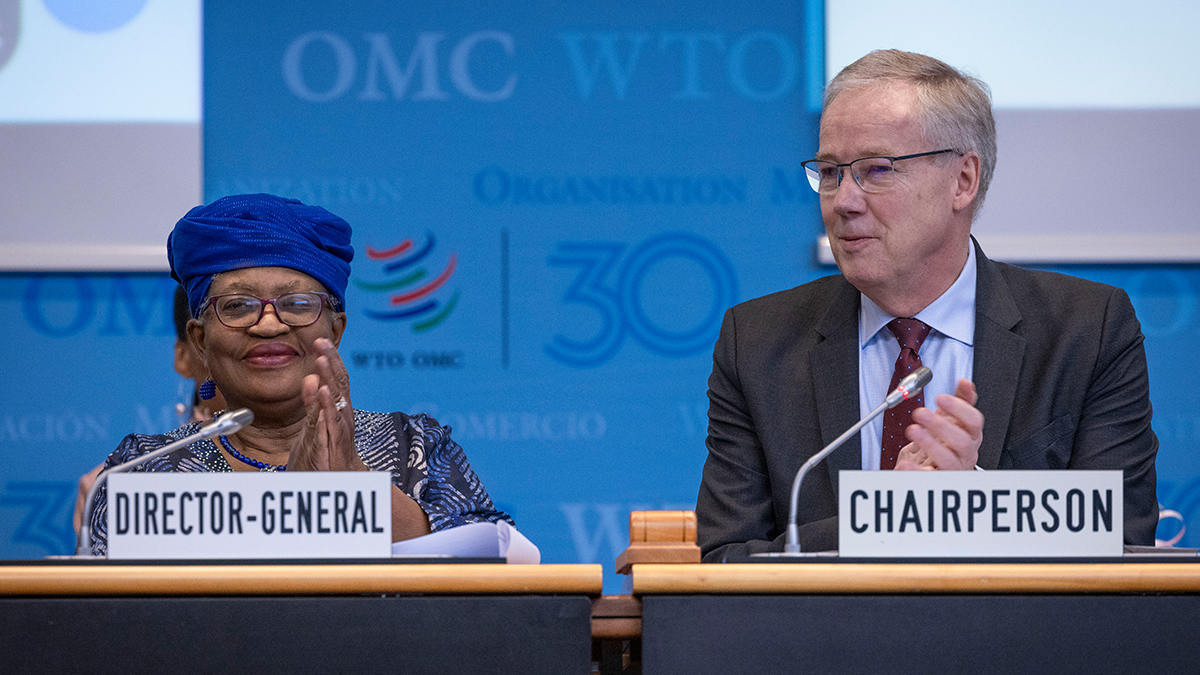
The General Council of the World Trade Organization (WTO) has agreed by consensus to reappoint Dr. Ngozi Okonjo-Iweala as Director-General for a second four-year term, set to begin on 1 September 2025. This decision reflects broad recognition of her exceptional leadership and strategic vision for the future of the WTO.

The reappointment process, initiated on 8 October 2024, was overseen by Ambassador Petter Ølberg of Norway, Chair of the General Council. With no additional nominations submitted by the 8 November deadline, Dr. Okonjo-Iweala stood as the sole candidate. The process was conducted in a fully open and transparent manner, adhering to the WTO’s “Procedures for the Appointment of Directors-General” (WT/L/509).

During a special General Council meeting on 28-29 November 2024, Dr. Okonjo-Iweala outlined her forward-looking vision for the WTO. Following her presentation and a Q&A session with members, the Council formally endorsed her reappointment by consensus.

Ambassador Ølberg praised her achievements, stating:

“The General Council commends Dr. Ngozi Okonjo-Iweala for her outstanding leadership during her first term. Amid significant global economic challenges, she strengthened the WTO’s ability to support its members and set a forward-looking agenda for the organization. Her leadership was instrumental in securing meaningful outcomes at pivotal moments, including the 12th and 13th Ministerial Conferences (MC12 and MC13), where major milestones were achieved.”

He continued:

“As we look ahead, the Council fully supports Dr. Okonjo-Iweala’s commitment to ensuring that the WTO remains responsive, inclusive, and results-driven. Her leadership will be critical as the organization continues to advance a resilient, rules-based, and equitable global trading system.”

Background

Dr. Ngozi Okonjo-Iweala first assumed office as Director-General on 1 March 2021, becoming the first woman and first African to lead the WTO. Her first term concludes on 31 August 2025. Her reappointment highlights the strong support for her efforts to enhance the WTO’s relevance and capacity in addressing the evolving challenges of global trade.

Source: wto.org

Continue Reading
Click to comment

Leave a Reply

Your email address will not be published. Required fields are marked *

Middle East

Saudi Arabia Shuts Down One of World’s Largest Oil Refinery after Iran’s Drone Strike

Published

on

By

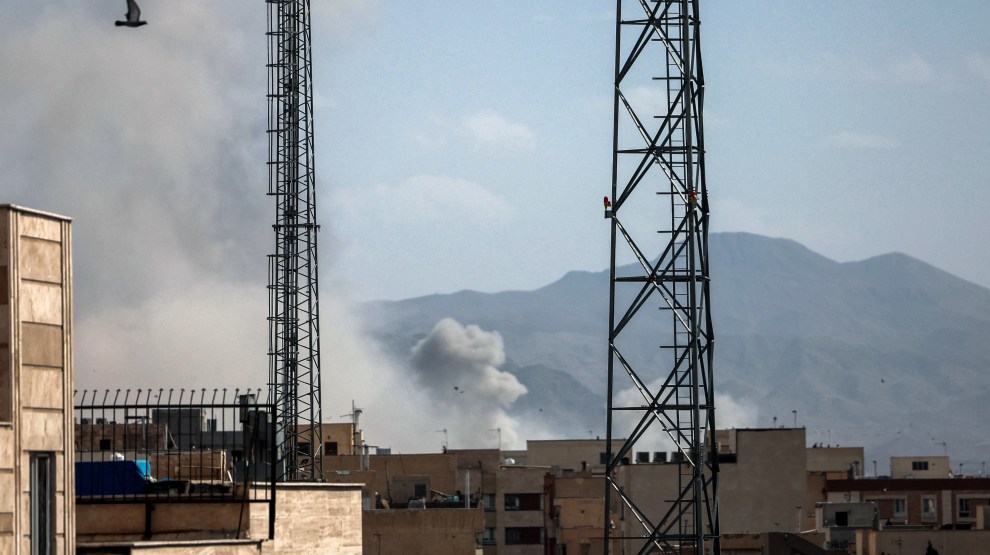
Saudi Aramco has halted operations at its Ras Tanura refinery in Saudi Arabia after a reported drone strike in the area, according to Reuters.

Ras Tanura, one of the largest oil refining and export facilities in the world, has a refining capacity of roughly 550,000 barrels per day and serves as the kingdom’s largest oil export terminal.

The facility handles approximately 6.5 million barrels of crude daily nearly 7% of global oil supply flows through this single site.

Reports indicate the attack was carried out by Iran amid rising regional tensions, affecting critical Aramco infrastructure.

Following the strike, a fire reportedly broke out in the refinery’s processing complex.

Authorities say the blaze has been contained, and no casualties were recorded.

A series of strikes by the US and Israel against Iran began last Saturday.

Continue Reading

World

Trump Claims 48 Iran Leaders Killed in US-Israeli Operations

Published

on

By

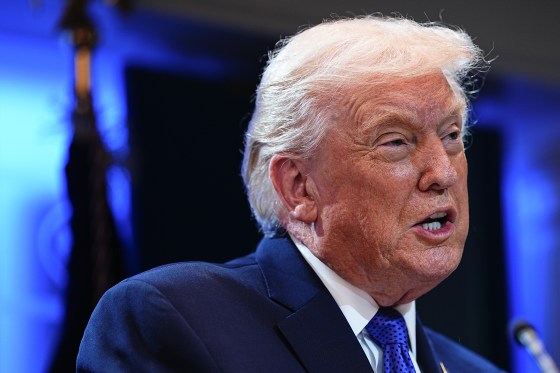
The United States President, Donald Trump, has claimed that over 48 Iranian leaders have been killed in ongoing U.S.-Israeli bombardments, describing the offensive as a major success.

“Nobody can believe the success we’re having, 48 leaders are gone in one shot. And it’s moving along rapidly,” Trump said in an interview with Fox News.

The military strike, launched Saturday, aims to dismantle the Islamic Republic’s leadership and degrade its military capabilities.

Iran has confirmed the death of its supreme leader, Ali Khamenei.

In a separate interview with CNBC, Trump reiterated his confidence in the operation’s progress.

“We’re doing our job not just for us but for the world. And everything is ahead of schedule,” he said. “Things are evolving in a very positive way right now, a very positive way.”

The interviews were conducted before the U.S. military announced its first casualties in the conflict. United States Central Command (CENTCOM) confirmed that three service members were killed, five seriously wounded, and several others sustained lighter injuries.

CENTCOM also said U.S. forces had sunk an Iranian warship at a dock in the Gulf of Oman as part of ongoing operations.

Continue Reading

Middle East

Iran Confirms Supreme Leader Ali Khamenei Dead after US-Israeli Attacks

Published

on

By

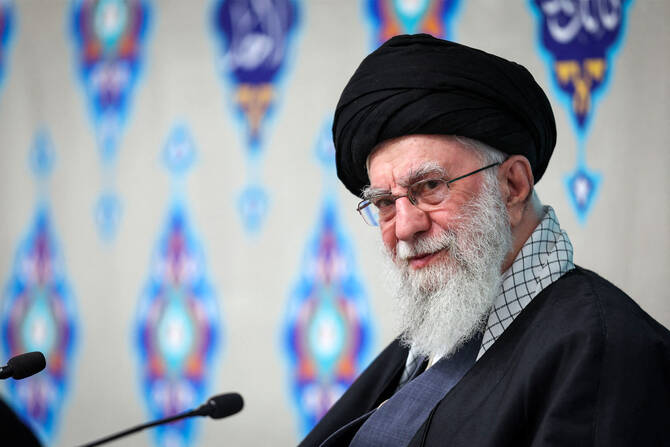
Iranian state media have confirmed that Supreme Leader Ayatollah Ali Khamenei was killed at his office in the Israeli-US attacks on Iran, following earlier reports of his killing by US and Israeli officials.

A 40-day mourning period for the longtime Iranian leader has been announced.

The Sunday confirmation comes after Iran’s Tasnim and Mehr news agencies initially reported that Khamenei remained “steadfast and firm in commanding the field”.

US President Donald Trump wrote in a post on his Truth Social platform earlier in the day that 86-year-old Khamenei was killed in the joint US-Israeli strikes, which began early on Saturday.

“He was unable to avoid our Intelligence and Highly Sophisticated Tracking Systems and, working closely with Israel, there was not a thing he, or the other leaders that have been killed along with him, could do,” Trump wrote.

“This is the single greatest chance for the Iranian people to take back their Country,” he said. “Hopefully, the IRGC [Islamic Revolutionary Guard Corps] and Police will peacefully merge with the Iranian Patriots.”

While Iranian authorities have long planned for the possible killing of Khamenei in the event of a war with the US and Israel, his assassination injects new uncertainty into an unfolding conflict that has already spurred concerns that fighting could escalate and expand further.

Israeli Prime Minister Benjamin Netanyahu had earlier also claimed that there were “growing signs” that Khamenei had been killed.

Additionally, the Reuters news agency, citing an unnamed senior Israeli official, had reported that Khamenei’s body had ⁠been located.

Khamenei has been Iran’s supreme leader since 1989, succeeding the founder of the post-shah Iran, Ayatollah Ruhollah Khomeini, who steered Iran’s 1979 revolution.

The supreme leader holds ultimate authority over all branches of government, the military and the judiciary, while also acting as the country’s spiritual leader.

Barbara Slavin, a distinguished fellow at the Stimson Center in Washington, DC, told Al Jazeera that Iran “has a plan” in place in the event that Khamenei’s death is confirmed.

“There will probably be a council that will be set up to run the country. It may already have been running the country, as far as we know,” she said.

Trump signals continued strikes

Saturday’s strikes on Iran targeted 24 provinces, killing at least 201 people, according to Iranian media reports, citing the Red Crescent.

Among the attacks, Israel struck two schools in Iran, killing at least 108 people at the Shajareh Tayyebeh girls’ elementary school in the southern city of Minab, and two others at a school east of the capital, Tehran.

Netanyahu said in his address that many “senior figures” had been “eliminated” in the wave of attacks targeting senior leaders, as Trump called for the government to be toppled.

Israel, Netanyahu said, had killed “commanders in the Revolutionary Guard and senior officials in the nuclear programme. And we will continue.”

Trump indicated on his Truth Social post that “heavy and pinpoint bombing” of Iran would go on “uninterrupted throughout the week or, as long as necessary”.

Iran’s counterattacks on Saturday triggered air-defence interceptions in several countries where airbases with US assets are hosted, including Kuwait, Qatar, the United Arab Emirates and Bahrain.

On Saturday evening, the Iranian Revolutionary Guard Corps (IRGC) said that the third and fourth waves of “retaliatory” strikes on US and Israeli positions were ongoing, according to a statement carried by the IRNA news agency.

Guterres calls for de-escalation

United Nations Secretary-General Antonio Guterres told an emergency meeting of the Security Council that he deeply regretted that an opportunity for diplomacy had been “squandered”.

“Military action carries the risk of igniting a chain of events that no one can control in the most volatile region of the world,” he told the 15-member body. “I call for de-escalation and an immediate cessation of hostilities”.

Addressing the Security Council, Iran’s UN ambassador, Amir Saeid Iravani, said the US and Israel had “initiated an unprovoked and premeditated aggression”, attacking “civilian populated areas in multiple large cities of Iran, where millions of people reside”.

“This is not only an act of aggression, it is a war crime, and a crime against humanity,” he said.

The US ambassador to the UN, Mike Waltz, insisted that the military action was lawful. “Iran cannot have a nuclear weapon,” he said. “That principle is not a matter of politics. It’s a matter of global security.”

China’s UN ambassador, Fu Cong, said Beijing was very concerned by “the sudden escalation of regional tensions”.

Russia’s ambassador, Vassily Nebenzia, condemned the US-Israeli air strikes, demanding that the US and Israel “immediately cease their aggressive actions”.

Source: Aljazeera

Continue Reading

Trending