
Boss Picks
ICYMI – June 12: The Heroes, the Villains


By Eric Elezuo
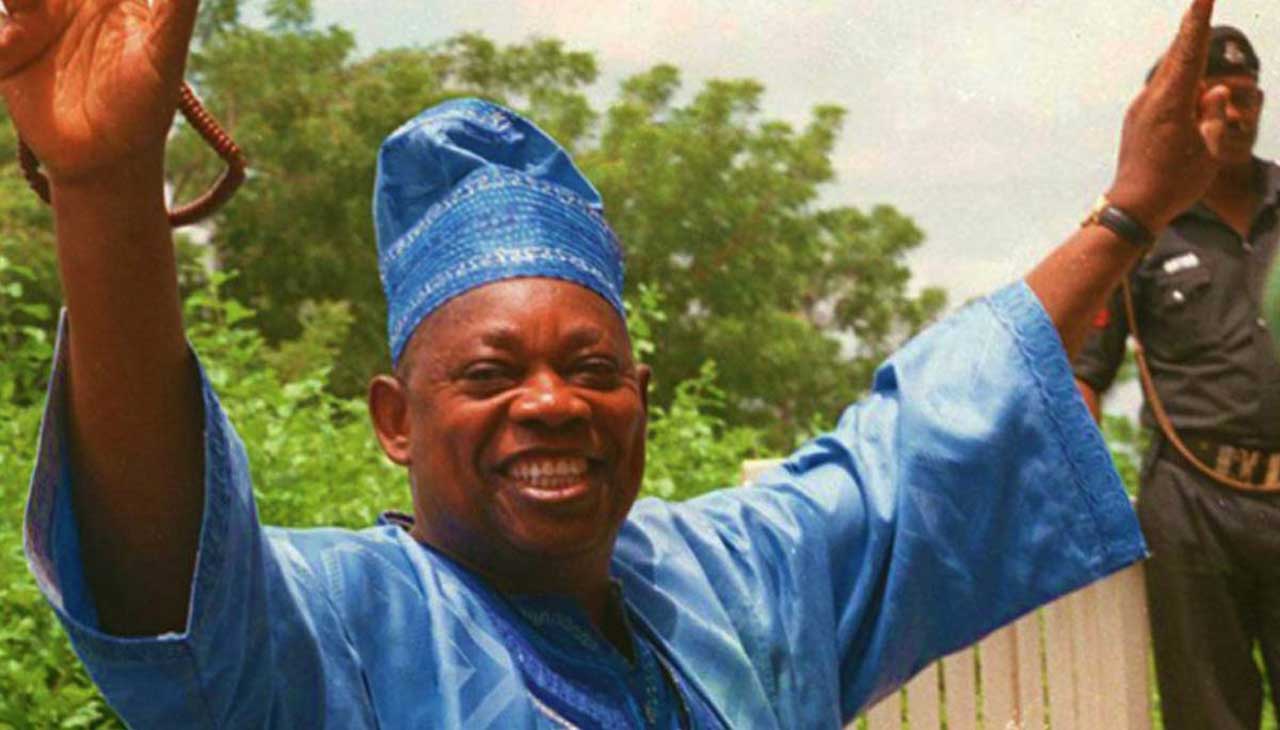
June 12 has become an official national day, after many years of the agitation to recognize it. It was the day that Nigerians set aside tribal and religious sentiment to vote massively for MKO Abiola and his running mate, Babagana Kingibe in an election everyone described as the freest and fairest.
But the presumed winner never took office because nidway into the release of the results, the then President, Ibrahim Badamasi Babangida annulled the process, and there began a crisis.
While many agitated for the restoration of Abiola’s mandate, many sold out, and joined the Babangida, Shonekan and Abacha oppressors.
Below is an abridged list of those in support and against the June 12 mandate. You can add more names if there are:
MKO Abiola
The story of Chief Moshood Kasimawo Olawale Abiola is better compared to the beautiful bride, so beloved and cherished all because of how she distinguished herself. MKO, as he is popularly called, was the candidate of the Social Democratic Party in the disputed June 12 1993 Presidential election – an election acclaimed by not a few persons as the freest and fairest the country has ever had. The Ogun state born billionaire entrepreneur was leading handsomely when the Babangida junta suddenly annulled the election.
Abiola will not easily let go of his mandate, and with the people solidly behind him, he fought the Babangida and later Abacha junta to a standstill, and finally paid the supreme price when he died in detention on July 7, 1998, a day he was supposedly to be released, in the presence of notable world leaders. His death was a great blow to democratic and June 12 struggle.
One striking thing about Abiola’s democratic struggle was the fact that he didn’t actually need it. He was stupendously rich, and could have let go but he didn’t. He died fighting for the masses. He died a selfless democrat at 60.
Gani Fawehinmi

One of Nigeria’s finest lawyers, late Abdul-Ganiyu Fawehinmi was a human rights activist, who defended the masses without equivocation. He was fearless in his approach to matters so long as it provides succor to a citizen. Before he was recognised and awarded the coveted Senior Advocate of Nigeria, his followers had ‘honoured’ him with the ‘Senior Advocate of the Masses.’
Late Fawehinmi reported that he was arrested, detained and incarcerated a total of 32 times by successive military regimes, including those of Gen. Yakubu Gowon (six times), Gen. Olusegun Obasanjo (three times), Gen. Ibrahim Babangida (17 times) and Gen. Sani Abacha (six times).
Babangida said of him, “I appreciate you that you have a strong conviction and fight for it consistently. This is the context in which I see Gani.” He added that the arrest of Gani is ‘all in a day’s work. It’s just part of the job description’. Today, the administration of President Muhammadu Buhari has posthumously honoured him with the GCON award.
Frank Kokori

As the Secretary-General of the Nigeria Union of Petroleum and Natural Gas Workers (NUPENG) at the time, Kokori singlehandedly paralysed the country’s economy by calling out workers in the petroleum sector to go on strike. The mass action significantly paralysed the economy, and gave the government a wake up call.
He allegedly refused carrots dangled by the Abacha regime all because of the democratic struggle.
Wole Soyinka

An intellectual of repute, Nobel Laureate, Prof. Wole Soyinka, was not left out in post-June 12 struggle. It is on record that the literary icon used his international connection to draw the attention of the international community to events in Nigeria.
He was one of the brains and voices behind the much talked about Radio Kudirat, which was set up at a time when the military had their foot on media organisations and journalists. He was also a strong pillar of the National Democratic Coalition (NADECO) made up of pro-democracy fighters.
Kudirat Abiola

She was the second wife of MKO Abiola, who stood stoutly behind her husband. While Abiola was in detention, Kudirat took up the mantle, and was in the forefront of the fight for his release. Joining forces with other activists and civil rights giants, she became a painful thorn to the Abacha led regime.
Her fearless journey was cut short when she was brutally murdered at the Oregun area of Lagos on June 4, 1996. She was only 44.
A partaker in her assassination, Mr. Mohammed Abdul, aka Katako, in 2007, confessed that Kudirat’s murder was state sponsored.
He said: “On the day of the attack, we followed Kudirat Abiola’s white Mercedez Benz from Ikeja to Allen Avenue and then to the Lagos-Ibadan Expressway. When we got to the Toll Gate area, (Sgt. Barnabas) Rogers asked me to get close to the Benz and I did. Then, he (Rogers) leaned out of the window and started spraying the victim with bullets with the P90 rifle. After that, we immediately drove to Dodan Barracks.”
Anthony Enahoro

Also a leader of NADECO, Enahoro led the coalition in the Diaspora while on exile. He was the Chairman of NADECO; the Chairman of the Movement for National Reformation and was the leader of Pro-National Conference Organisation (PRONACO).
The statesman, known for moving a motion for Nigeria’s self-rule, never relented in his call for the recognition of the June 12, 1993, presidential election won by Abiola.
On many occasions, he escaped assassination. He died on December 15, 2010, at 87.
Beko Ransome-Kuti
Beko formed what has been described as Nigeria’s first human rights organisation, the Campaign for Democracy, which was used to tackle Abacha’s dictatorship in the post-June 12 struggle. The CHDR is also Beko’s brainchild.
Under the regime, a military tribunal in 1995 sentenced Beko to life in prison for bringing the mock trial of Obasanjo to the attention of the world. His freedom came with the death of Abacha in 1998.
He died on February 10, 2006.
Ndubuisi Kanu

He is one of the few Igbo men who fought ceaseless for the restoration of the June 12-Abiola mandate.
After his retirement from the military, Kanu joined the pro-democracy movement and was one of the leaders of NADECO during the period; he later became chairman of the coalition in 2013.
Kanu also had his share of the bitter experiences like other pro-democracy activists like him. During the struggle, he reportedly escaped assassination by a stroke of luck
Alfred Rewane

Rewane was a successful businessman, a major financier of NADECO in the post-June 12 struggle. He used his means to support his compatriots in the opposition to the Abacha regime.
He was murdered on October 6, 1995, in his Ikeja residence, at the age of 78.
Abubakar Umar

Umar was another soldier, like Kanu who opposed to the annulment of the June 12, 1993 election.
He masterminded Abiola’s installation as president, and was caught, but was lucky to get away. He left the Nigerian Army in the heat of the struggle in 1993, and became a social critic and founded a political party called the Movement for Unity and Progress.
Ayo Opadokun
Chief Ayo Opadokun spent a sizable part of his life behind bars in the battle to actaulise June 12.
Alao Aka-Basorun
A former President of the Nigeria Bar Association, Aka-Basorun was one of the pioneers of legal activism. Fondly referred to as ‘The Lion of the Bar,’ he was said to be one of the earliest proponents of national conference and restructuring of Nigeria’s federation.
He was one of the leading lawyers who defended Abiola during his “treason” trial, aftermath of his ‘Epetedo Declaration.’
He suffered a memory failure at the assassination of Kudirat Abiola and never recovered.
Abraham Adesanya
Adesanya, as the leader of the Afenifere and deputy leader of NADECO remained at home with the likes of the late Gani Fawehinmi, Femi Falana, Olisa Agbakoba and a host of others while many fled the country.
He mysteriously escaped the assassins’ bullets in 1997. It was during the trial of those suspected to have attacked him that revelations were made that he was marked for assassination for being a member of NADECO, a group already outlawed by the military regime.
Tunji Braithwaite
Braithwaite was one of the brains behind the ‘June 12 Coalition of Democratic Formations,’ another pro-democracy advocacy group. Unlike some of his contemporaries, he rejected offers by successive military juntas and remained in the country even as a good number of activists fled the country.
Olusegun Osoba
One of the finest journalists Nigeria has ever produced, Chief Olusegun Osoba, was the Editor and Managing Director of government-owned Daily Times Nigeria Ltd under Babangida’s regime. He had bitter experiences like his compatriots.
Osoba revealed that Babangida sacked him three times while Abacha made attempts on his life three times due to his alignment with NADECO.
Osoba said in parts, “I will call him by his name. Three times Babangida sacked me. Three times he re-instated me. At last, he converted my sack to resignation. Three times Abacha wanted to kill me. I was in hiding for one year,” he said.
Other notable activists in the June 12 struggle are Frederick Faseun, Ibrahim Tahir, Balarabe Musa, Bola Tinubu, Ebitu Ukiwe, Walter Carrington, Bolaji Akinyemi, Bola Ige, Femi Falana, Olisa Agbakoba, Yinka and Joe-Okei-Odumakin, Dele Momodu, late Chima Ubani, Debo Adeniran, Ebun-Olu Adegboruwa, Omoyele Sowore, Segun Maiyegun, Segun Okeowo, Femi Aborisade, Tokunboh Afikuyomi, Ademola Adeniji-Adele, Joe Igbokwe, Solanke Onasanya, Kayode Fayemi, Shehu Sani, among a host of many others.
The Villains
Ibrahim Babangida

Perhaps there is no greater villain of the June 12 struggle that Babangida. He will be remembered for his infamous annulment of the June 12, 1993 election. In fact, he started the imbroglio when on June 23, 1993, in a nationwide broadcast, he annulled the election.
Though he took full responsibility for the annulment of the election he claims it was a collective decision.
Sani Abacha

Abacha had the opportunity to right the wrongs of IBB, but failed to do so, instead he constituted himself as a terror, and planned to perpetuate himself in power.
During his regime, many lives of activists were cut short, and he caused others to flee the country. He did not stop at denying Abiola his mandate, he arrested him and held him inncustody until his death in 1998.
In his quest to kill June 12, and democracy in general, he lured and lobbied friends and associates of Abiola to serve in his government. Many of them such as the running mate to Abiola, Babagana Kingibe, Ebernezer Babatope, Lateef Jakande among others, withdrew their loyalty to the presumed president-elect.
Tony Anenih
Chief Tony Anenih was the National Chairman of the SDP, on which platform Abiola contested the 1993 election. Anenih, alias ‘Mr. Fix It,’ He practically failed to fix the people’s mandate, and forced forces with the oppressors.
Babagana Kingibe

Many see Babagana Kingibe as the greatest let down of the June 12 struggle. He was Abiola’s running mate in the 1993 contest, and common sense assumed he will stick with his principal to the end, but he became a turncoat and sold the mandate when he joined Abacha’s regime with the likes of Tony Anenih.
A lot of people have said that he does not in any way deserve the honours of GCON bestowed on him by Buhari. He didn’t fight at all before giving up. He never believed in June 12.
Uche Chukwumerije

The late Sen. Uche Chukwumerije became Babangida and Shonekan’s Information Minister while activists were fighting to reclaim the June 12 mandate. His propaganda theory was so potent that many wondered where he gets them from. He fought activists to a standstill.
In later interview, he supported the annulment based, according to him, on ‘security report…at the time’. He eventually benefitted from the democratic process as elected senator.he died on April 19, 2015,
Daniel Kanu
Kanu came from nowhere to become Abacha’s henchman and perpetrated serious anti-democratic activities, including organizing the infamous one million march for Abacha with his ‘Youth Earnestly Ask for Abacha’ group. He basically dined and wined with the autocratic government.
Kanu was reported as saying, “The destiny of this nation and the transition to democracy under the present dispensation can only achieve its viable potential if handled by prudent, purposeful, and transparent leadership of General Abacha.”
When he contested and won PDP’s ticket for the House of Representatives in AMAC/Bwari Federal Constituency in 2002, he was paid back in his own coin as his was ‘annulled’ over “unverifiable certificates” and “unclear antecedents.”
Arthur Nzeribe

He was Babangida’s own henchman, and was in the forefront of truncating the June 12 election with his infamous Association for Better Nigeria.
The ABN had made taken a major step to ensure the junta remained in power by approaching a court to prevent the conduct of the June 1993 presidential election. Its argument: leader of the NRC and the SDP were corrupt politicians.
The Campaign for Democracy challenged them and won.
Nzeribe’s association, again, went to court after the poll to prevent the release of the election results. Babangida listened and the political crisis ensued.
Nzeribe later boasted of his role in the cancellation of the June 12 election.
Abimbola Davies
He was one of the directors of the Nzeribe-led pro-Abacha ABN, among several others. He has been criticised for his links with the anti-democratic forces. Davies made a u-turn shortly after, and exposed the ABN motives.
Ernest Shonekan
A kinsman of Abiola, Shonekan happily accepted the interim leadership role. He could have used the opportunity to cause, but he never did. He revolved round the presidency until Abacha sacked him three months later.
Abdul-Azeez Arisekola-Alao

The late Ibadan-based billionaire businessman pitched his tent with Babangida in as much as he was Abiola’s friend and Yoruba Islamic leader. He spoke vehemently against the June 12 mandate.
He said, “Wallahi tallahi billahillazi la’ila ha illahuwa – and we are in the month of Ramadan; that is what happened at that time. It was after the election that members of the Armed Forces Ruling Council threatened to kill both MKO Abiola and IBB, if he insisted on releasing the result of the election. They threatened to kill both IBB and Abiola.”
Lamidi Adedibu
The late strongman of Ibadan politics, Alhaji Lamidi Adedibu, was said to have ‘arranged’ the infamous conditional bail to be granted to Abiola while in incarceration, a move that would have denied Abiola his mandate if he accepted the offer.
IBB was later quoted as saying that Adedibu supported the June 12 annulment.
Jerry Gana
Prof. Jerry Gana was one of the civilians co-opted into Abacha’s transition and being the Minister of Information, he was one of earliest people to sing the dirge of June 12.
Gana had in May 1994, almost the first year anniversary of June 12, reportedly said, “The military administration (Abacha’s regime) did not actualise the June 12 election, in spite of its opposition to the annulment, for fear that certain sections of the country could rise against it. If they actualised June 12 when they came in, another section would rise.
“The annulment is a painful one but we cannot because of it allow the people of Nigeria to be destroyed. Somebody has made a mistake like somebody made in 1966, like somebody made in 1984, like somebody made a mistake by stopping Jerry Gana from becoming a president by annulling my own primaries.”
Al-Mustapha, Sofolahan, Others

Abacha’s former Chief Security Officer, Maj. Hamza Al-Mustapha; Kudirat’s former Personal Assistant, Alhaji Lateef Shofolahan; a son of late military Head of State, Gen. Sani Abacha, Mohammed Abacha; and Rabo Lawal were in December 1999 charged with conspiracy and murder over their alleged involvement in the assassination of Kudirat Abiola.
After 13 years of instituting the case, which was presided over by five successive judges and during which the accused persons were in prison custody, Al-Mustapha and Shofolahan were sentenced to death by a Lagos High Court on January 30, 2012.
Lawal Pedro, who led the prosecution, had accused Al-Mustapha of ordering Barnabas Rogers, (alias Sgt. Rogers), a member of Abacha’s Strike Force, to kill Kudirat. However, the Court of Appeal sitting in Lagos on Friday, July 12, 2013, discharged and acquitted al-Mustapha and Shofolahan, saying there was not enough evidence to incriminate him in the murder of Kudirat. The verdict overturned the death sentence passed on al-Mustapha by the Lagos High Court.
Similarly, the likes of Bashir Tofa, the candidate of the NRC, who has yet to openly admit that Abiola won the election; Chief Tom Ikimi, the chairman of NRC, who defected to Abacha’s camp; Humphrey Nwosu, who couldn’t muster the courage to release the remaining results and others.
The Five political parties that adopted Abacha as their sole candidate for the election are also great enemies of the June 12 struggle. Someone had described them as the ‘five leprous fingers of Abacha’.
Additional Info from The Punch
First published on June 10, 2018
By Eric Elezuo
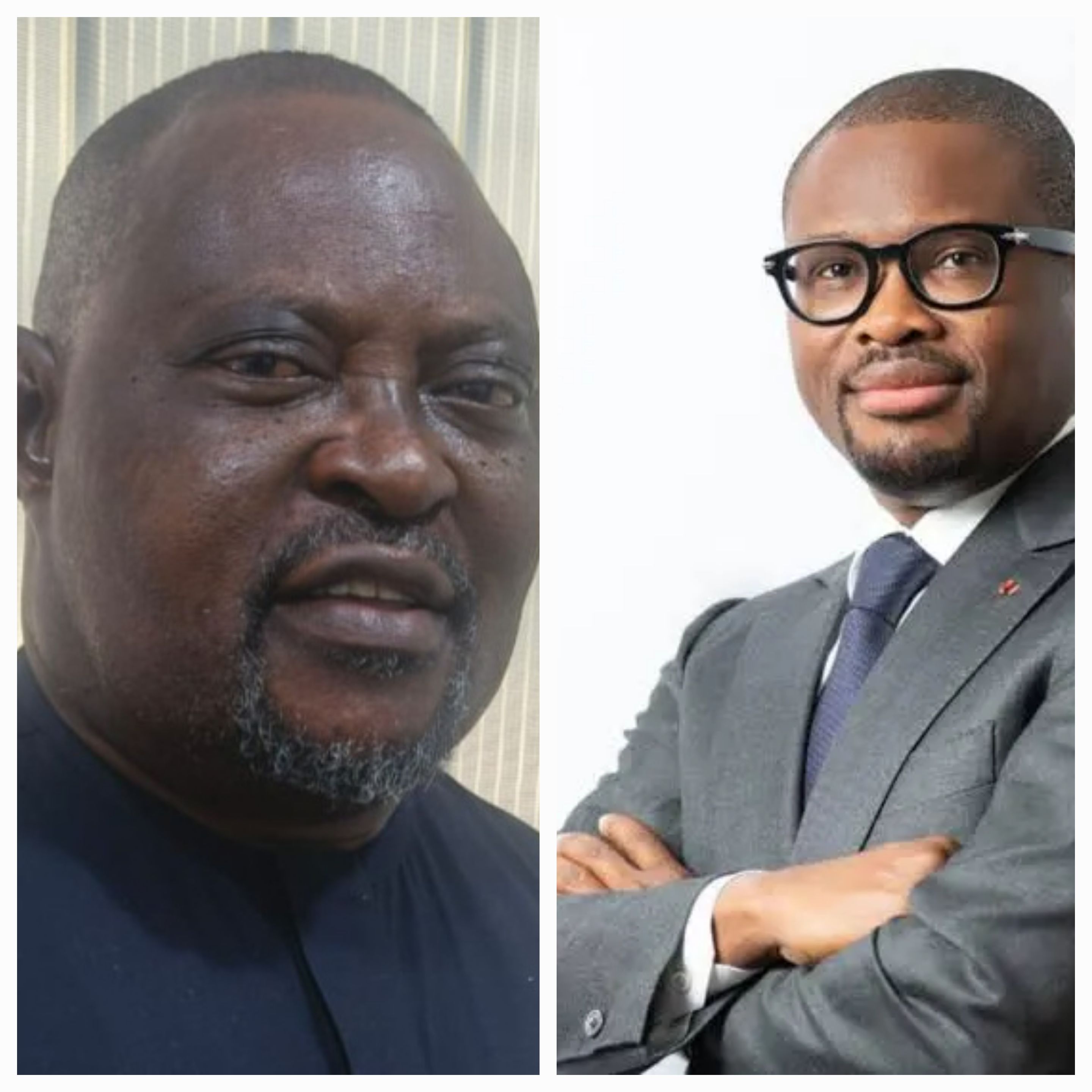
The Koumagnon Family and Allied Families of Seme-Kpodji, of the Republic of Benin, led by Monsieur Alberto Koumagnon, has declared their unflinching support for the candidacy of Romuald Wadagni as he steps out on Sunday to vie for the presidential seat of the Republic of Benin.
In statement of declaration, the families observed that Wadagni is propelled by a ‘vision embodied in this ambitious, realistic project, resolutely focused on the future of our country’.
The declaration is presented in full:
DECLARATION OF SUPPORT BY THE GREAT KOUMAGNON FAMILY AND ALLIED FAMILIES OF SÈMÈ-KPODJI FOR CANDIDATE ROMUALD WADAGNI

The great KOUMAGNON family and allied3 families of Sèmè-Kpodji, deeply committed to the values of peace, progress, and development, followed with particular interest the presentation, on Saturday, March 21, 2026, of the “Further Together” (Plus loin ensemble) social project by our dear candidate, President Romuald WADAGNI.
Following this important political event, and gathered on this day ……… /……… 2026, we wish to express our full support for the vision embodied in this ambitious, realistic project, resolutely focused on the future of our country.
From the outset, we, descendants of the KOUMAGNON family and allied families, commend the enlightened leadership of President Patrice TALON who, faithful to his commitment to building a modern and prosperous Benin, has been able to propose to the presidential majority a competent, credible candidate who brings hope for consolidating achievements.
In this dynamic of continuity and progress, the candidacy of President Romuald WADAGNI is fully in line with the continuation of the structural reforms undertaken over several years in all sectors, particularly in infrastructure.
In this regard, we recognize and commend the many achievements of the government, especially road infrastructure, which has significantly improved mobility and living conditions for the populations of the communes of Sèmè-Kpodji and surrounding areas.
Moreover, these remarkable efforts reflect a constant determination to connect localities, stimulate economic exchanges, and sustainably strengthen the attractiveness of our territories.
Building on these achievements and firmly oriented toward the future, we are convinced of the relevance of the “Further Together” project.
Therefore, the great KOUMAGNON family and allied families of Sèmè-Kpodji give their firm, committed, and unconditional support to candidate Romuald WADAGNI, as well as to his running mate, Mrs. Mariam Chabi Talata Zimé Yérima.
In the same spirit, we call on all daughters and sons of Sèmè-Kpodji, as well as all citizens committed to peace and development in our country, Benin, to mobilize massively in support of this hopeful momentum by turning out in large numbers on April 12.
We also wish to assure our dear candidate of our commitment to mobilize widely to ensure a high voter turnout in the commune of Sèmè-Kpodji.
Together, let us continue the efforts undertaken.
Together, let us consolidate our achievements.
Together, let us go further.
Long live Benin on its path toward progress!
Long live the WADAGNI–TALATA ticket!
Thank you.
Done at Sèmè-Kpodji, on ……/……..2026
The great KOUMAGNON family and allied families
By Eric Elezuo
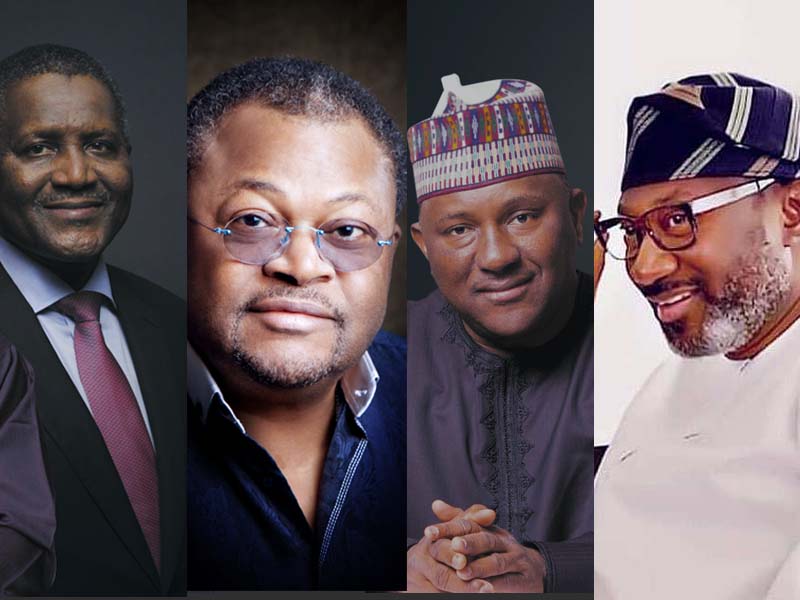
With a loud ovation, Nigerians reveled at the announcement of its billionaire-quartet, Aliko Dangote, Mike Adenuga, Femi Otedola, and Abdulsamad Rabiu as among Africa’s richest individuals in 2026.
The four has constantly put Nigeria in the limelight, ensuring that Forbes is never complete without a mention of the giant of Africa, Nigeria
According to the latest Africa Billionaires ranking released by Forbes, Dangote retained his position as Africa’s richest man, with an estimated net worth of $28.5 billion. He added about $4.6 billion to his fortune over the past year, largely driven by the strong performance of Dangote Cement on the Nigerian Exchange Limited.
Telecommunications magnate Adenuga also retained his place among Africa’s billionaires.
The founder of Globacom and chairman of Conoil Producing remains one of Nigeria’s most influential entrepreneurs with diversified interests spanning telecoms, oil and gas, and banking.
Otedola, chairman of Geregu Power Plc, also featured on the list despite a slight dip in his wealth over the past year. Forbes estimates that the billionaire investor lost about $200 million following the sale of a majority stake in the power generation company at a discount to its market price.
The increase in Rabiu’s net worth was largely driven by the performance of BUA Cement, whose shares rose 135% over the past year, outperforming the broader rally on the Nigerian stock market.
The 23 billionaires on the continent are now worth a combined $126.7 billion, representing a 21% increase from 2025 after they collectively added $20.3 billion to their net worth.
Across the continent, billionaire fortunes were boosted by strong equity market performance, record corporate profits, and improving currency stability in several African economies.
South Africa remains the highest number of billionaires on the list, with seven individuals, followed by Egypt with five, Nigeria with four, and Morocco with three.
Here is a peep into the world of Nigeria’s Billionaire-Quartet.
ALIKO DANGOTE

For the President of the Dangote Group, Alhaji Aliko Dangote, and his multifaceted group, playing second fiddle has never been an option. Both the enterprise and the entrepreneur have maintained market leadership to the extent that Dangote himself has appropriated the richest man in Africa status to himself, and has hardworkingly sustained the tag for as long as anyone can remember.
Since 2014, when Forbes magazine named him the world’s 23rd billionaire, jumping 20 spots on the scale from his previous 43rd position among the elite club of the world’s richest people. Aliko Dangote has not looked back, winning back to back the accolade among African billionaires, and never slipping from the world ranking.
Again, as expected, the famous Forbes has proclaimed the soft spoken businessman as Africa’s richest man for the 12th time in a row; a proof that the name Dangote is synonymous with consistency. He is a businessman, who understands that no man rest on his oars if turnovers have to continue to turn over. With marked differentiation, he has demystified the business terrain, and proved that if it can be done, then it must done. His establishment of the humongous fertilizer and sugar plants and the ambitious refinery in Lekki, Lagos, Nigeria, are testimonies of the trajectory of one who knows his onions.
Worth $13.4 by the last Forbes ranking, which sustained him as the richest man in African for the 11th time, entrepreneur extraordinaire has the following points to his name:
- Aliko Dangote, Africa’s richest person, founded and chairs Dangote Cement, the continent’s largest cement producer.
- He owns 85% of publicly-traded Dangote Cement through a holding company.
- Dangote Cement has the capacity to produce 48.6 million metric tons annually and has operations in 10 countries across Africa.
- After many years in development, Dangote’s fertilizer plant in Nigeria began operations in mid-2021.
- Dangote Refinery, under construction since 2016, hit the public space since 2024, and is one of the world’s largest oil refineries, with a capacity of 650,000 barrels per day production.
The above and many has remained the factors that have made it easy for the billionaire to remain in the top echelon of world’s money men, and the supremo among African businessmen. Little wonder he is one of the few recipients of the GCON national honours reserved for top politicians of vice president ranking and top government appointees.
Born in Kano in 1957, Dangote proudly shuttles between three wonderful tags as the richest man in Nigeria; the richest man in Africa and the richest Black man in the world. He has paid his dues, and mankind is the better for it.
Releasing impacts, Aliko Dangote Foundation (ADF), the private charitable foundation of Alhaji Aliko Dangote. Incorporated in 1994, as Dangote Foundation, is saddled with the mission to enhance opportunities for social change through strategic investments that improve health and wellbeing, promote quality education, and broaden economic empowerment opportunities. 20 years later, the Foundation has become the largest private Foundation in sub-Saharan Africa, with the largest endowment by a single African donor.
The primary focus of ADF is child nutrition, with wraparound interventions centered on health, education and empowerment, and disaster relief. The Foundation also supports stand-alone projects with the potential for significant social impact.
The Foundation works with state and national governments and many highly reputable international and domestic charities, non-governmental organizations and international agencies to advance its humanitarian agenda.
In one of its biggest collaboration to date, Aliko Dangote Foundation started working in partnership with the Bill and Melinda Gates Foundation and key northern State Governments in Nigeria from 2013 to eradicate polio and strengthen routine immunization in Nigeria.
Worthy of praise is the fact that nearly a decade, the Foundation has spent over N7 Billion in the course of feeding, clothing and the general welfare of the Internally Displaced Persons in the Northeast.
To make his host communities feel at ease, and the impact of his presence, Dangote has embarked on an initiative to provide further support to improving educational systems in Ibeju-Lekki and Epe locality. The educational support initiative is a tripartite programme consisting of scholarship, capacity building for teachers and school infrastructure projects.
In addition, Scholarships have been awarded to 52 secondary school students whilst some financial support was provided to their parents and/or guardians. Tertiary students will be included in the next batch of the scheme.
Furthermore, about 100 teachers, principals and school administrators were trained in teaching techniques for the 21st century. After which they were monitored in class on how they were using the skills acquired.
There is hardly any sector that has not felt the milk of human kindness running through Aliko Dangote; the military, media, politicians, governments across boards and more.
Dangote is surely an asset to this world!
As at today, there is no space for slowing down for Dangote as he continues to trudge on, creating firsts after first for himself and for humanity. He is blessed with three wonderful daughters, who have followed the rewarding footprints of entrepreneurship, and is looking forward to hitting the richest man in the world status. And very soon too.
ABDULSAMAD RABIU

Abdulsamad Rabiu’s consistent climb on the ladder of success has become phenomenal. The unassuming Chairman at BUA Group has become a study in entrepreneurial discipline, focus, philanthropy and intentional sacrifice. But what can actually be said of a man who has steadily evolved as one of Africa’s biggest investors, in fact, the biggest in the order of reckoning on the Nigerian Exchange. He has graciously used his BUA Foundation and the phenomenal Abdul Samad Rabiu Africa Initiative to not only affect lives, but ensured that the people of the world, especially his native Nigeria, live in better comfort. The Chairman/Chief Executive Officer, Bua Group, makers of quality cement, sugar, flour among other wonderful household items has been a epitome of enterprise. He is presently by divine and entrepreneurial orchestration one of Nigeria’s richest investor. He is also the third richest man in the Africa, by Forbes calculation behind Nigeria’s Aliko Dangote, South African billionaire, Johann Rupert.
In 2023, via a list compiled by Billionaires in Africa revealed the rankings on the Nigerian Exchange, NGX, showing that Abdulsamad Rabiu, the billionaire businessman and industrialist, overtook Aliko Dangote as the richest investor in the country, albeit temporarily.
According to data tracked by Billionaires.Africa, Rabiu’s holdings in his publicly-listed businesses on the local bourse were valued at an impressive $6.01 billion, making him the only investor with an investment portfolio worth over $6 billion then. This is a feat that can only be achieved through wholesome business acumen and dedication.
Born August 4, 1960, in Kano, to one of Nigeria’s foremost industrialists in the 1970s and 1980s, Khalifah Isyaku Rabiu, Abdul Samad Isyaku Rabiu CON is a perfect combination of many things in one.
It was in his native Kano that he kick-started his academic pursuit, carousing through elementary education with ease as a gifted child, and obtained his First School Leaving Certificate. He was later admitted into the Federal Government College, Kano, where he had his secondary education, and gradually with honours.
With a combination of fate, brilliance and determination, Abdulsamad was catapulted to Capital University in Columbus, Ohio, where he studiously studied Economics, and acquired his tertiary education before returning to Nigeria, all before his 24th birthday, to oversee his family business. He was that much sought after, and highly brilliant, and considered capable of holding fort for his father, who was being detained by the administration of General Muhammadu Buhari over matters concerning import duties.
In 1988, just after learning the ropes of entrepreneurial excellence, Abdul Samad Rabiu established BUA International Limited, for the sole purpose of commodity trading. The company followed after the footsteps of his father, and imported rice, edible oil, flour, iron and steel.
In 1990, having exhibited the character worthy of a world class entrepreneur, and the ability to execute classical projects, Rabiu’s BUA was invited by the government, which owned Delta Steel Company to supply its raw materials in exchange for finished products. This provided a much-needed leverage for the young company, and consequently expanded further into steel, producing billets, importing iron ore, and constructing multiple rolling mills in Nigeria.
Rabiu’s dexterity showed further a few years later, when the company acquired Nigerian Oil Mills Limited, the largest edible oil processing company in Nigeria, and there erupted the company’s and BUA’s influence and care over the people in the provision of affordable edible oil. His passion to see people excel in comfort has continued to make him churn out one great tiding after another, and endearing him in the hearts of the generality of the public.
A man with a vision for tomorrow, Rabiu, in 2005, started two flour-milling plants, in Lagos and in Kano, and by 2008, had broken an eight-year monopoly in the Nigerian sugar industry by commissioning the second-largest sugar refinery in sub-Saharan Africa. This was a feat only a bravest of hearts could wroth. As a result, in 2009, the company went on to acquire a controlling stake in a publicly-listed Cement Company in Northern Nigeria and began to construct a $900 million cement plant in Edo State, completing it in early 2015. Rabiu’s passion for expansion is unequalled.
BUA Group has since concentrated and excelled in manufacturing, infrastructure and agriculture and producing a revenue in excess of $2.5 billion. This is in addition to being the chairman of the Bank of Industry (BOI).
The Group, in 2019, announced plans to merge its privately owned BUA Cement with the publicly traded Cement Company of Northern Nigeria Plc (CCNN), to create Nigeria’s second largest cement producer thereby consolidating the grip on the cement market and breaking its monopolistic status.
MICHAEL ADENUGA

Michael Adenuga Jr. is one entrepreneur, who has proved over the decades that he is not the regular billionaire. He is of the stock that is not regulated by stock market figures, but by liquid cash. And that explains why his wealth and net worth supercedes whatever figures churned out by any institution, or any position he is placed in the billionaires’ list.
Adenuga is, for all intent and purpose, in a world and class of his own. This is because his business trajectory and personal philosophy are uniquely his, and therefore worthy of emulation.
Sitting atop one of the most cherished and subscribed network, Glo, Adenuga has not only inspired lives, but practically lifted not a few to enviable heights.
Known for his diverse investments in oil, gas, telecommunications, banking, construction, and real estate, Mike Adenuga notably shook up the African telecom sector with the launch of his telecommunications network, Globacom Limited (Glo), in August 2003.
Also referred to as The Guru, Adenuga is like the proverbial Iroko tree, who is unlike any other. In terms of humility, pedigree, magnanimity, wealth and portfolio of investments, he is one of a kind.
“As of Jan. 1, 2024, Forbes, the U.S.-based business magazine renowned for tracking global billionaire fortunes, estimated Adenuga’s wealth at $6.1 billion. By Dec. 31, 2024, his net worth had grown to $6.8 billion, ranking him as the 448th richest person in the world. Adenuga’s wealth is anchored in his control of Globacom, Nigeria’s second-largest mobile telecommunications and digital services provider, which boasts over 60 million subscribers,” according to Billionaires.Africa
Adenuga is fondly remembered for launching operations on Per Second Billing, thus ensuring subscribers only pay for actual time spent on a call instead of the practice of billing customers N50 per minute even when the call cuts off at just 2 seconds. It also crashed the cost of SIM card from N30,000 to N6,999 and later N100, thereby making it possible for low income earners, students and artisans to own GSM lines today. It is now one of the most recognizable brands across the continent.
Love him or hate him, you can’t fault him. He is an enigma. A definition of class, humanity, intellectual discipline and entrepreneurial acumen. He is the very epitome of when the going gets tough, the tough gets going. And of course, a reference point and research material when it comes to philanthropy. Dr. Mike Adenuga doesn’t give little or give just for giving sake. He gives to sort and solve a lasting challenge. Yes, he is Dr. Michael Adenuga Jr., ‘The People’s Billionaire,’ and without introduction, the brain behind the increasingly success stories recorded at the Globacom Group, among his many other conglomerates and subsidiaries.
Known by many appellations, such as the Spirit of Africa, a rare gem, walking kindness, moon amongst the stars, owner of wealth beyond money, the mighty oak, the man with the gift of Foresight, the Bull, Pillar of sports among a whole lot more, Adenuga’s image looms large. He appears little, and achieves so much more. Hardly seen, but gracefully and consistently felt.
Born on April 29, 1953 to Oloye Michael Adenuga Sr and Chief (Mrs) Juliana Oyindamola Adenuga, the Yeyeoba of Ijebuland, Otun Gbadebo of Ikija and Iyalaje of Ijebu-Igbo, Dr. Mike Adenuga Jnr was not a silver spoon kid, but his parents were comfortable.
The indigene of Oru, Ijebu-Igbo, Ogun State was born and schooled in Ibadan. He attended the famous Ibadan Grammar School. He had his university education in the United States. He majored in Business administration with emphasis on Marketing.
While in school, to augment the allowance sent by his parents, he worked as a cabbie (Taxi Driver), putting in many hours of work a week. This culture of back-breaking hard work shaped him for his ambitious business adventures later in life.
Dr. Mike Adenuga Jr is married to Mrs. Titi Adenuga (nee Adewale). She provides the comfort and stability that such an incredibly busy man requires. His children are Oyin, Babajide (Bobo), Paddy, Bella, Eniola, Bimbo, Sade and ‘Niyi Jnr. He also has grandchildren.
FEMI OTEDOLA

Billionaire businessman, and Chairman, Geregu Power Plc, simply addressed as Femi Otedola (CON), is a focused and determined man. He made his choice from day one, and has refused to be derailed. This explains his prolific nature in the world of entrepreneurship, which has directed his life.
One thing is very obvious before all and sundry, and that is the fact the dotting father of four adorable children is really an Epicurus son, and has no place for half measures when it comes to giving himself, his business and of course everyone around him the good life.
It won’t be forgotten in a hurry how the philanthropist spent a whopping Three Million Pounds to rent a cruise boat in celebration of his 60th birthday in 2022.
Born on November 4, 1962, in Ibadan to the family of the late Sir Michael Otedola, a former governor of Lagos State, Otedola is a definition of everything good, positive and encouraging. He has lived his 60 years representing the very essence of living, affecting lives as a philanthropist, developing careers and manpower as a businessman, industrialists and entrepreneur, and raising biological children, who has stood their own in the society. There is hardly anywhere this tall, handsome phenomenon of a personality can be faulted.
The billionaire businessman started his education at the University of Lagos Staff School before attending Olivet Baptist High School from where he was admitted into Obafemi Awolowo University in 1980. He graduated in1985.
A former chairman of Forte Oil Plc, the Chancellor of St Augustine University, Epe, Lagos, is the founder of Zenon Petroleum and Gas Ltd, and the owner of a number of other businesses across shipping, real estate and finance. He has recently invested in power generation as part of the liberalisation of the sector in Nigeria.
The author of the bestseller, MAKING IT BIG, who has homes in Lagos, Abuja, Dubai, London and New York City has a much impressive existence since he set out to take the bull by the horns in the field of enterprise. This is as chronicled by wikipedia. In 2003, having identified an opportunity in the fuel retail market, Otedola secured the finance to set up Zenon Petroleum and Gas Ltd, a petroleum products marketing and distribution company.
As owner and chairman of Zenon, in 2004 he invested N15 billion in downstream infrastructure development and acquired storage depots at Ibafon, Apapa as well as four cargo vessels, amounting to a combined total storage capacity of 147,000 metric tonnes. The same year he acquired a fleet of 100 DAF fuel-tanker trucks for N1.4 billion.
By 2005, Zenon controlled a major share of the Nigerian diesel market, supplying fuel to most of the major manufacturers in the country including Dangote Group, Cadbury, Coca-Cola, Nigerian Breweries, MTN, Unilever, Nestle and Guinness.




Koumagnon Family Pledges Unalloyed Support for Romuald Wadagni As President

Trump Accuses Nigeria of Spreading Fake News on Iran Ceasefire Deal

Benin Republic 2026: Romuald Wadagni, The President in Waiting

Why I Want to Be President – Romuald Wadagni

Prominent ADC Leaders Storm INEC Hqrs in Protest Against Dictatorship

Dangote Refinery Raises Petrol Price to N1,275, Diesel Now N1,950

Windstorm Destroys Wike’s Newly Built Abuja Bus Terminal

Effective Strategic Leadership: Resolving Nigeria’s Contemporary Challenges and Unlocking Inclusive Possibilities

The Oracle: The New Digital Colonialism: Navigating AI Policy Under Foreign Tech Dominance (Pt. 5)

The Ponnles Honour Parents With N150m Memorial Endowment at OAU

‘ADC Membership Hits 500,000 after INEC Derecognition of Leadership’

Adding Value: Examine Yourself by Henry Ukazu

Evangelist Ebenezer Obey: Celebrating a Music Maestro at 84

Sorrow, Tears, Love As Ex-Ovation Editor, Mike Effiong, Buries Wife, Kemi in Lagos
-
 Opinion5 days ago
Effective Strategic Leadership: Resolving Nigeria’s Contemporary Challenges and Unlocking Inclusive Possibilities
-
 The Oracle5 days ago
The Oracle: The New Digital Colonialism: Navigating AI Policy Under Foreign Tech Dominance (Pt. 5)
-
 Events5 days ago
The Ponnles Honour Parents With N150m Memorial Endowment at OAU
-
 News3 days ago
‘ADC Membership Hits 500,000 after INEC Derecognition of Leadership’
-
 Adding Value5 days ago
Adding Value: Examine Yourself by Henry Ukazu
-
 Boss Of The Week5 days ago
Evangelist Ebenezer Obey: Celebrating a Music Maestro at 84
-
 Events5 days ago
Sorrow, Tears, Love As Ex-Ovation Editor, Mike Effiong, Buries Wife, Kemi in Lagos
-

 Featured3 days ago
ADC Raises Alarm over INEC’s Plot to Prevent Party from Fielding Candidates