Opinion
Tinubu, Nigeria is Sinking and Streets are Full of Tears
Published
2 years agoon
By
Eric
By Farooq A. Kperogi
The searing torment that everyday folks are going through in Nigeria right now is so dire, so unbearably extreme, and so unexampled in its rawness that even diasporan Nigerians like me who live tens of thousands of miles away from home can feel it not just vicariously but also experientially.
The unending streams of requests for help to meet the most basic obligations of life that we get from previously proud, resourceful, and self-sufficient family members, friends, acquaintances, and even strangers are the conduits through which we have experiential encounters with the ongoing cost-of-living turmoil in the country.
The lower classes are sinking deeper into soul-depressing depths of poverty, despair, and hopelessness, and the middle class is so hobbled by the economic crunch that it is disappearing faster than soap bubbles. The lower and the middle classes are now united by a common sensation of emptiness, agony, and anxiety for the future.
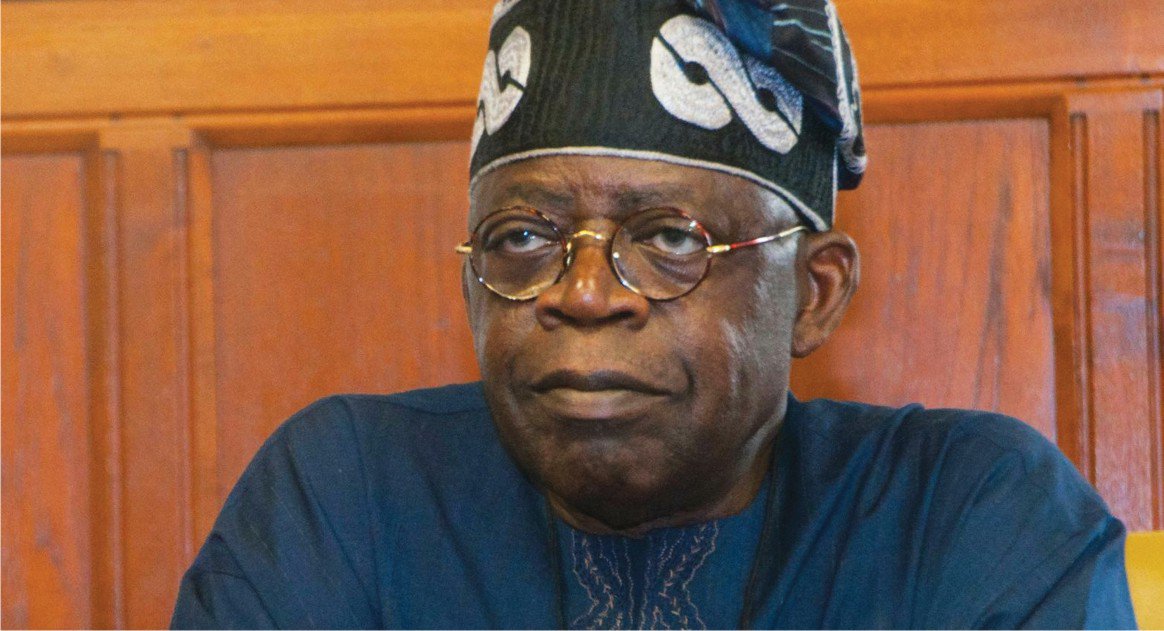
Every day is worse, less hopeful, and more precarious than the previous day for most Nigerians. Even hope, which French philosopher François de La Rochefoucauld assured us is the last thing that dies in humans, is desperately going into a death spiral. That’s an ominous signal President Bola Ahmed Tinubu would do well to not take lightly.
Nigeria is famous for its superabundant supply of self-regenerating hope even in the midst of the most nerve-racking existential strain. You know you’re dealing with a potentially explosive social rupture when hope is grasping for breath among people who are famed for feasting on hope.
The current state of affairs isn’t unavoidable. It’s the predictable consequence of the pigheaded pursuit of a ruinous policy of subsidy removal from petrol, the lifeblood of Nigeria. I sounded an early warning about this a month before Tinubu was inaugurated.
In my April 29, 2023 column titled “Six Agenda Items for Tinubu’s Success,” I specifically warned Tinubu to resist the neoliberal anti-subsidy seduction of Western financial institutions, which they have successfully brainwashed Nigerian economists and civil society members into not just accepting but also aggressively evangelizing.
I wrote: “I know that there is now an artfully manufactured consent, particularly among the gilded classes in Nigeria, about the undesirability of ‘fuel subsidy.’ I don’t care what it’s called, but any policy (call it deregulation, subsidy removal, appropriate pricing, etc.) that results in an arbitrary and unbearable hike in the price of petrol without a corresponding increase in the salaries of workers and an improvement in the living conditions of everyday people will sink Tinubu.”
I concluded: “I can assure Tinubu that if petrol price hikes deepen people’s misery, he’ll have a tough time governing.”
The dramatic spikes we have seen in abductions for ransom all over the country are attributable to the rising tide of unheard-of deprivation that the removal of petrol subsidies has activated. And that’s just one auxiliary after-effect of the removal of petrol subsidies without a cushion or an alternative.
Other after-effects are the total collapse of the informal sector and what remained of Nigeria’s manufacturing sector. It also instigated the unprecedentedly hyper-inflationary pressures that are being exerted on the economy. Prices of basic goods and services and even of medications for common illnesses are now beyond the reach of people. That’s an unsustainable magnitude of agony.
But it was always obvious to anyone with even a halfway functioning brain that removing petrol subsidies in a weak, oil-producing economy that is organically petrol dependent, that has no well-developed public transportation system, that has weak infrastructures, and that is the poverty capital of the world would trigger infernal anguish on the vast majority of the people and tank the economy to the ground.
These are not birth pangs. They are not the pains before the gains. There is no light at the end of the tunnel. The tunnel is condemned to unrelieved darkness. The blight Nigerians are contending with now is the certain and inevitable result of a conscienceless implementation of disconnected and irrelevant economic policies inspired from outside Nigeria.
I came of age during General Ibrahim Babangida’s regime. IBB started the so-called structural adjustment programs (removal of subsidies, devaluation of the naira, mass retrenchment, etc.), which inaugurated Nigeria’s descent into the abyss. I heard the exact same things the current government is spouting during IBB’s time: that it would get worse before it got better, that after the birth pangs a big bouncing baby would be born, that there was delayed gratification awaiting us if only we could be a little more patient.
None of the promises materialized. Instead, suffering was elevated to crushing heights. Advanced fee fraud (also called 419) blossomed. Corruption was fertilized. Brain drain to the West got wings. This period also unleashed the naira’s irrecoverable slide into the deep hole of worthlessness.
Decades after, the same SAP about which hundreds of books and articles have been written and whose irreversible damage we continually lament, has been artfully repackaged, disguised, deodorized, and huckstered by a well-oiled gang of soulless apes who deployed all manner of clever rhetorical trickery to coax Nigerians into consenting to their own self-incineration.
The idea that petrol subsidies had to go because they were riddled with corruption and that they consumed a disproportionate share of our national budget is a mere propagandistic cop-out. If petrol subsidy administration is rid of corruption (that is perpetrated in cahoots with the government, which explains why no “subsidy thief” has ever been apprehended much less brought to justice), it would consume no greater share of our national budget than any governmental obligation.
It certainly won’t be anywhere near the colossal venality that is perpetuated at the Federal Ministry of Humanitarian Affairs, Disaster Management and Social Development under the guise of giving money to the poor.
The truth is that we have no original, independent thinkers among people who make or influence economic policies in Nigeria. They are all hopelessly mindless parrots of ill-comprehended economic prescriptions of the Bretton Woods institutions. They do not have the cognitive and intellectual sophistication to transcend what I call derivative or regurgitative knowledge.
There is not a single example of a country in the world that has developed on the basis of the prescriptions of the World Bank and the IMF. On the contrary, the only countries that have achieved inclusive growth and development outside the West are precisely the countries that have bucked the World Bank and the IMF. And every country that uncritically adopts the recommendations of these institutions has been wracked by utter devastation.
Unfortunately, if either Atiku Abubakar or Peter Obi were president today, Nigeria would experience exactly what it is going through now. Like Tinubu, Atiku and Obi said they would remove petrol subsidies “on day one.” When you remove petrol subsidies “on day one” in a desperately poor, inordinately petrol-supported economy with no public transportation, you get what Nigerians are going through now. It’s not rocket science.
Similarly, both Atiku and Obi said they would float the naira and let its fate be determined by the vagaries of demand and supply. When you do that in an import-dependent economy, you can’t escape what the naira is going through now.
Atiku tweeted in March 2021—and in several policy documents—that “Nigeria must move towards a single exchange rate to be determined by market forces.”
On April 9, 2022, Obi also tweeted: “The truth is that for long market forces have not determined the exchange rate of the Naira…. It has to end. Let the exchange rate be determined by the forces of demand and supply. It’s that simple.”
In other words, Tinubu is doing exactly what Atiku and Obi had proposed they would do, and the results would have been the same. The hyperinflation and hurt Nigerians are going through now won’t have been evaded because it is Atiku or Obi who removed petrol subsidies “from day one.” The naira’s glide to the bottom wouldn’t have been avoided because Atiku or Obi “floated” the naira.
That is why Atiku- or Obi-supporting critics of Tinubu come across as ignorant partisans who have drunk the Kool-Aid of their cult leaders. Atiku and Obi supporters should be grateful that their idols are not president today. They would have been bearing the reputational brunt of the boneheaded, discredited rightwing economic policies they also advocated, which have thrown Nigeria into the current mess.
Interestingly, in response to Obi’s 2022 tweet rhapsodizing over the imperative of subjecting the naira to the “forces of demand and supply,” a supporter of his by the name of Abel (with the handle @governance9ja) wrote a riposte, which has turned out to be prescient. He wrote: “So @PeterObi will float the currency for a country where most factor inputs into local manufacturing is imported? We already have cost push inflation reducing real income of many Nigerians. Floating naira will ruin many households. @PeterObi and @OfficialABAT are two of a kind.”
Obi supporters who have wet dreams of a Nirvana if Obi were president should wake up. His economic policies are exactly like Tinubu’s. Personalities aren’t the issue; policies are.
Tinubu and his team need to face the reality confronting them and change course. I know that Nigeria has been so polluted by neoliberal propaganda that even news that the government was paying subsidies through the backdoor to stop petrol prices from getting to N1,000 per liter was seized upon by the opposition to poohpooh the government, which compelled the government to deny paying any subsidies.
I’ve never seen this level of self-crushing inanity in my life. Assistance to the needy (which is what subsidy literally means) is now a dirty word that everyone avoids like the plague.
But the government should know that even hope is dying in Nigeria. When a usually hopeful nation spawns armies of hopeless and angry people through thoughtless economic policies dictated by outsiders, it sows and nurtures the seeds of its self-destruction.
Related
You may like
Opinion
The State of Leadership Today: A Look at Global, African and Nigerian Realities
Published
3 days agoon
January 31, 2026By
Eric
By Tolulope A. Adegoke PhD
“Leadership for our age is measured not by the height of the throne, but by the depth of its roots in integrity, the breadth of its embrace of collective talent, and the courage to cultivate systems that bear fruit for generations yet unseen” – Tolulope A. Adegoke, PhD.
Leadership today is at a crossroad. Around the world, in our communities, and within our organizations, old ways of leading are straining under new pressures. This isn’t just a theoretical discussion; it’s about the quality of our daily lives, the success of our businesses, and the future of our nations. Let’s walk through the current trends, understand their very real impacts, and then explore practical, hands-on solutions that can unlock a better future for everyone.
Part 1: The Leadership Landscape – Where We Stand
The Global Picture: Beyond the Solo Leader
The image of the all-powerful, decisive leader at the top of a pyramid is fading. Today, effective leadership looks different. It’s more about empathy and service than authority. People expect their leaders—in companies and governments—to be authentic, to listen, and to foster teams where everyone feels safe to contribute. Furthermore, leadership is now tightly linked to purpose and responsibility. It’s no longer just about profits or power; stakeholders demand action on climate, fair treatment of workers, and ethical governance. Leaders must also be tech-savvy guides, helping their people navigate constant digital change while dealing with unpredictable global events that disrupt even the best-laid plans.
Africa’s Dynamic Challenge: Youth and Promise
Africa’s story is one of incredible potential meeting stubborn challenges. The continent is young, energetic, and full of innovative spirit. Yet, this tremendous asset often feels untapped. Too frequently, a gap exists between this rising generation and established leadership structures, leading to frustration. While the African Continental Free Trade Area (AfCFTA) presents a historic chance for economic unity, it requires leaders who think beyond their own borders. At the same time, democratic progress sometimes stalls, with leaders clinging to power. The most pragmatic leaders are those who engage with the vibrant informal economy—the hustlers, market traders, and artisans—who form the backbone of daily life and hold the key to inclusive growth.
Nigeria’s Pressing Reality: Crisis and Resilience
In Nigeria, the leadership experience often feels like moving from one emergency to the next. Attention is consumed by immediate crises—security threats, economic swings, infrastructure breakdowns—making long-term planning difficult. This has triggered a profound loss of confidence, visibly seen in the “Japa” phenomenon, where skilled professionals leave seeking stability and opportunity abroad. This brain drain is a direct critique of the system. Politics remains deeply influenced by ethnic and regional loyalties, which can overshadow competence and national vision. Yet, in the face of these trials, a remarkable spirit of entrepreneurial resilience shines through. Nigeria’s business people and tech innovators are daily solving problems and creating value, often compensating for wider systemic failures.
Part 2: The Real-World Impact – How This Affects Us All
These trends are not abstract; they touch lives, businesses, and countries in tangible ways.
· On Everyday People: When leadership is perceived as self-serving or ineffective, trust evaporates. People feel anxious about the future and disconnected from their leaders. This can manifest as cynicism, social unrest, or the difficult decision to emigrate. The struggle to find good jobs, feel secure, and build a future becomes harder, deepening inequalities.
· On Companies and Organizations: Businesses operate in a tough space. They face a war for talent, competing to retain skilled employees who have global options. They must also navigate unpredictable policies, provide their own power and security, and balance profitability with rising demands for social responsibility. The burden of operating in a challenging environment increases costs and risk.
· On Nations: Countries plagued by poor governance face a competitiveness crisis. They struggle to attract the kind of long-term investment that builds economies. Policy becomes unstable, changing with political winds, which scares off investors and stalls development. Ultimately, this can destabilize not just one nation but entire regions, as problems like insecurity and migration spill across borders.
Part 3: A Practical Pathway Forward – Building Leadership That Delivers
The situation is complex, but it is not hopeless. Turning things around requires deliberate, concrete actions focused on systems, not just individuals.
1. Fortify Institutions with Transparency and Merit.
We must build systems so strong that they work regardless of who is in charge.
· Action: Legally protect key institutions—the electoral body, the civil service, the courts—from political interference. Appointments must be based on proven competence and integrity, not connections.
· Action: Implement technology-driven transparency. Let citizens track government budgets and projects in real time through public online portals. Sunshine is the best disinfectant.
2. Bridge the Gap Between Leaders and the Led.
Leadership must become a conversation, not a monologue.
· Action: Create mandatory Youth Advisory Councils at all levels of government and in large corporations. Give young people a formal platform to contribute ideas and hold leaders accountable on issues like education, digital innovation, and job creation.
· Action: Leaders must adopt regular, unscripted “town hall” meetings and use simple digital platforms to explain decisions and gather feedback directly from citizens and employees.
3. Channel Entrepreneurship into National Solutions.
Harness the proven problem-solving power of the private sector.
· Action: Establish Public-Private Impact Partnerships. For example, the government can partner with tech companies to roll out digital identity systems or with agribusinesses to build modern farm-to-market logistics. Clear rules and shared goals are key.
· Action: Launch National Challenge Funds that invite entrepreneurs and researchers to compete to solve specific national problems, like local clean energy solutions or affordable healthcare diagnostics, with funding and market access as the prize.
4. Redeploy Nigeria’s Greatest Export: Its Diaspora.
Turn the brain drain into a brain gain.
· Action: Create a Diaspora Knowledge & Investment Bureau. This agency would actively connect Nigerians abroad with opportunities to mentor, invest in startups, or take up short-term expert roles in Nigerian institutions, transferring vital skills and capital.
· Action: Offer tangible incentives, like tax breaks or matching funds, for diaspora-led investments in critical sectors like healthcare, renewable energy, and vocational training.
5. Cultivate a New Mindset in Every Citizen.
Ultimately, the culture of leadership starts with us.
· Action: Integrate ethics, civic responsibility, and critical thinking into the core curriculum of every school. Leadership development begins in the classroom.
· Action: Celebrate and reward “Local Champions”—the honest councilor, the community organizer, the business owner who trains apprentices. We must honor integrity and service in our everyday circles to reshape our collective expectations.
Conclusion: The Work of Building Together
The challenge before us is not to find a single heroic leader. It is to participate in building a better system of leadership. This means championing institutions that work, demanding transparency in our spaces, mentoring someone younger, and holding ourselves to high ethical standards in our own roles.
For Nigeria and Africa, the possibility of a brighter future is not a dream; it is a choice. It is the choice to move from complaining about leaders to building leadership. It is the choice to value competence over connection, to seek common ground over division, and to invest in the long-term health of our community. This work is hard and requires patience, but by taking these practical steps—starting today and in our own spheres—we lay the foundation for a tomorrow defined by promise, stability, and shared success. The power to deliver that possibility lies not in one person’s hands, but in our collective will to act.
Dr. Tolulope A. Adegoke, AMBP-UN is a globally recognized scholar-practitioner and thought leader at the nexus of security, governance, and strategic leadership. His mission is dedicated to advancing ethical governance, strategic human capital development, and resilient nation-building, and global peace. He can be reached via: tolulopeadegoke01@gmail.com, globalstageimpacts@gmail.com
Related
Opinion
Globacom Redefines Standard for Telecoms in 2026
Published
5 days agoon
January 29, 2026By
Eric
By Michael Abimboye
As always, Globacom is at the heart of telecoms transformation in Nigeria. The acquisition of additional spectrum, is a decisive move that has expanded network capacity and fundamentally improved customer experience.
With the ability to carry significantly higher data volumes at greater speeds, users are seeing faster downloads, stronger uploads, seamless video streaming, and clearer voice calls even at peak periods. Crucially, this expansion has driven down latency. Independent performance testing has ranked Glo as the network with the lowest latency in Nigeria, meaning faster response times whenever data commands are initiated.
This spectrum advantage is being matched on the ground by the rollout of thousands of new LTE sites nationwide. Network capacity has increased pan-Nigeria, with noticeably higher download speeds across regions. At the same time, the installation of thousands of additional towers is easing congestion and closing coverage gaps, particularly in high-density locations such as markets and tertiary institutions, where demand for fast, reliable internet is highest.
Power reliability, often the silent determinant of network quality, is also being reengineered. Globacom has deployed hybrid battery power systems across numerous sites, reducing dependence on diesel while improving sustainability. Beyond cost efficiency, this greener model delivers stronger uptime ensuring uninterrupted power supply and optimal performance for base stations and switching centres.
Behind the scenes, Glo has upgraded its switching systems and data centres to accommodate rising traffic volumes nationwide. These upgrades are designed not only for today’s demand but to ensure the network consistently meets performance KPIs well into the future, even as data consumption continues to grow.
Equally significant is the massive reconstruction and expansion of Globacom’s optic fibre cable (OFC) network. Along highways and metro routes affected by road construction, fibre routes are being reconstructed and relocated to safeguard service continuity. Thousands of kilometres of new fibre have also been rolled out nationwide, fortifying the OFC backbone, improving redundancy, reducing network glitches, and enabling the network to handle increasingly heavy data loads with resilience.
These investments collectively address long-standing coverage gaps while driving densification and capacity enhancement in already active areas, ensuring a more balanced and reliable national footprint.
At the core layer, Globacom is modernising its network elements through new platforms and applications, upgraded enterprise and interconnect billing systems, and an expanding roster of roaming partners for both in-roaming and out-roaming services strengthening its integration into the global telecoms ecosystem.
Taken together, these are not incremental upgrades. They represent a deliberate, system-wide repositioning.
In 2026, Globacom is not just improving its network; it is asserting itself as the technical leader in Nigeria’s telecommunications industry and has gone on a spending spree to satisfy the millions of subscribers enjoying seamless connectivity across Nigeria.
Related
Opinion
How GLO Sustains Everyday Businesses in Kano, Nigeria’s Centre of Commerce
Published
1 week agoon
January 25, 2026By
Eric
By Dr Sani Sa’idu Baba
For more than two weeks, Kano woke up under a veil of fog. Not the poetic kind, but the stubborn Harmattan fog that dulls vision, slows movement, and disrupts daily rhythm. Dawn arrived quietly. Shops opened late. Calls failed repeatedly. Internet bars blinked on and off like uncertain promises. Across the state, one reality became impossible to ignore: communication had become a struggle. This reality carried even greater weight in the capital of Kano, the centre of commerce in Nigeria.
As Ramadan approaches and gradually leads to the celebration of Eid-el-Fitr, everyone understands what this season represents. It is a period when online businesses, both big and small, become a major source of livelihood for millions. Traders prepare for peak demand, online vendors scale up advertising, and buyers from across the country look to Kano for goods. Visitors stream in from other states, transactions multiply, and the success of this entire commercial ecosystem depends heavily on one thing: seamless network connectivity between buyers and sellers.
In Kano, where business breathes through phone calls, alerts, and instant messages, poor network is not just inconvenient, it is costly. Calling became difficult. Browsing the internet felt like a battle. For many, it meant frustration. For others, it meant loss.
As these challenges persisted day after day, conversations across the city began to take a clear and consistent direction. In homes, offices, and markets, a new conversation began to dominate discussions. A brother of mine, deeply involved in the communication business at Farm Center Market, the largest hub for telecom activity in Kano shared his amazement. Day after day, customers walked up to data vendors with one clear, confident request: “Glo data.” Not alternatives. Not experiments. Just Glo, he said. At first, it seemed puzzling. If you were already on Glo, you might not even notice the difference. But for those struggling on other networks, the contrast was undeniable. In the middle of foggy mornings and unstable signals, Glo stood firm.
And soon, the conversation spread everywhere. At tea junctions in the early hours, as people warmed their hands around cups of shayi, discussions circled around how Glo “held up” when others disappeared. In university classrooms, students whispered comparisons before lectures began, who could download materials, who could submit assignments, and which network actually worked. More strikingly, Glo users quietly turned their phones into lifelines, sharing hotspots with classmates so others could access lecture notes, submit assignments, and stay connected. At sports viewing centres, between goals and missed chances, fans debated networks with the same passion as football rivalries. In markets, traders told customers how Glo saved their day. In every gathering of people across Kano, Glo became the reference point. The reason was simple: Glo had saved businesses.
Consider the POS operator by the roadside. Every successful transaction that attracts him/her ₦100 here, ₦200 there is survival. Failed transfers mean angry customers and lost income. During these fog-heavy days, many operators would have been stranded. But where Glo bars stayed strong, withdrawals went through, alerts dropped, and trust preserved.
Picture a roadside trader making her first sale of the day through a simple WhatsApp call, her voice steady as she confirms an order that will set the tone for her business. Nearby, an online vendor advertises products in WhatsApp groups, responds to messages, takes calls from interested buyers, and confirms deliveries, all in real time. Behind every one of these small but significant transactions is reliable connectivity. Delivery riders weaving through traffic and racing against time also depend on uninterrupted network access to reach customers, confirm payments, and complete orders. In moments when other networks struggled, Glo quietly kept these wheels of commerce turning, ensuring that daily hustle did not grind to a halt. Beyond the busy streets of the city, the impact of this reliability becomes even more profound in remote villages in Kano.
Back in Kano city, rising transportation costs have reshaped the way people work. Many professionals have had no choice but to adapt, turning their homes into offices and relying heavily on the internet to stay productive. Many now attend virtual meetings, send large files, collaborate remotely, and meet deadlines without leaving their homes. In a period marked by economic pressure and uncertainty, dependable internet is no longer a convenience, it is a necessity. In these conditions, Glo continues to provide the stability that keeps work moving forward.
At this point, Glo stops being seen merely as a telecommunications company. It emerges as the invisible backbone of the Nigerian hustle, supporting the determination and resilience of everyday people. From POS operators and online merchants to students, delivery services, market traders, and remote workers who refuse to give up, Glo remains present in the background, quietly powering their efforts. In tough terrains, harsh weather, and challenging times, when other networks fluctuate or fade, Glo stays connected.
You may not always hear it announce itself loudly, and you may not notice it when everything is working smoothly. But when a single call saves a business, when one alert prevents a financial loss, and when one stable connection keeps a dream alive, Glo proves its value, not as noise or empty promises, but as consistent reliability and lived experience. And that is how quietly, consistently, and powerfully Glo continues to power Nigeria’s everyday businesses, sustaining dreams and survival UNLIMITEDLY…
Dr. Baba writes from Kano, and can reached via drssbaba@yahoo.com
Related


Legendary Gospel Singer, Ron Kenoly, is Dead
Wike Remains Undisputed Rivers APC, PDP Leader, Tinubu Rules
Police Nab Coordinator, Two Monarchs over Killing of Four Persons in Ebonyi
Lagos Govt Bans Illegal Chieftaincy Titles
Court Restrains NLC, TUC from Embarking on Strike, Protest in Abuja
Glo Leads in Investments, Performance As NCC Sets New Standard for Telecoms
Memoir: My Incredible 10 Years Sojourn at Ovation by Eric Elezuo
Court Sends Actress Angela Okorie to Prison for Alleged Cyber-Stalking
Spider-Man Voice Actor Alexis Ortega Dies at 38
Memoir: My Incredible 10 Years Sojourn at Ovation by Eric Elezuo
The State of Leadership Today: A Look at Global, African and Nigerian Realities
Voice of Emancipation: President Tinubu’s Recent Trip to Turkey
Incumbency Factor Will Not Determine 2027 Election, Atiku, Obi, Others Talk Tough
Otunba Adekunle Ojora: Farewell to a Good Man
Trending
-
Entertainment6 days agoCourt Sends Actress Angela Okorie to Prison for Alleged Cyber-Stalking
-
Entertainment5 days agoSpider-Man Voice Actor Alexis Ortega Dies at 38
-
Featured2 days agoMemoir: My Incredible 10 Years Sojourn at Ovation by Eric Elezuo
-
Opinion3 days agoThe State of Leadership Today: A Look at Global, African and Nigerian Realities
-
Voice of Emancipation2 days agoVoice of Emancipation: President Tinubu’s Recent Trip to Turkey
-
Headline6 days agoIncumbency Factor Will Not Determine 2027 Election, Atiku, Obi, Others Talk Tough
-
Headline2 days agoOtunba Adekunle Ojora: Farewell to a Good Man
-
Boss Of The Week2 days agoGhana 2028: Mahamudu Bawumia Claims NPP’s Presidential Ticket