Opinion
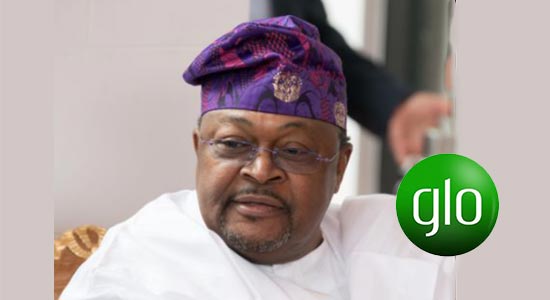
Mike Adenuga: 70 Times a Genius
Published
3 years agoon
By
Eric
By Olabode Opeseitan
This is a celebration of an exceptional African business icon and enigma from an insider perspective. I have interacted with the billionaire founder of Globacom and Conoil, Dr. Mike Adenuga Jr., for over three decades, 16 years of which I worked for him, often at close quarters. This is an unrestrained chronicling of his unique attributes; with anecdotes and perspectives you probably have never read elsewhere.
THE ENIGMA
It was one of those activity-choked days when his meetings lasted till very late in the night. He had, a few moments earlier, closed his last meeting for the day with senior managers in his signature style. “Well, everyone to himself, God for us all,” he said with reverence, yet commandingly and reassuringly. With everyone released, he treated the remaining files on his desk, passed them to his secretary and crossed over from his Oval Office at the golden building to his palatial residence, which he fittingly christened Bellissima on the waterfront. Bellissima is an Italian word coined from bella, which means gorgeous, while issima, is an absolute superlative. Bellissima, the name, absolutely complements the gorgeousness of the immaculate white buildings at the Adenuga villas and their coral-coloured roofs. You would think, at that wee hour, he was heading straight to bed once he got home. No Sir!
Dr. Adenuga is genetically fortunate to require only about three to four hours of sleep a day. The influential Wall Street Journal calls his kind the sleep-less elite who need just a few hours of sleep to function normally. In that mold are the likes of Tim Cook of Apple and former American President Donald Trump. Sometimes, he would make a few calls to give some follow-up instructions or review some aspects of his last meetings. Then, he would pour himself a glass of one of the smoothest cognacs in the world, relax and journey back to the past couple of hours to dissect his previous day, reflectively.
This is a celebration of an exceptional African business icon and enigma from an insider perspective. I have interacted with the billionaire founder of Globacom and Conoil, Dr. Mike Adenuga Jr., for over three decades, 16 years of which I worked for him, often at close quarters. This is an unrestrained chronicling of his unique attributes; with anecdotes and perspectives you probably have never read elsewhere.
THE ENIGMA
It was one of those activity-choked days when his meetings lasted till very late in the night. He had, a few moments earlier, closed his last meeting for the day with senior managers in his signature style. “Well, everyone to himself, God for us all,” he said with reverence, yet commandingly and reassuringly. With everyone released, he treated the remaining files on his desk, passed them to his secretary and crossed over from his Oval Office at the golden building to his palatial residence, which he fittingly christened Bellissima on the waterfront. Bellissima is an Italian word coined from bella, which means gorgeous, while issima, is an absolute superlative. Bellissima, the name, absolutely complements the gorgeousness of the immaculate white buildings at the Adenuga villas and their coral-coloured roofs. You would think, at that wee hour, he was heading straight to bed once he got home. No Sir!
Dr. Adenuga is genetically fortunate to require only about three to four hours of sleep a day. The influential Wall Street Journal calls his kind the sleep-less elite who need just a few hours of sleep to function normally. In that mold are the likes of Tim Cook of Apple and former American President Donald Trump. Sometimes, he would make a few calls to give some follow-up instructions or review some aspects of his last meetings. Then, he would pour himself a glass of one of the smoothest cognacs in the world, relax and journey back to the past couple of hours to dissect his previous day, reflectively.
That, for Dr. Adenuga is a spiritual voyage of sorts where he tries to set matters straight between himself and the people he had encountered. Meditatively, he would ask himself, ‘Was I fair to him? Was she fair to me? Is there any additional value to explore and get a better result beyond the ideas the various teams from Globacom to Conoil Producing, Conoil Plc, Cobblestone Properties & Estate and others presented? How can we optimize our assets?’ He could be at this for up to three or four hours before calling it a day. That is how the genius mindset of Chairman Adenuga works. Upon deep reflection, if in the previous day there was anyone the Chairman felt he was unfair to, he would make amends, often not in an apology but in voluntary compensatory actions. If there was anyone he felt was unfair to him, he would also take corrective measures. As generous as he frequently is, he doesn’t spare the rods when he needs to make people account for their misdeeds. Where he acts the fastest is on any matter that could stimulate business growth. He takes whatever action is required to get results, particularly where the opportunity is hot and fresh, even if it requires a trip to the most distant part of the world. There were people in the Mike Adenuga Group who had travelled to the US, Europe, China and other parts of Africa and had no clue they were travelling as close as four to 24 hours before they boarded their flights. No other business leader I have known can match his mettle when it comes to pulling all the strings to get a difficult result. That perhaps is the strongest staying power of an icon his admirers call the Great Guru.
HOW HE PRESIDES OVER MEETINGS
Dr. Adenuga is a strict disciplinarian who runs his organisations with traits of the command-and-control structure of a military hierarchy. A perfectionist, he expects his officials and consultants to be prompt, organised, adequately prepared and conform to the rules of his office. “You can’t do that here. This is the Office of the Chairman”, he would thunder and remind anyone stepping out of line. He is irritated by tardiness and unintelligent responses. A voracious reader and intellectual explorationist, he ceaselessly brings himself up to speed on the latest trends in the businesses he is involved in, from oil exploration to the downstream, banking to finance, real estate, hospitality, road construction and telecommunications. You cannot pull the wool over his eyes. One moment he is discussing the network configuration management system for Globacom with his technical team, the next moment, he is discussing the result of geological surveys and offshore/onshore drilling of oil with his Conoil Producing management team. The same day, he is getting feedback from his representatives at Julius Berger, where he has controlling shares, and Cobblestone, the multibillion real estate company which has luxurious properties spread across the land. This is just a snippet of his regular undertakings. He probably would have slowed it down by now.
He is also politically and economically savvy. He has unassailable strategies on how to fix the Nigerian economy. I can just imagine how much Nigerian and African leaders can tap from his profound solutions, most of which are a bigger bang for the buck, even without asking to be paid any buck. It’s there just for the asking!
How long or short he spends with every presenting team depends on how much value he gets from or adds to the presentation. He needs only a few slides to decide if a presentation is worth his precious time. Yet, he displays a disarming humility, especially when there are visiting consultants or advisers. He is quick to spot and convert opportunities. He sees the boardroom and an entire organisation like a football team where only the players in good form keep their shirts. “Everyone must fight for his shirt”, he would say. Yet, he shows the milk of human kindness to his people. He gets personal with employees he often interacts with, cares about their welfare over and beyond the benefits they get from the system. Dr. Adenuga is also a powerful storyteller who has shared several aspects of his life relevant to topics under discussion with officials during or after meetings.
HOW HE KEEPS VALUABLE STAFF
Despite his strict regimen and famous quote of, “We may laugh and play together, don’t let the hierarchy be lost on you,” Dr. Adenuga is among the most involved and most caring employers of labour you can ever see. When a valued staff departs voluntarily or is asked to quit over certain developments, the Chairman does not see it as a permanent separation. If there is an opening later and he remembers any of the former staff he rates as ‘livewires’ who can fill the void, he will go after such staff, entice, appeal, incentivize or take any step necessary to bring him/her back. Dr. Adenuga goes as far as speaking directly to the staff or sending emissaries to them to gain their confidence and rekindle their collaboration. Biblical? Perhaps, yes. Leaders can leave a herd and go after a lost or missing sheep. For a business leader who can afford to hire any staff from anywhere in the world, that is a rare act of humility, large-heartedness and pragmatism. About two years after I had left Globacom in 2020, I got a surprise call from the Chairman. “Bode, mo ti’n wa e. Nibo lo wa lat’ojo yi” (Bode, I have been looking for you, where have you been all this while)? Then he added, “We shouldn’t be far from each other. I shouldn’t be looking for you when I need you or you, looking for me when you need me. There is no easy way to say goodbye but there can be a pleasant way.” I thanked him for his fatherly admonition, and we have kept in touch ever since. The truth is that the Chairman really does not need me to the point of seeking me out. It is just his nature to be kind to his employees and friends he considered valuable when they were with him.
ROLE IN TURNING WIZ KID, OTHERS INTO GLOBAL STARS
The world today celebrates Wizkid, Burna Boy and other Nigerian music superstars who have become global icons. Dr. Adenuga played a big part in accelerating their journeys into global reckoning. He instructed his management team to engage the fledgling music stars then as brand ambassadors and take them on musical and comedy tours across the country. Many of them had the opportunity to perform in different parts of Nigeria for the first time, courtesy of the Adenuga gesture. Empowerment is one of the core reasons he founded Globacom. He wanted the fish seller in Epe or the yam seller in Aboh Mbaise or the farmer in Dawakin, Kano to be able to reach their customers and boost their trade. When things were tough for comedians, Nollywood stars and musicians, the endorsement and performance fees they got from Globacom helped in no small way to see them through. Many of the beneficiaries are eternally grateful for that deed. His impact was also felt in football across Nigeria, Ghana and at CAF where he pumped millions of dollars to promote and develop African football for almost two decades.
ADENUGA’S EXTENSIVE CONNECTIONS
The Chairman has an extensive network of connections, and he has kept many of them in his closest circle over the years. In the innermost of the circle are the Awujale of Ijebuland, Oba Sikiru Adetona, who is his older cousin, the Esama of Benin, Sir Cabriel Igbinedion, and his son, Chief Lucky Igbinedion, boardroom guru Mr. Bode Emmanuel, General IBM Haruna, General Ibrahim Badamosi Babangida, Dr. Seyi Roberts and Chief Obi Adimora. This list is by no means exhaustive. Another of the elite senior friends is General Alani Akinrinade, whom he met as the big brother of his close childhood friend. He has nurtured a sublime friendship with the Akinrinades over the years. He is particularly fond of General Akinrinade, who was kind to them in those days when the youngsters were trying to find their feet. The powerful list also includes past and present heads of state across the world, Governors, Senators, traditional rulers, professionals, friends and associates. Many thought he would be in a dilemma when two of his friends, Alhaji Atiku Abubakar and Asiwaju Bola Ahmed Tinubu, went head-to-head in the last presidential election. They forgot that he is a boardroom virtuoso who understands the dynamics of leadership contests in Nigeria and would never be caught in the crossfire. His strategy over time is to leave politicking to politicians and stay in his comfort zone, the boardroom and business management.
RELATIONSHIP WITH HIS CHILDREN
Like every caring and doting father, the Chairman loves his children to bits. He spoils them with gifts and finds time to attend to them despite his extremely busy schedule. He prioritises family dinner which could be at least once a week, often after watching movies together at the family’s luxuriant cinema hall. He also comes hard on them when they get on the wrong side of his strict rules. He once told one of his children whom he had to compel to attend a meeting after requesting to be excused, “Come rain or shine, I’m at this desk, working. If I can do that without giving excuses, then you shouldn’t give excuses. The only thing I owe you is to give you a good education. Afterwards, if you want to stay here, you are welcome, but you must adhere to my instructions”. Surely, he cherishes them and will do anything for them, but he wants to train them in his strict disciplinarian way, believing this will strengthen them in sustaining the huge legacy he is bestowing on them. Everyone close to the Adenugas knows that his scions have also fully embraced the ethos of hard work wholeheartedly and they are adept at what they do. He once told me after a meeting at his Oko-Awo home office, shortly before relocating to the Banana Island home, that his wish was to hand over his flourishing empire to his children.
ADENUGA’S LEGENDARY GENEROSITY
Dr. Adenuga’s generosity is legendary. He gives personal rewards like no other billionaire, except for probably a few like Oprah Winfrey. “If God has given you this kind of resources, it is not for you and your family alone,” he would say. That is the guiding philosophy influencing the way he reaches out through his wealth.
All year round, he splashes generous gifts on extended family, friends, associates, staff and the less privileged. The gifts could range from exotic brand-new cars to expensive perfumes, designer bags, designer wristwatches and cash. And during every festive season, he has a long list of beneficiaries he touches with life-transforming gifts; some on rotation, others in perpetuity. He is detailed and exquisitely tasteful, not only in the quality of gifts but also in the manner the gifts are presented. His Christmas cards are not only the best designed but the first to arrive. Recipients have treated them as valuables to be proudly displayed. He is unorthodox in living out his precepts. He does things his own way and the Chairman acts and moves when he wants to. He doesn’t like to be over pressurised.
His company, Globacom, recently revamped and furnished the rundown home of a former national football hero, Peter Fregene, who had been in financial distress. That altruism has the imprimatur of Dr. Adenuga written all over it. He feels a deep sense of inexplicable joy when he sends his team to look for and rehabilitate Nigerians whose predicaments caught his attention. Sometimes, he would send his team to go and enquire about the well-being of a friend and associate he had not heard from in a while and ensure such was well taken care of. He also loves enabling empowerment promotions, using his companies to give out jaw-dropping prizes like houses, cars, hefty sums of money and tools of trade such as sewing machines and tricycles, among others.
HOW HE INDULGES SELF
The chairman enjoys the good things of life and pampers himself in remarkable ways. Yet, he believes that if it is not broken, don’t fix it. At his Oko-Awo, VI, Lagos office, he used the same TV sets for over a decade before finally giving the nod for them to be changed. His car preferences include Mercedes Benz G Wagon, Range Rover, sports cars, Toyota Landcruiser and Bentley. For some reason, he keeps his distance from Rolls Royce.
He also has a fleet of private jets, including the recently acquired Dassault Falcon, a quiet, productive, beautiful and luxurious executive jet built to withstand stormy weather. Named Sisi Paris after one of his grandchildren, the Dassault Falcon is a beauty in the air.
He has palatial homes in Lagos, Ibadan, Abuja, Accra, London and Johannesburg. The Lagos villa is the most extensive of them all with numerous mansions, a chapel, a purpose-built auditorium, an office tower, a general office for his private staff and an executive holding bay for visitors, a residence for domestic staff, a gym, an Olympic size swimming pool, a helipad and a boat dock. The Chairman is a connoisseur of excellent wine, champagne and a power dresser who sets his own dressing standards. Occasionally, he invites special friends over to spend the evening with him and can arrange for top-of-the-range entertainers to tickle their fancy, even if they are just a couple. Sometimes, he also arranges to have dinner or lunch with his best performing staff, often at some of the choicest restaurants in town. Always looking out for the comfort of his people, he would scan the room at regular intervals and nudge those who were not relaxed enough to drink or eat more.
A GENIUS LIKE NO OTHER
As a business icon, he reacts to issues in a manner totally different from many other business elites. No matter the storm, he is always calm. Dr. Adenuga has spent a substantial part of the last two and a half decades of his life nurturing Globacom to the giant brand it has become. He built it all from the ground up, spending thousands of painstaking days and nights with his team. In the process, he has been celebrated locally and globally, at times maligned and a few times persecuted. He has stepped on toes; others have stepped on his toes. Sometimes, he would get his team to defend his honour, at other times, he would let it slide. He knew he could not please everyone and he endeavours to fix his shortcomings. In later years, he developed a thick skin to extreme critics. When he sees a profound gesture or publication celebrating his exploits, he reaches out to express his gratitude, sometimes personally. He likes to keep his head under the parapet, as he loves to frame it.
Dr. Adenuga has never confronted any government in power. He would always devise his own ingenious way to co-exist harmoniously with the government of the day. He believes he has too much at stake to take on any government. He uses diplomacy, tact and rapprochement to reconcile differences. The most vindictive government for Dr. Adenuga remains the Olusegun Obasanjo regime, which even forced him to go into self exile. From various reports, Obasanjo wanted him (Dr. Adenuga) to implicate General Babangida and lie to the Economic and Financial Crimes Commission (EFCC) that the General owns Globacom. ‘Once you confirm that to Nuhu, everything will be fine’, he was instructed. At that time, Nuhu Ribadu was the Chairman of EFCC. Adenuga couldn’t understand why anyone would want him to lie against himself over his own business. Adenuga refused. He was hounded out of town and the rest is now history. For General Babangida, that was a commendable act of courage by Adenuga for refusing to accede to a trumped-up charge to implicate him (Babangida), ruin his reputation and then possibly give his traducers the weapon they need to prosecute him.
HIS LOVE FOR SOYINKA, MAITAMA SULE, OJUKWU
Dr. Adenuga is a master strategist. When he launched Globacom, he chose Glo with Pride as the payoff line. It was a rallying call to the entire nation to be proud of our heritage and accomplishments. To ingrain the brand in the heart of fellow countrymen as a national hero to treasure, he sought out the support of Nobel laureate, Professor Wole Soyinka; one of Nigeria’s finest diplomats, Alhaji Yusuf Maitama Sule, and the Ikemba Nnewi, Dim Emeka Odumegwu Ojukwu. They all had one thing in common. They were elder statesmen who were respected vastly in their spheres of influence. After some convincing, they agreed to do it to support a young man who was making the nation proud. Professor Soyinka was a tough nut to crack. He made it categorically clear that he wouldn’t do brand endorsements. Dr. Adenuga counted on the poet’s closest allies such as Dr. Yemi Ogunbiyi to convince him to support the vision on the condition that his (Professor Soyinka’s) message would not be used for product endorsements. When the messages were launched on national television, they became an instant hit across the country. As the first fully owned Nigerian telecommunication brand to be launched after two foreign brands in the same category had enjoyed a two-year head start, Globacom needed such a tremendous intervention to stand a chance. It complemented the Per-Second Billing narrative and propelled Globacom to become the darling of the nation.
LET THE CELEBRATIONS BEGIN
To all fond admirers of Dr. Adenuga worldwide, it is an extraordinary moment of inestimable joy to see an icon of this magnitude clock the ripe age of 70 on April 29, 2023. This is not the moment to nit-pick about his life or start documenting his shortcomings. This is a period to soak ourselves in unadulterated joy as we commemorate an exceptional national asset, father, husband, uncle, mentor, visionary, philosopher and juggernaut. Wherever you are on April 29, please fill your glass and let us toast to the good health and longer life of this incredible achiever who holds the highest national honour of three major countries, including the Grand Commander of the Order of the Niger (GCON) in Nigeria, Companion of the Star of Ghana and Commander of the Legion of Honour in France.
Opeseitan is a social commentator, consultant and global business developer.
Related
You may like
Opinion
The Synergy Imperative: Integrating Transformative Leadership and Strategic Management for Africa’s Ascent
Published
17 hours agoon
December 20, 2025By
Eric
By Tolulope A. Adegoke, PhD
“The bridge from Africa’s potential to its preeminence is built with the twin pillars of visionary leadership, which dares to imagine the impossible, and disciplined management, which masters the possible” – Tolulope A. Adegoke, PhD
Africa’s journey from a continent brimming with untapped potential to a unified global powerhouse is arguably the defining narrative of our century. This transformation, however, hinges on a critical catalyst: a new paradigm of leadership. To dismantle the persistent architecture of poverty and transcend the historical cycle of mediocrity, African nations require more than administrators; they need visionary architects and master builders. This necessitates a powerful fusion of transformative leadership—which sets the daring direction—and strategic, execution-focused management—which paves the road to get there. The synergy between these two forces is non-negotiable for unlocking the innovative capacity needed to deliver tangible possibilities for Africa’s people, its dynamic corporations, and its sovereign nations.
I. The Essence of Transformative Leadership: Architecting a New Continental Consciousness
True transformative leadership moves beyond maintaining the status quo. It is an audacious practice of reimagining futures, challenging deeply embedded narratives, and mobilizing collective will toward a shared, audacious horizon.
1. Crafting a Unifying and Aspirational Narrative: The transformative leader’s first task is to be a master storyteller for the future. This involves articulating a vision that moves past diagnoses of poverty to paint a vivid, compelling picture of continental success—a Africa renowned for its innovation, quality, and strategic influence. This narrative must replace a mindset of scarcity with one of boundless opportunity, fostering a new identity where “Made in Africa” signifies excellence, reliability, and cutting-edge solutions. It is about making the idea of a continental giant not a distant dream, but an inevitable destination in the public imagination.
2. Demonstrating Unshakeable Ethical Fortitude: The battle against mediocrity is fundamentally a battle for integrity. Transformative leaders must embody and enforce an ironclad commitment to governance that is transparent, accountable, and institutionally robust. This requires the political courage to depersonalize state institutions, empowering independent judiciary, audit authorities, and anti-corruption commissions not just on paper but in practice. By becoming the chief guardian of institutional integrity, a leader builds the essential currency of trust—without which long-term investment and social cohesion are impossible.
3. Championing Radical Inclusivity: No single entity holds a monopoly on innovative ideas. Transformative leaders actively dismantle top-down governance silos to create participatory ecosystems. They facilitate sustained dialogues that bring together the pragmatic insights of the private sector, the grassroots realities understood by civil society, the foresight of academia, and the voices of marginalized communities. This inclusive approach does more than improve policy; it fosters a profound sense of collective ownership over the continent’s destiny, building a resilient coalition for sustained change.
II. The Discipline of Strategic Management: Building the Engine of Execution
A vision without a rigorous mechanism for implementation remains a mere hallucination. Transformative leadership must be operationalized through management systems characterized by precision, adaptability, and results.
1. Engineering a Performance-Obsessed Public Sector: The public administration must be fundamentally redesigned into a lean, data-driven delivery machine. This demands:
o Integrated Outcome Frameworks: Adopting systems like the Balanced Scorecard to cascade the national vision into clear departmental objectives, measurable Key Performance Indicators (KPIs), and individual accountability metrics for civil servants.
o Evidence-Based Policy Orchestration: Investing in robust data analytics units and real-time monitoring dashboards. Resource allocation and program adjustments must be driven by hard evidence of what works, moving policymaking from political intuition to strategic science.
o Relentless Process Innovation: Launching comprehensive digital governance initiatives to automate and streamline bureaucratic processes—from business licensing to customs clearance. This eliminates friction, reduces opportunities for graft, and dramatically improves the user experience for citizens and investors alike.
2. Cultivating Dynamic Innovation Ecosystems: Management’s role is to create the fertile ground where creativity and enterprise can flourish. This is a deliberate, managerial function:
o Establishing Agile Policy Laboratories: Creating regulatory sandboxes in key sectors like fintech, renewable energy, and logistics allows startups to test breakthrough ideas in a controlled environment with temporary regulatory relief, fostering innovation without compromising systemic stability.
o Orchestrating Strategic Alliances: Building structured platforms for public-private-research collaboration. Government can de-risk pioneering R&D in areas like vaccine manufacturing or artificial intelligence for agriculture, with clear pathways for commercialization led by the private sector and fueled by academic research.
o Safeguarding Intellectual Creation: Modernizing and rigorously enforcing intellectual property regimes managed by efficient, trustworthy institutions. This protects African innovators, attracts R&D investment, and ensures that breakthroughs conceived on the continent yield prosperity for its people.
3. Mastering Capital: Human and Financial:
o Strategic Human Capital Development: Aligning national education and vocational training curricula with the future skills demanded by the continental transformation agenda requires active management through a permanent skills council, ensuring a seamless pipeline of talent for the industries of tomorrow.
o Pioneering Financial Architecture: Beyond domestic revenue mobilization, management excellence is key to structuring and accessing innovative finance. This includes developing bankable project pipelines for green bonds, diaspora investment instruments, and blended finance models to fund the massive infrastructure required for integration, all while maintaining impeccable sovereign debt management.
III. The Tangible Dividend: Delivering Expanded Possibilities for All
The ultimate metric for this leadership-management model is the tangible impact on the ground.
· For Africa’s Citizens: The outcome is expanded human agency and dignity. This manifests as access to meaningful, future-oriented employment; quality, affordable healthcare and education delivered efficiently; and social protections that empower rather than create dependency. Citizens experience a state that is a capable partner in their aspirations.
· For Africa’s Enterprises: The outcome is a predictable, enabling, and competitive operating environment. Corporations and entrepreneurs benefit from reliable infrastructure, seamless administrative processes, access to capital, and a fair, transparent market. This enables them to scale, innovate, and compete confidently on regional and global stages.
· For Africa’s Nations and Continental Body: The outcome is sovereign capability and collective strategic influence. Individually, nations evolve into resilient, adaptive economies. Collectively, a strategically managed and integrated Africa transforms into a formidable negotiating bloc, capable of shaping global rules on trade, climate, and digital governance, and moving from being a subject of global dynamics to a definitive shaper of the world order.
Conclusion: The Imperative of Synergy
The path from poverty to preeminence is paved by the dual forces of transformative leadership and strategic management. Leaders must provide the spark of vision, the moral compass, and the political will to embark on an audacious journey. The management apparatus must provide the meticulous map, the engine, and the metrics to navigate it successfully. When these elements align in harmony—when the architect’s dream is matched by the engineer’s precision—Africa will ignite a self-sustaining cycle of innovation, inclusive growth, and shared prosperity. This is the pathway that turns the latent potential within its people, the ambition of its corporations, and the sovereignty of its nations into a manifested reality. It is how the continent will cease to be perpetually “rising” and will firmly stand, a realized giant, shaping the century ahead.
Dr. Tolulope Adeseye Adegoke is a distinguished scholar-practitioner specializing in the intersection of African security, governance, strategic leadership and effective management. His expertise is built on a robust academic foundation—with a PhD, MA, and BA in History and International Studies focused on West African conflicts, terrorism, and regional diplomacy—complemented by high-level professional credentials as a Distinguished Fellow Certified Management Consultant and a Fellow Certified Human Resource Management Professional.
Related
Opinion
A Marriage That Changed History: Celebrating Mobolaji and Dele Momodu at 33
Published
18 hours agoon
December 20, 2025By
Eric
By Dr. Sani Sa’idu Baba
Some marriages are sustained by time, a few are tested by trials, but only the rarest are forged by destiny and proven by history. The union of Chief Dele Momodu and Chief Mobolaji Aderamaja Momodu belongs firmly in this extraordinary class, a marriage where love speaks with courage, partnership walks with purpose, and devotion quietly reshapes lives and legacies.
As Chief Dele and his remarkable wife Mobolaji Momodu mark 33 years of marital union, I am compelled to pause, not just to celebrate longevity, but to honour a love story that has survived trials, triumphed over tyranny, and blossomed into a partnership that continues to inspire generations.
I have always known them as love birds. It is almost impossible to engage Chief Dele Momodu in any meaningful conversation without the affectionate and respectful mention of his wife. He speaks of her not as an appendage to his success, but as its backbone, his confidant, his compass, and proudly, his “prayer warrior.” That alone speaks volumes in a world where gratitude within marriage is often whispered, if acknowledged at all.
Chief Mobolaji is kindness personified. Whenever I am privileged to be their guest whether at their warm Ikoyi home in Lagos or at public functions, her concern is constant and sincere. She will not sit comfortably until she is certain that everyone around her, especially her guests, is fine. That gentle strength, that instinctive compassion, defines her essence.
Yet, beyond her kindness lies courage. History will forever remember one defining moment on 25th July 1995 during the dark, oppressive days of General Sani Abacha’s dictatorship, a very heart-touching story. Strange, faceless men had come looking for Dele Momodu at their home. At the time, he was away in Ogun State. Without hesitation, His wife Mobolaji immediately sensed the danger coming when she suspected that those men could have been Abacha’s attack dogs. Highly cerebral young woman she was, she acted smartly by sneaking to trace the road the knew her husband was likely following to come back home. Luckily enough, she stopped him and raised the alarm. That single, decisive action changed the course of history.
Dele Momodu had already tasted detention for his pro-democracy stance where he was detained in Alagbon close. Now, he was being hunted again, this time in connection with the underground Radio Freedom, later renamed Radio Kudirat, in honour of the murdered activist Kudirat Abiola. Acting swiftly on his wife’s intuition and bravery, he disguised himself as a farmer and fled through the Seme border into Cotonou, Benin Republic. That escape marked the beginning of a three years exile in London, but also the preservation of a voice Nigeria could not afford to lose. That moment was not just the act of a wife, it was the intervention of destiny, executed through love.
In making that daring escape, Dele Momodu paid an enormous personal price. He left behind his only child in the care of his devoted wife and also his elderly mother in Ile-Ife, stepping into the uncertainty of exile with nothing but faith, conviction, and hope. That three years journey away from home would later prove transformative, culminating in the birth of Ovation International Magazine in London in April 1996, a global brand that would redefine African storytelling and project Nigerian excellence to the world. How Ovation emanated from Momodu’s rare bravery and risk taking is a another interesting story for another day.
Chief Dele Momodu has often shared that his earliest ambition was simple: to become a teacher, marry a teacher, and live happily thereafter . Fate, however, had grander plans. Their story began during their university days at the University of Ife (now Obafemi Awolowo University), where Dele earned a degree in Yoruba in 1982 and later a Master’s degree in English Literature in 1988. From humble beginnings in Ile-Ife, they embarked on a journey that would take them across mountains and valleys.
On their 30th wedding anniversary, Chief Dele Momodu described his wife as a “combination of brains and beauty”, a woman with whom he has “climbed mountains and descended valleys together.” Few statements capture the depth of partnership more profoundly.
Their marriage in December 1992, graciously bankrolled by the late Chief Moshood Kashimawo Olawale Abiola, Dele Momodu’s adopted father was not merely a union of two souls, but the convergence of purpose, principle, and providence.
After 33 years today, their union stands as a testament to what marriage should be: friendship strengthened by faith, love fortified by sacrifice, and partnership tested, and proven by history.
Beyond the public milestones and historic moments lies a quieter but equally profound achievement, the family they built together. Blessed with four sons whom I refer to as “the Momodu’s 4 effects”, Chief Dele Momodu and Chief Mobolaji Momodu have raised a generation that reflects the values of discipline, faith, and excellence that define their home.
As they celebrate this remarkable milestone, Nigeria celebrates with them. Their story reminds us that behind every courageous man is often a discerning, fearless woman, and behind every lasting marriage is mutual respect, unwavering loyalty, and shared vision.
Happy 33rd Wedding Anniversary to Chief Dele Momodu and Chief Mobolaji Aderamaja Momodu, a couple whose love did not merely survive time, but shaped it.
May the years ahead be gentler, brighter, and filled with the same grace that has defined the journey so far, in good health, wealth, happiness, fulfillment and massive blessings.
Dr Baba writes from Kano, and can be reached via drssbaba@yahoo.com
Related
Opinion
Rebuilding the Pillars: A Comprehensive Blueprint for Overcoming Nigeria’s Leadership Deficit
Published
1 week agoon
December 13, 2025By
Eric
By Tolulope A. Adegoke, PhD
Systemic governance reform as the critical foundation for unlocking sustainable development and restoring national promise. “Nations are not built on resources, but on systems. Nigeria’s future rests not on changing leaders, but on transforming the very structures that create them” – Tolulope A. Adegoke, PhD
Introduction: The Leadership Imperative
Nigeria, often described as the “Giant of Africa,” stands at a pivotal moment in its historical trajectory. Possessing unparalleled human capital, vast natural resources, and a dynamic, youthful population, the nation’s potential remains paradoxically constrained by deeply embedded structural deficiencies within its leadership architecture. These systemic flaws—evident across political, corporate, and civic institutions—have created profound cracks that undermine public trust, stifle economic innovation, and impede the delivery of fundamental social goods. This leadership deficit is not merely a political inconvenience; it is the central bottleneck to national progress.
Addressing this challenge requires moving beyond cyclical criticism of individuals and towards a deliberate, strategic reconstruction of the systems that produce, empower, and hold leaders accountable. This blog post presents a holistic, actionable blueprint designed to seal these cracks permanently. It offers a pathway to cultivate a leadership ecosystem that is transparent, accountable, performance-driven, and ethically grounded, thereby delivering tangible possibilities for Nigeria’s people, empowering its corporate sector, and restoring its stature on the global stage.
Section 1: Diagnosing the Structural Cracks—A Multilayered Analysis
A precise diagnosis is essential for effective treatment. Nigeria’s leadership challenges are multifaceted and mutually reinforcing, stemming from three core structural failures.
1. The Governance Architecture Failure
The current system suffers from a fundamental contradiction: a hyper-centralized federal model that stifles local innovation and accountability. Critical institutions, including the Independent National Electoral Commission (INEC), the judiciary, and the civil service, frequently operate with compromised autonomy, inadequate technical capacity, and vulnerability to political interference. Furthermore, the intended checks and balances among the executive, legislative, and judicial branches have weakened, creating avenues for impunity and concentrated power that deviate from democratic principles.
2. The Leadership Pipeline Collapse
The mechanisms for recruiting and developing leaders are fundamentally broken. Political party structures too often prioritize patronage, loyalty, and financial muscle over competence, vision, and ethical fortitude. There exists no systematic, nationwide program for identifying, nurturing, and mentoring successive generations of public servants. This results in a recurring leadership vacuum and a deficiency of cognitive diversity at decision-making tables, limiting the range of solutions for national challenges.
3. The Integrity Infrastructure Erosion
Perhaps the most damaging crack is the erosion of public trust, fueled by opacity and impunity. Decision-making processes and public resource allocations are frequently shrouded in secrecy, while accountability mechanisms are rendered ineffective. The consistent weakness in enforcing ethical codes across sectors has allowed a culture of corruption to persist, which acts as a regressive tax on development, scuttles investor confidence, and demoralizes the citizenry.
Section 2: A Tripartite Framework for Sustainable Transformation
Lasting reform necessitates concurrent, mutually reinforcing interventions across three interconnected pillars.
Pillar I: Constitutional and Institutional Reformation
Implementing True Cooperative Federalism: It is imperative to undertake a constitutional review that clearly delineates responsibilities and revenue-generating authorities among federal, state, and local governments. This empowers subnational entities to become laboratories of development, tailored to local contexts, while fostering healthy competition in providing public services. Fiscal autonomy must be matched with enhanced capacity-building initiatives at the state and local government levels.
Fortifying Independent Institutions: Key democratic institutions require constitutional protection from executive and legislative overreach. This includes guaranteeing transparent, first-line funding from the Consolidated Revenue Fund and establishing rigorous, meritocratic panels for appointing their leadership. Strengthening bodies like the Code of Conduct Bureau and the Public Complaints Commission is equally vital.
Professionalizing the Political Space: Electoral reform must introduce systems like ranked-choice voting to encourage more issue-based, inclusive campaigning. Legislation should mandate demonstrable internal democracy within political parties, including transparent primaries and audited financial disclosures, to reduce the capture of parties by narrow interests.
Pillar II: Cultivating a Leadership Development Ecosystem
Establishing a Premier National School of Governance (NSG): Modeled on institutions like the Lee Kuan Yew School of Public Policy, a Nigerian NSG would serve as the apex institution for executive leadership training. Attendance for all senior civil servants, political appointees, and legislators should be mandatory, with curricula focused on strategic public administration, ethical leadership, complex project management, and national policy analysis.
Catalyzing a Corporate Governance Revolution: The Securities and Exchange Commission (SEC) and the Corporate Affairs Commission (CAC) must enforce stricter codes requiring diverse, independent, and technically competent boards. The private sector should be incentivized—through tax credits or preferential procurement status—to establish leadership fellowship programs that place high-potential private-sector executives into public sector roles for fixed terms, fostering cross-pollination of skills and perspectives.
Instituting a Presidential Leadership Fellowship (PLF): This highly selective, merit-based program would identify Nigeria’s most promising young talents (aged 25-35) from all fields—technology, agriculture, law, the arts—and place them in intensive two-year rotations across critical government agencies, private sector giants, and civil society organizations. This creates a nurtured cohort of future leaders with a national network and a deep understanding of systemic interconnections.
Pillar III: Architecting Robust Accountability & Performance Systems
Deploying a Digital Transparency Platform: A mandatory, open-access National Integrated Governance Portal (NIGP) should display in real-time the status, budget, and contractor details of every major public project. Strategic use of blockchain technology can create immutable records for procurement contracts and resource distribution, significantly reducing opportunities for diversion.
Empowering Oversight and Consequence: Anti-corruption agencies require not only independence but also enhanced forensic capacity and international collaboration. Performance tracking must extend to the judiciary and legislature; publishing annual scorecards on case clearance rates, legislative productivity, and constituency impact can drive public accountability.
Embedding a Culture of Results: All government ministries, departments, and agencies (MDAs) must operate under a National Key Results Framework (NKRF). This performance contract system would define clear, measurable quarterly deliverables tied to national development plans. Autonomy and discretionary funding should be increased for MDAs that consistently meet targets, while underperformance triggers mandatory restructuring and leadership review.
Section 3: The Indispensable Cultural Reorientation
Technocratic fixes will fail without a parallel cultural shift that venerates service and integrity.
Embedding Ethics from Foundation: A redesigned national curriculum, from primary through tertiary education, must integrate civic ethics, critical thinking, and Nigeria’s constitutional history to build an informed citizenry that values good governance.
Launching a “Service Nation” Campaign: A sustained, multi-platform national campaign, developed in partnership with respected cultural, religious, and traditional institutions, should celebrate role models of ethical leadership and reframe public service as the nation’s highest calling.
Enacting Ironclad Whistleblower Protections: Comprehensive legislation must be passed to protect whistleblowers from all forms of retaliation, including provisions for anonymous reporting, physical protection, and financial rewards, aligning with global best practices to encourage exposure of malfeasance.
Section 4: A Practical, Phased Implementation Roadmap (2025-2035)
Phase 1: The Foundation Phase (Years 1-3)
Convene a National Constitutional Dialogue involving all tiers of government, civil society, and professional bodies.
· Establish the Nigerian School of Governance (NSG) and inaugurate the first cohort of the Presidential Leadership Fellowship (PLF).
· Pilot the National Integrated Governance Portal (NIGP) in the Ministries of Health, Education, and Works.
Phase 2: The Integration & Scaling Phase (Years 4-7)
· Enact and begin implementation of the new constitutional framework on fiscal federalism.
· Graduate the first NSG cohorts and embed training as a prerequisite for promotions.
· Roll out the NKRF performance contracts across all federal MDAs and willing pilot states.
Phase 3: The Consolidation & Maturation Phase (Years 8-12)
· Conduct a comprehensive national review, assessing improvements in governance indices, citizen trust metrics, and economic competitiveness.
· Establish Nigeria as a regional hub for leadership training, offering NSG programmes to other African nations.
· Institutionalize a self-sustaining cycle where performance culture and ethical leadership are the unquestioned norms.
Conclusion: Forging a New Path of Leadership
The task of sealing the cracks in Nigeria’s leadership foundation is undeniably monumental, yet it is the most critical work of this generation. It demands a departure from transactional politics and short-term thinking toward a covenant of nation-building. The integrated blueprint outlined here—combining institutional redesign, leadership cultivation, technological accountability, and cultural renewal—provides a viable pathway.
This is not a call for perfection, but for systematic progress. By committing to this journey, Nigeria can transform its governance from its greatest liability into its most powerful asset. The outcome will be a nation where trust is restored, innovation flourishes, and every citizen has a fair opportunity to thrive. The resources, the intellect, and the spirit exist within Nigeria; it is now a matter of courageously building the structures to set them free.
Dr. Tolulope Adeseye Adegoke is a distinguished scholar-practitioner specializing in the intersection of African security, governance, and strategic leadership. His expertise is built on a robust academic foundation—with a PhD, MA, and BA in History and International Studies focused on West African conflicts, terrorism, and regional diplomacy—complemented by high-level professional credentials as a Distinguished Fellow Certified Management Consultant and a Fellow Certified Human Resource Management Professional.
A recognized thought leader, he is a Distinguished Ambassador for World Peace (AMBP-UN) and has been honoured with the African Leadership Par Excellence Award (2024) and the Nigerian Role Models Award (2024), alongside inclusion in the prestigious national compendium “Nigeria @65: Leaders of Distinction.”
Dr. Adegoke’s unique value lies in synthesizing deep historical analysis with practical management frameworks to diagnose systemic institutional failures and design actionable reforms. His work is dedicated to advancing ethical governance, strategic human capital development, and sustainable nation-building in Africa and the globe. He can be reached via: tolulopeadegoke01@gmail.com & globalstageimpacts@gmail.com
Related


Court Upholds Authenticity of David Mark-led ADC Executive
How Glo Network Became the Lifeline That Saved Two Lives: A True Story from Sallari
Insecurity: Akpabio Begs Tinubu to Reinstate Police Orderlies for NASS Members
Delta Govt Confirms Death of Senator Nwaoboshi at 68
Anthony Joshua Defeats Jake Paul in Sixth-round Knockout
The Synergy Imperative: Integrating Transformative Leadership and Strategic Management for Africa’s Ascent
Adding Value: Be Selfish with Your Time by Henry Ukazu
Alleged Corrupt Practices: Dangote Petitions ICPC Against NMDPRA MD Farouk
Book Launch: Tinubu Vows to Sustain Buhari’s Legacies
NNPCL Slashes Fuel Price by N80
Corruption Allegations: NMDPRA Boss Farouk Ahmed Meets Tinubu, Resigns
I’m Ready for Probe, NMDPRA Boss Farouk Ahmed Responds to Dangote’s Corruption Allegation
Tinubu Didn’t Win 2023 Election, Will Lose in 2027 – Abaribe
US Congressman Recounts Harrowing Experience in Nigeria, Confirms ‘Systematic Genocidal Campaign’
Trending
-
Headline4 days agoAlleged Corrupt Practices: Dangote Petitions ICPC Against NMDPRA MD Farouk
-
National5 days agoBook Launch: Tinubu Vows to Sustain Buhari’s Legacies
-
Business2 days agoNNPCL Slashes Fuel Price by N80
-
Headline3 days agoCorruption Allegations: NMDPRA Boss Farouk Ahmed Meets Tinubu, Resigns
-
National4 days agoI’m Ready for Probe, NMDPRA Boss Farouk Ahmed Responds to Dangote’s Corruption Allegation
-
Headline5 days agoTinubu Didn’t Win 2023 Election, Will Lose in 2027 – Abaribe
-
World4 days agoUS Congressman Recounts Harrowing Experience in Nigeria, Confirms ‘Systematic Genocidal Campaign’
-
News5 days agoGowon is Not Dead, in Good Health, Aide Debunks Death Rumour