Opinion
Voice of Emancipation: Thriving in a Global Crisis
Published
3 years agoon
By
Eric
By Kayode Emola
The last year has been a nightmare for the common man, finding himself responsible for footing the bills of high inflation, high interest, and the cost of living crisis, in the midst of a number of trying situations. Many Western leaders want us to believe that these all stem from the conflict in Russia; yet they cannot justify how, in these same circumstances, the rich are getting richer, and energy companies are declaring hefty profits. Whilst at the same time, the poor around the world have been left behind to fend for themselves through all of these tribulations.
Many of us are oblivious to the wider picture, unconcerned with the global financial tsunami that is currently stirring. However, we are all feeling the effects of inflation and the rising costs of everyday items; none of us is insulated, even in our ignorance. Therefore, I am going to discuss a few of the global events and potential ways to mitigate the challenges. For those who are conscious, this may serve as a precaution to prevent them from falling into a ditch; whilst for the less aware, maybe a note of caution will manage to bring them back on track.
It is undeniable that inflation is biting hard, causing prices of everyday goods to spiral out of control. A large contributory factor in this was the recklessly excessive printing of money by countries in Europe and America during the Covid-19 pandemic. Now, with their economies suffering, it raises speculation about whether this has given the West a hidden agenda in terms of their approach to the conflict between Russia and Ukraine.
Unquestionably, in the circumstance of war, certain parties are guaranteed to profit, namely, those whose business interests lie in the production of munitions. One may therefore infer that such parties would have a vested interest in prolonging the conflict, rather than dispensing with rapid and decisive intervention.
No one can justify Russia’s use of force; however, a more meaningful approach could have been taken to avert the war. Russia had amassed troops at the border of Ukraine for over a month, thinking that this will give it leverage in negotiating with NATO and the European Union (EU) for Ukraine’s continued exclusion from these entities.
Perhaps if the United Nation had intervened in time, the situation could have been de-escalated in a timely and professional manner. Instead, Russia felt unheard by the Western democracies; and, as a result, we all are paying the high price, whether we like it or not. The thought that the war is likely to go on for several more years is one that should chill the spine of every person around the world.
What is currently Happening?
Recently, we have seen the impact caused by the current crisis on the banking sector. Rising inflation has caused central banks to raise interest rates worldwide. Peripheral banks that had sold long-term products at lower interest rates now have to pay the difference themselves, thereby potentially jeopardising their own financial stability.
Secondly, banks that have invested in long-term government bonds have seen the value of those bonds fall. This has not only put customers’ money at risk, but the market response to the two conditions has caused two internationally renowned global banks (Silicon Valley Bank and Credit Suisse) to have to be forcefully taken over. Furthermore, the Germany-based Deutsch bank is also having trouble. It takes only one event or mistake for everything to spiral out of control, and the whole house falls like a pack of cards.
People have seen their electricity and gas bills triple in recent months; and pump prices of diesel and petrol have been similarly impacted. An average household in the UK that was previously paying less than £80 per calendar month are now paying in excess of £300 pcm just to keep their homes warm. Despite all of this, major energy companies are still declaring serious growth and profit. Just this week, it was reported that the chief executive of British Gas, Chris O’Shea, had been awarded a performance bonus of £1.4m last year, bringing his salary for 2022 up to £4.5m. Yet concurrently millions of ordinary people are unable to afford to even heat their homes.
Not only are energy costs increasing aggressively, but the central banks’ rising interest rates have led to mortgage rates returning to levels not seen since 2006, prior to the financial crisis. This has caused monthly mortgage repayment figures to rise by over £450 pcm, in some cases, a situation which is clearly unsustainable in the long run.
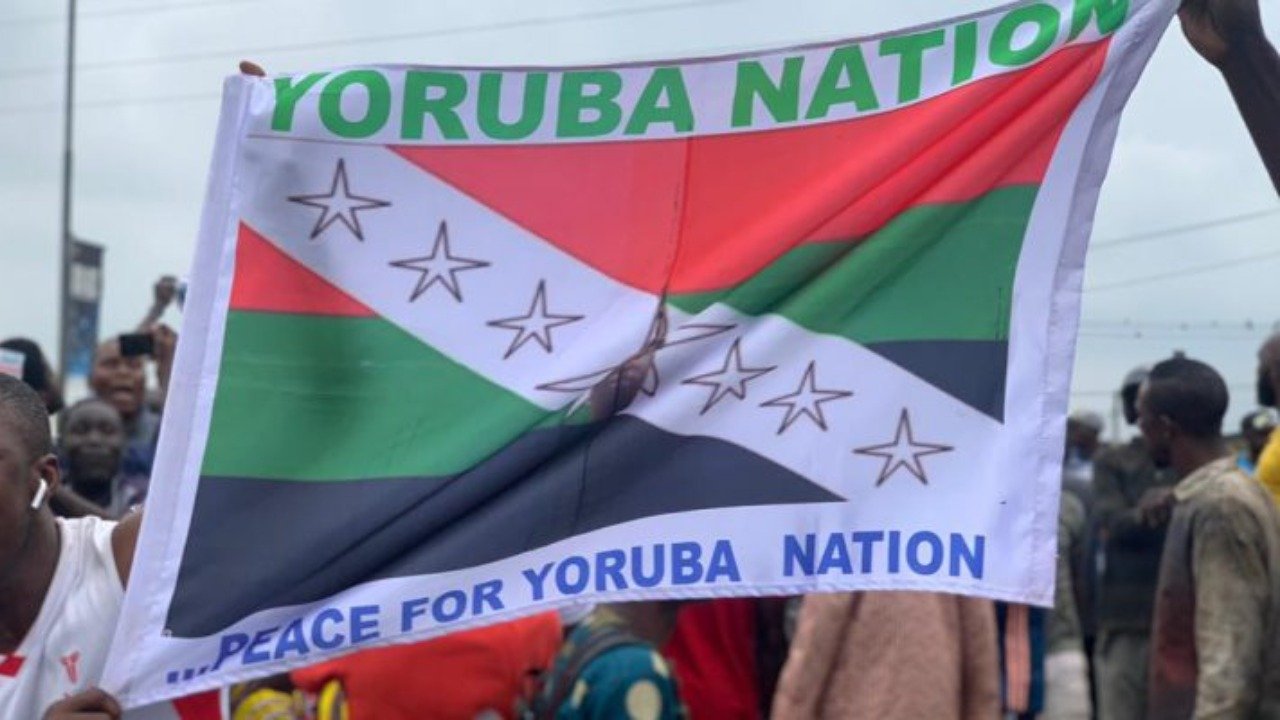
For my Yoruba folks, what does this mean for our survival? The mere fact that we are in Nigeria already sets us at a disadvantage when attempting to navigate the choppy waters of the global crisis. Despite the enormous challenges facing the country, the Central Bank of Nigeria last week increased its interest rates to 18%.
It is becoming clear that we must find a way to create our own financial system, in order to mitigate against soaring interest rates and inflation. We must put measures in place to ensure that the disastrous naira redesign policy, which devastated millions of our people, cannot recur in the future. A self-contained financial ecosystem built on blockchain technology would allow us to protect ourselves from hostile government policies. This would also help our people safeguard money for a rainy day.
Ultimately, we Yoruba need our own financial system. However, this is likely to be impossible until we exit from Nigeria. In the meantime, whilst we await the birth of our Yoruba nation, I implore us all to be aware that we are living in precarious times wherein only the prepared can survive. This is not the time to embark on frivolous spending, but rather the time to be careful and judicious with our finances. Protect your upside and ensure that your downside is covered, so that when the storms get heavier, you will be able to not only survive but thrive, when others are complaining.
Related
You may like
Opinion
Ovation @30: A Triumph of Vision, Courage and African Excellence
Published
4 hours agoon
April 11, 2026By
Eric
By Dr. Sani Sa’idu Baba
There is an African proverb that says, “However long the night, the dawn will surely break.” No story embody this truth more powerfully than that of Chief Dele Momodu and the remarkable rise of Ovation International. Founded in April, 1996 at the height of the Sani Abacha regime, Ovation was born not out of comfort, but from adversity. In forced exile in London, faced with uncertainty and hardship, Momodu chose not to surrender to circumstance but to challenge it, daring to create a global lifestyle magazine at a time when Africa’s image was largely defined by negativity.
From that improbable beginning emerged a publication that would go on to redefine how Africa is seen by the world. Ovation introduced a different narrative, one of elegance, achievement, culture, and pride, documenting African success stories with unmatched consistency. At a time when global media often overlooked the continent’s brilliance, Ovation boldly projected it, celebrating milestones, personalities, and cultures across Africa and its diaspora. It became a powerful cultural bridge, connecting cities and continents while showcasing an Africa that is vibrant, accomplished, and globally relevant.
Over the past three decades, Ovation has not merely reported stories, it has shaped destinies and elevated generations. It has provided a platform for emerging talents in entertainment, business, and public life, often spotlighting individuals long before they attained global recognition. Its influence extended beyond storytelling into economic and social impact, creating employment for thousands across journalism, photography, real estate, design, and event production, while also setting new standards in lifestyle media, enterprenership and event documentation. Long before the rise of digital platforms, Ovation was already global, distributing African excellence to audiences around the world and strengthening the connection between Africa and its diaspora.
Through changing times and technological revolutions, Ovation International has remained consistent in quality, bold in vision, and authentic in purpose. Its ability to evolve without losing its identity is a testament to its strength as not just a magazine, but an enduring institution. Today, as it marks 30 years of impact, it stands as one of Africa’s most influential media platforms, one that has significantly contributed to reshaping global perception and asserting Africa’s place in the world.
This milestone is a celebration of resilience, vision, and legacy. It is a tribute to the pride of Africa Chief Dele Momodu, whose courage transformed hardship into history, and whose dream once considered unrealistic became a continental force. It is also a celebration of the entire Ovation family, whose dedication over the years has sustained and expanded this vision. Thirty years on, Ovation is not just a witness to Africa’s story, it is one of its most powerful storytellers.
A big thank you to Chief Dele Momodu for proving long ago that Africa is not synonymous with bad news, and congratulations on three decades of excellence proof that when the dawn finally comes, it can illuminate the world.
Dr. Sani Sa’idu Baba writes from Kano, and can be reached via drssbaba@yahoo.com
Related
Opinion
Effective Strategic Leadership: Resolving Nigeria’s Contemporary Challenges and Unlocking Inclusive Possibilities
Published
6 days agoon
April 4, 2026By
Eric
By Tolulope A. Adegoke PhD
In an era of complex global uncertainties, effective strategic leadership stands as a proven catalyst for national renewal. It is defined by deliberate vision, data-driven decision-making, ethical accountability, inclusive stakeholder engagement, and adaptive execution that prioritizes long-term societal value over short-term expediency. For Nigeria — Africa’s most populous nation and largest economy — such leadership offers a clear, actionable pathway to address the multifaceted crises that have constrained progress as of April 2026. These challenges include persistent insecurity, economic volatility, deepening poverty, human capital deficits, and governance implementation gaps. By applying strategic leadership principles, Nigeria can not only mitigate these issues but also deliver tangible possibilities across three critical spheres: empowered peoples (individuals and communities), thriving corporates (businesses and enterprises), and resilient nation-building (institutional and societal advancement). This solution-driven exposition draws on empirical realities while outlining practical, evidence-based strategies that align with international best practices in governance, development economics, and leadership studies.
Nigeria’s Current Realities: A Balanced Assessment
As documented in recent analyses from the World Bank, PwC’s Nigeria Economic Outlook 2026, and the Bertelsmann Transformation Index, Nigeria grapples with interconnected pressures. Security threats — ranging from insurgency and banditry in the North-East and North-West to farmer-herder conflicts in the Middle Belt, separatist agitations in the South-East, and expanding urban-rural criminal networks — have intensified, with conflict-related fatalities rising in 2025. These have displaced communities, disrupted agriculture, and eroded investor confidence. Economically, while macroeconomic reforms under the current administration have begun stabilizing inflation and foreign exchange, real growth remains uneven (projected around 4.3% for 2026), concentrated in services and ICT, while agriculture and manufacturing lag due to insecurity, infrastructure deficits, and high energy costs. Poverty is projected to affect approximately 62% of the population (around 141 million people) by the end of 2026, compounded by stagnant human capital outcomes: nutrition, learning, and skills deficits are estimated to cost children born today over half of their potential future earnings. Governance challenges, including corruption, patronage networks, and slow policy implementation, further undermine public trust and reform momentum. These issues are not insurmountable; they are symptoms of systemic gaps that effective strategic leadership can systematically address.
How Effective Strategic Leadership Solves Nigeria’s Core Challenges
Strategic leadership succeeds by diagnosing root causes, mobilizing collective resources, and implementing measurable reforms. In Nigeria’s context, it would prioritize five interconnected pillars: human capital investment, security sector transformation, economic diversification, institutional integrity, and inclusive governance.
- Tackling Insecurity Through Integrated, Intelligence-Led Strategies Effective leaders treat security as a human development imperative rather than purely militarized response. Solutions include professionalizing security forces with community policing models, advanced intelligence-sharing platforms, and technology-driven surveillance (drones, data analytics). Leadership would integrate socio-economic interventions — such as youth employment programs and livestock development initiatives — to address root drivers like poverty and resource competition. International benchmarks, such as Rwanda’s post-conflict security reforms or Colombia’s integrated peace-building approach, demonstrate that combining kinetic operations with development yields sustainable peace. In Nigeria, this would reduce fatalities, restore agricultural productivity, and rebuild public confidence.
- Reversing Economic Volatility and Poverty Through Targeted Reforms Strategic leadership would accelerate fiscal discipline, revenue diversification, and private-sector-led growth. This entails full implementation of tax reforms with transparency safeguards, investment in critical infrastructure (power, roads, digital connectivity), and incentives for agro-processing and renewable energy. By anchoring monetary policy to stabilize inflation and the naira while protecting vulnerable households through expanded social safety nets, leaders can ease cost-of-living pressures. PwC and World Bank data show that even modest improvements in human capital and security could unlock 2–3 percentage points of additional annual GDP growth, directly reducing poverty.
- Bridging Human Capital Deficits Through Education, Health, and Skills Ecosystems Leaders must treat people as the ultimate asset. Solutions include universal early childhood development programs, curriculum reforms emphasizing STEM and vocational skills, and public-private partnerships for healthcare and digital literacy. Evidence from Singapore and South Korea illustrates how sustained leadership focus on education transformed resource-scarce economies into global powerhouses. In Nigeria, reversing learning stagnation and nutrition gaps would boost future earnings and demographic dividends.
- Strengthening Institutional Integrity and Anti-Corruption Mechanisms Strategic leaders embed transparency through digital procurement, independent anti-corruption bodies with prosecutorial powers, and performance-based governance dashboards. Merit-based appointments and judicial reforms would dismantle patronage networks, enhancing policy execution and public trust.
- Fostering Inclusive and Adaptive Governance Leadership would promote national dialogue platforms, devolved responsibilities (e.g., state-level security coordination with federal standards), and youth/women inclusion in decision-making to reduce ethnic and regional tensions.
Delivering Possibilities Across Peoples, Corporates, and Nations
For Peoples (Individuals and Communities): Effective leadership empowers citizens by creating safe, opportunity-rich environments. Targeted investments in education, health, and skills would raise living standards, reduce vulnerability to recruitment by criminal elements, and foster social cohesion. Community-led development initiatives, supported by transparent local governance, would restore dignity and agency, enabling families to thrive rather than merely survive.
For Corporates (Businesses and Enterprises): Strategic leadership cultivates a predictable, investor-friendly climate. By securing supply chains, enforcing contracts, and offering incentives for innovation and local content, leaders enable businesses to expand, create quality jobs, and drive diversification. Corporate examples from Lagos tech hubs and emerging agro-industries already show that improved security and policy consistency accelerate growth; scaled nationally, this would attract foreign direct investment and position Nigerian enterprises as continental leaders.
For Nations (Nation-Building and Global Positioning): At the national level, such leadership builds resilient institutions, diversifies the economy beyond oil, and enhances Nigeria’s diplomatic and economic influence in Africa and beyond. Strengthened governance would improve global competitiveness rankings, deepen AfCFTA participation, and attract strategic partnerships. The result: a more cohesive, prosperous nation capable of contributing meaningfully to global development agendas such as the Sustainable Development Goals.
Global Relevance and Lessons for Nigeria
Globally, nations that have overcome similar challenges — Botswana’s resource-led but governance-driven success, Vietnam’s human-capital-focused reforms, or Estonia’s digital governance transformation — prove that strategic leadership consistently delivers results. Nigeria can adapt these models contextually, leveraging its youthful population, cultural diversity, and strategic location to become an African benchmark rather than a cautionary tale.
Actionable Recommendations for Immediate Implementation
- Establish a National Strategic Leadership Academy for public and private sector leaders, emphasizing data analytics, ethics, and crisis management.
- Launch a multi-stakeholder National Possibilities Commission to monitor progress on security, human capital, and economic diversification with quarterly public dashboards.
- Prioritize public-private partnerships in security technology, education infrastructure, and agro-industrial zones.
- Integrate youth and civil society into policy design through structured consultation mechanisms.
- Benchmark progress against international indices (World Bank Human Capital Index, Global Peace Index, Ease of Doing Business) to ensure accountability.
Conclusion: A Call to Transformative Action
Effective strategic leadership is not an abstract ideal but a practical, results-oriented discipline that Nigeria can harness today. By confronting insecurity, economic fragility, and human capital deficits head-on through visionary, ethical, and inclusive approaches, leaders can resolve pressing crises and unlock unprecedented possibilities for individuals, businesses, and the nation as a whole. The global community stands ready to support credible, solution-driven efforts. Nigeria’s abundant human and natural endowments, combined with decisive leadership, position it to move from potential to prosperity — delivering a future where every citizen, enterprise, and institution contributes to and benefits from shared progress. The time for implementation is now; the rewards will define generations to come.
Dr. Tolulope A. Adegoke, AMBP-UN is a globally recognized scholar-practitioner and thought leader at the nexus of security, governance, and strategic leadership. His mission is dedicated to advancing ethical governance, strategic human capital development, and resilient nation-building, and global peace. He can be reached via: tolulopeadegoke01@gmail.com, globalstageimpacts@gmail.com
Related
Opinion
PDP Crisis: Illegal Factional Convention is a Direct Assault on Party Constitution and Democracy
Published
2 weeks agoon
March 29, 2026By
Eric
By Prince Adedipe Dauda Ewenla
The attention of party faithfuls and the general public has been drawn to the desperate and unconstitutional attempt by a faction within the Peoples Democratic Party to foist an illegal National Convention on the party in clear violation of its constitution and established democratic norms.
Let it be stated unequivocally: the Constitution of the PDP is clear, unambiguous, and binding on all members only a duly elected National Working Committee (NWC) has the constitutional authority to convene, approve, and conduct a National Convention.
This position is firmly grounded in the provisions of the PDP Constitution:
1. Section 31(3) clearly vests the power to summon and convene the National Convention in the appropriate constitutional organ of the party, which operates through the National Working Committee.
2. Section 29(2)(a) establishes the National Working Committee as the principal executive organ responsible for the day-to-day administration and decision-making of the party.
3. Section 47(1) affirms the supremacy of the party constitution, making it binding on all members and organs of the party without exception.
Flowing from these provisions, any gathering, meeting, or assembly convened outside this constitutional framework is illegal, null, void, and of no consequence, being ultra vires, null ab initio, and incapable of conferring any legal rights or obligations whatsoever.
The ongoing attempt by a faction reportedly aligned with the Minister of the Federal Capital Territory, Nyesom Wike, to organize a so-called convention through an imposed and illegitimate caretaker structure is nothing but a brazen assault on the rule of law, party supremacy, and internal democracy, and amounts to a clear case of constitutional subversion.
For the avoidance of doubt:
Individuals who have been suspended or expelled from the party lack the locus standi to act on its behalf.
Any caretaker arrangement not constitutionally backed by the elected organs of the party remains a nullity ab initio.
No faction, no matter how powerful, can override the supremacy of the party constitution.
Any purported action taken in furtherance of this illegality is void and liable to be set aside ex debito justitiae by any court of competent jurisdiction.
It is instructive that the Federal High Court and other competent courts have already taken judicial notice of these constitutional breaches by entertaining suits challenging the legality of the proposed convention. This alone is a clear warning that the entire process is fundamentally defective and cannot stand the test of law.
We therefore align firmly and unequivocally with the leadership direction and stabilizing efforts under Kabiru Turaki, whose commitment to constitutional order, due process, and party unity remains the only credible path forward for the PDP at this critical time.
The party cannot and must not be hijacked by individuals driven by personal ambition, vendetta politics, or external influence.
The survival of the PDP as a viable opposition platform depends on strict adherence to its constitution and respect for its legitimate structures.
We warn, in the strongest possible terms, that:
Any convention conducted outside the authority of a duly elected NWC will be resisted and rejected by loyal members of the party.
Any outcome from such an illegal exercise will be treated as void ab initio and will not be recognized within the party or before the Independent National Electoral Commission.
Those promoting this illegality are inviting avoidable chaos, multiplicity of suits, and grave political consequences for the PDP ahead of 2027.
This is not just about a convention this is about the soul, legality, and future of our great party.
I call on all genuine stakeholders to rise above factional manipulation and defend the constitution of the PDP with courage and clarity.
The rule of law must prevail. Fiat justitia ruat caelum. The constitution must stand. The PDP must not fall.
Prince Amb. (Dr.) Adedipe Dauda Ewenla
PDP Southwest Ex-Officio
Related


Voice of Emancipation: Lessons from the Iran/USA War
Ovation @30: A Triumph of Vision, Courage and African Excellence
ADC National Convention: To Be or Not to Be?
Israel Questions Pakistan’s Credibility in Mediating over US-Iran Ceasefire Agreement
Osun 2026: INEC Planning to Recruit APC Members As Electoral Officials, Lawmakers Allege
The Oracle: Human Rights: Our Everyday Essentials (Pt. 1)
Tech and Humanity: The AI You Can’t See is the Risk You Can’t Manage
‘ADC Membership Hits 500,000 after INEC Derecognition of Leadership’
Trump Delays Iran’s Strike by 2-Weeks As Pakistani Leaders Intervene
Is Amupitan’s INEC Complicit?
FG Expels US Missionary Alex Barber
ADC Raises Alarm over INEC’s Plot to Prevent Party from Fielding Candidates
I Won’t Be Intimidated, Seun Okinbaloye Replies Wike
Amnesty Condemns Wike’s ‘Shoot’ Remark Against Seun Okinbaloye
Trending
-
News5 days ago‘ADC Membership Hits 500,000 after INEC Derecognition of Leadership’
-
World3 days agoTrump Delays Iran’s Strike by 2-Weeks As Pakistani Leaders Intervene
-
Headline6 days agoIs Amupitan’s INEC Complicit?
-
National3 days agoFG Expels US Missionary Alex Barber
-
Featured5 days agoADC Raises Alarm over INEC’s Plot to Prevent Party from Fielding Candidates
-
Featured5 days agoI Won’t Be Intimidated, Seun Okinbaloye Replies Wike
-
Headline5 days agoAmnesty Condemns Wike’s ‘Shoot’ Remark Against Seun Okinbaloye
-
Featured2 days agoBenin Republic 2026: Romuald Wadagni, The President in Waiting