Connect with us

Opinion

Our Welfare and the Politics of 2023

Published

on

By Kunle Oshobi

As we approach the 2023 presidential elections, as it has become the norm in the Nigerian political scene, issues of ethnicity, religion, and region of the presidential candidates continue to dominate the headlines and criteria for support while the issue of which candidate is best equipped to fix the economy and make life better for Nigerians has taken the back seat.

The irony in all this is that the foremost responsibility of our political leaders is to ensure the welfare and security of the people. While the ability to effectively manage and grow the economy will take care of the welfare of the people, issues of ethnicity, religion, and region add zero value to the effectiveness of our leaders other than the fact that politicians use it as a tool to distract and divide us while they take away our attention from what matters most to us which is our economic welfare.

The more pertinent issue is that the economy is now at it’s lowest ebb given the fact that all the economic gains achieved since the return to democracy in 1999 have been reversed in the last seven years by the current administration that appears clueless as far as managing the economy of the country is concerned.

As a result of this per capita income of Nigerians has dropped by over 50% since 2015 while the Naira has lost over 70% of it’s value within the same period. This has resulted in the prohibitive cost of goods and services, high
unemployment rate, declining productivity, excruciating national debts, increased crime rate, and Nigeria becoming the poverty capital of the world at a time when other third world countries are fast pulling their citizens out of poverty.

Given the grim existential reality we find ourselves in, given the pathetic state of the country’s economy, in our self-interest it only makes sense that we collectively support a candidate that is best equipped and has a proven track record to fix the economy and of all the presidential candidates soliciting for our votes next year, only one of them has a credible track record with growing the economy and has also demonstrated his preparedness to get our country’s economy back on track.

As is the current situation today, at the return to democracy in 1999, the Nigerian economy was at its lowest ebb with the GDP growth rate having stagnated at 0.58%, huge external debt of $35 billion, and debt service obligations in excess of $3 billion per annum, foreign reserves at less than $3 billion, GDP per capita of less than $500 and oil prices at less than $17 per barrel.

Without blaming the past military administrations for the nation’s woes, the
Obasanjo administration set to work and assembled an economic team under the supervision of the then Vice President Atiku Abubakar who was put in charge of the economy while Obasanjo focused more on international diplomacy to restore Nigeria’s battered image in the international community.

With the leadership of Atiku Abubakar, the economic team was able to turn around the economy, and from a dismal economic growth rate of 0.58% in 1999, they were able to achieve a growth rate of 16.2% by the third quarter of 2002 at a time of relatively low oil prices (This remains the highest ever economic growth rate achieved in the county’s history) and put
the country on a trajectory which resulted in our GDP per capita growing by over 600% to $3,000 per capita by 2014.

Having set the economy on the path of sustainable growth, they also ensured that the country’s resources were very well managed and were able to grow the country’s foreign reserves by the highest margins in the
country’s history even after paying off our external debts through a negotiated settlement in an agreement in which they were able to save the country a whopping $18 billion.

That asides they initiated several economic policies which helped to accelerate the growth of the country’s economy and create jobs such as the bank consolidation program which grew our banking industry by over 300% in just two years, the pension reforms which has now grown our pension funds to be in excess of 14 trillion Naira and remains the largest single pool of funds in the Nigerian financial services industry till date, the
Local content policy in the oil industry which retains on average $8 billion worth of oil service contracts to local entrepreneurs while ensuring technology transfer, the cement industry policy which boosted local cement production, saves the country $3 billion annually from money spent on imports and created hundreds of thousands of jobs down the value chain, liberalization of the telecoms industry which attracted tens of billions of dollars into the economy and grew the telecoms industry by over 30,000% within fifteen years amongst several other policies that added up to make Nigeria the fastest growing economy in Africa and resulted in Nigeria becoming the biggest economy in Africa by the time the economy was
rebased in 2013.

It was this same rapid economic growth that Lagos being the commercial capital of the country benefited from and allowed it to significantly grow it’s IGR from the companies thriving based on the economic policies. Ironically, it is someone that added zero value to these companies apart from taxing them that has been busy claiming credit for the IGR growth over the years.

In addition to the vibrant growth-inducing economic policies, as part of the efforts to manage the country’s resources judiciously, the Economic and Financial Crimes Commission (EFCC), Independent Corrupt Practices
Commission (ICPC) were established to institutionalize the fight against corruption while the National Agency for Food Drug Administration and Control (NAFDAC) was strengthened to make the fight against fake drugs more effective in the country. The Budget Monitoring and Price Intelligence Unit (BMPIU) popularly known as Due Process office was also established to cut the high cost of procurements and contracts, thus saving the federal government hundreds of billions of Naira yearly in the process.

Growing the economy didn’t happen by chance, it took a lot of hard work, strategic planning, commitment, and tenacity which the Atiku-led economic team of the Obasanjo administration exhibited to make Nigeria become the fastest-growing economy in Africa. Given the economic predicament in which we find ourselves today, it is inevitable that we must elect a president that is not just committed to revamping the economy but has a proven track record and experience in this regard.

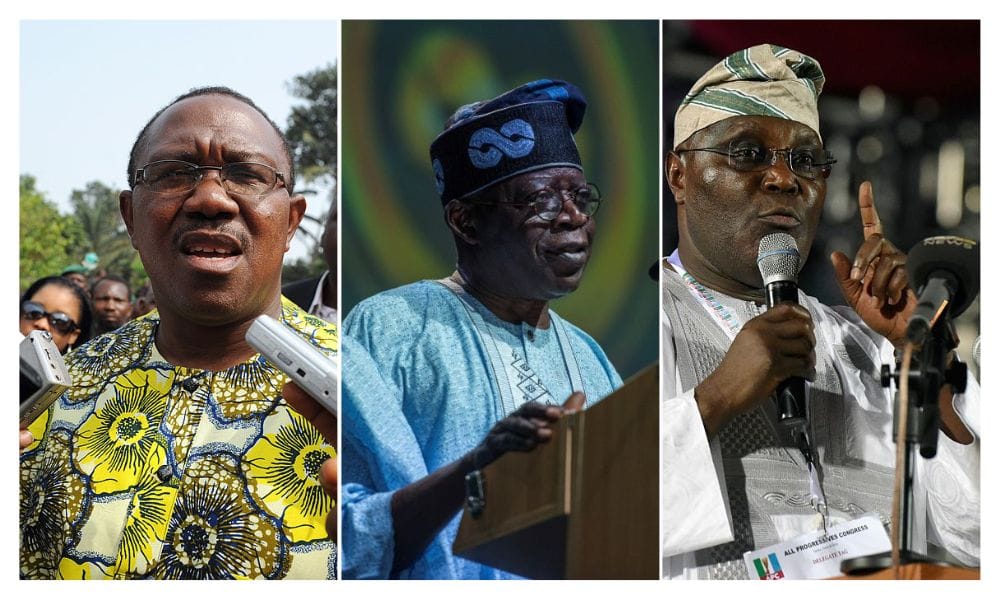
Of all the presidential candidates that have presented themselves to serve as the country’s next president, only Atiku Abubakar has the requisite experience to turn around the country’s economy while it is also a fact that he is the candidate that has shown the most commitment to fixing the country’s economy based on his level of preparedness.

Apart from having the most robust and realistic plan for the country, Atiku Abubakar plans to address the biggest challenge entrepreneurs have in the country with a $10 billion economic stimulus plan to finance Small and Medium-scale Enterprises (SMEs) in the country to stimulate economic growth. On the contrary, his main opposition’s plan to grow the economy is to recruit 50 million youths into the army and feed them with agbado (corn) and cassava to stimulate demand and supply thus betraying his
cluelessness in managing the economy for growth.

Another frontline candidate is fond of banding slogans such as ‘moving the economy from consumption to production” without any clearcut economic plan of how he intends to achieve this feat but if we are to go by his antecedents in which the poverty rate in his state went up from 41.4% to 53.7% under his leadership as governor, we can safely conclude that all his noise about moving the country from ‘consumption to production’ is mere propaganda as he has demonstrated a very poor ability to manage and grow the economy in his most recent public assignment.

As we approach the 2023 elections, we as Nigerians have to stop allowing sentiments, emotions, and propaganda to influence our decision-making process. We have to identify the candidate that is best equipped to ensure that our best interest as Nigerians is taken care of and which is revamping our economy and growing it for our collective benefit.

In ending this article, I must submit that it is actually in our enlightened self-interest as Nigerians, to vote for Atiku Abubakar as the next president of the federal republic of Nigeria as he is the candidate that is best equipped to fix our ailing economy, grow it and ensure that we all as Nigerians enjoy a better standard of living and higher quality of life. Our welfare is what matters most and it only makes sense that we support the man who has a solid track record of phenomenal performance in managing and growing our economy.

Kunle Oshobi writes from Lagos.

Continue Reading
Click to comment

Leave a Reply

Your email address will not be published. Required fields are marked *

Opinion

Dele Momodu’s Arrival: Day ADC Became Heavier

Published

on

By

By Dr. Sani S a’idu Baba

What does loyalty mean to you in friendships, family, or work? To me, loyalty is staying true, honest and supportive even when it’s hard. That truth defines my relationship with Chief Dele Momodu, whom I more often refer to as the pride of Africa. My loyalty to him is non-negotiable. It is not seasonal, transactional, or driven by convenience. It is rooted in conviction. So, the moment he collected his membership card of the African Democratic Congress (ADC) in his hometown of Ihievbe, Owan East, Edo State, I did the same in Kano. In that instant, distance dissolved, and purpose aligned. What happened yesterday was not just a decamping; it was a declaration. A declaration that the long, hard road to Rescue, Recover and Reset Nigeria has gained one of its most formidable travellers.

This is indeed a remarkable day for the ADC. While many defections into political parties come and go with the tides of ambition, Dele Momodu’s entry stands apart, loud in meaning, deep in symbolism, and heavy with consequence. For the ADC, this is not merely the acquisition of a new member; it is the embrace of a movement-builder, a conscience-keeper, and a bridge across Nigeria’s fractured divides, and these qualities are evident in his record.

First, Dele Momodu’s political pedigree is rare and refreshing. In an environment where political loyalty often bends toward power, he has never been part of the ruling party throughout his entire political life. This is not stubbornness; it is principle. It means he understands opposition not as noise-making, but as nation-guarding. He knows how to put governments on their toes firmly, intelligently, and fearlessly. The ADC has gained a man perfectly schooled in democratic vigilance, one who knows that true progress is sharpened by principled opposition.

Second, the ADC has gained a tested pro-democracy fighter in Dele Momodu. He paid a personal price during the military era for resisting dictatorship and standing firmly for democratic rule in the Third Republic. That history of sacrifice now translates into a major advantage for the ADC: a leader with the moral authority, experience, and courage to constitutionally, peacefully and intellectually confront the growing threat of a one-party state and one-man dictatorship. With Dele Momodu in its fold, the ADC is better equipped to defend democracy and lead the national effort to recover Nigeria from authoritarian drift.

Third, he is widely recognized as one of the most principled and loyal politicians Nigeria has produced. When Dele Momodu commits, he commits fully. No half-measures. No double games. No conditional loyalty. If he belongs to a party, he supports it wholeheartedly and unconditionally. For the ADC, this is priceless. In a time when political parties struggle with internal contradictions and wavering allegiances, here is a man whose word is his bond and whose presence strengthens internal cohesion.

Fourth, the ADC has attracted not just a member, but a truth-teller. Dele Momodu derives pleasure in saying the truth as it is, without varnish, without fear, without apology. Parties rise or fall not only by their slogans but by their capacity for honest self-examination. With Momodu in the ADC, the party gains its greatest advisor and most reliable mirror. He will celebrate what is right, challenge what is wrong, and insist on moral clarity. This is how serious political institutions are built.

Fifth, Dele Momodu is a magnet. He attracts highly responsible, competent, and patriotic Nigerians from every corner of the country. Many see him as a part-time and independent politician, one whose ultimate allegiance is not to party symbols but to Nigeria’s soul. That perception is powerful. It means that wherever he goes, Nigerians are ready to follow, to join, and to support. By welcoming him, the ADC has sent a clear signal to the nation: this is a home for credibility, courage, and Nigeria first politics.

Wherever Dele Momodu goes, Nigerians at home and in the diaspora admire him effortlessly. He never gets tired of engaging, mentoring, inspiring, and mobilising. Without any noise, he becomes a vehicle of mass mobilisation. With him, the ADC’s message will travel farther than billboards, deeper than rallies, and faster than propaganda. This is influence earned through decades of credibility, not imposed.

I speak from experience. I was the North-West Coordinator of the Dele Momodu Movement in 2022 when he contested the presidential primaries under the PDP. I later served as his agent at the primaries held at the Moshood Abiola Stadium, Abuja, on May 28, 2022. I went round with him all over Nigeria, and from that experience, I came to truly understand the perception of the ordinary Nigerian about the extraordinary pedigree of Dele Momodu, how people see him as consistent, authentic, accessible, and genuinely committed to Nigeria’s progress.

Sixth, the ADC has attracted a great promise-keeper in Dele Momodu. Let me back this claim with facts. I was among those who accompanied him to the screening before the PDP presidential primaries. When he came out and journalists asked him questions, his response was characteristically clear and sincere: it is totally about Nigeria, nothing personal. He went further to announce the promise he took during the screening, that he would support whoever emerged as the party’s candidate to victory, and he kept that promise. As great globetrotter that he is, no one can easily recall when last Dele Momodu stayed in Nigeria for months, working assiduously for the success of his party and its candidate, His Excellency Atiku Abubakar. While many others who took the same promise were busy throwing tantrums, he was on the field, mobilising, advocating, and delivering. That was a promise kept.

But beyond politics lies the most compelling asset Dele Momodu brings to the ADC: his story. The turbulent but triumphant journey of his life can draw tears not only from the over 140 million Nigerians living in extreme poverty today, but from anyone who understands struggle. It is a story that melts hearts across class, age, and geography. Relatable. Poignant. Edifying. It speaks directly to the Nigerian who feels forgotten by birth or battered by circumstance. It tells you that you may be a rejected stone today, penniless, down and out but you can become a chief cornerstone tomorrow. Not by cutting corners, but by patience, consistency, building networks of influence, embracing hard work, and staying faithful to your dream. Perhaps this is why Dele Momodu is arguably the Nigerian mentor with the highest number of mentees across every nook and cranny of this country, myself included. His mentorship culture is organic, generous, and transformational. He opens doors, builds people, and multiplies hope. For the ADC, this is a strategic advantage that cannot be overstated. A party that attracts Dele Momodu automatically attracts thousands of thinkers, professionals, youths, and patriots he has inspired over decades.

Dele Momodu is in a class of his own. Naturally unique. Authentically Nigerian. Globally respected and travels road less travel. His life proves that greatness can rise from adversity, and leadership can be forged without bitterness. With his entry into the ADC, the party has not just caught a “big fish”; it has netted a tide-changer. Yesterday, in Ihiebve, history was made. From Edo to Kano, from the grassroots to the global stage, a new chapter has begun. The ADC is no longer just preparing for the future, it is recruiting it. And with Dele Momodu on board, the mission to Rescue, Recover and Reset Nigeria has found one of its strongest voices and most trusted hands.

The journey ahead is demanding. But with men of principle, truth and influence like Chief Dele Momodu, the ADC is no longer asking Nigerians to believe. It is giving them a reason to.

Dr Baba writes from Kano, and can be reached via drssbaba@yahoo.com

Continue Reading

Opinion

Reimagining the African Leadership Paradigm: A Comprehensive Blueprint

Published

on

By

By Tolulope A. Adegoke, PhD

“To lead Africa forward is to move from transactional authority to transformational stewardship—where institutions outlive individuals, data informs vision, and service is the only valid currency of governance” – Tolulope A. Adegoke, PhD

The narrative of African leadership in the 21st century stands at a critical intersection of profound potential and persistent paradox. The continent, pulsating with the world’s youngest demographic and endowed with immense natural wealth, nonetheless contends with systemic challenges that stifle its ascent. This divergence between capacity and outcome signals not merely a failure of policy, but a deeper crisis of leadership philosophy and practice. As the global order undergoes seismic shifts, the imperative for African nations to fundamentally re-strategize their approach to governance has transitioned from an intellectual exercise to an existential necessity. Nigeria, by virtue of its demographic heft, economic scale, and cultural influence, serves as the continent’s most significant crucible for this transformation. The journey of Nigerian leadership from its current state to its potential apex offers a blueprint not only for its own 200 million citizens but for an entire continent in search of a new compass.

Deconstructing the Legacy Model: A Diagnosis of Systemic Failure

To construct a resilient future, we must first undertake an unflinching diagnosis of the present. The prevailing leadership archetype across much of Africa, with clear manifestations in Nigeria’s political economy, is built upon a foundation that has proven tragically unfit for purpose. This model is characterized by several interlocking dysfunctions:

·         The Primacy of Transactional Politics Over Transformational Vision: Governance has too often been reduced to a complex system of transactions—votes exchanged for short-term patronage, positions awarded for loyalty over competence, and resource allocation serving political expediency rather than national strategy. This erodes public trust and makes long-term, cohesive planning impossible.

·         The Tyranny of the Short-Term Electoral Cycle: Leadership decisions are frequently held hostage to the next election, sacrificing strategic investments in education, infrastructure, and industrialization on the altar of immediate, visible—yet fleeting—gains. This creates a perpetual cycle of reactive governance, preventing the execution of decade-spanning national projects.

·         Administrative Silos and Bureaucratic Inertia: Government ministries and agencies often operate as isolated fiefdoms, with limited inter-departmental collaboration. This siloed approach fragments policy implementation, leads to contradictory initiatives, and renders the state apparatus inefficient and unresponsive to complex, cross-sectoral challenges like climate change, public health, and national security.

·         The Demographic Disconnect: Africa’s most potent asset is its youth. Yet, a vast governance gap separates a dynamic, digitally-native, and globally-aware generation from political structures that remain opaque, paternalistic, and slow to adapt. This disconnect fuels alienation, brain drain, and social unrest.

·         The Weakness of Institutions and the Cult of Personality: When the strength of a state is vested in individuals rather than institutions, it creates systemic vulnerability. Independent judiciaries, professional civil services, and credible electoral commissions are weakened, leading to arbitrariness in the application of law, erosion of meritocracy, and a deep-seated crisis of public confidence.

The tangible outcomes of this flawed model are the headlines that define the continent’s challenges: infrastructure deficits that strangle commerce, public education and healthcare systems in states of distress, jobless economic growth, multifaceted security threats, and the chronic hemorrhage of human capital. To re-strategize leadership is to directly address these outputs by redesigning the very system that produces them.

Pillars of a Reformed Leadership Architecture: A Holistic Framework

The new leadership paradigm must be constructed not as a minor adjustment, but as a holistic architectural endeavor. It requires foundational pillars that are interdependent, mutually reinforcing, and built to endure beyond political transitions.

1. The Philosophical Core: Embracing Servant-Leadership and Ethical Stewardship
The most profound change must be internal—a recalibration of the leader’s fundamental purpose. The concept of the leader as a benevolent “strongman” must give way to the model of the servant-leader. This philosophy, rooted in both timeless African communal values (ubuntu) and modern ethical governance, posits that the true leader exists to serve the people, not vice versa. It is characterized by deep empathy, radical accountability, active listening, and a commitment to empowering others. Success is measured not by the leader’s personal accumulation of power or wealth, but by the tangible flourishing, security, and expanded opportunities of the citizenry. This ethos fosters trust, the essential currency of effective governance.

2. Strategic Foresight and Evidence-Based Governance
Leadership must be an exercise in building the future, not just administering the present. This requires the collaborative development of a clear, compelling, and inclusive national vision—a strategic narrative that aligns the energies of government, private sector, and civil society. For Nigeria, frameworks like Nigeria’s Agenda 2050 and the National Development Plan must be de-politicized and treated as binding national covenants. Furthermore, in the age of big data, governance must transition from intuition-driven to evidence-based. This necessitates significant investment in data collection, analytics, and policy-informing research. Whether designing social safety nets, deploying security resources, or planning agricultural subsidies, decisions must be illuminated by rigorous data, ensuring efficiency, transparency, and measurable impact.

3. Institutional Fortification: Building the Enduring Pillars of State
A nation’s longevity and stability are directly proportional to the strength and independence of its institutions. Re-strategizing leadership demands an unwavering commitment to institutional architecture:

·         An Impervious Judiciary: The rule of law must be absolute, with a judicial system insulated from political and financial influence, guaranteeing justice for the powerful and the marginalized alike.

·         Electoral Integrity as Sacred Trust: Democratic legitimacy springs from credible elections. Investing in independent electoral commissions, transparent technology, and robust legal frameworks is non-negotiable for political stability.

·         A Re-professionalized Civil Service: The bureaucracy must be transformed into a merit-driven, technologically adept, and well-remunerated engine of state, shielded from the spoils system and empowered to implement policy effectively.

·         Robust, Transparent Accountability Ecosystems: Anti-corruption agencies require genuine operational independence, adequate funding, and protection. Complementing this, transparent public procurement platforms and mandatory asset declarations for public officials must become normalized practice.

4. Collaborative and Distributed Leadership: The Power of the Collective
The monolithic state cannot solve wicked problems alone. The modern leader must be a convener-in-chief, architecting platforms for sustained collaboration. This involves actively fostering a triple-helix partnership:

·         The Public Sector sets the vision, regulates, and provides enabling infrastructure.

·         The Private Sector drives investment, innovation, scale, and job creation.

·         Academia and Civil Society contribute research, grassroots intelligence, independent oversight, and specialized implementation capacity.
This model distributes responsibility, leverages diverse expertise, and fosters innovative solutions—from public-private partnerships in infrastructure to tech-driven civic engagement platforms.

5. Human Capital Supremacy: The Ultimate Strategic Investment
A nation’s most valuable asset walks on two feet. Re-strategized leadership places a supreme, non-negotiable priority on developing human potential. For Nigeria and Africa, this demands a generational project:

·         Revolutionizing Education: Curricula must be overhauled to foster critical thinking, digital literacy, STEM proficiency, and entrepreneurial mindset—skills for the Fourth Industrial Revolution. Investment in teacher training and educational infrastructure is paramount.

·         Building a Preventive, Resilient Health System: Focus must shift from curative care in central hospitals to robust, accessible primary healthcare. A healthy population is a productive population, forming the basis of economic resilience.

·         Creating an Enabling Environment for Talent: Beyond education and health, leadership must provide the ecosystem where talent can thrive: reliable electricity, ubiquitous broadband, access to venture capital, and a regulatory environment that encourages innovation and protects intellectual property. The goal is to make the domestic environment more attractive than the diaspora for the continent’s best minds.

6. Assertive, Strategic Engagement in Global Affairs
African leadership must shed any vestiges of a supplicant mentality and adopt a posture of strategic agency. This means actively shaping continental and global agendas:

·         Leveraging the AfCFTA: Moving beyond signing agreements to actively dismantling non-tariff barriers, harmonizing standards, and investing in cross-border infrastructure to turn the agreement into a real engine of intra-African trade and industrialization.

·         Diplomacy for Value Creation: Foreign policy should be strategically deployed to attract sustainable foreign direct investment, secure technology transfer agreements, and build partnerships based on mutual benefit, not aid dependency.

·         Advocacy for Structural Reform: African leaders must collectively and persistently advocate for reforms in global financial institutions and multilateral forums to ensure a more equitable international system.

The Nigerian Imperative: From National Challenges to a National Charter

Applying this framework to Nigeria requires translating universal principles into specific, context-driven actions:

·         Integrated Security as a Foundational Priority: Security strategy must be comprehensive, blending advanced intelligence capabilities, professionalized security forces, with parallel investments in community policing, youth employment programs in high-risk areas, and accelerated development to address the root causes of instability.

·         A Determined Pursuit of Economic Complexity: Leadership must orchestrate a decisive shift from rent-seeking in the oil sector to value creation across diversified sectors: commercialized agriculture, light and advanced manufacturing, a thriving creative industry, and a dominant digital services sector.

·         Constitutional and Governance Re-engineering: To harness its diversity, Nigeria requires a sincere national conversation on restructuring. This likely entails moving towards a more authentic federalism with greater fiscal autonomy for states, devolution of powers, and mechanisms that ensure equitable resource distribution and inclusive political representation.

·         Pioneering a Just Energy Transition: Nigeria must craft a unique energy pathway—strategically utilizing its gas resources for domestic industrialization and power generation, while simultaneously positioning itself as a regional hub for renewable energy technology, investment, and innovation.

Conclusion: A Collective Endeavor of Audacious Hope

Re-strategizing leadership in Africa and in Nigeria is not an event, but a generational process. It is not the abandonment of culture but its evolution—melding the deep African traditions of community, consensus, and elder wisdom with the modern imperatives of transparency, innovation, and individual rights. This task extends far beyond the political class. It is a summons to a new generation of leaders in every sphere: the tech entrepreneur in Yaba, the reform-minded civil servant in Abuja, the agri-preneur in Kebbi, the investigative journalist in Lagos, and the community activist in the Niger Delta.

Ultimately, this is an endeavor of audacious hope. It is the conscious choice to build systems stronger than individuals, institutions more enduring than terms of office, and a national identity richer than our ethnic sum. Nigeria possesses all the requisite raw materials for greatness: human brilliance, cultural richness, and natural bounty. The final, indispensable ingredient is a leadership strategy worthy of its people. The blueprint is now detailed; the call to action is urgent. The future awaits not our complaints, but our constructive and courageous labor. Let the work begin in earnest.

Dr. Tolulope A. Adegoke is a globally recognized scholar-practitioner and thought leader at the nexus of security, governance, and strategic leadership. His work addresses complex institutional challenges, with a specialized focus on West African security dynamics, conflict resolution, and sustainable development.

Continue Reading

Opinion

Rivers State: Two Monkeys Burn the Village to Prove They Are Loyal to Jagaban

Published

on

By

By Sly Edaghese

Teaser

Rivers State is not collapsing by accident. It is being offered as a sacrifice. Two men, driven by fear of irrelevance and hunger for protection, have chosen spectacle over stewardship—setting fire to a whole people’s future just to prove who kneels better before power.

There comes a point when a political tragedy degenerates into farce, and the farce mutates into a curse. Rivers State has crossed that point. What is unfolding there is not governance, not even conflict—it is ritual madness, a grotesque contest in which two men are willing to burn an entire state just to be noticed by one man sitting far away in Abuja.

This is not ambition.

This is desperation wearing designer jacket.

At the center of this inferno stand two performers who have mistaken power for immortality and loyalty for slavery. One is a former god. The other is a former servant. Both are now reduced to naked dancers in a marketplace, grinding their teeth and tearing flesh to entertain Jagaban.

The first is Nyesom Wike—once feared, once untouchable, now frantic. A man whose political identity has collapsed into noise, threats, and recycled bravado. His ministerial appointment was never a validation of statesmanship; it was a severance package for betrayal. Tinubu did not elevate Wike because he admired him—he tolerated him because he was useful. And usefulness, in politics, is key, but it has an expiry date.

Wike governed Rivers State not as a public trust but as a private estate. He did not build institutions; he built dependencies. He did not groom leaders; he bred loyalists. Before leaving office, he salted the land with his men—lawmakers, commissioners, council chairmen—so that even in absence, Rivers State would still answer to his shadow. His obsession was simple and sick: if I cannot rule it, no one else must.

Enter Siminalayi Fubara—a man selected, not tested; installed, not trusted by the people but trusted by his maker. Fubara was meant to be an invisible power in a visible office—a breathing signature, a ceremonial governor whose only real duty was obedience.

But power has a way of awakening even the most timid occupant.

Fubara wanted to act like a governor. That single desire triggered a full-scale political assassination attempt—not with bullets, but with institutions twisted into weapons. A state of emergency was declared with obscene haste. The governor was suspended like a naughty schoolboy. His budget was butchered. His local government elections were annulled and replaced with a pre-arranged outcome favorable to his tormentor. Lawmakers who defected and lost their seats by constitutional law were resurrected like political zombies and crowned legitimate.

This was not law.

This was organized humiliation.

And when degradation alone failed, Wike went further—dragging Fubara into a room to sign an agreement that belonged more to a slave plantation than a democratic republic.

One clause alone exposed the rot:
👉 Fubara must never seek a second term.

In plain language: you may warm the chair, but you will never own it.

Then came the most revealing act of all—Wike leaked the agreement himself. A man so intoxicated by dominance that he thought publicizing oppression would strengthen his grip.

That leak was not strategy; it was confession. It told Nigerians that this was never about peace, order, or party discipline—it was about absolute control over another human being.

But history has a cruel sense of humor.

While Wike strutted like a victorious warlord and his loyal lawmakers sharpened new knives, Fubara did something dangerous: he adapted. He studied power where it truly resides. He learned Tinubu’s language—the language of survival, alignment, and betrayal without apology. Then he did what Nigerian politics rewards most:

He crossed over.

Not quietly. Not shamefully. But theatrically. He defected to the APC, raised a party card numbered 001 and crowned himself leader of the party in Rivers State. He pledged to deliver the same Rivers people to Tinubu just as Wike also has pledged.

That moment was not boldness.

It was cold-blooded realism.

And in one stroke, Wike’s myth collapsed.

The once-feared enforcer became a shouting relic—touring local governments like a prophet nobody believes anymore, issuing warnings that land on deaf ears, reminding Nigerians of favors that no longer matter. He threatened APC officials, cursed betrayal, and swore eternal vengeance. But vengeance without access is just noise.

Today, the humiliation is complete.

Fubara enters rooms Wike waits outside.

Presidential aides shake hands with the new alignment.

The old king rants in press conferences, sounding increasingly like a man arguing with a locked door.

And yet, the darkest truth remains: neither of these men cares about Rivers State.

One is fighting to remain relevant.

The other is fighting to remain protected.

The people—the markets, the schools, the roads, the civil servants—are expendable extras in a drama scripted far above their heads.

Some say Tinubu designed this blood sport—unable to discard Wike outright, he simply unleashed his creation against him. Whether genius or negligence, the effect is the same: Rivers State is being eaten alive by ambition.

This is what happens when politics loses shame.

This is what happens when loyalty replaces competence.

This is what happens when leaders treat states like bargaining chips and citizens like ashes.

Two monkeys are burning the village—not to save it, not to rule it—but to prove who can scream loudest while it burns.

And Jagaban watches, hands folded.

But when the fire dies down, when the music stops, when the applause fades, there will be nothing left to govern—only ruins, regret, and two exhausted dancers staring at the ashes, finally realizing that power does not clap forever.

Sly Edaghese sent in this piece from Wisconsin, USA.

Continue Reading

Trending