By Tolulope A. Adegoke PhD
PREAMBLE: THE STRATEGIC MOMENT AND ITS IMPERATIVES
The Economic Community of West African States confronts a moment of institutional reckoning without precedent in its fifty-year history. The confluence of democratic recession, the fracturing of regional solidarity, the commodification of the Community’s security space by external actors, and the erosion of popular faith in the tangible benefits of integration has converged to pose a systemic threat to the organization’s foundational relevance. The established toolkit of declaratory diplomacy, automatic suspension, and sanctions escalation has demonstrably exhausted its capacity to compel compliance or to stabilize the regional order.
The way forward, therefore, cannot be a mere intensification of existing methods. It must be a strategic recalibration of ECOWAS’s institutional posture, operational doctrines, and normative architecture. The objective is not the preservation of institutional prestige for its own sake, but the patient, principled, and incentivized reconstruction of a regional political community in which sovereign member states and their citizens perceive membership as a demonstrable enhancement of their national security, economic prosperity, and democratic legitimacy. The following roadmap articulates a sequenced, non-biased, and operationally concrete way forward, structured across five interdependent strategic lines of effort.
STRATEGIC LINE OF EFFORT I: RECALIBRATE THE NORMATIVE FOUNDATION OF THE COMMUNITY
The prevailing perception that the ECOWAS normative framework on democratic governance is applied with selectivity—penalizing military seizures of power while remaining diplomatically passive in the face of civilian constitutional manipulation—has inflicted severe damage on the institution’s moral authority. Rectifying this asymmetry is an indispensable precondition for the restoration of credible institutional leadership.
Action 1.1: Convene an Extraordinary Authority Summit Dedicated Exclusively to Normative Self-Correction
The Chair of the Authority must convene, within a non-extendable 90-day period, an Extraordinary Summit with a single, undiluted agenda item: the critical review and amendment of the 2001 Protocol on Democracy and Good Governance. This Summit must not be subsumed within a broader agenda of security or economic matters. Its singular focus signals institutional seriousness and prevents diplomatic evasion.
Action 1.2: Codify and Adopt a Binding Symmetrical Sanctions Regime
The Summit must adopt a formal Supplementary Protocol that introduces, with legally binding precision, a definition of the “Constitutional Coup” or “Incumbent Entrenchment.” This shall be defined as any action by a sitting elected executive, whether through legislative manipulation, compliant judicial ruling, or tailored constitutional referendum, that modifies the fundamental law of the state for the primary purpose of abrogating or eliminating established presidential term limits in order to extend the incumbent’s tenure. The sanctions prescribed for this defined violation must be identical in their automaticity of trigger, procedural robustness, and severity of consequence to those prescribed for classical military coups d’état. This single act of symmetrical legal self-correction eliminates the charge of institutional bias and re-establishes the Community as a principled, impartial guarantor of democratic integrity.
Action 1.3: Mandate the ECOWAS Council of Ministers to Develop a Compliance Monitoring and Early Warning Matrix
The Council of Ministers must be mandated to develop, within 120 days, a transparent, indicator-based Compliance Monitoring and Early Warning Matrix. This matrix must track, on a continuous and publicly accessible basis, the compliance status of every member state against the full spectrum of democratic governance norms, including term limit provisions, electoral calendar integrity, and civil liberties protections. The matrix serves as an objective, depoliticized early warning mechanism that triggers preventive diplomatic engagement before a crisis crystallizes, removing the element of discretionary political judgment that fuels perceptions of bias.
STRATEGIC LINE OF EFFORT II: REPOSITION THE SECURITY ARCHITECTURE FROM PUNITIVE POSTURE TO ENABLING PARTNERSHIP
The region’s security space has become an unregulated, competitive marketplace for external military projection. ECOWAS must fundamentally reconceive its security offer to member states, pivoting from a posture associated with kinetic interventionism to one of technical enabling partnership that sovereign states perceive as enhancing, rather than constraining, their national security.
Action 2.1: Adopt and Promulgate a Binding External Security Partner Code of Conduct
The Mediation and Security Council must convene a high-level Strategic De-confliction and Transparency Dialogue with all external state actors conducting unilateral security operations on the territory of ECOWAS member states. The binding, legally codified outcome shall be an ECOWAS External Security Partner Code of Conduct. Its central provision mandates that all bilateral Status of Forces Agreements (SOFAs), defense cooperation memoranda, and security-related basing or access pacts between any external state and any individual ECOWAS member state be formally and confidentially deposited with a centralized registry at the ECOWAS Commission within a non-extendable 90-day period. The objective is a non-prejudicial technical audit ensuring that the cumulative effect of multiple, independently negotiated bilateral arrangements does not inadvertently undermine collective regional security.
Action 2.2: Formally Reconceptualize the ECOWAS Standby Force into a Modular Technical Enabling Capability
The Department of Political Affairs, Peace and Security must be directed to present, within 180 days, a comprehensive doctrinal and operational blueprint for the reconceptualization of the ECOWAS Standby Force (ESF) into a new instrument, provisionally designated the “ECOWAS Crisis Response and Resilience Capability” (ECRRC). This new capability must execute a decisive doctrinal pivot away from large-scale conventional combat power projection—a mission type assessed as operationally unviable and politically irrecoverable in the current environment—and towards the provision of high-demand, low-substitutability technical enabling functions. These core modules shall include a multi-source intelligence fusion and strategic warning cell, a specialized digital border security and management task force, and a dedicated regional counter-financing of terrorism unit operating in institutional coordination with GIABA. This recalibrated offer creates a non-coercive incentive for disengaged states to voluntarily resume security cooperation.
Action 2.3: Establish a Specialized Civilian Harm Monitoring and Accountability Mechanism
The Commission must establish, with immediate effect, an operationally independent Civilian Harm Monitoring and Accountability Mechanism (CHMAM). Its personnel shall be sourced from member states with no direct security-material interest in the Sahelian theatre. Its mandate is the impartial, transparent, and universally applied monitoring, verification, and public reporting of civilian harm perpetrated by all armed actors, including state forces and their external partners. This mechanism depoliticizes the protection agenda and positions ECOWAS as a non-partisan guarantor of humanitarian accountability.
STRATEGIC LINE OF EFFORT III: ENGINEER A CALIBRATED, INCENTIVE-ANCHORED POLITICAL ENGAGEMENT FRAMEWORK
The sterile binary between “immediate unconditional constitutional restoration” and “indefinite unverifiable transition” has produced a protracted diplomatic gridlock. A new engagement framework, grounded in verified deliverables and sequenced incentives, is required.
Action 3.1: Constitute a Permanent, Empowered Panel of Eminent Persons for Silent Mediation
The Chair of the Authority must formally constitute, through a Decision of the Authority, a permanent Panel of Former Heads of State and Eminent Persons. Membership must be curated exclusively from a small cohort of former leaders whose nations possess an unassailable living legacy of peaceful, constitutional, and fully contested democratic alternation of executive power. The Panel’s mandate is to conduct a silent, continuous, indefinitely sustained shuttle diplomacy mission, operating strictly on the methodology of interest-based negotiation. No public statements, no deadlines, and no press releases are to be issued by the Panel. This permanently discontinues the counterproductive practice of “mégaphone diplomacy.”
Action 3.2: Table a Formal, Three-Tiered Transition Compact with Verified Deliverables and Sequenced Incentives
The Commission, under the political guidance of the Mediation and Security Council, must prepare and formally table a comprehensive Three-Tiered Transition Compact as the baseline framework for engagement with member states currently under transitional military administration. The tiers are sequenced as follows:
· Tier 1 (Immediate Confidence Building): Full, unimpeded humanitarian access to all conflict-affected zones, verified by operational humanitarian agencies; and the release of all political detainees not credibly charged with violent criminal offenses, verified by the African Commission on Human and Peoples’ Rights. Upon successful independent verification, ECOWAS commits to a formal suspension of targeted economic sanctions against the state apparatus.
· Tier 2 (Sequenced Political Roadmap): A binding 24-month, bottom-up electoral sequence—local elections first, constitutional referendum second, presidential and parliamentary elections third—with a guaranteed statutory role for ECOWAS in the technical vetting of the electoral management body. Upon verification of each phase, incremental incentives are released.
· Tier 3 (Structural Guarantee Against Self-Dealing): The constitutional entrenchment, prior to terminal elections, of a non-amendable clause prohibiting any serving member of the transitional government from contesting those elections. Upon verification and peaceful transfer of power, all remaining sanctions are lifted, and ECOWAS proactively sponsors the state’s full reintegration and development financing package.
Action 3.3: Formally Delink Humanitarian Access from Political Negotiation
The Commission must issue a binding institutional directive establishing that humanitarian access and the protection of civilian populations are non-negotiable obligations under international humanitarian law and the ECOWAS Treaty. These shall not be treated as bargaining chips within political negotiations. This directive establishes an impartial humanitarian baseline that protects the vulnerable and starves extremist narratives of their recruitment material.
STRATEGIC LINE OF EFFORT IV: CONSTRUCT AND DELIVER A TANGIBLE, VISIBLE ECONOMIC COUNTER-OFFER
Economic sanctions, while a legally mandated instrument, have inflicted disproportionate harm on vulnerable populations and have been successfully weaponized by transitional authorities as evidence of ECOWAS hostility. A serious, fully-funded, and rapidly disbursing economic offer that demonstrates the irreplaceable material value of ECOWAS membership is a strategic necessity.
Action 4.1: Capitalize and Launch the ECOWAS Community Livelihood and Border Zone Resilience Facility
The Commission, in partnership with the ECOWAS Bank for Investment and Development (EBID) and the African Development Bank, must convene a dedicated donor pledging conference within 120 days to capitalize a substantially expanded, fast-disbursing stabilization instrument. The facility’s exclusive investment focus shall be the cross-border communities whose economic fabric has been destroyed by insecurity and political rupture. Priority projects shall include the rehabilitation of transhumance corridors with negotiated local governance structures, the construction of solar-powered border market infrastructure, and the launch of a massive Community-Based Youth Employment and Apprenticeship Program targeted at displaced youth in frontier zones. All projects must be collaboratively and transparently branded as direct dividends of ECOWAS solidarity.
Action 4.2: Adopt a Unified Institutional Position Linking Debt Relief to Verified Governance Progress
The Authority must adopt a formal Common Position directing its collective diplomatic weight towards aggressive advocacy for a comprehensive, non-punitive, and development-sensitive sovereign debt restructuring framework for all severely affected member states. This advocacy shall be executed at the G20 Common Framework, the IMF Executive Board, and the Paris Club. Critically, the ECOWAS Common Position must explicitly and publicly link a pathway to structural debt relief to the affected state’s independently verified, irreversible progress against the Tier 2 and Tier 3 benchmarks of the Transition Compact. This leverages the international financial architecture as a structurally aligned positive incentive for good-faith engagement, offering a sophisticated alternative to blunt unilateral sanctions.
Action 4.3: Reaffirm and Technically Safeguard the Free Movement Protocol as a Non-Negotiable Community Asset
The Commission must urgently establish a dedicated, technically staffed “Free Movement Safeguard and Facilitation Unit.” This unit’s mandate is to work bilaterally and discretely with all member states, including those in withdrawal processes, to identify and implement the minimal, security-justified, and technically proportionate border management procedures that can preserve the residual functional operation of the Free Movement Protocol for ordinary citizens, even during periods of political estrangement. Preserving this tangible, daily-lived benefit of ECOWAS citizenship protects the human constituency for regional integration and prevents the political fracture from metastasizing into permanent inter-community estrangement.
STRATEGIC LINE OF EFFORT V: INSTITUTIONALIZE A TRANSFORMED STRATEGIC COMMUNICATION AND DIPLOMATIC PROTOCOL
All substantive policy interventions will fail if transmitted through the existing, demonstrably counterproductive communication protocols. A binding institutional transformation of ECOWAS’s mode of public engagement is a standalone strategic priority.
Action 5.1: Institute a Mandatory Linguistic and Register Recalibration Across All Official Communications
The Commission must issue a binding editorial protocol mandating a permanent and institution-wide recalibration of the language employed in all communiqués, declarations, and public statements. The default opening frame of “condemnation, suspension, and ultimatum” must be replaced by a primary, consistent language frame that centers the “non-negotiable, legally binding obligation of ECOWAS to the sustained physical security, human dignity, and economic opportunity of the individual West African citizen.” The primary subjects of all public interventions shall be the identifiable human beings whose lives are affected: the farmer, the trader, the displaced child. This reframes the diplomatic confrontation from a contest between elites into a shared responsibility for protection.
Action 5.2: Permanently Discontinue Mégaphone Diplomacy and Institutionalize a Protocol of Public Humility
The ECOWAS Authority must formally resolve to permanently discontinue the practice of issuing public ultimatum deadlines as an instrument of political mediation. The only regular public updates permitted on the political process shall be confined to measured, independently verified progress on humanitarian deliverables. The substantive, consequential work of political resolution is to be conducted exclusively through the confidential, professional channels of the Permanent Panel of Eminent Persons. This protocol deliberately starves the political crisis of the sensationalist, polarizing public media cycle upon which spoilers and external actors depend, relocating the work of resolution to an environment where trust can be painstakingly reconstructed.
Action 5.3: Launch a Sustained, Decentralized Community-Level Public Diplomacy Campaign
The Commission must design and resource a sustained, decentralized public diplomacy campaign that operates below the level of national media and engages directly with local communities, traditional authorities, women’s associations, and youth networks in border regions. The campaign’s message must be non-polemical and focused exclusively on the tangible, practical benefits of ECOWAS citizenship—the right to travel, to trade, to access education and healthcare across borders—documented through the authentic testimonies of real citizens whose lives have been positively impacted. This ground-level, person-to-person diplomacy rebuilds the popular constituency for regional integration from the bottom up, countering the top-down, state-controlled narratives that currently dominate the information space.
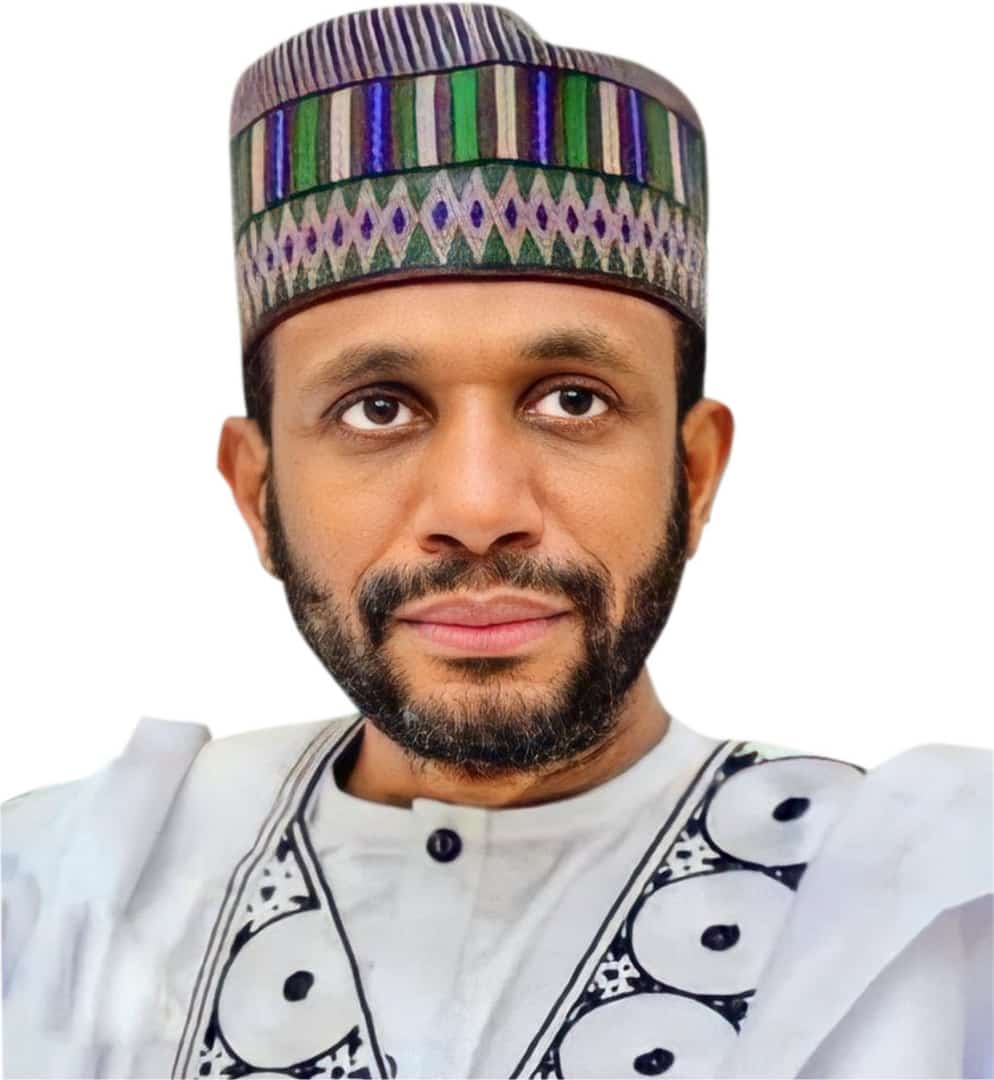
Dr. Tolulope A. Adegoke, AMBP-UN is a globally recognized scholar-practitioner and thought leader at the nexus of security, governance, and strategic leadership. His mission is dedicated to advancing ethical governance, strategic human capital development, resilient nation building, and global peace. He can be reached via: tolulopeadegoke01@gmail.com, globalstageimpacts@gmail.com











 Featured4 days ago