Connect with us

Economy

Naira Redesign: Finance Ministry Warns CBN of Consequence, Denies Knowledge of Project

Published

on

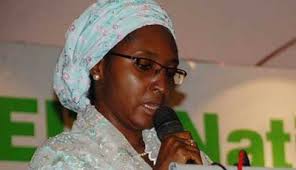
The Minister of Finance, Budget and National Planning, Zainab Ahmed, has dissociated herself from the Naira redesign policy fixed for December 15, 2022 by the Central Bank of Nigeria.

The Minister, who commented on the policy in response to question raised by Senators during the 2023 budget defence session she had with the Senate Committee on Finance, chaired by Senator Solomon Olamilekan, warned the CBN of consequences that may arise from the policy.

The Senate had told the Finance Minister that barely two days after announcement of the policy by the CBN, the negative effect was already being experienced in the country’s forex.

The Senate noted that just two days after announcement of the policy, value of the Naira to a US dollar has risen from N740 to N788 due to rush in exchange of stashed Naira Notes for foreign currencies, particularly the dollar.

The senators added that the policy may be a well-conceived one, but the timing, going by realities on the ground, is very wrong as the naira may fall to as low as N1,000 to a US dollar before January 31, 2023 fixed for full implementation of the policy.

In her response, Ahmed said she and her Ministry were not aware of the policy but only heard of it from the media.

She said, “Distinguished Senators, we were not consulted at the Ministry of Finance by the CBN on the planned naira redesigning and cannot comment on it as regards merits or otherwise.

“However, as a Nigerian privileged to be at the top of Nigeria’s fiscal management, the policy as rolled out at this time portends serious consequences on value of naira to other foreign currencies.

“I will, however, appeal to this committee to invite the CBN governor for required explanations as regards merits of the planned policy and rightness or otherwise of its implementation now.”

The CBN Governor, Godwin Emefiele, had on Wednesday said that the apex bank would redesign the country’s currency from 200 Naira denomination to N1,000 notes.

He said the action was taken in order to take control of the currency in circulation just as he posited that the bulk of the nation’s currency notes were outside bank vaults and that the CBN would not allow the situation to continue.

The planned policy, he added, was in line with Sections 19, Subsections a and b of the CBN Act 2007, upon which the Management of the CBN sought and obtained the approval of the President Muhammadu Buhari to redesign, produce, and circulate new series of banknotes at N200, N500, and N1,000 notes.

Continue Reading
Click to comment

Leave a Reply

Your email address will not be published. Required fields are marked *

Economy

Dangote Refinery Raises Petrol Price to N1,275, Diesel Now N1,950

Published

on

By

The Dangote Petroleum Refinery has increased the gantry price of petrol and diesel, further tightening pressure on consumers and businesses across Nigeria. This is however, in response to the rising geopolitical tensions in the Middle East and their ripple effects on global energy markets.

A top official at the refinery, who confirmed the development to our correspondent on Tuesday night, said the facility adjusted its pricing in response to prevailing international crude oil benchmarks and market realities.

The new pricing template shows that petrol rose by N75 per litre to N1,275, representing an increase of about 5.02 per cent, while diesel jumped by N200 per litre to N1,950.

This marks a sharp increase from last month’s prices of N1,200 per litre for petrol and N1,750 for diesel, signalling that diesel is now on track to breach the N2,000 per litre mark at the pump, further intensifying cost pressures across the economy.

“The adjustment is in line with global market trends. You are aware of the ongoing tensions in the Middle East and how they have impacted crude oil prices. These are external factors that directly influence refined product pricing,” the official, who spoke in confidence due to the lack of authorisation to speak on the matter, stated.

He added, “Petrol has been reviewed upward by N75 to N1,275 per litre, which is about a five per cent increase, while diesel has increased more significantly by N200 to N1,950 per litre. These changes reflect the realities of the international market.”

Market data from Petroleumprice.ng corroborated the development, indicating that the latest petrol price reflects a 5.02 per cent increase at the gantry level.

The development comes at a time when stakeholders had hoped that increased local refining capacity would help stabilise domestic fuel prices. However, analysts say Nigeria remains exposed to global oil price volatility due to its reliance on international crude benchmarks for pricing.

The latest hike could trigger a fresh wave of increases in pump prices nationwide, with marketers expected to pass on the additional cost to consumers in the coming days.

Global oil markets have remained volatile in recent weeks due to escalating tensions in the Middle East, a region that accounts for a significant share of the world’s crude oil supply. Any disruption or perceived risk to supply routes often leads to price spikes, which in turn affect refined petroleum products globally.

Nigeria, despite being an oil-producing country, operates a deregulated downstream sector where fuel prices are largely determined by market forces. This means that local prices are influenced by international crude prices, exchange rates, logistics costs, and refinery operations.

The Dangote Petroleum Refinery, Africa’s largest, was expected to reduce Nigeria’s dependence on imported fuel and help stabilise prices. However, experts note that as long as crude oil pricing remains tied to global benchmarks, domestic fuel prices will continue to fluctuate in response to international developments.

The latest increase also comes amid concerns over affordability, with consumers already grappling with high energy and transportation costs. A sustained price increase could worsen inflationary pressures and slow economic recovery.

Continue Reading

Economy

Tinubu Seeks World Bank Support to Boost Agriculture, Economic Reforms

Published

on

By

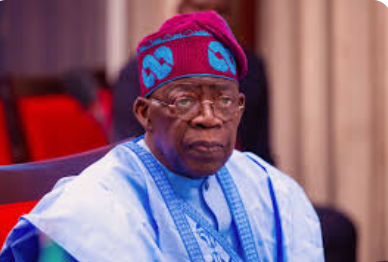
President Bola Tinubu has called on the World Bank to support Nigeria’s ongoing economic reforms, with a focus on agriculture, youth employment, and private sector growth, as part of his administration’s strategy to strengthen the economy and expand opportunities for the citizens.

The president made the remarks on Tuesday while receiving a delegation from the World Bank led by Anna Bjerde, Managing Director of Operations, at the State House, Abuja.

“Since we went into this tunnel of reform, we have our hands on the power and we’re never going to look back. Initially, it was painful and difficult, but those who win are not the ones who give up in difficult times,” Tinubu said.

The president highlighted the importance of mechanization and modernization of agriculture to increase productivity and create opportunities for Nigeria’s large young population.

“We have mechanization centers to help farmers with improved seedlings and fertilizers to enhance their programs. The goal is to move farmers from small-scale holders to large cooperatives that can create opportunities for Nigerians,” he explained.

Tinubu also pointed to the petrochemical sector and other domestic industries as areas where the government is working to improve outputs and strengthen local markets. He stressed that reforms are continuous and must be grounded in transparency, accountability, and stability.

“The first reaction to reforms was high inflation, but it has come down dramatically, and the Naira is now stable. We want to help investors operate with ease, reduce bureaucracy, and develop the skills of our people,” he said.

Anna Bjerde commended Tinubu’s administration for its consistent and steady approach to reforms over the past two years. She highlighted that Nigeria has become a global example of reform implementation, giving confidence to investors and policymakers worldwide. “The results achieved in the last two years are commendable. Your steady communication of the importance of reforms has given confidence and clarity, and there is no turning back,” Bjerde said.

She emphasized the importance of job creation, particularly for Nigeria’s youth, noting that Africa’s young population is growing rapidly and that SMEs are central to employment generation.

“Agriculture is a huge part of the economy and a major employer. Innovations in mechanization, cooperatives, value-chain development, and infrastructure can be scaled to create more opportunities,” Bjerde said.

She also highlighted the World Bank’s financial support for Nigeria, including public sector financing of $17 billion, private sector support of $5 billion through the IFC, and investment guarantees exceeding $500 million. These instruments are aligned with Nigeria’s reforms, including trade, digital initiatives, and inflation management, to stimulate private sector growth and human development.

“We want to work with Nigeria to accelerate growth, improve access to finance for SMEs, and support early childhood development as part of a comprehensive human development strategy,” she added.

The meeting underscored Nigeria’s push to attract foreign support for strategic reforms, particularly in sectors that directly affect youth employment, food security, and overall economic growth.

Continue Reading

Economy

New Tax Laws: Presidential Committee Tackles KPMG over Criticisms of ‘Gaps’, ‘Errors’ and ‘Omissions’
Published

on

By

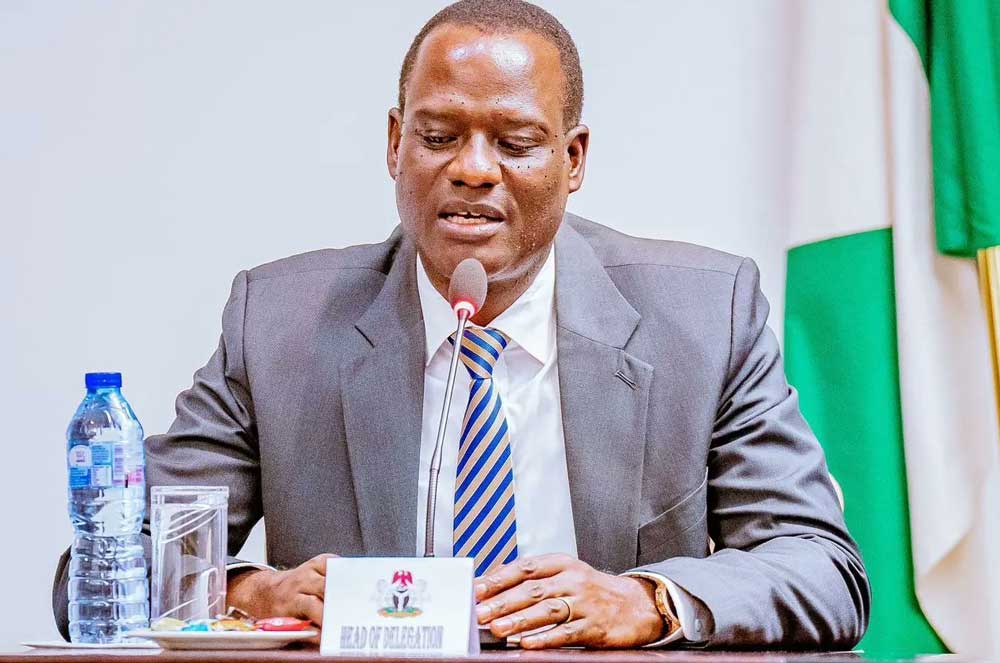
The Chairman of the Presidential Committee on Fiscal Policy and Tax Reforms, Taiwo Oyedele, has pushed back strongly against observations by KPMG on Nigeria’s new tax laws, saying the firm largely misunderstood the policy intent and misrepresented deliberate reform choices.

In a detailed statement shared on Saturday on X, Oyedele said the committee welcomed constructive feedback but argued that most of KPMG’s claims were flawed. “We welcome all perspectives that contribute to a shared understanding and successful implementation of the new tax laws,” he said. However, he added that “the majority of the publication reflected a misunderstanding of the policy intent, a mischaracterisation of deliberate policy choices, and, in several instances, repetitions and presentation of opinion and preferences as facts.”

According to Oyedele, several issues described by KPMG as errors or gaps were either based on “the firm’s own errors and invalid conclusions” or stemmed from “issues not properly understood by the firm.” He stressed that policy disagreements should not be framed as technical mistakes.

Addressing concerns about the taxation of shares and potential stock market sell offs, Oyedele said such fears were unfounded. “The fact is that the applicable tax rate on share gains is not a flat 30%,” he said, noting that “a significant majority of investors (99%) are entitled to unconditional exemption.” He added that market performance at an all time high showed investors understood the reforms.

On the commencement date of the new laws, Oyedele dismissed KPMG’s suggestion of aligning reforms strictly with accounting periods, describing it as “a narrow view of the complex transition issues” involved in wholesale tax reform.

He also defended provisions on indirect transfer of shares, saying they were aligned with global best practices. “The assertion that it may affect the country’s economic stability is disingenuous,” he said, explaining that the measure was designed to block long exploited tax loopholes.

Responding to claims of gaps in VAT exemptions, Oyedele said a specific exemption for insurance premiums was unnecessary. “If it is not broken, don’t fix it,” he stated, arguing that insurance premiums were not taxable supplies under existing law.

Oyedele further criticised proposals he said would undermine reform objectives, including calls to exempt foreign insurance companies from tax and allow deductions tied to parallel market foreign exchange. He said disallowing such deductions was “a critical fiscal policy choice designed to complement monetary policy, strengthen, and stabilise the Naira.”

On personal income tax, Oyedele rejected claims that higher rates would harm growth. He said the top marginal rate was competitive globally and ensured fairness without discouraging investment.

He also accused KPMG of factual errors, including references to the Police Trust Fund, noting that its taxing provisions expired in June 2025. “KPMG’s point that the new tax law should be amended to repeal the taxing section of the Police Trust Fund Act is needless,” he said.

While acknowledging clerical issues may arise in any major reform, Oyedele said these were already being addressed internally. He urged stakeholders to engage constructively. “We urge all stakeholders to pivot from a static critique to a dynamic engagement model,” he said, stressing that the reforms marked “a bold step toward a self sustaining and competitive Nigeria.”

Continue Reading

Trending