
Boss Of The Week
Ademola Adeleke: Demystifying Entrepreneurship, Administration


By Eric Elezuo
It was a gathering of distinguished egg heads, prolific intellectuals and ardent academics at the Adeline Hall of the Lead City University, Ibadan, when notable and celebrated Chairman of Council and Pro-Chancellor of the Institution, Professor Jide Owoeye, marked his entry into the septugenarian circle.
The event, a multiple-in-1 classic, featured tribute session, a panel session, books presentation and reading as a well as a defined colloquium. Among topnotch individuals that graced the event were delectable heads of higher institutions of learning including the Vice Chancellor, Edo State University, Uzairue, Sheldrake O. Akindele; the Vice Chancellor, Chrisland University, Abeokuta, Oyedunni S. Arulogun; Vice Chancellor of Crescent University, Abeokuta, Ibrahim Gbajabiamila, and the Deputy Vice Chancellor, Ajayi Crowther University, Oyo, Muyiwa Popoola, who were members of the panel session that discussed critical mechanisms that enhance and safeguard the future of education in the country.


The panelists leveraged on the theme, Nigeria Higher Education and Private Sector Involvement: Navigating the Path, Confronting the Challenges, Exploring Opportunities for the Future. The lead discussant was the Vice Chancellor, Federal University, Katherine, Gombe State, Umaru Pate.
Speaker after speaker, the academic giants celebrated the unequaled legacies of Prof Owoeye’s 70 years of impressive existence, especially his scholarly contributions to the standardization of not only learning, but also academic environment in Nigeria with the establishment of Lead City University in 2005.
The ceremony was punctuated with various genres of entertainment including cultural dances, touch of saxophone, talking drum display, drama presentation by students of the institution, and a host of others.

Among the books presented at the ceremony were Asia in World Politics and Knowledge in the Emerging Global Order.
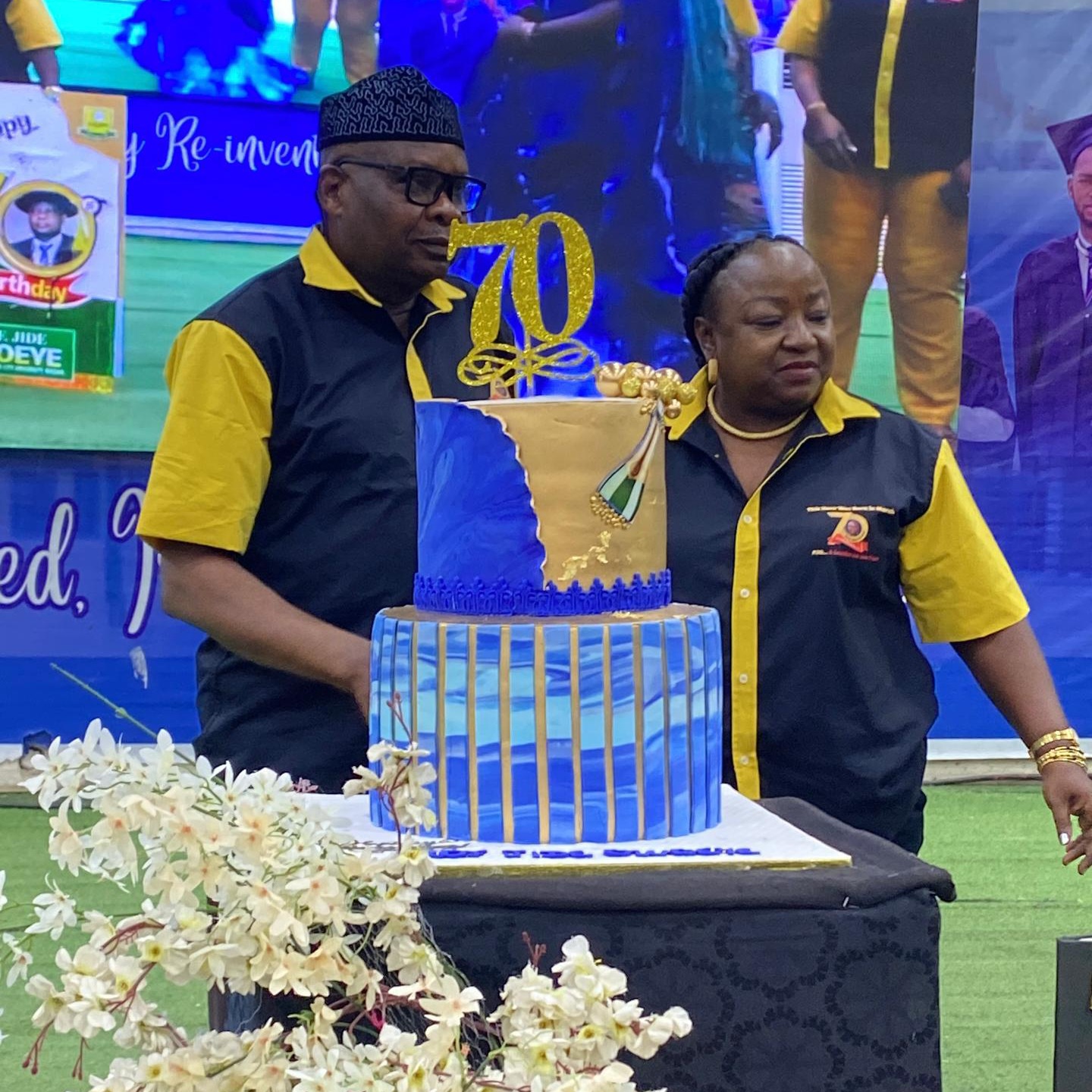
The highpoint of the gathering was the cutting of the birthday cake with various presentations of full size portraits and other gifts items from colleagues, students and staff.


Othe dignitaries who graced the occasion were Chairman, Ovation Media Group, Chief Dele Momodu, General Secretary, Pan African Writers Association (PAWA), Wale Okediran, Oyo State Commissioner of Lagos among others.
Speaking on his achievements, a long time friend from the University of Ife days, Chief Momodu, noted that Prof Owoeye has always been a man of letters, who has carved a niche for himself, adding that Nigeria and Africa are proud of him.
Distinguished in every ramifications, and an authority in International politics and relations, with bias to Asia, Owoeye has transverse all areas and degrees of the academic environment, terminating at the professorial level, and capping it all with the establishment of topnotch private university as the icing on the cake of his academic pursuit and inclination. He boasts of bachelor’s, masters and doctorate degrees in different fields of international studies.
For Owoeye, reaching the peak of his profession was when he became a professor of International Relations at OAU in the year 2000.


Born on March 1, 1956, Prof. Jide Owoeye is a teacher, and a very proud one at that, who would not miss any opportunity to introduce learning and exchange of knowledge. That practically explains why his 70th birthday celebration was tailored towards a colloquium and book presentation status.
Owoeye began his schooling at the OLMC Demonstration School, Ibadan, where he spent the period between 1962 and 1967 acquiring elementary or foundational knowledge of education.
Afterwards in 1968, he attended Olivet Baptist High School, Oyo, for his school certificate, and left in 1972 before attending Government College Ibadan, for his Higher School Certificate, from 1973 to 1974.


He was admitted into the University of Ife, now Obafemi Awolowo University, for his first degree.
On graduation, he was employed as Insurance Officer at Akin George & Company, Lagos, as he decided to try his hands in circular career. His stint at the firm lasted between 1979 and 1980.
Thereafter, he made a daring turn into the word of teaching, becoming Lecturer II at the Department of Government, OSCAS, Ile-Ife, from 1980 to 1982. He briefly worked as Administrative Officer at the Obafemi Awolowo University, Ile-Ife, afterwards in 1983 before landing the position of Senior Lecturer at the Department of International Relations, Obafemi Awolowo University.
Then, there was no turning back from the academic world. He was made a Visiting Senior Research Fellow at the Nigerian Institute of International Affairs, Lagos, from 1992 to 1993, and then, Associate Lecturer, Foreign Policy Academy, at the Ministry of Foreign Affairs, International Centre for Asian Studies.


In a 2019 interview he granted The Punch, Owoeye noted as follows as to what propelled his desire to establish his own university: “I have been in the university system for almost 37 years and 24 of those years were spent in the public university system. I was a professor at the Obafemi Awolowo University, Ile Ife, Osun State, and I noticed then that if one has passion for education, one should have seen some of the lapses (in the system), and some of those lapses one discovered can only be corrected if one is the head of the institution. I believe if you aspire to have a better university system, it is either you head the institution or you look for avenues to help create one where you can impact upon. That was what brought about the passion to work towards establishing a private university where the quest for excellence can actually be attained.”
Owoeye’s rich trajectory in the world of education is common knowledge, leading to his hold several high-profile positions in Obafemi Awolowo University.


Owoeye is married to his lovely wife, Emuleomo, whom he wedded in 1982, and they are blessed with three children; a son and two daughters.
Meanwhile, a special birthday soiree has been scheduled for March 1, his day of turning 70 proper, at Adeline Hall of the university. It promises to be the mother of all celebrations.
Having spent a lot of energy paying attention to education, Owoeye would love to be remembered as somebody who contributed to quality education (at the tertiary and non-tertiary levels) in this country.
Happy 70th birthday sir!
Photos: Tunde Bolarinwa
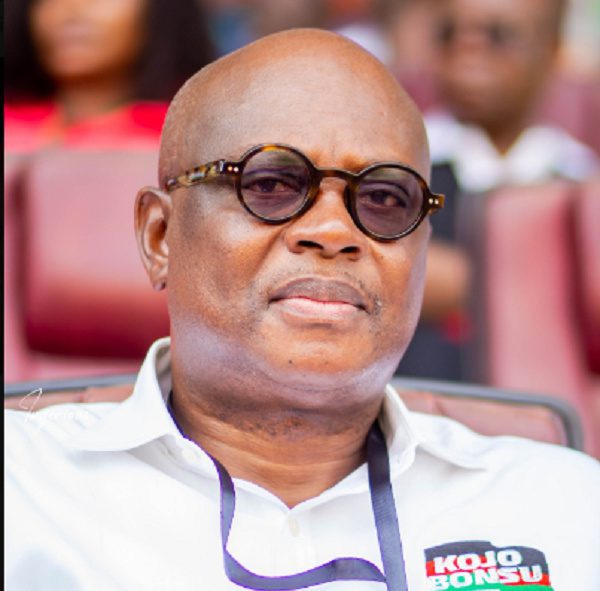
Schooled in varioius areas of human endeavour and administration, Mr Kojo Bonsu is an asset, not only to the Republic of Ghana, but the world in general. He has by every standard paid his dues to the development of his country, serving as the current Ambassador to the Peoples Republic of China, and having served in many other diverse areas including sports administration and entrepreneurship.
Presently, the face of the Republic in China has taken it upon himself to recreate the investment platform of Ghana in China, mandating the media to begin as a matter of urgency, to make Ghana the subject of focus in their reporting.
In other words, the Ambassador has appealed to the Chinese media to use their medium to promote Ghana. A call that resonate the general mantra of the government of President John Dramani Mahama
According to Bonsu, Ghana boasts of several business opportunities, therefore if the Chinese media take keen interest in Ghanaian issues, it would help attract investors from China to Ghana.
He insisted that the door of the Ghana Embassy in China is wide open to Chinese journalists, especially those who want to positively project Ghana.
Bonsu made the remarks while hosting a press soiree in Beijing, on behalf of the Ghana Embassy, which was graced by a number of prominent media institutions in China.
The programme was mainly used to promote Ghana’s upcoming 69th independence anniversary celebrations and also highlight investent opportunities in the country.
Kojo Bonsu, who is a former Kumasi Mayor, said Ghana is the safest, friendly and best country for any investor to do business, urging Chinese businessmen to heed his advice.
“The Chinese media institutions should henceforth partner with the Ghana Embassy in promoting trade and investment opportunities in both of our sister countries for growth.
According to him, Ghana is a democratic nation, which has conducive atmosphere for businesses to flourish, stressing his desire to work and improve Ghana-China relations.
“Ghana is committed to strengthening ties with China. My country is a stable democracy, has business-friendly environment and rich cultural heritage,” Kojo Bonsu stated.

A native of Offinso, a town in the Ashanti Region of Ghana, Michael Kojo (Mensa) Bonsu, thoroughbred professional, both in politics and administration, was born to a respected Offinso Queen Mother and a military officer, among eight other siblings.
He had his Ordinary Level education at the Tamale Secondary School, between 1974 and 1979, where he developed the knack, desire and dream of becoming a football administrator.
Thereafter, he was admitted into the Drayton School in London, but could not immediately assume studies because of the several businesses he was handling at the time. However, between 1985 and 1990, when Bonsu joined giant sports kit manufacturers, Adidas, he enrolled into their football Business Unit at Herzogenaurach, Germany, and in the process obtained a Diploma in Sports Business and Marketing. Presently, he holds a Master’s Degree in International Relations.
After completing his training in sports Business and marketing, Bonsu worked with Adidas and became their first representative in West Africa and served as an Assistant Marketing Officer. He rose to become the kit maker’s manager in Ghana and the whole of West Africa. Within which period he brokered deals between the company and the Ghana football Association specifically the Ghana football national team.
Bonsu’s dexterity in all the things he has laid his hands, including the oil sector, on earned him a citation of honour in 2015 by Managing Director of GOIL, Mr Patrick A.K. Akorli as follows; “You were the key advocate on the board when the monumental decision to rebrand GOIL was taken – the results of which have seen GOIL being propelled to the number one position (retail) among oil marketing companies in Ghana”.
He served as the Managing Director of GOIL from July 2011 to February 2012.
In addition to his legacy of achievements, Bonsu is a director of Tamale-based club Real Tamale United. He was also an executive member of Asante Kotoko.
In 2003, he launched a bid to be the Ghana Football Association’s President. He went against former president of the GFA Kwesi Nyantakyi, politician and executive member of Accra Hearts of Oak, Vincent Odotei Sowah, a former FA vice-chairman, Joseph Ade Coker and former executive council chairman, Y.A Ibrahim. He subsequently lost to Kwesi Nyantakyi in the elections in December 2005.
An ardent supporter of Asante Kotoko and Premier side Tottenham Hotspur, in 2001, he founded and published Agoo Magazine, an African lifestyle magazine.
In January 2010, Bonsu was appointed board chairman of the National Sports Authority then a council under the Ministry of Youth and Sports. He is known and respected for spearheading the re-branding of the sports council until it subsequently became a sports authority.
In 2013, President Mahama nominated him for the position of Metropolitan Chief Executive for the Kumasi Metropolitan Assembly. He resigned in July 2016, following an issue with the Kumasi Traditional Council.
Among many other landmarks, Bonsu would be remembered building the first ever recreational facility, the Kumasi Rattray Park, and organizing the second largest event as part of the celebration of Ghana at 50, dubbed “Ghana As One Gala Night” at Ghana’s Black Star Square with International artists including The Whispers, Shalamar, Pat Thomas, AB Cresntil, Gyedu Blay Amboley, Paapa Yankson and Ola Williams.
It is also on record that in 2014, he secured a loan facility from the Deutsche Bank UAE through parliamentary approval to build the largest modern market in West Africa, the Kejetia Market, called the “Kejetia Dubai,” completed in 2017. He also built the Asawase market, Tafo market, and Atonsu-Agogo market. He renovated the Kumasi Prempeh Assembly Hall. Bonsu’s strides speak volumes.
Bonsu tried his hands at the presidency of Ghana in 2024, but could not win the ticket of his party as Mahama was the preferred choice.
Bonsu continues to exhibit great strides as a distinguished administrator, businessman and political juggernaut.




ADC Unveils Approved Timetable for Congresses, Convention

AFCON 2025: CAS Overturns CAF Verdict

MoneyMaster Enhances Banking App, Gifts Customers Data, Airtime

Iran Has Given Up on Nuclear Weapons, Trump Claims

IGP Disu Redeploys Top Police Officers in Major Shake-up

FG Helpless over Power Outages, Minister Adelabu Admits, Apologises to Nigerians

Obi Condemns Arrest of Sheikh Ahmad Shortly after Meeting in Kaduna

AFCON 2025: George Weah Urges CAS to Overrule CAF’s Verdict

My Dear Brother, Dele Momodu by Segun Adeyemi

The Oracle: The New Digital Colonialism: Navigating AI Policy Uunder Foreign Tech Dominance (Pt. 3)

Why Investing in People Outperforms Every Resource on Earth

Trump Announces 5-Day Ceasefire on Strikes Against Iran, Opts for Talks

The Travails of Nasir El-Rufai

TEF Entrepreneurship: Tony Elumelu Foundation Sets March 22 to Announce 2026 Cohort
-
 Sports5 days ago
AFCON 2025: George Weah Urges CAS to Overrule CAF’s Verdict
-
 Opinion5 days ago
My Dear Brother, Dele Momodu by Segun Adeyemi
-
 The Oracle6 days ago
The Oracle: The New Digital Colonialism: Navigating AI Policy Uunder Foreign Tech Dominance (Pt. 3)
-
 Opinion5 days ago
Why Investing in People Outperforms Every Resource on Earth
-
 World3 days ago
Trump Announces 5-Day Ceasefire on Strikes Against Iran, Opts for Talks
-
 Headline4 days ago
The Travails of Nasir El-Rufai
-
 Featured6 days ago
TEF Entrepreneurship: Tony Elumelu Foundation Sets March 22 to Announce 2026 Cohort
-

 Voice of Emancipation4 days ago
Voice of Emancipation: President Tinubu’s State Visit to the United Kingdom