Headline
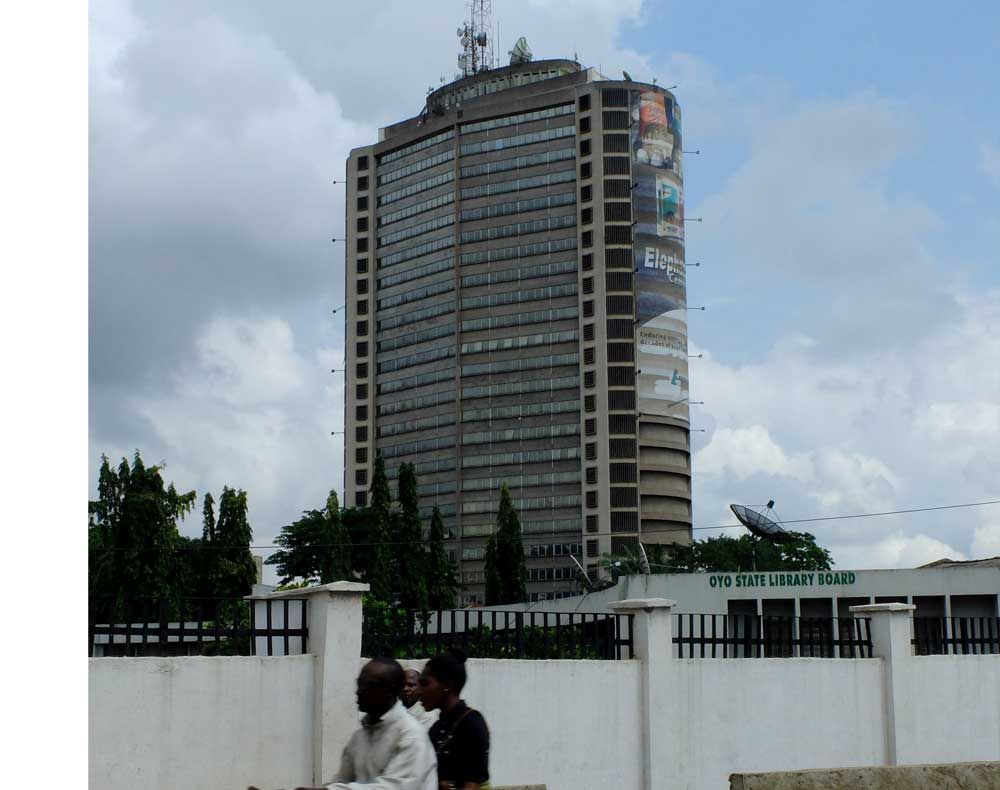
Cocoa House Ibadan: Reminiscences and Metaphors of a Mansion in the Sky
Published
4 years agoon
By
Eric
By Hon Femi Kehinde
Ibadan, epicentre of several firsts, blazed the trail in several strides and endeavours, in Nigeria’s early growth and development. Cocoa house, like several others was prime ingenuity, political sagacity and economic wizardry of the early pathfinders of our regional growth, ably led by Chief Obafemi Awolowo.
The 26-storey building was proposed by Chief Obafemi Awolowo, with proceeds from Cocoa exportation. Cocoa house was commissioned in 1965, at a height of 105 metres. The initial name given to the 26-storey building was “ile awon agbe”, translated from Yoruba to English, to mean House of Farmers. The name was later changed to Cocoa house, because it was built from the proceeds of cocoa exportation and also because it was built in front of a cocoa tree, just in front of a water fountain.
It was once the tallest building in Nigeria and the first sky scrapper in West Africa. It is located in Dugbe – a major commercial area in Ibadan, Oyo State. Dugbe Market began in 1919, on the site of a small market and slab. It is believed to have been one of the traditional gate markets along the tall wall of Ibadan.
The building of the railway station nearby in 1901, was of a great significance, as the nearest market to the main means of long distance transport. The Obafemi Awolowo Government had an economic blue print in its Western Region Development plan from 1955 to 1960. The development plan emphasized property development through the Regional Government, and thus the need to set up a property development company, known as National Investment and Property Company (NIPC). The motto of the Action Group was “life more abundant”.
Following the promulgation of the Banking Ordinance, forbidding banks from being directly involved in property acquisition and development, the echelons of the Action Group, with major support from the leader – Chief Obafemi Awolowo, incorporated the National Investment and Property Company on the 18th of April, 1958, to take over the functions of the property development and acquisition, which had hitherto been rendered to the Action Group by the National Bank of Nigeria, under the Chairmanship of Dr. Akinola Maja. The National Bank, established in 1933, had other directors -T. A. Doherty, called to the Bar in 1921, Akin Adeshigbe, Olaniyi Johnson and Hamzat Subair Akinola Maja, qualified as a medical doctor in 1918, from the University of Edinburgh.
The NIPC had four directors and shareholders as –
Dr. Akinola Maja (Chairman)
S.O Gbadamosi, an astute business man.
Chief Alfred Rawane (who was also the M.D of WNDC)
Chief S.O Shonibare (Secretary, NIPC and managing Director) with a paid up capital of 100, 000 and paid up capital of £25, 000 each.
It could be safely concluded, that the NIPC was formed to continue from where the National Bank stopped, as the financial pillar of the Action Group. Between May 1959 and May 1962, the NIPC had given the Action Group over £4, 000, 000. The company was often directly or indirectly involved through the interlocking relationship of its directors. The company had hardly been incorporated when it started to borrow money from the marketing board. The company had, on the 25th of April, 1958 through its M.D, Chief Shonibare, forwarded a letter to its marketing board, setting out a comprehensive programme of development. The properties listed were as follows-
5 storey building (208-212 Broad Street, Lagos)-£120,000:000
4 Storey Building (128-130 broad street, Lagos)-£60, 000:00
3 18 storey building, (8-10 Broad Street and 68-70 Campbell Street)-£1, 500, 000
80-82 Broad Street, Lagos£500, 000
Apapa Ware House and Offices £100, 000
Barclays Bank site and British and French Bank Site, Ibadan- 31,200, 000
6 Storey Department store, Kingsway store, Ibadan-£500, 000.
This list was later amended to substitute some items with others, which then brought in the idea of a skyscraper to be called cocoa house. There can be no doubt, that most of the properties were prime ones and the viability was never at anytime in doubt. The contractors of Cocoa House, were Messers Cappa and D’Alberto- a construction firm, established in 1932, by two Italian men- Pietro Carlo Cappa and Vigino D’Alberto.
Chief Shonibare, the Managing director was a property development guru, the owner of Shonny investment and Property Company, which was developing an extensive estate in Maryland, Lagos. He had worked with the United African Company (UAC).
Alhaji Sule Oyesola Gbademosi was an astute businessman, and was reputed to be very wealthy. He attended Baptist Academy, Lagos. SLA Akintola was his teacher in school. He went into early commerce after school and prospered. He established Ikorodu Trading Co. Ltd, in 1933 and thereafter, a textile mill. He was the Treasurer of the Action Group. Chief Rewane was the Chairman of the Western Nigeria Development Corporation and a business guru in his own right. Alfred was tall, shimmering, ebony black and stately, that one could easily, be hypnotised by his presence. His commanding presence was however dwarfed by the arresting power of his intellect. A man of deep integrity, Rewane insisted on paying the WNDC, despite being its M.D, for the use of its transport to convey his children to school and his pets to the Veterinary Doctor. Such was the way he ran his affairs. At the end of his tenure, which came rather abruptly, the corporation owed him.
Alfred Rawane, was no doubt one of the ablest and most astute businessmen, Nigeria could boast about during that period. Chief Awolowo had picked the best and ablest men for the task of the returns of their investment and this proved his choice was right. There was a time when Nigeria asked for and secured the service of a Dr. Rao, as economic adviser to the government, some expatriates in the country at that time, wondered why a country that had men like Rewane, Shonibare and Gbadamosi, needed an expatriate economic adviser. All the government needed to do, was to get them together in a room for some days and task them to produce an economic blue print for the country. A brain that had the foresight of entrepreneurship, to invest in Maryland, when it was a desolate and out of the way area, is incontestably, a genius of the highest order. So were almost all the men Chief Awolowo had picked. It was to his eternal credit, that he had chosen such men to run the company. If he had the company being set up for business, it would have succeeded astronomically, but it was not set up for business as such. Its history and the circumstances for its formation show that its raison d’etre was to provide the AG with the fund it would need to carry out all its activities.
The NIPC, awarded the building contract, for Cocoa House, to a firm of constractors- Messers Cappa and D’Alberto. The firm of Cappa and D’Alberto, a leading building and Civil Engineering firm, was established in 1932, by two Italian men- Pietro Carlo Cappa and Vigino D’Alberto.
Cocoa house was ready for delivery to the NIPC in July, 1964, but due to the turmoil and political divides in the Western Region, the Cocoa house edifice could not be commissioned until the 10th of July, 1965, by the then Premier- Chief Samuel Ladoke Akintola, coincidentally, on his birthday. SLA Akintola, was born on the 10th of July, 1910, in Ogbomoso.
The Akintola Government had set up an enquiry to establish the real owners of the cocoa house. Chief Obafemi Awolowo at the time of the official commissioning of the cocoa house in 1965, was already in jail in Calabar prisons, for treasonable felony.
The Western Region at this point was getting adrift and only two people could avert this sinking ship- the two people were Awolowo and Akintola, but unfortunately, the centre could no longer hold.
The state of the growth of the Western Region, before the crisis and political dispersal was phenomenal. The Western Region Government had established the first Television Station in Africa on the 31st of October, 1959. This was enhanced by a legislative enactment, that removed broadcasting from the exclusive list to the concurrent list. The WNTV, was in partnership with Overseas rediffusion, U.K. Anthony Enahoro was the Honourable Minister of Information.
In 1962, to popularise the Television services, the WNTV started television viewing centres in Omi Adio and Lalupon. Liberty Stadium, the first of such in Africa, was also built in 1959 in honour of Nigeria’s independence, coming up in 1960. The 25, 000 sitter capacity stadium, patterned after Wembley stadium in the United Kingdom, hosted the first World title boxing Tournament on the 10th of August, 1963, between Nigeria’s own Dick Tiger and Dene Fulmer of the United States. In 1959/60, 20 farm settlements and 5 Agricultural institutes were created by Awolowo to encourage educated young minds to make a profitable career in farming. Life was rosy and robustly cheerful. Men married many wives, and life flourished abundantly. Awolowo’s 5 years development plan, from 1955 to 1960, was to enhance a steady rise in income, and the general standard of living of the people. The Western Region Government was paying 5 Shillings as daily wage for its daily wage workers, when the Federal Government, paid 3 Shillings.
The farm settlement, was patterned after the kibbutz agricultural system of Israel, with Chief Akindeko, minister of Agriculture as the pivot. The Western Region Government had established, the first Housing Estate in Nigeria- the Bodija Housing Estate, the first dual carriage way in Nigeria, the Mokola Queen Elizabeth Secretariat Road, the first modern parliament- the Western Region House of Assembly and House of Chiefs, the first modern Secretariat in Agodi, Ibadan, Reddifusion Radio- a one channel radio station, had come in 1955, through the same partnership of Reddifusion company in the united kingdom.
The University College Hospital, Ibadan, an affiliate of the University of Ibadan, a 1,000 bed research and teaching hospital, was also established by an August 1952 Act of parliament and was formally commissioned after completion on the 20th November, 1957.
Ibadan blossomed!
The Cocoa house became a honey pot and a centre for attraction and tourist delight. Its presence, encouraged Dugbe to be the economic nerve centre of Ibadan. In the cocoa house neighbourhoods, were the ancient homes of the Syrians and the Lebanese, that is- the Assad Zard, the Moukarim, the J. Allens, the Gamras and their Cocoa stores, ware houses and showrooms, which made the place- Ibadan business nerve centre and commercial hub. The hub takes you to the market, the Barclays Bank-now Union Bank, the rotund standard bank-now First Bank, the Cooperative Bank, the Radio Nigeria,Aje House, PZ and John Holt. Natives and non-natives thrived, without let or hindrance.
The eminence of cocoa house in Ibadan, was not rivalled until 1982, when a 12 floor glass house building was officially opened. This structure, popularly called “broking house” or “glass house” or “Femi Johnson”, was built by the popular insurance and risk management mogul- Late Femi Johnson. The building is mostly built of glass. It is a beauty to behold. The building was formally declared opened by Femi Johnson’s bosom friend-Chief Bola Ige, then Governor of Oyo State. “Glass House” was the former site of Paradise Hotel, where Eddy Okonta and numerous musicians played.
At the official commissioning of the building, Chief Bola Ige said he would have been the Master of Ceremony (MC), if he was not occupying the office of governor of Oyo State. Femi Johnson was a prominent member of the Ibadan literary and drama world, through his membership of the Ibadan Players of the dawn group, with others like- Christopher Kolade, Segun Olusola, Yemi Lijadu, Sola Rhodes, Wole Soyinka, Wale Ogunyemi and the likes.
Femi Johnson was also, a hunting maverick, with the likes of Wole Soyinka and some of their Hunter Friends., hunting for animals in their hunting expeditions, as their interesting pass time.
Femi Johnson, senior brother of Mobolaji Johnson, former governor of Lagos state, was born and bred in Lagos state. He attended CMS Grammar School Lagos, and read private books on insurance; he joined the law union and rock Lagos, from where he was later transferred to Ibadan to manage their branch. He later set up his insurance firm, known as Femi Johnson & Co. He died in the year 1987 at the age of 53.
In January, 1985, the 26-storey cocoa house, suffered a mishap. The entire building was gutted by fire. It temporarily lost its beauty and elegance to the inferno. The fire was said to have consumed everything in the building, because the fire fighters in Ibadan did not have the equipment or the skill to put out a raging inferno in a sky scrapper. Unfortunately, some fire fighters, caught in the inferno, were consumed by the fire. Col. Oladayo Popoola, then military governor of Oyo state, was on a tour of Oke-Ogun in Oyo State, when he received a radio message, that cocoa house, the pride of the Yoruba nation had been burnt, perhaps beyond recognition, according to his then Chief Press Secretary(CPS)- Oloye Lekan Alabi.
Governor Popoola arrived the scene of the incidence at about 7pm and lifted the morales of the fire fighters, to continue with their efforts, to rescue this pride of the Yoruba nation. It was suspected, that this fire incidence of January 9 1985, began in the top floors from a mal functioned electrical equipment, from the administrative office of the National Bank on the 13th Floor. The building was immediately closed for public use until August 1992, when it was again re-opened for commercial use.
The Military Governors of Oyo, Ondo and Ogun States, had set up an enquiry, comprising of the top echelons of the Nigerian Institute of Architects, Nigerian Institute of Engineers, to advise the Government as to its next line of action on Cocoa house.
It was safely concluded, that the cocoa house should not be pulled down, but rehabilitated and its glory and beauty restored. The fire inferno, did not affect the foundation. The Western states government set up the rehabilitation fund, raising committee to rehabilitate, and restore cocoa house.
In its rehabilitated form, rather than its hollowed side earlier look, cocoa house now looks like a cocoa pod. Cocoa house was also not rivalled, until 1979, when the NECOM building was completed in Marina Lagos and houses the headquarters of NITEL. The NECOM building on 32 floors was constructed by Constain West Africa Limited- a foreign construction company, that was incorporated in 1948. The lightings at the top of the tower, serves as a light house beacon for the Lagos habour. The building, with a height of 160 metres, was constructed with concrete, and then over took cocoa house, to become the tallest building in West Africa, at the time of completion.
Like the cocoa house, NECOM building suffered two fire incidences, in 1983 and 2015, respectively. Interestingly, the Burj Khalifa, peaking at the height of 2,217 feet, stands as the tallest building in the world, standing on 160 floors.
Cocoa house Ibadan and the recently collapsed sky scrapper in Ikoyi Lagos, provides a great study in contrast and metaphor. It would not be too farfetched, that the Ikoyi building collapsed, because it could not withstand the forces of nature, or gravity or as a result of substandard building materials or the combination of the three factors, or not sticking to the specifications approved Cocoa house still stands as the rock of Gibraltar!
May you, Cocoa house, continue to stand tall and erect, as the first of such edifices in the sub Saharan West Africa, and in the fondest memories of those that conceptualised you, towards the economic prosperity of the Western region of Nigeria, in the days of yore…
Cocoa house, continue to dance in the sky as one of our first childhood fancies.
Hon. (Barr.) Femi Kehinde is Legal Practitioner and Former Member, House of Representatives, representing Ayedire/Iwo/Ola-Oluwa Federal Constituency, Osun State (1999-2003)
Related
You may like
Headline
Atiku Abubakar @79: Celebrating a True Statesman + Dele Momodu’s Inspiring Tribute
Published
1 week agoon
November 29, 2025By
Eric
By Eric Elezuo
The rich cultural border town of Jada in Adamawa State, Nigeria, came briskly alive during the week, when trusted colleagues and associates, party bigwigs and immediate family members, trooped in to honour a man, whose legacies of political sagacity and entrepreneurial wizardry have become a reference point, Alhaji Atiku Abubakar, a former Vice President of the Federal Republic of Nigeria, as he celebrates his 79th birthday.
With fanfare, razzmatazz and deep-rooted joy, the about-to-become-octogenarian hosted a week-long soiree rooted in legit discourse, high profile networking and philanthropy for all and sundry.
Known for his near-impeccable public service image, Atiku is revered as the Midas of our time, converting almost nothing to something of immense value.

A former Speaker of the House of Representatives, Hon Yakubu Dogara, once described the invincibility of the Wazirin Adamawa as follows:
1. Give him pure water and he’ll turn it into Farro water
2. Show him a Primary school and he’ll turn it into a world class univeristy
3. Show him a jetty and he’ll turn it into a world class port
4. Give him a bull and a heifer and just few years and he ll give you a herd
5. Give him a bag of chaff and he’ll mill it into animal feed
6. Give him a bottle of bala blue and he’ll turn the cream to farro juice
7. Give him a home and he’ll bring Nigeria into it as family members
8. Make him walk into an environment where there is contention and fight and see how they fade into peace.
From the Nnamdi Azikiwe International Airport to the Yola Airport in Adamawa State, heartfelt accolades from supporters trailed every movement of the vice president, who absorbed all with equanimity, acknowledging greetings with finesse and humility, stopping at regular intervals for a deep hug and claspy handshake that says more friendship and camaraderie.

The grand finale of the activities was held at the Atiku Family Event Hall in Jada with a well-attended Commemoration Lecture that drew dignitaries and admirers including political associates, mentees, members of the diplomatic corps and many others from far and wide. Though it was meant to be an in-house celebration, it drew together distinct policy makers and more.
From one distinguished speaker to another, soul striking lectures and goodwill messages were delivered including tributes aimed at extolling the stateman-like qualities of His Excellency.

It is instructive to note that Atiku, as he is easily recognized, is not just another politician; he is exceptionally versatile as a detribalised, prolific entrepreneur and a practitioner of politics without bitterness. It is not a wonder therefore that he has excelled in politics, public service, and entrepreneurship, most especially.
It was in the notes of the one of the keynote speakers, Chief Dele Momodu, that the underlying greatness, humane qualities and more of Atiku Abubakar were laid bare before public scrutiny.
Momodu, in a lecture he titled Alhaji Atiku Abubakar: The Consumate Democrat, took the audience down memory lane as he highlighted the uncommon humility the Waziri Adamawa demonstrated when he stepped down for MKO Abiola in 1993.
The details of Chief Momodu’s speech are as follows:
ALHAJI ATIKU ABUBAKAR: THE CONSUMMATE DEMOCRAT

It gives me great pleasure, and I consider it a privilege, to have been invited to speak about one of the greatest Nigerians alive today. There’s no way I would have turned down this request.
Just last week, I was invited to a roundtable meeting at the British House of Lords in London, also at the behest of Alhaji ATIKU ABUBAKAR. I wish to offer my sincere gratitude to ALHAJI for his confidence in me and his demonstration of love for me at all times.
My earliest recollection of Alhaji was wayback in 1993, in the beautiful city of Jos, where three political gladiators, Alhaji Babagana Kingibe, Alhaji Atiku Abubakar, and Chief Moshood Abiola had locked horns in a world heavyweight bout to decide who picks the Presidential ticket of the Social Democratic Party. I was barely 32/33 at that time but I was politically savvy and heavily inspired and motivated by my adopted father, Chief Moshood Abiola.

The SDP primary of that year remains unprecedented till this day. I will not bore you with details of the Convention that brought these juggernauts into a three horse race, which only one of them can, and must win. But there was a logjam and the only way a winner could have emerged was for one of them to step down and quit the race. This was a tough decision for all of them.
Alhaji Babagana Kingibe enjoyed the avuncular support of most of the SDP Governors. Alhaji Atiku had access to the extensive networks of his mentor Major General Shehu Musa Yar’Adua. The Abiola team calculated well and smartly by reaching out to the godfather pronto. The incredible then happened. Without much ado, Alhaji stepped down and thus cleared the coast for the eventual victory of my adopted father, Chief Moshood Abiola. Since then, unknown to Alhaji Atiku, I have been his big fan. Alhaji did not throw tantrums or sulk endlessly like a baby. He did not seek to destroy their party. Not that he didn’t have enough reasons to be angry and bitter but he chose the path of uncommon equanimity and submitted himself to the immutable will of Allah at His appointed time.

What could have made matters worse, Alhaji Atiku failed to clinch the runningmate slot, against conventional wisdom of give and take. Again, Alhaji Atiku went back to his drawing board, and about his life peacefully without raining a tirade of insults against distinguished elders who have paid their dues to our country. Even when he had the opportunity to retaliate after the June 12 debacle, Alhaji followed a path of honor by supporting Chief Abiola, unconditionally, and for the revalidation of his mandate. Alhaji Atiku is not your common politician.
As fate would have it, he later contested the Governorship election in his home state and won. But before settling down to his Gubernatorial assignments, he was invited to be the Vice President to President Olusegun Obasanjo. He would soon become the most effective and influential Vice President ever in Nigeria. As the head of the economic team, he was able to attract and work with the best and brightest. The gentleman’s agreement was that he would Vice for the office of the President after one term, but again he was let down. He could have fought tooth and nail against his Boss, President Olusegun OBASANJO but he chose the path of absolute peace and patience. But his boss was unhappy that Alhaji and his friends ever challenged him. President OBASANJO went after them like bullets. And there were collateral damages here and there. Several of my friends in Alhaji’s office at the Presidential villa were summarily sacked.

I must confess that I have never seen a man like Alhaji before. He takes everything in his strides. Most politicians would have brought down the rooftops. His faith in Allah is unshakable. What should have been to his glory eventually became his albatross. But Allah compensated with extraordinary favor as a businessman. While his peers became parasites feeding fat on the State, Alhaji became King Midas and most businesses he touched turned to gold. Though he never abandoned his political dreams, he pursued his ambition with visionary clarity and painstaking discipline. He never engaged in violence. He rather invested unrelentingly in the rule of Law. Whenever he contested and he felt robbed of victory, he headed to the courts of the land. Many of his landmark cases have since enriched our jurisprudence and legal lexicon. He has remained a tireless fighter and defender of the rights of the common man.
It is a tragedy that such a man of sharp intellect and prodigious talents has been endlessly maligned in the name of politics.

It must be noted that many of our political icons had suffered similar persecution in the past. My sad conclusion is that when we refuse to encourage good people, the worst amongst us will continue to thrive.
I make bold to declare my maximum respect for ALHAJI ATIKU ABUBAKAR as a great man of ideas and ideals, a peacemaker, man of God, blessed family man, absolutely detribalised, very cosmopolitan, well educated, versatile, humble in spirit, unpretentious, experienced and exposed. He is without doubt a man of diversity and destiny. May Allah preserve him for the benefit of all us because in the days of tribulations, kids must run to the elders of the house. No one else is better prepared for this role at this auspicious moment.
Please, let’s all rise and give a standing ovation to a leader who has refused to give up on his goals…

Other speekers, who eulogized the celebrant in goodwill messages were former Adamawa Governor Jibrilla Bindow, Senator Ishaku Abbo, Senator Aishatu Dahiru Ahmed Binani, Senator Abdulaziz Nyako and several others.
In his traditional soft-spoken nature, Atiku expressed gratitude to all attendees, with special appreciation to the organizers, and special mention of Prof. Ahmed Shehu (Pullo Jada) for their dedicated efforts to ensure the smooth sailing of the event.
THE MAN ATIKU ABUBAKAR

Below is brief history of the former Vice President as told by himself –
I was born on the 25th of November 1946 in Jada village, Adamawa State Like many of my generation, my father was opposed to Western education and tried to keep me out of school. When the government discovered this, my father spent a few days in jail. I was then enrolled in Jada primary school.
When I was only 11 years old, my father drowned and died while trying to cross a small river. The task of raising me then fell on my mother. At that age I resolved to work hard, remain focused and be successful in life to make my her proud. In 1960, I was admitted to Adamawa Provincial Secondary School in Yola.
Academically, I did well in English Language and Literature but I struggled with Physics, Chemistry and Mathematics. I spent most holidays working to earn extra money. In 1961, when I was 15 years old, my mother’s elder brother sold the family house in Jada without her knowledge and rendered us homeless. I spent that holiday working and from my earnings, I bought a house for my mother in Ganye. I became an orphan when my mother suffered a heart attack and died in 1984.

Post Secondary School
I graduated from secondary school in 1965. After that, I studied at the Nigeria Police College in Kaduna for a short while. I left when I was unable to present an O-Level Mathematics result. I worked briefly as a Tax Officer in the regional Ministry of Finance, from where I gained admission to the School of Hygiene in Kano in 1966.
I graduated with a Diploma in 1967, having served as Interim Student Union President at the School. In 1967 I enrolled for a Law Diploma at the Ahmadu Bello University Institute of Administration, on a scholarship from regional government. After graduation in 1969, I was employed by the Nigerian Customs Service.
Family
I met nineteen year old Titilayo Albert when I was serving at Idiroko, Lagos, and in December 1971 I married her secretly, because her family was initially opposed to the union. On 26 October 1972, Titi delivered a baby girl and we named her Fatima. Titi later gave birth to Adamu, Halima and Aminu.
In January 1979 I married Ladi Yakubu as my second wife. I wanted to expand the Abubakar family. I had no siblings and I felt extremely lonely as a child. I did not want my children to feel that way.
This is why I married more than one wife. My wives are my sisters, my friends, and my advisers and they complement one another. Ladi gave birth to Abba, Atiku, Zainab, Ummi-Hauwa, Maryam and Rukayatu.

In 1983 the late Lamido of Adamawa who had become like my father made me the Turaki of Adamawa. This position was usually reserved for one of the Emir’s favorite sons and was rarely given to non-royals like me. To ensure that I met the ‘blood tie’ requirement for the title, the Lamido gave me one of his daughters, Princess Rukaiyat, to marry.
She gave birth to Aisha, Hadiza, Aliyu, Asmau, Mustafa, Laila and Abdulsalam. I married Fatima Shettima in 1986. She gave birth to Amina (Meena), Mohammed and two sets of twins Ahmed and Shehu, Zainab and Aisha and then Hafsat. Jennifer Jamila Atiku-Abubakar is my last wife. She gave birth to Abdulmalik, Zara and my youngest child, Faisal.

Customs
My Customs career commenced on 30 June 1969. My first posting was at Idi-Iroko, a border town between Nigeria and Benin Republic. My other assignments included the Lagos Airport, Apapa Ports (1974), Ibadan Customs Command (1975), Kano Command (1976), Maiduguri (Area Comptroller, 1977), Kaduna (1980) and the Apapa Ports in 1982.
In April 1984, when I was the Murtala Muhammed Airport Area Administrator, my name was associated with a scandal that made headlines. As part of efforts to cripple corrupt politicians who had stashes of stolen cash in their possession, the new military government had phased out the old naira currency and replaced it with new ones. Orders had been given to ensure that all luggage entering the country was properly screened to prevent smuggling of the old notes. The Emir of Gwangu and Ambassador Dahiru Waziri had arrived from Saudi Arabia with many suitcases. As is customary, the suitcases were supposed to pass through Custom officers for check but the Emir’s son, who was a Major in the Army and also ADC to Head of State Gen Buhari drove straight to the Tarmac with soldiers, off-loaded the suitcases there, picked up his father and the Ambassador and drove away. The soldiers had threatened to shoot the Custom officers who had protested and tried to stop them. My officers reported in writing to me and I in turn reported the incidence to my boss, the Director of Customs. A few days later, one of the officers leaked the story to Guardian Newspapers and their correspondent called me to confirm if it was true. I did.

Soon after, Newspaper Headlines read, “Passenger with 53 suitcases leaves airport unchecked”. This scandal embarrassed the government and they tried to make me deny it happened. I refused and they threatened to throw me out of service. The Minister of Finance then, Soleye, who oversaw the Customs Service played a big role in ensuring I wasn’t dismissed. He had said it would be unfair to punish me for being honest and standing by my officers.
In 1987 I was promoted to Deputy Director of Customs and Excise in charge of Enforcement and Drugs. In April 1989, when I was 43, I voluntarily retired from Customs after 20 years of meritorious service.
Business
I’ve always had a good nose for business. In my early years as a Customs officer, I received a 31,000 naira Housing Loan, built a bungalow in Yola, and rented it out. With the rent I collected in advance, I bought a second plot and built another house. I continued building new houses with rent from completed ones and after a few years I had built 8 houses in choice areas in Yola. When I was transferred to Kaduna, I continued this process and in a few years I had 5 houses there.
In 1981, I moved into agriculture. I became the largest maize farmer in the whole of Gongola state. Unfortunately, due to Government policies that increased the cost of production, the business fell on hard times and closed in 1986.

The most successful business I ever ventured into was with Gabrielle Volpi, an Italian businessman. He intimated me about how profitable Oil and Gas Logistics business could be and, trusting his abilities, I partnered with him to form NICOTES which started operating from a container office at Apapa ports.
When the business began to grow, we relocated to Onne, Rivers State. The company, now known as INTELS (Integrated and Logistics Services) is a multi-billion naira company that has a staff of over 15,000 people and pays huge dividends to its shareholders. My other businesses include agriculture, feed making, plastics, printing, TV/radio media, and beverages.
Politics
I met Shehu Musa Yar’Adua towards the end of my Customs career. He invited me to the political meetings that were happening regularly in his Lagos home; and that was how my foray into politics began.
In 1989 the political meetings became Peoples Front of Nigeria and I was elected as the National Vice- Chairman.
We wish the Wazirin Adamawa a happy birthday, and many fruitful years ahead!
Related
Headline
Season of Compensations: Tinubu Submits 32 Ambassadorial Nominees to Senate
Published
1 week agoon
November 29, 2025By
Eric
President Bola Ahmed Tinubu has sent the names of 32 ambassadorial nominees to the Senate for confirmation, days after he sent the first batch of three names.
Bayo Onanuga, media aide to President Tinubu made this known in a statement on Saturday.
According to the statement, President Tinubu, in two separate letters to the President of the Senate, Godswill Akpabio asked the Senate to consider and confirm expeditiously 15 nominees as career ambassadors and 17 nominees as non-career ambassadors.
Onanuga stated that there are four women on the career ambassadors’ list and six women on the non-career ambassadors’ list.
The statement reads, “Among the non-career ambassador designates are Barrister Ogbonnaya Kalu from Abia, a former presidential aide, Reno Omokri (Delta), former chairman of the Independent National Electoral Commission (INEC), Mahmud Yakubu, former Ekiti first lady, Erelu Angela Adebayo, and former Enugu governor, Ifeanyi Ugwuanyi.
“Others are Tasiu Musa Maigari, the former speaker of the Katsina House of Assembly, Yakubu N. Gambo, a former Commissioner in Plateau State and former deputy executive secretary of the Universal Basic Education Commission (UBEC).
“Professor Nora Ladi Daduut, a former senator from Plateau; Otunba Femi Pedro, a former deputy governor of Lagos State; Chief Femi Fani-Kayode, a former aviation minister from Osun State; and Barrister Nkechi Linda Ufochukwu from Anambra State are on the nomination list.
“Also on the list are former First Lady of Oyo, Fatima Florence Ajimobi, former Lagos Commissioner, Lola Akande, former Adamawa Senator, Grace Bent, former governor of Abia, Victor Okezie Ikpeazu, Senator Jimoh Ibrahim, businessman, lawyer and Senator from Ondo State, and the former ambassador of Nigeria to the Holy See, Ambassador Paul Oga Adikwu from Benue State.
“Among the nominees for career ambassador and high commissioner-designates are: Enebechi Monica Okwuchukwu (Abia), Yakubu Nyaku Danladi (Taraba), Miamuna Ibrahim Besto (Adamawa), Musa Musa Abubakar (Kebbi), Syndoph Paebi Endoni (Bayelsa), Chima Geoffrey Lioma David (Ebonyi) and Mopelola Adeola-Ibrahim (Ogun).
“The other nominees are Abimbola Samuel Reuben (Ondo), Yvonne Ehinosen Odumah (Edo), Hamza Mohammed Salau (Niger), Ambassador Shehu Barde (Katsina), Ambassador Ahmed Mohammed Monguno (Borno), Ambassador Muhammad Saidu Dahiru (Kaduna), Ambassador Olatunji Ahmed Sulu Gambari (Kawara) and Ambassador Wahab Adekola Akande (Osun).
“The new nominees are expected to be posted to countries with which Nigeria maintains excellent and strategic bilateral relations, such as China, India, South Korea, Canada, Mexico, the United Arab Emirates, Qatar, South Africa, Kenya, and to Permanent Missions such as the United Nations, UNESCO, and the African Union. All the nominees will know their diplomatic assignments after their confirmation by the Senate.
“Last week, President Tinubu sent three ambassadorial nominees for screening and confirmation. The nominees were Ambassador Ayodele Oke (Oyo), Ambassador Amin Mohammed Dalhatu (Jigawa), and Retired Colonel Lateef Kayode Are (Ogun). All three are in the pot for posting to the UK, USA, or France after their confirmation.
“President Bola Ahmed Tinubu said more nominees for ambassadorial positions will be announced soon.”
Related
Headline
FG Must Urgently Deploy Modern Technology to Curb Killings – Obasanjo
Published
1 week agoon
November 29, 2025By
Eric
Former President Olusegun Obasanjo has declared that Nigerians owe no one an apology for seeking assistance from the international community to tackle the country’s insecurity, stressing that lives are being lost daily regardless of religion, ethnicity, or political affiliation.
Speaking on Friday night at the ongoing Plateau Unity Christmas Carols and Praise Festival in Jos, Obasanjo said the Federal government must urgently deploy modern technology to curb killings, noting that with technology, no criminal should be beyond the reach of security agencies, as the country has the capacity to take them out.
“In these days of technology, there should be nobody who can hide after committing a crime,” he said. “Before I left government, we had the capacity to pick up anybody in Nigeria once identified… Every Nigerian life matters, whether Christian, Muslim or pagan. Nigerians are being killed; this must stop.”
He insisted Nigerians have the right to seek international partnership if domestic efforts fall short, arguing that saving lives must remain the nation’s priority.
Plateau State governor, Caleb Mutfwang, who also addressed the gathering, reassured citizens that Nigeria would overcome its current trials. “By the grace of God, those who want Nigeria destroyed will not succeed,” he declared, praying that national and state leaders continue to receive strength and wisdom to act rightly.
The governor said the annual carol event was inspired by the vision of uniting the people of Plateau through worship and thanksgiving. “God is delighted when we come together in unity to exalt His name,” he said. “Despite all odds, we are gathered again this year to celebrate the goodness of God in the land of the living.”
Mutfwang welcomed dignitaries in attendance, including former President Obasanjo; General Lawrence Onoja (rtd.); former Governors of Plateau State, Joshua Dariye and Jonah Jang, who attended with his wife, Ngo Talatu; former Minister of Women Affairs, Dame Pauline Tallen; former Governor of Adamawa State, Boni Haruna; former Chief of Defence Staff, General Martin Luther Agwai (rtd.); and the GOC 3 Division, Major General Folorunsho Oyinlola, among others.
Expressing delight in the diversity of worshippers, the governor said Plateau citizens put aside denominational differences to worship under one banner. “With unity, we will shut the door against the enemy that troubles us,” he said.
The event featured ministrations from renowned gospel artistes including Buchi, Uche Etiaba, Pastor Chingtok, and choirs drawn from various denominations.
Related


Soldiers Strike in Benin Republic, Removes Talon, Takes over Govt
The Incredible World of Capt. Segun Sotomi @45
Adding Value: Heal and Move On by Henry Ukazu
Open Letter to Global Leadership: Forging New Intergenerational Partnership for Sustainable Governance
Meet Muhammad Ashfaq Hussain, CEO at Profound Realtors
How Dr. Fatima Ibrahim Hamza (PT, mNSP) Became Kano’s Healthcare Star and a Model for African Women in Leadership
Era of Nationwide Fuel Queues Has Come to An End, Says Dangote
Alex Otti Pays Solidarity Visit to Nnamdi Kanu in Sokoto Prison
After Weeks of Incarceration, Cameroon Opposition Leader Dies in Detention
US Moves to Impose Visa Restrictions on Sponsors, Supporters of Violence in Nigeria
Just In: Defence Minister Abubakar Badaru, Resigns, Tinubu Accepts
Tinubu Names Immediate Past CDS Chris Musa As New Defence Minister
Redefining Self-leadership: Henry Ukazu As a Model
US Lawmakers Meet Today over Reported Christian Genocide
Trending
-
Featured6 days agoAlex Otti Pays Solidarity Visit to Nnamdi Kanu in Sokoto Prison
-
Featured6 days agoAfter Weeks of Incarceration, Cameroon Opposition Leader Dies in Detention
-
World4 days agoUS Moves to Impose Visa Restrictions on Sponsors, Supporters of Violence in Nigeria
-
News6 days agoJust In: Defence Minister Abubakar Badaru, Resigns, Tinubu Accepts
-
National5 days agoTinubu Names Immediate Past CDS Chris Musa As New Defence Minister
-
Opinion4 days agoRedefining Self-leadership: Henry Ukazu As a Model
-
USA5 days agoUS Lawmakers Meet Today over Reported Christian Genocide
-
Featured4 days agoDavido Hails Uncle, Gov Adeleke on Resignation from PDP