Connect with us

Featured

Billionaire Businessman, Otedola, Felicitates with Babangida at 80, Recalls Message to Ex-President Jonathan

Published

on

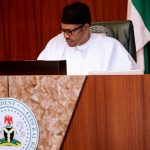
Billionaire businessman, Femi Otedola, has recalled the role played by former Military President, General Ibrahim Badamosi Babangida, in the political logjam caused by the prolonged sickness of the late president Umaru Musa Yar’Adua in 2010, when he asked former president Goodluck Jonathan to assert himself at their next Federal Executive Council (FEC) meeting by sitting on the president’s seat.

With Yar’Adua failing to formally transfer power to his deputy, Jonathan, when he was flown abroad for medical treatment, there was tension across the nation as a result of the power vacuum, which led to several public protests.

In his forthcoming book on business lessons, scheduled for release in November, Otedola revealed that Babangida had sent a message through him to then Vice President Jonathan, to sit on the empty seat of the President in the next FEC meeting and by implication, send a message to all concerned then that he understood the nuances of power and politics.

Otedola, who joined million other people across the world to felicitate with Babangida, who would be 80 years tomorrow, Tuesday, August 17, Wished the retired general more rewarding years and thanked him also for all that he represented and still represents.

Writing on the need for entrepreneurs to engage with political authorities in one of the chapters of his new book, Otedola maintained that such a relationship would benefit the country.

“Entrepreneurs’ outreach and dialogue with political leaders, among many positives, will ensure stability and social coherence, guaranteeing economic progress.

“Worried by the tension and uncertainty, I decided to do something on my own. In the first week of February 2010, I went to Minna, Niger state, along with Hajia Bola Shagaya, to commiserate with General Ibrahim Babangida over the death of his wife, Maryam.

“At his Hilltop residence, we spoke on a wide range of issues, but I told him I needed to discuss an urgent and vital issue. He took me to his study, where the two of us were alone. I told him that the state of the nation had been agitating my mind,” he stated.

Otedola said he then asked Babangida: “Your Excellency, how can we get out of this logjam? The political heat is too much.

“Calm and resolute, IBB replied: ‘Femi, advise your friend that when he gets to the Council Chambers next week for the Federal Executive Council (FEC) meeting, he should go and sit on the President’s chair.’

“I found that fascinating and assured him I would pass the message across. I travelled back to Abuja by road in the evening and went straight to have dinner with Dr. Jonathan. I did not waste time in delivering General Babangida’s message to him,” he wrote.

Continuing, he added: “He nodded and asked me: ‘What do you think?’ I laughed and said, ‘Be a man, Your Excellency. Go and sit on that chair!’ He looked at me for some time and responded that he would think about it.

“A week later, on Tuesday, February 9, the National Assembly adopted the famous ‘Doctrine of Necessity’ to make Dr. Jonathan the Acting President pending the return of President Yar’Adua from his medical

“Behind-the-scene moves by prominent Nigerians preceded this decision. The legislative resolution was unprecedented, but the nation had been tensed up. The fault lines were so stoked that an unusual solution was needed to address the unique situation.

“With Jonathan now legally empowered to act as President, there remained the critical optics: would he stand-in for the President confidently and authoritatively? Or would he try to maintain a subdued outlook? The following day was the FEC meeting. As Dr Jonathan entered the Council Chamber, he made to sit on the chair of the Vice President—his usual seat.

“As the protocol officer pulled out the VP’s chair, Dr. Jonathan marched towards the seat reserved for the President. And he sat on it! That was the moment Dr Goodluck Jonathan took control of power. By that act, he sent a strong signal to all Nigerians that he was now in charge. The same day, Jonathan even reshuffled the cabinet.”

Yar’Adua died on May 5, 2010, and Jonathan was sworn in as his replacement, going on to win the 2011 presidential elections and serving one term in office.

In the book, Otedola said entrepreneurs must engage with political authorities, because it was only when there was peace that the economy could boom.

He wrote: “While many may see political engagement for entrepreneurs as one-sided—in the sense that only the entrepreneur benefits—the reality is that it could work both ways. I tapped into my political connections to contribute my little quota to resolving a power crisis that almost set the country on fire.

“This example is one of the several instances in which I used my access to the seat of power and political heavyweights to contribute to nation-building and national development. Entrepreneurs need to appreciate the fact that peace for the country is peace for their businesses, too. We need a stable and peaceful country first and foremost.”

ThisDay

Continue Reading
Click to comment

Leave a Reply

Your email address will not be published. Required fields are marked *

Featured

El-Rufai to Remain in ICPC Custody Till June

Published

on

By

Justice Darius Khobo of the Kaduna State High Court has adjourned the bail hearing of former Governor of Kaduna State, Mallam Nasir El-Rufai, to the first week of June, 2026.

El-Rufai is being arraigned on multiple charges bordering on alleged financial crime and abuse of office by the Independent Corrupt Practices and Other Related Offences Commission (ICPC).

“Similarly, another charge, number KDH/KAD/ICPC/01/26, against Mallam Nasir El-Rufa’i and one Amadu Sule (LEDA) has also been filed before a Kaduna State High Court in the Kaduna Judicial Division,” the ICPC said last month.

“The charges in the State High Court case range from abuse of office, fraud, and intent to commit fraud to conferring undue advantage, among others. Both charges were filed by the ICPC on the 18th of March, 2026.”

Speaking after the court session, counsel to the former governor, Ukpon Akpan, kicked against the lingering adjournment of the bail hearing by one presiding judge as politically motivated.

The high-profile case has drawn significant public attention, with heightened security presence observed around the court premises.

The former governor had arrived at the court at about 9 am in a convoy accompanied by ICPC officials and operatives of the Department of State Services (DSS).

During the proceedings, supporters of the former governor gathered outside the courtroom, while security agencies maintained order and restricted movement within the vicinity.

Inside the courtroom, journalists, as usual, were not allowed, as proceedings are expected to focus on arguments presented by both the defence and prosecution regarding the bail request.

At the last sitting, the defence team had maintained that their client poses no flight risk and is willing to comply with all conditions set by the court.

Meanwhile, the prosecution has urged the court to carefully consider the gravity of the charges.

The 66-year-old former governor of Kaduna has been in ICPC custody since February 19 following his release by the Economic and Financial Crimes Commission (EFCC).

El-Rufai, a former minister of the FCT, was, however, released on March 27 based on compassionate grounds following his mother’s death.

Continue Reading

Featured

Timi Frank Petitions US, Demands Gbajabiamila’s Resignation over ‘Anti-Democratic’ Remarks

Published

on

By

Political activist, Comrade Timi Frank, has called on the United States government to investigate and sanction the Chief of Staff to the President, Femi Gbajabiamila, over alleged actions capable of undermining Nigeria’s democracy.

Frank’s demand followed a viral video in which Gbajabiamila was quoted as telling Hon Leke Abejide, during his wife’s 50th birthday that: “Don’t come to APC. Stay in ADC and scatter them. We like what you’re doing… stay in ADC and win your election… bring Bala Gombe, and we’ll support him. Good luck in court.”

Describing the remarks as “reckless” and dangerous, the former Deputy National Publicity Secretary of the All Progressives Congress (APC), said they point to a deliberate attempt to weaken opposition parties and erode democratic institutions.

“Your statement, as Chief of Staff, raises serious concerns about the determination by President Bola Ahmed Tinubu’s regime to truncate democracy,” he said, adding that “inference can be made that there is an infringement on the independence of the judiciary.”

He warned that any suggestion that courts could be influenced “undermines public confidence in democratic institutions,” citing references to political actors, including Leke Abejide, as requiring clarification to avoid “dangerous interpretations.”

Frank argued that Gbajabiamila’s comments effectively confirm the Presidency’s involvement in crises rocking opposition parties such as the Peoples Democratic Party (PDP), Social Democratic Party (SDP), New Nigeria Peoples Party (NNPP), and the African Democratic Congress (ADC).

“When a Chief of Staff speaks, it reflects the body language of the President. This points to a deliberate attempt to weaken opposition and consolidate power,” he said.

He further claimed that state influence, including the use of the judiciary, is being deployed against opposition parties. “The audacity of the statement suggests nothing will happen even if opposition parties are destabilised. That is dangerous,” he added.

Frank described Gbajabiamila as “an alter ego of the President” who had “displayed the arrogance of power,” insisting that public office holders must uphold restraint, respect for the rule of law and constitutional order.

He also urged U.S. authorities to probe Gbajabiamila’s activities and financial dealings.

“As an American citizen, he should be held accountable. We want to know if he is meeting his tax obligations in line with his earnings in Nigeria,” Frank said, describing him as “a bad ambassador of the United States.”

“We want to be sure that all earnings, including those from official and business engagements in Nigeria, are properly declared and taxed,” he added.

On accountability, Frank insisted resignation was the only honourable option.

“We call for your resignation with immediate effect. If such a statement were made in the United States, the official involved would have resigned forthwith,” he said.

He disclosed plans to petition the U.S. Embassy in Nigeria, stressing that “those entrusted with leadership must reflect humility, constitutional awareness and respect for separation of powers.”

“Power is transient, but institutions must endure. Any comment that diminishes their independence must be corrected,” he added.

The call comes amid rising concerns over the stability of Nigeria’s multiparty system and allegations of increasing pressure on opposition parties.

Comrade Timi Frank is the ULMWP Ambassador (East Africa and Middle East) and Senior Advisor, Global Friendship City Association (GFCA), USA.

Continue Reading

Featured

Alleged Coup Plotters Get April 22 Date for Trial, Slammed with 13-Count Charge

Published

on

By

The Federal Government has filed a 13-count charge before the Federal High Court in Abuja against a retired Major General, a retired Naval Captain, a serving police inspector, and three others over an alleged coup plot and acts of terrorism.

The alleged coup plotters, are scheduled to be arraigned tomorrow (Wednesday), April 22, before Justice Joyce Abdulmalik of the Federal High Court, Abuja.

Those named in the charge are Major General Mohammed Ibrahim Gana (rtd), Captain (NN) Erasmus Ochegobia Victor (rtd), Inspector Ahmed Ibrahim, Zekeri Umoru, Bukar Kashim Goni, and Abdulkadir Sani.

Also listed as a defendant, but said to be at large, is former Minister of State for Petroleum Resources, Timipre Sylva.

The charge, filed by the Office of the Attorney-General of the Federation and signed by the Director of Public Prosecutions of the Federation, Rotimi Oyedepo, SAN, accuses the defendants of offences ranging from treason and terrorism to failure to disclose security intelligence and money laundering linked to terrorism financing.

At the centre of the case is an allegation that the defendants conspired in 2025 to undermine the Nigerian state.

According to the charge, they “conspired with one another to levy war against the state to overawe the President of the Federal Republic of Nigeria,” an offence punishable under Section 37(2) of the Criminal Code.

The prosecution further alleged that the defendants had prior knowledge of a planned treasonable act involving one Colonel Mohammed Alhassan Ma’aji and others but failed to alert authorities.

The charge stated that they, “knowing that and intended to commit treason, did not give the information thereof with all reasonable despatch to either the President or a Peace Officer.”

In another count, the defendants were accused of failing to take preventive steps, as they allegedly “did not use any reasonable endeavours to prevent the commission of the offence.”

Beyond treason, the Federal Government is prosecuting the defendants for terrorism-related offences under the Terrorism (Prevention and Prohibition) Act, 2022.

The charge alleged that they “conspired with one another to commit an act of terrorism in the Federal Republic of Nigeria.”

Particularly, Inspector Ahmed Ibrahim and Zekeri Umoru are accused of participating in meetings linked to terrorist activities.

Prosecutors claim they acted “in a bid to further a political ideology which may seriously destabilise the constitutional structure of the Federal Republic of Nigeria.”

The charge also accused the defendants of providing support for terrorism, alleging that they “knowingly and indirectly rendered support” to facilitate acts of terror.

In addition, the prosecution alleged a deliberate suppression of intelligence, stating that the defendants “had information which would be of material assistance in preventing the commission of the act of terrorism but failed to disclose the information to the relevant agency as soon as practicable.”

The case further traced financial transactions allegedly linked to terrorism financing, with multiple defendants accused of handling proceeds of unlawful activities.
Bukar Kashim Goni is alleged to have “indirectly retained the aggregate sum of N50,000,000, which forms part of the proceeds of an unlawful act, to wit: terrorism financing,” while Abdulkadir Sani allegedly retained N2 million from a similar source.

Zekeri Umoru, according to the charge, “without going through a financial institution accepted a cash payment of the sum of N10,000,000,” and also retained an additional N8.8 million suspected to be proceeds of terrorism financing.

Inspector Ahmed Ibrahim was also accused of taking possession of N1 million linked to the same alleged scheme.

All financial-related counts were brought under the Money Laundering (Prevention and Prohibition) Act, 2022.

The 13-count charge presents what prosecutors describe as a coordinated network involving security personnel, civilians, and a politically exposed individual, allegedly connected to activities threatening national security.

Continue Reading

Trending