Opinion
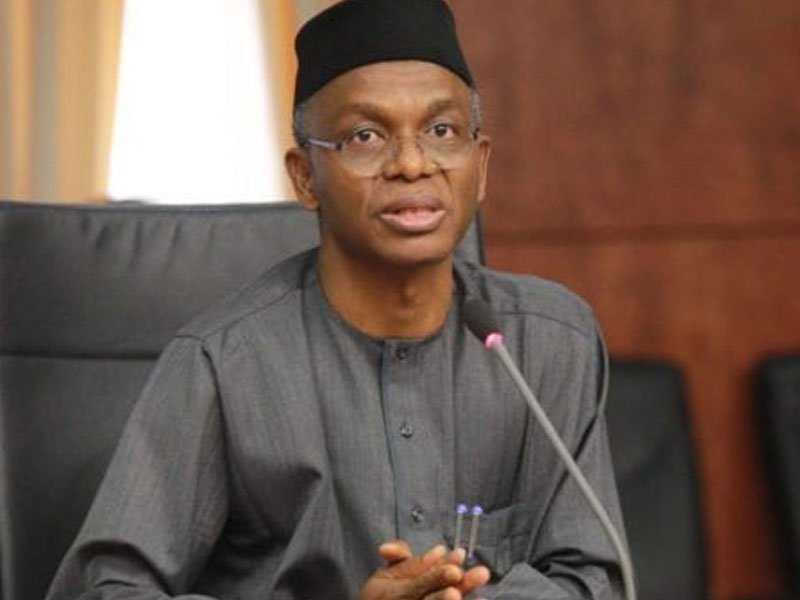
Opinion: Kaduna Workers and the Bizzare Metamorphosis of a Good Person: An Open Letter to Governor Nasir el-Rufai
Published
5 years agoon
By
Eric
By Chief Mike Ozekhome SAN, OFR, PhD
INTRODUCTION
I know you people in the corridors of power don’t bother about reading or hearing from we lesser mortals. You love listening to yourselves, to fawners, bootleggers, bootlickers, contractors, influence-peddlers and genuflectors. I am not one. Fortunately. But, give me some minutes and read this this my humble open letter to you. This is because aside being a patriot, pan-Nigerian, Constitutional Lawyer, Human Rights Activist and Pro- democracy campaigner, I am also an avid and voracious reader, writer, Essayist, archivist and historian. Aside law books, I also write long essays, poems, articles and books on sundry matters, such as national discourse, literature, history, native laws, customs and traditions. I presently write 6 columns for 6 different newspapers EVERY WEEK, some since 2014. NON- STOP! The Sun, Sunday Telegraph, The Boss, Thisday, ThisNigeria and Afenmai News. These are aside my numerous weekly columns (at times daily) interventions on sundry national and international issues.
EXTRAPOLATION WITH LITERARY CHARACTERS
I once read Nobel Laureate, Prof Wole Soyinka’s “JERO’S METAMORPHOSIS”, a play staged in 1960 (I was barely 2 years old then), and published in 1963. I also read Soyinka’s “THE TRIALS OF BROTHERS JERO”. In the former play, Jero was in possession of a confidential file which revealed government’s plans to transform the beach into a public prosecution ground and tourists’ centre. The satirical play was about the willy ways Jero tried to unite all the church leaders operating at the beach and make them form one church, with him as the sole leader. Soyinka was satirically decrying the hypocritical way Nigerians practised the Christian religion. He was shocked at the obsequious and unquestioning devotion that converts and adherents displayed towards their manipulative spiritual leaders.
In “THE TRIALS OF BROTHER JERO” first published in 1964, Soyinka mocked the proselytizing Church preachers who did not even have churches (as did brother Jero), and so preached in public places. He highlighted the transformation of these leaders from their religious titles of Bishop, Pastor and Prophet, to military titles, such as General, Colonel, Sergeant, etc. Soyinka depicted church leaders as deceptive, corrupt, fraudulent, politically ambitious and abandoning their flock in pursuit of merchantilistic and mundane cravings. Thus, Like Karl Marx, Soyinka satirized on these crafty preachers who deceived their sumnabulistic followers. The play exposed the contradictions in blind faith and slavish following, and satired the too many social and political imbalances in Nigeria of the 60s. The ills Soyinka kicked against in the early 60s are even worse today. Have u not seen viral videos where so called Pastors urinated in the mouths of their hypnotised worshippers, or farted on their faces, or sat on their heads, with other members clapping and washing his legs on their heads? They are told that is the only way to get rich or see paradise. Remember Jonestown where 909 people were made to commit mass suicide on the orders of their Pastor, Jones? Religion had been termed opium of the people by Karl Marx, used as an instrument to fight wars as beast in Europe, instead of using it to give solace to the soul of man. Soyinka had theorised along that line.
MY FRIENDSHIP WITH MALLAM EL-RUFAI
Welcome Mallam El-Rufai, the cerebral Quantity Surveyor Governor of Kaduna, who, once upon a time, was a jolly good fellow. I consider you my dear friend. I don’t know if you still do, me, based on our different world views and obvious glaring deological differences. You may not remember. We first met in 2002, at Sheraton hotel, Lagos. We had both come to deliver papers in our respective areas of expertise at a workshop. We again met in 2005, at the residence of Mr Brain Brown, the then American Consul-General. Then later as Minister of FCT in 2005. As Minister of the FCT, you were uncompromising against corruption and defacement of the Abuja master plan. Not ready to play ball with the legislative arm on financial gratifications from your Ministry, you were promptly declared a persona non gratia by the NASS, and banned from holding public office for 10 years. You immediately consulted me through my good friend, now Senator Uba Sani. We later met at your Life Camp home. On your instructions, I headed for the Federal High Court, Abuja, to challenge your ban. I won the case. The NASS appealed. I also defeated the NASS at the Court of Appeal, Abuja. That was how you, Nasir, bounced back to public reckoning from the limbo, to have been able to contest and win election as Kaduna State Governor, first, in 2015; and then, in 2019. I don’t know if your present beyond-the-clouds office will allow you remember this piece of history. But, the cold, hard records are there.
EL-RUFAI’S METAMORPHOSIS
Now, El-Rufai, you, have since metamorphosed, like brother Jero. You now see yourself as a tin god, a powerful deity, to be worshipped and perennially appeased by human sacrifices in terms of toying with citizens’ welfare.
El-Rufai, you had sacked over 45000 workers. You did not care about their families and dependants in these horrific harsh economic times unleashed on Nigerians by your clueless and anti-people APC Government. The workers kicked, as they are entitled to do in any democracy; even under totalitarian military juntas. You flexed your tiny mosquito muscles and played Louis X1V of France (of the ‘L’ etat ce’st moi’ – I am the State’- fame). Ayuba Wabba, NLC President, gathered his Kaduna flock workers, like a hen, her chicks, and called out a Kaduna State strike. You, El-Rufai, will hear none of it. Your authority had been challenged by lesser mortals. How dare they? Their temerity and audacity!
To you, a civil strike amounts to economic sabotage, and Ayuba Wabba must be apprehended and tossed into jail like a common criminal. You even placed a handsome reward, an expensive ransom, on Waba’s head. Thank God, it was not a fatwa. You are a Governor who has so far refused to pay ransom to free your own innocent University Students kidnapped from their University, right under your nose in Kaduna. Five of them have since been gruesomely butchered. You were not touched. The rest of the hostages live in daily terror; fear of death, and fear of fear. Their parents are tired of crying. Their oceans of tears have since dried up in daily supplication to god El-Rufai, to help save their innocent children. You, El-Rufai, will not budge. Like the Pharaoh of Egypt, you will not let your people go! (Exodus 5:1-10; 5:6-23; 7:13; 16; 8:15,19).
Now, the Kaduna workers carried out their threat. They downed tools. Swagging Emperor Nero El-Rufai will take none of the ‘nonsense’. Pronto, you fired all Nurses from level 14 downward, for daring to participate in the collective strike. Nigerians, can you believe that? I cannot, myself!
The workers nonetheless took to the streets in a peaceful protest, waving banners. Yes, as done by innocent Nigerians who had waved Nigerian flags and banners in a peaceful protest and were horrendously mauled down at the Lekki toll gate in October, 2020.
What did your (El-Rufai’s) Government do next? It panicked, instigated violence, employed a horde of weed-smoking, cudgel-carrying, machetes- brandishing and stones-hauling street thugs and urchins to unleash violence and mayhem on these peaceful protesters. The security agents were there, watching, probably enjoying themselves. They ‘siddon look’. Never mind that Ayuba Wabba, NLC President, had pro-actively sent SOS to the Director, DSS, Abuja, Director, DSS, Kaduna branch and the DIG of Police, Kaduna State. That is Nigeria’s sorry State. Complete nadir. No help from anywhere!
MY FREE ADVISE TO YOU, EL-RUFAI
My free advice to you, Mallam swashbuckling deity, El-Rufai. You should drop these issues immediately. You must not dare arrest the NLS Chairman, or actualise the dismissal of the said Nurses. You have since changed from the sweet humble guy I used to know, and gradually, not suddenly, become dictatorial and despotic. You are reminding us of Hitler and Musolini. I am genuinely shocked as to how such a well read, exposed and travelled man like you, who once self-exiled himself from Nigeria, for fear for his life, has metamorphosed into a full-blown tyrant and intolerant absolutist god that must be worshipped. Because of the intoxicating effect of power on you, as an aphrodisiac. Why have you developed an insatiable bacchanalian appetite to inflict sufferings and misery on Nigerians, especially your own citizens that you govern?
YOU ARE DESECRATING CITIZENS’ INALIENABLE RIGHTS
Let me tell you this. The rights to life, dignity of the human person, personal liberty, fair hearing, freedom of expression, peaceful assembly and association and freedom of movement, etc, are basic fundamental and inalienable human rights guaranteed under the 1999 Constitution. They are respectively contained in sections 32, 33, 34,35,38,39 and 40 of the1999 Constitution of Nigeria. At least, your tyrannical APC Government has not yet abrogated this Constitution. These rights are also universally recognised under the United Nations Declaration of Human Rights, the African Charter on Human and People’s Rights, the European Charter on Human Rights, the American Convention on Human Rights, the International Covenant on Civil and Political Rights and other international instruments. The right to protest without even seeking Police permission has been serially upheld by Nigerian appellate courts. See the cases of IGP V ANPP (2007) AHELR 179 (CA); (2007) 18 NWLR (PT 1066) 457, at pages 49I- 499, per Adekeye, JCA (as she then was?; AG FEDERATION V ABUBAKAR (2007) 10 NWLR (PT 1041) 1,92-93; OSADEBEY V AG,BENDEL STATE (1991) SCNJ 102, 218.
WABBA’S HEAD: RANSOM, RANSOM, RANSOM!!!
Mallam, I read to my chagrin, that you have allegedly offered to pay handsome ransom for the arrest of Ayuba, the NLC Chairman. Let me advise you to perish that obnoxious idea. You should rather use the ransom for the release of the helpless and unfortunate Boko Haram- kidnapped students of your state. If you yield to my advice, you would not be doing anything new at all. After all, you once told shocked Nigerians how you had to pay humongous ransom to the rampaging Fulani armed bandits that ceaselessly poured into your state from neighbouring African countries in 2015, to enable the 2015 presidential elections hold. I have therefore been incredulous and nonplussed as to your sudden pretended Janus votle-face “haram” or revulsion against payment of ransom, even to free the endangered souls of vulnerable school children who were kidnapped under your very despotic Government. Out of these, 5 students have already been brutally killed in cold blood. Can you really sleep, or fold your legs on the mat, to pray to Allah? What will you be praying for? Will your prayers and supplications cross the ceiling? I can no longer understand these elites in Government, and how they suddenly change once they taste the intoxicating liquor of power. Or, can you, Nigerians?
HOW DO YOU WANT TO BE REMEMBERED?
Mallam, how would you want to be remembered in history? As a tyrant, autocrat, despot, absolutist, oppressor, totalitarian, autarchy, dictator? As a slave driver, persecutor, bully, scourge? Just how? El-Rufai, why are you playing brother Jero? Why are you acting out Idi Amin, Emperor Bokassa, Adolf Hitler, Timur, Queen Mary 1, Vladi-mir Lenin, Augusto, Pinochet, Kim Jong II, Emperor Hirohito, Leonid Brezhnev, Joseph Stalin and Pol Pot? Why have you shredded your beautiful garments of innocence and empathy and dorned the dictatorial apparels of Saddam Hussein, Ivan The Terrible, Kim 11 Sung, Ayatollah Khomeini, Nero, Ghenghis Khan, Mao Zedong, Ivan 1V, Lepold 11 of Belgium and Attila The Hun? Why Nasir? Why, El-Rufai? Why, Ahmad? Just why, Mallam Nasir Ahmad El-Rufai, for God’s sake?
Related
You may like
Opinion
The Synergy Imperative: Integrating Transformative Leadership and Strategic Management for Africa’s Ascent
Published
14 hours agoon
December 20, 2025By
Eric
By Tolulope A. Adegoke, PhD
“The bridge from Africa’s potential to its preeminence is built with the twin pillars of visionary leadership, which dares to imagine the impossible, and disciplined management, which masters the possible” – Tolulope A. Adegoke, PhD
Africa’s journey from a continent brimming with untapped potential to a unified global powerhouse is arguably the defining narrative of our century. This transformation, however, hinges on a critical catalyst: a new paradigm of leadership. To dismantle the persistent architecture of poverty and transcend the historical cycle of mediocrity, African nations require more than administrators; they need visionary architects and master builders. This necessitates a powerful fusion of transformative leadership—which sets the daring direction—and strategic, execution-focused management—which paves the road to get there. The synergy between these two forces is non-negotiable for unlocking the innovative capacity needed to deliver tangible possibilities for Africa’s people, its dynamic corporations, and its sovereign nations.
I. The Essence of Transformative Leadership: Architecting a New Continental Consciousness
True transformative leadership moves beyond maintaining the status quo. It is an audacious practice of reimagining futures, challenging deeply embedded narratives, and mobilizing collective will toward a shared, audacious horizon.
1. Crafting a Unifying and Aspirational Narrative: The transformative leader’s first task is to be a master storyteller for the future. This involves articulating a vision that moves past diagnoses of poverty to paint a vivid, compelling picture of continental success—a Africa renowned for its innovation, quality, and strategic influence. This narrative must replace a mindset of scarcity with one of boundless opportunity, fostering a new identity where “Made in Africa” signifies excellence, reliability, and cutting-edge solutions. It is about making the idea of a continental giant not a distant dream, but an inevitable destination in the public imagination.
2. Demonstrating Unshakeable Ethical Fortitude: The battle against mediocrity is fundamentally a battle for integrity. Transformative leaders must embody and enforce an ironclad commitment to governance that is transparent, accountable, and institutionally robust. This requires the political courage to depersonalize state institutions, empowering independent judiciary, audit authorities, and anti-corruption commissions not just on paper but in practice. By becoming the chief guardian of institutional integrity, a leader builds the essential currency of trust—without which long-term investment and social cohesion are impossible.
3. Championing Radical Inclusivity: No single entity holds a monopoly on innovative ideas. Transformative leaders actively dismantle top-down governance silos to create participatory ecosystems. They facilitate sustained dialogues that bring together the pragmatic insights of the private sector, the grassroots realities understood by civil society, the foresight of academia, and the voices of marginalized communities. This inclusive approach does more than improve policy; it fosters a profound sense of collective ownership over the continent’s destiny, building a resilient coalition for sustained change.
II. The Discipline of Strategic Management: Building the Engine of Execution
A vision without a rigorous mechanism for implementation remains a mere hallucination. Transformative leadership must be operationalized through management systems characterized by precision, adaptability, and results.
1. Engineering a Performance-Obsessed Public Sector: The public administration must be fundamentally redesigned into a lean, data-driven delivery machine. This demands:
o Integrated Outcome Frameworks: Adopting systems like the Balanced Scorecard to cascade the national vision into clear departmental objectives, measurable Key Performance Indicators (KPIs), and individual accountability metrics for civil servants.
o Evidence-Based Policy Orchestration: Investing in robust data analytics units and real-time monitoring dashboards. Resource allocation and program adjustments must be driven by hard evidence of what works, moving policymaking from political intuition to strategic science.
o Relentless Process Innovation: Launching comprehensive digital governance initiatives to automate and streamline bureaucratic processes—from business licensing to customs clearance. This eliminates friction, reduces opportunities for graft, and dramatically improves the user experience for citizens and investors alike.
2. Cultivating Dynamic Innovation Ecosystems: Management’s role is to create the fertile ground where creativity and enterprise can flourish. This is a deliberate, managerial function:
o Establishing Agile Policy Laboratories: Creating regulatory sandboxes in key sectors like fintech, renewable energy, and logistics allows startups to test breakthrough ideas in a controlled environment with temporary regulatory relief, fostering innovation without compromising systemic stability.
o Orchestrating Strategic Alliances: Building structured platforms for public-private-research collaboration. Government can de-risk pioneering R&D in areas like vaccine manufacturing or artificial intelligence for agriculture, with clear pathways for commercialization led by the private sector and fueled by academic research.
o Safeguarding Intellectual Creation: Modernizing and rigorously enforcing intellectual property regimes managed by efficient, trustworthy institutions. This protects African innovators, attracts R&D investment, and ensures that breakthroughs conceived on the continent yield prosperity for its people.
3. Mastering Capital: Human and Financial:
o Strategic Human Capital Development: Aligning national education and vocational training curricula with the future skills demanded by the continental transformation agenda requires active management through a permanent skills council, ensuring a seamless pipeline of talent for the industries of tomorrow.
o Pioneering Financial Architecture: Beyond domestic revenue mobilization, management excellence is key to structuring and accessing innovative finance. This includes developing bankable project pipelines for green bonds, diaspora investment instruments, and blended finance models to fund the massive infrastructure required for integration, all while maintaining impeccable sovereign debt management.
III. The Tangible Dividend: Delivering Expanded Possibilities for All
The ultimate metric for this leadership-management model is the tangible impact on the ground.
· For Africa’s Citizens: The outcome is expanded human agency and dignity. This manifests as access to meaningful, future-oriented employment; quality, affordable healthcare and education delivered efficiently; and social protections that empower rather than create dependency. Citizens experience a state that is a capable partner in their aspirations.
· For Africa’s Enterprises: The outcome is a predictable, enabling, and competitive operating environment. Corporations and entrepreneurs benefit from reliable infrastructure, seamless administrative processes, access to capital, and a fair, transparent market. This enables them to scale, innovate, and compete confidently on regional and global stages.
· For Africa’s Nations and Continental Body: The outcome is sovereign capability and collective strategic influence. Individually, nations evolve into resilient, adaptive economies. Collectively, a strategically managed and integrated Africa transforms into a formidable negotiating bloc, capable of shaping global rules on trade, climate, and digital governance, and moving from being a subject of global dynamics to a definitive shaper of the world order.
Conclusion: The Imperative of Synergy
The path from poverty to preeminence is paved by the dual forces of transformative leadership and strategic management. Leaders must provide the spark of vision, the moral compass, and the political will to embark on an audacious journey. The management apparatus must provide the meticulous map, the engine, and the metrics to navigate it successfully. When these elements align in harmony—when the architect’s dream is matched by the engineer’s precision—Africa will ignite a self-sustaining cycle of innovation, inclusive growth, and shared prosperity. This is the pathway that turns the latent potential within its people, the ambition of its corporations, and the sovereignty of its nations into a manifested reality. It is how the continent will cease to be perpetually “rising” and will firmly stand, a realized giant, shaping the century ahead.
Dr. Tolulope Adeseye Adegoke is a distinguished scholar-practitioner specializing in the intersection of African security, governance, strategic leadership and effective management. His expertise is built on a robust academic foundation—with a PhD, MA, and BA in History and International Studies focused on West African conflicts, terrorism, and regional diplomacy—complemented by high-level professional credentials as a Distinguished Fellow Certified Management Consultant and a Fellow Certified Human Resource Management Professional.
Related
Opinion
A Marriage That Changed History: Celebrating Mobolaji and Dele Momodu at 33
Published
15 hours agoon
December 20, 2025By
Eric
By Dr. Sani Sa’idu Baba
Some marriages are sustained by time, a few are tested by trials, but only the rarest are forged by destiny and proven by history. The union of Chief Dele Momodu and Chief Mobolaji Aderamaja Momodu belongs firmly in this extraordinary class, a marriage where love speaks with courage, partnership walks with purpose, and devotion quietly reshapes lives and legacies.
As Chief Dele and his remarkable wife Mobolaji Momodu mark 33 years of marital union, I am compelled to pause, not just to celebrate longevity, but to honour a love story that has survived trials, triumphed over tyranny, and blossomed into a partnership that continues to inspire generations.
I have always known them as love birds. It is almost impossible to engage Chief Dele Momodu in any meaningful conversation without the affectionate and respectful mention of his wife. He speaks of her not as an appendage to his success, but as its backbone, his confidant, his compass, and proudly, his “prayer warrior.” That alone speaks volumes in a world where gratitude within marriage is often whispered, if acknowledged at all.
Chief Mobolaji is kindness personified. Whenever I am privileged to be their guest whether at their warm Ikoyi home in Lagos or at public functions, her concern is constant and sincere. She will not sit comfortably until she is certain that everyone around her, especially her guests, is fine. That gentle strength, that instinctive compassion, defines her essence.
Yet, beyond her kindness lies courage. History will forever remember one defining moment on 25th July 1995 during the dark, oppressive days of General Sani Abacha’s dictatorship, a very heart-touching story. Strange, faceless men had come looking for Dele Momodu at their home. At the time, he was away in Ogun State. Without hesitation, His wife Mobolaji immediately sensed the danger coming when she suspected that those men could have been Abacha’s attack dogs. Highly cerebral young woman she was, she acted smartly by sneaking to trace the road the knew her husband was likely following to come back home. Luckily enough, she stopped him and raised the alarm. That single, decisive action changed the course of history.
Dele Momodu had already tasted detention for his pro-democracy stance where he was detained in Alagbon close. Now, he was being hunted again, this time in connection with the underground Radio Freedom, later renamed Radio Kudirat, in honour of the murdered activist Kudirat Abiola. Acting swiftly on his wife’s intuition and bravery, he disguised himself as a farmer and fled through the Seme border into Cotonou, Benin Republic. That escape marked the beginning of a three years exile in London, but also the preservation of a voice Nigeria could not afford to lose. That moment was not just the act of a wife, it was the intervention of destiny, executed through love.
In making that daring escape, Dele Momodu paid an enormous personal price. He left behind his only child in the care of his devoted wife and also his elderly mother in Ile-Ife, stepping into the uncertainty of exile with nothing but faith, conviction, and hope. That three years journey away from home would later prove transformative, culminating in the birth of Ovation International Magazine in London in April 1996, a global brand that would redefine African storytelling and project Nigerian excellence to the world. How Ovation emanated from Momodu’s rare bravery and risk taking is a another interesting story for another day.
Chief Dele Momodu has often shared that his earliest ambition was simple: to become a teacher, marry a teacher, and live happily thereafter . Fate, however, had grander plans. Their story began during their university days at the University of Ife (now Obafemi Awolowo University), where Dele earned a degree in Yoruba in 1982 and later a Master’s degree in English Literature in 1988. From humble beginnings in Ile-Ife, they embarked on a journey that would take them across mountains and valleys.
On their 30th wedding anniversary, Chief Dele Momodu described his wife as a “combination of brains and beauty”, a woman with whom he has “climbed mountains and descended valleys together.” Few statements capture the depth of partnership more profoundly.
Their marriage in December 1992, graciously bankrolled by the late Chief Moshood Kashimawo Olawale Abiola, Dele Momodu’s adopted father was not merely a union of two souls, but the convergence of purpose, principle, and providence.
After 33 years today, their union stands as a testament to what marriage should be: friendship strengthened by faith, love fortified by sacrifice, and partnership tested, and proven by history.
Beyond the public milestones and historic moments lies a quieter but equally profound achievement, the family they built together. Blessed with four sons whom I refer to as “the Momodu’s 4 effects”, Chief Dele Momodu and Chief Mobolaji Momodu have raised a generation that reflects the values of discipline, faith, and excellence that define their home.
As they celebrate this remarkable milestone, Nigeria celebrates with them. Their story reminds us that behind every courageous man is often a discerning, fearless woman, and behind every lasting marriage is mutual respect, unwavering loyalty, and shared vision.
Happy 33rd Wedding Anniversary to Chief Dele Momodu and Chief Mobolaji Aderamaja Momodu, a couple whose love did not merely survive time, but shaped it.
May the years ahead be gentler, brighter, and filled with the same grace that has defined the journey so far, in good health, wealth, happiness, fulfillment and massive blessings.
Dr Baba writes from Kano, and can be reached via drssbaba@yahoo.com
Related
Opinion
Rebuilding the Pillars: A Comprehensive Blueprint for Overcoming Nigeria’s Leadership Deficit
Published
1 week agoon
December 13, 2025By
Eric
By Tolulope A. Adegoke, PhD
Systemic governance reform as the critical foundation for unlocking sustainable development and restoring national promise. “Nations are not built on resources, but on systems. Nigeria’s future rests not on changing leaders, but on transforming the very structures that create them” – Tolulope A. Adegoke, PhD
Introduction: The Leadership Imperative
Nigeria, often described as the “Giant of Africa,” stands at a pivotal moment in its historical trajectory. Possessing unparalleled human capital, vast natural resources, and a dynamic, youthful population, the nation’s potential remains paradoxically constrained by deeply embedded structural deficiencies within its leadership architecture. These systemic flaws—evident across political, corporate, and civic institutions—have created profound cracks that undermine public trust, stifle economic innovation, and impede the delivery of fundamental social goods. This leadership deficit is not merely a political inconvenience; it is the central bottleneck to national progress.
Addressing this challenge requires moving beyond cyclical criticism of individuals and towards a deliberate, strategic reconstruction of the systems that produce, empower, and hold leaders accountable. This blog post presents a holistic, actionable blueprint designed to seal these cracks permanently. It offers a pathway to cultivate a leadership ecosystem that is transparent, accountable, performance-driven, and ethically grounded, thereby delivering tangible possibilities for Nigeria’s people, empowering its corporate sector, and restoring its stature on the global stage.
Section 1: Diagnosing the Structural Cracks—A Multilayered Analysis
A precise diagnosis is essential for effective treatment. Nigeria’s leadership challenges are multifaceted and mutually reinforcing, stemming from three core structural failures.
1. The Governance Architecture Failure
The current system suffers from a fundamental contradiction: a hyper-centralized federal model that stifles local innovation and accountability. Critical institutions, including the Independent National Electoral Commission (INEC), the judiciary, and the civil service, frequently operate with compromised autonomy, inadequate technical capacity, and vulnerability to political interference. Furthermore, the intended checks and balances among the executive, legislative, and judicial branches have weakened, creating avenues for impunity and concentrated power that deviate from democratic principles.
2. The Leadership Pipeline Collapse
The mechanisms for recruiting and developing leaders are fundamentally broken. Political party structures too often prioritize patronage, loyalty, and financial muscle over competence, vision, and ethical fortitude. There exists no systematic, nationwide program for identifying, nurturing, and mentoring successive generations of public servants. This results in a recurring leadership vacuum and a deficiency of cognitive diversity at decision-making tables, limiting the range of solutions for national challenges.
3. The Integrity Infrastructure Erosion
Perhaps the most damaging crack is the erosion of public trust, fueled by opacity and impunity. Decision-making processes and public resource allocations are frequently shrouded in secrecy, while accountability mechanisms are rendered ineffective. The consistent weakness in enforcing ethical codes across sectors has allowed a culture of corruption to persist, which acts as a regressive tax on development, scuttles investor confidence, and demoralizes the citizenry.
Section 2: A Tripartite Framework for Sustainable Transformation
Lasting reform necessitates concurrent, mutually reinforcing interventions across three interconnected pillars.
Pillar I: Constitutional and Institutional Reformation
Implementing True Cooperative Federalism: It is imperative to undertake a constitutional review that clearly delineates responsibilities and revenue-generating authorities among federal, state, and local governments. This empowers subnational entities to become laboratories of development, tailored to local contexts, while fostering healthy competition in providing public services. Fiscal autonomy must be matched with enhanced capacity-building initiatives at the state and local government levels.
Fortifying Independent Institutions: Key democratic institutions require constitutional protection from executive and legislative overreach. This includes guaranteeing transparent, first-line funding from the Consolidated Revenue Fund and establishing rigorous, meritocratic panels for appointing their leadership. Strengthening bodies like the Code of Conduct Bureau and the Public Complaints Commission is equally vital.
Professionalizing the Political Space: Electoral reform must introduce systems like ranked-choice voting to encourage more issue-based, inclusive campaigning. Legislation should mandate demonstrable internal democracy within political parties, including transparent primaries and audited financial disclosures, to reduce the capture of parties by narrow interests.
Pillar II: Cultivating a Leadership Development Ecosystem
Establishing a Premier National School of Governance (NSG): Modeled on institutions like the Lee Kuan Yew School of Public Policy, a Nigerian NSG would serve as the apex institution for executive leadership training. Attendance for all senior civil servants, political appointees, and legislators should be mandatory, with curricula focused on strategic public administration, ethical leadership, complex project management, and national policy analysis.
Catalyzing a Corporate Governance Revolution: The Securities and Exchange Commission (SEC) and the Corporate Affairs Commission (CAC) must enforce stricter codes requiring diverse, independent, and technically competent boards. The private sector should be incentivized—through tax credits or preferential procurement status—to establish leadership fellowship programs that place high-potential private-sector executives into public sector roles for fixed terms, fostering cross-pollination of skills and perspectives.
Instituting a Presidential Leadership Fellowship (PLF): This highly selective, merit-based program would identify Nigeria’s most promising young talents (aged 25-35) from all fields—technology, agriculture, law, the arts—and place them in intensive two-year rotations across critical government agencies, private sector giants, and civil society organizations. This creates a nurtured cohort of future leaders with a national network and a deep understanding of systemic interconnections.
Pillar III: Architecting Robust Accountability & Performance Systems
Deploying a Digital Transparency Platform: A mandatory, open-access National Integrated Governance Portal (NIGP) should display in real-time the status, budget, and contractor details of every major public project. Strategic use of blockchain technology can create immutable records for procurement contracts and resource distribution, significantly reducing opportunities for diversion.
Empowering Oversight and Consequence: Anti-corruption agencies require not only independence but also enhanced forensic capacity and international collaboration. Performance tracking must extend to the judiciary and legislature; publishing annual scorecards on case clearance rates, legislative productivity, and constituency impact can drive public accountability.
Embedding a Culture of Results: All government ministries, departments, and agencies (MDAs) must operate under a National Key Results Framework (NKRF). This performance contract system would define clear, measurable quarterly deliverables tied to national development plans. Autonomy and discretionary funding should be increased for MDAs that consistently meet targets, while underperformance triggers mandatory restructuring and leadership review.
Section 3: The Indispensable Cultural Reorientation
Technocratic fixes will fail without a parallel cultural shift that venerates service and integrity.
Embedding Ethics from Foundation: A redesigned national curriculum, from primary through tertiary education, must integrate civic ethics, critical thinking, and Nigeria’s constitutional history to build an informed citizenry that values good governance.
Launching a “Service Nation” Campaign: A sustained, multi-platform national campaign, developed in partnership with respected cultural, religious, and traditional institutions, should celebrate role models of ethical leadership and reframe public service as the nation’s highest calling.
Enacting Ironclad Whistleblower Protections: Comprehensive legislation must be passed to protect whistleblowers from all forms of retaliation, including provisions for anonymous reporting, physical protection, and financial rewards, aligning with global best practices to encourage exposure of malfeasance.
Section 4: A Practical, Phased Implementation Roadmap (2025-2035)
Phase 1: The Foundation Phase (Years 1-3)
Convene a National Constitutional Dialogue involving all tiers of government, civil society, and professional bodies.
· Establish the Nigerian School of Governance (NSG) and inaugurate the first cohort of the Presidential Leadership Fellowship (PLF).
· Pilot the National Integrated Governance Portal (NIGP) in the Ministries of Health, Education, and Works.
Phase 2: The Integration & Scaling Phase (Years 4-7)
· Enact and begin implementation of the new constitutional framework on fiscal federalism.
· Graduate the first NSG cohorts and embed training as a prerequisite for promotions.
· Roll out the NKRF performance contracts across all federal MDAs and willing pilot states.
Phase 3: The Consolidation & Maturation Phase (Years 8-12)
· Conduct a comprehensive national review, assessing improvements in governance indices, citizen trust metrics, and economic competitiveness.
· Establish Nigeria as a regional hub for leadership training, offering NSG programmes to other African nations.
· Institutionalize a self-sustaining cycle where performance culture and ethical leadership are the unquestioned norms.
Conclusion: Forging a New Path of Leadership
The task of sealing the cracks in Nigeria’s leadership foundation is undeniably monumental, yet it is the most critical work of this generation. It demands a departure from transactional politics and short-term thinking toward a covenant of nation-building. The integrated blueprint outlined here—combining institutional redesign, leadership cultivation, technological accountability, and cultural renewal—provides a viable pathway.
This is not a call for perfection, but for systematic progress. By committing to this journey, Nigeria can transform its governance from its greatest liability into its most powerful asset. The outcome will be a nation where trust is restored, innovation flourishes, and every citizen has a fair opportunity to thrive. The resources, the intellect, and the spirit exist within Nigeria; it is now a matter of courageously building the structures to set them free.
Dr. Tolulope Adeseye Adegoke is a distinguished scholar-practitioner specializing in the intersection of African security, governance, and strategic leadership. His expertise is built on a robust academic foundation—with a PhD, MA, and BA in History and International Studies focused on West African conflicts, terrorism, and regional diplomacy—complemented by high-level professional credentials as a Distinguished Fellow Certified Management Consultant and a Fellow Certified Human Resource Management Professional.
A recognized thought leader, he is a Distinguished Ambassador for World Peace (AMBP-UN) and has been honoured with the African Leadership Par Excellence Award (2024) and the Nigerian Role Models Award (2024), alongside inclusion in the prestigious national compendium “Nigeria @65: Leaders of Distinction.”
Dr. Adegoke’s unique value lies in synthesizing deep historical analysis with practical management frameworks to diagnose systemic institutional failures and design actionable reforms. His work is dedicated to advancing ethical governance, strategic human capital development, and sustainable nation-building in Africa and the globe. He can be reached via: tolulopeadegoke01@gmail.com & globalstageimpacts@gmail.com
Related


Court Upholds Authenticity of David Mark-led ADC Executive
How Glo Network Became the Lifeline That Saved Two Lives: A True Story from Sallari
Insecurity: Akpabio Begs Tinubu to Reinstate Police Orderlies for NASS Members
Delta Govt Confirms Death of Senator Nwaoboshi at 68
Anthony Joshua Defeats Jake Paul in Sixth-round Knockout
The Synergy Imperative: Integrating Transformative Leadership and Strategic Management for Africa’s Ascent
Adding Value: Be Selfish with Your Time by Henry Ukazu
Threat Against Nigeria’s Multi-Party Democracy: Atiku, Obi, George, Others Accuse Tinubu of Plot to Annihilate Opposition
Alleged Corrupt Practices: Dangote Petitions ICPC Against NMDPRA MD Farouk
Book Launch: Tinubu Vows to Sustain Buhari’s Legacies
NNPCL Slashes Fuel Price by N80
Corruption Allegations: NMDPRA Boss Farouk Ahmed Meets Tinubu, Resigns
I’m Ready for Probe, NMDPRA Boss Farouk Ahmed Responds to Dangote’s Corruption Allegation
Tinubu Didn’t Win 2023 Election, Will Lose in 2027 – Abaribe
Trending
-
Headline6 days agoThreat Against Nigeria’s Multi-Party Democracy: Atiku, Obi, George, Others Accuse Tinubu of Plot to Annihilate Opposition
-
Headline4 days agoAlleged Corrupt Practices: Dangote Petitions ICPC Against NMDPRA MD Farouk
-
National5 days agoBook Launch: Tinubu Vows to Sustain Buhari’s Legacies
-
Business1 day agoNNPCL Slashes Fuel Price by N80
-
Headline3 days agoCorruption Allegations: NMDPRA Boss Farouk Ahmed Meets Tinubu, Resigns
-
National4 days agoI’m Ready for Probe, NMDPRA Boss Farouk Ahmed Responds to Dangote’s Corruption Allegation
-
Headline5 days agoTinubu Didn’t Win 2023 Election, Will Lose in 2027 – Abaribe
-
Entertainment6 days agoTribute to Jimmy Cliff: Last Lion of Reggae Crossed the Rivers