Connect with us

Business

FirstBank CEO, Others Laud, Empower Women at FirstGem 4.0

Published

on

By Eric Elezuo

The Chief Executive Officer, First Bank of Nigeria Ltd and Subsidiaries, Dr. Adesola Adeduntan, has lauded the qualities of African women, saying a woman who knows how money works is in a vantage position to change the world for the better.

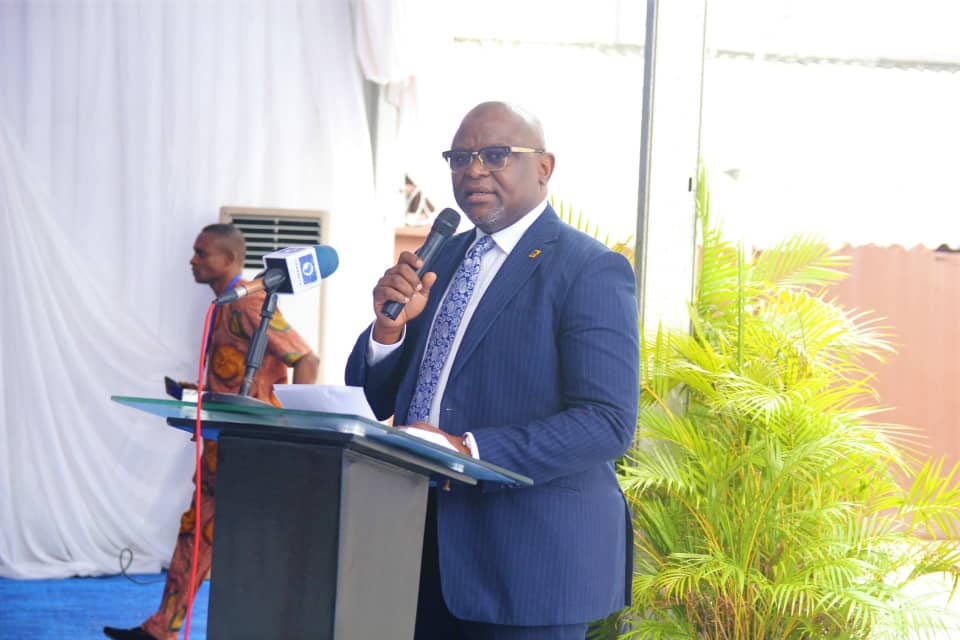
Dr Adeduntan made this assertion while delivering his speech at the First Gem Annual Conference 4.0 with the theme, “The Art of Negotiation”, held both on location and via the web.

This year’s event, which fell into the month of March appears symbolic as it represents two wonderful occasions including the celebration of the International Women Day, which provides opportunity to discuss and proffer solutions to gender parity issues and women empowerment challenges, and the 127th anniversary of the bank, FirstBank of Nigeria Limited. Of more importance is the fact that the 4.0 edition took place on the very day the company marked its birthday.

In his speech, Adeduntan paid glowing tributes to women, citing the fact that First Gem is tailor-made to suit the financial inclinations of women in business. He reiterated that “FirstBank, through the FirstGem initiative, is committed to supporting the contemporary woman’s financial services needs across the various stages of her life,” adding that “Our FirstGem value proposition provides real solutions to challenges faced by female entrepreneurs and working professionals.”

The FirstBank’s CEO eulogised the enterprising African woman, using an African proverb, which says, “If you educate a man you educate an individual, but if you educate a woman, you educate a family (nation)” stressing that “If you teach a woman how money works, provide her with the right products and funding support; she can transform the world.”

Further in his narrative, Adeduntan went down memory, bringing to the presence the moments that birth FirstGem as a preferred platform for the empowerment of women financially and numerous achievements recorded overtime.

He said: “In the last five years, our FirstGem initiative has served to foster the empowerment of women across the socio-economic strata with implementation across three pillars.

“The FirstGem platform for women (access to leadership programs/ workshops/trainings on women empowerment, business skills on wealth management and investment plans) Value proposition including capacity building, affordable finance, access to infrastructure, market visibility for women MSMEs

“A strong commitment as a financial institution to support women by leveraging the Bank’s resources in developing unique and mutually rewarding solutions.

“Today, our work is more important and impactful than ever! A review of the performance of the FirstGem initiative shows the effectiveness of our efforts to elevate and empower the Nigerian woman. In 2020, we gave out loans of NGN 58 billion to over 81,000 female entrepreneurs and professionals.
Empowering women via agent banking proposition is one of the outcomes of the FirstGem initiative. Across our agent banking network – the largest verified bank-led agent banking network in Nigeria – , we have about 24,500 female agents representing 28 percent of the agents in our network. It gives us much joy to see that more women are embracing this proposition and getting empowered.

“The FirstGem Initiative takes an inclusive approach to empowering women to make confident and sound decisions with respect to their business, family, and future. Whether you are the primary financial decision maker, a partner or financially independent, the time is now to power your own financial success by being part of the FirstGem Initiative – Open a FirstGem account and join the FirstGem community!

“Finally, as we close out on the activities that celebrate women folks, this March, I would like to restate that, at FirstBank, we remain committed to providing products and services that will allow our female customers and employees to thrive and attain their maximum potentials in business and career. Let us work together to make 2021 count for women, everywhere!

He advised women entrepreneurs to take advantage of the opportunities the FirstGem offers, noting that “we are leveraging the Agent banking proposition to close the gender gap and tap into the rich and overlooked base of the pyramid customer segment (that is predominantly women) with the realization that failure to fully harness women’s productive potential represents a missed opportunity to drive accelerated global economic growth.”

Recognising that the post- COVID-19 pandemic economic indices do not in any way favour women, Adeduntan informed that FirstBank has devised a veritable approach to support women’s wealth creation and financial independence.

“It has become imperative to match the scale and urgency of this challenge with financial products that address the lifecycle financial needs of women. The products should holistically address the needs of women by providing them with integrated access to savings as well as short and long-term credit, capacity building, and wealth management advisory. This suite of products will improve the earning capacity and reduce poverty levels amongst the women folk, in the medium to long term. Success will be dependent on everyone playing a part!” The FirstBank CEO said.

Firstgem is an exclusive FirstBank initiative to inspiresl and empower women to take charge of their financial future through the provision of access to resources and interactive workshops and advisory that help women to make informed financial decisions and build wealth management competences.

Other speakers at the event were the Chairman Board of Directors, First Bank of Nigeria Limited, Mrs. Ibukun Awosika, who spoke on the theme of the International Women’s Day, “Choose to Challenge”, Professor of Economics at IESE Business School, Prof Pedro Videla, who spoke on the current state of the Global Economy and how it Impacts Business Decisions, and Senior Lecturer, IESE Business School, Prof Mehta Kandarp, who lectured on Negotiation as a Tool for Winning in Business and Career.

Continue Reading
Click to comment

Leave a Reply

Your email address will not be published. Required fields are marked *

Business

2025: UBA Group Dominates, Wins Banker Awards, Emerges Africa’s Bank of the Year, Third Time in Five Years

Published

on

By

Africa’s Global Bank, United Bank for Africa (UBA) Plc, has once again, reaffirmed its leadership as one of the continent’s most innovative and resilient financial institutions, as the bank has, for the third time in five years, been named the African Bank of the year 2025 by the Banker.com.

UBA also won the Best Bank of the Year awards in nine of its 20 African subsidiaries, bringing its total awards this year to ten as UBA Benin, UBA Chad, UBA Republic of Congo (Congo-Brazzaville), UBA Liberia, UBA Mali, UBA Mozambique, UBA Senegal, UBA Sierra Leone, and UBA Zambia, all came out tops as the best banks in their respective countries, underscoring the bank’s strength across West, Central and Southern Africa and highlighting the depth of its Pan-African franchise.

The Banker.com, a leading global finance news publication published by the Financial Times of London, organises the annual Bank of the Year Awards, and this year’s edition was held at a grand ceremony at the Peninsula, London, on Wednesday.

The Chief Executive Officer, UBA UK, Deji Adeyelure, received the awards on behalf of the bank, representing the Group Managing Director/CEO, Oliver Alawuba, and was accompanied by the bank’s Head Business Development, Mark Ifashe, and Head, Financial Institutions, Shilpam Jha.

The Banker’s awards are widely regarded as the most respected and rigorous in the global banking industry, celebrating institutions that demonstrate outstanding performance, innovation and strategic execution.

In its remarks on UBA’s winnings, the banker.com said, “For the third time in five years, UBA Group has won the coveted Bank of the Year award for Africa. UBA Group time after time punches above its weight against its larger African rivals. The bank this year also takes home nine separate country awards (one more than it gained for its last continental win in 2024), equivalent to around a quarter of the awards for the continent, and more than any of its continent-wide rivals.”

Continuing, it said, “Perhaps even more impressive is the fact that the awards were won across a broad geographic spread, going to lenders based in the Economic Community of West African States (Benin, Liberia, Senegal, Sierra Leone, and former member Mali), the Central African Economic and Monetary Community (Chad, Republic of Congo) and the Southern African Development Community (Mozambique, Zambia). Its award wins were particularly notable in the highly competitive categories for Benin and Mozambique.”

The Banker also highlighted UBA’s strong financial performance and commitment to future growth. In 2024, the Group recorded a 46.8 per cent increase in assets and a 6.1 per cent rise in pre-tax profits in local currency terms, while continuing to invest significantly in talent and technology. West Africa remains UBA’s heartland, with operating revenue and profit increasing by 87 per cent and 89 per cent respectively in H1 2025.

The bank’s digital and innovation leadership was equally recognised. During the year under review, and launched its Advance Top-Up buy-now-pay-later feature on the *919# USSD platform, expanding financial access for customers, while the bank’s chatbot Leo continued its strong growth trajectory, with transaction volumes rising by 29 per cent year-on-year in H1 2025. Notably, in August, Leo became the first African banking chatbot to enable cross-border payments via the Pan-African Payment and Settlement System (PAPSS).

UBA’s Group Managing Director/Chief Executive Officer, Oliver Alawuba, while reacting to the achievement, said the recognition affirms the bank’s long-term strategy and customer-first philosophy.

“This honour reflects the strength of our Pan-African network, the trust of our customers, and the dedication of our people. Winning Africa’s Bank of the Year for the third time in five years is not by chance; it is a testament to disciplined execution, innovation, and a deep understanding of the markets we serve,” Alawuba said.

“Our nine country awards across diverse regions of Africa show that UBA is not just growing, but growing with impact. We remain committed to driving financial inclusion, supporting economic development, and deploying technology that makes banking simpler, faster, and more accessible to Africans everywhere,” he added.

United Bank for Africa is one of the largest employers in the financial sector on the African continent, with 25,000 employees group-wide and serving over 45 million customers globally. Operating in twenty African countries, the United Kingdom, the United States of America, France and the United Arab Emirates, UBA provides retail, commercial and institutional banking services, leading financial inclusion and implementing cutting-edge technology.

Continue Reading

Business

ConOil, TotalEnergies Sign Massive Production Contract to Boost Nigeria’s Oil and Gas Output

Published

on

By

By Eric Elezuo

In a bid to boost Nigeria’s oil and gas output, Conoil Producing Limited has partnered Total Energies Limited to sign a massive production contract.

The contract-signing ceremony, which took place on Thursday, at LA DEFENSE, in Paris, France, saw the Chairman of Conoil Producing, and Commander of the French Légion d’Honneur (CdrLR), Dr. Mike Adenuga Jr., signing on behalf of Conoil while the Chairman and Chief Executive Officer of TotalEnergies, Mr. Patrick Pouyanné, signed for TotalEnergies, in whose headquarters office served as the venue of the event.

Details soon…

Continue Reading

Business

Tinubu’s 15% Import Duty on Petrol is Good for Nigeria, Says Rewane, Marketers Disagree

Published

on

By

Popular economist and chief executive of Financial Derivatives Company Limited, Bismark Rewane, has explained that President Bola Ahmed Tinubu’s approval of a 15 per cent import duty on petrol and diesel is good for the country.

Rewane, speaking in an interview on Channels TV, said the import tariff is designed to encourage local production of petroleum products.

According to the policy, it is aimed to discourage imports and retain jobs in Nigeria.

“Petrol import duty is good for the country. Why is it good? Because it encourages domestic production. Anytime you import, you are actually creating jobs for other countries rather than your own country. Basically, import protection is good,” he said.

The move means that Nigerians would have to pay more for fuel consumption when it is implemented.

Recently, data from the Nigerian Midstream and Downstream Petroleum Regulatory Authority showed that 69 per cent of petrol consumed in Nigeria is imported, while 31 per cent is locally produced.

The policy places Dangote Refinery in an advantageous position in the country’s oil and gas sector.

However, Nigerians have kicked against the move, saying it would cause more hardship in the country.

This comes as an All Progressives Congress chieftain in Delta State, Ayiri Emami, on Thursday urged President Tinubu to withdraw the 15 per cent import duty tariff because it will bring more hardship for Nigerians.

Meanwhile, Petroleum marketers have warned that the pump price of Premium Motor Spirit, popularly called petrol, could exceed N1,000 per litre following the 15 per cent ad valorem import tariff on fuel imports.

The new policy, which takes effect after a 30-day transition period expected to end on 21 November 2025, is part of the government’s strategy to protect local refiners and reduce the influx of cheaper imported products that threaten domestic refining investments.

However, marketers say the move could backfire and push retail prices beyond the reach of average Nigerians.

Commenting in a telephone interview on Thursday, multiple depot operators with knowledge of the matter, who spoke on condition of anonymity, said the decision could further raise the price of petrol, which already sells for around N920 per litre, in many parts of the country.

“As it is, the price of fuel may go above N1,000 per litre. I don’t know why the government will be adding more to people’s suffering,” one of the depot operators said.

Another depot operator added, “Unfortunately, some of the importers are working in alignment with Dangote, which is why the last price increase was general; all players raised their prices at once. Let’s just wait and see what happens next.”

Another operator added that without a clear framework to stabilise market forces and ensure fair competition, the new import duty could trigger another round of price hikes and worsen the hardship faced by consumers.

The National Vice-President of the Independent Petroleum Marketers Association of Nigeria, Hammed Fashola, also agreed that the tariff had its implications, saying it might lead to a price surge.

Fashola said the policy had both positive and negative effects, adding that it could discourage importation while promoting local refining.

The IPMAN leader opined that some marketers moght perceive it as an opportunity to monopolise the sector in favour of Dangote and a few other refineries.

“The 15 per cent tariff on imported fuel has its own implications. Maybe the price will go up, and equally, it will discourage importers from bringing in fuel if it becomes too costly.

“But it has both negative and positive effects on the sector. I see that the government is trying to protect local refiners, but it will have its own implications because people will see it as a way of monopolising the industry for certain people. At the same time, the government aims to protect the local refiners.”

However, Fashola stressed that the failure of the local refiners to supply enough fuel into the domestic market could trigger a fuel crisis.

“If the local refiners fail, it will have its own implications. It may lead to scarcity, and people will not have an alternative. So, it has both positive and negative effects. That’s the way I see it,” he added.

Continue Reading

Trending