Islam
Friday Sermon: Creation Revisited 1
Published
5 years agoon
By
Eric
By Babatunde Jose
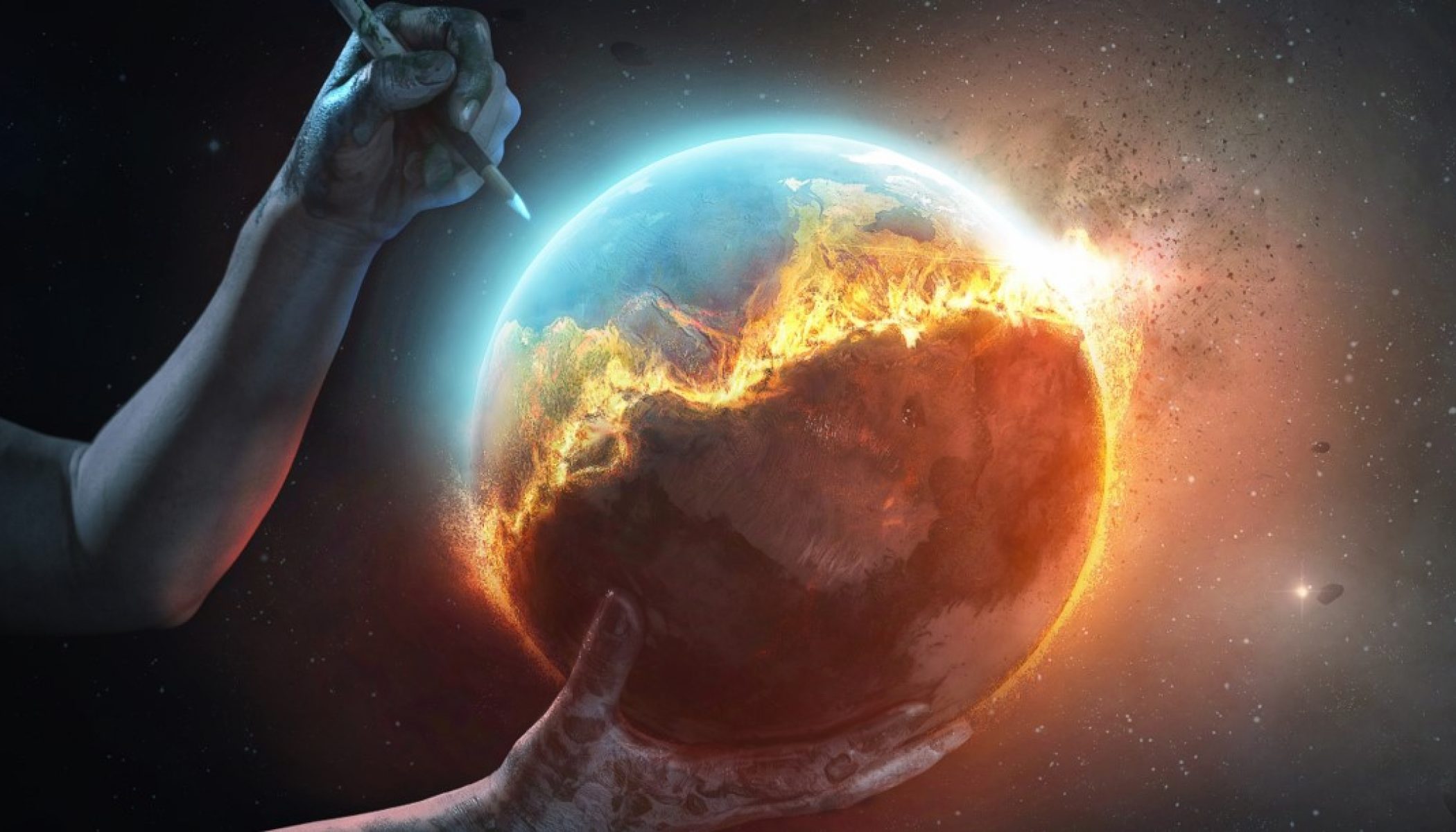
In one of his last works, The Grand Design, Professor Stephen Hawking argued that the Big Bang, rather than occurring following the intervention of a divine being, was inevitable due to the law of gravity. However, in his previous book, A Brief History of Time (1988), Hawking had seemed to accept the role of God in the creation of the universe. But in The Grand Design, co-written with American physicist Leonard Mlodinow, he said new theories showed a creator is “not necessary”. This is one aspect of the arrogance of science. In the book Hawking sets out to contest Sir Isaac Newton’s belief that the universe must have been designed by God as it could not have been created out of chaos. “Because there is a law such as gravity, the universe can and will create itself from nothing,” wrote Hawking: “Spontaneous creation is the reason there is something rather than nothing, why the universe exists, why we exist. Lord Sacks the Chief Rabi of England accused the astrophysicist of logical fallacy for excluding possibility of supernatural creation. Unfortunately for the astrophysicist, his theory encountered the same pitfall of creationists belief in Creatio ex nihilo ( “creation out of nothing”).This refers to the belief that matter is not eternal but had to be created by some divine creative act, frequently defined as God. It is a theistic answer to the question of how the universe comes to exist. It contrasts with Ex nihilo nihil fit or “nothing comes from nothing”, which means that all things were formed from preexisting things; an idea by the Greek philosopher Parmenides (c.540-480 BC) about the nature of all things.
All divine religions have taught that the flawless functioning of the Universe is proof of intelligent design in creation. See Quran 2:117 and Quran 6:73. Every detail that emerges as we observe the sky, Earth, and all living things is intended as evidence of the Creator’s power and wisdom.
God is not limited in what He can create or how He creates. We can have knowledge only to the extent that He permits. Going further, man did not invent the natural laws of science. These laws have always been there until man was able to reason them out. The laws of gravity, speed of light and sound have always been there. Archimedes did not invent the law of displacement, he only discovered it through observation, neither did Newton invent the law of gravity, gravity had always been there before he was created. In short, what science has done is to open our eyes to the existence of established laws of nature and the unlimited possibilities open to man. Scientific discovery is a work in progress.
God can use stages in His creation if He so wills. For example, He produces a plant from a seed or a human being from the coming together of a sperm and an egg cell. Yet these stages have nothing to do with evolution and have no room for chance or coincidence. Every stage in the emergence of a plant, or the turning of a single cell into a human being “in the best of forms,” happens thanks to the perfect systems created by God’s infinite might.
A growing number of educators and scientists around the world believe the account of creation in the Bible and the Quran and are pointing us back to the truth of these words: ‘In the beginning God created the heavens and the earth.’ The question ‘evolution or creation?’ becomes clearer when you rephrase it as ‘accident or design?’ Sir Fred Hoyle, professor of astronomy at Cambridge University, said: ‘The chance that higher life forms might have emerged in this way [through evolution] is comparable to the chance that a tornado sweeping through a junkyard might assemble a Boeing 747 from the materials therein.’ Even evolutionist Stephen Hawking, acknowledged: ‘The universe and the laws of physics seem to have been specifically designed for us.’
Today, scientists are coming to grips with the fact that that life can exist even in unimaginable places. Life has been found to exist in volcanoes and in extreme cold; conditions which were hitherto believed to be inhospitable to any life form: Ethiopia’s Dallol geothermal area could qualify. Minerals from one of the volcano’s many hot, acidic, salty springs have been found to contain an ultra-tiny order of microbe. High heat, salt, and an insanely low pH are not typical conditions you would expect to harbor life. In the Alaskan tenebrionid beetle Upis ceramboides, the extracellular fluids freeze at a high sub-zero temperature, and once frozen in the natural environment this species can survive down to −60°C. Who says life cannot be found on another planet?
Science defines the universe as being made up of five components: time, space, matter, power, and motion. 1) ‘Most cosmologists agree that the Genesis account of creation, in imagining an initial void, may be uncannily close to the truth’ (Time magazine). 2) ‘The universe suddenly exploded into being…The big bang bears an uncanny resemblance to the Genesis command’ (Jim Holt, science writer: The Wall Street Journal). 3) ‘New scientific revelations about supernovas, black holes, quarks, and the big bang even suggest to some scientists that there is a “grand design” in the universe’ (U.S. News & World Report).
The retina in your eye contains 137 million light-sensitive cells, while the focusing muscles in your eye move approximately 100,000 times a day. Well guess what? Charles Darwin wrote in ‘On the Origin of the Species by Means of Natural Selection’, ‘To suppose that the eye…could have been formed by natural selection [evolution], seems, I freely confess, absurd in the highest degree.’ The truth is this: God made you, and He has a plan for your life.
What animal gazes with awe at the magnificence of Mount Kilimanjaro? What animal obtains joy from the sounds of music? Or takes the time to form itself into an orchestra to create and harmonize music? What animals among the beasts sets up court systems and dispense justice to its fellow creatures? Only man can uncover the hidden laws of electricity and can utilize the law of aerodynamics to transport ourselves around the globe.
Man is not just another animal in the evolutionary chain. ‘Microevolution’ teaches variations within species. For example, there are different types of dogs, etc. But there is no scientific evidence to support ‘macroevolution’ – one species evolving into another species. Contrary to belief of evolutionists, God did not first create apes and then cause them to evolve into human beings through a flawed transitional form with missing organs. No Sir, God created man as we know him.
In reference to creation, Dr Derek Prince wrote: ‘I have been a professor at Britain’s largest university [Cambridge] for nine years. I hold various degrees and academic distinctions, and I feel in many ways I am quite sophisticated intellectually, . . . I have studied many attempts to explain man’s origin and found them all unsatisfying and in many cases self-contradictory. The limits of science?
Related
You may like
Islam
Friday Sermon: Climate Change and the Hands of God
Published
5 days agoon
December 12, 2025By
Eric
Allah has created the universe in all its diversity, richness and vitality: The stars, the sun and moon, the earth and all its communities of living beings. All these reflect and manifest the boundless glory and mercy of their Creator. All created beings by nature serve and glorify their Maker, all bow to their Lord’s will. We human beings are created to serve the Lord of all beings, to work the greatest good we can for all the species, individuals, and generations of God’s creatures.
In the Quran, Allah is depicted as the controller of nature, gently driving clouds, merging them, and allowing rain to fall as He wills. The Quran emphasizes the importance of not spreading corruption on earth, which includes theft, fraud, and environmental degradation. As global warming and environmental issues increasingly affect our world, Islamic teachings underscore the need for environmental stewardship, reminding us to respect and care for our planet.
The Quran and Sunnah provide significant lessons on the relationship between humans and the environment, highlighting the moral responsibility to preserve natural resources. Severe weather events, such as storms and hail, are acknowledged but are not overtly tied to apocalyptic signs in Islamic texts. Verse 11 in Surah Az-Zukhruf emphasizes that rain is sent down in measured amounts, reflecting Allah’s control over the environment. There should be no doubt about this.
Islam cautions against wastefulness in resource usage, using terms like ‘Tabdhir’ (squandering) and ‘Israaf’ (extravagance) to convey the importance of balance and conservation. The Quran offers timeless guidance on living harmoniously within our ecological limits, promoting the thoughtful use of natural resources for the benefit of all creatures. This speaks to the flaring of gas in our oil fields.
The Quran explicitly advises against wastefulness, with verses reminding believers of the importance of using resources thoughtfully. Allah says in the Quran: “, but do not waste; verily, He does not love the wasteful.” (Quran 7:31)
By embracing these principles, Muslims can positively impact the environment. The Quran reminds us of Allah’s provisions, such as the creation of the ozone layer, which protects life on earth. Additionally, weather forecasting is viewed as an informed practice based on observing nature. In summary, the Quran provides profound insights that advocate for environmental awareness and responsibility, urging believers to act diligently in caring for the earth.
However, we should be cautious when discussing the issue of climate change in abstraction. The world and the universe were created by an All-Knowing God who apportioned with precision the provisions he has made. “Do not those who disbelieve see that the heavens and the earth were a closed-up mass, then We opened them out? And We made from water every living thing. Will they not then believe?” (Quran 21:30)
Knowing that we would one day transit from one energy source to another in order to maintain the growing population which he had commanded to ‘be fruitful and multiply’, Allah in His wisdom buried hydrocarbon in the soils of Saudi Arabia, Iran, Iraq, Uzbekistan, Nigeria, Angola, United States, Venezuela, Russia and many other countries. God was not stupid; He was provisioning us with sources of energy.
However, in the course of its usage, these gifts of fossil fuel are now turning into our albatross as a result of global warming. Allah has warned us in the Quran to use whatever we were given judiciously without committing excesses.
The Quran sets forth key principles of eco-consciousness that resonate with us as believers. Concepts such as responsible consumption, avoiding wastefulness, and nurturing the land highlight our role in environmental protection. The teachings encourage us to view nature as a divine trust, prompting us to respect and preserve the ecosystem as part of our spiritual obligation.
The Quranic perspective on the environment is not merely a set of guidelines but a comprehensive framework that shapes how Muslims interact with the natural world. These teachings are deeply embedded in the concepts of stewardship, balance, respect, and conservation.
With this in mind, we have a significant role to play in addressing climate change through the lens of Islam. Our faith encourages stewardship of the Earth and making choices that reflect a commitment to sustainability. By incorporating environmentally-friendly practices into our daily life, we can fulfill this Islamic responsibility and contribute to a healthier planet.
According to Islamic teachings, humans are Allah’s vicegerents (khalifah) on Earth see Quran 2:30. The theology of creation emphasizes that humans have a responsibility to manage and protect the environment and to use their abilities in accordance with divine guidance. This stewardship is integral to fulfilling their role as vicegerents on Earth.
The greatest contributor to climate change, if truth must be told, has been the phenomenal industrial and socio economic development of the First World. From coal fired energy sources to oil and gas, the climate effect cannot be overemphasized. There is also the need for heating fuel during winter, without which people in the cool temperate regions would freeze to death.
The People’s Republic of China, the United States, India, the European Union, Indonesia, the Russian Federation, and Brazil accounted for half of all global greenhouse gas emissions. This is an inevitable corollary of industrial development.
The US military is the single largest institutional consumer of fuel in the world. Credible estimates place it in the range of 80 to 90 million barrels of fuel per year. This staggering figure highlights the military’s dependence on fossil fuels and the significant logistical challenges involved in supplying forces around the globe.
Beginning during the second half of the twentieth century, fossil fuel consumption by the world’s militaries grew substantially. As warfare has become increasingly carbon intensive, military aircraft and other large war machines have continued to guzzle massive amounts of gasoline, diesel, and jet fuel. Today’s modern armies, air forces, and naval fleets are consuming fossil fuels at unprecedented rates. In addition to using fossil fuels to power machinery like tanks and battleships, weapons manufacturing also guzzles a significant amount of energy and fossil fuels.
Former Director of the Central Intelligence Agency and retired United States Army General David Petraeus once famously said, “Energy is the lifeblood of our war fighting capabilities” (Crawford, 2019). As the world’s largest military power, the U.S. military is the single biggest consumer of fossil fuels and producer of greenhouse gas emissions in the world. In addition to concerns about climate change, American military officials continue to highlight the national security implications of being overly dependent on fossil fuels.
Since the 1800s, human activities have caused shifts in weather conditions, chiefly because human activity has increased exponentially as a result of the quantum leap of world population.
Burning fossil fuels can cause global warming as it releases large amounts of carbon dioxide and greenhouse gas into the air, which can trap the sun’s heat and increase temperatures. These however cannot be helped. The burning of fossil fuel as coal, oil and gas are corollary of human population development. More than half of the current world population depends on firewood, coal and other fuels for their livelihood.
The pace of Global climate change today is of a different order of magnitude from the gradual changes that previously occurred throughout the most recent era, the Cenozoic. Moreover, it is human-induced: we have now become a force dominating nature. The epoch in which we live has increasingly been described in geological terms as the Anthropocene, or “Age of Humans”.
Our species, though selected to be a caretaker or steward (khalifah) on the earth, has been the cause of such corruption and devastation on it that we are in danger of ending life as we know it on our planet.
This current rate of climate change cannot be sustained, and the earth’s fine equilibrium (mīzān) may soon be lost. As we humans are woven into the fabric of the natural world, its gifts are for us to savour.
But the same fossil fuels that helped us achieve most of the prosperity we see today are the main cause of climate change. In the brief period since the Industrial Revolution, humans have consumed much of the non-renewable resources which have taken the earth 250 million years to produce – all in the name of economic development and human progress.
We note with alarm the combined impacts of rising per capita consumption combined with the rising human population. We also note with alarm the multi-national scramble now taking place for more fossil fuel deposits under the dissolving ice caps in the arctic regions. We are accelerating our own destruction through these processes.
Excessive pollution from fossil fuels threatens to destroy the gifts bestowed on us by Allah – gifts such as a functioning climate, healthy air to breathe, regular seasons, and living oceans. But our attitude to these gifts has been short-sighted, and we have abused them. What will future generations say of us, who leave them a degraded planet as our legacy?
Our planet has existed for billions of years and climate change in itself is not new. The earth’s climate has gone through phases wet and dry, cold and warm, in response to many natural factors. Most of these changes have been gradual, so that the forms and communities of life have adjusted accordingly. There have been catastrophic climate changes that brought about mass extinctions, but over time, life adjusted even to these impacts, flowering anew in the emergence of balanced ecosystems such as those we treasure today. Climate change in the past was also instrumental in laying down immense stores of fossil fuels from which we derive benefits today. Ironically, our unwise and short-sighted use of these resources is now resulting in the destruction of the very conditions that have made our life on earth possible.
Rabbana atina fid dunya hasanatan wa fil Aakhirati hasanatan waqina ‘adhaban-nar: Our Lord, give us in this world [that which is] good and in the Hereafter [that which is] good and protect us from the punishment of the Fire.
Barka Juma’at and a happy weekend
Related
Islam
Friday Sermon: Pride and the Pitfalls of Arrogance
Published
2 weeks agoon
December 4, 2025By
Eric
“Pride goes before destruction, and a haughty spirit before a fall.” Proverbs 16:18 .
The problem with pride is that it is a dangerous and deceptive sin. Nothing brings more destruction to our nation, homes, and relationships than a prideful spirit.
Adrian Rogers says, “Pride is a problem that all wrestle with, and those who think they don’t have it probably have more of it.”
A good self-image or self-esteem is not pride; neither is receiving honor or awards we’ve worked for.
Pride is an attitude of independence from God; it is a spirit of ungratefulness to God. A prideful person esteems himself better than other people.
The great sin of pride is a snare into which we fall all too easily, and its deceitful road leads only to destruction. Charles Haddon Spurgeon (Late Baptist preacher) declares that “There is nothing into which the heart of man so easily falls as pride, and yet there is no vice which is more frequently, more emphatically, and more eloquently condemned in Scripture.”
Unchastity, anger, gluttony, arrogance, conceit, drunkenness, and all that, are mere flea bites in comparison: it was through Pride that the devil became the devil: Pride leads to every other vice: it is the complete anti-God state of mind…… it is Pride which has been the chief cause of misery in every nation and every family since the world began.
Pride defies God; it is a fist in His face. Pride is what created the devil and ruined the human race in the Garden of Eden. God hates it, and when we harbor pride in our hearts, we become His adversary.
Pride divides society; there has never been an argument, a war, a divorce, or church split apart where pride was not the major factor.
Pride dishonors life; in the pursuit of honor, pride brings shame. Proverbs 29:23 says, “A man’s pride will bring him low, but the humble in spirit will retain honor.”
Pride is the road to ultimate ruin—national, domestic, financial, emotional, spiritual, and eternal ruin—because it destroys all that it controls.
Pride is a matter of the heart; if we are not right with God, we cannot be right with one another. But the grace of God is sufficient for everyone. James 4:6 says, “God resists the proud, but gives grace to the humble.”
There is none so bad he cannot be saved, there is none so good he doesn’t need saving. Defeating pride begins with humbling ourselves before God.
A profane person is one who has no spiritual conception, who sets no value on a birthright, and will sell it for red pottage. A profane person has no consciousness of the eternal, no commerce with the spiritual, is proud of animal ability, and acts as though independent of God. Profanity never prays, never worships, never speaks of spiritual intercourse, has no traffic with the eternities, no commerce with heaven.
What is pride? Pride is an attitude of independence from God. Pride is a spirit of ungratefulness to God. God has so blessed us. We have so many things. We act like we deserve it and have earned it, and it is ours.
Some may say that they worked for what they have. Who gave us the ingenuity to work? Who gave us the strength and energy? We do not have one thing that we have not received. Pride is esteeming ourselves better than other people.
A proud person becomes irritated when corrected for mistakes. A proud person accepts praise for things over which he or she has no control, such as beauty, talent, and abilities. Those are gifts.
C.S. Lewis said that pride gets no pleasure out of having something, only out of having more of it than the other man.
The Quran states that Allah does not like the arrogant and boastful, and those with an atom’s weight of arrogance in their heart will not enter Paradise. Humility, on the other hand, is a central goal of spiritual purification and is seen as the opposite of pride.
The concept of conceit, expressed in the Quran with terms like ‘mukhtal’ (self-deluded) and ‘fakhur’ (boastful), is a severely condemned spiritual disease. Pride is a direct challenge to Allah’s attribute of Al-Kabeer (The Greatest). Allah explicitly states His dislike for the arrogant and boastful.
Tafsir by authorities like Ibn Kathir on Quran 4:36 For Allah loveth not the arrogant, the vainglorious; and 57:23 For Allah loveth not any vainglorious boaster; clarifies that this refers to an arrogant individual who is pleased with themselves and boastful to others, while being ungrateful to Allah for His blessings.
In classical Islamic scholarship, pride (Al-Kibr) is a grave spiritual malady of the heart, defined by the Prophet Muhammad (SAW) as the dual act of rejecting divine truth and holding people in contempt. Classical authorities like Imam Al-Ghazali elaborate that it is an internal sense of self-aggrandizement that positions oneself above others and, ultimately, above the truth itself.
Across the 11 key Quranic verses on this topic, from the ‘pride in sin’ (2:206) “When it is said to him, “Fear Allah,” he is led by arrogance to (more) crime. Enough for him is Hell; – an evil bed indeed (to lie on)!” – to turning away from people scornfully (31:18); a consistent theme emerges: Pride is the primary veil that blinds the heart to guidance and severs the connection with Allah.
Ibn Kathir’s tafsir confirms that this was the foundational sin of Iblis and the cause of ruin for past nations who rejected their prophets. This synthesis establishes pride not merely as a negative trait but as a direct challenge to divine authority and a fundamental obstacle to spiritual purification.
In theological perspective, pride is a spiritual disease of the heart (qalb) that corrupts faith and actions.
Seen as the root of narcissism, inability to accept criticism, and contempt for others, leading to social isolation and spiritual ruin; Pride seals the heart from accepting truth and guidance from Allah and His messengers.
Overcoming pride and cultivating its opposite, humility, is a central goal of spiritual purification.
Prophet Muhammad (SAW) warned severely against it, stating that no one with an atom’s weight of arrogance in their heart will enter Paradise.
There is a powerful connection between pride and the senses. Verses like 22:9 (Disdainfully) bending his side, in order to lead (men) astray from the Path of Allah: For him there is disgrace in this life, and on the Day of Judgment We shall make him taste the Penalty of burning (Fire). And 75:33 Then did he stalk to his family in full conceit! show that internal arrogance is not abstract; it physically manifests in one’s posture, gait, and even the direction of one’s gaze. This proves that purification in Islam is holistic, requiring both internal change and external correction. — Al-Ghazali, Al-Qurtubi
A cross-verse synthesis of ‘pride in sin’ (2:206) and ‘pride of ignorance’ (48:26) uncovers a critical insight: pride creates a self-reinforcing cycle. The ‘pride of ignorance’ prevents one from seeking knowledge, and the ‘pride in sin’ prevents one from accepting correction, trapping the individual in a downward spiral of ignorance and disobedience, a spiritual feedback loop that only humility can break.
One recurring theme emphasized throughout the Quran is the importance of humility and the warning against pride and arrogance. These negative traits are viewed as obstacles in the spiritual journey, hindering individuals from attaining closeness to Allah and fostering harmonious relationships with others.
Surah Luqman, verse 18, states formerly cited highlights the detestable nature of arrogance and also contrary to the qualities that Allah desires in His servants.
“Indeed, He does not like the arrogant.” (Quran 16:23). This verse serves as a clear message that pride and arrogance find no favor in the sight of Allah.
Surah Al-Baqarah, verse 206, illustrates the grave consequences of arrogance. It highlights that when individuals become self-absorbed and disregard the guidance of Allah, they pave the way for their own spiritual downfall.
Surah Al-Furqan, verse 63, provides a contrasting image: “And the servants of the Most Merciful are those who walk upon the earth easily, and when the ignorant address them [harshly], they say [words of] peace.” This verse showcases the virtue of humility in the face of adversity.
The Holy Quran serves as a beacon of guidance for Muslims, offering profound insights into various aspects of life. Among the recurring themes emphasized in the Quran are the condemnation of pride and arrogance, and the promotion of humility. These negative traits are seen as hindrances to spiritual growth and detrimental to one’s relationship with Allah and fellow human beings. These verses underscore the importance of humbleness, while warning against the pitfalls of arrogance.
By cultivating humility in their hearts and actions, believers can strive to embody the virtues that Allah seeks in His servants, fostering an atmosphere of love, respect, and harmony within themselves and their communities.
Today, we celebrate the birthday of a virtuous woman of impeccable humility and godliness who has demonstrated forbearance and patience. A paragon of beauty, resilience and acceptance: We present to you our amiable sister Alhaja Lateefah Abimbola Kuru (the last daughter), retired but not tired and ever smiling. May Allah bless her new age and bless her home. Grant her good health and the wherewithal to take care of Amal, her lovely daughter. Bola, happy birthday and Allah’s everlasting blessings.
Barka juma’at and happy weekend.
Related
Islam
Friday Sermon: Which of the Favours of Your Lord Will You Deny? Surah Ar-Rahman
Published
3 weeks agoon
November 28, 2025By
Eric
The teachings of Al- Qur’an are universal, addressed to all people throughout the world regardless of their creed and colour. They enlighten man’s soul, purify his morals, condemn all wrongs, order good deeds and call for the establishment of justice and fraternity through obeying Allah as the supreme authority. Surah Ar-Rahman has benefits in education, indicating that the properties of educators are generous, compassionate, gentle, polite and morality to their students and anyone (Personal Competence).
Surah Rahman is the 55th chapter of the Quran and has 78 verses. It is often referred to as “The Beneficent.” It highlights the attributes of Allah, particularly His mercy and generosity. The surah is notable for its repeated refrain, “Fabi ayyi ala’i rabbikuma tukaththiban?” (So, which of the bounties of your Lord will you deny?), which serves to remind and awaken the listener to the blessings they receive from Allah.
The repetition of this question challenges those who deny the existence or power of Allah and invites them to reflect on their own limited abilities in comparison to the infinite power of Allah.
Surah Rahman also contains other instances of repetition. For example, the phrase “Then which of the blessings of your Lord will you both (jinns and men) deny?” is repeated six times in the surah.
Similarly, the phrase “So which of the favors of your Lord would you deny?” is repeated five times in the surah. This repetition further emphasizes the importance of gratitude and encourages the listener or reader to reflect on the countless blessings that Allah has bestowed upon them.
Another example is the repetition of the phrase “Which of the powers of your Lord can you (people) deny?” This phrase is repeated nine times in the surah, and it serves to highlight the power and might of Allah.
Overall, the repetition in Surah Rahman serves to emphasize key points and make them more memorable for the listener or reader. The repetition of the question “Which of your Lord’s blessings would you deny?” throughout the surah reminds us of Allah’s countless blessings and encourages us to express gratitude to Him. It also serves as a rhetorical device to challenge those who deny or reject the existence of Allah, inviting them to reflect on the blessings that are evident in the world around them.
The repetition of this question, along with other phrases such as “Then which of the blessings of your Lord will you both (jinns and men) deny?” and “So which of the favors of your Lord would you deny?” further emphasizes the importance of recognizing and acknowledging Allah’s blessings and encourages us to think about the ways in which we may be ungrateful or unaware of these blessings.
Finally, the repetition of the phrase “Which of the powers of your Lord can you (people) deny?” serves to highlight the power and might of Allah and challenges those who deny His existence or power to reflect on their own limited abilities in comparison to the infinite power of Allah.
Surah Rahman also includes other forms of repetition, such as parallelism and refrains. Parallelism is a literary device in which similar ideas are expressed using different words or phrases. For example, in verse 13, the phrase “Then which of the favors of your Lord will you deny?” is repeated twice, with slightly different wording: “Which of the favors of your Lord will you deny? He created man from clay.” This repetition creates a sense of rhythm and balance and helps to drive home the message of gratitude and recognition.
In the great astronomical universe there are exact mathematical laws, which bear witness to Allah’s Wisdom and also to His favors to His creatures; for we all profit by the heat and light, the seasons, and the numerous changes in the tides and the atmosphere, on which the constitution of our globe and the maintenance of life depend.
To be taken both literally and figuratively. A man should be honest and straight in every daily matter, such as weighing out things which he is selling: and he should be straight, just and honest, in all the highest dealings, not only with other people, but with himself and in his obedience to Allah’s Law. Not many do either the one or the other when they have an opportunity of deceit.
Justice is the central virtue, and the avoidance of both excess and defect in conduct keeps the human world balanced just as the heavenly world is kept balanced by mathematical order.
How can Allah’s favors be counted? Look at the earth alone. Life and the conditions here are mutually balanced for Allah’s creatures. The vegetable world produces fruit of various kinds and corn or grain of various kinds for human food. The grain harvest yields with it fodder for animals in the shape of leaves and straw, as well as food for men in the shape of grain. The plants not only supply food but sweet-smelling herbs and flowers.
The whole Surah is a symphony of Duality. The things and concepts mentioned in this Surah are in pairs: man and outer nature; sun and moon; herbs and trees; heaven and earth; fruit and corn; human food and fodder for cattle; things nourishing and things sweet-smelling; and so on throughout the Surah. Then there is man and Jinn. “Will ye deny?” that is, fail to acknowledge either in word or thought or in your conduct. If you misuse Allah’s gifts or ignore them that is equivalent to ingratitude or denial or refusal to profit by Allah’s infinite Grace.
The ships-sailing ships and steamers, and by extension of analogy, airplanes and airships majestically navigating the air-are made by man, but the intelligence and science which made them possible are given by man’s Creator; and therefore the ships also are the gifts of Allah.
The most magnificent works of man-such as they are – are but fleeting. Ships, empires, the wonders of science and art, the splendors of human glory or intellect, will all pass away. The most magnificent objects in outer Nature – the mountains and valleys, the sun and moon, the Constellation Orion and the star Sirius – will also pass away in their appointed time. But the only One that will endure forever is the “Face” of Allah. Tekbir!
Every single creature depends on Allah for its needs: of all of them the Cherisher and Sustainer is Allah. “Seek (its needs)”: does not necessarily mean ‘seek them in words’: what is meant is the dependence: the allusion is to the Source of supply.
Allah is still the directing hand in all affairs. He does not sit apart, careless of mankind or of any of His creatures. But His work shows new splendor every day, every hour, every moment.
Allah gives to both good and evil men a chance in this period of probation; but this period will soon be over, and Judgment will be established. To give you this chance, this probation, this warning, is itself a favor, by which you should profit, and for which you should be grateful.
If you think that because you do things in secret, or because some of your sins do not seem to meet their inevitable punishment or some of your good deeds seem to go unnoticed, do not be deceived. Judgment will soon come. You cannot possibly escape out of the zones in which your lives have been cast, without authority from Allah. Be grateful to Allah for the chances He has given you.
Blessed be the name of thy Lord, Full of Majesty, Bounty and Honor.
The question in Surah Rahman is a wake-up call for all of us. It reminds us that our time in this world is short. We don’t know when we will die or when the Day of Judgment will come. So, we need to make the most of every moment and every blessing. We need to use our time and energy to do good and get closer to Allah. We need to change our bad habits and develop good ones. We need to be kind and generous to others. And we need to remember that everything we have is a gift from Allah. It is not because of our own efforts or abilities. This should make us humble, and it should also make us more grateful.
At this hour, we pray to Allah to grant divine healing to the sick as we remember our sister Sobura, who is currently afflicted. May Allah open the gate of divine healing for her and ease her pains as she currently undergoes chemotherapy.
May Allah teach us how to be grateful for all we have been given.
Barka Juma’at and a happy weekend!
Related


I’m Ready for Probe, NMDPRA Boss Farouk Ahmed Responds to Dangote’s Corruption Allegation
No Court Order Against Tinted Glass Permit Enforcement, Police Insist
Alleged Corrupt Practices: Dangote Petitions ICPC Against NMDPRA MD Farouk
US Congressman Recounts Harrowing Experience in Nigeria, Confirms ‘Systematic Genocidal Campaign’
Ex-CJN Tanko Mohammed is Dead
Tinubu Didn’t Win 2023 Election, Will Lose in 2027 – Abaribe
Book Launch: Tinubu Vows to Sustain Buhari’s Legacies
Nigerian Soldiers Still Trapped in Burkina Faso – Foreign Affairs Minister
Dangote Launches Historic ₦1trn Scholarship Scheme for 1.3m Students
2027: Nigeria Sliding into ‘Fanatical Governance’, Momodu Blasts APC, Submissive Legislature and Weak Opposition
There’s No Govt in Nigeria, Tinubu is the Person in Power – Dele Momodu
Rebuilding the Pillars: A Comprehensive Blueprint for Overcoming Nigeria’s Leadership Deficit
Corruption! Tinubu Tackles ‘Buhari Boys’
Bayelsa Deputy Gov Slumps, Dies at 60
Trending
-
Africa5 days agoNigerian Soldiers Still Trapped in Burkina Faso – Foreign Affairs Minister
-
Featured5 days agoDangote Launches Historic ₦1trn Scholarship Scheme for 1.3m Students
-
Featured5 days ago2027: Nigeria Sliding into ‘Fanatical Governance’, Momodu Blasts APC, Submissive Legislature and Weak Opposition
-
Featured4 days agoThere’s No Govt in Nigeria, Tinubu is the Person in Power – Dele Momodu
-
Opinion4 days agoRebuilding the Pillars: A Comprehensive Blueprint for Overcoming Nigeria’s Leadership Deficit
-
Headline3 days agoCorruption! Tinubu Tackles ‘Buhari Boys’
-
News6 days agoBayelsa Deputy Gov Slumps, Dies at 60
-
News6 days agoAwujale: Fusengbuwa Ruling House Rejects Kwam 1’s Application