
Headline
The Exclusive Story of Dangote Refinery and Petrochemical

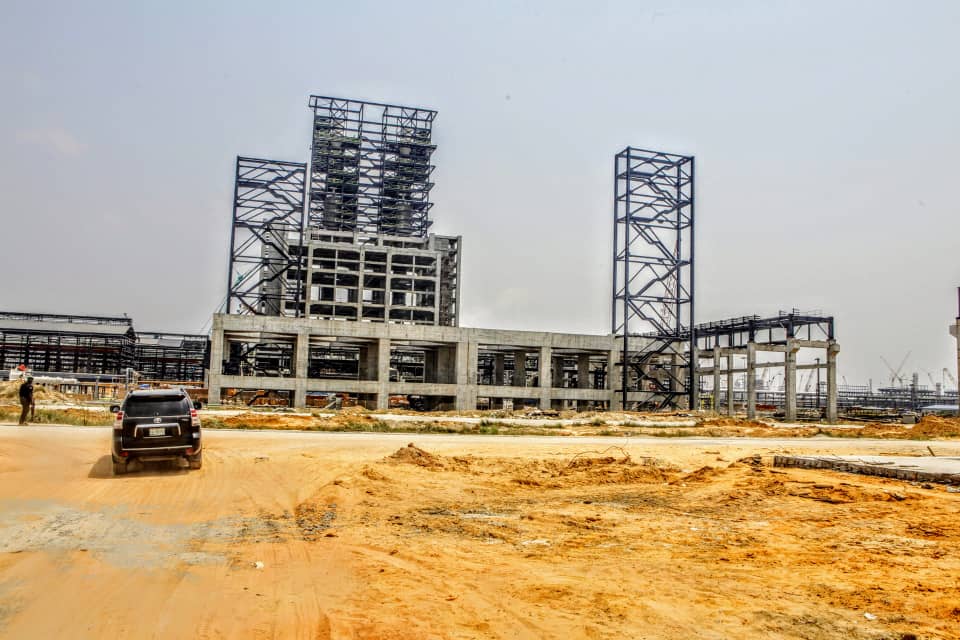

By Michael Effiong
In his essay “The Talented Tenth,” W.E.B. Du Bois wrote, “The Negro race, like all races, is going to be saved by its exceptional men.” Alhaji Aliko Dangote is exactly the type of exceptional Africans Du Bois had in mind.
From small beginnings, he has built a business empire and a brand that has put him among the richest and the most influential businessmen on the continent and in fact, planet earth.
For those who meet Dangote for the first time, his polite, soft-spoken demeanor is impossible to forget. But don’t be mistaken, this cool mien belies his inner toughness.
The kind of toughness, vision, passion and determination that will propel anyone to success against all odds. The kind of toughness that will make you want to thread where others dread; the kind of toughness that will make you believe that you can make impossible possible; the kind of toughness that will make you dream up a gargantuan project like the Dangote Refinery & Petrochemical, a project that his fellow billionaire and businessman, Mr. Femi Otedola has christened, THE DANGOTE WONDERLAND.

Indeed, that project tucked inside the Lekki Area in the outskirts of Lagos is a wonder to behold. Pictures do not do justice to this mega project; it is the kind of project that you have to see to appreciate its true worth and magnificence.
Those who have been to the site after being wowed by its sheer size, and of course the audacity and ambition of its designers could not help but soliloquize about the visionary Aliko Dangote, “What was he thinking?’
He alone knew where he was going when a few days after his 56th birthday in April, 2013 he told the world about his dream of building a refinery in Nigeria.
According to him, the Dangote Petroleum Refinery will be the largest single train petroleum refinery in the world with a capacity to refine 650,000 barrels of crude daily and employ thousands of Nigerians directly and indirectly.
Located in the Lekki Free Trade Zone, in Ibeju-Lekki, Lagos State, the facility covers a land area of approximately 2,635 hectares which is six times the size of the famous Victoria Island.
Revealing why he chose Lagos State for the project, the Forbes-listed billionaire noted that Lagos was investment friendly and the Governor was very willing to help resolve all issues.
Every one knows that to finance this kind of project was not going to be easy, but Dangote’s track record of business excellence did the magic.

This much was revealed along with the financing model at the signing ceremony of the first tranche of loan secured for the Refinery. This was a $3.3 billion term loan facility supported by a consortium of 12 local and international banks. The loan facility was jointly coordinated by Standard Chartered Bank as the Global Coordinator, and Guaranty Trust Bank Plc as the Local Coordinator.
At the ceremony, President/Chief Executive of Dangote Group, Aliko Dangote said: “This plant will further entrench Africa’s role on the global map as not only a valued contributor for natural resources, but also a competent manufacturer of refined products and fertilizer. As a result, several African nations will be less reliant on importing fuel and fertilizer from foreign markets, reducing the negative impact of negotiating terms within increasingly turbulent international markets.”

“We will end up spending between $12 billion to $14 billion. The funding is going to come through equity, commercial bank loans, export credit agencies and developmental banks,” Dangote noted.
He added “We have done the numbers and we are sure of numbers. This is a project that will redefine the sector”
Also speaking, CEO of Standard Chartered Bank in Nigeria, Ms. Bola Adesola, added: “Standard Chartered is proud to support the Dangote Group in a project which will significantly boost Nigeria’s economic productivity and create valuable jobs with specialist skills from key growth sectors. This project is an historic example of self-empowerment and leadership for the continent as a whole – and is made possible through effective partnerships between the Nigerian private sector, Government and international financial institutions. Standard Chartered remains committed to being here for good in Nigeria, and the region.”

And for Mr. Segun Agbaje, Managing Director of Guaranty Trust Bank Plc, “This landmark project reinforces Dangote’s commitment to the development of the Nigerian economy. We are proud to be associated with Dangote on this transaction and this demonstrates the bank’s commitment to supporting the development of the agriculture and oil and gas industries.”
That was not all, Dangote also signed a loan of $650 million from the African Export-Import Bank (Afreximbank), $300 million loan from the African Development Bank and $997.4 million in training grant from the United States Trade and Development Agency for 100 of its staff.

With the funds to kick off in place, Dangote then had to seek partners that will help the dream become a reality.
According to a report by Businessday, India state-owned firm, Engineers India Limited was contracted to provide project management consultancy (PMC) services, as well as engineering, procurement and construction management (EPCM) for the Nigerian refinery, US-based Honeywell UOP was contracted for the supply of catalyst regeneration and dryer regeneration control systems, column trays, heat exchanger tubes, a modular CCR unit, and catalyst coolers among other equipment, C&I Leasing was contracted to provide transportation and installation services for mooring systems and subsea pipelines of the refinery, Hang Xiao Steel Structure Company is to provide steel structure and Jan De Nul Group was engaged for carrying out land reclamation works.
Furthermore, MAN Diesel & Turbo was contracted for supplying two compressor trains, Air Liquide Engineering & Construction was contracted for supplying the SMR units.

Fabtech (18 columns), Schneider Electric (process automation systems), SOFEC (Catenary Anchor Leg Mooring buoys), and WABAG (raw water treatment plant) and Still Earth Construction were also part of the contractors on the project.
Thus, work began in earnest and so when the Publisher of The Boss, Dele Momodu, Billionaire businessman, Femi Otedola visited the Refinery just last week, they were astounded at the amount of work that had been done.
The Dangote Petroleum Refinery has the capacity to meet 100% of the Nigerian requirement of all refined products (Gasoline, 57 million litres per day; Diesel, 27 litres per day; Kerosene, 11 million litres per day and Aviation Jet, 9 million litres per day) and also have surplus of each of these products for export.

The 400 MW Power Plant in the Refinery alone will be able to meet the total power requirement of Ibadan DisCo of 860,316 MWh covering five States including Oyo, Ogun, Osun, Kwara and Ekiti. A Captive Power plant comprising three Steam Turbine Generators of 40 MW capacity each, making a Total of 120 MW is also part of the package.
In addition, the Refinery will create market for $11 billion per annum of Nigerian Crude. Interestingly, the facility is designed for 100% Nigerian Crude with flexibility to process other crudes. Of course, its strategically located marine infrastructure for Crude receipts & product trade is an added advantage.

Also part of this humongous project is the Dangote Fertilizer Plant which will have two of the World’s Largest Fertilizer Trains – Three Million Tonnes per Annum capacity at 1.5m per train. It is bigger than the 1.4 million tonnes per annum of the former champion, Indorama Fertilizer Limited.
The Fertilizer Project is the largest Granulated Urea Fertilizer complex coming up in the entire fertilizer industry history in the world, with an investment of $2 Billion (Two billion US Dollars).
The complex consists of Ammonia and Urea plants, with associated facilities and infrastructure to produce 3 MMTPA Urea, the complex envisages:
• 2 x 2,200 MTPD Ammonia Plants based on Halder Topsoe technology
• 2 x 4,000 MTPD Melt Urea Plants based on Snamprogetti technology
• 2 x 4,000 MTPD Urea Granulation Plants based on Uhde Technology

The Fertilizer from this plant will be channeled into growing the local agriculture sector which is essential in producing healthy crops and promoting Nigeria and West Africa’s agricultural development. The Petrochemical plant will also produce Polypropylene which is a common component of most plastic and fabric products.
We are told that the the first products from this fertilizer facility will be ready for the market by the end of this February and as a matter of fact, distributors have already been assembled and they are set for action.
In other to ensure that this facility is first-rate, the company has deployed the most advanced technology and bench marks itself with the best standards in the world.

We gathered that in very aspect of the project, Dangote and his team have not settled for anything but the very best.
For example, Dangote Refinery has the biggest single-train facility used for refining crude. The atmospheric equipment which was manufactured by Sinopec company in China, is the primary unit processor of crude oil into fuels.
Capt Rajen Sacher, Head, Maritime and Ports Infrastructure of Dangote said the equipment weighs 2250MT; Length, 112.5m; Width, 14.036m; and Height, 13.752m. The above-mentioned weight does not include the weight of the internal trays which is approx. 536 MT.”
He said that the crude oil processor took 14 months in construction by Sinopec company in China and eight weeks to be brought down to Nigeria.
“Dangote refinery also invested heavily in dredging the sea from the refinery to Apapa for easy passage of the vessel,” he said. The piece of equipment which has the length of a soccer field, has the weight of 320 large elephants.

It was because of this and other heavy duty equipment called Out of Dimension that the company had to construct a special jetty which has made its work easier.
Talking of construction of its structures, the concrete for piling, residual catalytic cracking sub-structure, pavement plant areas, building in plant and non-plant areas and roads and drains have been carefully crafted to ensure maximum fortification.
It currently has the largest ready mix concrete production facility in the world. At thickness of 9 inches, 16 metres wide, the concrete required for the Refinery project is enough to pave the entire Federal Roads in Lagos (720KM).
In terms of providing employment, the Dangote Refinery has employed over 10,000 Nigerian personnel on site, with employment by the various contractors and subcontractors at the site reaching 7,500. The current ratio of Nigerians to Expatriates is 93% Nigerians to 7% Expats.

Apart from creating employment, Dangote, we gathered, is also passionate about technology transfer to Nigerians.
In this regard, a total of 900 Nigerian Engineers are being trained in design, engineering and design of the refinery. There are currently other Engineers currently under-going training.
Furthermore, the company recently completed the training of 200 artisans selected from the host communities in the areas of Masonry, Carpentry, AC Electricians, Plumbing, Welders, Iron-benders and Auto Mechanics. This was achieved in collaboration with the Nigerian Directorate of Employment and Nigerian Content Development and Monitoring Board. (This is one of Dangote Refinery’s Corporate Social Responsibility programmes within the host communities). Batch B of trainees are currently undergoing training and will soon graduate.

Without any shadow of doubt, Dangote Refinery was built with the future in mind and that is why as part of the project a residential facility to accommodate its staff was being constructed.
So far, accommodation for over 30,000 workers is ready as well those for 2,000 Managers. In addition, site offices, warehouses and lay-down areas have been completed.
This forward-thinking policy of Dangote Group helped the company in no small measure during the COVID-19 lockdown of last year. Because it had these accommodation facilities in place, it was able to safely monitor and house many of its staff which ensured that the disruption to its operations was minimal.
Without any shadow of doubt, the Refinery Project will definitely have tremendous benefit to the country.
The benefits include: Technology transfer, employment, power generation, professional development, production of petrochemicals, increased demand for domestic crude. unhindered availability of the product, development of local area and ancillary industries, availability of high quality products (Euro V Grade), annual Foreign Exchange earnings from exports of USD 5.5 billion and annual Foreign Exchange Saving from import substitution of USD 7.5 billion.

As a responsible corporate organisation, the company, we gathered, is committed to holistic development of its host communities and local institutions, as such it has executed comprehensive and robust community development initiatives in partnership with host communities.
Some of these initiatives are also designed to mitigate project impact on these communities whilst also improving its own operational efficiency.
Additionally, it instituted a well thought out Grievance Management Process (GMP) to ensure that all project related grievances from host communities or stakeholders are effectively addressed. The GMP was communicated to communities during stakeholder engagement using local language to aid understanding.
 Some of these notable initiatives include:
Water, Sanitation & Hygiene(WASH) Initiative – Under this scheme, the Project has provided 14 functional boreholes to its host communities. It has also gone one step further by undertaking quarterly lab tests to check for water portability.
There is also the Farmers Livelihood Support Programme: Dangote Fertiliser is currently implementing a livelihood support programme for farmers and Project Affected Persons(PAPs) impacted by the 53km gas pipeline constructed for the Fertiliser Project.
The programme which targets 150 beneficiaries aims at building capacities of farmers in innovative farming techniques, distributing adapted cassava stem cells and providing technical support to farmers to ensure proper planting practices which ultimately results in increased farming yields. It will also build capacities of local entrepreneurs on SME management and the income generating potentials of cassava by-products.
Dangote has also embarked on an initiative to provide further support to improving educational systems in Ibeju-Lekki and Epe locality. The educational support initiative is a tripartite programme consisting of scholarship, capacity building for teachers and school infrastructure projects.
In addition, Scholarship was awarded to 52 secondary school students whilst some financial support was provided to their parents and or guardians. Tertiary students will be included in the next batch of the scheme.

Furthermore, about 100 teachers, principals and school administrators were trained in teaching techniques for the 21st century. After which they were monitored in class on how they were using the skills acquired.
Still on education, the company plans to renovate existing structures, building new schools, donating school furniture and equipment etc. This component of the education support initiative will take off this year.
Already, it has constructed a block of 6 classrooms with restroom facilities and staff rooms. This was handed over at a formal ceremony in December 2020.
Youth development was also an area it took seriously. 400 local youths have been trained in two batches of 200 beneficiaries per batch. They are being trained on acquiring vocational skills such as plumbing, masonry, welding, iron bending, auto mechanics and electrical works. First batch of trainees graduated in September 2020 and some of them have been engaged; 2nd batch of trainees will graduate in February 2021.
It also organized programmes to build the capacity of local institutions such as the Community Development Committee (CDC), Project Implementation Committee(PIC), local leaders, youth leaders etc. on various subject areas such as stakeholder engagement, advocacy, networking, conflict resolution and negotiation, presentation skills, influx and impact of influx etc.
On a biannual basis, the Managers of the Dangote facility undertakes a project disclosure meeting to inform the communities on project status, impacts and impact mitigation strategies. Input are also sought from community stakeholders at these meetings and this information is integrated into the mitigation strategy.
Apart from the recent visit of Otedola and Momodu, many prominent Nigerians who recognize the great potential of this gigantic project have also paid a visit to the site.
When he was taken on tour of the facility, Vice President, Prof. Yemi Osinbajo described the Project as ambitious and intimidating.
He was not alone, the Governor of Central Bank, Mr. Godwin Emefiele also toured the facility and was very impressed. He noted that Dangote facility will employ over 70, 000 Nigerians when it starts operation and will also save the country foreign exchange.
An elated Alhaji Dangote noted at the occasion that his company “will be one of the highest foreign exchange generating companies, going forward”. Adding ”I must really confess that without government support, there is no way we could have done what we have done so far”
From all indications, this project is certainly going to add zest as well as stimulate the Nigerian economywhen it comes fully on stream.




World Bank Flags ‘Hidden Spending System’ Diverting N34.53trn of Nigeria’s Revenue

Why MTN, Airtel Suspended Airtime, Data Borrowing Services + the FCCPC Connection

Voice of Emancipation: Nigeria’s Political Climate and the Yoruba Struggle

Tinubu, Victim of Historical Amnesia – Atiku

2027: Why Nigeria Can’t Afford to Lose Atiku’s Experience and Expertise

Again, Iran’s Military Closes Strait of Hormuz

African Heritage Awards: Honours Galore for Ex-AfDB President, Akinwumi Adesina

Ali Ndume Accuses FG of Insincerity in Fight Against Insecurity

Supreme Court Fixes April 22 for Hearing in ADC Leadership Crisis

Leadership As Decisive Force in Regional and Continental Security

Tech and Humanity: When the System Has No Answer, Build One

Dele Momodu Proposes Atiku/Obi Ticket As ‘Best Bet’ to Unseat Tinubu in 2027

Man Rescued Amid Attempt to Jump into Lagos Lagoon

The Oracle: Human Rights: Our Everyday Essential Pt.2
-
 National6 days ago
Ali Ndume Accuses FG of Insincerity in Fight Against Insecurity
-
 Headline5 days ago
Supreme Court Fixes April 22 for Hearing in ADC Leadership Crisis
-
 Opinion2 days ago
Leadership As Decisive Force in Regional and Continental Security
-
 Tech and Humanity2 days ago
Tech and Humanity: When the System Has No Answer, Build One
-
 Featured5 days ago
Dele Momodu Proposes Atiku/Obi Ticket As ‘Best Bet’ to Unseat Tinubu in 2027
-
 Featured4 days ago
Man Rescued Amid Attempt to Jump into Lagos Lagoon
-
 The Oracle2 days ago
The Oracle: Human Rights: Our Everyday Essential Pt.2
-

 Islam3 days ago
Friday Sermon: DEL FAJ at 76: To Whom Much is Given…