Islam
Friday Sermon: Black Lives Will Not Matter 2
Published
6 years agoon
By
Eric
By Babatunde Jose
For the Black race to extricate itself from the clutches and knee of the white race, it would need to show exemplary and remarkable strides in socio-economic development. The World today respects only the developed and structurally stable nations. Unfortunately, Africa is still wallowing in backwardness and primitivism. Yet, we are not the only race that have had he knee of the Whiteman on its neck. Many countries, especially those colonized escaped the neo-colonialism of the West: They rejected the imposed language and culture, but embraced the technology and knowhow of the Whiteman. They therefore, escaped the Whiteman’s knee on their neck; and they can breathe! Among those that escaped are India, China, Japan, Singapore, Malaysia, Korea, Dubai and the Gulf States of Qatar, Bahrain and Abu Dhabi; unfortunately we did not escape and the rest of Africa too; South Africa inclusive.
Our woe began shortly after independence when we started toying with development models being manufactured by Western economists. We started borrowing development models some of which were not suited to our temperament, and which failed to work despite an abundance of big time economists too numerous to mention. We continued to tie ourselves to the apron string of the ‘mother country’ and never stopped being producers’ of primary goods or commodities; which we still do today.
We produce enough Cocoa to leverage a confectionery industry but failed to use it as a base for an industrial take off. Instead, farmers are just being ripped off and we never add value to products coming out of our land. The cocoa pod can be used for soap production, Cocoa juice can also be gotten from it, the dried beans will yield cocoa butter for the cosmetic industry which is more expensive than the cocoa powder that gives chocolate from which the “Nestle’s” of this world make more money than Cote D’Ivoire, Ghana & Nigeria put together. And we want the Whiteman to respect people who cannot do the math of economics of Cocoa. The same is true of our much vaunted oil and gas industry. Just as we export cocoa and import Ovaltine, we export crude oil and import petroleum products. All the derivates of the process of refining that help feed pharmaceuticals, fertilizers and all are lost to the economy.
With our eyes wide open, Michelin and Dunlop departed our shores despite the fact that Rubber, the basic raw material for the tire industry is plentiful in our country. Yet we import tires for our cars.
A few decades ago, we were a serious cotton producer and it formed the basis for our textile industry; today, that industry is comatose. It borders on the fact that we are not a serious people. But our women import lace voile from Austria that grows no cotton.
We do not adhere strictly to development plans and at some point abandon plans. This is a major pitfall in our economic development. Because we lack adequate data to work with, most of the indices of development are carried out haphazardly. Cases in point are health, education, power and infrastructure. How many Nigerians are there? We would never know because of the politicization of census figures.
How many children of school age do we have to provide primary, secondary and university education for? We do not know. How many jobs will those that graduate need? We do not know. Yet, there are serious countries like India and China that started with similar problems like us that have been able to cross the bridge. With a population of more than 1.3 billion, it’s no surprise that India runs the largest national school system in the world, with more than 700,000 schools in operation. Since the turn of the century, China has experienced a revolution in third level education. It has outstripped both the United States and Europe in graduate numbers and as of 2016, it was building the equivalent of nearly one university per week. In 2016 India had the most graduates of any country worldwide with 78.0 million while China followed close behind with 77.7 million. The U.S. was in third place with 67.4 million graduates, and the gap behind the top two countries is widening.
According to the World Economic Forum, STEM (science, technology, engineering and mathematics) has become a pretty big deal in China’s flourishing universities.
As far as planning and abandonment of plans are concerned; a good case in point is the story of Lagos State which by 1983 had drawn up a master plan for the development of the state which it divided into 4 zones. Our family printing press was involved in the production of the documents. It was a fantastic scheme that includes schools, recreational facilities, resorts and of course roads in Lekki axis including an airport and monorail. At a point all lands on the left of the express going towards Epe were designated for farmland and allocation papers were issued. The Honorable Commissioner for Agriculture at the time would remember with nostalgia how his office was inundated with requests by friends and foes alike for a piece of the action. At last nothing became of the laudable scheme. That in itself is one of the pitfalls to our development. Today, the greater part of Lagos is unplanned and uncharted and as confusing as can be: In short, a planner’s nightmare.
For over 12 years now, the proposed mass transit rail line from Okokomaiko to Marina is yet to come on stream. The same goes for the expansion of the Lagos/Ibadan Expressway. We have written in the past bout the ‘Monuments of Waste’ as a result of abandonment of development projects in the country, chief of which is the Ajaokuta Iron and Steel Complex which is now in its 40th year of stagnation and waste. You can add to this the comatose Mambilla Hydro Electricity project; also in its 40th year of immobility. With these monumental issues of waste and profligacy, our hope of sustained development at best stand attenuated.
It is also in this country that we set up paper mills at Jebba, Oku Iboku and Iwopin; all moribund and yet we have an educational system that could benefit from the paper produced. Equally moribund and abandoned is the Nigeria Romania Wood Industry with its dedicated Teak forest reserve. This ought to have come in handy in the manufacture school furniture.
What kind of country will allow its railway system to collapse as we did? Yet India’s national railway system operated by the government as a public good is the fourth largest railway network in the world, with a route length of 95,981-kilometre as of March 2019. About 50.90% of all the routes are electrified with 25 kV 50 Hz AC electric traction. Founded 16 April 1853 (166 years ago) it employs 1.30 million (2017). The high-speed railway is a recent phenomenon. Yet, it is still the major carrier of goods and personnel. But here we are still ‘jonesing’ on the 150 kilometer Lagos/Ibadan rail.
India weaved a development paradigm that was sui generis; and today has crossed the Rubicon into becoming a technological giant on its own. Today, India is noted for software development and its people are sought all over the world. Bangalore has given Silicon Valley a run for its money. It is also a giant pharmaceutical manufacturer, especially in generic drugs. India has gone to space and is a nuclear power. The result is that the Whiteman cannot snub the Indian, especially when Tata, the Indian business guru is a significant investor in the British economy with its ownership of Jaguar/Range Rover and steel industry. Bollywood if the biggest film industry in the world.
Rather than embark on industrialization, we were content with setting up assembly plants; what Frantz Fanon described as the industry of underdeveloped countries. Even at that, these assembly plants were ruined and rendered comatose, by people some of whom are running around today wanting to contest gubernatorial seats in their states.
The bottom line is that we lack the requisite leadership to run the biggest Black nation in the world. We have only touched the tip of the iceberg. Much more colossal pitfalls abound, including corruption and bad governance which have made us to lose respect all over the world.
After all said and done, the Black race as a result of the actions of its leaders in Africa has failed to win the respect of other races as a consequence of their acts of omission and commission. The greatest flaw of the Black African leaders is treasury looting on an unprecedented scale. The celebrated ‘Abacha loot’ has no other name than state robbery. Our kamikaze military leaders who ruled this country for a total of 32 years set our development back by a hundred years. Their accomplices in the act are the civil servants and the politicians; people of questionable pedigree. They are not bothered about the upliftment of their people not to talk of the race. To these extent therefore, even our Black cousins out there do not respect us. How can we raise our voice on their behalf. We have even added another ignoble trait to our repertoire, that of international scam and fraud.
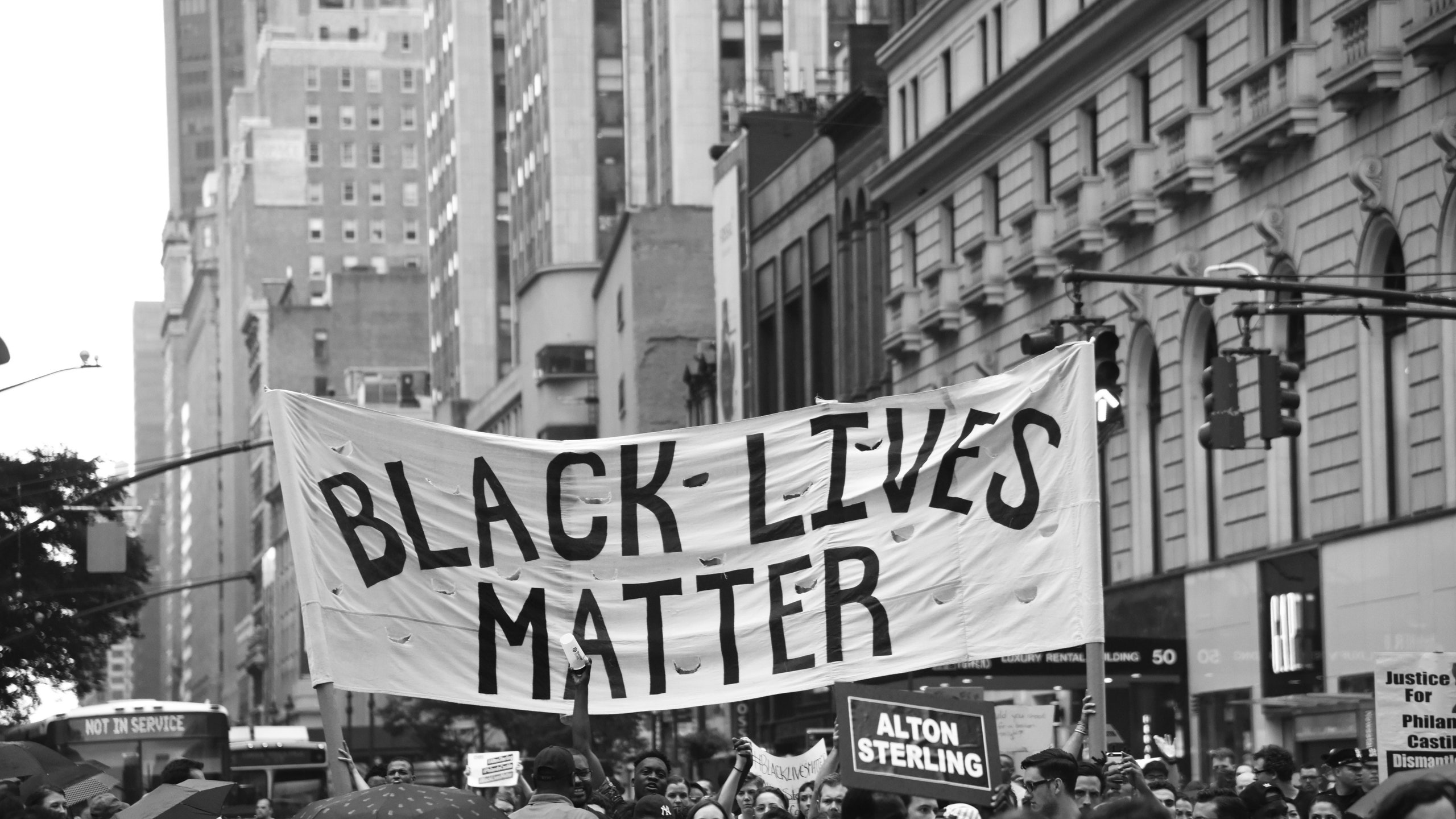
We might therefore ask how the Whiteman can accord us the dignity as leaders of the Black race. Yes, indeed ‘Black Live Matter’, in all ways imaginable; but for it to gain traction and stop the injustice being meted to our kit and kin out there, we need to get our acts together and show leadership: A leadership which we have long abdicated.
Barka Juma’at and Happy weekend
Related
You may like
Islam
Friday Sermon: Reflections on Ramadan 3: Spiritual Stocktaking
Published
5 days agoon
March 6, 2026By
Eric
O ye who believe! Guard your own souls: If ye follow (right) guidance, no hurt can come to you from those who stray. The goal of you all is to Allah: it is He that will show you the truth of all that ye do. (Quran 5:105)
A deep reflection on the institution of Fast reveals the various ways in which fasting helps in the mending of habits and development of character and God consciousness.
Ramadan is a time for moral rearmament and retrospection. It’s a time for critical self evaluation and adjustment.
How does the prayers and fasting of Ramadan influence attitudes and perspectives; how is it improving relationships with families, friends and neighbors; how much has it increased consciousness of responsibility towards the destitute; how is it impacting on the body, the heart, the mind and the soul?
If there is a genuine effort towards the spiritualization of one’s being, the moralization of consciousness, empathy in attitude and goodness in conduct; then perchance a concerted effort is being made of treading on the pathway towards the objective of fasting – the attainment of taqwa (piety). Truly, the month of Ramadan is a season for spiritual stocktaking.
Among the profound concepts discussed in the Quran, one that stands out is Taqwa. While often loosely translated as ‘fear of Allah,’ Taqwa encapsulates a far deeper meaning, emphasizing consciousness and mindfulness of the Divine.
The term ‘Taqwa’ is derived from the Arabic root ‘waqa,’ which means to shield or protect oneself. It’s a state of the heart cultivated by harboring fear and awe of Allah, leading to adherence to His guidelines and abstention from His prohibitions. “O you who have believed, fear Allah as He should be feared and do not die except as Muslims [in submission to Him].” (Surah Al-Imran, 3:102). Thus, Taqwa isn’t merely fear – It’s an all-encompassing concept that drives a believer’s thoughts, intentions, and actions.
According to Erik Ohlander, the word taqwa is used in the Quran over 100 times. According to the Oxford Dictionary of Islam, the word taqwa and its derivatives appear “more than 250 times” in the Quran “…But the clothing of righteousness (Taqwa) – that is best…” (Quran 7:26), the criterion of honor in Allah’s sight “…Indeed, the most noble of you in the sight of Allah is the most righteous (most full of Taqwa) of you…” (Quran 49:13). This frequent mention of Taqwa in the Quran underscores its critical role in shaping a believer’s spiritual journey.
Nurturing Taqwa in our hearts isn’t an overnight process but a continuous journey of spiritual growth. We begin this journey by gaining knowledge of Allah and His commands. Say: Is it that ye deny Him Who created the earth in two Days? And do ye join equals with Him? He is the Lord of (all) the Worlds. (Surat Fussilat 41:9).
Next, we engage in constant remembrance (dhikr) of Allah, striving to maintain mindfulness of His presence in our daily lives. Consciousness of His omnipresence encourages us to act righteously. Another crucial element is consistent prayer (Salat), which serves as a direct link between us and Allah, helping to strengthen our relationship with the divine. This is echoed in a Hadith where the Prophet (SAW) said, “He who remembers his Lord and he who does not are like the living and the dead.” (Bukhari).
Although Taqwa is deeply personal, it has profound societal implications. A community guided by Taqwa values truth, justice, and compassion, as these values are at the heart of Allah’s commands. “O you who have believed, be persistently standing firm for Allah, witnesses in justice, and do not let the hatred of a people prevent you from being just. Be just; that is nearer to righteousness (Taqwa)…” (Quran 5:8).
When individuals in a society cultivate Taqwa, they create an environment of mutual respect, tolerance, and peace. They hold themselves accountable, striving not only for their well-being but also for the welfare of others. Living with Taqwa allows us to contribute to building a more empathetic, fair, and loving society.
Actively seeking ways to enhance Taqwa can lead us to live more fulfilling lives spiritually. “…Allah has sent down the best statement: a consistent Book wherein is reiteration. The skins shiver therefrom of those who fear their Lord; then their skins and their hearts relax at the remembrance of Allah. That is the guidance of Allah by which He guides whom He wills. And one whom Allah leaves astray – for him there is no guide.” (Surah Az-Zumar 39:23).
Another practical step is incorporating more acts of charity into our lives. Generosity and kindness imbibe the spirit of Taqwa as they reflect our obedience and submission to Allah’s command. Prophet Muhammad (SAW) once said, “Charity extinguishes the sins just as water extinguishes the fire” (Tirmidhi).
When we embody Taqwa, it profoundly influences our interpersonal relationships. As Allah advises us in the Quran, “…and speak to people good [words]…” (Quran 2:83). This translates into healthier, more respectful, and loving relationships, helping to foster a stronger, more united community.
Taqwa and patience go hand in hand. Life can sometimes throw us in challenging situations. It’s during these times that Taqwa empowers us to be patient, persevere, and trust in Allah’s plan. As Allah mentions in the Quran, “O you who have believed, seek help through patience and prayer. Indeed, Allah is with the patient.” (Quran 2:153). With Taqwa, we can remain patient and hopeful, recognizing that every hardship is a test of faith.
Prophet Muhammad (SAW) often reminded us of the importance of patience, citing it as a virtue of the highest order: “Patience is a key to success” (Bukhari). Through patience, we can navigate the uncertainties of life with grace and dignity.
In Islam, ultimate success lies in attaining Allah’s pleasure and entering Paradise. Taqwa is the path that leads us to this success. As Allah tells us in the Quran, “And hasten to forgiveness from your Lord and a garden as wide as the heavens and earth, prepared for the righteous.” (Surah Al-Imran 3:133).
A vital aspect of Taqwa is the realization of our eventual accountability to Allah. This powerful awareness permeates every aspect of our lives, shaping our actions and decisions. Allah reminds us in the Quran, “So whoever does an atom’s weight of good will see it, And whoever does an atom’s weight of evil will see it.” (Surah Az-Zalzalah 99:7-8).
Knowing that we’re accountable for our deeds can be sobering but it also motivates us to strive for excellence in all areas of life. Thus, Taqwa fuels a commitment to leave a positive impact on our surroundings, which unfortunately our leaders are not doing. .
Taqwa, the deep-rooted consciousness and fear of Allah, is not merely a concept but an actionable principle that has far-reaching implications in our daily lives.
By cultivating Taqwa, we are essentially preparing for the ultimate success – to attain Allah’s pleasure and His Paradise.
Ramadan is an ideal training period for filtering out bad habits and developing virtuous character. It is therefore a good time for our leaders to turn a new leaf, lest ‘we the people’ decide to chase them out like Oliver Cromwell did the ‘Long Parliament’ in 1653.
Cromwell’s speech aptly reflects the character of our leaders today: “It is high time for me to put an end to your sitting in this place, which you have dishonored by your contempt of all virtue, and defiled by your practice of every vice; ye are a factious crew, and enemies to all good government; ye are a pack of mercenary wretches, and would like Esau sell your country for a mess of pottage, and like Judas betray your God for a few pieces of money. Is there a single virtue now remaining amongst you? Is there one vice you do not possess? Ye have no more religion than my horse; gold is your God; which of you has not bartered your conscience for bribes? Is there a man amongst you that has the least care for the good of the Commonwealth? Ye sordid prostitutes; have you not defiled this sacred place, and turned the Lord’s temple into a den of thieves, by your immoral principles and wicked practices? Ye are grown intolerably odious to the whole nation; . . ..” If only they would change in the spirit of Ramadan!
Prophet Muhammad (SAW) said: “Your practice of faith will not be correct unless your actions are correct, and your actions will not be considered correct unless your heart is correct.” Ramadan is therefore a period for spiritual rejuvenation as it offers the opportunity for a unique expression of worship.
From ethical and moral perspectives, we should contemplate the higher purpose and the deeper meaning of our lives, trying to live meaningfully; balancing our physicality with our spirituality.
While Fasting, we are far more aware of the hunger of the poor and the suffering of the oppressed and are therefore instructed to be more generous this month. This promotes attentiveness to social responsibility, interest in the welfare of society and inspires a continued spirit of generosity. The Qur’an refers to the fasting ones as sa’ihin/spiritual wayfarers. So, the journey of Ramadan motivates each person to perpetuate the positive spirit being imbibed and to continue on the spiritual journey towards fulfilment and excellence.
It is easy to talk about the world’s problem of hunger. We can feel sorry that millions of people go to bed hungry each day. But not until one can actually feel it in one’s own body is the impact truly there. Compassion based on empathy is much stronger and more consistent than compassion based on pity. This feeling must lead to action.
Fasting is never an end in itself; that’s why it has so many different outcomes. But all the other outcomes are of no real moral value if compassion is not enlarged and extended through fasting. It is therefore in the interest of our fasting leaders and those not fasting to shed the toga of iniquity, selfishness and corruption and for once think of the poor masses that are not only defenseless but also hungry. It is only by doing this that the fast can have spiritual reward and meaning.
As the prophet Isaiah said, “The kind of fasting I want is this: remove the chains of oppression and the yoke of injustice, and let the oppressed go free. Share your food with the hungry and open your homes to the homeless poor” (Isaiah 58:3-7) May Allah accept our fast, Amee.
Ramadan Kareem and Barka Jumuah
Related
Islam
Friday Sermon: Reflections on Ramadan 2: The Taraweeh Conundrum
Published
2 weeks agoon
February 27, 2026By
Eric
The Taraweeh prayer is a special form of supererogatory prayer performed in the congregation immediately or some minutes after the obligatory Isha prayer during the holy month of Ramadan. However, scholarly discussions have emerged regarding whether Taraweeh is a firmly established Prophetic Sunnah or an innovation (bid‘ah).
While it is widely accepted that the Prophet Muhammad (SAW) performed Taraweeh, historical accounts indicate that he did not continue leading it publicly due to concerns that it might become obligatory.
He always offered the Sunnah or nafl (Tahajjud) prayers at home and only the fard prayers were offered at the Masjid in congregation. There are plenty of Hadiths reflecting this matter.
What therefore, is Tahajjud prayer? We can call this the ‘sixth’ prayer as mentioned in the Quran as an “additional” prayer, but made obligatory only for the Prophet (SAW): And pray in the small watches of the morning: (it would be) an additional prayer (or spiritual profit) for thee: soon will thy Lord raise thee to a Station of Praise and Glory! (Al-Isra, Quran 17:79)
Prophet Muhammad (SAW) said regarding the month of Ramadan:“Whoever establishes the night prayer (Qiyam al-Layl) in it out of sincere Faith and hope for reward from Allah, all of his previous sins will be forgiven.” [Sahih al-Bukhari, volume 3, book 32, number 226]
The Ahl al-Sunnah wa’l Jama’ah or Sunnis generally considers it a Sunnah to offer specific evening prayers – the Taraweeh – in congregation during the holy month of Ramadan. The Shi’ah, on the other hand, is not allowed to offer them in congregation.
Meanwhile, we do not find the word “Taraweeh” anywhere in the Quran and Hadith because the prayer is referred to as the “Night Prayer” (Qiyam-ul-layl) in the Quran and Sunnah, which basically is the Tahajjud prayer.
It is a term developed later amongst Muslims. Linguistically, the word “Taraweeh” is the plural of the word ‘tarwiha’ referring to the short period of rest between every two or four units of the prayer.
It is a well-established fact that the Taraweeh, as a congregational night prayer of Ramadan, owes its existence to the order of the second caliph, ‘Umar b. al-Khattab.
Narrated Abu Hurayra: Allah’s Apostle said, “Whoever prayed at night the whole month of Ramadan out of sincere faith and hoping for a reward from Allah, then all his previous sins will be forgiven.” Ibn Shihab (a sub-narrator) said, “When Allah’s Apostle died, the people continued observing that Nawafil individually, not in congregation, and it remained as such during the Caliphate of Abu Bakr and in the early days of ‘Umar’s Caliphate.
Abdur Rahman bin ‘Abdul Qari said, “I went out in the company of ‘Umar bin Al-Khattab one night in Ramadan to the mosque and found the people praying in different groups – a man praying alone or a man praying with a little group behind him. Then, ‘Umar said, ‘In my opinion I would better collect these (people) under the leadership of one Qari (reciter) (i.e. let them pray in congregation!)’. So, he made up his mind to congregate them behind Ubayy bin Ka’b. Then, on another night, I went again in his company and the people were praying behind their reciter. On that, ‘Umar remarked, ‘What an excellent bid’ah this is.’ [Sahih al-Bukhari, volume 3, book 32, number 227]
“It was called bid’ah because the Prophet (SAW) did not use to pray it in congregation, and neither was it prayed like that in the time of Abu Bakr al-Siddiq.” [al-Qastallani, Irshad al-Sari, Sharh Sahih al-Bukhari, volume 5, page 4] [al-Nawawi, Sharh Sahih Muslim, volume 6, page 287]
Umar was the first who set the example of the night prayer of Ramadan, the Taraweeh, and instructed different regions regarding it. This was during the month of Ramadan of the year 14AH. He appointed for the people reciters of the Quran who led the Taraweeh prayer for men and women.” Ibn Sa’d, Kitab al-Tabaqat, volume 3, page 281; al-Suyuti, Tarikh al-Khulafa’, page 137; al-‘Ayni, ‘Umdat al-Qari fi Sharh Sahih al-Bukhari, volume 6, page 125.
Offering the optional prayers individually inside the home and away from the congregation in the mosque is highly recommended by the Prophet (SAW) as it brings more blessings for the home and family and helps in the Islamic upbringing of children. The Prophet (SAW) said: “O people! Perform your prayers at your homes, for the best prayer of a person is what he performs at his home, except the compulsory (congregational) prayer.” Sahih al-Bukhari, volume 9, book 92, number 393; al-Nasa’i, Sunan, volume 3, p. 161, p. 198.
Once Abdullah bin Mas’ud asked the Prophet (SAW): “Which is better; to pray in my house or in the mosque?” The Prophet (SAW) replied: “Do you not see how near to the mosque my house is? To pray in my house is more beloved to me than to pray in the mosque except for the obligatory prayers.” Ibn Majah, Sunan, English translation: Vol. 1, Book 5, Hadith 1378.
Narrated Zaid bin Thabit : Allah’s Apostle (SAW) made a small room (with palm leaf mat). Allah’s Apostle (SAW) came out (of his house) and prayed in it. Some men came and joined him in his prayer. Then again the next night they came for the prayer, but Allah’s Apostle (SAW) delayed and did not come out to them. So they raised their voices and knocked on the door with small stones (to draw his attention). He came out to them in a state of anger, saying, “You are still insisting (on your deed, i.e. Taraweeh prayer in the mosque) that I thought that this prayer (Taraweeh) might become obligatory on you. So you people, offer this prayer at your homes, for the best prayer of a person is the one which he offers at home, except the compulsory (congregational) prayer.” [Sahih al-Bukhari, volume 8, book 73, number 134]
Imam al-Baqir and Imam al-Sadiq were asked about the permissibility of praying optional prayers in congregation during the nights of Ramadan. They both narrated a tradition of the Prophet (SAW) where he said: “Verily, the offering of nafila (recommended prayers) in congregation during the nights of Ramadan is an innovation…” [al-Hurr al-`Amili, Wasa’il al-Shi`ah, volume 8, page 45]
This view of the Imams from the Prophet’s progeny is confirmed by a scholar well-known amongst the Ahl al-Sunnah who writes: “The progeny of the Prophet (SAW) say that congregation in Tarawih is an innovation”. [al-Shawkani, Nayl al-Awtar, volume 3, page 50]
“The scholars agree on its merit, but they differ on whether it is better to pray it in one’s home individually or in congregation in a mosque.” Al-Nawawi, the famous commentator of Sahih Muslim, then goes on to list scholars who support the second and dominant view. He then writes: “Malik, Abu Yusuf, some Shafi’i scholars, and others say that it is better to pray it individually in the home”. [al-Nawawi, Sharh Sahih Muslim, volume 6, page 286]
Another hadith that refers to this prayer is: Narrated Abu Huraira: Allah’s Apostle said: “Whoever establishes prayers during the nights of Ramadan faithfully out of sincere faith and hoping to attain Allah’s rewards (not for showing off), all his past sins will be forgiven.” (Bukhari, Book 2, Hadith 36)
By “establishes prayers during the nights of Ramadan” the Prophet (SAW) is indicating the Tahajjud prayer. During Ramadan, Tahajjud prayer is substituted as Taraweeh prayer, which is essentially the same prayer offered in the same manner without any change.
They are both classified as qiyaam al-layl. However the Qiyaam al-layl during Ramadan is called Taraweeh because the Salaf used to rest (istarahu) after every two or four rakats, because they made their prayers long in order to make the most of this season of great reward.
Tahajjud, on the other hand, is a voluntary night prayer performed after sleeping and can be offered any night of the year, not limited to Ramadan. It is part of Qiyam al-Layl, the general night prayer, and is highly recommended in the last third of the night. Tahajjud can be prayed in any number of rakats according to personal preference, and it is better performed at home rather than in congregation.
According to a Hadith, the number of rakats in the night prayer is not limited but should be in two rakats at a time and end with one rakat witr: Ibn `Umar said, “While the Prophet (SAW) was on the pulpit, a man asked him how to offer the night prayers. He replied, ‘Pray two rakat at a time and then two and then two and so on, and if you are afraid of the dawn (the approach of the time of the Fajr prayer) pray one rakah and that will be the witr for all the rakat which you have offered.” Ibn `Umar said, “The last rakat of the night prayer should be odd, for the Prophet (SAW) ordered it to be so.
Taraweeh is therefore a Ramadan-specific night prayer performed mainly in congregation, whereas Tahajjud is a voluntary night prayer performed late at night, any time of the year, emphasizing personal devotion and spiritual reflection. Fortunately for the larger Umma, Taraweeh in congregation has come to stay, having been practiced for over 1,400 years: Time and usage has settled the controversy on the side of the majority Sunni.
Shafa and Witr are voluntary night prayers too, performed after Isha, with Shafa being even-numbered rakats and Witr being an odd-numbered concluding prayer.
Witr prayer, which means “odd” in Arabic, is a highly recommended Sunnah (non-obligatory) prayer that holds great significance in Islam. Witr prayer can be performed anytime after the Isha prayer and before the Fajr (dawn) prayer. The best time to pray Witr is during the last third of the night, as this time is considered particularly blessed. However, if one fears they will not wake up for the late-night prayer, it is permissible to pray Witr earlier in the night.
In Qiyam of Ramadan, Sheik Albaani said it is Sunnah to recite Sabih ismi Rabika al-‘A’la in the first rakah, Qul Ya ayuha’l-Kafiroon in the second rakah, and Qul Huwa Allahu ahad in the third rak’ah. Sometimes Qul a’odhu bi Rabi’l-Falaq and Qul a’odhu bi Rabi’l-Nas may be added as well.
Ya Ghaafir, forgive me for every single sin I ever put forth, cover me in this life and the next, and don’t let shame keep me from returning to You. Ya Ghaffar, for every time I fall and rise again, meet me with another chance. Let my heart grow softer with every repentance, and my view of the door of Your mercy only grow wider. For You have never tired of forgiving me despite my constant sins. Ya Ghafur, forgive me for what I know and what I don’t, what I’ve done and what I still may do, wash away every hidden trace of my wrongdoing, and turn the stains of my past into light on my scrolls. Reach me with Your forgiveness even in the holes that I’ve dug for myself. Ya Tawwaab, turn towards me so that I may turn back to You. And call me back every time I drift. And accept me every time I return. Make repentance my constant companion and joy and Jannah my reward in finding You again.
Barka Juma’at and Ramadan Kareem
Related
Islam
Friday Sermon: Reflections on Ramadan 1: Prophet’s (SAW) Ramadan Sermon
Published
3 weeks agoon
February 20, 2026By
Eric
Ramadan is the [month] in which was sent down the Qur’an, as a guide to mankind, also clear [Signs] for guidance and judgment [Between right and wrong]. So every one of you who is present [at his home] during that month should spend it in fasting, but if anyone is ill, or on a journey, the prescribed period [Should be made up] by days later. Allah intends every facility for you; He does not want to put you in difficulties. [He wants you] to complete the prescribed period, and to glorify Him in that He has guided you; and perchance ye shall be grateful. (Surat Al-Baqarah 2:185)
Muslims welcome the holy month of Ramadan as a time for religious and divine reflection. It is a time for spiritual stocktaking and moral revitalization. It is a time of rejuvenation of religious and moral piety and reaffirmation of faith.
Even the diehard and titular Muslims undergo a behavioral and attitudinal change during this month. The mosques are filled to capacity and the whole community assumes an atmosphere of religiosity: A time when even the confirmed sinners seek the benevolence of Allah; a time when evil and vile men seek atonement for their iniquities.
Such is the month of Ramadan. Perchance, our leaders will take advantage of the promise of forgiveness from Allah to turn a new leaf and do the needful in making our life better and seek the path of righteousness.
We have suffered enough as a people and this suffering does not need to continue. With the resources with which we have been endowed, there is enough for everyone to bask in the prosperity of our God-given provisions. But when a few conspire to deny the majority their rightful share of the commonwealth, they sentence the people into penury, want, misery and poverty. Ramadan is therefore, an opportunity for sober reflection and a chance for meaningful and positive change.
Those who have perfected the ignoble art of cheating their fellowmen and converting the common patrimony into personal wealth have an opportunity to rethink and change. If only we know that the end is nearer than we think.
Abu Huraira narrated that Allah’s Messenger (SAW)said: “When the month of Ramadan starts, the gates of heaven are opened and the gates of Hell are closed and the devils are chained.” [Bukhari] Fasting in Ramadan is therefore a shield from Hell; fasting subdues sinful desires and reduces their severity: It is these desires and lusts that lead to Hell Fire.
The Quran talks about the reward of fasting and there are verses which general meaning infers that those who obey Allah will be saved from Hell, and fasting is a form of obeying Allah. The Hadith of our beloved Prophet Mohammad (SAW), are clear in this regard; Abu Said al-Khudri reported that the Messenger of Allah (SAW), said: “No servant fasts on a day in the path of Allah except that Allah removes the Hell Fire seventy years further away from his face.” [Bukhari and Muslim] Abu Said al-Khudri also relates that the Messenger of Allah (SAW) said: “Fasting is a shield with which a servant protects himself from the Fire”[Ahmad, Sahih]
“Uthman Ibn Abil-`Aas relates that the Messenger of Allah (SAW) said : “Whoever fasts a day in the way of Allah, Allah places between him and the Fire a trench like that between heavens and the earth”. [at-Tirmidhi and at-Tabarani, sahih]
So Muslims fast as an act of worship, a chance to get closer to God and a way to become more compassionate to those in need.
We will end this sermon with the Prophet’s (SAW) Ramadan Sermon:
“O People! The month of Allah (Ramadan) has come with its mercies, blessings and forgiveness. Allah has decreed this month the best of all months. The days of this month are the best among the days and the nights are the best among the nights and the hours during Ramadan are the best among the hours.
“This is a month in which you have been invited by Him (to fast and pray). Allah has honored you in it. In every breath you take is a reward of Allah, your sleep is worship, your good deeds are accepted and your invocations are answered.
“Therefore, you must invoke your Lord in all earnestness with hearts free from sin and evil, and pray that Allah may help you to keep fast, and to recite the Holy Qur’an. Indeed! Miserable is the one who is deprived of Allah’s forgiveness in this great month.
“While fasting, remember the hunger and thirst on the Day of Judgment. Give alms to the poor and needy. Pay respect to your elders, have sympathy for your youngsters and be kind towards your relatives and kinsmen. Guard your tongue against unworthy words, and your eyes from scenes that are not worth seeing (forbidden) and your ears from sounds that should not be heard. Be kind to orphans so that if your children may become orphans they will also be treated with kindness.
“Do repent to Allah for your sins and supplicate with raised hands at the times of prayer as these are the best times, during which Allah Almighty looks at His servants with mercy. Allah Answers if they supplicate, responds if they call grants if He is asked, and accepts if they entreat.
“O people! You have made your conscience the slave of your desires. Make it free by invoking Allah for forgiveness. Your back may break from the heavy load of your sins, so prostrate yourself before Allah for long intervals, and make this load lighter. Understand fully that Allah has promised in His Honor and Majesty that people who perform Salat and Sajda (prostration) will be guarded from Hell-fire on the Day of Judgment.
“O people! If anyone amongst you arranges for Iftar (meal at sunset) for any believer, Allah will reward him as if he had freed a slave, and Allah will forgive him his sins.” A companion said: ‘but not all of us have the means to do so,’ to which the Prophet (SAW) replied: ‘Keep yourself away from Hell-fire though it may consist of half a date or even some water if you have nothing else.’
“O people! Anyone who, during this month cultivates good manners will walk over the Sirat (bridge to Paradise) on the day when feet will tend to slip. For anyone who during this month eases the workload of his servants, Allah will make easy his accounting, and for anyone who doesn’t hurt others during this month, Allah will safeguard him from His Wrath on the Day of Judgment. Anyone who respects and treats an orphan with kindness during this month, Allah shall look at him with kindness on that Day. Anyone who treats his kinsmen well during this month, Allah will bestow His Mercy on him on that Day, while anyone who mistreats his kinsmen during this month, Allah will keep away from His Mercy.
“Whoever offers the recommended prayers during this month, Allah will save him from Hell, and whoever observes his obligations during this month, his reward will be seventy times the reward during other months. Whoever repeatedly invokes Allah’s blessings on me, Allah will keep his scale of good deeds heavy, while the scales of others will be tending to lightness. Whoever recites during this month an Ayat (verse) of the Quran, will get the reward of reciting the whole Quran in other months.
“O people! The gates of Paradise remain open during this month. Pray to your Lord that they may not be closed for you; while the gates of Hell are closed, pray to your Lord that they never open for you. Satan has been chained; invoke your Lord not to let him dominate you.”
“Ali ibn Talib (Radhi Allahu ‘Anh) said: “I asked, ‘O Messenger of Allah (SAW), what are the best deeds during this month?'” He replied: ‘O Abu-Hassan, the best of deeds during this month is to be far from what Allah has forbidden.'”
May Allah accept our Fast as acts of Ibadah; Amin.
Barka Juma’at and Ramadan Karim
Related


Dangote Slashes Fuel Price by N100 As Global Crude Slumps
Tenure Policy: India, Others Reject Tinubu’s Ambassadors
Gumi: Timi Frank Urges Trump to Halt Security Cooperation with Nigeria
Business Series: UBA to Spotlight Africa’s New Generation of Female Leaders
Adenuga, Dangote, Otedola, Rabiu Make 2026 Forbes Africa Billionaires List
Former Super Eagles Coach, Festus Onigbinde is Dead
Appeal Court Upholds Sacking of Turaki-led PDP Executive
Iran Confuses Israel As Missile Splits into Multiple Warheads in Tel Aviv
Presidency Releases Postings of Ambassadors-designate
Israeli Ambassador Accuses Iran of Spreading Terror, Sponsoring Extremist Activities in Nigeria
International Women’s Day: The Boss Celebrates 100 Influential Nigerian Women
The Oracle: The New Digital Colonialism: Navigating AI Policy Under Foreign Tech Dominance (Pt. 1)
The Scars of Glory and the Burden of Leadership!
Class, Glamour As Global Statesman, Chief Olusegun Obasanjo Celebrates 89th Birthday
Trending
-
Middle East2 days agoIran Confuses Israel As Missile Splits into Multiple Warheads in Tel Aviv
-
Featured5 days agoPresidency Releases Postings of Ambassadors-designate
-
Headline5 days agoIsraeli Ambassador Accuses Iran of Spreading Terror, Sponsoring Extremist Activities in Nigeria
-
Boss Picks2 days agoInternational Women’s Day: The Boss Celebrates 100 Influential Nigerian Women
-
The Oracle5 days agoThe Oracle: The New Digital Colonialism: Navigating AI Policy Under Foreign Tech Dominance (Pt. 1)
-
Opinion4 days agoThe Scars of Glory and the Burden of Leadership!
-
Featured4 days agoClass, Glamour As Global Statesman, Chief Olusegun Obasanjo Celebrates 89th Birthday
-
Featured6 days agoAkinwumi Adesina Celebrates Obasanjo at 89