Connect with us

Entertainment

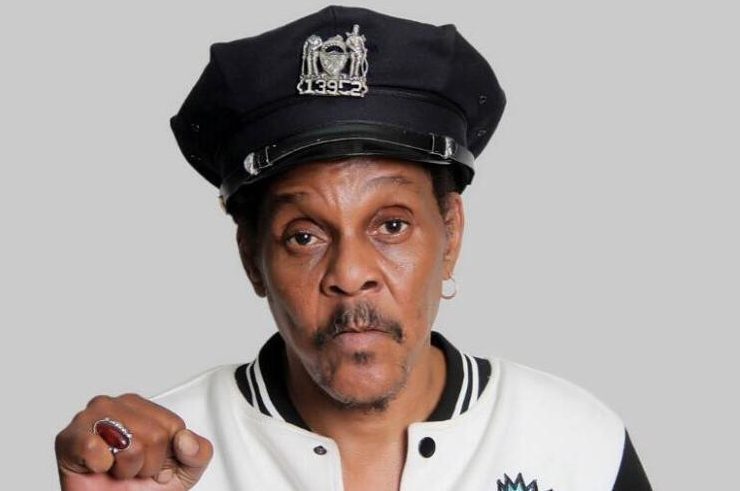
Majek Fashek (1963-2020): The Triumphs, the Storm, the Travails

Published

on

By Eric Elezuo

Could you believe that even age mates of late Majek Fashek believed he was 71 years, and was born in 1949. They claimed that was what the official record said…such naivety. One day, someone would tell them something different from their names, and they will believe because one supposedly ‘impeccable’ source has erroneously written it. I still wonder what we do with our brains, even with claims that we have been to school. Well, that is a story for another day!

He was only 25 years in 1988 when his glory filled not only the airwaves but the nook and crannies of the Nigerian music and entertainment circle. It didn’t stop there, Majekodunmi Fasheke, known as Majek Fashek for short, took his epic arrival into stardom more than a niche further, covering the world with his own form of ‘Righteousness’. He dished out hits after hits, making him the epicentre of Reggae music in Nigeria, competing favourably with the likes of Alpha Blonde and Lucky Dube in the Africa continent, and world icons like Robert Nester Marley, Peter Tosh, Gregory Isaac and many more. New York Daily News hailed him as the spiritual heir to Bob Marley.

Majek Fashek occupied the late 80s and early 90s like a colossus, as his hit album, Prisoner of Conscience with the track ‘Send Down the Rain’, became a national anthem of some sort. Every child could sing the song; it was on the lips of every adult. And of course, it was interwoven with childlike chorus which heralds the arrival of mothers after a long absence. It was made for all ages; a product of long term planing. More so, its prophetic orientation and spiritual undertone made it a toast for all season.

In a 2013, when Fashek’s former bandmate and cousin, Amos McRoy, granted an interview with now defunct Entertainment Express Newspaper, he claimed that the singer told him the song ‘Send Down The Rain’ had a spiritual force behind it.

That was one of the things he told me in Cote d’Ivoire. Based on what he told me, I think he ‘crossed the line’ before he released the album,” McRoy said in that interview.

In Cote d’Ivoire, I asked him certain questions. His reply was: ‘Amos, are you that naive? I released Send Down The Rain, everywhere that song was played, rain must fall. Even in summer while we were on US tour, I played Send Down The Rain and rain fell. I released Free Mandela and that month Mandela was released. I did fire (Majek Beware) the week that record was released was the week the Rodney King incident happened. That song, Fire o! Fire o! was played for almost two months in all the TV and radio stations in Los Angeles during that Rodney King episode. So, are you that naive? Don’t you reason?

He practically started a musical revolution in 1988, and by 1989, he carted away six awards at the PMAN Awards including two of the most important nominations; the prestigious Album of the Year and Song of the Year categories. His Send Down the Rain competed in the category of millennial hits such as Nico Mbago’s Sweet Mother and Onyeka Onwenu’s One Love in not only national, but international appeals.

One thing is obvious, no Nigerian song has been so mythologized as ‘Send Down the Rain’ and by extension, Holy Spirit. He composed every song personally, and gave Bob Marley’s ‘Redemption Song’ a touch of excellence when he remixed it. No one can deny that Fashek was a legend. A typical example of one who came during his time, saw and conquered. Many believed he had room for more conquest if not for the self-destructive mode he put himself. Reports had it that he dabbled into spiritism, not drug use, and ruined a God-given career.

This as much was confirmed by McRoy thus:

“Truth is Majek’s problem is spiritual. Majek strayed into spiritism.

Majek’s problem is not drug-related. He took to alcoholism to get over his real problem. Failing to keep the rules of whatever he delved into, he started to hallucinate. He started seeing things. For instance, if he was in a room, he would tell you ‘open the door, open the window’. If you tell him the air condition is on, he would say “Can’t you see them spirits; you want to trap the spirits. Men, let the spirits move around.”

In the peak of his career in 1991, Fashek visited New York for the first time, and that was when he released the track ‘Mashek Fashek Inna New York’. The excited attached to the song would reveal his clear human nature, as he x-rayed life in the city that never sleeps in comparison to what is obtainable in other cities of the world. He was practically surprised to see that there were homeless people, beggars and destitute in New York.

Born in February 1963 in Benin City, Edo State, Mashek Fashek, who was known as Rajesh Kanal in the early 80s when he started music, was part of a group called Jastix along with McRoy Gregg, and Black Rice who was the lead singer. They featured as the in-house band of a music show ‘Music Panorama’ which aired on NTA Benin. One can confidently say he was motivated by The Mandators, led by Victor Essiet. The group launched Reggae in Nigeria with ‘Sunrise’ in 1979.
He featured as one of the session musicians for an upcoming female Reggae singer known as Edi Rasta. Today, she is fondly remembered as Evi Edna Ogholi, arguably Nigeria’s Queen of Reggae. He went solo after Jastix disbanded, and signed on to Tabansi where he released ‘Send Down the Rain’ in 1988.
He followed up the success of the debut album with I&I Experience under Tabansi Records in 1989. The successes he recorded drew the attention of CBS Records Nigeria (now Sony Music), which released the album ‘So Long Too Long’ in 1990. In the same year, he signed to Interscope Records and released the album ‘Spirit of Love’ in 1991.
In 1992, Fashek make history as the first Nigerian singer to appear on a late-night TV show in America, the David Letterman Show, where he sang ‘So Long, Too Long’.
Many believe that Majek Fashek was a victim of inability to manage success. Though his success wasn’t spontaneous cause he worked for it, it came like an avalanche when it did. And in a space of three to five years, he became a toast of the music world. By the end of the 1990s, he was nowhere to be found though his songs still reverberate on the airwaves; his personality was gone. When he was spotted, he was a shadow of himself, a vegetable; highly emaciated. At a time, he was reportedly spotted in Ikeja begging for alms to buy cigarrete. He was losing it!
In the midst of his crisis, he managed to release an album ‘Rainmaker’ in 1997, and collapsed into oblivion for years until he resurfaced, after spirited efforts by well meaning Nigerians including his manager, Umenka Uzoma Day, to release ‘Little Patience’ with November Records. His person was gone…just the talent managed to showcase. People knew from the video that it was just a matter of time.
As at the time he visited Ovation Magazine in late 2017, he was practically inaudible; it was his manager who said most of the things on his behalf.
Until his death on June 1, 2020 as announced by Uzoma Day, in New York, the musical legend, Mashek Fashek, was battling to regain both his health and personality. He lost both! But the gift he gave to the world in his lyrics will forever live, and never to be tampered with.
Speaking on his death, Chairman, Music Society of Nigeria, Chief Tony Okoroji, who was the PMAN president when Fashek carted away six awrds in 1988, said “Majek is not dead, he travelled”
And like Majek himself said during the funeral of Ras Kimono, ‘Rastas don’t die’
Adieu the Rainmaker, Mashek Fashek!

Continue Reading
Click to comment

Leave a Reply

Your email address will not be published. Required fields are marked *

Entertainment

Hollywood Bubbles As Season of Awards Sets in

Published

on

By

By Samantha Ofole-Prince

From AAFCA to BAFTA, the Golden Globes to the Critics Choice Awards, it’s certainly the season of splurges and speeches.

Each year between November and March, Hollywood becomes host to a majority of significant film awards as numerous guilds and critics associations heap accolades on movies which have moved them.

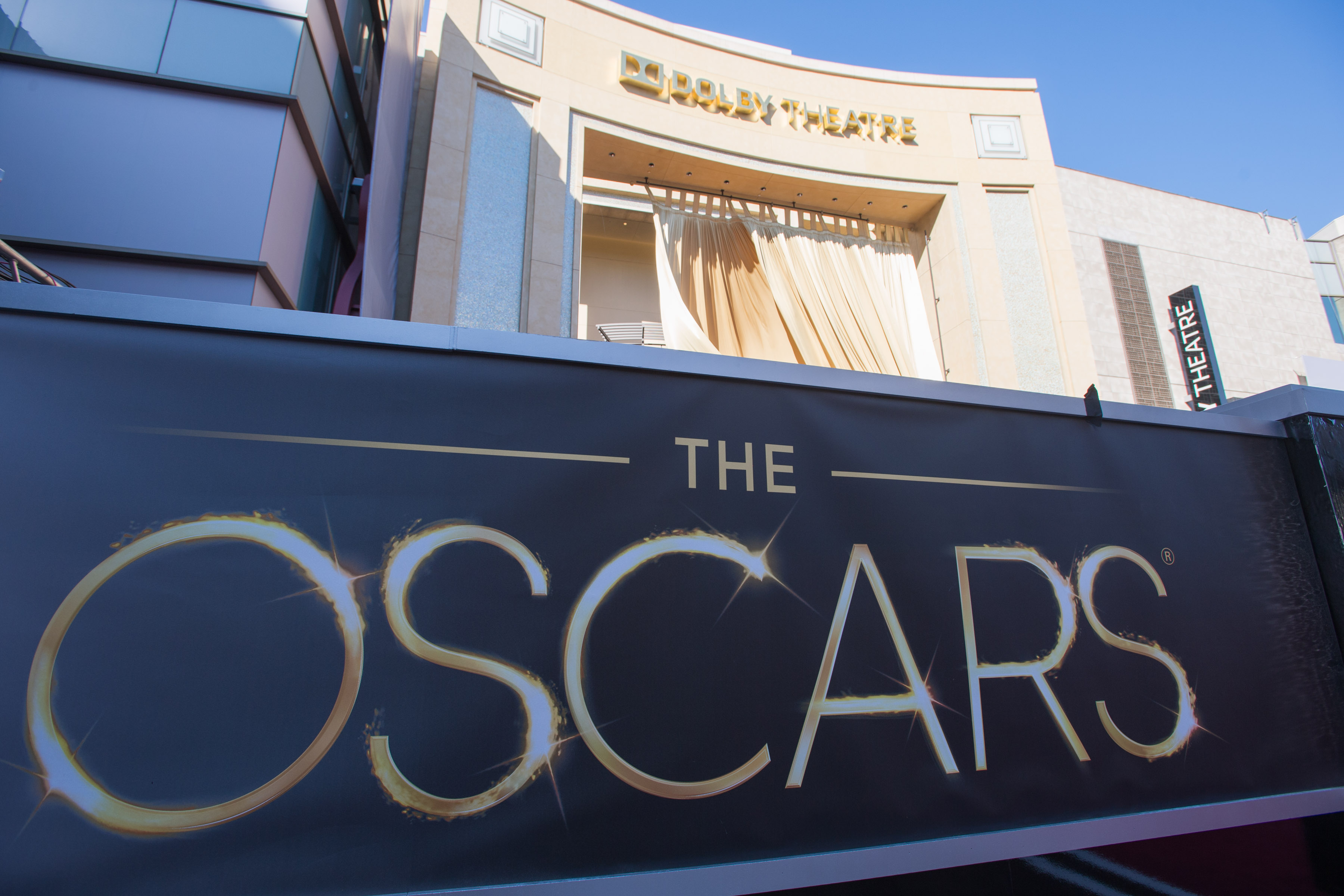
With 3 more major awards that include the Screen Actors Guild Awards, Oscars and the Image Awards left to dole out their nominations list, Samantha Ofole-Prince shares the scorecard on who’s snagged what statuettes so far.

Paul Thomas Anderson‘s action-thriller “One Battle After Another” has dominated the season. The film about a washed-up ex-revolutionary on a quest to rescue his daughter from a resurfaced nemesis that stars Leonardo DiCaprio, Chase Infiniti, Sean Penn and Teyana Taylor, has struck a chord with audiences receiving more accolades than any other movie. Some of the categories it has been nominated for include Best Director, Best Actor, Best Supporting Actor, Best Ensemble, Best Adapted Screenplay, Best Cinematography, Best Production Design, Best Costume Design, Best Sound Design and Best Visual Effects.  The film will most likely receive multiple Oscar nominations on January 22nd.

“Sinners,” the supernatural horror film directed by Ryan Coogler, follows close behind with 17 nominations, nearly matching the record of 18 that “Barbie” achieved two years ago from the Critics Choice Awards. The film collected a nod for Best Picture, while cast members Michael B. Jordan, Wunmi Mosaku, and Miles Caton are up for Best Actor, Best Supporting Actress, and Best Young Actor / Actress respectively. Ryan Coogler was recognized in the categories of Best Director and Best Original Screenplay, and the film also received nods for Best Casting and Ensemble, Best Cinematography, Best Production Design, Best Editing, Best Costume Design, Best Hair and Makeup, Best Visual Effects, Best Stunt Design, Best Song, Best Score, and Best Sound. Coogler also received the Director Award at the Critics Choice 8th annual Celebration of Black Cinema.

Guillermo del Toro’s “Frankenstein” hasn’t done too badly either this awards season. The live-action film adaptation of Mary Shelley’s classic novel about a scientist bringing a monstrous creature to life in a daring experiment, earned several Golden Globe nominations with additional recognition at the Critics Choice Awards and Gotham Awards for its screenplay, design, and performances.

Other notable nominations include Akinola Davies Jr.’s “My Father’s Shadow.” His feature length film debut, which is set against the backdrop of the 1993 Nigerian presidential election, has won several notable awards and special mentions at international film festivals and award ceremonies.  Directed from a screenplay he co-wrote with his brother Wale, it secured two major awards at the 35th Annual Gotham Film Awards with a Breakthrough Director for Akinola, an Outstanding Lead Performance for its main actor Ṣọpẹ́ Dìrísù. The film also received 12 total nominations at the British Independent Film Awards (BIFA).

Tessa Thompson’s role as a manipulative woman in an entangled relationship between two men in the movie “Hedda” recently earned her several nominations including a Golden Globe nod for Best Actress, a Spirit Award nomination and Best Actress wins at the African American Film Critics Award and Critics Choice Celebration of Black Cinema. Other accolades include Gotham Awards and nominations for Best Film at the BFI London Film Festival, with production design and score.

Notable Nigerian actors Damson Idris, Cynthia Erivo and Ego Nwodim have also received accolades. Idris received a Best Supporting Actor nod from the African American Film Critics Association (AAFCA) and was honored by the Critics Choice Association (CCA) for his role as a race car drive in the movie “F1.” Erivo received two Golden Globe nominations and a Critics Choice Award nomination for her work in “Wicked: For Good” in the Best Actress category and Ego Nwodim received a Critics Choice Award nomination for Best Supporting Actress in a Comedy Series for “Saturday Night Live.”

Despite decent reviews and strong performances from both Dwayne Johnson, who plays a real-life former amateur wrestler and mixed martial artist in the movie “The Smashing Machine,” and Ayo Edebiri, who plays a PHD student who accuses a Yale Professor of rape in the film “After the Hunt,” both have failed to garner many accolades. Johnson did receive his first Golden Globe nomination and Edebiri, an Emmy and SAG award-winning actor, writer, producer, director, and comedian, did get another Golden Globe nod in the television category, but it was for her portrayal of chef Sydney on the television series “The Bear.”

Now the countdown begins to the Oscar nominations, one of the most-watched live entertainment events of the year, the NAACP Image Awards and the SAG Awards nominations.

Samantha Ofole-Prince is a U.S. based journalist and movie critic who covers industry-specific news that includes television and film.

Photos: Critics Choice Association

Continue Reading

Entertainment

Actress Iyabo Ojo Makes Case for Single Mothers

Published

on

By

Nollywood actress, Iyabo Ojo, has spoken on the changing perception of single motherhood, saying many men now want serious relationships with single mothers rather than treating them as side partners.

According to the actress, being a single mother is no longer seen as a stigma, as many women in that category and their children are doing well in different areas of life.

She noted that unlike in the past, some men now actively seek relationships with single mothers because of their maturity and life experience.

She added that many of these men make their intentions clear, insisting on marriage.

Iyabo Ojo encouraged women not to feel discouraged after a failed relationship, saying another partner would be willing to accept and love them.

Declaring herself the “President General of the Single Mothers Association,” the actress urged single mothers to embrace confidence, resilience, and self-worth, and not to feel ashamed of their status.

“Gone are the days that being a single mother was a stigma. Single mothers’ children are doing great things in life. Men are chasing single mothers. They are even begging us that they don’t want us to be a side chick. They want us to marry them because we have experience. If a man leaves you, another man will accept you. I am The President General of the Single Mothers Association,” she said.

Continue Reading

Entertainment

Tribute to Jimmy Cliff: Last Lion of Reggae Crossed the Rivers

Published

on

By

By Prince Adeyemi Shonibare

The wind blows soft across the hills of Jamaica, and the world feels it — a tremor of sorrow, a sigh of history, as Jimmy Cliff, the last Lion of the Reggae Mountains, crossed the great river at eighty-one.
He was the troubadour who sang survival into existence. The freedom-fighter who turned melody into movement. The dreamer who taught the world that:
“You can get it if you really want, but you must try, try and try.”
And try he did — from Somerton to Kingston, from Kingston to the world.

THE JOURNEY — FROM SOMERTON TO THE SUMMIT

Born James Chambers, a young boy humming tunes to the morning breeze, Jimmy Cliff stepped into Kingston with nothing but ambition and spirit. He recorded “Hurricane Hattie” at sixteen, and the island took notice.
He rose like sunrise — slow, steady, unstoppable. Reggae, ska, rocksteady — he touched them all, carving a golden road across Jamaica’s musical skyline.

Then came the explosion that stamped his immortality.

“THE HARDER THEY COME” — A REVOLUTION ON SCREEN

With the 1972 classic The Harder They Come, Jimmy Cliff did more than act; he preached struggle and hope for the entire world.
His voice cried out: “The harder they come, the harder they fall.” Oppressed people everywhere heard their story.
In “Many Rivers to Cross,” he poured a lifetime of pain, faith, and yearning:
“Many rivers to cross, but I can’t seem to find my way over.”
Yet he always crossed — and showed humanity how.

THE MAN WHO SANG FOR HUMANITY

Jimmy Cliff lived with the soul of a pilgrim, a man who believed that peace could ride on melody. He travelled far, performed wide, raised children with pride, held philosophies that blended faith and freedom.

He sang of unity in “Wonderful World, Beautiful People,” reminding humanity:
“There is a place where love is flowing freely.”
His life proved that music could make nations kinder and people braver.

AWARDS, HONOURS, AND ETERNAL RESPECT

Jimmy Cliff earned the world’s applause:

Rock and Roll Hall of Fame

Grammy Awards

Jamaica’s Order of Merit

Worldwide tours and universal reverence
A catalogue woven into the soundtrack of global culture
But his deepest legacy lies in the millions who found hope in his voice, who stood tall because he sang:
“I can see clearly now, the rain is gone.”

THE LAST LION OF THE REGGAE GENERATION

With Marley gone, with Toots, Peter, Bunny, and Gregory gone, Jimmy Cliff stood as the final elder — the last lion roaring from reggae’s original pride.
He carried the flame when others dimmed. He carried the memory. He carried the movement. He carried the message.
And now he has crossed the last river — the one his own lyrics foresaw.

TRIBUTES FOR A TITAN

“Jimmy Cliff was a bridge between struggle and joy — a global treasure.” — Jamaican Prime Minister
“He sang the world into courage.” — Global Entertainment Guild
“Reggae has lost its last first-born. The music will never forget.” — International Music Legends Alliance

Though gone in body, the stage curtain remains open for the last lion who crossed all the many rivers after finally finding his way.

Jimmy Cliff is gone. But Jimmy Cliff can never die.His voice lives in street corners where youth gather, in radios crackling across African markets, in festivals, in freedom rallies, in every soul that ever felt hope rise from a song.

His own words now carry him across eternity:
“There’s a river that must be crossed, and I must cross it.”

He has crossed. The Lion rests. But his roar echoes forever.

One love. One legend. One Jimmy Cliff.

Continue Reading

Trending