Islam
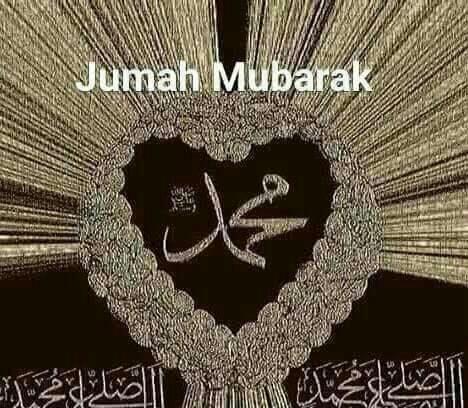
Friday Sermon: Excursions in Islam 6: Prophet Muhammad (PBOH)
Published
6 years agoon
By
Eric
By Babatunde Jose
“Verily you have in the Prophet of God an excellent model, for him who fears God and the Last Day and who remembers God much” (Quran 33:22).
Religious belief is a continuous conversation between inspirational and transcendent reality and current events in the mundane sphere. We look into the sacred past for lessons that can elucidate our present. Most religions have a rallying point in personalities that exemplify their religious faiths; in Gautama Buddha, Buddhists see the supreme reality of Nirvana; Christians achieve being born again in Jesus with a glimpse of the divine presence of God. These paradigmatic personalities shed light on the often dark conditions in which most of us seek salvation in our flawed world.
The life of Prophet Muhammad (c.570–632 CE) was as crucial to the nascent Islamic ideal of his time as it is today. His career reveals the unfathomable activity of God in our world, and illustrates the perfect surrender (Islam), that every human being should make to the divine. According to the traditions, Muslims were to imitate the way Muhammad lived to the smallest details in their daily existence; Sunnah.
Largely as a result of the efforts of the early historians such as Muhammad ibn Ishaq (d. 767); Muhammad ibn ‘Umar al-Waqidi (d. c. 820); Muhammad ibn Sa‘d (d. 845); and Abū Jaʿfar Muḥammad ibn Jarīr al-Ṭabarī (d. 923) we know more about Muhammad than about nearly any other founder of a major religious tradition.
After the Prophet’s death, Muslims ruled a vast empire, stretching from the gates of China to Andalucía (Spain). The first essays in Muslim history were written to address perplexities emanating from contemporary living. How could Muslims apply the Prophet’s insights and practice to their own times?
Writing about the Prophet Muhammad was never a wholly antiquarian pursuit. The process continues today. Some Muslim fundamentalists have based their militant ideology on the life of Muhammad; Muslim extremists believe that he would have condoned and admired their atrocities. But mainline Muslims are appalled by these claims, and point to the extraordinary pluralism of the Quran, which condemns aggression and sees all rightly guided religions as deriving from the one God. According to Esposito and Mogahed; ‘the Quran balances permission to fight the enemy with a strong mandate for making peace’- Esposito, John L.; Mogahed, Dalia (2007). Who speaks for Islam? What A Billion Muslims Really Think. (Gallup Press). See also Quran 8:61.
There is a long history of Islamophobia in Western culture that dates back to the time of the Crusades. Western people have always found it difficult to see Muhammad in a more objective light: Christian critics insisted that Muhammad was a charlatan who imposed his religion on a reluctant world by force of arms; they called him a lecher and a sexual pervert. But can that be correct? Are these assertions supported by historical exegesis?
The Western world is indeed engaged on a new crusade against the Islamic world. Muhammad was not a man of violence. We must therefore approach his life in a balanced way, in order to appreciate his considerable achievements. We appeared to have learned nothing from the tragedy of the 1930s, when this type of bigotry made it possible for Hitler to kill six million Jews.
As a paradigmatic personality, Muhammad has important lessons, not only for Muslims, but also for Western people. His life was a Jihad or “struggle.” Muhammad brought peace to war-torn Arabia(Pax Arabica), and we need people who are prepared to do this today in our polarized world; not the buccaneers and rascals that rule the world today. Muhammad would never have asked his people to take Clorox nor ask them to ingest untested drugs. His life was a tireless campaign against greed, injustice, and arrogance, which are the bane of our society today, particularly in this clime. Political leaders today are tainted with the tar of corruption, hedonism and profligacy. A race of vipers and most untrustworthy people, who lie, cheat and fornicate in office and desecrate the Alter of God. They are mostly anti people in their actions and are never tired of serving mammon. Unlike the prophet who lived a life of frugality, deprivation and service to his people, these people live lives of self aggrandizement and stealing from the people; unrepentant sinners!
Paradoxically, Muhammad became a timeless personality because he was so rooted in his own period. We cannot understand his achievement unless we appreciate what he was up against. Muhammad midwife a new way of life called Islam and to the credit of his efforts and that of his successors, that creed has waxed strong and is today the second largest and fastest growing religion in the world. Today 24% of World population is Muslim (1.9 Billion). No wonder he was proclaimed the ‘greatest personality who ever lived’ not by his fellow Muslims but by Michael H. Hart’: The 100: A Ranking of the Most Influential Persons in History.
According to a renowned Hindu scholar Swami Lakshmi Shankaracharya ‘peace and humanity is the core teaching of Islam. But, unfortunately, most of the Muslims don’t follow Islamic teachings and they hardly learn from the life of Prophet Muhammad’.
Through his actions he taught his people enduring lessons on equality, companionship and respect: Verily the most honored of you in the sight of God is the one who is the most righteous of you (Quran 49:13)
He was the leader not just in all spheres of life in this world but a man of religion, a general, a father, an elder brother, a husband, a friend and above all a Prophet of God.
He could have used the passion that his followers had for him in whatever manner he pleased; to luxuriate in extravagance, sumptuousness, luxury and opulence like our modern day political Tsars. He could have deserved it too. Yet he slept on a crude straw mat that left his back marked, he prayed on the bare earth which left his forehead stained and he wore clothes that had torn many times over and that he himself had mended; many nights he went to bed hungry. He had many attributes that made him an extraordinary leader respected by friends and foes. He was compassionate: And was considered by his Companions to be the most loving, kind, and empathetic of all of them. “O Messenger of Allah! It is a great Mercy of God that you are gentle and kind towards them; for, had you been harsh and hard-hearted, they would all have broken away from you” (Quran 3:159).
He was patient and composed. He suffered throughout his life from all kinds of abuse, but he dealt with them patiently and mercifully. He was called by his enemies a liar, lunatic and even a magician. However, he was determinant, and he followed his path inviting people to worship just Allah and to loathe idols that helped in nothing.
He was merciful. When he conquered Mecca without bloodshed, and regardless of how people there inflicted him with every kind of suffering, eventually forcing him to migrate to Medina, and then waged war on him, he told them: “You may go free! No reproach this day shall be on you; may Allah forgive you.”
He denied all forms of racism, and considered all humans equals. He said: “There is no superiority for an Arab over a non-Arab, nor for a non-Arab over an Arab. Neither is the white superior over the black, nor is the black superior over the white except by piety.”
Indeed, he was a mercy to the world as Allah said in his book: Indeed, in this [Quran] is notification for a worshiping people. And We have not sent you, [O Muhammad], except as a mercy to the worlds.” (Quran 21:106-107)
A good shepherd guides his flock, unites them, works for their welfare without taking advantage of them and cares for each individual. Not only did he care for the well-being of each and every member of his flock, he was uncompromising in his determination to protect the integrity of his mission. Today, we have leaders who lack compassion, vision and mission. All they care about is they.
In their book; Mohammed: Calling and Work of the Prophet in Arabia; the Grail Message, it is reported that; “Mohammed sees the essence of his mission in combining Judaism and Christianity to make a united, living faith. Judaism seems to him rigid and broken-off, since it rejects Jesus; Christianity, through many an interpretation by the church, no longer contains for him the pure Truth as Jesus had brought it. . . .” “Gladdening as it is to experience Mohammed’s recognition and fulfillment in the book, equally painful is the depicted manifold human failing that confronts him. Basically it is the same happening as with every Grace form the Light, only in different form: The place of the Living Truth is taken by the dead dogma. Where the spiritual power of the light would have led in helping love to upbuilding, to peace, to true happiness, the power of the Darkness dominates, directed only to the earthly, and brings men discord, destruction and hatred.”
Muhammad—as a prophet who transformed Arabia and much of the world with his teachings—could not have achieved success without being a good leader. At the end of the day: Unless and until our interpretation of scripture and the life of the Prophet resulted in a major life change, it was incomplete. Scripture is a mirror, in which we see both our ugliness and beauty: Its purpose is not to teach us about God’s work in the past but to spur our own quest for holiness in the present. There is therefore much to learn from the Quran and the life of our Prophet, May The Peace And Blessing Of God Be Upon Him.
Barka Juma’at and a happy weekend
Words on Marble: “I have always held the religion of Muhammad in high estimation because of its wonderful vitality. It is the only religion which appears to me to possess that assimilating capability to the changing phase of existence which can make itself appeal to every age. The world must doubtless attach high value to the predictions of great men like me. I have prophesied about the faith of Muhammad that it would be acceptable to the Europe of tomorrow as it is beginning to be acceptable to the Europe of today. The medieval ecclesiastics, either through ignorance or bigotry, painted Islam in the darkest colors. They were in fact trained both to hate the man Muhammad and his religion. To them Muhammad was Anti-Christ. I have studied him — the wonderful man, and in my opinion far from being an Anti-Christ he must be called the Savior of Humanity. I believe that if a man like him were to assume the dictatorship of the modern world he would succeed in solving its problems in a way that would bring it the much-needed peace and happiness. But to proceed, it was in the 19th century that honest thinkers like Carlyle, Goethe and Gibbon perceived intrinsic worth in the religion of Muhammad, and thus there was some change for the better in the European attitude towards Islam. But the Europe of the present century is far advanced. It is beginning to be enamored of the creed of Muhammad.” Sir George Bernard Shaw (26 July 1856 – 2 November 1950)
Related
You may like
Islam
Friday Sermon: Excursion into the Inexplicable and Incomprehensible
Published
2 days agoon
January 16, 2026By
Eric
Allah! There is no deity except Him, the Ever-Living, the Sustainer of existence. Neither drowsiness overtakes Him nor sleep. To Him belongs whatever is in the heavens and whatever is on the earth. Who is it that can intercede with Him except by His permission? He knows what is before them and what will be after them, and they encompass not a thing of His knowledge except for what He wills. His Throne extends over the heavens and the earth, and their preservation tires Him not. And He is the Most High, the Most Great. (Quran 2:255 – Ayat-ul-Kursi)
The second sentence in the above verse is corroborated by Psalm 121:3-4 in the phrase “he doesn’t sleep nor slumber”, which emphasizes that God is a constant protector who is always vigilant over His people.
No doubt it is agreed by all, including the non-people of God, that the wonders in nature and their inexplicability has given rise to the phrase ‘the work of God is incomprehensible’. We might search but will not comprehend.
The supernatural is usually defined as that which is not explicable by the known forces of nature. Supernature knows no bounds. Too often we see only what we expect to see: our view of the world is restricted by the blinkers of our limited experience; but it need not be this way.
Albert Einstein, in the London Observer, 5 April 1964, said, ‘I cannot believe that God plays dice with the cosmos.’ There is life on earth – one life, which embraces every animal and plant on the planet. Time has divided it up into several million parts, but each is an integral part of the whole.
The enigma of creation is a profound mystery that encompasses the origins of the universe, the earth, and all living beings. It highlights the divine wisdom and power of God as the ultimate Creator. The Bible’s account of creation in Genesis 1:1, “In the beginning, God created the heavens and the earth,” sets the stage for the unfolding narrative of creation. The six days of creation describe the systematic and purposeful act of God bringing the universe into existence, culminating in the creation of humanity in His own image (Genesis 1:27).
The mystery of creation is further emphasized in passages that speak to God’s wisdom and power, such as Job 38:4-7, challenges Job’s understanding of creation and God’s omnipotence, emphasizing that God is aware of all aspects of creation and existence. Similarly, Psalm 104:24 invites us to pause and gasp at creation’s scope, its wise design, and its living abundance: Countless works and flawless wisdom. The doctrine of “creation ex nihilo,” meaning “creation out of nothing,” is a key aspect of the mystery of creation.
“And to Allah belong the unseen [aspects] of the heavens and the earth, and to Him will be returned the matter, all of it…” (Quran 11:123)
There are ninety-two chemical elements that occur in nature, but only sixteen, forms the basis of all living matter. One of the sixteen, carbon plays a central role because of its ability to form complex chains and rings that can be built into an immense number of compounds. And yet, from the thousands of possible combinations, just twenty amino acids are singled out as the units of construction for all proteins.
Most significant of all, these proteins are produced in the right place at the right time by an ordered sequence of events governed by a code carried in just four molecules, called nucleotide bases. This is true whether the protein is destined to become a bacterium or an African elephant. The instructions for all life are written in the same simple language.
The activities of life are governed by the second law of thermodynamics which states that the state of entropy of the entire universe, as an isolated system, will always increase over time. The second law also states that the changes in the entropy in the universe can never be negative.
Why is it that when you leave an ice cube at room temperature, it begins to melt? Why do we get older and never younger? Certain things happen in one direction and not the other, this is called the “arrow of time” and it encompasses every area of science. The thermodynamic arrow of time (entropy) is the measurement of disorder within a system. Denoted as the change of entropy suggests that time itself is asymmetric with respect to order of an isolated system, meaning: a system will become more disordered, as time increases. Who created and decreed this? Allah SWT.
We learn from the Quran Verse 39:67 that God’s greatness is far beyond human comprehension – the verse states that all seven universes are “folded within God’s hand.”
Supported by the Quran’s formidable mathematical code, we are taught that our universe is the smallest and innermost of seven universes, see Quran 41:12, 55:33, 67:5, & 72:8-12).
Meanwhile, our scientific advances have shown us that our galaxy, the Milky Way, is 100,000 light years across, and that our universe contains a billion such galaxies and a billion trillion stars, plus countless decillions (1+60 zero) of heavenly bodies. Our universe is estimated to span distances in excess of 20,000,000,000 light years.
If we take only a quintillion [1,000,000,000,000,000,000] of the stars and simply count them [from 0 to quintillion] one count per second, day and night, this will take 32 billion years (more than the age of the universe). That is how long it will take to just “count” them; but God “created” them. Such is the greatness of God.
Seven universes, each surrounding the next: Surely we can appreciate the vastness of our universe if we imagine going on a space odyssey. When we leave the planet Earth towards the sun, at the speed of light (approximately 300,000 kilometers per second or 186,282 miles per second), we reach the sun after 93,000,000 miles or 8 minutes 20 seconds. It will take us more than 50,000 years at the speed of light to exit our galaxy. From the outer limit of the Milky Way, our planet Earth is invisible. Not even the most powerful telescope can detect our tiny “Earth.”
We have to spend more than 2,000,000 years at the speed of light to reach our next-door galaxy. At least 10,000,000,000 years, at the speed of light, must be spent to reach the outer limit of our universe. From the outer limit of our universe, even the Milky Way is like a speck of dust in a large room. Allahu Akbar !!!
The second universe surrounds our universe. The third universe is larger than the second, and so on. More accurately, our universe should be considered the seventh universe, surrounded by the sixth universe, which is surrounded by the fifth universe, and so on. Can you imagine the vastness of the first, outermost universe? No number exists to describe the circumference of the first universe. This incomprehensible vastness is “within the fist of God’s hand.”
God’s greatness is represented not only by the fact that He holds the seven universes in His hand, but also by the fact that He fully controls every atom, even subatomic components, everywhere in the greater universe (Quran 6:59, 10:61, & 34:3).
Nearer us here on earth, Fish are incredibly diverse, and their survival hinges on their ability to maintain a stable internal environment, a process known as osmoregulation. They did not have to learn it; they were created that way. This is especially critical when it comes to managing water and salt levels within their bodies relative to the surrounding water. Can all fish live in both freshwater and saltwater? No.
Freshwater fish live in an environment where the salt concentration in their bodies is higher than the surrounding water. This leads to a constant influx of water through osmosis. To counteract this, freshwater fish have natural specific adjustments: They drink very little water. They produce large amounts of dilute urine to expel excess water. Their gills actively absorb salts from the surrounding water. These processes allow them to maintain a proper balance despite the constant osmotic pressure.
Saltwater fish face the opposite problem. The salt concentration in the surrounding water is higher than in their bodies, leading to a constant loss of water through osmosis. To survive in this environment, they drink large amounts of seawater. They produce small amounts of concentrated urine to conserve water. They actively excrete excess salts through their gills. Without these mechanisms, they would quickly become dehydrated and die.
While most fish are limited to either freshwater or saltwater, a small group called euryhaline fish can tolerate a wide range of salinity levels. These fish possess remarkable physiological adaptations that allow them to transition between freshwater and saltwater environments. Examples of euryhaline fish include: Salmon that migrate from freshwater rivers to the ocean to grow and mature before returning to freshwater to spawn. Also similar to salmon, eels migrate between freshwater and saltwater environments.
Euryhaline fish achieve this feat through a combination of physiological and behavioral adaptations. They can alter the function of their gill cells to either absorb or excrete salt as needed. Hormones, like cortisol, play a crucial role in regulating salt transport across the gills. Their kidneys can adjust the volume and concentration of urine they produce.
Some euryhaline fish may also seek out areas with more appropriate salinity levels during the transition period.
Salmon belong to the Salmonidae family, which includes salmon, trout, whitefish, taimen, lenok, char, and grayling. They typically swim in temperate and arctic waters in the Northern Hemisphere in large groups known as shoals, and can survive in both fresh and saline water. Whilst they spend the most of their adult lives at sea, salmon undertake an epic migration inland to the rivers in which they were born in order to reproduce.
What makes the salmon’s migration, often called a “salmon run”, so impressive is the challenge of swimming upstream against miles of rushing river water, as well as hurtling up and over rocks, waterfalls and dodging predators.
1. Salmon can leap 12 feet out of water—higher than the men’s high jump record.
2. Salmon are anadromous, meaning they migrate from oceans into rivers to reproduce.
3. They return to the same rivers in which they were born to spawn, and can even locate the specific tributary of the river they were born in.
4. Salmon migrate enormous distances to reach their spawning grounds.
5. Salmon use their eyesight to plan their jumps—they can judge distance in and out of water very well.
Salmon make their exhausting migrations back to their birth rivers because they instinctively know that water far in-land provides a safer environment than the open ocean for them to spawn.
Salmon must also lay their eggs in freshwater because their offspring are not born with the ability to survive in saline water: They develop this ability when they are ready to migrate to the ocean after birth. Whilst rivers provide safety for reproducing salmon and offspring, there is not enough food for all the salmon to eat once they mature, so they must venture out to the ocean where most salmon will live until they are ready to reproduce.
It is one of nature’s amazing phenomena that salmon can find their way back to their birthplace to spawn with such accuracy—just how they manage this has been a popular topic of research among ichthyologists. Yet, on the reversed scale is the case of the eel. Allah knows best.
Barka Juma’at and a happy weekend.
+234 803 311 0822
AKIN’S WIFE GOES HOME IN GLORY:
Abimbola Funmilola Motunriolaoba Aloba, (nee Olayinka) (68) goes home today to meet her maker.
Amiable wife of our friend and brother Akin Uwaifo Aloba, Bimbo as we all call her, died 7th January 2026, when she decided ‘it is finished’. She left, leaving behind her husband and two beautiful Aloba boys, Mayowa and Omoferimi (a child born on the fateful day when our friend miraculously missed being on the Nigerian Air Force Lockheed C-130H Hercules which crashed three minutes after take-off. All 159 people on board were killed, Akin would have been the 160th victim on that fateful 26 September 1992).
Bimbo was ever smiling. A lawyer by training but saw-miller by inherited trade and a doting mother who lavished affection on her family. She will surely be missed. It is appropriate to bid her farewell by saying: Inna lillah wa inna ilehi rajiun, from Him we come and to Him our return. May God grant her eternal rest.
Related
Islam
Friday Sermon: Science in the Quran: Bridging Faith and Modern Discoveries
Published
1 week agoon
January 9, 2026By
Eric
By Babatunde Jose
Throughout history, the Holy Quran has provided descriptions of natural phenomena that modern science has only recently begun to comprehend. The Quran/science connection continues to fascinate both believers and researchers alike as we delve deeper into understanding our universe.
Scientific references in the Quran refer to verses that describe natural phenomena with accuracy that seems impossible for the time of revelation, long before modern scientific methods or equipment. These aren’t vague, mystical passages that can be stretched to fit any interpretation. Rather, they often contain specific details that align remarkably well with discoveries made centuries later.
In 7th century Arabia, there were no microscopes, no telescopes, and other appurtenances. The prevailing scientific understanding was limited by what could be observed with the naked eye. And yet, the Quran contains descriptions of embryology, astronomical phenomena, and deep-sea characteristics that modern scientific research has confirmed.
The scientific knowledge in the Quran serves as a bridge between faith and reason for many believers.
From a historical perspective, the recognition of scientific accuracy in the Quran isn’t a modern phenomenon designed to make Islam seem compatible with science. In fact, early Islamic scholars were often at the forefront of scientific discovery, inspired partly by Quranic encouragement to observe and study the natural world. The first verse revealed to Prophet Muhammad (SAW) was “Read,” emphasizing the importance of knowledge acquisition in Islam.
During the Islamic Golden Age (8th-14th centuries), scholars like Ibn al-Haytham, Al-Biruni, and Ibn Sina (Avicenna) made groundbreaking contributions to medicine, astronomy, mathematics, and optics. Many explicitly cited finding the words of Allah to be a source of intellectual inspiration.
One of the most striking examples of Quran pronouncement concerns the origin of the universe. Modern cosmology points to the Big Bang as the moment of creation of the universe – the idea that the universe began as a singularity before expanding into what we see today.
The Quran states in Surah Al-Anbiya: “Have those who disbelieved not considered that the heavens and the earth were a joined entity, then We separated them” (Quran 21:30).
This verse, revealed 1,400 years ago, describes the heavens and earth as once being a single entity that was subsequently separated. Many scholars see this as remarkably aligned with the Big Bang theory, which wasn’t proposed until the 20th century.
In 1929, astronomer Edwin Hubble discovered that the universe was expanding – a revolutionary finding that changed our understanding of cosmology. But centuries earlier, the Quran stated in Surah Adh-Dhariyat: “And the heaven We constructed with strength, and indeed, We are [its] expander” (Quran 51:47).
The Arabic word “moosi’oon” used here indicates the active and ongoing expansion of the universe. When this verse was revealed, the prevailing belief was that the universe was static and eternal. Therefore, this Quranic assertion was contrary to scientific ideas of the time, yet aligned perfectly with discoveries made in the 20th century.
Before modern astronomy, humans believed the sun circled the earth. But the Quran correctly describes celestial orbits in Surah Al-Anbiya: “And it is He who created the night and the day and the sun and the moon; all [heavenly bodies] in an orbit are swimming” (Quran 21:33).
Surah Yasin states: “It is not for the sun to catch up to the moon, nor does the night outstrip the day. Each is swimming in an orbit” (Quran 36:40).
These verses describe the independent orbits of the sun and moon, along with the concept that they’re “swimming” (the Arabic word “yasbaḥoon”) through space – a surprisingly accurate description of celestial bodies moving through the vacuum of space, floated as if in water. The meaning of the word “orbit” here aligns perfectly with our modern understanding of celestial mechanics, despite being stated in the Quran 14 centuries ago.
Mountains have long been admired for their majesty, but their formative role in Earth’s stability wasn’t understood until plate tectonics theory developed in the 20th century. Modern geology has revealed that mountains have deep “roots” that stabilize the earth’s crust.
The Quran states in Surah An-Naba: “Have We not made the earth a resting place, and the mountains as stakes?” (Quran 78:6-7). The description of mountains as “stakes” or “pegs” (awtad in Arabic) is remarkably consistent with modern understanding that mountains deeply penetrate the surface of the earth; much like a stake stabilizes a tent.
The water cycle – evaporation, cloud formation, and precipitation – is fundamental to life on Earth. The Quran in Surah Ar-Rum describes this process with remarkable accuracy: “It is Allah who sends the winds, and they stir the clouds and spread them in the sky however He wills, and He makes them fragments so you see the rain emerge from within them” (Quran 30:48).
Another verse in Surah Al-Hijr states: “And We send the fertilizing winds and sent down to earth water from the sky” (Quran 15:22). The reference to “fertilizing winds” is particularly noteworthy, as modern meteorology confirms that winds play a crucial role in cloud formation and rainfall.
The Quran in Surah Al-Anbiya also emphasizes the life-giving properties of water in the verse: “We made from water every living thing. Will they not then believe?” (Quran 21:30). This fundamental fact is now a cornerstone of modern biology, but was stated clearly in the Quran long before modern science established this as a scientific truth.
Barrier between Seas: One of the most frequently cited examples of Quran oceanography is its description of the barrier between different bodies of water, in Surah Ar-Rahman: “He released the two seas, meeting [side by side]; Between them is a barrier [so] neither of them transgresses” (Quran 55:19-20).
Modern oceanography has confirmed that when two seas meet, they don’t immediately mix due to differences in density, temperature, and salinity. This creates a boundary where the waters remain distinct – exactly as described in the Quran. This is remarkable scientific evidence of the Quran’s accuracy regarding natural phenomena. How could this knowledge be available to someone living in a desert environment, far from oceans, at a time when people knew very little about oceanography?
Perhaps the most detailed scientific facts in the Quran relate to human embryology and the development of the embryo. The Quran describes the stages of fetal development with remarkable precision in Surah Al-Mu’minum: “We created man from an extract of clay. Then We placed him as a drop into a clot, and then We made the clot into a lump, and We made the lump into bones, and We clothed the bones with flesh. Then We produced him as another creation” (Quran 23:12-14).
Dr. Keith Moore, a prominent embryologist, was so impressed by the Quran embryology descriptions that he incorporated Quranic terminology into his textbooks. “It is remarkable,” he noted, “how accurately the Quran describes embryonic development, using terminology that precisely fits what we can now observe with modern equipment. This level of precision from an illiterate man in the 7th century represents a true marvel.”
The frontal lobe of the brain, responsible for planning and initiating behavior, is now known to be involved in lying. Interestingly, the Quran makes reference to the front of the head in connection with lying in Surah Al-Alaq: “No indeed! If he does not stop, We will seize him by the naseyah (forelock), a lying, sinful naseyah!” (Quran 96:15-16).
This connection between the frontal area of the brain and lying/sin was unknown in the 7th century, yet aligns with modern neuroscience findings about the role of the prefrontal cortex in ethical decision-making. For many scholars of Islamic texts, this precise correlation represents another scientific wonder of the Quran.
Long before fingerprinting became a science, the Holy Quran, Surah Al-Qiyamah referenced the unique nature of fingertips: “Yes, We are able to put together in perfect order the very tips of his fingers” (Quran 75:4).
Until the development of submarines and specialized equipment, humans had no way to explore the ocean depths. The Quran, however, describes deep seas with remarkable accuracy in Surah An-Nur: “Or [they are] like the darkness in a darkness of a fathomless sea which is covered by waves, upon which are waves, over which are clouds – layers of darkness, some of them upon others” (Quran 24:40).
Modern oceanography studies have confirmed that at depths below 200 meters, there is complete darkness in a deep sea. The verse’s description of layered darkness and waves above which are waves matches what we now know about internal waves that occur at the density boundary between layers of water.
Dr. William Hay, a marine scientist, remarked that this Quranic description is “remarkably modern in the context of what we know about the deep sea.” The precision of this description, coming from an illiterate prophet in a desert environment far from oceans, is considered by many to be a clear phenomenon that aligns with the laws of nature that we’ve only recently come to understand through the scientific method.
Another fascinating aspect of Islamic scientific discoveries relates to the boundaries between different types of water. The Quran states in Surah Al-Furqan: “He is the one who has set free the two bodies of flowing water, one sweet and palatable, the other salty and bitter. And He has made between them a barrier and a forbidding partition” (Quran 25:53).
This verse describes not only the different properties of freshwater and saltwater but also the existence of a partition between them. Modern oceanography has confirmed that where rivers meet the sea, there exists a “pycnocline” zone with distinct properties different from both the freshwater and the seawater. The mathematical precision of these natural boundaries, described in the Quran, represents another scientific wonder.
Surah Al-Hadid and many other parts of the Quran contain similar precise descriptions of natural phenomena that align with modern scientific understanding, despite being revealed in an era when such knowledge was not available.
While many scholars find the scientific references in the Quran compelling, others urge caution in interpretation. Dr. Muzammil Siddiqi notes, “The Quran is primarily a book of guidance, not a book of science. When it mentions scientific phenomena, it does so to direct humans to reflect on creation as a sign of the Creator.” Allahu Akbar!
Barka Juma’at and a happy weekend.
Related
Islam
Friday Sermon: Origin of Life: Failure of Scientific Explanations
Published
2 weeks agoon
January 2, 2026By
Eric
Can science explain the origin of life? The origin of life is enmeshed in so many hypotheses, theories, conjectures, speculations and propositions that, in an attempt to exclude the contribution of God, there has been no headway. They even say it’s an accidental phenomenon which cannot be explained.
The study of the origin of life is a very active research area in which important progress is being made, although the consensus among scientists is that none of the current hypotheses has thus far been confirmed. The origin of life on Earth stands as one of the great mysteries of science. Various answers have been proposed, all of which remain unverified. In an attempt to find solutions to the mystery of life and find out if we are alone in the galaxy, we will need to better understand what geochemical conditions nurtured the first life forms.
The earliest solid evidence for life is found in stromatolitic formations in Western Australia and South Africa, dated as 3.5 billion years old. However, evidence may yet be found that life was present on Earth more than 3.5 billion years ago.
Phillip Johnson is known as the father of intelligent design, the idea in its current form appeared in the 1980s, and Johnson adopted and developed it after Darwinian evolution came up short, in his view, in explaining how all organisms, including humans, came into being.
The Haldane-Oparin theory on the origin of life was tested to a limited extent by two American chemists, Harold Urey and Stanley Miller. They successfully produced organic molecules from some of the inorganic components thought to have been necessary for the appearance of life, the prebiotic phase. But they did not succeed in creating life.
The origin of life on Earth (and possibly on other planets) is said to be the result of the chemical evolution of the universe. Generations of stars have enriched the interstellar medium (ISM) with atomic elements that can form simple molecules even in the exotic conditions found in outer space.
Origin of life is also called biogenesis, protobiogenesis and biopoiesis. There is significant scientific evidence that life originated from a single source. Two major lines of evidence involve RNA and the shape of amino acids. All cells use ribosomes and transfer RNA (tRNA) to synthesize proteins from chains of amino acids. This process is very similar in all living organisms.
But, what is the real origin of life? Life is coeternal with matter and has no beginning; life arrived on Earth at the time of Earth’s origin or shortly thereafter it is assumed. Life arose on the early Earth by a series of progressive chemical reactions. Such reactions may have been likely or may have required one or more highly improbable chemical events. And it gets complicated from there.
The most accepted theory on the origin of life is the theory of biochemical evolution. The modern theory is also known as “chemical theory” or theory of primary abiogenesis. In the modern theory, the hypothesis of abiogenesis was proposed with a condition that the non-living materials can give rise to life in the condition of primitive earth.
The scientific theories of the origin of life therefore include Spontaneous origin; that Life may have evolved from non-living matter as association with prebiotic molecules under primitive earth conditions, became more and more complex. This theory suggests that life could come from nonliving things, decaying and rotting matter like straw, mud, etc.
Other theories are the panspermia theory, the theory that life began in ice, the theory that life began in clay, the “RNA world” theory of the origin of life, the Oparin-Haldane theory of the origin of life, and the theory that life began in deep-sea vents.
Evidence for the panspermia theory includes the fact that some living things have survived, even after 1.5 years mounted outside the International Space Station– in one case 100% of the bacterial endospores placed in Mars-type conditions were viable – still capable of life, in other words. A quarter of the experiment’s tobacco seeds survived to be grown as plants back on Earth.
The idea that life can flourish only under terrestrial conditions has been made obsolete by research. It is a mistake to believe that life cannot exist without water and oxygen. Even on our own earth there are forms of life that need no oxygen. They are called anaerobic bacteria. A given amount of oxygen acts like poison on them. Why should there not be higher forms of life that do not need oxygen?
Scientific investigation, concentrated on our earth until very recently, has praised this world of ours as the ideal planet. It is not too hot and not too cold; it has plenty of water; there are unlimited quantities of oxygen; organic processes constantly rejuvenate nature.
In fact, the assumption that life can exist and develop only on a planet like the earth is untenable. It is estimated that 2,000,000 different species of living creatures live on the earth. Of these—this again is an estimate—1,200,000 are “known” scientifically. And among these forms of life known to science there are still a few thousand that ought not to be able to live at all according to current ideas!
In the light of current scientific research, the premises for life must be thought out and tested anew. For example, one would think that highly radioactive water would not support life. But there are actually some kinds of bacteria which can adapt themselves to the lethal water that surrounds nuclear reactors. An experiment carried out by biologist Dr. Sanford Siegel sounds eerie. He re-created the atmospheric conditions of Jupiter in his laboratory and bred bacteria and mites in this atmosphere, which share none of the prerequisites we have hitherto laid down for ‘life’. Ammonia, methane, and hydrogen did not kill them. The experiments by Dr. Howard Hinton and Dr. Blum, Bristol University entomologists, had equally startling results.
We also know of bacteria that live in volcanoes, of others that eat stone, and some that produce iron. The forest of question marks grows.
Experiments are going on at many research centers. New proof that life is by no means bound to the prerequisites for life on our planet are constantly accumulating. For centuries the world appeared to revolve around the laws and conditions that govern life on earth. This conviction distorted and blurred our way of looking at things; it put blinkers on scientific investigators, who unhesitatingly accepted our standards and systems of thought when viewing the universe.
“Have not those who disbelieved known that the heavens and the earth were one connected entity, then We separated them?…” (Quran 21:30)
Dr. Alfred Kroner is one of the world’s renowned geologists. He is Professor of Geology and the Chairman of the Department of Geology at the Institute of Geosciences, Johannes Gutenberg University, Mainz, Germany. He said: “Thinking where Muhammad came from . . . I think it is almost impossible that he could have known about things like the common origin of the universe, because scientists have only found out within the last few years, with very complicated and advanced technological methods, that this is the case.”
The Quran’s narrative of the creation of the universe is rich with detail, symbolism, and profound insights. It speaks to the majesty and power of God as the Creator, the ordered and purposeful nature of the cosmos, and the intricate interconnections of all living things. For believers, these verses provide a source of awe and inspiration. It encourages a deeper appreciation of the universe and its Creator.
Through its timeless wisdom, the Quran continues to inspire exploration and understanding. It invites humanity to reflect on the origins of existence and our place within the grand tapestry of creation.
The Quran contains numerous verses that highlight Allah’s creation, emphasizing His power, wisdom, and the signs of His existence in the universe. On the Creation of the Heavens and the Earth: “Indeed, in the creation of the heavens and the earth and the alternation of the night and the day are signs for those of understanding.” (Surah Al-Imran 3:190). This verse encourages reflection on the natural world as a testament to Allah’s existence and power.
On His ability to create: “Is not He, Who created the heavens and the earth Able to create the like of them? Yes, indeed! He is the All-Knowing Supreme Creator.” (Surah Yaseen 36:81). This verse emphasizes Allah’s omnipotence in creation.
“Indeed, in the creation of the heavens and the earth, and the alternation of night and day, are signs for people of understanding.” (Surah Al-Baqarah 2:164) Highlights the importance of recognizing the signs of Allah in the natural world.
“And We did not create the heavens and the earth and whatever is between them in play.” (Surah Al-Anbiya 21:16). This verse indicates that creation is intentional and serves a greater purpose.
“And certainly did We create man out of clay and then We made him a sperm-drop in a firm lodging. Then We made the sperm-drop a clinging clot, and We made the clot a lump [of flesh], and We made out of that lump bones and clothed the bones with flesh; then We developed out of it another creation.” (Surah Al-Mu’minun 23:12-14). This verse describes the stages of human creation, illustrating Allah’s intricate design.
These verses collectively emphasize that the universe and everything within it is a deliberate creation of Allah, filled with signs that invite reflection and understanding. They serve as reminders of His power, wisdom, and the purpose behind creation, encouraging believers to contemplate the world around them and recognize the signs of their Creator.
Rabbana afrigh ‘alaina sabran wa thabbit aqdamana wansurna ‘alal-qawmil-kafirin. Our Lord! Bestow on us endurance, make our foothold sure, and give us help against the disbelieving folk (Quran 2:250)
Barka Juma’at and Happy New Year. May the New year usher in tremendous good for us all and greater reflection of our position in the scheme of Allah’s purpose. May we luxuriate in greater happiness and good health, Amen.
Related


Re-engineering the Mind: A Pathway to Freedom for Peoples, Corporates and Nations
Adding Value: Why You Must Work by Henry Ukazu
The Oracle: The University As a Catalyst for Societal Development (Pt. 5)
Alaafin Kicks As Makinde Okays Olubadan As Chair of Oba Council
Rivers High Court Temporarily Halts Fubara’s Impeachment Process
Undeclared $40k: Supreme Court Upholds Conviction of Ex-Gov Lamido’s Son
Dele Momodu’s Arrival: Day ADC Became Heavier
JAMB Announces Jan 26 As Commencement Date for Sale of 2026 Entry Forms
Benin Agog As Accomplished Entrepreneur and Journalist, Dele Momodu Set to Formally Declare for ADC
Two Rivers Lawmakers Step Down from Impeachment Proceedings Against Fubara, Sue for Peace
‘A Friend of a Thief is a Thief’, Defence Minister Warns Gumi, Other Bandit-Sympathizers
US Cancels Visa Processing for Nigeria, Brazil, Russia, 72 Other Countries
TWINSFAJA Shines As Africa’s Richest Man Rewards Top Dangote Cement Partners
Badagry Mourns Passage of Oba Akran Amid Sobriety, Restriction of Movement
Trending
-
News3 days agoJAMB Announces Jan 26 As Commencement Date for Sale of 2026 Entry Forms
-
Boss Picks3 days agoBenin Agog As Accomplished Entrepreneur and Journalist, Dele Momodu Set to Formally Declare for ADC
-
News5 days agoTwo Rivers Lawmakers Step Down from Impeachment Proceedings Against Fubara, Sue for Peace
-
Featured3 days ago‘A Friend of a Thief is a Thief’, Defence Minister Warns Gumi, Other Bandit-Sympathizers
-
Featured3 days agoUS Cancels Visa Processing for Nigeria, Brazil, Russia, 72 Other Countries
-
Boss Picks2 days agoTWINSFAJA Shines As Africa’s Richest Man Rewards Top Dangote Cement Partners
-
Headline5 days agoBadagry Mourns Passage of Oba Akran Amid Sobriety, Restriction of Movement
-
Entertainment4 days agoGlo Raises Bar in Mobile Entertainment with Launch of New ‘Travel Saga’