Opinion
Opinion: Wike, Slow Down and Take it Easy
Published
6 years agoon
By
Eric
By Ehi Braimah
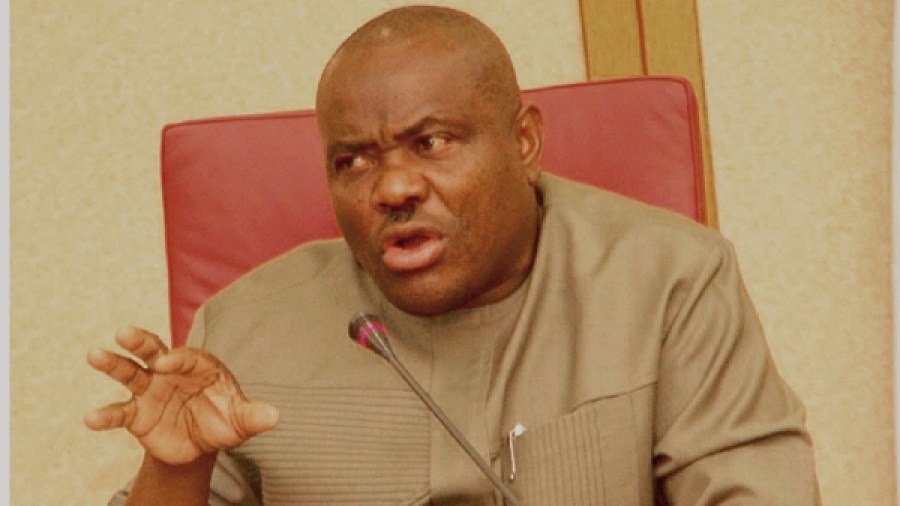
Governor Nyesom Wike of Rivers State has been in the news lately for his exertions to contain the spread the spread of coronavirus in the state, and he has supporters on both sides of the aisle for his actions. Let me be clear: Wike, in my view, has good intentions for his people but his methods and style usually give him away as a hard man who is “angry, stubborn, bitter, wicked, confrontational and unfriendly.” This characterization could be wrong but one thing is certain: Wike has projected a riveting public image as a fighter and tough guy; he’s bold and courageous, and it is unkind to suggest he’s unhinged as he has been portrayed lately in the media by some commentators.
However, it will be nice to know why he is angry, that is if he’s truly angry. As the Nation newspaper asked in its Hardball comment on May 12, 2020, “What ails Wike?” Let me paraphrase that: “What ails Wike so badly as governor that he doesn’t give a damn about the consequences of his actions?” Why does he have a penchant for drawing attention to himself? This is not the time to talk about the politics of his party and how he hosted the party’s convention in Port Harcourt before the last Presidential elections although the political events were remarkable. Is his style a reflection of the character of politics in Rivers State or is it a deliberate face-off with Abuja? Is Wike’s behaviour a symptom of a deeper malaise as noted pointedly by Sam Omatseye, author, writer and Chairman, editorial board of the Nation newspaper, in his column recently? Whatever it is, as we search for answers to these questions, I will appeal to His Excellency to slow down and take it easy because there will be life after office as governor.
One thing we cannot take way from Wike is that he was voted twice into office as governor of Rivers State – it means he has the popular support and mandate of his people; he has spent five years in office with three more years to go. I have close friends and associates in Port Harcourt and I have been visiting the Garden City since 1984 — 36 years ago. So, as you can imagine, I have an emotional attachment to the city; PH is like my second home.
We have laws in Nigeria but enforcement is a major challenge. While growing up, I enjoyed the joke that garri – the popular staple food – will not obey the last order until it sees hot water. Translation: we need tough leaders to rein us in because we’re “difficult people” to manage. I support Wike from the perspective that laws must be enforced and obeyed because we practice and celebrate a culture of impunity in this country; we do not like obeying laws. Habitual law breaking is worse than the coronavirus disease. Once you know somebody somewhere who is influential, we believe it is a license to break the law. It shouldn’t be so. With laws that are not enforced, society breaks down and result in chaos and anarchy.
However, in spite of the executive order on COVID-19 in Rivers State, I disagree with Wike for ordering that two hotels should be demolished – my view is that the judgement was harsh and provocative. Although his earlier actions on the lockdown scenario in Rivers State were controversial, pulling down the hotels drew sharp criticisms even from his admirers – it was clearly an aberration and it amounted to killing a fly with a sledge hammer; the decision was high-handed.
Instead, the law should have provided for sealing the hotels and asking the owners to pay fines to the government in the event of a violation. Hotel demolition is an extreme decision; it is the equivalent of sending persons who flout the lockdown order to the gas chambers. A hotel, however the size and shape, is an asset and major investment; the business employs people and pays taxes to the authorities. Hotels form part of the hospitality and tourism industry and at a time oil revenue is drying up, why should we be shutting down sources of revenue from other sectors? Every economic activity contributes to our GDP.
Speaking on ‘The Morning’ Show of Arise News on the demolition of the hotels, human rights activist and legal luminary, Femi Falana, Senior Advocate of Nigeria (SAN), says the demolition of the hotels cannot be justified, adding that if any law was breached, the proprietors of the hotels should have been charged to court. According to him, Section 43 of the Nigerian Constitution guarantees the right of every citizen to own a property. As far as Falana was concerned, due process was not followed and he advised the owners of the hotels to go to court.
As Wike’s stories trended, memes of him surfaced on the social media as a way of expressing disagreement with his harsh decisions. The cinema poster announcing an upcoming movie featuring Wike as the lead actor was particularly hilarious but the message was not lost – it was a rebuke and public ridicule of His Excellency as a “demolition man”.
First, it was the arrest of Caverton pilots and others who flew into Port Harcourt. After their arrests in April for allegedly violating the lockdown law, they were arraigned at a Magistrate court and remanded in prison until the following month. Caverton presented an official pass duly approved for the flight but Wike was not interested. Hadi Sirika, Minister of Aviation, hissed, grumbled and fumed in Abuja until normalcy returned. Shortly after, some security helmsmen in Rivers State were replaced based on directives from Abuja.
It was the turn of oil workers — also on essential duty — next. The story was that security agencies in Rivers State arrested 22 staff of Exxon Mobil who entered the state from Akwa Ibom in violation of the State’s executive order. The national body of Petroleum and Natural Gas Senior Staff Association of Nigeria (PENGASSAN) responded to the arrest in a press statement and accused Wike of “hostage taking, intimidation and harassment”.
Our dear governor is a lawyer and he is familiar with responsibilities on the exclusive legislative list. “The law must take its course,” Wike announced at one of his briefings. “Nobody is above the law; we arrested Exxon Mobil workers because we could not ascertain their health status (reference to COVID-19),” he added. The oil workers were later released after PENGASSAN threatened a nationwide strike action but before this time, Wike had boasted that they would be charged to court.
Then in a passionate open letter, one Charles Isichie, who is based in Port Harcourt and familiar with operations in the maritime sector, wrote to Wike, in a non-combative tone, to complain about how some of his decisions have affected the sector. For example, dock workers were arrested on their way to work by the Task Force on COVID-19 but were later released. “They should not have been arrested in the first place because they were on essential duty to the nation,” Isichie lamented in his letter. By releasing the workers, an industrial action by the Maritime Workers’ Union of Nigeria was averted at a time of global economic crisis. Isichie appealed to Wike to withdraw all the charges against the workers. Before this arrest, the Task Force had also arrested workers of the Nigerian Ports Authority, terminal operators, labourers and cleaning agents in spite of Presidential directives that port operations should continue during the lockdown.
All ports in Nigeria are currently open, berthing and dispatching vessels with the exception of those in Rivers State, Isichie wrote in his letter. With the spate arrests and intimidation going on in the state, operators of the Port Harcourt and Onne Ports are afraid to go to work. When vessels are unable to discharge their contents, the importer of the goods pays demurrage and economic activities arising therefrom become grounded. In closing his letter, Isichie wrote: “Your Excellency, moments like this are not when politics should dictate state policy or action. These are trying times when the welfare and well-being of citizens should be paramount in the minds of leaders.”
Governor Wike, you do not need any imperial authority to throw your weight around and inflict pain on your people as you have been doing lately. What you need is humility; it is a mark of great leaders. “Leaders don’t inflict pain, they share pain,” wrote American businessman and writer, Max De Pree (1924 – 2017). Every punishment meted out to Rivers people should be commensurate to the offence committed.
You’re the chief executive of Rivers State and by the special grace of God, your tenure will end well. From my interaction with the good people of your state, there’s sufficient evidence to show that they love you. “Wike is a purposeful, energetic and courageous governor; his political family is well and alive,” a Port Harcourt resident and academic confided in me in a moving tribute. “Majority of Rivers people are happy with him. He defends their interests and provides the public good for the generality of the people. I agree absolutely with his lockdown strategy and, more importantly, our governor embarked on massive infrastructural development and he has built confidence in Rivers people,” the anonymous Prof added.
What other endorsement can Wike possibly ask for? Rivers people see him as an action governor who is restoring the pride of the state. Most of them defend his actions and they are fully persuaded he will not let them down. But these are indeed extraordinary times because of the devastating effects of the global pandemic — what we need right now are empathy, encouragement and hope for a better tomorrow; not pulling down hotels or auctioning anything and everything in sight.
Your Excellency, I cannot speak in your Ikwerre dialect, but when I say, “biko nu; whe ri wan yo,” I’m sure you understand what I mean. From all indications, you are aggressive and combative but please temper justice with mercy because quarantine will not last forever. May God bless you for heeding my plea. As I was planning this piece, it was reported that one of your media aides, Simeon Nwakaudu, had passed on after a brief illness. May his soul rest in peace.
Postscript: In my tribute to Chief Dele Momodu on his 60th birthday, I erroneously stated that Chief Momodu is from Uzebba in Edo State. That was incorrect. Chief Momodu hails from Ihievbe in Owan East local government area of Edo State. The error is regretted.
*Braimah is a public relations consultant and marketing strategist based in Lagos (ehi.braimah@brandimpact.ng)
Related
You may like
Opinion
Rebuilding the Pillars: A Comprehensive Blueprint for Overcoming Nigeria’s Leadership Deficit
Published
6 days agoon
December 13, 2025By
Eric
By Tolulope A. Adegoke, PhD
Systemic governance reform as the critical foundation for unlocking sustainable development and restoring national promise. “Nations are not built on resources, but on systems. Nigeria’s future rests not on changing leaders, but on transforming the very structures that create them” – Tolulope A. Adegoke, PhD
Introduction: The Leadership Imperative
Nigeria, often described as the “Giant of Africa,” stands at a pivotal moment in its historical trajectory. Possessing unparalleled human capital, vast natural resources, and a dynamic, youthful population, the nation’s potential remains paradoxically constrained by deeply embedded structural deficiencies within its leadership architecture. These systemic flaws—evident across political, corporate, and civic institutions—have created profound cracks that undermine public trust, stifle economic innovation, and impede the delivery of fundamental social goods. This leadership deficit is not merely a political inconvenience; it is the central bottleneck to national progress.
Addressing this challenge requires moving beyond cyclical criticism of individuals and towards a deliberate, strategic reconstruction of the systems that produce, empower, and hold leaders accountable. This blog post presents a holistic, actionable blueprint designed to seal these cracks permanently. It offers a pathway to cultivate a leadership ecosystem that is transparent, accountable, performance-driven, and ethically grounded, thereby delivering tangible possibilities for Nigeria’s people, empowering its corporate sector, and restoring its stature on the global stage.
Section 1: Diagnosing the Structural Cracks—A Multilayered Analysis
A precise diagnosis is essential for effective treatment. Nigeria’s leadership challenges are multifaceted and mutually reinforcing, stemming from three core structural failures.
1. The Governance Architecture Failure
The current system suffers from a fundamental contradiction: a hyper-centralized federal model that stifles local innovation and accountability. Critical institutions, including the Independent National Electoral Commission (INEC), the judiciary, and the civil service, frequently operate with compromised autonomy, inadequate technical capacity, and vulnerability to political interference. Furthermore, the intended checks and balances among the executive, legislative, and judicial branches have weakened, creating avenues for impunity and concentrated power that deviate from democratic principles.
2. The Leadership Pipeline Collapse
The mechanisms for recruiting and developing leaders are fundamentally broken. Political party structures too often prioritize patronage, loyalty, and financial muscle over competence, vision, and ethical fortitude. There exists no systematic, nationwide program for identifying, nurturing, and mentoring successive generations of public servants. This results in a recurring leadership vacuum and a deficiency of cognitive diversity at decision-making tables, limiting the range of solutions for national challenges.
3. The Integrity Infrastructure Erosion
Perhaps the most damaging crack is the erosion of public trust, fueled by opacity and impunity. Decision-making processes and public resource allocations are frequently shrouded in secrecy, while accountability mechanisms are rendered ineffective. The consistent weakness in enforcing ethical codes across sectors has allowed a culture of corruption to persist, which acts as a regressive tax on development, scuttles investor confidence, and demoralizes the citizenry.
Section 2: A Tripartite Framework for Sustainable Transformation
Lasting reform necessitates concurrent, mutually reinforcing interventions across three interconnected pillars.
Pillar I: Constitutional and Institutional Reformation
Implementing True Cooperative Federalism: It is imperative to undertake a constitutional review that clearly delineates responsibilities and revenue-generating authorities among federal, state, and local governments. This empowers subnational entities to become laboratories of development, tailored to local contexts, while fostering healthy competition in providing public services. Fiscal autonomy must be matched with enhanced capacity-building initiatives at the state and local government levels.
Fortifying Independent Institutions: Key democratic institutions require constitutional protection from executive and legislative overreach. This includes guaranteeing transparent, first-line funding from the Consolidated Revenue Fund and establishing rigorous, meritocratic panels for appointing their leadership. Strengthening bodies like the Code of Conduct Bureau and the Public Complaints Commission is equally vital.
Professionalizing the Political Space: Electoral reform must introduce systems like ranked-choice voting to encourage more issue-based, inclusive campaigning. Legislation should mandate demonstrable internal democracy within political parties, including transparent primaries and audited financial disclosures, to reduce the capture of parties by narrow interests.
Pillar II: Cultivating a Leadership Development Ecosystem
Establishing a Premier National School of Governance (NSG): Modeled on institutions like the Lee Kuan Yew School of Public Policy, a Nigerian NSG would serve as the apex institution for executive leadership training. Attendance for all senior civil servants, political appointees, and legislators should be mandatory, with curricula focused on strategic public administration, ethical leadership, complex project management, and national policy analysis.
Catalyzing a Corporate Governance Revolution: The Securities and Exchange Commission (SEC) and the Corporate Affairs Commission (CAC) must enforce stricter codes requiring diverse, independent, and technically competent boards. The private sector should be incentivized—through tax credits or preferential procurement status—to establish leadership fellowship programs that place high-potential private-sector executives into public sector roles for fixed terms, fostering cross-pollination of skills and perspectives.
Instituting a Presidential Leadership Fellowship (PLF): This highly selective, merit-based program would identify Nigeria’s most promising young talents (aged 25-35) from all fields—technology, agriculture, law, the arts—and place them in intensive two-year rotations across critical government agencies, private sector giants, and civil society organizations. This creates a nurtured cohort of future leaders with a national network and a deep understanding of systemic interconnections.
Pillar III: Architecting Robust Accountability & Performance Systems
Deploying a Digital Transparency Platform: A mandatory, open-access National Integrated Governance Portal (NIGP) should display in real-time the status, budget, and contractor details of every major public project. Strategic use of blockchain technology can create immutable records for procurement contracts and resource distribution, significantly reducing opportunities for diversion.
Empowering Oversight and Consequence: Anti-corruption agencies require not only independence but also enhanced forensic capacity and international collaboration. Performance tracking must extend to the judiciary and legislature; publishing annual scorecards on case clearance rates, legislative productivity, and constituency impact can drive public accountability.
Embedding a Culture of Results: All government ministries, departments, and agencies (MDAs) must operate under a National Key Results Framework (NKRF). This performance contract system would define clear, measurable quarterly deliverables tied to national development plans. Autonomy and discretionary funding should be increased for MDAs that consistently meet targets, while underperformance triggers mandatory restructuring and leadership review.
Section 3: The Indispensable Cultural Reorientation
Technocratic fixes will fail without a parallel cultural shift that venerates service and integrity.
Embedding Ethics from Foundation: A redesigned national curriculum, from primary through tertiary education, must integrate civic ethics, critical thinking, and Nigeria’s constitutional history to build an informed citizenry that values good governance.
Launching a “Service Nation” Campaign: A sustained, multi-platform national campaign, developed in partnership with respected cultural, religious, and traditional institutions, should celebrate role models of ethical leadership and reframe public service as the nation’s highest calling.
Enacting Ironclad Whistleblower Protections: Comprehensive legislation must be passed to protect whistleblowers from all forms of retaliation, including provisions for anonymous reporting, physical protection, and financial rewards, aligning with global best practices to encourage exposure of malfeasance.
Section 4: A Practical, Phased Implementation Roadmap (2025-2035)
Phase 1: The Foundation Phase (Years 1-3)
Convene a National Constitutional Dialogue involving all tiers of government, civil society, and professional bodies.
· Establish the Nigerian School of Governance (NSG) and inaugurate the first cohort of the Presidential Leadership Fellowship (PLF).
· Pilot the National Integrated Governance Portal (NIGP) in the Ministries of Health, Education, and Works.
Phase 2: The Integration & Scaling Phase (Years 4-7)
· Enact and begin implementation of the new constitutional framework on fiscal federalism.
· Graduate the first NSG cohorts and embed training as a prerequisite for promotions.
· Roll out the NKRF performance contracts across all federal MDAs and willing pilot states.
Phase 3: The Consolidation & Maturation Phase (Years 8-12)
· Conduct a comprehensive national review, assessing improvements in governance indices, citizen trust metrics, and economic competitiveness.
· Establish Nigeria as a regional hub for leadership training, offering NSG programmes to other African nations.
· Institutionalize a self-sustaining cycle where performance culture and ethical leadership are the unquestioned norms.
Conclusion: Forging a New Path of Leadership
The task of sealing the cracks in Nigeria’s leadership foundation is undeniably monumental, yet it is the most critical work of this generation. It demands a departure from transactional politics and short-term thinking toward a covenant of nation-building. The integrated blueprint outlined here—combining institutional redesign, leadership cultivation, technological accountability, and cultural renewal—provides a viable pathway.
This is not a call for perfection, but for systematic progress. By committing to this journey, Nigeria can transform its governance from its greatest liability into its most powerful asset. The outcome will be a nation where trust is restored, innovation flourishes, and every citizen has a fair opportunity to thrive. The resources, the intellect, and the spirit exist within Nigeria; it is now a matter of courageously building the structures to set them free.
Dr. Tolulope Adeseye Adegoke is a distinguished scholar-practitioner specializing in the intersection of African security, governance, and strategic leadership. His expertise is built on a robust academic foundation—with a PhD, MA, and BA in History and International Studies focused on West African conflicts, terrorism, and regional diplomacy—complemented by high-level professional credentials as a Distinguished Fellow Certified Management Consultant and a Fellow Certified Human Resource Management Professional.
A recognized thought leader, he is a Distinguished Ambassador for World Peace (AMBP-UN) and has been honoured with the African Leadership Par Excellence Award (2024) and the Nigerian Role Models Award (2024), alongside inclusion in the prestigious national compendium “Nigeria @65: Leaders of Distinction.”
Dr. Adegoke’s unique value lies in synthesizing deep historical analysis with practical management frameworks to diagnose systemic institutional failures and design actionable reforms. His work is dedicated to advancing ethical governance, strategic human capital development, and sustainable nation-building in Africa and the globe. He can be reached via: tolulopeadegoke01@gmail.com & globalstageimpacts@gmail.com
Related
Opinion
How Dr. Fatima Ibrahim Hamza (PT, mNSP) Became Kano’s Healthcare Star and a Model for African Women in Leadership
Published
2 weeks agoon
December 6, 2025By
Eric
By Dr. Sani Sa’idu Baba
My dear country men and women, over the years, I have been opportune to watch numerous speeches delivered by outstanding women shaping the global health sector especially those within Africa. Back home, I have also listened to towering figures like Dr. Hadiza Galadanci, the renowned O&G consultant whose passion for healthcare reform continues to inspire many. Even more closer home, there is Dr. Fatima Ibrahim Hamza, my classmate and colleague. Anyone who knew her from the beginning would remember a hardworking young woman who left no stone unturned in her pursuit of excellence. Today, she stands tall as one of the most powerful illustrations of what African women in leadership can achieve when brilliance, discipline, and integrity are brought together.

Before I dwell into the main business for this week, let me make this serious confession. If you are a regular traveler within Nigeria like myself, especially in the last two years, you will agree that no state currently matches Kano in healthcare delivery and institutional sophistication. This transformation is not accidental. It is the result of a coordinated, disciplined, and visionary ecosystem of leadership enabled by Kano State Governor, Engr Abba Kabir Yusuf. From the strategic drive of the Hospitals Management Board under the meticulous leadership of Dr. Mansur Nagoda, to the policy direction and oversight provided by the Ministry of Health led by the ever committed Dr. Abubakar Labaran, and the groundbreaking reforms championed by the Kano State Primary Health Care Management Board under the highly cerebral Professor Salisu Ahmed Ibrahim, the former Private Health Institution Management Agency (PHIMA) boss, a man who embodies competence, hard work, honesty, and principle, the progress of Kano’s health sector becomes easy to understand. With such a strong leadership backbone, it is no surprise that individuals like Dr. Fatima Ibrahim Hamza is thriving and redefining what effective healthcare leadership looks like in Nigeria.
Across the world, from top medical institutions to global leadership arenas, one truth echoes unmistakably: when women lead with vision, systems transform. Their leadership is rarely about theatrics or force; it is about empathy, innovation, discipline, and a capacity to drive change from the inside out. Kano State has, in recent years, witnessed this truth firsthand through the extraordinary work of Dr. Fatima at Sheikh Muhammad Jidda General Hospital.
In less than 2 years, Dr. Fatima has emerged as a phenomenon within Kano’s healthcare landscape. As the youngest hospital director in the state, she has demonstrated a style of leadership that mirrors the excellence seen in celebrated female leaders worldwide, women who inspire not by occupying space, but by redefining it. Her performance has earned her two high level commendations. First, a recognition by the Head of Service following a rigorous independent assessment of her achievements, and more recently, a formal commendation letter from the Hospitals Management Board acknowledging her professionalism, discipline, and transformative impact.
These acknowledgements are far more than administrative gestures, they place her in the company of women leaders whose influence reshaped nations: New Zealand’s Jacinda Ardern with her empathy driven governance, Liberia’s Ellen Johnson Sirleaf with her courageous reforms, and Germany’s Angela Merkel with her disciplined, steady leadership. Dr. Fatima belongs to this esteemed lineage of women who do not wait for change, they create it.
What sets her apart is her ability to merge vision with structure, compassion with competence, and humility with bold ambition. Staff members describe her as firm yet accessible, warm yet uncompromising on standards, traits that embody the modern leadership model the world is steadily embracing. Under her stewardship, Sheikh Jidda General Hospital has transformed from a routine public facility into an institution of possibility, demonstrating what happens when a capable woman is given the opportunity to lead without constraint.
The recent commendation letter from the Hospitals Management Board captures this evolution clearly: “Dr. Fatima has strengthened administrative coordination, improved patient care, elevated professional standards, and fostered a hospital environment where excellence has become the norm rather than the exception”. These outcomes are remarkable in a system that often battles bureaucratic bottlenecks and infrastructural limitations. Her work is proof that effective leadership especially in health must be visionary, intentional, and rooted in integrity.
In a period when global discourse places increasing emphasis on the importance of women in leadership particularly in healthcare, Dr. Fatima stands as a living testament to what is possible. She has demonstrated that leadership is never about gender, but capacity, clarity of purpose, and the willingness to serve with unwavering commitment.
Her rise sends a powerful message to young girls across Nigeria and Africa: that excellence has no gender boundaries. It is a call to institutions to trust and empower competent women. And it is a reminder to society that progress accelerates when leadership is guided by competence rather than stereotypes.
As Kano continues its journey toward comprehensive healthcare reform, Dr. Fatima represents a new chapter, one where leadership is defined not by age or gender, but by impact, innovation, and measurable progress. She is, without question, one of the most compelling examples of modern African women in leadership today.
May her story continue to enlighten, inspire, and redefine what African women can, and will achieve when given the opportunity to lead.
Dr. Baba writes from Kano, and can be reached via drssbaba@yahoo.com
Related
Opinion
Book Review: Against the Odds by Dozy Mmobuosi
Published
2 weeks agoon
December 4, 2025By
Eric
By Sola Ojewusi
Against the Odds is an ambitious, deeply personal, and unflinchingly honest memoir that traces the remarkable rise of Dozy Mmobuosi, one of Nigeria’s most dynamic and controversial entrepreneurs. In this sweeping narrative, Mmobuosi reveals not just the public milestones of his career, but the intimate struggles, internal battles, and defining moments that shaped his identity and worldview.
The book is both a personal testimony and a broader commentary on leadership, innovation, and Africa’s future—and it succeeds in balancing these worlds with surprising emotional clarity.
A Candid Portrait of Beginnings
Mmobuosi’s story begins in the bustling, unpredictable ecosystem of Lagos, where early challenges served as the furnace that forged his ambitions. The memoir details the circumstances of his upbringing, the value systems passed down from family, and the early encounters that sparked his desire to build solutions at scale.
These foundational chapters do important work: they humanize the protagonist. Readers meet a young Dozy not as a business figurehead, but as a Nigerian navigating complex social, financial, and personal realities—realities that millions of Africans will find familiar.
The Making of an Entrepreneur
As the narrative progresses, the memoir transitions into the defining phase of Mmobuosi’s business evolution. Here, he walks readers through the origins of his earliest ventures and the relentless curiosity that led him to operate across multiple industries—fintech, agri-tech, telecoms, AI, healthcare, consumer goods, and beyond.
What is striking is the pattern of calculated risk-taking. Mmobuosi positions himself as someone unafraid to venture into uncharted territory, even when the cost of failure is steep. His explanations offer readers valuable insights into:
• market intuition
• the psychology of entrepreneurship
• the sacrifices required to build at scale
• the emotional and operational toll of high-growth ventures
These passages make the book not only readable but instructive—especially for emerging
African entrepreneurs.
Triumphs, Crises, and Public Scrutiny
One of the book’s most compelling strengths is its willingness to confront controversy head-on.
Mmobuosi addresses periods of intense scrutiny, institutional pressure, and personal trials.
Instead of glossing over these chapters, he uses them to illustrate the complexities of building businesses in emerging markets and navigating public perception.
The tone is reflective rather than defensive, inviting readers to consider the thin line between innovation and misunderstanding in environments where the rules are still being written.
This vulnerability is where the memoir finds its emotional resonance.
A Vision for Africa
Beyond personal history, Against the Odds expands into a passionate manifesto for African transformation. Mmobuosi articulates a vision of a continent whose young population, natural resources, and intellectual capital position it not as a follower, but a potential leader in global innovation.
He challenges outdated narratives about Africa’s dependency, instead advocating for
homegrown technology, supply chain sovereignty, inclusive economic systems, and investment in human capital.
For development strategists, policymakers, and visionaries, these sections elevate the work from memoir to thought leadership.
The Writing: Accessible, Engaging, and Purposeful
Stylistically, the memoir is direct and approachable. Mmobuosi writes with clarity and intention, blending storytelling with reflection in a way that keeps the momentum steady. The pacing is effective: the book moves seamlessly from personal anecdotes to business lessons, from introspection to bold declarations.
Despite its business-heavy subject matter, the prose remains accessible to everyday readers.
The emotional honesty, in particular, will appeal to those who appreciate memoirs that feel lived rather than curated.
Why This Book Matters
Against the Odds arrives at a critical moment for Africa’s socioeconomic trajectory. As global attention shifts toward African innovation, the need for authentic narratives from those building within the system becomes essential.
Mmobuosi’s memoir offers:
• a case study in resilience
• an insider’s perspective on entrepreneurship in frontier markets
• a meditation on reputation, legacy, and leadership
• a rallying cry for African ambition
For readers like Sola Ojewusi, whose work intersects with media, policy, leadership, and social development, this book offers profound insight into the human stories driving Africa’s new generation of builders.
Final Verdict
Against the Odds is more than a success story—it is a layered, introspective, and timely work that captures the pressures and possibilities of modern African enterprise. It challenges stereotypes, raises important questions about leadership and impact, and ultimately delivers a narrative of persistence that audiences across the world will find relatable.
It is an essential read for anyone interested in the future of African innovation, the personal realities behind public leadership, and the enduring power of vision and resilience
Related


Mike Adenuga, Emmanuel Macron Hold High-Powered Meeting in Paris
Free at Last: Burkina Faso Releases 11 Nigerian Soldiers, Aircraft
Corruption Allegations: NMDPRA Boss Farouk Ahmed Meets Tinubu, Resigns
I’m Ready for Probe, NMDPRA Boss Farouk Ahmed Responds to Dangote’s Corruption Allegation
No Court Order Against Tinted Glass Permit Enforcement, Police Insist
Alleged Corrupt Practices: Dangote Petitions ICPC Against NMDPRA MD Farouk
US Congressman Recounts Harrowing Experience in Nigeria, Confirms ‘Systematic Genocidal Campaign’
There’s No Govt in Nigeria, Tinubu is the Person in Power – Dele Momodu
Rebuilding the Pillars: A Comprehensive Blueprint for Overcoming Nigeria’s Leadership Deficit
Corruption! Tinubu Tackles ‘Buhari Boys’
Threat Against Nigeria’s Multi-Party Democracy: Atiku, Obi, George, Others Accuse Tinubu of Plot to Annihilate Opposition
Voice of Emancipation: Nicolas Maduro is a Goner
OAU: MicCom Institutes Financial Awards for Best Graduating Student, Producing Dept
Book Launch: Tinubu Vows to Sustain Buhari’s Legacies
Trending
-
Featured6 days agoThere’s No Govt in Nigeria, Tinubu is the Person in Power – Dele Momodu
-
Opinion6 days agoRebuilding the Pillars: A Comprehensive Blueprint for Overcoming Nigeria’s Leadership Deficit
-
Headline5 days agoCorruption! Tinubu Tackles ‘Buhari Boys’
-
Headline4 days agoThreat Against Nigeria’s Multi-Party Democracy: Atiku, Obi, George, Others Accuse Tinubu of Plot to Annihilate Opposition
-
Voice of Emancipation4 days agoVoice of Emancipation: Nicolas Maduro is a Goner
-
News4 days agoOAU: MicCom Institutes Financial Awards for Best Graduating Student, Producing Dept
-
National3 days agoBook Launch: Tinubu Vows to Sustain Buhari’s Legacies
-
Headline2 days agoAlleged Corrupt Practices: Dangote Petitions ICPC Against NMDPRA MD Farouk