By Hon. Femi Kehinde
“Ninu offii, ati olaa ni Omo Pandoro n’dagba” is a Yoruba aphorism that may not be easily captured in English interpretation, without losing its essence, context and philosophy.
But, nevertheless, one may say, in the face of adversity and vicissitudes, the Pandoro tree thrives!
Pandoro is an unplanned plant: “o’ la le hu.”
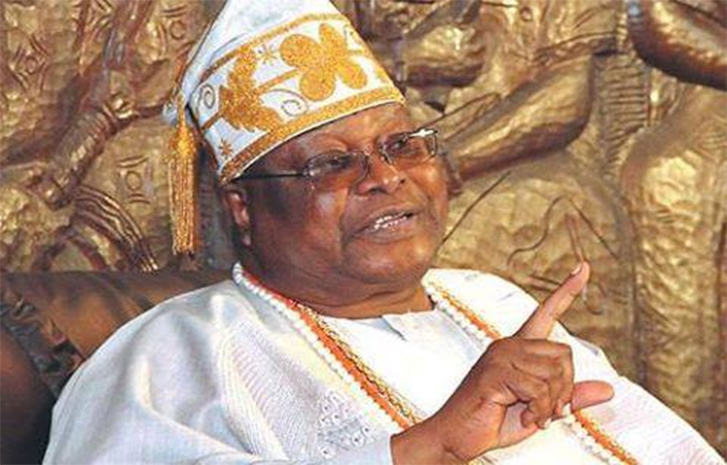
These perhaps may capture the life of Awujale Sikiru Kayode Adetona- the Ijebu Kingdom potentate, from the 4th of January, 1960, (date of appointment) to date, and better known as Alaayeluwa Sikiru Kayode Adetona,-Ogbagba II, the Awujale of Ijebu Ode.
Sikiru was born on Thursday, the 10th of May 1934, to Omo Oba Rufai Adetona and Wulemot Ajibabi Adetona (Née Onashile) of Ijebu Igbo, a year after the ascension of Daniel Richardson Otubusin Adesanya, to the throne of Awujale of Ijebu Ode.
Daniel Richardson, the 56th Awujale of Ijebu Ode, starting from Awujale Olu Iwa, was a Tailor and Draper in Lagos, before his ascension to the exalted throne of his fore fathers as Awujale of Ijebu Ode, and Gbelegbuwa II. He succeeded Awujale Alli Ogunaike, who reigned between 1929 and 1933.
He was on the stool till 1959. He witnessed the political evolution and transformation, that visited the position of traditional rulers, as a result of the Macpherson constitution of 1951. Awujale Adesanya was regarded as a highly cultured Oba, who demonstrated humility and devotion.
Hitherto, Obas were real Kaabiyeisis, who had political power and authority.
As if undergoing leadership training, Sikiru attended various Primary Schools,- Baptist school Ereko Ijebuode, Ogbere United Primary School, Ijebu Ode. Ansarudeen Primary school Ijebu Ode- between 1943 and 1950. In 1951, he was admitted to Olu Iwa college (now Adeola Odutola college Ijebu Ode), and left school in 1956 . In 1957, Sikiru left Ijebu Ode for Ibadan and was in the employment of the Western Region Ministry of Finance, where he worked in the Audit department. It is interesting to note, that around this period, Ibadan, being a melting point of the Yoruba Nation and even Nigeria, had so many of Sikiru’s age grade, beginning to navigate their lives and future. Olusegun Obasanjo, also around this period, moved to Ibadan, after the completion of his secondary school education at the Baptist Boys High School, Abeokuta, and worked as a class room teacher, at the African Church Modern School, Odu-Ona, Ibadan.
Moshood Kashimawo Olawale Abiola, also an ex student of the Baptist boys high school, Abeokuta, relocated to Ibadan, where he worked at the Barclays Bank, Dugbe Ibadan and later the Finance department of the Western region government.
Olusegun later enlisted in the Nigerian Army in 1959 and Moshood Kashimawo Olawale Abiola, also secured a Western Region scholarship, to study Accountancy at the Glasgow University, Scotland, United Kingdom, in 1960.
In later years, their paths were later to cross.
Towards the end of 1958, Sikiru left the services of the Western Region Government and moved to Port Harcourt, to travel to the United Kingdom, to study Accountancy. From Port Harcourt, he travelled by sea, on the popular passenger vessel- MV Aureole, to begin a new life. He arrived in the United Kingdom early in January,1959.
He had settled down and began to savour the new life of a student in the United Kingdom. As a young man, he had all the thrills and frills of the student life and looked forward to the journey back home, as a qualified Chartered Accountant, in no distant future.
However, destiny lurked in the corner to change the tide of events for Sikiru, who was already in England, fond of dressing impressively and impeccably, in a three piece suit. Sometime in September 1959, the 56th Awujale of Ijebu Ode Oba Daniel Richardson Adesanya, who had been on the throne since 1933 joined his ancestors, and thus the frenetic race for a worthy successor, from the next ruling house, – Anikinaiye Ruling House.
Naturally, there were about five aspirants from the ruling house, including Sikiru’s father- Rufai Adetona, who, as if a star gazer, surrendered his aspiration for his son Sikiru, who was already studying in the United Kingdom.
Interestingly, Sikiru’s father, gave him “the crown which would have been his, thereby, according to Sikiru- “setting him on the path of destiny”
Chief Adeola Odutola, the Ogbeni Oja of Ijebu Ode, became the Regent of Ijebu Ode, in the absence of an Awujale.
The Anikinaiye Ruling House, formally presented Sikiru Adetona to the Odus- the kingmakers, for endorsement, approval and recommendation for appointment.
Chief Samuel Olatunbosun Shonibare- the Asiwaju of Ijebu Ode and Chief Honourable Emmanuel Okusanya Okunowo,- the Damask merchant and Honourable member representing Ijebu Ode Federal Constituency in the House of Representatives, were also involved in the process to pick an Awujale, that would be young, charming and literate.
The experience of having a highly literate, dynamic, intelligent, charismatic and extremely handsome Joel Adeboye as the Orumolusi of neighbouring Ijebu Igbo, was a sufficient guide.
Joel Adebiye had trained as a Nurse in the Ogbomoso Baptist Hospital and School of Nursing, and there after worked with various government agencies, before ascending the stool of Orimolusi of Ijebu Igbo in 1947.
This vantage opportunity, made Joell Adeboye, to be elected as the first Chairman of the Ijebu Divisional Council in 1955, as against Daniel Richardson Adesanya, the then Awujale of Ijebu Ode. Unfortunately, Joel Adeboye died in a plane crash (BOAC Argonaut Aircraft) in Tripoli, Libya, on the 21st of September, 1955 on his way back home, after attending the Cocoa Allied Conference, which held in London, between September 13th and 15th, at the Grosvenor House, London. Chief Obafemi Awolowo, then Premier of the Western Region, at the grave side of Adeboye, in a funeral oration, described him as:
“one of the most progressive and enlightened natural rulers in Nigeria. He was a class by himself, a benevolent and constitutional ruler”. He died at the age of 46 years.
Samuel Olatunbosun Shonibare, founding member of the Action Group in 1950, former employee of the UAC in Ibadan and Ijebu Ode, Managing Director of the Amalgamated Press Limited, with head office in the United Kingdom, under the Chairmanship of Mr. Thompson, a very wealthy Briton, was given the responsibility to travel to London and unofficially sound Sikiru out, evaluate his comportment, character and readiness for the stool, and report back home.
In England, Shonibare was not disappointed with what he saw in Sikiru, as a ready occupier, of the exalted stool of the 57th Awujale of Ijebu Ode.
On the 4th of January, 1960, the Permanent Secretary of the defunct Western Region Ministry of Local Government, in a letter with reference number- CB. 41/333 conveyed to the Local Government Adviser in Ijebu Ode, approval of the Western Region Governor in Council led by Olola Sir John Rankine, the appointment of Sikiru Adetona, as the Awujale of Ijebu-Ode and thus the beginning of a Royalty, that has traversed 60 years, in glory, splendor, turbulence, defiance and glamour.
The king elect, flew back home on the arrangement of Chief S. O Shonibare, who lodged him in his Mary Land Estate Ikeja, Lagos and on the 18th of January, 1960, Sikiru was introduced to the Ijebu nation, by the Ogbeni Oja of Ijebu Ode- Chief Adeola Odutola and immediately moved to traditional seclusion at the “Odo,” for three months.
On Saturday the 2nd of April, 1960, Sikiru Adetona was formally installed as the Awujale of Ijebu Ode and Ogbagba II, amid pump, pageantry and glamour. He was presented with the staff of office by Premier SLA Akintola.
On this memorable day, the new Premier of the Western Region, Chief Samuel Ladoke Akintola, who had assumed office on the 15th of December 1959 and the former Premier of the Western Region, Chief Obafemi Awolowo, now, leader of the Opposition in the House of Representatives, Lagos, with their wives- HID and Faderera, were cynosures of all eyes, centres of attraction and attention.
The power dynamics had changed. There were shouts of the usual “Awo! Awo!! Awo!!!” and splinter shouts of “SLA! SLA!!”
Awolowo had earlier been used to an undivided share of power and Leadership, having been Minister of Local Government and leader of Government Business from 1952 to 1954, Leader of the Action Group, and Premier of the Western Region from 1954 to December 15 1959.
The wife of the new Premier- Faderera, was certainly not comfortable with a divided share of attention.
On Tuesday, the 5th of April, 1960, the new Awujale of Ijebu Ode, Oba Sikiru Kayode Adetona, was introduced to the Western Region House of Chiefs as a new member of the House, with the Ooni of Ife- Oba Tadeniawo Adesoji Aderemi as President.
Unlike the other Regions, the Western Region had a bicameral legislature – the House of Assembly and the House of Chiefs.
From the House of Chiefs, Sikiru Adetona became a Minister without portfolio, in the Western Region Government, alongside five other equally distinguished mornarchs:
1. The Hon. Oba Isaac Babalola Akinyele-The Olubadan of Ibadan.
2. Hon. Oba Tewogboye II, the Osemawe of Ondo
3. Hon. Oba S. O Abimbola, the Oluwo of Iwo.
4. Hon. Oba Obiaka A. Gbennoba- The Obi of Agbor
5. His Highness, the Hon. Erejuwa II, the Olu of Warri.
He became a member of the Regional Executive Council of the Western Region Government alongside 20 Regional Ministers.
The 26 year old monarch and the 57th Awujale of Ijebu Ode, now began to see what fate and destiny had thrust on him and how to hold that office, without lack.
Shortly after his ascension as Awujale, the cracks in the Action Group, began to unfold and the crisis reached its crescendo, at the Annual Conference of the Party in Jos, in February 1962.
SLA Akintola was dismissed from the Party, Ayo Rosiji was removed as National Secretary of the party and replaced with S. G Ikoku and Bola Ige became the Federal Publicity Secretary. There was a wide gulf, that snow balled into a major crises, that perhaps, began the end of the First Republic and the sack of the Western Region Government by the Federal Parliament. This led to the appointment of Dr. M.A Majekodumi as the Administrator of the Western Region from May 29 1962 to 31st of December 1962. Capt. Muritala Mohammed, who later became the Head of State of Nigeria, between July 29 1975 and February 13, 1976 was his Aid-de camp (ADC).
The new Administrator, upon assumption of office, also appointed the young Sikiru Adetona as a commissioner without portfolio, during the Emergency period. Modele Odunjo Née (Akintola) was a dotting daughter and first child of Chief Samuel Ladoke Akintola. She was alleged to be friendly with the young Awujale.
Modele was a very active participant in the crisis of the Western Region and ran her father’s errands, as a trusted ally, on several occasions. She was her father’s envoy to the United Kingdom, in 1962, to deliver her father’s letter, personally to Queen Elizabeth II, the Queen of England, following the political lock- jam in the Western Region.
Reality dawned on Awujale Sikiru, that he needed a secured means of financial life line, to enable him entrench his foothold in office and also prevent him from being an indigent monarch.
He went into merchandise. He was fully involved in the business of transportation and haulage and that at a point in time, he had about 50 trailers in his fleet of vehicles. He also set his mother up, in the business of beer distributorship.
As a result of this crisis, Awolowo had been jailed for treasonable felony and lost his son- Olusegun in a ghastly motor accident, on his way to Lagos, from Ibadan to be part of his father’s Attorneys at the Coker Commission of Enquiry, on the 10th of July, 1963. Modele, SLA’s daughter, also died in 1965. Magistrate Dapo Aderemi- first son of Ooni Adesoji Aderemi, had also died in 1964.
Chief Olatunbosun Shonibare the man with the Midas touch, had also died in 1964, at the age of 44 years and Chief Okunowo had gone to the opposite side of the political divide of Obafemi Awolowo.
In fact on the 29th of May 1962, at a Plenary Session, to formally pass the Emergency Rule Act, 1962, Honourable Okunowo had implored Prime Minister Hon. Tafawa Balewa, to “find something to do about Awolowo” whom he had derided, insinuating, that the insanity of a mad man, may not be easily discernible.
Awujale Adetona was also at this period, seen as being perhaps, not supportive of the Awolowo cause and political tendency.
As a result of the military putsh of January 15 1966, Colonel Yakubu Gowon, who would have been the first Aid De Camp (ADC) to Sir Adesoji Aderemi, as Governor of the Western Region, became the new Head of State and Commander In Chief of the Armed Forces, after the sack of the First Republic
He granted Chief Obafemi Awolowo pardon released him from the Calabar Prison, made him Federal Minister of Finance and Vice Chairman of the Federal Executive Council.
Awolowo later became the Asiwaju of Yoruba land in 1968.
Oba Sikiru Adetona at this point in time, was also fully entrenched in his position as the Awujale of Ijebu Ode, but political old wounds did not heal.
Oba Sikiru was fingered as being supportive of the “Demo”, cause of the NNDP, of the Akintolas, as against the UPGA cause of Obafemi Awolowo in the First Republic.
This political divides, percolates in defining Awujale’s political position in the First and Second Republic.
In 1977, a strong member of the Awolowo political machine, brilliant and cerebral journalist who had been Editor of the Daily Service newspaper and founding member of the Awolowo committee of friends, became the Chairman of the Ijebu Ode Local Government following the Local Government Reforms of the Obasanjo Government in 1976.
Chief Victor Olabisi Onabanjo, born in 1927, attended Baptist Academy Lagos, studied journalism at the Fleet Street School of Journalism in London, between1950-1951.
He was the popular Columnist of Ayekoto in the Daily Service Newspapers. He writes in sweet prose. As evidence, in the Daily Service Newspaper Column of the 3rd of March, 1954, editor and columnist- Bisi Onabanjo Alias Ayekoto wrote:
“Mr. Awolowo, leader of the AG Government in the West will be 45 on Saturday, March 6. I understand he does not normally celebrate his birthday elaborately. It is usually limited to his immediate family and as a rule; he always likes to have the day to himself and rarely receives visitors. But on Saturday, there may be a break with the normal practice. He is bound to receive visitors and if there will be no celebration, it is likely that iced water and orange squash will be served. Mr. Awolowo himself is a teetotaler”
Onabanjo and Adetona, despite suspected political divides, were initial jolly good fellows. Sikiru Adetona had at some point, assisted in taking care of some of Onabanjo’s needs, most especially, in his failing health and also in his business.
In 1979, Chief Obafemi Awolowo lost election to Alhaji Sehu Shagari as President of Nigeria on the platform of the UPN, but Onabanjo won election on the same party platform to be Governor of Ogun state on the 1st of October 1979 and was sworn into office for a second term in office on the 1st of October, 1983.
Onobanjo from 1979, as Executive Governor of Ogun State, became a man with immense power and there was a cat and mouse relationship, between the governor and his king- the Awujale of Ijebu Ode. Shortly after assumption of office as governor, he wrote a letter to the Chief Imam of his town, Ijebu Ode, that he would be joining the Muslim faithfuls on a Friday Jumat service, for a thanksgiving service to commemorate his election as Governor of Ogun state.
Upon receipt of this letter, the Chief Imam, bewildered that a Christian could pick the Ijebu Ode Central mosque for a thanksgiving service, informed the Awujale, who foiled this arrangement.
The Chief Imam wrote back, that his Excellency, the Governor, could not be accommodated.
Onobanjo felt slighted, embarrassed and insulted. On the scheduled date, he simply did not turn up.
There was a strained relationship between the royal stool and the executive office of the Governor of Ogun State.
As if waiting for a pound of flesh, that came actually in August 1981, the Awujale wrote to the Governor, informing him of his proposed visit to the United Kingdom, for medical vacation and also left his oversees address and phone contact, in case the Governor may wish to speak with him.
The governor siezed thus opportunity, to reply the Awujale, by requesting for further information about the trip, to enable him make his decision.
The Awujale upon receipt of this letter, fired back that he was not seeking his permission to travel, but was only informing him, of his contact address during the vacation.
The Awujale travelled, nonetheless, without waiting for a further reply from the governor.
Onabanjo felt slighted and insulted by this action of the monarch of his home town-Ijebu Ode. He asked emissaries to inform him to quickly come back home.
The Awujale, rather than being bothered by this request, thoroughly enjoyed his vacation, and also, changed his contact address and phone numbers, .
After vacation, he came back home, and was on the 23rd of November 1981, suspended from office as the Awujale of Ijebu Ode and a Justice Sogbetan Commission of Enquiry, was set up, to probe the Awujale’s defiance, non chalance, audacity and indiscretion.
Justice Sogbetan was appointed a Judge of the Ogun State High Court in 1977. The panel of Enquiry, hastily constituted also came out with its decisions in haste, to recommend the deposition of Adetona as Awujale of Ijebu Ode in 1982.
The governor, almost immediately, summoned the meeting of the Executive Council and approved the deposition of Sikiru, as the Awujale of Ijebu Ode.
As would be expected, Sikiru Adetona filed an action against the government of Ogun State, to challenge his deposition.
His legal team was ably led by the legal titan Chief FRA Williams and also assisted by Chief Sina Odedina, a prominent Ijebu Lawyer.
The case was on. Adetona was deposed and Onabanjo was re-elected and sworn in as Governor of Ogun State on the 1st of October, 1983.
For Adetona, fate and destiny still lurked in the corner.
On the 31st of December 1983, the Second Republic was aborted by a military putsch, announced by Brigadier Sani Abacha of the Second Mechanized Division of the Nigerian Army, Ibadan. The civilian government of Alhaji Shehu Shagari was replaced by Major General Mohammed Buhari as Head of State and Commander in Chief of the Armed Forces.
Brigadier Oladipupo Diya another Ijebu son from Oduogbolu, became the new Military Governor of Ogun State.
Justice Kolawole of the Ogun State High Court delivered a land mark Jugdment in 1984, that upturned the decision of the Sogbetan Commission of Enquiry and ordered the immediate restoration of Sikiru Adetona back to his stool as Awujale of Ijebu -Ode.
The Military Government of Oladipupo Diya, did not appeal this judgment, but rather, enforced the judgment.
Sikiru Kayode Adetona went back to the stool as the Awujale of Ijebu Ode and Ogbagbao II.
Now, being unencumbered, the Awujale went back to his stool like a cat with nine lives and thus, another fresh journey in the last 36 years.
As a re-invigorated monarch, he now has a settled mind, to think of giant developmental strides, for Ijebu ode and the ijebu nation. He continues in his independent mindedness.
He has always enjoined monarchs to be stubborn, independent minded in whatever they set their hearts to do and also be non partisan, whatever that may mean.
In childhood and adolescence, Sikiru Adetana acknowledged the pivotal role of his maternal aunt-Chief Mrs.Oyin Adenuga, who, according to him, was the “force behind his mother in her determination to see me educated.”
In his growing up years, Sikiru had lived at various points in time, with Chief Mrs. Oyin Adenuga in Ibadan. She was the mother of the wealthy business man, OIL and telecommunication giant-Mike Adenuga.
In reciprocating this motherly love and affection of his mother’s younger sister, in his early up bringing, Sikiru has always been protective of her interest and that of her children.
On the 9th of July, 2006 according to the Awujale ” the EFCC had come calling brusquely on Mike Adenuga, Chairman of globacom.
They broke his gate and swarmed into his house and kept him under house arrest.
The Awujale swung into action and raised a legal team to defend him. Consequently, Mohammed son of Ibrahim Babaginda, former Head of State, was also quized.because of an allegation, that Atiku Abubaka- Vice President of Nigeria and Chairman of Petroleum Trust Development fund had placed some of PTDF’s fund in Mike’s Equatorial Trust Bank which had assisted Mike in paying for the globacom licence.
Mike debunked this and showed evidence of payment for the licence through a loan from the BNP Paribas Bank of France. Former President Ibrahim Babangida, was also suspected to be a shareholder in Globacom.
Mike subsequently went on exile to London, and whilst in London, went on vacation with the Awujale to France…
Coincidentally, President Olusegun Obasanjo was also in France to attend a conference of African Presidents, on the invitation of President Chirac of France.
Awujale used this opportunity, to visit Chief Obasanjo to further explain Mike’s case and how he was just being a pawn in a political chess game and connundrum
At the lobby of the Embassy hotel, where Mike had waited for the Awujale, who had gone for a private meeting with Chief Obansanjo, he told Mike that he had nothing against him, and a clever Mike, replied back to the man of power-“Your Excellency, I understand, thank you! “
Through thick and thin, Awujale fought for Mike’s cause until it was finally resolved.
Awujale also accused Obasanjo of being enstranged with his friend and former Minister of Defence Theophilus Danjuma. He told Obasanjo of his rumoured interest in the Obajana Cement Factory of Aliko Dangote, and also accused him, of being an ingrate, and advised him, to mend fences with some of his friends who had assisted him at one point or the other, to be in office in 1999, as he was approaching the end of his tenure.
A good example, according to the Awujale- “was chief S. O Bakare. (Oluwalogbon) who “gave everything to support Obasanjo, when he was down. Inspite of Obasanjo’s condemnation by the populace, Bakare still stood by him. I had forewarned Bakare that Obasanjo would eventually dump him. Notwithstanding, he stood by Obasanjo. In the end Obasanjo walked away. A few months in the office, they separated as friends.”
Obasanjo’s only response to the Bakare issue, in his latest response to Awujale, was that he had asked Chief Tony Anenih, as Minister for Works and Transport, to patronise Chief Bakare’s Pegeout Automobile Delearship Business. Chief Stephen Olukunle Bakare is the Babalaje of Ijebu Land.
He also, in his response accused Awujale of being “a serial liar.”
His auto biography-Awujale the Autobiography of Alaiyewa Oba S. K Adetona Ogbagba II, published in 2010, to mark his 50th year on the throne is a Magnus Opus on the Awujale story.
To him, nobody could tell his story better than himself and thus the 17 chapters book.
According to him “Chief Bayo Kuku, the Ogbeni-Oja of Ijebu Land, who believed I had a story to tell, commissioned a biography to be done some 10 years ago.
When I read the draft, I knew it was not my story. One night in a dream, I saw the book my book, with the title and the various chapters. I woke up in the morning and started to write. Here is the book. “
Sikiru Adetona has blended tradition with modernity. He has resuscitated the Ijebu age grade system (Regberegbe)
He has given Ijebu Ode a new altra modern palace- Ojude Pavilion.
He encouraged the creation of the Ijebu development board on poverty reduction which has assisted in no small measure the indigents in the society.
He is Chancellor of a Federal University and has also endowed a professorial chair on good governance at the Olabisi Onabanjo University.
Oba Johnson Adebayo Okubena, the Elerunwon of Erunwon Ijebu- a first class monarch and Attorney at law, has eulogized the Awujale as “a quitenessential monarch, moderniser and excellent leader.” To him, Sikiru Adetona is “certainly non pariel”.
There is no gain saying, the fact Awujale Adetona has brought prosperity, class, elegance, glamour, grandeur, panache and exceptional grace to the exalted throne. At 86, 60 years on the throne, and still bubbling, it is certainly Igba odun, Odun kan!
Hon Femi Kehinde is a legal practitioner and former Member, House of Representatives, National Assembly Abuja, representing Ayedire/Iwo/Ola-Oluwa Federal Constituency of Osun State (1999-2003).








 Sports4 days ago