Connect with us

Economy

Marketers Predict Petrol Price Could Further Drop by N8/litre

Published

on

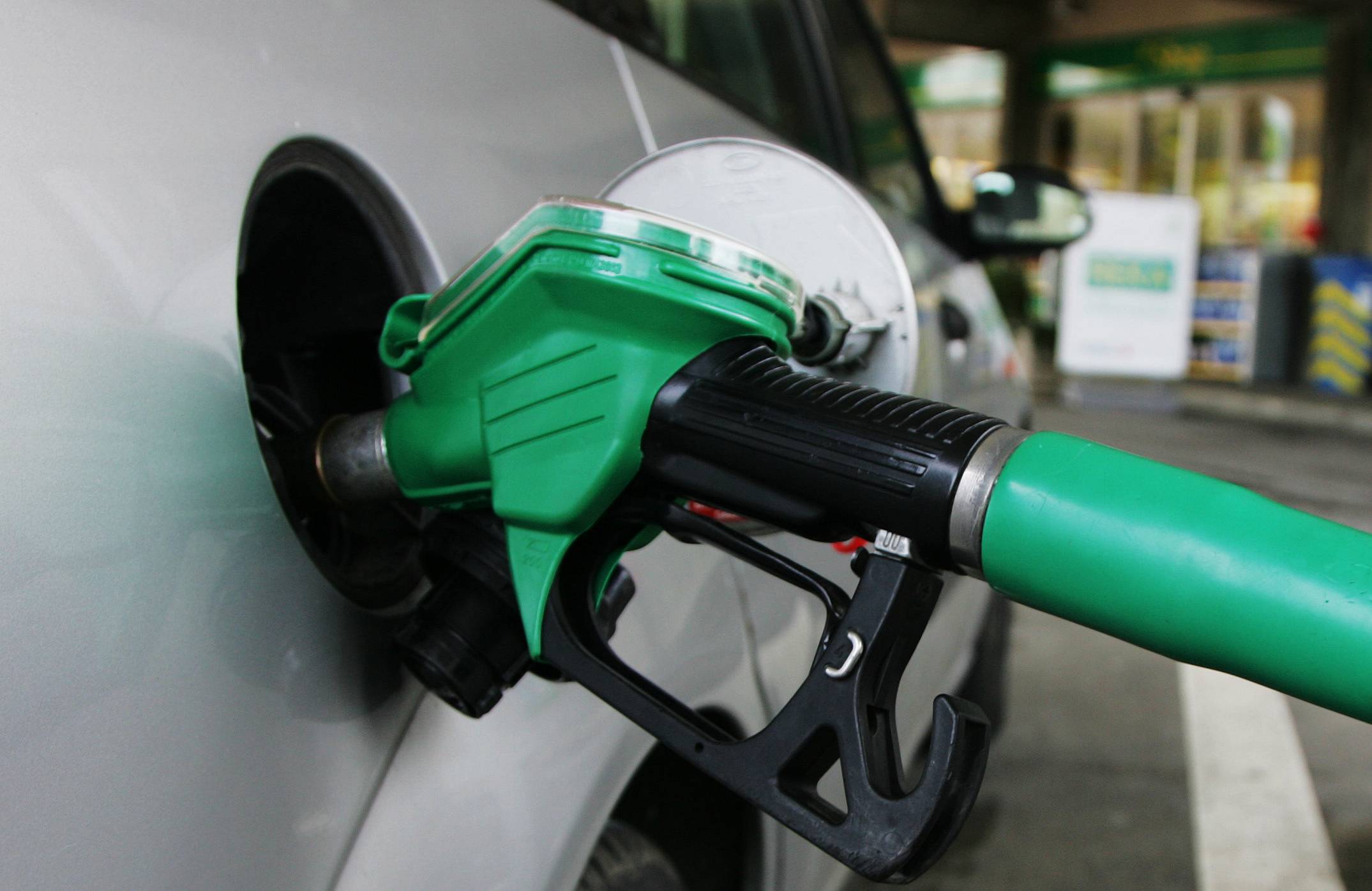
The pump price of petrol could drop further by between N5 and N8 per litre, operators in the downstream oil sector have said.

According to oil marketers, the crash in crude oil price warranted the recent slashes in petrol price by the Petroleum Products Pricing Regulatory Agency.

They noted that the current PMS cost of N123.5/litre to N125/litre could drop further when other operators join the Nigerian National Petroleum Corporation to start importing products.

Senior officials of the Independent Petroleum Marketers Association of Nigeria and the Petroleum Products Retail Outlets Owners Association of Nigeria, however, noted that this would happen when every downstream petrol importer begins to access the dollar at the same rate with NNPC.

The Chairman, Board of Trustees, IPMAN, who doubles as Group Executive Director, Nipco Plc, Aminu Abdulkadir, said that the price band for petrol would go down as far as crude oil prices stayed low.

Abulkadir, who said this in a television interview monitored by our correspondent in Abuja, noted that PPPRA would always provide a band because the price of the commodity was not definite.

He said, “Dealing with pump products is something that is not definite and that is why the PPPRA provides a band. A band is a range.

“Today, as the price is at N123.5/litre, I believe that by the time the market is totally free for marketers to import on their own, the band could still come lower than what it is by at least N5 to N8.”

On whether PPPRA would still determine the price of petrol for all dealers, he stated that the agency would mainly be saddled with the duty of providing a price band.

The IPMAN boss observed that the fluctuation in global crude oil prices would cause changes in petrol price in Nigeria.

Abdulkadir said, “They (PPPRA) will always partake in determining a band and not to give a fixed price. As the price of crude oil increases, the price of petroleum products will also increase but not as sharply as in an under-deregulated market.

“Different filling stations will sell at different prices and that is the essence of freeing the market. Definitely you will not get a fixed price but as the deregulation matures, the difference in the prices of retail outlets will not be up to N1.

He added, “By the time the industry understands the deregulation very well, you will find out that the difference between one retail outlet and the other will not be more than 50k to 80k because efficiency will come to play.”

On his part, the National President, PETROAN, Billy Gillis-Harry, told our correspondent that marketers would also want to see policy stability as the downstream sector sets for full deregulation.

Gillis-Harry, who admitted that petrol price would drop in a fully deregulated market, canvassed the domestic refining of petroleum products as against the massive dependence on imports.

He further noted that it was important for marketers to have access to loans in order to ensure the availability of products in all geographical zones of Nigeria to drive economic development.

The Punch

Continue Reading
Click to comment

Leave a Reply

Your email address will not be published. Required fields are marked *

Economy

CBN Increases ATM Daily Cash Withdrawal Limit to N100k

Published

on

By

The Central Bank of Nigeria (CBN) has increased cash withdrawal limits on all channels to N500,000 weekly for individuals and N5 million for corporates.

Announcing the policy revision in a circular on Tuesday, the regulator pegged automated teller machine (ATM) withdrawals at N100,000 daily, with a weekly cumulative withdrawal of N500,000.

The development is a major shift from tighter cash policy measures introduced under the previous administration.

In December 2022, the central bank, under Godwin Emefiele, its former governor, had directed deposit money banks and other financial institutions to limit over-the-counter cash withdrawals by individuals and corporate entities per week N100,000 and N500, 000, respectively.
The CBN’s latest policy reversal, also removed the cumulative deposit limit, saying the fee on excess deposit “shall no longer apply”.

According to the regulator, the policies form part of efforts to moderate the rising cost of cash management, address security concerns, and “reduce the potential for money laundering associated with the economy’s heavy reliance on cash”.

The bank said the policies, issued over the years in response to evolving circumstances in cash management, sought to reduce cash usage and encourage accelerated adoption of other payment options, particularly electronic payment channels.

However, with the “effluxion of time”, the apex bank said the need has arisen to streamline the policies’ provisions to reflect present-day realities.

“Consequently, effective January 1, 2026, the following cash-related policies, which are for mandatory compliance by all deposit-taking financial institutions in Nigeria, shall apply nationwide,” the circular reads.

“The cumulative deposit limit is hereby removed and the fee for excess deposit shall no longer apply.

“The cumulative weekly withdrawal limit across all channels shall be N500,000 for individuals and N5 million for corporates. Cumulative weekly withdrawals above these limits shall attract excess withdrawal fees as indicated in ‘5’ below.

“The special authorisation for withdrawal of N5 million and N10 million once monthly by individuals and corporates, respectively, shall no longer apply.

“Automated Teller Machine (ATM) withdrawal limit shall be N100,000 daily (per customer), subject to a maximum of N500,000 weekly. As indicated in ‘2’ above, cash withdrawals from ATMs and point of sale devices are part of the weekly withdrawal limit indicated therein.

“Excess cash withdrawals (withdrawals above the levels indicated in ‘2’ above) shall attract fees of 3 percent and 5 percent to individual and corporate customers, respectively, on the excess amount withdrawn. The fee shall be shared 40 percent to the CBN and 60 percent to the bank or financial institution.”

According to the circular, signed by Rita Sike, CBN’s director of financial policy and regulation department, said all currency denominations “may be loaded in ATMs”.

However, the CBN retained the limit on over-the-counter encashment of third-party cheques at N100,000.

“Account holders are advised that any withdrawal under this section will form part of the cumulative weekly set in ‘2’ above”.

“Banks shall render the following monthly returns (in a format to be advised) to the respective supervisory departments (Banking Supervision Department, Other Financial Institutions Supervision Department and Payments System Supervision Department) as applicable:

“a . Returns on cash withdrawal transactions above the specified limit;

“b. Returns on Cash Deposits

“Deposit Money Banks (DMBs) shall create separate accounts to warehouse processing charges collected on cash withdrawals above the limits.

“The following accounts/entities are exempted from the application of sections 2 and 5 of this circular:

“i. Revenue generating accounts of federal, state, and local governments; and

ii. Accounts of microfinance banks and primary mortgage banks with commercial and non-interest banks.

The CBN also said the exemption of embassies, diplomatic missions and aid-donor agencies from specific cash policies “shall no longer apply”.

Continue Reading

Economy

CBN Retains Interest Rate at 27%

Published

on

By

The Monetary Policy Committee of the Central Bank of Nigeria has maintained the benchmark interest rate at 27 per cent, extending its pause on monetary tightening.

The CBN Governor, Olayemi Cardoso, announced the decision on Tuesday at the end of the committee’s 303rd meeting in Abuja.

Cardoso said, “The Committee decided by a majority vote to maintain the monetary policy stance,” indicating that members were not yet convinced that current economic conditions warranted another reduction.

The move follows the 50-basis-point cut implemented in September 2025, the only rate reduction since the tightening cycle began under the current CBN leadership.

It also marks the fourth consecutive hold this year.

The MPC had raised rates six times in 2024 amid surging inflation and currency pressures.

The Punch

Continue Reading

Economy

FG Stops Proposed 15% Import Duty on Diesel, Petrol

Published

on

By

The Nigerian Midstream and Downstream Petroleum Regulatory Authority (NMDPRA), on Thursday, announced discontinuation of the planned 15 per cent duty on imported petroleum products.

NMDPRA’s Director, Public Affairs Department, George Ene-Ita, conveyed the development in a statement while warning the public to shun panic buying.

President Bola Tinubu, on October 29, approved an import tariff on petrol and diesel, a policy expected to raise the landing cost of imported fuel.

The President’s approval was conveyed in a letter signed by his Private Secretary, Damilotun Aderemi, following a proposal submitted by the Executive Chairman of the Federal Inland Revenue Service, Zacch Adedeji.

The proposal sought the application of a 15 per cent duty on the cost, insurance, and freight value of imported petrol and diesel to align import costs with domestic market realities.

Implementation was slated to take effect on November 21, 2025.

The policy aimed to protect and promote local refineries like the Dangote Refinery and modular plants by making imported fuel more expensive.

While intended to boost local production, it is also expected to increase fuel costs, which could lead to higher inflation and transportation prices for consumers.

Experts have argued that the move could translate into higher pump prices for consumers, with some estimating an increase of up to N150 per litre or more.

In an update, however, NMDPRA said the government was no longer considering going ahead with implementing the petrol import duty.

“It should also be noted that the implementation of the 15% ad-valorem import duty on imported Premium Motor Spirit and Diesel is no longer in View,” the statement read in part.

Meanwhile, the NMDPRA also assured all that there is an adequate supply of petroleum products in the country, within the acceptable national sufficiency threshold, during this peak demand period.

“There is a robust domestic supply of petroleum products (AGO, PMS, LPG, etc) sourced from both local refineries and importation to ensure timely replenishment of stocks at storage depots and retail stations during this period.

“The Authority wishes to use this opportunity to advise against any hoarding, panic buying or non-market reflective escalation of prices of petroleum products.

“The Authority will continue to closely monitor the supply situation and take appropriate regulatory measures to prevent disruption of supply and distribution of petroleum products across the country, especially during this peak demand period.

“While appreciating the continued efforts of all stakeholders in the midstream and downstream value chain in ensuring a smooth and uninterrupted supply and distribution, the public is hereby assured of NMDPRA’s commitment to guarantee energy security,” the statement added.

Continue Reading

Trending