Connect with us

Business

FEC Approves Increase in VAT from 5% to 7.2%

Published

on

The Federal Executive Council on Wednesday approved an increase in the Value Added Tax (VAT) payable in Nigeria.

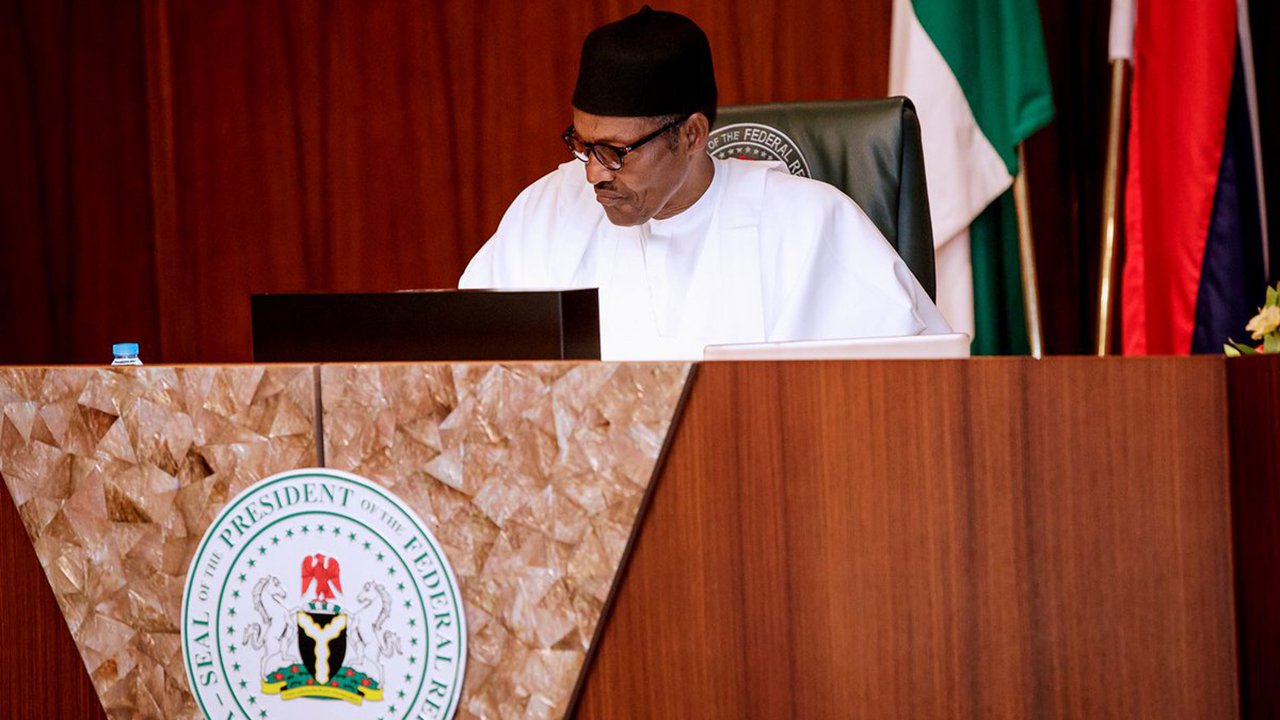
The Minister of Finance, Zainab Ahmed, announced the approval while briefing journalists after the FEC meeting presided by President Muhammadu Buhari.

Mrs Ahmed said the VAT was increased from the current 5 per cent to 7.2 per cent.

“We also reported to council and council has agreed that we start the process towards the increase of the VAT rate.

“We are proposing and council has agreed to increase the VAT rate from 5 per cent to 7.2 per cent,” she said.

Mrs Ahmed gave an increase in revenue accruable to state governments as one of the reasons for the increase.

“This is important because the federal government only retains 15 per cent of the VAT, 85 per cent is actually for the states and local government and the states need additional revenue to be able to meet the obligations of the minimum wage.”

The minister, however, said the implementation will not be immediate as there was the need to amend the current law.


“This process involves extensive consultations that needs to be made across the country at various levels and also it will involve the review of the VAT Act.

“So, it is not going to be implemented immediately until the Act is reviewed,” she said.

She said the increase in the VAT was also included in the government’s revenue projection for 2020.

“Following these assumptions, the total revenue estimate in the sum of N7.5 trillion for the year 2020 and N2.09 trillion that will be accruing to the federation account and the VAT respectively.

“There will of course be the distribution to the three tiers of government based on the statutorily revenue sharing formula as defined in the constitution and to this effect, it means the federal government will be receiving proposed aggregate of N4.26 trillion from the federal account and the VAT pool, while the states and the local government are expected to receive N3.04 trillion and N2.27 trillion respectively,” she said.

Mrs Ahmed also spoke on the government’s planned expenditure for 2020. She said about N2.45 trillion has been proposed for debt servicing.

“The expenditure for the year 2020 is in the total sum of N10.07 trillion. This is three per cent less than the approved expenditure in the 2019 budget that has been passed into law. The total expenditure includes statutory transfers, non-debt recurrent expenditure such as salaries and pensions and also the Social Intervention Programme.

“The 2020 budget has a debt service estimated at N2.45 trillion and a sinking fund to retire maturing obligations issued to local contractors and other creditors in the sum of N296 billion. So there is a total sum of N3.43 trillion that is provided for personnel and pension cost inclusive of N218 billion for the top 19 government-owned enterprises in the country. This represents an increase of N453 billion over the 2019 approved budgetary expenditure. This also implies a 40 per cent of this recurrent expenditure to the projected revenue.

“The budget deficit is projected at N2.15 trillion in the year 2020 and this is lower than what was approved in the 2019 budget which was N2.47 trillion.

“Let me state that these projections include drawdowns on project tied loans and these represent 1.51 per cent of estimated gross domestic product (GDP). This is well below what is allowed by the Fiscal Responsibility Act of 2007 which is still put at 3 per cent.

“I want to add that council approved our presentation and so the next phase for us is to consult with the National Assembly and then the Medium Term Expenditure Framework (MTEF) to the National Assembly for their own view and subsequent approval,” she said.

The 2020 budget proposal is expected to be submitted to the National Assembly when they reconvene from their recess later this month.

Senate President Ahmed Lawan has said the National Assembly would pass the budget before the end of the year if it receives it early from the Executive.

Premium Times

Continue Reading
Click to comment

Leave a Reply

Your email address will not be published. Required fields are marked *

Business

ConOil, TotalEnergies Sign Massive Production Contract to Boost Nigeria’s Oil and Gas Output

Published

on

By

By Eric Elezuo

In a bid to boost Nigeria’s oil and gas output, Conoil Producing Limited has partnered Total Energies Limited to sign a massive production contract.

The contract-signing ceremony, which took place on Thursday, at LA DEFENSE, in Paris, France, saw the Chairman of Conoil Producing, and Commander of the French Légion d’Honneur (CdrLR), Dr. Mike Adenuga Jr., signing on behalf of Conoil while the Chairman and Chief Executive Officer of TotalEnergies, Mr. Patrick Pouyanné, signed for TotalEnergies, in whose headquarters office served as the venue of the event.

Details soon…

Continue Reading

Business

Tinubu’s 15% Import Duty on Petrol is Good for Nigeria, Says Rewane, Marketers Disagree

Published

on

By

Popular economist and chief executive of Financial Derivatives Company Limited, Bismark Rewane, has explained that President Bola Ahmed Tinubu’s approval of a 15 per cent import duty on petrol and diesel is good for the country.

Rewane, speaking in an interview on Channels TV, said the import tariff is designed to encourage local production of petroleum products.

According to the policy, it is aimed to discourage imports and retain jobs in Nigeria.

“Petrol import duty is good for the country. Why is it good? Because it encourages domestic production. Anytime you import, you are actually creating jobs for other countries rather than your own country. Basically, import protection is good,” he said.

The move means that Nigerians would have to pay more for fuel consumption when it is implemented.

Recently, data from the Nigerian Midstream and Downstream Petroleum Regulatory Authority showed that 69 per cent of petrol consumed in Nigeria is imported, while 31 per cent is locally produced.

The policy places Dangote Refinery in an advantageous position in the country’s oil and gas sector.

However, Nigerians have kicked against the move, saying it would cause more hardship in the country.

This comes as an All Progressives Congress chieftain in Delta State, Ayiri Emami, on Thursday urged President Tinubu to withdraw the 15 per cent import duty tariff because it will bring more hardship for Nigerians.

Meanwhile, Petroleum marketers have warned that the pump price of Premium Motor Spirit, popularly called petrol, could exceed N1,000 per litre following the 15 per cent ad valorem import tariff on fuel imports.

The new policy, which takes effect after a 30-day transition period expected to end on 21 November 2025, is part of the government’s strategy to protect local refiners and reduce the influx of cheaper imported products that threaten domestic refining investments.

However, marketers say the move could backfire and push retail prices beyond the reach of average Nigerians.

Commenting in a telephone interview on Thursday, multiple depot operators with knowledge of the matter, who spoke on condition of anonymity, said the decision could further raise the price of petrol, which already sells for around N920 per litre, in many parts of the country.

“As it is, the price of fuel may go above N1,000 per litre. I don’t know why the government will be adding more to people’s suffering,” one of the depot operators said.

Another depot operator added, “Unfortunately, some of the importers are working in alignment with Dangote, which is why the last price increase was general; all players raised their prices at once. Let’s just wait and see what happens next.”

Another operator added that without a clear framework to stabilise market forces and ensure fair competition, the new import duty could trigger another round of price hikes and worsen the hardship faced by consumers.

The National Vice-President of the Independent Petroleum Marketers Association of Nigeria, Hammed Fashola, also agreed that the tariff had its implications, saying it might lead to a price surge.

Fashola said the policy had both positive and negative effects, adding that it could discourage importation while promoting local refining.

The IPMAN leader opined that some marketers moght perceive it as an opportunity to monopolise the sector in favour of Dangote and a few other refineries.

“The 15 per cent tariff on imported fuel has its own implications. Maybe the price will go up, and equally, it will discourage importers from bringing in fuel if it becomes too costly.

“But it has both negative and positive effects on the sector. I see that the government is trying to protect local refiners, but it will have its own implications because people will see it as a way of monopolising the industry for certain people. At the same time, the government aims to protect the local refiners.”

However, Fashola stressed that the failure of the local refiners to supply enough fuel into the domestic market could trigger a fuel crisis.

“If the local refiners fail, it will have its own implications. It may lead to scarcity, and people will not have an alternative. So, it has both positive and negative effects. That’s the way I see it,” he added.

Continue Reading

Business

FirstBank Partners Verve to Issue Free Debit Cards in Nationwide Promo

Published

on

By

First Bank of Nigeria Limited (FirstBank), Nigeria’s premier and leading financial inclusion services provider, has announced the launch of the Verve Flash Promo, a special initiative rewarding customers with free Verve cards.

The campaign, which commenced on 6 October 2025, and will run until 30 January 2026, is exclusively targeted at FirstBank customers whose ATM cards have expired.

The free cards will be issued daily to 131 customers on a first-come, first-served basis across the Bank’s branches, nationwide. FirstBank’s unwavering commitment to convenience, accessibility, and customer satisfaction.

Speaking on the rewards to FirstBank customers, Chuma Ezirim, the Group Executive, e-Business and Retail Products at FirstBank, said: “The Verve Flash Promo is not just about rewarding customers with free verve debit cards; it is about celebrating our legacy of 131 years of trust, resilience, and innovation in the Nigerian financial services industry. At FirstBank, we remain committed to providing customer-centric solutions that enable secure, seamless, and convenient payment experiences. Partnering with Verve International on these initiatives, including the Verve Good Life promo, underscores our shared vision of deepening financial inclusion while rewarding our loyal customers for their continuous patronage.”

Also commenting, Vincent Ogbunude, Managing Director, Verve International, noted:

“Through strategic collaborations like this with FirstBank, we continue to demonstrate Verve’s commitment to enhancing access to seamless payment solutions for every Nigerian. The Verve Flash Promo not only rewards loyal customers but also reinforces our vision of making everyday transactions more rewarding, secure, and convenient. As we extend the Good Life Promo, we remain steadfast in our goal of deepening financial inclusion while delivering real value to Verve cardholders across the country.”

Meanwhile, the ongoing Verve Good Life promo, designed to reward Verve debit card holders for using their cards at specific merchant points, has been extended to 30 November 2025.

During the period, Verve Card holders enjoy 10% cashback at The Place Restaurant, Quickteller, Buypower, Filmhouse, AlliExpress, Addide Supermarkets, and Chowdeck app every Thursday to Sunday.

Verve cardholders can now enjoy a 10% cashback on the Google Play Store any day of the week throughout the Good Life Promo, which runs until 30 November 2025. Moreso, every transaction made with a Verve card whether on ATMs, POS terminals, or online platforms automatically earns customers a chance to win up to ₦1,000,000.

Continue Reading

Trending