Connect with us

Featured

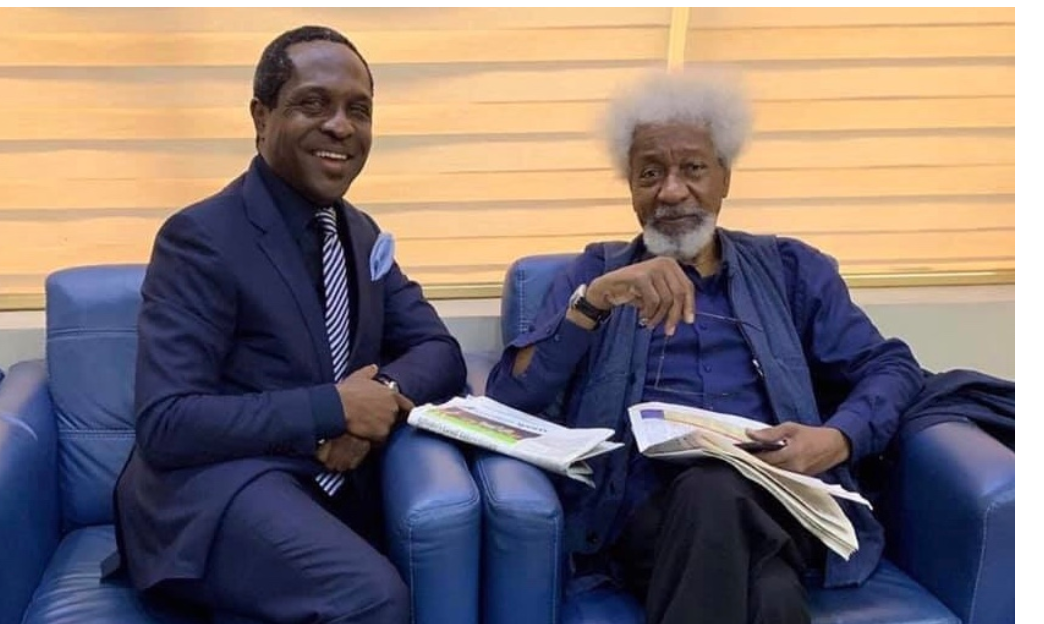
Soyinka’s Son Speaks “My Father Has Earned Respect”

Published

on


Dear Mr. Tonye Cole: Thank You For Standing Up For Respect, By Olaokun Soyinka

Mr. Tonye Cole
Seat 1A
Air Peace
Abuja – Los
c/o Instagram via Twitter

Dear Mr. Cole,

I am writing to thank you for standing up for my father, and for respect. You ignited a social media storm that appears to have had even more impact on aviation matters than Iran’s recent downing of the U.S.A drone. Professor Soyinka’s inadvertent trespass into someone else’s ‘seatspace’ has triggered numerous unguided missiles which are flying all over social media.

My dad travels a lot and at his age we, his offspring, have been advising him to cut down. I hope if I get to his ripe old age I will still be as independent as he is, though he does have the occasional mishap – I’m sure this is not the first time he’s occupied the wrong seat. It’s not a big deal and most frequent flyers have done it. I’ve not asked him yet, but if it was deliberate then, as my wife points out, he was probably trying to keep away from the aisle to avoid the inevitable ‘go-slow’ as people stopped to shake his hand. Most likely it was mere preoccupation with other matters.

The young man whose seat it was may have had a specific reason to insist on having his seat. He was within his rights, and WS would be last person to make an issue of it. My irritation, however, is reserved for the social media warriors.

Some vehemently defended the right of the young man to claim his seat. They hailed him for bravely standing up to oppression and divined how a young WS himself might have reacted in a similar situation. (He is an activist but a gentleman, so it is most likely he would have graciously given way to an elder who mistakenly sat in his seat). Some criticised WS for attempting to callously deprive a youth of the fruits of his hard-earned money. One wag even suggested he might as well have insisted on having the pilot’s seat.

Others castigated your good self for mentioning the t-shirt and tattoo. They poured venom on the passengers who dared to suggest that Prof. should have been allowed to stay where he was. Thus, online, the non-drama transformed into a tragicomic metaphor for the problem of Nigeria. Soyinka representing, to some lazy thinkers, the oppressive ruling class that has laid waste to the country, now trying to deprive the young of their dues even in the confines of an airplane cabin. The deprived seat-owner meanwhile representing our virile but dispossessed young Nigerians, angry and determined to grab and hold on to whatever they can. Not prepared to give an inch, or deference, to any venerable agent of the wasted generation. The cabin controversy had gone from local to international.

Do our online youths these days see it as a badge of honour to avoid the courtesies that we traditionally extended to our elders? Why do they insist on jumping to the most uncharitable conclusion? (‘It was deliberate. WS commandeered the seat’). Why did people insist on misinterpreting the events? Can’t an elderly man make a mistake?

I believe the learning point of this controversy lies in understanding the difference between right and entitlement. The seat owner had a right – that is enforceable. But the elder though he or she is entitled to some deference and respect, can only hope for it. In this case it was not given and WS, unhesitatingly moved seat.

To the online outraged, I would point out that those who like to see an elder given his due deference are entirely within their rights to judge the young man. And if they decide to add some profiling (the t-shirt, tattoo, face cap), please just ‘chop it’! He passed up a small opportunity to bestow an act of kindness, and commentators happily pointed out his emblems of youthful disregard for convention. Afterall, he had just disregarded a convention that many hold dear.

Extending courtesies based upon age such as offering your seat in a crowded bus or lifting a heavy bag is not just a matter of convention or kindness but common sense. We will all become that person: a bit more frail every passing year, a little unsteady, occasionally absent minded, frustratingly blurred of vision. We will inevitably need to rely on considerate fellow passengers or observant bystanders. We hope they will anticipate and help. The future seems far away for youths, but soon enough it will be today’s young ones who are the elders. They may one day have to struggle to their feet to make way for youths bent on claiming their rights.

I have not commented on the fact that beyond being an elderly man, WS has served his country in a way that many would do well to emulate. I will leave that for others to go into. Our garrulous online youths, however, should not take freedom of expression for granted. In his day, the dictator Abacha tightly controlled the then novelty called the Internet. People spent decades in jail, being tortured for merely hinting at criticism of the military ruler. Our freedom to hold our leaders accountable is a precious right bought by the heroism of many; some died, some are still living. So, as you fight your battles of today, please do so with a sense of history.

On that historical note I will finish with an anecdote about Wole Soyinka and another airline seat. He returned from exile to Nigeria in 1998 for the very first time after Abacha’s demise. Although he had departed in secret four years earlier on the back of a motorcycle along a forest path, he returned home more publicly by plane. His first-class seat was given to him, free, by KLM. I know this because I arranged it. After explaining the situation to a senior manager, the airline did not hesitate to offer to fly him back on that momentous occasion. I accompanied him on the flight and proudly watched as grateful and admiring compatriots made their way up the aisle to get a glimpse of him or to thank him for his steadfast years-long role in opposing the military junta at great personal cost. Not all the cabin crew were aware of the intricacies of Nigerian politics and the historic nature of the occasion. The commotion soon got the message through and then even I got the VIP treatment (i.e. endless Champagne). I’m sure if WS had insisted on sitting in the pilot’s seat they would have obliged. Wole Soyinka was given respect freely – he had not demanded it, he earned it.

On landing, the joyous, singing throng that met him at the airport arrivals hall was a sight that I will never forget. Now he was seated shoulder high.

I recount this not as a boast. Rather, as a reminder to our young online activists that respect for our senior citizens is also about history – you just don’t know the story behind the seats your elders have occupied, even before you were born.
So, once again, thank you for reminding us about respect, Mr. Tonye Cole.

With kind regards

Olaokun Soyinka.

Continue Reading
Click to comment

Leave a Reply

Your email address will not be published. Required fields are marked *

Featured

Gumi: Timi Frank Urges Trump to Halt Security Cooperation with Nigeria

Published

on

By

A political activist and former Deputy National Publicity Secretary of the All Progressives Congress (APC), Comrade Timi Frank, on Wednesday, urged the United States government and President Donald Trump to halt intelligence sharing and security cooperation with the Nigerian government, citing recent comments attributed to Islamic cleric Sheikh Ahmad Gumi on banditry and terrorism.

Frank, who is the ULMWP Ambassador (East Africa and Middle East), made the call in a statement issued in Abuja, saying the remarks credited to Gumi suggesting that Nigerian authorities may know the identities and locations of bandits raise serious questions about the handling of insecurity in the country.

“If it is true that the government knows the names of these bandits, knows where they are located and even knows their camps, then Nigerians deserve to know why decisive action has not been taken,” he said.

He argued that the continued rise in kidnappings and killings across the country suggests that insecurity has escalated despite claims that security agencies possess intelligence about those responsible.

According to him, the continued deterioration of security despite international support raises suspicion that insecurity may be benefiting some individuals, alleging that insecurity in the country has become a “profitable business” for some actors within the system.

“Kidnappings have increased. Killings have escalated. Insecurity has worsened across the country. If a government truly knows the identities and locations of terrorists and bandits yet fails to act decisively, then that raises serious concerns,” he said.

He added: “They want the insecurity to persist because as long as insecurity continues in the country, it’s an opportunity for them to rig the 2027 general elections in Nigeria.

“They don’t care about Nigerians that are dying. They don’t care about Nigerians that are being kidnapped. They don’t care about the well-being of the people. They don’t care about the suffering of the people. They don’t care about good governance. All they care about is how they will rig themselves back to power using insecurity as cover.”

He urged the United States to exercise caution in its dealings with the administration of President Bola Ahmed Tinubu, particularly in the area of intelligence while asserting that “the government of today appears to be friends with terrorists.”

“I am calling on the United States government to be very careful in its dealings with the current Nigerian administration. The U.S. should suspend intelligence sharing and security cooperation with the Nigerian government and its security chiefs,” he said.

The activist alleged that despite the security assistance Nigeria has received from international partners, the situation on the ground has continued to deteriorate.

“There appears to be a pattern where the government continues to receive security assistance and aid from the United States and other international partners, yet insecurity keeps worsening,” he said.

He said Nigerian soldiers were still losing their lives in the fight against insurgency and banditry despite military equipment and support provided by foreign partners.

“Today, Nigerian soldiers are dying in large numbers despite the equipment and support provided by the United States and other countries. With the level of support Nigeria has received, the war against insecurity should have made significant progress,” he said.

The activist called on President Trump to take decisive steps against terrorist groups operating in Nigeria and act independently if necessary.

“We are appealing directly to President Donald Trump to take a strong and decisive stand. If the United States truly wants to help Nigeria defeat terrorism and make the country great again, it should be prepared to act firmly against the terrorists responsible for the violence,” he said.

He added that such actions should not depend solely on cooperation with Nigerian authorities.

“The United States should be ready to take bold steps in confronting terrorist networks threatening Nigeria, even if it means acting independently like it did on Christmas eve against those responsible for the violence,” he said.

Frank who currently serves as the United Liberation Movement for West Papua (ULMWP) Ambassador to East Africa and the Middle East as well as Senior Advisor to the Global Friendship City Association (GFCA), USA, also called on the United States Congress to pay closer attention to developments in Nigeria and support measures that would address insecurity and strengthen democratic processes.

He further urged the United States to support credible democratic processes in Nigeria, noting that free and fair elections would help strengthen governance and stability.

According to him, decisive international engagement could help address the security challenges facing the country and support efforts to restore stability.

“If the United States truly wants to assist Nigeria, it should help ensure peace, security and credible democratic processes. That is how Nigeria can move forward and become stable and prosperous again,” he said.

He added that strong international support could help Nigeria overcome insecurity and rebuild confidence in governance.

“With the right actions and international support, Nigeria can defeat terrorism, restore stability and move toward a future where the country can truly become great again,” he said.

Continue Reading

Featured

Business Series: UBA to Spotlight Africa’s New Generation of Female Leaders

Published

on

By

Africa’s Global Bank, United Bank for Africa (UBA) Plc, is set to host a special edition of its impactful quarterly UBA Business Series, which be specifically focused on celebrating and empowering the modern woman with the theme: “gen w – ‘The Evolved Woman’

The session, which is scheduled to hold on Thursday, March 12, 2026 from 11AM at UBA House, Lagos, will bring together an array of accomplished female leaders and professionals who will share insights, experiences and practical strategies for navigating ambition, leadership and growth in today’s dynamic environment.

The session will also be streamed live across all UBA digital platforms, and interested participants can register to attend virtually or in person via this link: on.ubagroup.com/tfig.

This edition of the Business Series aims to move the conversation around women intensely forward, highlighting a new generation of women who are not simply seeking opportunities but confidently creating them. The discussion will explore how women today are shaping industries, leading businesses, and redefining success on their own terms.


The event will feature an inspiring lineup of speakers, including entrepreneur and founder of ORÍKÌ Group, Joycee Awosika; media personality & entrepreneur, Tomike Adeoye; entrepreneur and founder of Fine Funky, Olufunke Davies; and award-winning Broadcaster, Ayo Mario-Ese. The conversation will be hosted by media personality and actor, Tobi Bakre.


Panelists’ will share their personal journeys and perspectives on navigating professional spaces, building resilient businesses, embracing authenticity and redefining leadership as women in a rapidly evolving global landscape.

Speaking ahead of the event, UBA’s Group Head, Marketing and Corporate Communications, Alero Ladipo, explained that the special edition of the Business Series reflects the bank’s firm commitment to supporting women for the critical roles they play in driving economic growth and innovation across Africa.

She said, “The modern African woman is evolving in remarkable ways. She is bold, visionary, and intentional about the spaces she occupies. Through this edition of the UBA Business Series, we want to celebrate women while also creating a platform where meaningful conversations around leadership, ambition and opportunity can take place.”

The quarterly UBA Business Series has become a key knowledge-sharing platform designed to equip entrepreneurs, professionals and business leaders with insights, tools and strategies needed to grow sustainable enterprises as well as navigate the evolving business landscape.

United Bank for Africa is one of the largest employers in the financial sector on the African continent, with 25,000 employees group-wide and serving over 45 million customers globally. Operating in twenty African countries, the United Kingdom, the United States of America, France and the United Arab Emirates, UBA provides retail, commercial and institutional banking services, leading financial inclusion and implementing cutting-edge technology.

Continue Reading

Featured

Class, Glamour As Global Statesman, Chief Olusegun Obasanjo Celebrates 89th Birthday

Published

on

By

By Ruth Akpan

The historic city of Abeokuta, the capital of Ogun State, played host to an extraordinary gathering of statesmen, diplomats, scholars, traditional rulers and business leaders, who converged at the iconic Olusegun Obasanjo Presidential Library to celebrate the 89th birthday of Nigeria’s former President and globally respected elder statesman, Chief Olusegun Obasanjo.

The remarkable occasion, marked by a high-profile commemorative lecture, transcended the boundaries of a mere birthday celebration. Instead, it blossomed into a national intellectual convocation reflecting the towering stature of the former Nigerian leader whose enduring influence continues to shape political thought, diplomacy, and continental discourse across Africa and beyond.

The atmosphere at the majestic venue was one of intellectual engagement and dignified celebration as eminent personalities gathered to honour the remarkable life and enduring legacy of Olusegun Obasanjo. Gracefully by his side throughout the memorable gathering was his wife, Mrs. Bola Obasanjo, while members of the Obasanjo family, led by his daughter Iyabo Obasanjo, joined well-wishers in celebrating the patriarch whose decades of service have left an indelible mark on Nigeria and the African continent.

Organised by the Centre for Human Security and Dialogue, the event featured a distinguished lecture titled “The Global Africa Enlightenment: From Chains to Renaissance,” a thought-provoking theme that resonated profoundly with Africa’s historical journey—from centuries of enslavement and colonial subjugation to a future defined by unity, knowledge, and purposeful leadership.

The lecture provided a powerful moment of reflection on Africa’s past struggles while inspiring renewed commitment toward building societies anchored in justice, innovation, and institutional strength. The discourse also emphasized that Africa’s progress ultimately depends on strengthening democratic institutions, nurturing visionary leadership, and cultivating societies that uphold fairness, creativity, and collective advancement.

In his keynote address on the lecture’s theme, His Excellency Jean-Robert Pillard, Haitian Ambassador Extraordinary and Plenipotentiary to the Republic of South Africa, observed that history binds people together while culture reminds humanity of its shared identity. He noted that culture should not be viewed merely as nostalgic memory but as compelling evidence that the separation among African peoples was largely political rather than spiritual.

According to the ambassador, the concept of the Global Africa Enlightenment is not a newly invented philosophy but rather a reunion of peoples who share common ancestry, history, and heritage. While history preserves memory, he stressed, destiny demands action.

He further noted that the call for a Global Africa Enlightenment by Olusegun Obasanjo represents far more than poetic expression; rather, it is a clear policy direction and intellectual blueprint for the renewal and revitalisation of African civilisation.

The intellectual depth of the gathering was further enriched by scholarly responses delivered by Professor Oyedunni Arulogun, Vice-Chancellor of Chrisland University, and Professor Eyitope Ogunbodede, former Vice-Chancellor of Obafemi Awolowo University, Ile-Ife. Their reflections expanded on the lecture’s themes, examining Africa’s role in global intellectual discourse and the imperative for visionary leadership, innovation, and education.

Additional contributions came from student representative Rehinat Ololude, the Alake and Paramount Ruler of Egbaland, Oba Adedotun Aremu Gbadebo, and Dr. Eke Agbai, whose remarks added intergenerational perspectives to the profound discussions of the day.

One of the significant highlights of the event was the presentation of two scholarly works authored by the celebrant himself. With characteristic intellectual passion, Chief Obasanjo formally presented his books titled “Lest We Forget: Slavery, Slave Trade, Emancipation, and Reparation” and “Nigeria: Past and the Future.”

The books, which delve into the complex historical realities of slavery and Africa’s political evolution, reflect Obasanjo’s enduring commitment to documenting history while offering profound insights into Nigeria’s developmental trajectory and the continent’s future. 

In a stirring tribute, the Governor of Ogun State, Prince Dapo Abiodun described the celebrant as “an enduring study in leadership,” noting that his influence extends far beyond Nigeria to the wider African and international community. Reflecting on Obasanjo’s remarkable diplomatic engagements, the governor highlighted his numerous interventions in regional conflicts, particularly in countries such as Liberia, Ethiopia, and the Democratic Republic of the Congo, where he served as mediator and peace envoy.

“Beyond Nigeria, Baba, your influence has extended across Africa and the wider international community, particularly in the area of conflict resolution and diplomacy.

“Through the African Union, the United Nations, and various global initiatives, you have consistently promoted dialogue as a pathway to peace and stability.”

Governor Abiodun further emphasised the importance of studying exemplary leaders such as Obasanjo, especially for younger generations across Africa.

“Young Africans must study figures like Baba, not merely to celebrate their achievements but to understand the principles that guide their decisions. They must learn how leadership, when driven by purpose and service, can influence the direction of a nation and even a continent,” he added.

The governor also reflected on Obasanjo’s historical role as Nigeria’s military Head of State, recalling how the nation firmly opposed apartheid and colonial rule under his leadership. According to him, Obasanjo strongly believed that the freedom of one African nation was intrinsically linked to the freedom of all African peoples.

Goodwill messages also poured in from across Nigeria and the international community.
Former President Goodluck Jonathan and President of the African Development Bank, Akinwumi Adesina sent congratulatory messages praising Obasanjo as an “apostle of peace” whose commitment to dialogue and stability has helped shape Africa’s diplomatic landscape.

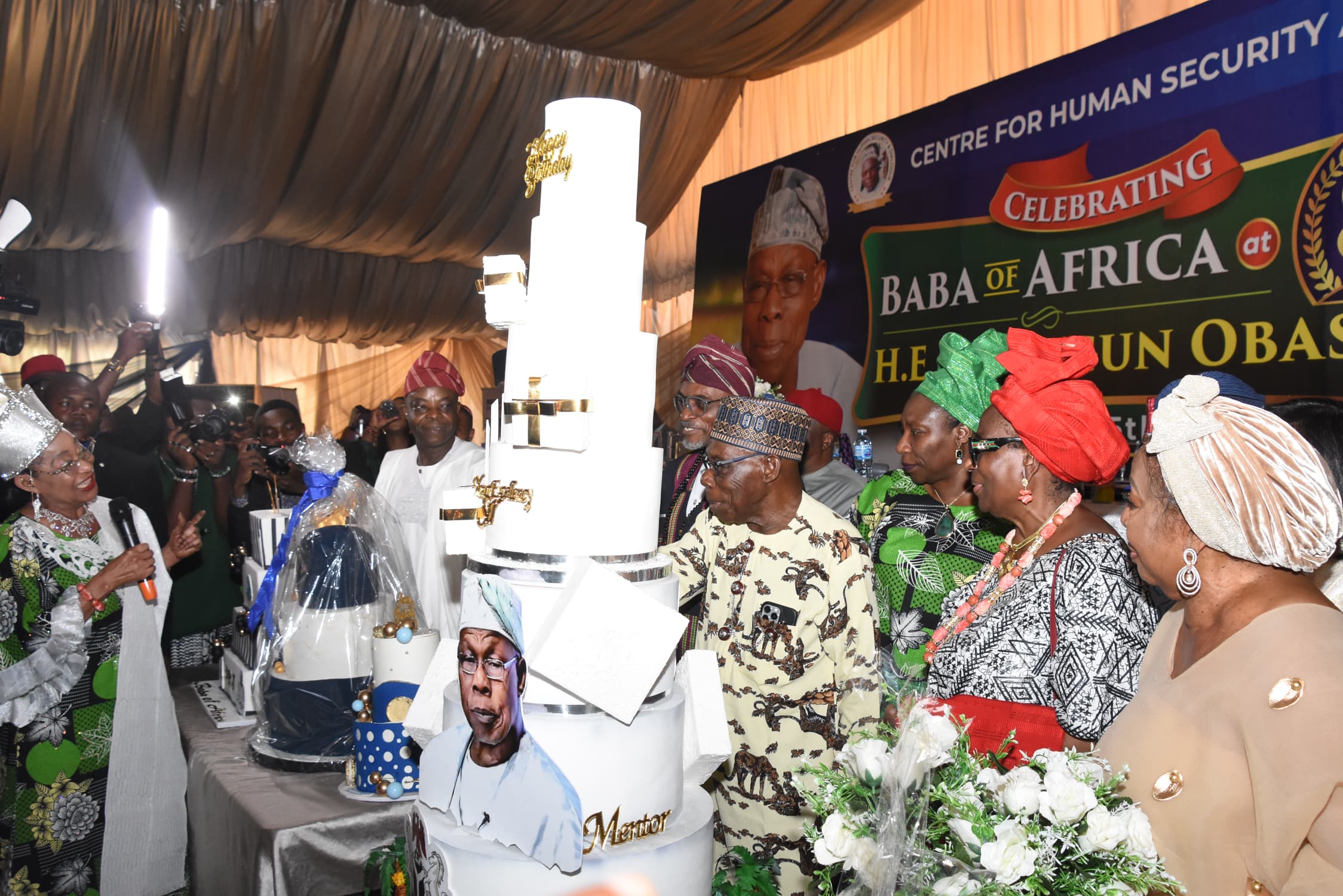
The ceremonial cutting of the beautiful birthday cake was coordinated by respected business leader and former minister, Nike Akande as the celebrant, flanked by family members and friends marked the joyous moment.

Also present at the occasion were the Governor of Ogun State, Prince Dapo Abiodun, Deputy Governor of Ogun State, Noimot Salako-Oyedele, members of the Ogun State Executive Council, former Governors of Ogun State Gbenga Daniel and Ibikunle Amosun, former Governor of Osun State, Olagunsoye Oyinlola, former Governor of Kano State, Rabiu Musa Kwankwaso, renowned political economist Pat Utomi and former presidential candidate Peter Obi.

Adding regal splendour to the occasion was the presence of eminent traditional rulers including the Olubadan of Ibadanland, His Imperial Majesty Rasidi Adewolu Ladoja; the Alake of Egbaland, Oba Adedotun Aremu Gbadebo; and the Olowu of Owu Kingdom, His Royal Majesty Saka Adelola Matemilola.

Following the intellectually stimulating lecture, guests proceeded to a lavish reception held at the OOPL Marquee where the atmosphere transformed into one of celebration, camaraderie and conviviality.

Serving as Chairman of the occasion, the former Governor of Osun State, Olagunsoye Oyinlola delivered warm and reflective opening remarks that set the tone for the event, describing Chief Obasanjo as a visionary leader whose contributions to Nigeria, Africa, and the global community remain immeasurable.
Equally moving was the glowing tribute delivered by Erelu Abiola Dosunmu, who paid heartfelt homage to the celebrant, describing him as a courageous leader, visionary statesman, and tireless advocate for peace and African unity.

The event was attended by distinguished personalities including former Commonwealth Secretary-General Emeka Anyaoku; the elegant society matriarch, Erelu Abiola Dosunmu; respected entrepreneur and founder of Chisco Motors, Chidi Anyaegbu; and the ever-gracious former senator Florence Ita‑Giwa, among numerous other eminent personalities.

The evening was enlivened by captivating musical entertainment from legendary juju maestro Ebenezer Obey, whose timeless melodies filled the air with nostalgia and elegance.

Continue Reading

Trending