Connect with us

Africa

AFCON security beefed after Cairo explosion

Published

on

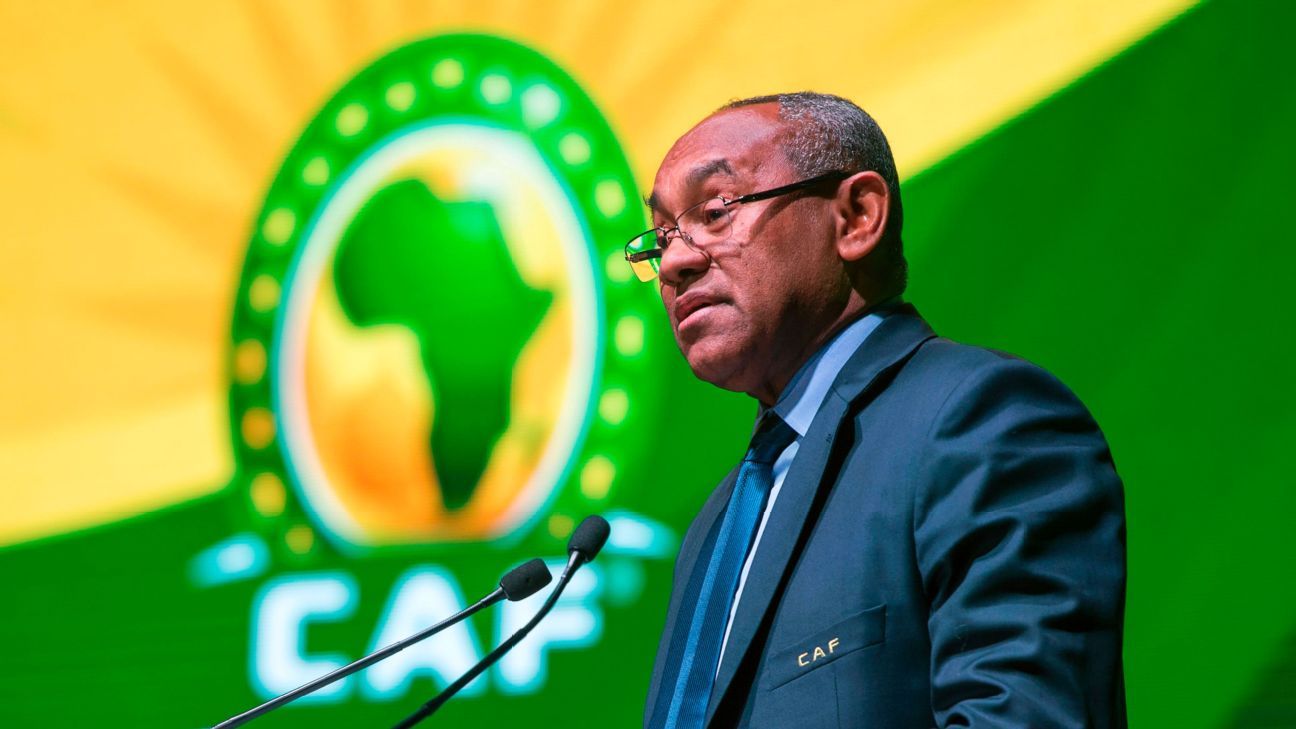
Confederation of African Football president Ahmad Ahmad said a special committee has been set up to deal with security concerns at the Africa Cup of Nations in Egypt next month.

At least 17 people were injured when an explosion hit a bus carrying mostly South African tourists in Cairo 10 days ago. The rudimentary device containing nails and pieces of metal detonated on the perimeter of the Grand Egyptian Museum.

Egypt’s Interior Ministry said recently that militant group Hasm were planning ‘a series of attacks in the country to create an “atmosphere of chaos.”

The Nations Cup will feature 24 teams from around the continent to play at venues in Cairo, Alexandria, Ismailia and Suez from June 21 to July 19.

“Security is a big problem in the world, not only in Egypt. No country can be sure that nothing will happen. It is very sad to feel like that,” Ahmad, on a two-day visit to South Africa, told reporters on Wednesday.

“The Egyptian government and CAF have for the first time implemented a security committee and they will continue to work together to try and make sure that nothing will happen.”

A Reuters investigation last month found that Egyptian security forces had shot dead hundreds of suspected militants in what the Interior Ministry said were gunbattles, but which bereaved families said were extrajudicial killings.

At the Nations Cup in 2010, three people were killed as the Togo team bus was attacked by militants as they travelled to the tournament in Angola, including assistant coach Amelete Abalo.

Togo withdrew from the tournament, which led to a CAF ban for the next two editions, though that was later quashed by the Court of Arbitration for Sport.

Continue Reading
Click to comment

Leave a Reply

Your email address will not be published. Required fields are marked *

Africa

Soldiers Strike in Benin Republic, Removes Talon, Takes over Govt

Published

on

By

Military personnel in Benin on Sunday announced that they had ousted President Patrice Talon, although his entourage said he was safe and the army was regaining control.

Soldiers calling themselves the “Military Committee for Refoundation” (CMR), said on state television that they had met and decided that “Mr Patrice Talon is removed from office as president of the republic”.

The announcement follows two coups in Madagascar and Guinea-Bissau in as many months. Benin is bordered in the north by Niger and Burkina Faso, which have also seen military takeovers.

The French Embassy said on X that “gunfire was reported at Camp Guezo” near the president’s official residence in the economic capital.

It urged French citizens to remain indoors for security.

But Talon’s entourage said Talon, who has been president of the west African nation for 10 years and is due to step down in April, was safe.

“This is a small group of people who only control the television. The regular army is regaining control. The city and the country are completely secure,” his office told AFP.

Benin’s political history has been marked by several coups and attempted coups.

Talon, who came to power in 2016, is due to reach the end of his second term in 2026, the maximum allowed by the constitution.

The main opposition party has been excluded from the race to succeed him, and instead the ruling party will vie for power against a so-called “moderate” opposition.

Talon, a 67-year-old former businessman dubbed the “cotton king” of Cotonou, has been praised for bringing economic development to Benin but is regularly accused by his critics of authoritarianism.

AFP

Continue Reading

Africa

World’s Oldest President, Paul Biya, Wins Cameroon Election at 92

Published

on

By

Cameroon ’s top court on Monday declared incumbent Paul Biya, the world’s oldest president, the winner of the Oct. 12 election. Clashes with security forces left at least four protesters dead ahead of the announcement as opposition supporters rallied to demand credible results.

Biya, 92, has led the central African nation since 1982. The Constitutional Council said he received 53.66% of votes while former ally-turned-challenger Issa Tchiroma Bakary got 35.19%. The turnout was 57.7%.

In a social media post after the declaration, Tchiroma said that there was gunfire directed at civilians and two people were shot dead in his hometown in Garoua.

He said: “Toll of their attack: two dead. I wonder what will be said this time? Shooting point-blank at your own brothers — I can’t help but wonder if you’re mercenaries. Kill me if you want, but I will liberate this country by any means necessary. What blatant impunity.”

The four protesters were shot dead in Douala, the economic capital, on Sunday, as hundreds of people stormed streets in several cities. Tchiroma had claimed victory days before Monday’s announcement, citing results he said were collated by his party. Biya dismissed the claim.

According to Samuel Dieudonne Ivaha Diboua, governor of the Littoral Region that includes Douala, several members of the security forces were injured by protesters. He said at least 105 protesters were arrested.

Videos online showed protesters clashing with security forces, who fired tear gas and tried to disperse people barricading major roads in Douala and other cities, including Garoua and Maroua in the north.

Dozens of opposition supporters, activists and leaders have been arrested in recent days. Paul Atanga Nji, minister of territorial administration, said on Saturday the government arrested several people plotting violent attacks.

One protester, Oumarou Bouba, a 27-year-old trader in Maroua, said: “I am ready to stake my life to defend my vote. I voted for Tchiroma because I want change.”

Following the announcement of the results, Sani Aladji, a 28-year-old who works in a hotel in Maroua, said: “Nothing will change. I expected that Issa Tchiroma would bring change, which is why I voted for him. There’s rampant corruption under Biya’s regime. We are tired of that. We don’t have roads.”

Biya has ruled Cameroon longer than most of its citizens have been alive. Over 70% of the country’s almost 30 million population is below 35. The election has been the latest dramatic example of tension between Africa’s youth and the continent’s many aging leaders.

He first came to power in 1982 following the resignation of Cameroon’s first president and has ruled the country since then, later benefiting from a constitutional amendment that abolished term limits.

Critics accuse Biya of leading Cameroon from a period of relative stability into one of crisis and conflict. The country in recent years has faced attacks by Boko Haram militants in the north and a secessionist insurgency in the country’s English-speaking North West and South West regions.

That crisis, triggered by the government’s attempts to impose French in English-speaking schools and courts, has killed nearly 7,000 people, displaced more than one million more internally and sent thousands fleeing to neighboring Nigeria.

Despite Cameroon being an oil-producing country that is experiencing modest economic growth, young people say the benefits have not trickled down beyond the elites. According to World Bank data, the unemployment rate stands at 3.5%, but 57% of the labor force aged 18 to 35 works in informal employment.

“Many young people across the country and in the diaspora had hoped for change, but that their hopes have been dashed. It feels like a missed opportunity,” said Dr Emile Sunjo, a senior lecturer in international relations at the University of Buea. “Cameroon could potentially slide into anarchy.”

Source: AP

Continue Reading

Africa

Kenya Opposition Leader, Raila Odinga, Dies at 80

Published

on

By

Kenyan opposition leader, Raila Odinga, has died at the age of 80 during a health visit to India, local police said Wednesday — a political earthquake that could transform politics in the East African nation.

Odinga was the perennial opposition figure of Kenyan politics, running unsuccessfully for the presidency on five occasions, most recently in 2022.

He remained a dominant force, able to rally huge numbers, particularly from his native western Kenya.

Indian police told AFP he was walking with his sister, daughter, and a personal doctor “when he suddenly collapsed”.

“An Indian police security officer and a Kenyan security officer were also with them at the time. He was rushed to a nearby private hospital, but was declared dead,” the police source said.

Odinga’s death was also confirmed to AFP by a member of his political team, but they requested anonymity while awaiting an official announcement from the party.

Born on January 7, 1945, Odinga spent his early years in politics either in jail or in exile, fighting for democracy during the autocratic rule of President Daniel arap Moi.

A member of the Luo tribe, he entered parliament in 1992 and ran unsuccessfully for the presidency in 1997, 2007, 2013, 2017, and 2022, claiming to have been cheated of victory in the last four elections.

He cast himself as an anti-establishment firebrand despite belonging to one of Kenya’s top political dynasties — his father serving as the country’s first vice president after independence in 1963.

His death leaves a leadership vacuum within the opposition, and it is far from clear if anyone will have the same ability to mobilise opposition forces as the country heads into a potentially volatile campaign period ahead of elections in 2027.

Kenya’s former chief justice, and current presidential candidate, David Maraga, said he was “shocked” by news of the death.

Odinga was “a patriot, a pan-Africanist, a democrat and a leader who made significant contributions to democracy in Kenya and in Africa,” Maraga wrote on X.

“Kenya has lost one of its most formidable leaders who shaped the trajectory of our beloved country. Africa has lost a leading voice in pushing for peace, security, and development. The world has lost a great leader,” he added.
Ethiopian Prime Minister Abiy Ahmed was among the first to react, posting on X:

“On behalf of the Government of Ethiopia, I extend my sincere condolences on the passing of former Kenyan Prime Minister Raila Odinga. May he Rest In Peace.”

A spokesman for the Sreedhareeyam Ayurvedic Eye Hospital and Research Centre in Kerala, India, also confirmed the death.

“He experienced some breathing difficulties and collapsed. He was provided CPR on the spot, and having seen some sign of recovery, he was rushed to the nearest modern hospital. Despite repeated efforts by the medics, his condition deteriorated and the doctors were unable to save him,” the spokesman said.

AFP

Continue Reading

Trending