Connect with us

News

Osun Lawmaker Caught Bathing in Market Square, Victim of Fraudsters – Police

Published

on

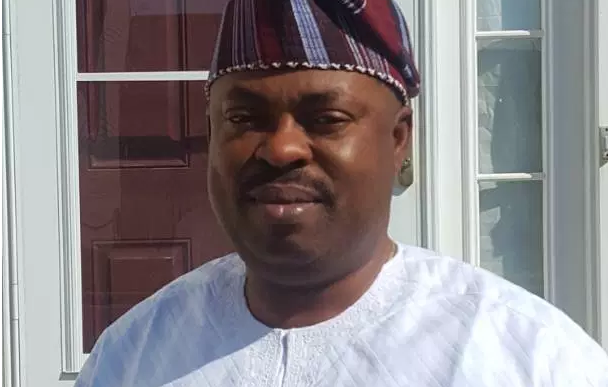
Timothy Owoeye, an Osun State lawmaker seen on a viral video depicting him as bathing in the market square for ritual, was a victim of a ritual syndicate which had operated in the state for a long time, reports Premium Times.

Little was known outside of Osun State about Mr Owoeye until a video showing him being beaten by some men who purportedly caught him taking a midnight ritual shower in a market hit the Internet this weekend.

Some of those who circulated the video on social media said Mr Owoeye, who is currently the House Majority Leader of Osun State House of Assembly, was performing the ritual as he intensified activities towards his political success in the upcoming general elections.

But Mr Owoeye, representing Ilesa West for the All Progressives Congress, was actually a victim of a high-wire blackmail racket that had seen him part with humongous amount of his personal wealth in a desperate bid to save not only his own career but family image, Osun police commissioner, Adeoye Fimihan said.

“The fellow is a victim of some fraudsters who duped him some amount of money,” Mr Fimihan said by telephone. “They tricked him to that place and did that to blackmail him so that he will not be able to lodge complaint in the public.”

Mr Owoeye’s misery began about six months ago when he agreed to have a midnight shower in a market as recommended by herbalists he had been consulting for traditional prayers. The location is rumoured to be Osun Jela, described as a lull community between Osogbo, the state capital, and Ijesa.

But as he undressed himself and started having his shower, some persons — whom the police suspect had been lurking in the dark— emerged from the nearby bush, turned on lights and focused cameras on the lawmaker.

PREMIUM TIMES learnt from sources close to Mr Owoeye that persons were arranged by the fraudsters who had been parading themselves to the lawmaker as herbalists working to help enhance his fortunes through traditional means.

They syndicate promised not to circulate the video if Mr Owoeye complied with their demands for cash. He paid the initial cash to the crooks, which subsequently opened a cascade of regular financial flows to their pockets.

At some point during the blackmail, about three months ago, Mr Owoeye wanted to sell a filling station he owned after running out of liquid cash to keep hushing his so-called scandal.

“He did not sell the filling station, but he had paid them more than 40 million before then,” the source said. It was when Mr Owoeye was trying to raise money by selling his filling station that an associate pressed him to disclosed what his crisis was about. He was then asked to advised to take the matter to the governor and subsequently to the police.

“We are happy that he summoned the courage to complain and the police succeeded in arresting some of those fellows and they were charged to court,” Mr Fimihan said. “Whatever is being circulated is just a way of ensuring that he will not be able to complain.”

The commissioner said he could not immediately tell how much Mr Owoeye lost to the scheme, but the police had recovered N10 million of it already.

“I cannot say precisely now, but the police were able to recover N10 million of the funds he was swindled,” the police chief said.

Premium Times

Continue Reading
Click to comment

Leave a Reply

Your email address will not be published. Required fields are marked *

News

I Won’t Surrender Rivers N700bn IGR to Anyone, Fubara Vows

Published

on

By

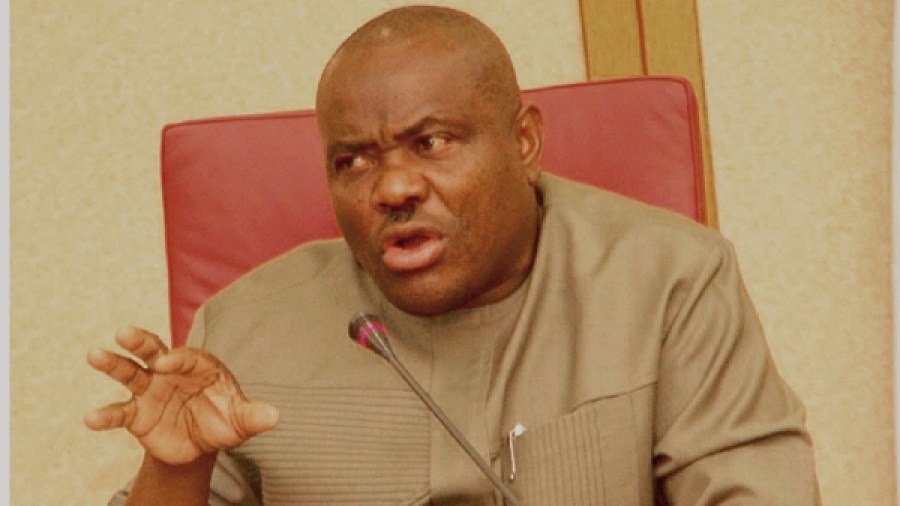
Rivers State governor, Siminalayi Fubara, has resisted alleged pressure to hand over N700 billion, representing 35% of the State’s internally generated revenue (IGR), to anyone, sparking a heated power struggle with former Governor Nyesom Wike, now Federal Capital Territory (FCT) minister.

The dispute has raised concerns about the welfare of Rivers State residents, with 4.4 million people living in multidimensional poverty.

The feud between Fubara and Wike, who unilaterally chose Fubara as his successor, has escalated into violent confrontations, defections, and legal battles.

Wike has threatened to make Rivers State “ungovernable” if Fubara fails comply, while his supporters have vowed to “deal with” Fubara.

In response, Fubara has warned that he cannot be intimidated, saying: “Rivers State is not a playground” and that he’s prepared to defend the state’s interest.

His supporters have also threatened to mobilise protests against Wike and his allies.

The crisis had paralysed governance, prompting President Bola Tinubu to declare a six-month emergency rule in the State last year.

The situation remains tense, with both sides maintaining their respective stance.

The outcome will have significant implications for Rivers State and Nigerian politics.

The dispute highlights concerns about godfatherism in Nigerian politics and its impact on governance.

Wike has accused Fubara of ingratitude, while Fubara sees the former’s demands as an attempt to undermine his authority.

Continue Reading

News

Rivers Assembly Begins Impeachment Proceedings Against Fubara

Published

on

By

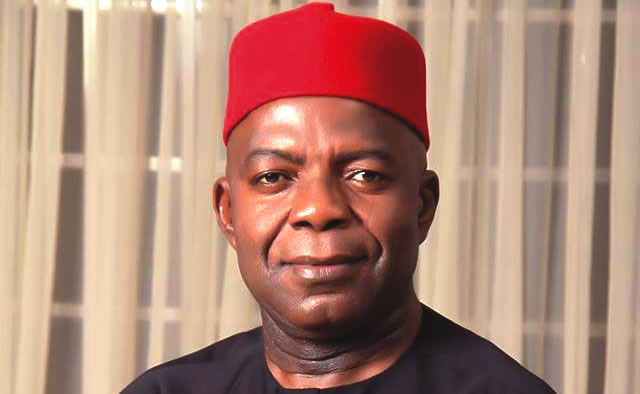
The Rivers State House of Assembly has commenced impeachment proceedings against Governor Siminalayi Fubara.

The legislature kicked off the process at plenary on Thursday.

The lawmakers are accusing Fubara and his deputy of gross misconduct.

Speaker of the House, Martin Amaewhule, is presiding over the session.

The day’s proceedings bear the imprimatur of renewed hostilities between Fubara and his predecessor Nyesom Wike, minister of the Federal Capital Territory (FCT).

On December 5, 2025, a horde of the Rivers assembly lawmakers led by the speaker, announced their defection from the Peoples Democratic Party (PDP) to the All Progressives Congress (APC).

Days later, Fubara formalised his own switch from the PDP to the APC.

However, the sabre-rattling and thinly veiled remarks between Wike and Fubara, which culminated in the declaration of emergency rule in the state in March 2025, have persisted.

Most of the Rivers lawmakers have stayed loyal to Wike.

TheCable

Continue Reading

Featured

US Imposes $15,000 Visa Bond on Visiting Nigerians

Published

on

By

The United States has introduced new travel restrictions that may require Nigerians applying for B1/B2 business and tourism visas to post financial bonds of up to $15,000, as Washington tightens entry conditions for nationals of countries it classifies as high risk.

Under the new policy announced by the U.S. State Department on Tuesday, applicants from 38 countries, 24 of them in Africa, including Nigeria, may be required to provide visa bonds of $5,000, $10,000, or $15,000, depending on the assessment made during their visa interview. The measures will take effect on different dates, with Nigeria’s implementation scheduled to begin on January 21.

According to the State Department notice, “any citizen or national traveling on a passport issued by one of these countries, who is found otherwise eligible for a B1/B2 visa, must post a bond for $5,000, $10,000, or $15,000.” Applicants will also be required to submit a Department of Homeland Security Form I-352 and agree to the bond terms through the U.S. Treasury Department’s Pay.gov platform, regardless of where the visa application is submitted.

The department stressed that payment of a bond does not guarantee the issuance of a visa, warning that fees paid without the direction of a consular officer will not be refunded.

Nigerians who post the required bonds and obtain visas will also be restricted to entering the United States through designated airports, including Boston Logan International Airport, John F. Kennedy International Airport in New York, and Washington Dulles International Airport in Virginia.

Refunds of the bonds will only be made if the Department of Homeland Security confirms that the visa holder departed the United States on or before the authorised date of stay, if the applicant does not travel before the visa expires, or if the traveller applies for entry and is denied admission at a U.S. port of entry.

The development comes barely a week after partial U.S. travel restrictions on Nigeria took effect. On December 16, Nigeria was listed among 15 mostly African countries placed under partial travel suspensions, alongside Angola, Antigua and Barbuda, Benin, Côte d’Ivoire, Dominica, Gabon, and The Gambia.

Explaining Nigeria’s inclusion, U.S. authorities cited the continued activity of extremist groups such as Boko Haram and the Islamic State in parts of the country, which they said created “substantial screening and vetting difficulties.” The U.S. also referenced visa overstay rates of 5.56 percent for B1/B2 visas and 11.90 percent for F, M, and J visas.

As a result of the designation, the suspension covers both immigrant visas and several non-immigrant categories, including B1, B2, B1/B2, F, M, and J visas.

Continue Reading

Trending