Connect with us

Headline

Armed Herdsmen Six Times Deadlier than Boko Haram – ICG

Published

on

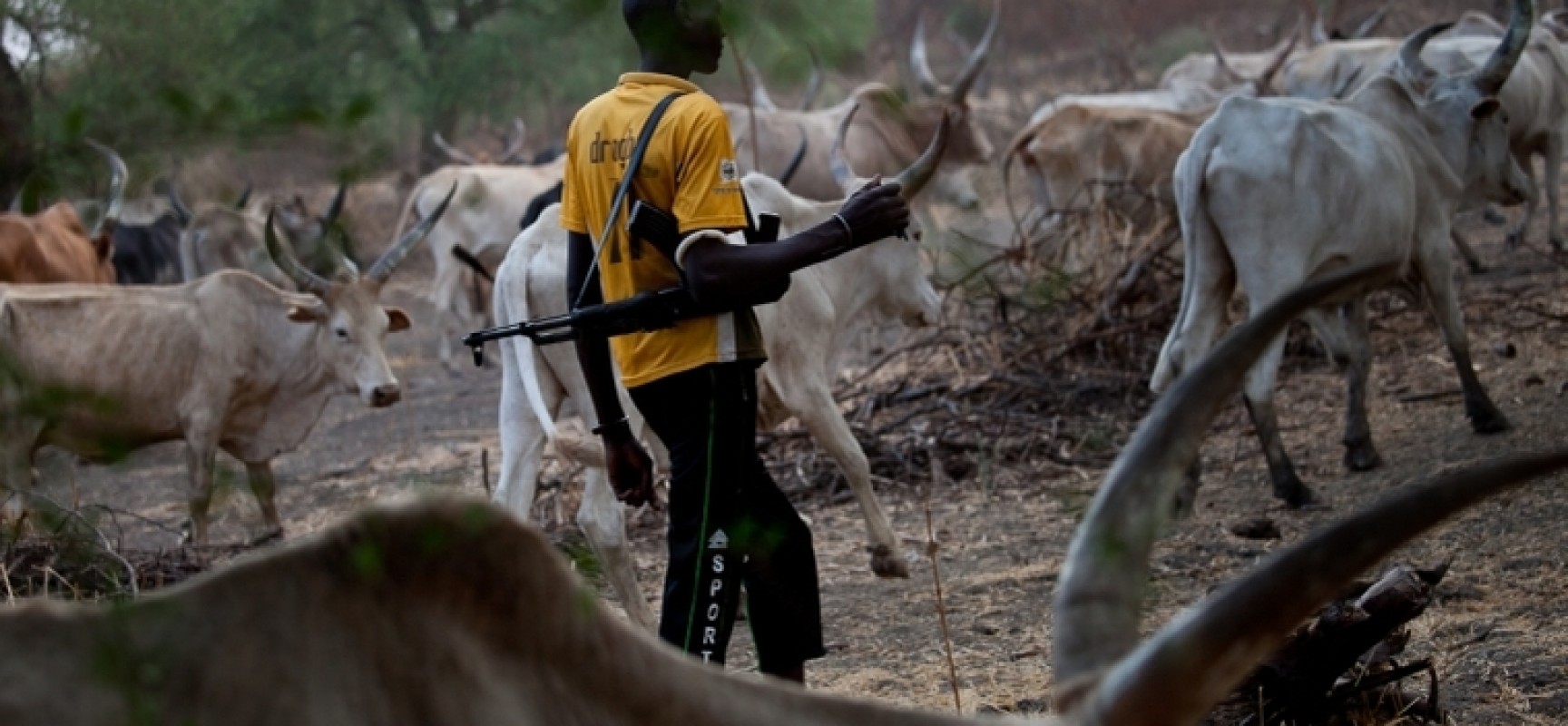
A new report on Thursday found that violence involving armed herdsmen was six times more deadly than Boko Haram in the first half of this year. The report then recommended urgent steps that the Nigerian government must take to stem further attacks.

The International Crisis Group (ICG) estimated 1,300 deaths linked to the farmer-herder violence within the first half of this year, adding that the dimensions of the attack have aggravated in recent months.

“What were once spontaneous attacks have become premeditated scorched-earth campaigns in which marauders often take villages by surprise at night,” the non-profit think-tank said. “Now claiming about six times more civilian lives than the Boko Haram insurgency, the conflict poses a grave threat to the country’s stability and unity, and it could affect the 2019 general elections.”

The report recommended that President Muhammadu Buhari’s approach to solving the crisis is acceptable but largely insufficient.

The government’s “immediate priorities should be to deploy more security units to vulnerable areas; prosecute perpetrators of violence; disarm ethnic militias and local vigilantes; and begin executing long-term plans for comprehensive livestock sector reform,” it said.

The report also found that the anti-open grazing statutes recently enacted by state governments in Benue and Taraba States also contributed to the escalation in latest attacks.

“The Benue State government should freeze enforcement of its law banning open grazing, review that law’s provisions and encourage a phased transition to ranching,” the ICG said.

Two spokespersons for Governor Samuel Ortom could not be reached for comments Thursday afternoon. But Mr Ortom has long argued that the grazing law in Benue was aimed at curbing the activities of potentially deadly herders and not to infringe on the rights of northern residents in the state.

Mr Ortom also argued that claims that the killings escalated as a result of the grazing law, which Inspector-General Ibrahim Idris and Defence Minister Mansur Dan-Ali have also made, were dishonest and dangerous.

The governor said scores of people were being killed in regular attacks since 2010, saying the law has nothing to do with the criminal intents of the attackers.

The agriculture minister, Audu Ogbeh, who is also from Benue, has also said the killing were not caused by the grazing laws.

In Plateau State, where Governor Samuel Lalong has been far more lenient towards herders, frequent attacks are still being recorded. Last month, over 200 people were feared killing in a weekend-long assault on villages in the state, a development that gripped the nation.

On the runaway armed banditry that is currently ravaging Zamfara, Sokoto, Kaduna and other northern states, the ICG blamed “government’s failure to either punish perpetrators of previous violence or respond to distress calls,” consequently emboldening the attackers.

Presidential spokesperson Garba Shehu did not return requests for comments.

Premium Times

Continue Reading
Click to comment

Leave a Reply

Your email address will not be published. Required fields are marked *

Headline

Insecurity: Akpabio Begs Tinubu to Reinstate Police Orderlies for NASS Members

Published

on

By

Senate President, Godswill Akpabio, has appealed to President Bola Tinubu to reconsider the directive withdrawing police orderlies from members of the National Assembly, citing safety concerns.

Akpabio made the appeal during the presentation of the 2026 budget to a joint session of the National Assembly, by President Tinubu, warning that some lawmakers fear they might be unable to return home safely following the withdrawal.

His said: “As we direct the security agencies to withdraw policemen from critical areas, some of the National Assembly said I should let you know they may not be able to go home today.

“On that note, we plead with Mr. President for a review of the decision.”

President Tinubu, on November 23, ordered the withdrawal of police officers attached to Very Important Persons (VIPs), directing that they be redeployed to core policing duties across the country.

According to Bayo Onanuga, Special Adviser to the President on Information and Strategy, Tinubu issued the directive after a security meeting with Service Chiefs and the Director-General of the Department of State Services (DSS) following heightened security issues in the country.

Under the order, VIPs requiring security are to seek protection from the Nigeria Security and Civil Defence Corps, as the Federal government seeks to boost police presence in communities, particularly in remote areas grappling with insecurity.

Tinubu later reaffirmed the directive on December 10, moments before presiding over the Federal Executive Council, expressing frustration over delays in implementation.

He instructed the Minister of Interior, Olubunmi Tunji-Ojo, to work with the Inspector-General of Police (IGP), Kayode Egbetokun, and the Civil Defence Corps to immediately replace withdrawn escorts to avoid exposing individuals to danger.

“I honestly believe in what I said…It should be effected. If you have any problem because of the nature of your assignment, contact the IGP and get my clearance,” Tinubu said.

“The minister of interior should liaise IG and the Civil Defence structure to replace those police officers who are on special security duties.

“So that you don’t leave people exposed,” he said.

Continue Reading

Headline

Defence Gulps Lion Share As Tinubu Presents N58.47trn 2026 Budget to NASS

Published

on

By

President Bola Tinubu has presented a budget of N58.47 trillion for the 2026 fiscal year to a joint session of the National Assembly, with capital recurrent (non‑debt) expenditure standing at N15.25 trillion.

Tinubu presented the budget on Friday, pegging the capital expenditure at N26.08 trillion and putting the crude oil benchmark at US$64.85 per barrel.

He said the expected total revenue is N34.33 trillion, projected total expenditure: N58.18 trillion, including N15.52 trillion for debt servicing. The budget is N23.85 trillion, representing 4.28% of GDP.

The budget was anchored on a crude oil production of 1.84 million barrels per day, and an exchange rate of N1,400 to the US Dollar for the 2026 fiscal year.

In terms of sectoral allocation, defence and security took the lion’s share with N 5.41 trillion, followed by infrastructure at N3.56 trillion.

Continue Reading

Headline

Mike Adenuga, Emmanuel Macron Hold High-Powered Meeting in Paris

Published

on

By

Accomplished billionaire businessman and Commander of the French Légion d’Honneur, Dr. Mike Adenuga Jr., GCON, CdrLH, has held a private meeting with the French President, Emmanuel Macron.

The two powerful citizens of the world held the meeting on Wednesday at the historic Élysée Palace in Paris.

The high-level engagement underscores the longstanding relationship between Dr. Adenuga and the French Republic, as well as his continued relevance in global business and diplomatic circles. 

A respected industrialist and philanthropist, Adenuga has been widely acknowledged for his contributions to economic development, telecommunications, energy, and humanitarian causes across Africa and beyond.

The meeting adds to Dr. Adenuga’s growing profile as a bridge between African enterprise and international leadership.

Continue Reading

Trending