
Featured
Police Confirm 86 Persons Dead in Plateau Attack




By Eric Elezuo
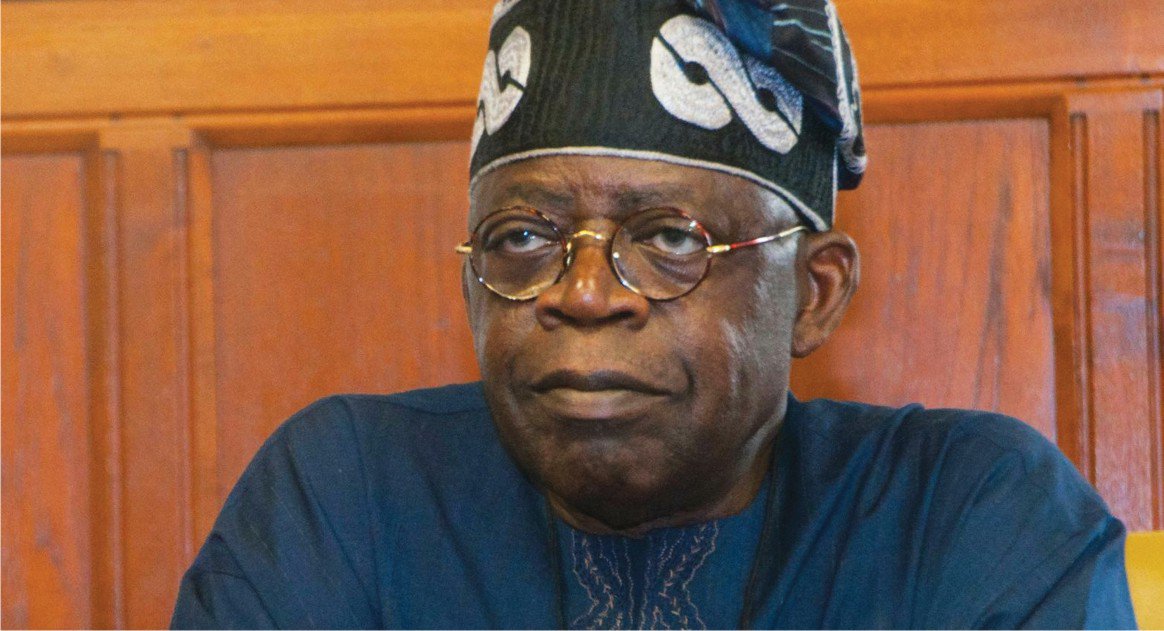
As the presidential election draws very close, one man stands taller than most of the candidates that would be on the ballot paper, or may have been on the ballot paper as far as the presidential election in Benin Republic is concerned. He is the hard working and most Indefatigable achiever, Monsieur Romuald Wadagni.
He us young, able and full of experience, having practiced positive and sincere politics for a very long in his young existence.
Wadagni comes across as the typical chip off the old block, when it comes to genuine leadership qualities and agenda. He has been tested, trusted and ready to take up the mantle of leadership towards providing genuineness and purposeful living condition for the people of Benin Republic.

In 10 consecutive years, since he was 39, Wadagni, has supervised the Finance and Economy ministry without blemish, and has received accolades from far and wide.
It is therefore not a fluke as the 49 years old, Romuald Wadagni was nominated as the ruling majority’s candidate for the upcoming presidential election in Benin.
Consequently, listed below are three things to know about him: 1:he has been the Minister of Finance for nearly 10 years. Romuald Wadagni was appointed Minister of Economy and Finance in April 2016. He was reappointed to the position in 2021 with the rank of Minister of State. He is considered one of the main architects of Benin’s economic recovery.

At the end of January 2025, he welcomed “average growth of more than 6.5% in recent years.” In 2018, Financial Afrik magazine ranked him among the 100 African personalities transforming the continent. In December 2024, the same media outlet named him “Best Finance Minister in Africa,” praising Benin’s macroeconomic stability in the face of international crises. 2: He is an expert in finance and accounting. Romuald Wadagni is a chartered accountant. After studying finance, private equity, and venture capital, he began his professional career in 1998 at Deloitte, one of the largest audit and consulting firms in the world.


At Deloitte, Romuald Wadagni rose through the ranks and successively held several positions of responsibility in France, the United States, and then in Francophone Africa. In 2012, at the age of 36, he became a partner at Deloitte. He later led the firm’s expansion across the African continent. After 17 years, he left the firm in April 2016 when he was appointed Minister of Economy and Finance of Benin.
He is the heir apparent of Patrice Talon. After two consecutive terms, President Patrice Talon, who can no longer run again, had promised to play an active role in choosing his successor. On August 31, 2025, he officially endorsed his Minister of Finance, Romuald Wadagni, as the candidate of the presidential majority.
This designation was confirmed in a joint statement by the Union Progressiste le Renouveau (UPR) and the Bloc Républicain (BR), the two main parties of the majority. On October 4, 2025, in Parakou, Romuald Wadagni and Mariam Chabi Talata, the current Vice President, were officially nominated during a major rally of the presidential majority. In his speech, the candidate minister promised to “consolidate the achievements” of his predecessor.

Prior to entering politics, Wadagni worked for the consulting firm Deloitte for 17 years. He was first appointed the minister of economy and finance on 7 April 2016, in the first Talon government, and subsequently reappointed in 2021 with the rank of senior minister.
In 2021, the financial newspaper Financial Afrik named Romuald Wadagni “Best African Minister of Economy and Finance”.
In 2024, the financial newspaper Financial Afrik named him “Finance Minister of the Year” for the 4th time in its ranking of “The 100 who are transforming Africa”.
ROMUALD WADAGNI AT A GLANCE

Romuald Wadagni is Senior Minister in charge of Economy and Finance of Benin. He was appointed on April 7, 2016, in the first government of President Patrice Talon and reappointed to this position in May 2021.
Romuald Wadagni is a public accountant certified in France and the USA. He also holds a master’s degree in finance and has completed specialized training in private equity and venture capital.
Before being appointed Minister of Economy and Finance in 2016, Romuald Wadagni had a leading international experience within Deloitte. In France from 1998, then in the United States from 2003, he developed cutting-edge expertise in several fields, serving customers in various sectors of activity (Mining, TMT, Financial Sector, Public Sector, Retail) and various governments and donors.





Nation Building Reimagined: Integrated Principles and Strategies for Sustainable Growth

Dear CDS, NSA, Your Prodigal Sons, Brothers Have Killed General Braimah

Voice of Emancipation: Lessons from the Iran/USA War

Ovation @30: A Triumph of Vision, Courage and African Excellence

ADC National Convention: To Be or Not to Be?

Israel Questions Pakistan’s Credibility in Mediating over US-Iran Ceasefire Agreement

Osun 2026: INEC Planning to Recruit APC Members As Electoral Officials, Lawmakers Allege

‘ADC Membership Hits 500,000 after INEC Derecognition of Leadership’

Trump Delays Iran’s Strike by 2-Weeks As Pakistani Leaders Intervene

FG Expels US Missionary Alex Barber

Benin Republic 2026: Romuald Wadagni, The President in Waiting

ADC Raises Alarm over INEC’s Plot to Prevent Party from Fielding Candidates

I Won’t Be Intimidated, Seun Okinbaloye Replies Wike
Prominent ADC Leaders Storm INEC Hqrs in Protest Against Dictatorship
-
 News5 days ago
‘ADC Membership Hits 500,000 after INEC Derecognition of Leadership’
-
 World3 days ago
Trump Delays Iran’s Strike by 2-Weeks As Pakistani Leaders Intervene
-
 National3 days ago
FG Expels US Missionary Alex Barber
-
 Featured2 days ago
Benin Republic 2026: Romuald Wadagni, The President in Waiting
-
 Featured5 days ago
ADC Raises Alarm over INEC’s Plot to Prevent Party from Fielding Candidates
-
 Featured5 days ago
I Won’t Be Intimidated, Seun Okinbaloye Replies Wike
-
 News3 days ago
Prominent ADC Leaders Storm INEC Hqrs in Protest Against Dictatorship
-

 World4 days ago
Iran’s Intelligence Chief Killed in US-Israeli Strikes