
Featured
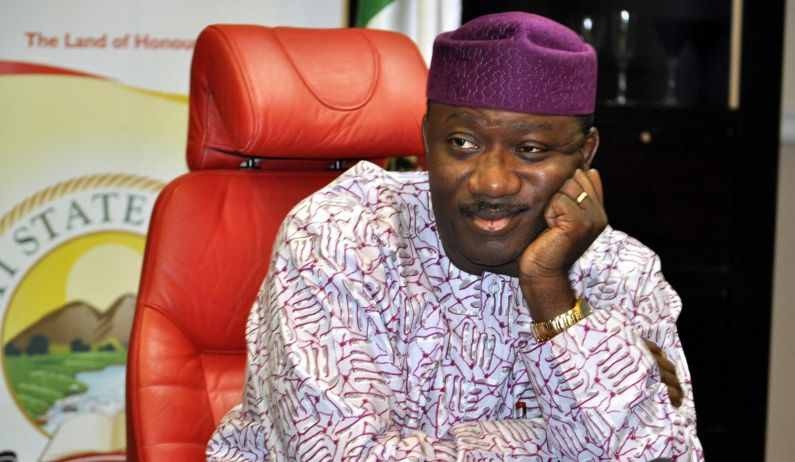
Fayemi: Second Time Around + Why He’s Contesting


By Eric Elezuo
Ever since his victory at the May 12, 2018 rescheduled Ekiti APC primary election, Dr. John Olukayode Fayemi, has been receiving a good deal of accolades from politicians across board; some positive, some near positive. But whichever way it is approached, Fayemi has won, declared the APC flag bearer in the July 14, Governorship election, as well as been presented to the leader of the party and President, Muhammadu Buhari.
Fayemi’s victory is applauded by his core believers and fans as a result of his ability to pick the ticket against all odds, even as a very late entrant; his never say never attitude even as pressure mounted on him to withdraw his aspirations.
Hails from Isan-Ekiti I Oye Local Government, where he was born on February 9, 1965, he is the immediate past Governor of Ekiti State, and his attempt at making a return to the Government has raised more questions than answers.
Currently the Minister of Solid Minerals Development, investigations have revealed that Fayemi’s quest to return to Ekiti Government is a calculated attempt to remain relevant in the political schemes in the next dispensation.
“It would be recalled that His Excellency joined the Ekiti governorship race very late; that was because it was never his intention to run. However, political wrangling both in the seat of power and the leadership of the ruling All Progressives Congress (APC) made the former governor chose to throw his hat into the ring,” TheBoss learnt.
Further enquiry revealed that Fayemi, after due consultations, foresaw a paradigm shift which may not be advantageous to him. This shift, it was further learnt, lies in the about to happen obvious change in the party leadership, where the current party chairman, Chief John Odigie Oyegun, is bent on giving way for former Edo State Governor, Comrade Adams Oshiomhole.

Even before the arrival of Oshiomhole, the party has been divided on parallel lines – the Oyegun camp and the Bourdillon/Oshiomhole camp. It was based on these camps that the fiasco that disrupted the May 5 botched Ekiti APC primary was premised upon.
“Fayemi knows that the tiny political life he may enjoy in the next dispensation lies on a balance, and he is bent on utilizing it to the best of his abilities. Being an Oyegun-man, he is aware that the exit of Oyegun and the coming of Oshiomhole will bring about a massive hurricane where all those that has ever stood against Tinubu will be swept away. This means that he will be losing his ministerial position, and will be politically out of space,” the Boss learnt.
Consequently, mustering enough goodwill as well as financial muscle, Fayemi clung to the last dying breath which is Oyegun. It is obvious that if he wins Ekiti election as governor, whatever happens in the next four years beginning from 2019, will not give him any sleepless. But otherwise, there is tension.
Except for political intrigues, watchers are of the opinion that the one oftentimes called elitist, is qualified to be governor, the fact that he was voted out four years ago notwithstanding. He is actually elitist as many has unwittingly remarked: his secondary education was at Christ School, Ado Ekiti from 1975 to 1980. His attendance at the Universities of Lagos and Ife at separate times bestowed on him degrees in History, Politics and International Relations. He also has a Doctorate degree in War Studies from the prestigious King’s College, University of London, England, majoring in civil-military relations.

Kayode Fayemi has been lecturer, journalist, researcher and Strategy Development adviser in Nigeria and the United Kingdom with stints at The Guardian, City Tempo and Nigeria-Now. He is a former Director of the Centre for Democracy & Development, a research and training institution dedicated to the study and promotion of democratic development, peace-building and human security in Africa. He was Strategy Development Adviser at London’s City Challenge; research fellow at the African Research & Information Bureau in London. As a prominent leader of the Nigerian opposition to military rule in exile, he was responsible for the founding and management of the opposition radios – Radio Freedom, Radio Democracy International & Radio Kudirat and played a central role in the opposition’s diplomatic engagements in exile. He is the writer of Out Of The Shadows.
Amongst his numerous academic and public policy engagements at home and abroad, Kayode Fayemi has lectured in Africa, Europe, the Americas and Asia. He has also served as an adviser on transitional justice, regional integration, constitutionalism, security sector reform and civil-military relations issues to various governments, inter-governmental institutions and development agencies.
In an interview with the Daily Independent in 2005, Mr. Fayemi made poverty, education and healthcare central to his manifesto. The implementation of which he asserts will be consultative, including being open to ideas from the diaspora.
After three and a half years fighting through the legal system on 15 October 2010 the appeal court sitting in Kwara state declared him the duly elected Governor of Ekiti State, and marked the end of Segun Oni’s administration.
His vision is summed up in an 8-point Agenda which centres around: Governance, Infrastructural Development, Modernising Agriculture, Education and Human Capital Development, Health Care Services, Industrial Development, Tourism Development, and Gender Equality and Woman Empowerment.
Fayemi runs an open administration, becoming the first governor in this present political dispensation in Nigeria to openly declare his Seven Hundred and Fifty Million Naira assets, Fayemi was also the first governor in Nigeria to sign into law the Freedom of Information Act on Monday, 4 July 2011.
He was defeated by Ayo Fayose of the PDP in the 2014 election while attempting to go second term. A few months ago, a panel of enquiry set up by Governor Fayose banned him from participating in public administration in Ekiti State for five years; a verdict he has declared a joke.
The clandestine Radio Freedom, later Radio Kudirat operator of those days, has said that his quest to return to governance has nothing to do with vengeance, but to complete the works he started, which he believes have been truncated by his successor, chiefly among them restoration of respect to elders.
It is really not uhuru for Fayemi yet as the election comes up in July, many weeks after a part of his war chest may have left office, paving the way for one if not an avalanche of his albatross.
Time, as usual, will tell.
By Eric Elezuo
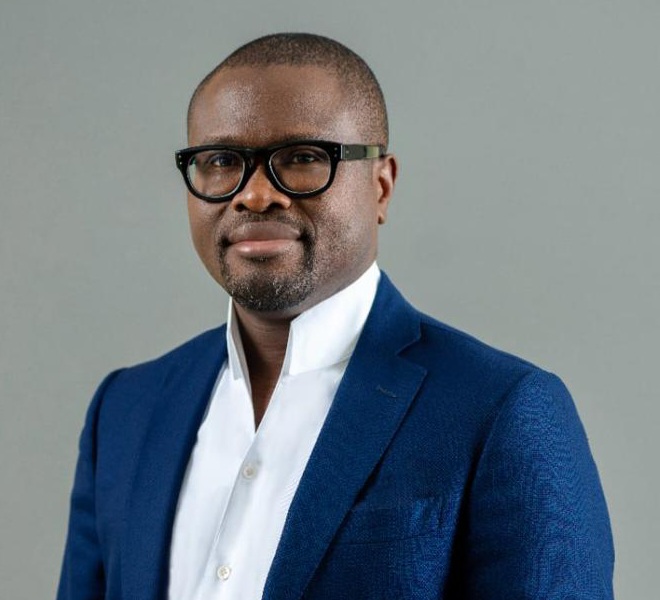
As the presidential election draws very close, one man stands taller than most of the candidates that would be on the ballot paper, or may have been on the ballot paper as far as the presidential election in Benin Republic is concerned. He is the hard working and most Indefatigable achiever, Monsieur Romuald Wadagni.
He us young, able and full of experience, having practiced positive and sincere politics for a very long in his young existence.
Wadagni comes across as the typical chip off the old block, when it comes to genuine leadership qualities and agenda. He has been tested, trusted and ready to take up the mantle of leadership towards providing genuineness and purposeful living condition for the people of Benin Republic.

In 10 consecutive years, since he was 39, Wadagni, has supervised the Finance and Economy ministry without blemish, and has received accolades from far and wide.
It is therefore not a fluke as the 49 years old, Romuald Wadagni was nominated as the ruling majority’s candidate for the upcoming presidential election in Benin.
Consequently, listed below are three things to know about him: 1:he has been the Minister of Finance for nearly 10 years. Romuald Wadagni was appointed Minister of Economy and Finance in April 2016. He was reappointed to the position in 2021 with the rank of Minister of State. He is considered one of the main architects of Benin’s economic recovery.

At the end of January 2025, he welcomed “average growth of more than 6.5% in recent years.” In 2018, Financial Afrik magazine ranked him among the 100 African personalities transforming the continent. In December 2024, the same media outlet named him “Best Finance Minister in Africa,” praising Benin’s macroeconomic stability in the face of international crises. 2: He is an expert in finance and accounting. Romuald Wadagni is a chartered accountant. After studying finance, private equity, and venture capital, he began his professional career in 1998 at Deloitte, one of the largest audit and consulting firms in the world.


At Deloitte, Romuald Wadagni rose through the ranks and successively held several positions of responsibility in France, the United States, and then in Francophone Africa. In 2012, at the age of 36, he became a partner at Deloitte. He later led the firm’s expansion across the African continent. After 17 years, he left the firm in April 2016 when he was appointed Minister of Economy and Finance of Benin.
He is the heir apparent of Patrice Talon. After two consecutive terms, President Patrice Talon, who can no longer run again, had promised to play an active role in choosing his successor. On August 31, 2025, he officially endorsed his Minister of Finance, Romuald Wadagni, as the candidate of the presidential majority.
This designation was confirmed in a joint statement by the Union Progressiste le Renouveau (UPR) and the Bloc Républicain (BR), the two main parties of the majority. On October 4, 2025, in Parakou, Romuald Wadagni and Mariam Chabi Talata, the current Vice President, were officially nominated during a major rally of the presidential majority. In his speech, the candidate minister promised to “consolidate the achievements” of his predecessor.

Prior to entering politics, Wadagni worked for the consulting firm Deloitte for 17 years. He was first appointed the minister of economy and finance on 7 April 2016, in the first Talon government, and subsequently reappointed in 2021 with the rank of senior minister.
In 2021, the financial newspaper Financial Afrik named Romuald Wadagni “Best African Minister of Economy and Finance”.
In 2024, the financial newspaper Financial Afrik named him “Finance Minister of the Year” for the 4th time in its ranking of “The 100 who are transforming Africa”.
ROMUALD WADAGNI AT A GLANCE

Romuald Wadagni is Senior Minister in charge of Economy and Finance of Benin. He was appointed on April 7, 2016, in the first government of President Patrice Talon and reappointed to this position in May 2021.
Romuald Wadagni is a public accountant certified in France and the USA. He also holds a master’s degree in finance and has completed specialized training in private equity and venture capital.
Before being appointed Minister of Economy and Finance in 2016, Romuald Wadagni had a leading international experience within Deloitte. In France from 1998, then in the United States from 2003, he developed cutting-edge expertise in several fields, serving customers in various sectors of activity (Mining, TMT, Financial Sector, Public Sector, Retail) and various governments and donors.





Nation Building Reimagined: Integrated Principles and Strategies for Sustainable Growth

Dear CDS, NSA, Your Prodigal Sons, Brothers Have Killed General Braimah

Voice of Emancipation: Lessons from the Iran/USA War

Ovation @30: A Triumph of Vision, Courage and African Excellence

ADC National Convention: To Be or Not to Be?

Israel Questions Pakistan’s Credibility in Mediating over US-Iran Ceasefire Agreement

Osun 2026: INEC Planning to Recruit APC Members As Electoral Officials, Lawmakers Allege

‘ADC Membership Hits 500,000 after INEC Derecognition of Leadership’

Trump Delays Iran’s Strike by 2-Weeks As Pakistani Leaders Intervene

FG Expels US Missionary Alex Barber

Benin Republic 2026: Romuald Wadagni, The President in Waiting
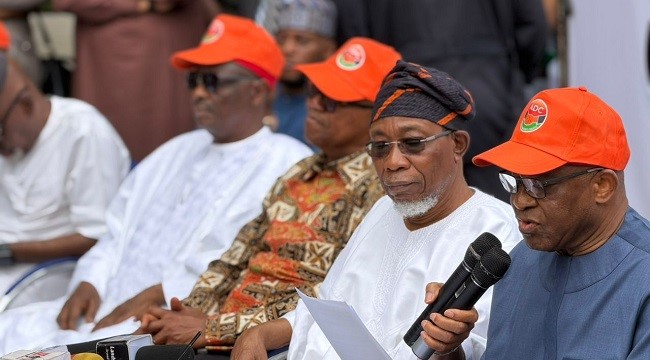
Prominent ADC Leaders Storm INEC Hqrs in Protest Against Dictatorship

Again, Iran Blocks Strait of Hormuz, Alleges Ceasefire Violation

ADC Raises Alarm over INEC’s Plot to Prevent Party from Fielding Candidates
-
 News6 days ago
‘ADC Membership Hits 500,000 after INEC Derecognition of Leadership’
-
 World4 days ago
Trump Delays Iran’s Strike by 2-Weeks As Pakistani Leaders Intervene
-
 National4 days ago
FG Expels US Missionary Alex Barber
-
 Featured3 days ago
Benin Republic 2026: Romuald Wadagni, The President in Waiting
-
 News4 days ago
Prominent ADC Leaders Storm INEC Hqrs in Protest Against Dictatorship
-
 Middle East3 days ago
Again, Iran Blocks Strait of Hormuz, Alleges Ceasefire Violation
-
 Featured6 days ago
ADC Raises Alarm over INEC’s Plot to Prevent Party from Fielding Candidates
-

 World3 days ago
Trump Accuses Nigeria of Spreading Fake News on Iran Ceasefire Deal