Connect with us

National

Federal Government Issues Travel, Safety Warning for Nigerians in Iran, Gulf States

Published

on

The Federal Government has advised Nigerians living in the Middle East, particularly in the Islamic Republic of Iran and surrounding Gulf nations, to take extra security precautions following rising military tensions in the region.

In a statement released on Saturday by the Ministry of Foreign Affairs, the government said it is closely watching developments involving military operations reportedly carried out by Israel and the United States against targets in Iran, as well as subsequent retaliatory actions affecting parts of the Gulf.

Authorities urged Nigerian citizens in the affected areas to remain alert and avoid locations considered strategic or sensitive, such as military bases and government installations, which could become flashpoints for further conflict.

The advisory recommended limiting non-essential movement and avoiding public gatherings or demonstrations until the security environment improves.

Nigerians were also advised to comply with instructions from local security agencies, noting that cooperation with authorities is vital for personal safety.

Diplomatic missions, including the Nigerian Embassy in Tehran and consular offices across neighbouring Gulf countries such as Qatar, Bahrain, Kuwait, the United Arab Emirates, and Saudi Arabia, have been placed on high alert to assist citizens and facilitate communication where necessary.

The government reiterated that the safety of Nigerians abroad remains a priority and pledged to continue monitoring the situation while providing updates as developments unfold.

It also appealed to parties involved in the conflict to de-escalate hostilities and return to negotiations in the interest of global peace and stability.

The advisory comes after reports of airstrikes targeting sites in Iranian cities, with explosions and plumes of smoke observed in the capital.

The military actions were described by U.S. officials as efforts to neutralise security threats, while Israeli authorities characterised them as preventive measures.

Donald Trump stated that the United States aimed to eliminate what he described as imminent dangers and vowed to destroy missile infrastructure linked to Iran’s defence capabilities. Israeli officials similarly framed the operations as defensive.

International reactions to the escalation have been cautious. African Union expressed concern over the potential impact on regional and global stability, urging restraint from all sides.

The European Union also weighed in, with European Council President António Costa noting that developments in Iran were troubling and that European leaders remained in contact with regional partners.

The Federal government concluded its statement by calling for peaceful resolution of the crisis and emphasising the importance of diplomacy in addressing security challenges.

Continue Reading
Click to comment

Leave a Reply

Your email address will not be published. Required fields are marked *

National

JAMB Warns Against AI-Driven UTME Fraud, Vows Sanctions for Candidates, Parents

Published

on

By

The Joint Admissions and Matriculation Board (JAMB) has announced tough measures against candidates and parents found culpable in examination malpractice, warning that the era of leniency is over.

Speaking in Abuja on Saturday, the Registrar, Professor Ishaq Oloyede, said the Board was alarmed by recent discoveries of organised fraud networks targeting the Unified Tertiary Matriculation Examination (UTME). He described the trend as a serious assault on merit and fairness within Nigeria’s education system.

Oloyede explained that JAMB had over the years committed substantial financial and technological resources to preserving the credibility of its examinations, stressing that these measures were designed to protect millions of diligent candidates who rely solely on hard work.

Investigations, he disclosed, uncovered criminal groups deploying artificial intelligence tools to impersonate JAMB officials and extort unsuspecting candidates. More troubling, according to him, was the active participation of some candidates and their parents, who knowingly paid for illicit assistance.

“The students and their parents are willing collaborators and cannot be regarded as innocent,” the Registrar said.

He revealed that over 100 candidates were linked to the scheme, with 83 confirmed to have made payments across 25 states, indicating that the malpractice is neither regional nor isolated.
He said the Board had forwarded recommendations to the Minister of Education, including the cancellation of affected registrations.

Oloyede also refuted claims circulating in some quarters that JAMB had increased its registration fees, describing the allegation as false and urging the public to report any centre charging above the approved rate.

As part of immediate corrective steps, several Computer-Based Test centres have been sanctioned, with some suspended from further participation in the examination process.

Dismissing suggestions that the Board should negotiate with offenders, the Registrar maintained that criminal conduct must be addressed through lawful channels.
“Why should we now be negotiating with criminals?” he asked, noting that suspects who left the country after previous examinations would be referred to security agencies for due process.

He emphasised that paying for examination fraud constitutes a criminal offence, warning that ignorance would no longer be accepted as a defence. Membership in online groups offering illegal assistance, he added, could also attract penalties.

Addressing parents directly, Oloyede cautioned that financing malpractice undermines a child’s moral foundation and future prospects. Encouraging shortcuts, he noted, sends a dangerous message that dishonesty is an acceptable path to success.

The Registrar further confirmed that some school proprietors were among those arrested in connection with the fraud.

On JAMB’s capacity to confront increasingly sophisticated schemes, Oloyede expressed confidence in the Board’s upgraded technical systems and its collaboration with national security agencies. He stated that enhanced monitoring mechanisms now enable the detection of prohibited electronic devices during examinations.

He also expressed concern over the involvement of underage candidates in malpractice, attributing the trend partly to parental pressure and complicity.

While reiterating that JAMB’s core mandate is the administration of examinations, Oloyede appealed to the media to support efforts aimed at discouraging malpractice and promoting integrity within the education sector.

Continue Reading

National

INEC Moves Presidential, Guber Elections to January and February Respectively

Published

on

By

The Independent National Electoral Commission (INEC) has rescheduled the 2027 Presidential and National Assembly election to Saturday, January, 16, 2027, following the enactment of the Electoral Act, 2026.

The Governorship and State Houses of Assembly Elections has also been shifted to Saturday, February, 6, 2027.

The Commission said the adjustment ensures full compliance with the new legal framework and allows for orderly conduct of electoral activities, including party primaries and campaigns.

Previously, the Presidential election was slated for February 20, 2027, while governorship and state Houses of Assembly polls were scheduled for March 6, 2027.

The timetable drew criticism from sections of the public, particularly Muslim groups, who argued that the proposed dates clashed with the holy month of Ramadan.

The amended Clause 28 now provides that INEC shall, not later than 300 days before the date fixed for the conduct of an election under this Act, publish a notice in each state of the Federation and the Federal Capital Territo

INEC in a statement on Thursday by National Commissioner and Chairman, Information and Voter Education Committee, Mohammed Haruna, said the Commission has reviewed and realigned the Schedule to ensure full compliance with the new legal framework.

He revealed that party primaries, including the resolution of disputes arising from primaries, will commence on 23rd April 2026 and conclude on 30th May 2026.

Campaigns for the Presidential and National Assembly elections are set to begin on 19th August 2026, with campaigns for Governorship and State Houses of Assembly elections starting on 9th September 2026.

The Commission emphasised that, as provided by law, all campaigns must end 24 hours before Election Day, and parties are expected to adhere strictly to these timelines, with compliance enforced by INEC.

The Commission also announced that the Osun State Governorship election, initially fixed for August, 8 2026, has been rescheduled to August, 15, 2026.

INEC noted that while some activities for the Ekiti and Osun governorship elections have already been conducted, all remaining processes will proceed strictly in accordance with the Electoral Act, 2026.

“The revised dates are consistent with the Constitution of the Federal Republic of Nigeria, 1999 (as amended) and the Electoral Act, 2026.

“The successful conduct of the forthcoming elections remains a collective responsibility.
The Commission calls on all stakeholders to cooperate in ensuring peaceful, credible and inclusive elections that reflect the sovereign will of the Nigerian people”, the commission said.

The Guardian

Continue Reading

National

Kayode Egbetokun ‘Resigns’ As IGP

Published

on

By

The Inspector General of Police (IGP), Kayode Egbetokun, has resigned from office at the request of President Bola Tinubu, according to a report by PREMIUM TIMES.

A source in the presidency said Mr Egbetokun was asked to resign at a meeting with the president at the Presidential Villa in Abuja on Monday.

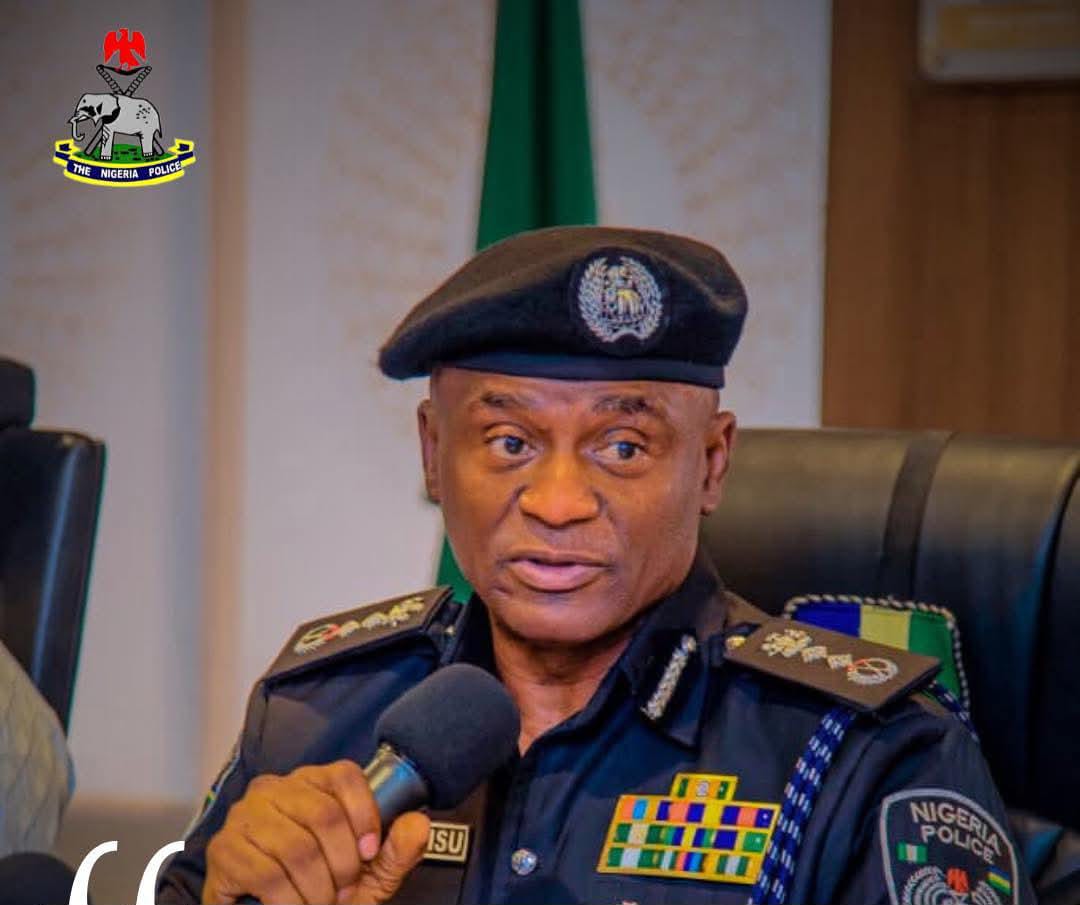
Mr Egbetokun is to be replaced by Tunji Disu, an Assistant Inspector General of Police (AIG).

Although the plan has not been officially announced, sources in the presidency and the police headquarters told PREMIUM TIMES that preparations are underway for a formal handover ceremony from Mr Egbetokun to Mr Disu.

Mr Egbetokun was appointed by President Tinubu as the 22nd IGP on 19 June 2023. His substantive appointment was confirmed by the Nigeria Police Council on 31 October that year.

Appointed as IGP at the age of 58, Mr Egbetokun was due for retirement on 4 September 2024, upon reaching the mandatory age of 60.

However, the National Assembly amended the police law, allowing him to serve his full four-year term as IG unless removed by the president.

He was thus expected to complete his four-year tenure and remain in office until 31 October 2027.

Despite complaints by many Nigerians, the presidency explained that Mr Egbetokun remained in office legally, citing the amended Police Act 2024, which allows an appointed IGP to serve a fixed four-year term regardless of their age or years of service.

Mr Egbetokun’s tenure as IGP was marked by several controversies, including human rights abuses.

The presidency has yet to issue a statement confirming Mr Egbetokun’s removal. Calls to presidential spokesperson Bayo Onanuga and police spokesperson Ben Hundeyin did not go through at the time of this report. However, a source at the presidency said an official announcement would be made later on Tuesday

Continue Reading

Trending