Connect with us

The Oracle

The Oracle: When a Nation Undermines Citizens’ Rights (Pt. 3)

Published

on

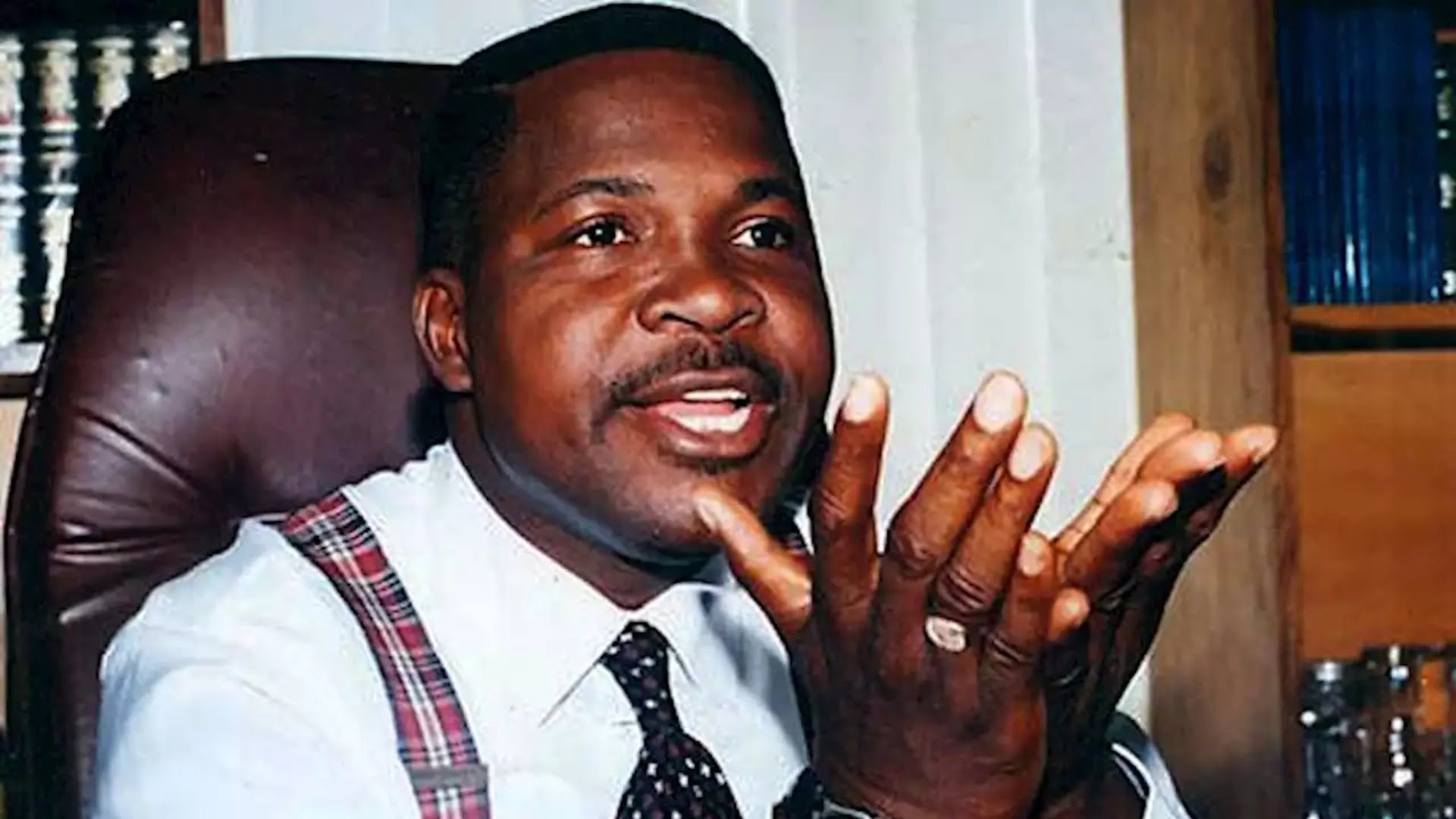
By Prof Mike Ozekhome SAN

INTRODUCTION

The last installment of this series continued from where the inaugural one stopped: the analogy of each corpse buried without justice being a clause in the Constitution buried in effigy. It then explained how inequality breeds violence, before moving onto how systemic lapses in law enforcement is the hidden engine of insecurity and erosion of rights. Later, it examined the contrast between constitutional mandate and institutional reality, followed by the politicization and weaponization of law enforcement; corruption as operational culture; and finally operational weaknesses and structural management. The week, we shall continue with same theme, after which we shall delve into the failure of internal accountability; collusion with criminal networks; erosion of civil liberties through enforcement practices; the cycle of impunity; abuse of judicial power and executive lawlessness targeted at the Bench. Thereafter, we shall consider various pathways and recommendations for addressing insecurity, rights protection and institutional weakness. Enjoy.

OPERATIONAL WEAKNESSES AND STRUCTURAL MISMANAGEMENT

Nigeria’s police-to-population ratio remains alarmingly low. With about 371,800 officers serving a population of over 236 million people, the country is well below the United Nations’ recommended benchmark of 222 officers per 100,000 people. This manpower gap severely hampers the Force’s capacity to tackle crime, especially in volatile areas plagued by insurgency and communal violence. To make matters worse, many of the limited officers available are deployed to safeguard high-profile politicians and elites rather than serving the broader public. In rural communities, especially in conflict-affected northern states, residents report waiting hours, sometimes days, for police to respond to distress calls, if they ever respond at all.

Compounding this problem is inadequate training. Many recruits receive minimal exposure to forensic methods, human rights protocols, or community policing principles. As a result, investigative work relies heavily on confessions, which are frequently extracted through coercion or torture. This not only violates constitutional guarantees against inhuman treatment but also produces unreliable evidence that weakens prosecutions.

Logistical deficits are equally damaging. Many police divisions operate without functioning patrol vehicles, secure communication equipment, or modern crime labs. The Inspector General of Police has acknowledged that, outside of Lagos, forensic capability is virtually non-existent. Without scientific investigation, crimes are either left unsolved or result in wrongful arrests, further undermining public trust

FAILURE OF INTERNAL ACCOUNTABILITY

In a functioning democracy, law enforcement personnel are subject to robust oversight, both internally and through independent bodies. In Nigeria, oversight mechanisms exist in name but not in consistent practice. The Police Service Commission (PSC), which is meant to handle recruitment, promotion, and discipline, is itself politically influenced and suffers from inadequate funding. Complaints of misconduct often disappear into opaque disciplinary processes, and there is little transparency about the outcomes.

When abuses are too public to ignore, as with the October 2020 End SARS protests, Commissions of Inquiry are established, testimonies are heard, and reports are submitted. Yet, implementation of recommendations remains rare. In Lagos, for example, despite the panel’s findings implicating specific officers in excessive force and unlawful killings, few have been prosecuted. Instead, many have returned quietly to duty. This pattern sends a dangerous message to the rank-and-file officers: violations carry reputational risk but rarely legal consequence.

COLLUSION WITH CRIMINAL NETWORKS

Perhaps the most alarming dimension of enforcement failure is the documented collusion between security personnel and criminal actors. In the Niger Delta, security forces have been implicated in illegal oil bunkering, the very crime they are deployed to prevent. In parts of the North-West, reports from Amnesty International and local media allege that bandit groups pay “protection fees” to avoid military or police raids.

Such collusion transforms law enforcement from an adversary of crime into a stakeholder in it. This is not merely passive negligence; it is active participation in the shadow economy of insecurity. In these areas, communities quickly learn that reporting crimes may not only be futile but dangerous, as information shared with authorities can be leaked to perpetrators.

EROSION OF CIVIL LIBERTIES THROUGH ENFORCEMENT PRACTICES

The systemic lapses in law enforcement also directly erode civil liberties. Arbitrary arrests, prolonged detentions without trial, suppression of lawful assembly, and harassment of journalists are not isolated acts but part of an entrenched enforcement culture. The constitutional right to personal liberty under Section 35 is regularly violated under the guise of maintaining public order.

Protesters face preemptive crackdowns, often justified by vague references to national security. During the #Revolution Now protests in 2019, dozens of demonstrators were detained, some for weeks, without formal charges. In many cases, court orders for their release were ignored by security agencies, underscoring the absence of legal consequence for disobedience of judicial authority.
This disregard for civil liberties creates a chilling effect on political participation and civic engagement. Citizens learn that speaking out carries personal risk, and self-censorship becomes a survival strategy. Over time, this quietens public dissent, enabling further abuses by both government and non-state actors.

THE CYCLE OF IMPUNITY

The combination of politicization, corruption, operational weakness, and lack of accountability feeds into a self-reinforcing cycle of impunity. Officers learn that their actions are judged not by legality but by political expediency. Politicians, in turn, see law enforcement as a tool to protect themselves and punish adversaries. Criminal networks exploit these gaps, securing protection through bribery or political patronage.

Once entrenched, this cycle is difficult to break. Each unpunished violation becomes a precedent, normalizing the idea that power grants immunity from the law. This normalization spreads beyond law enforcement to other institutions, eroding the very foundations of democratic governance.

THE ABUSE OF JUDICIAL POWER AND EXECUTIVE LAWLESSNESS AGAINST THE BENCH

In a functioning democracy, the judiciary serves as the impartial referee between the powerful and the powerless. It is the last line of defence for the citizen and the final hope for justice. But what happens when that sacred institution itself becomes the object of aggression? What happens when the enforcers of state power turn their weapons not on criminals, but on the judges who interpret the law? Nigeria confronted these very questions in October 2016, when the homes of senior judges across the country were invaded by heavily armed operatives of the Department of State Services under the cover of night.

These raids, carried out in Abuja, Gombe, and Port Harcourt, targeted some of the most senior members of the judiciary, including Justices Walter Onnoghen and Sylvester Ngwuta of the Supreme Court, and Federal High Court judges Adeniyi Ademola and Nnamdi Dimgba. The DSS claimed they were investigating corruption, yet their conduct betrayed a more sinister motive. Homes were stormed in Gestapo fashion, judges were treated like fugitives, and search warrants reportedly carried incorrect names or were not presented at all. The judiciary was under siege. In Rivers State, Governor Nyesom Wike arrived at the residence of one of the judges to intervene and was reportedly shoved, injured, and threatened by DSS operatives. It was not an arrest. It was a constitutional assault.

I spoke firmly and publicly against this invasion. I said then what I still affirm now: the DSS acted outside the bounds of the law. As I told journalists and as reported by Premium Times, the operation was not only illegal and unconstitutional but a dangerous desecration of the rule of law. No agency of government, including the DSS, has the authority to arrest or search the premises of serving judicial officers without going through the National Judicial Council, which is constitutionally empowered to discipline judges. If there are allegations of corruption, there is a process. That process was willfully ignored. What we saw instead was a show of force meant to intimidate and humiliate. It was executive lawlessness under the guise of anti-corruption.

The greatest tragedy, however, was not merely that these events occurred. It was the manner in which they were received. The Bar, which ought to have risen as a united force, was sluggish in its response. Statements were issued, but no real action followed. There were no mass protests, no urgent court filings to challenge the illegality. The judiciary itself offered little more than murmurs of disapproval. That silence was deafening. It spoke to a larger issue: the slow death of institutional courage. When judges are raided in their homes and lawyers look away, then the entire legal profession stands indicted. If we cannot defend our own, how then can we defend the people?

This unfortunate episode also calls into question the internal health of the judiciary. The Nigerian Law Society recently criticized the widespread abuse of power within judicial institutions, pointing to opaque appointments, poor welfare, and inconsistent rulings. According to their statement reported by the Guardian, the lower courts remain underpaid and under-respected, leaving many judicial officers vulnerable to compromise. It is undeniable that some within the judiciary have failed in their duties, and that corruption has indeed crept into its chambers. However, even in the face of that, the remedy is never brute force. It is lawful accountability, constitutional procedure, and institutional reform. The rule of law must never be sacrificed on the altar of expediency.
When security agents raid the homes of judges without due process, they are not upholding the law, they are undermining it. And when the legal community reacts with silence or justification, it invites a repeat. What began with judges will not end there. Such violations set a precedent that can easily extend to journalists, lawmakers, academics, and eventually, ordinary citizens. Today it is the gavel. Tomorrow it will be the pen, the vote, the voice. That is how authoritarianism begins not always with a declaration, but often with silence.

It is not too late to reset the balance. But we must remember that a judiciary that submits to fear is no judiciary at all. A legal profession that only whispers in the face of injustice is unworthy of its robes. We must return to our roots, as defenders of liberty and protectors of due process. Let the judiciary regain its independence, and let the Bar reclaim its courage. Only then can we begin to restore the broken faith between the Nigerian people and the system that was meant to serve them.

PATHWAYS AND RECOMMENDATIONS FOR ADDRESSING SECURITY, RIGHTS PROTECTION, AND INSTITUTIONAL WEAKNESS IN NIGERIA

The challenges outlined in this paper reveal a complex web of governance failures, enforcement gaps and systemic disregard for constitutional rights. Addressing these issues requires deliberate and sustained action across multiple fronts. The following ten pathways provide a practical blueprint for reform.

Reform of Law Enforcement Institutions
The Nigerian Police Force, the Department of State Services, and related agencies need deep structural reforms. Recruitment should be based on merit and integrity rather than political patronage. Training should include human rights education, forensic investigation, and conflict-sensitive community policing. The practice of diverting a large proportion of officers to serve political elites must be stopped so that policing resources are redirected toward public safety.

Creation of Independent Oversight and Accountability Mechanisms

A civilian-led oversight authority should be established with the power to investigate and prosecute cases of misconduct by law enforcement officials. This body must have full access to records, the ability to compel testimony, and legal safeguards for whistleblowers. Its findings should be made public to ensure transparency and build trust. (To be continued).

THOUGHT FOR THE WEEK

“Money and corruption are ruining the land, crooked politicians betray the working man, pocketing the profits and treating us like sheep, and we’re tired of hearing promises that we know they’ll never keep” – Ray Davies

Continue Reading
Click to comment

Leave a Reply

Your email address will not be published. Required fields are marked *

The Oracle

The Oracle: Entertainment is the Next Hope for Nigeria After Oil (Pt. 2)

Published

on

By

Prof Mike Ozekhome SAN

INTRODUCTION

The inaugural part of this piece was necessarily introductory. It examined the interplay between economic development and the demand for leisure; the growth and evolution of the entertainment industry- with a focus on Nigeria, specifically Nollywood. This week’s feature (its second and final installment) continues from where the previous week’s stopped with an assessment of other aspects of the industry like comedy and music. Thereafter, we discuss the potential of entertainment as the new ‘oil’ and conclude with a review of the impact emerging technologies such as Artificial Intelligence is having on the entertainment industry. Enjoy.

NOLLYWOOD (continues)

Nigeria’s biggest export to the world comes from her entertainment sector. In recent years Nigerian home videos, music and culture have found their ways into several African countries where they are dominating the local film and music industry.

A 2010 article by The Economist said thus: “Nigerian films are as popular abroad as they are at home. Ivorian rebels in the bush stop fighting when a shipment of DVDs arrives from Lagos. Zambian mothers say their children talk with accent learnt from Nigerian television. When the president of Sierra Leone asked Genevieve Nnaji, a Lagosian screen goddess, to join on the campaign trail, he attracted record crowds at his rally. Millions of Africans watch Nigerian films every day, many more than see American fare. And yet Africans have mixed feelings about Nollywood.” (The Economist. Lights, camera, Africa.http://www.economist.com/node/17723124).

So ubiquitous and pervasive is the Nigerian Entertainment industry that several African countries have actually raised alarm over what they term “the Nigerianization of Africa” (sort of a modern recolonization of Africa by Nigeria) –with some countries going as far as instituting measures to curb the growth of Nigerian films (and invariably Nigerian culture) in their country.
It is instructive to note that the Nigerian film industry has been able to propel itself to the current position it stands at without government support. The films are produced by individual financiers and marketed by private companies. However, recently- government and other international organization, like the World Bank, have begun to make effort to boost the industry. The Nigerian government and World Bank recently made available a loan scheme for movie producers and directors Nigeria’s entertainment and media market grew by 19.3% in 2014 to reach US$4 billion. By 2019, the market will be more than twice as big, with estimated total revenue of US$8.1 billion (tp://www.financialnigeria.com/nigeria-s-entertainment-and-media-industry-to-grow-to-8bn-by-2019-sustainable-photovideo-details-140.html#sthash.YKRy1xfI.dpuf).

COMEDY INDUTSRY

The Comedy sector of the Entertainment industry has become so huge that comedy has now become one of Nigeria’s export to Africa and the world. It is not yet clear how much or to what extent the sector contributes to the economy. A guess however, is that it is likely to be substantial. If not for anything, the very fact that the sector has acted as a catalyst to pull some Nigerian youth out of poverty into a life of affluence is more than enough contribution to the advancement of the economy. Comedians earn millions putting smiles on the faces of disgruntled Nigerians, giving them a short reprieve from the challenges faced on a daily basis. In addition to engaging their talents, entertainers also exploit their increasing celebrity status, resulting in income from endorsements of companies from a range of industries. The creative arts industry holds the potential to enrich Nigerians of all ages but also provides much needed therapy to help soothe the social woes that plague this developing nation.

NIGERIA MUSIC

Much like the film industry, the Nigerian music industry has grown over the years largely on individual efforts rather than governmental or institutional support. Nigerian music and the accompanying videos, are the most followed and watched, in Africa, with local acts collaborating with different music acts across the world from American’s Kanye West to Tanzania’s Diamond Platnumz. Davido’s signing with Sony Music has been described as a major game changer for Nigerian pop music. Another triumph is the story of Wizkid who is currently on a roll with an appearance on Drake’s album, as well as several other reported collaborations with Jidenna and Chris Brown.

Like Nollywood, the Nigerian music industry has enormous influence in the socio-cultural activities of the country –and indeed the rest of Africa. Nigerian musicians have coined several slangs (often nonsensical and meaningless) that have gained acceptance in mainstream Nigerian languages and are often weaved intricately into the social behavior, communication and behavior of the public.
It was reported that an estimated 1200 concerts and musical shows take place every year and account for a combined annual turnover of US$105.5 million from that sector alone!

ENTERTAINMENT AS THE NEW OIL

As stated above, Price water house Coopers came out with a report that the Nigerian entertainment industry is predicted to generate revenue in excess of $8 billion dollars by 2019. If President Buhari’s budget for 2016 is N6.02 trillion, and expected earnings from the industry are pegged at N2.51616 trillion ($8 billion at the official rate of N314.52), then the Nigerian entertainment sector is clearly at the forefront of the economy. If the entertainment industry, an industry currently underfunded and previously disregarded, can garner that much in terms of revenue, then Nigerians can be hopeful and confident of the future, despite the gathering economic storm clouds. As good as this sounds, there are other positive signs based on projections of the future growth direction of the industry (Naija.com. Feature: Entertainment as the alternative to oil for Nigeria. https://www.naij.com/823542-now-that-crude-oil-is-worthless-heres-another-option-for-nigeria.html).

Analysts had said that the movie segment made about N1.72trn in 2013. According to Business Day, the rebasing exercise shows the huge leap how the entire entertainment sector had been hugely underrated over the years. The sector was earlier classified amongst ‘other services’ that barely contribute N5bn to the annual GDP. The share has risen, sharply, from its once-insignificant status to become the first five. “What surprises me the most is the ‘Motions pictures, sound recording and music production’, which jumped to N9trn, which is a huge amount. I didn’t expect that kind of jump. Initially, it was under ‘other services’ where items that are too small are captured during the GDP computation,” (Leadership Newspaper. How Entertainment Contributes To Nigeria’s GDP. http://leadership.ng/entertainment/364405/entertainment-contributes-nigerias-gdp).

Also, in the last five years, the industry has grown in terms of quality and has been rated the third most valuable movie industry in the world, behind Hollywood and Bollywood. The development has also impacted on returns. The United Nations said, last May, that Nollywood is estimated to employ some 1,000,000 people and had the potential to create 1,000,000 more in the future if properly managed. Its release of about 50 films a week puts it in the same bracket in terms of production with movie-mad India, although revenues — thought to be about $590m a year — are considerably less.

ARTIFICIAL INTELLIGENCE IN THE MEDIA AND ENTERTAINMENT INDUSTRY

I agree with Aluko and Oyebode (https://www.aluko-oyebode.com/insights/artificial-intel-in-nigeria-issue-1/ accessed on 30th January, 2026) that the distribution of content in the global media and entertainment industry is rapidly changing. The reasons are not far-fetched: the increasing accessibility of content creation technologies such as high-resolution cameras, content development software, and smartphones, almost anybody can now create, publish, and share written, audio, and video content.

I also agree with them that this trend is further accelerated by the proliferation of the internet, which has led to the replacement of traditional media channels like cable and radio with on-demand streaming platforms like Netflix and YouTube. Consequently, consumers have potentially limitless options to choose from, in terms of media consumption, with the results that media companies are facing the need to raise the quantity as well as the quality of content they create to attract as many consumers as they can to drive higher value. This is where advanced technologies like Artificial Intelligence (AI) have proved handy in helping media companies to improve their services and enhance the customer experience.

I couldn’t agree more with their opinion that the following are instances of the use of AI in transforming the media and entertainment industry:

Content Personalization

We all enjoy popular SVOD platforms like Netflix, Hulu, and Prime which brings to us the kind of shows and movies that we love; this surely better than scrolling through their database searching for content that we prefer. That’s AI at the work. Additionally, content streaming sites have perfected their streaming recommendations according to different tastes and preferences for people of all locations, deploying machine-learning and AI algorithms to analyze user behavior, in terms of what genre of content users are mostly streaming in order to maximize the user experience. AI uses these data insights to create a highly personalized experience for every user.

Search Optimization

AI has also made it easier and more accurate to obtain search results and suggestions. For example, rather than searching for the title of a movie or the name of an item, you may just submit an image to Google and obtain results based on the image. Instead of searching for random lyrics to find the name of a song, you may play it and a streaming software like Shazam can identify the music for you. You may also instruct your phone to perform some actions after tapping the back or the screen for a particular number of time.
Regrettably, Nigeria has a long way to go in enacting appropriate universal AI regulation, forcing operators of these platforms to contend with mostly local laws, such as those dealing with copyright, when dealing with protected content. This also includes the Cybercrimes (Prohibition, Prevention, Etc) (Amendment) Act, 2024, in respect of illegal contents, Child Pornography and the Nigeria Data Protection Act and Regulations when dealing with consumers data.

CONCLUSION

John Litwack (The Lead Economist for Nigeria, World Bank.) stated that: “the large number of underemployed youth is a serious threat to the economic and political stability of the country. The median age in Nigeria is 14, and the population continues to grow at a rate close to 3 percent”. There is no doubt that Nigeria as a nation continues to remain one with tremendous potential.

However, it only remains that – a nation with tremendous potential – if Nigeria remains over dependent on the oil and gas industry and adequate investments are not made in initiatives that are more promising. The music industry continues to impress, transforming the global perception of Nigerians and employing teeming Nigerian youth whilst proving to be a lucrative venture for zealous entrepreneurs. Nollywood has also been identified as a promising industry with the potential to unlock both economic and social benefits. The industry has already hinted at its promise and is internationally competitive despite relatively little financial input. More investments need to be made to improve the quality and marketing of movies, but also enable the establishment of a self-sustaining domestic cinema industry. The industry however, remains far from its potential and with increased investments should not only help employ and entertain a significant portion of the Nigerian populace, but also provide forex flows from a growing international customer base. (The end).

THOUGHT FOR THE WEEK

“The world is a stage, the stage is a world of entertainment”. -Howard Dietz.

Continue Reading

The Oracle

The Oracle: Entertainment, the Next Hope for Nigeria After Oil (Pt. 1)

Published

on

By

By Prof Mike Ozekhome

INTRODUCTION

Entertainment is a form of activity that holds the attention and interest of an audience, or gives pleasure and delight. It can be an idea or a task, but is more likely to be one of the activities or events that have developed over thousands of years specifically for the purpose of keeping an audience’s attention (The Oxford English Dictionary (Oxford University Press, 1971, Vol. 1 pp. 213–4)).

According to Wikipedia, Entertainment is any activity which provides a diversion or permits people to amuse themselves in their leisure time, and may also provide fun, enjoyment and laughter. People may create their own entertainment, such as when they spontaneously invent a game; participate actively in an activity they find entertaining, such as when they play sport as a hobby; or consume an entertainment product passively, such as when they attend a performance (Wikipedia, Outline of entertainment. https://en.wikipedia.org/wiki/Outline_of_entertainment).

The entertainment industry (informally known as show business or show biz) is part of the tertiary sector of the economy and includes a large number of sub-industries devoted to entertainment. However, the term is often used in the mass media to describe the mass media companies that control the distribution and manufacture of mass media entertainment. In the popular parlance, the term show biz in particular connotes the commercially popular performing arts, especially musical theatre, vaudeville, comedy, film, and music. It applies to every aspect of entertainment including cinema, television, radio, theatre and music.

ECONOMIC DEVELOPMENT AND THE DEMAND FOR LEISURE

Leisure time has been a determining factor in the development of recreation and entertainment as an industry. Entertainment has grown as an industry in step with increased income and time available for leisure and recreation. Economic development, often quantified in terms of productivity or output per person-hour, has enabled goods and services to be produced with fewer labor inputs. The growth of the entertainment industries has been directly related to the development of a modern economy and rising economic productivity, though precise estimation of the demand for leisure is a thorny task (Owen, John D. 1971. The Demand for Leisure. Journal of Political Economy 79 (1): 56–76.). An important issue in the development of entertainment as an industry is the rising productivity of workers, and in particular the ways in which technical progress has increased worker productivity. Progress in technology, in addition to creating the demand for entertainment products and services, has also led to the creation of much of the dominant forms of contemporary entertainment (Thomson Gale. Loc cit.).

THE ENTERTAINMENT INDUSTRY: GROWTH AND PROGRESS

The Compound Annual Growth Rate (CAGR) of the entertainment and media spending worldwide has been predicted between 2014 and 2019, by sector. Of the 13 sectors that make up the Entertainment and Media industry, film will grow at the seventh-fastest pace worldwide. The fastest is Internet advertising, which will grow 13.1 percent annually from 2013-2017. Print will bring up the rear, with magazine publishing growing at 0.3 percent, while the newspaper industry remains flat. A milestone will occur in 2016, when the global E&M category becomes a $2 trillion industry (http://www.billboard.com/biz/articles/news/global/1565728/study-global-entertainment-industry-poised-to-top-2-trillion-in).

Despite forecasts revealing that online formats will experience the most annual growth, a further breakdown of worldwide entertainment and media revenue in 2009, 2013 and 2018, by platform reveals that non-digital platforms such as magazine and newspaper publishing will continue to dominate. In 2009, digital revenue for the industry totaled 342 billion U.S. dollars and non-digital revenue totaled 1,038 billion U.S. dollars. By 2018, it is expected that digital revenue will total 994 billion.

Entertainment as an industry—in the United States alone—is responsible each year for $150 billion in expenditures and some 120 billion hours of consumed time (Vogel, Harold L. 1998. Entertainment Industry Economics: A Guide for Financial Analysis. 4th ed. New York: Cambridge University Press.). Entertainment as an economic sector consists of diverse products and services including motion pictures, television, music, broadcasting, print media, toys, gaming, gambling, sports, and fine arts (Thomson Gale, Entertainment industry. International Encyclopedia of the Social Sciences 2008.). In 2017, Americans will buy 1.3 billion movie tickets and pay an average price of $9.60 for them, according to PwC, representing a slow growth of 1.3 percent a year in admissions and 2 percent a year in ticket prices stateside.

Based on PwC’s Global Entertainment & Media Outlook, the global E&M industry, following a pandemic-related decline in 2020, has experienced a period of significant growth. The industry in 2026 has reached an approximate growth rate of US$3 trillion in revenues.

Following a 2.3% decline in 2020, the industry saw a 10.4% rebound in 2021. Global advertising revenue has increased to $1 trillion in 2026, with digital advertising continuing to grow, at a 6.6% or higher CAGR

The Key Growth Drivers of the entertainment industry in Nigeria today includes but not limited to:
Video Games: Global video games and esports revenue, totaling US$215.6bn in 2021, is forecasted to grow at an 8.5% CAGR to reach US$323.5bn in 2026.
Over-the-top (OTT) Video: Expected to grow at a 7.6% CAGR through 2026, pushing revenues to US$114.1bn.
Cinema: Projected to reach a new high in 2023, with revenues rising at an 18.9% CAGR from 2021 to 2026.
Virtual Reality (VR): Forecasted to grow at a 24% CAGR to US$7.6bn in 2026.

The Emerging markets continue to lead with higher CAGRs, including Turkey (estimated 14.2%), Argentina (10.4%), India (9.1%), and Nigeria (8.8%) between 2021 and 2026. In contrast, however, traditional TV has declined at a -0.8% CAGR from 2021 to 2026.

THE ENTERTAINMENT INDUSTRY OF NIGERIA

Nigeria’s entertainment industry is a booming global force, led by Nollywood (the film industry), the world’s second-largest by volume, and a vibrant music sector (Afrobeats), both driving significant economic growth, international cultural influence, and job creation, despite ongoing challenges like piracy and rising production costs, with streaming and digital platforms fueling its massive expansion.

Entertainment serves as a major force for social and economic good, the sector provides, educates, and releases stress. The Nigerian entertainment industry is a major economic driver, (a rapidly expanding global powerhouse), with revenues expectation of $4.9 billion in 2026. The sector contributes significantly to GDP, with over ₦1.97 trillion generated in 2023. Digital streaming and social media are major drivers, connecting local talent to international audiences.

The Entertainment industry in Nigeria comprise of the film sector, the music sector, the comedy sector, the fashion and the art sector. The Nollywood veteran, Richard Mofe Danmijo, while delivering a speech at Professor Pat Utomi’s Annual Lecture, on 15th January, 2015, titled: “Impact of Entertainment on Nigeria’s Economy”, surmised the contribution of the Entertainment sector to the economy of Nigeria in this way: “Nollywood, the film and video segment, is the clear leader. In the last couple of years, our music has taken the world by storm. Our art is making in-roads into the global marketplace. Fashion has set its footstool in the global arena. Life theatre has come alive and the new media has continued to make these different aspects of entertainment available to the world in real time,”

NOLLYWOOD

According to Wikipedia, the emergence of the video film market in Nigeria is traced back to the 1980s when television productions thrived. Jimi Odumosu’s Evil Encounter, a 1980 horror film released directly on television, was the first production to be a pointer to how lucrative making film directly on video can be (Wikipedia, Cinema of Nigeria. https://en.wikipedia.org/wiki/Cinema_of_Nigeria). The film was extensively promoted before being aired on the television, and as a result, had streets flooded in the following morning with video copies of the recorded broadcast. It was reported that the film became an instant hit at Alaba market, a commercial district which later became the hub of video distribution in this period and also eventually became the hub of piracy in Nigeria. Since Evil Encounter, it became common, especially in Southern Nigerian cities to see video copies of recorded television programmes traded on the streets (History of Nollywood”. Nificon. Retrieved 15 October 2014. http://www.nificon.org/about/history-of-nollywood/).

This method was adopted and built on by producers and distributors at Alaba Market to reinvent the film industry, since the Nigerian cinema culture was facing a major decline. The first film produced on video in Nigeria was 1988’s SosoMeji, produced by Ade Ajiboye. The film was also screened at the few available theatres at the time. Subsequently, Alade Aromire produced Ekun (1989) on video, which was screened at the National Theatre, Iganmu (Emeagwali, Gloria (Spring 2004). “Editorial: Nigerian Film Industry”. Central Connecticut State University. Africa Update Vol. XI, Issue 2. Accessed January 30th, 2026) Emejulu, Obiajulu A.; Amadi, Dan Chima (December 2014). “Living in bondage: A dream deferred or a promise betrayed for Igbo linguistic and cultural renaissance?”. Academic Journals. International Journal of English and Literature. Retrieved 7 April 2015).

However, the boom experienced in this era is generally believed to have been kick started by Kenneth Nnebue’s Living in Bondage (1992). Nnebue had an excess number of imported video cassettes which he then used to shoot his first film on a Video camera (Nigeria’s film industry, The Economist”. Economist.com. 2006-07-27.). Although Living in Bondage is often touted in the media as the “first commercial video film”, several historians have argued that the video film industry was already booming before Living in Bondage (Nnabuko, J.O.; Anatsui, Tina C. (June 2012). “NOLLYWOOD MOVIES AND NIGERIAN YOUTHS-AN EVALUATION” (PDF). JORIND 10. 10 (2). ISSN 1596-8308. Retrieved 18 February 2015).

At the commencement of major boom in the 1990s, marked by the release of the direct-to-video film Living in Bondage (1992); the industry peaked in the mid 2000s to become the second largest film industry in the world in terms of the number of annual film productions, placing it ahead of the United States and behind only India. The films started dominating screens across the African continent and by extension, the Caribbeans and the Diaspora, with the movies significantly influencing cultures, and the film actors becoming household names across the continent.

According to Muyiwa Babarinde , the influence of Nigerian films has also crossed beyond the Nigerian borders (Op-Ed Editor and MuyiwaBabarinde, Y! Report: Nigeria’s emergence as Africa’s media and entertainment superpower. http://ynaija.com/y-report-nigerias-emergence-as-africas-media-and-entertainment-superpower/). Late Tayo Aderinokun, cofounder of Guaranty Trust Bank (GTB), in a 2004 speech said: “According to the Filmmakers Cooperative of Nigeria, every film in Nigeria has a potential audience of 15 million people within the country and 5 million outside. These statistics maybe somewhat conservative considering that half of West Africa’s 250 million people are Nigerians.” (TayoAderinokun, There are many untapped business opportunities in Nigerian film industry. Presentation made at the 50th Art Stampede Session of the Committee for Relevant Art (CORA) held at The National Theatre, Iganmu, Surulere, Lagos, Nigeria on Sunday March 7th, 2004.).

To be continued…

THOUGHT FOR THE WEEK

“The world is a stage, the stage is a world of entertainment”. -Howard Dietz

Continue Reading

The Oracle

The Oracle: The University As Catalyst for Societal Development (Pt. 7)

Published

on

By

By Prof Mike Ozekhome SAN

INTRODUCTION

In our last episode, we examined the core functions of Universities as tools for societal development through the following prisms: social mobility/equity; political development and cultural/social transformation. Thereafter, we analysed the challenges hindering the attainment of that goal, such as underfunding/structural decay and brain-drain. Today, we shall continue with same theme focusing on curriculum irrelevance; policization, corruption/strikes; poor research linkages; week institutional autonomy and limited global competitiveness (especially) African universities. Later we shall x-ray some pathways for reclaiming the university’s role and then conclusion. Enjoy.

Curriculum Irrelevance

In Nigeria, universities are meant to be engines of societal uplift—factories of innovation, virtue, and capacity. Yet, the curricula they enforce often remain anchored in the past, oblivious to the needs of the present or the demands of tomorrow. When the syllabus fails to track global technology, local industry, or national development, it becomes a gilded cage: polished on the outside, hollow within.

Former Education Minister Tunde Adeniran admonished that the current university curricula are outdated, producing “parasites and unemployable graduates.” These are not empty words—they are the judgment of authority and the verdict of public concern (Nigerian Tribune, “Nigerian varsity curriculum producing parasites, unemployable graduates — Adeniran, ex-education minister” https://tribuneonlineng.com/nigerian-varsity-curriculum-producing-parasites-unemployable-graduates-adeniran-ex-education-minister/ accessed 9 September 2025). The result? A cohort of graduates burdened with degrees, yet stripped of relevant skills, unable to build, to create, or to serve.

Politicization, Corruption and Strikes

In Nigeria (and indeed across much of Africa) the university, meant to be a forge of societal advancement, is often smothered by politicization, where creation and control of institutions serve political ends rather than national development. Many federal universities have been established not out of educational necessity but out of electoral calculus—aimed at scoring regional loyalties, patronage, or political symbolism. The result? A proliferation of half-funded institutions, where infrastructure lags, academic standards wither, and the capacity for meaningful engagement with society diminishes (Punch, “ASUU strike: Not again”).

Amidst this politicization, corruption festers at multiple levels—financial, academic, and moral. Financial mismanagement and nepotism divert scarce resources away from teaching and research; admission racketeering, “sorting” (cash-for-grades), ghost workers, and sexual harassment for marks corrode the moral fabric of institutions and undermine public. These corrupt practices distort the university’s purpose and erode its capacity to produce the leaders and professionals the nation so desperately needs.

Poor Research–Industry Linkages

One of the most persistent challenges facing many African universities is the weak linkage between academic research and industry demand. Despite individual examples of collaboration through internships, guest lectures, and curriculum co-development, these partnerships often remain fragmented and under-resourced. Particularly among small and medium-sized enterprises (SMEs), there is often limited capacity to engage with universities meaningfully, and vice versa — universities frequently lack sufficient incentives or infrastructure to align their research with market needs. Further constraints include scarce funding for applied research and commercialization, weak intellectual property management frameworks, and the absence of robust national strategic frameworks that align universities, industry, and government. As a result, many promising discoveries fail to cross the “valley of death” between innovation and market readiness.

Weak University Autonomy

Another structural barrier is the limited autonomy of universities. Across many African nations, public universities remain heavily controlled by governments through centralization of governance structures, finance, and administrative systems. For instance, in Ethiopia, Addis Ababa University’s attempts at governance reform toward autonomy have been hampered by lack of infrastructure capacity, insufficient stakeholder consensus, and inadequate political support. In Nigeria, public universities are often integrated into centralized payroll systems (such as IPPIS), face constrained admissions and funding models, and operate under dominant governing councils, all of which hinder independent decision-making. This restricted autonomy curtails their ability to innovate academically, manage financial resources effectively, and respond nimbly to evolving educational needs (https://journals.researchparks.org/index.php/IJIE/article/view/4286? > Accessed on 9th September, 2025).

Limited Global Competitiveness of African Universities

A third significant constraint is the diminished global competitiveness of African universities. Many fall short of top-tier global rankings—such as QS or Times Higher Education—due to a combination of inadequate research funding, low output of high-impact publications, poor infrastructure, and limited international engagement. For example, in Nigeria only a handful of universities appear in the global QS rankings, often placed far below their counterparts in Egypt or South Africa. Issues like academic instability (e.g., frequent strikes), brain drain, and limited visibility in global research networks further hinder competitiveness. In South Africa, previously high-performing institutions are slipping in global rankings, citing weakened research output and intensifying international competition (https://thenigeriaeducationnews.com/2025/03/19/africas-top-10-universities-academic-excellence-global-rankings-and-the-challenges-hindering-world-class-recognition/?utm_source=chatgpt.com> accessed on 9th September, 2025).
PATHWAYS TO RECLAIM THE UNIVERSITY’S ROLE

Adequate Funding and Resource Allocation

No institution thrives on starvation. For decades, African universities, particularly in Nigeria, have been treated as beggars at the table of national budgets. The result is crumbling lecture halls, under-equipped laboratories, poorly paid staff, and students learning theory without practice. If the university is truly the furnace where nations are forged, then it must be funded like the arsenal of national survival. Adequate funding does not mean mere salary payment; it means strategic investment in infrastructure, digital libraries, research grants, and innovation hubs. Without resources, universities cannot catalyze societal development—they will merely recycle mediocrity.

University–Industry–Government Synergy (Triple Helix Model)

Universities cannot exist as isolated ivory towers; they must become bridges between theory and practice. The “triple helix model” insists that government provides enabling policy, industry provides practical platforms and funding, while universities supply research and talent. In Nigeria, this linkage is painfully weak. Industries complain that graduates are unemployable, while universities lament poor funding. The cure is deliberate partnerships—internship pipelines, joint research projects, industrial endowments, and policy incentives. When these three actors intertwine, the university becomes a genuine catalyst, converting knowledge into usable development.

Emphasis on Research Commercialization
Too often, African universities produce theses and dissertations that gather dust on shelves instead of birthing patents, startups, or policy tools. This academic graveyard must be transformed into a marketplace of innovation. Research should not end in publication alone; it should translate into products, services, and solutions that society can use. In medicine, in agriculture, in law, in energy—findings must be commercialized and protected through intellectual property systems. By bridging the gap between “research for recognition” and “research for relevance,” universities can directly shape national economies.

Curriculum Reform: Innovation, Entrepreneurship, Technology, Ethics
The curriculum is the blueprint of a nation’s future. Outdated syllabi that ignore present realities will continue to produce graduates unfit for tomorrow’s challenges. Reform must be bold—infusing innovation, entrepreneurship, and technology across disciplines. Yet, skill without character is dangerous; hence ethics and leadership must also be embedded. Universities should not only produce engineers and lawyers, but entrepreneurs, inventors, and nation-builders who combine competence with conscience. Such curricula create graduates who are not job seekers, but job creators.

International Collaboration and Global Competitiveness

Knowledge knows no borders. In a world where research is increasingly global, African universities cannot afford parochialism. Partnerships with international institutions, exchange programs, joint publications, and participation in global rankings expose universities to best practices and raise their credibility. Furthermore, attracting foreign students and researchers generates revenue, enhances diversity, and situates the university as a global player. For Africa, this is not about imitation but about integration—entering the global stage while retaining local relevance.

Revival of Mentorship, Discipline, and Value-Driven Leadership

At the heart of the university’s decline lies a deficit of character. A generation of students has witnessed more strikes than semesters, more corruption than integrity, more shortcuts than mentorship. To reclaim the university’s role, there must be a moral revival. Senior academics must mentor juniors not only in scholarship but in values. Discipline—academic rigor, respect for deadlines, ethical research practices—must be re-enthroned. Leadership within universities must be less about politics and more about service. For without values, knowledge becomes a weapon; with values, knowledge becomes light.

CONCLUSION

The university, when rightly positioned, is far more than an academic enclave; it is the multiplier of societal progress and the beating heart of national destiny. It is here that knowledge is preserved, expanded, and transmitted across generations. It is here that research generates the innovations which fuel economic development, and where civic values are cultivated to sustain social cohesion. More than a training ground for professionals, the university is a crucible of leadership, a forum for critical debate, and a repository of cultural memory. In every society, universities function as both mirrors and architects—reflecting prevailing realities while simultaneously shaping the trajectory of the future.
No nation can rise above the strength of its universities. Where universities thrive, societies flourish with creativity, industry, and progress; where they falter, societies stumble into ignorance, unemployment, and stagnation. To underfund or neglect the university is not simply to weaken an institution—it is to weaken the very foundations of national development. To politicize it or reduce it to a degree factory is to mortgage the future and silence the engines of transformation that drive innovation, governance, and economic competitiveness.

Yet, when universities are nurtured, they become unstoppable catalysts for growth. With adequate funding, sound governance, global collaboration, and strong research–industry linkages, they evolve into hubs of knowledge creation, innovation, and civic renewal. They serve as bridges between past traditions and future aspirations, ensuring that societies remain adaptive, resilient, and forward-looking. They also extend their impact beyond the campus walls, engaging with communities, shaping public policy, and inspiring social reform.

For Africa, and Nigeria in particular, the stakes are especially high. If the continent is to break cycles of dependency and underdevelopment, it must reclaim and reposition its universities as engines of transformation. This requires more than piecemeal interventions; it calls for systemic reform, sustained investment, and a cultural revaluation of the role of higher education. When universities are strong, they not only prepare individuals for the workforce but also generate solutions to national challenges, foster inclusive societies, and project the intellectual sovereignty of the continent.

The truth is simple but profound: a society’s development is mirrored by the strength of its universities. To strengthen them is to secure the future, to invest in human capital, and to expand the horizons of possibility. To neglect them is to doom tomorrow to mediocrity, dependency, and decline. If Africa seeks genuine transformation, and if Nigeria desires enduring progress, then the university must remain at the centre: resourced, reformed, and revered as the catalyst of societal development. (Concluded)

THOUGHT FOR THE WEEK

“A University should be a place of light, of liberty, and of learning” – Benjamin Disraeli

Continue Reading

Trending