
Boss Of The Week
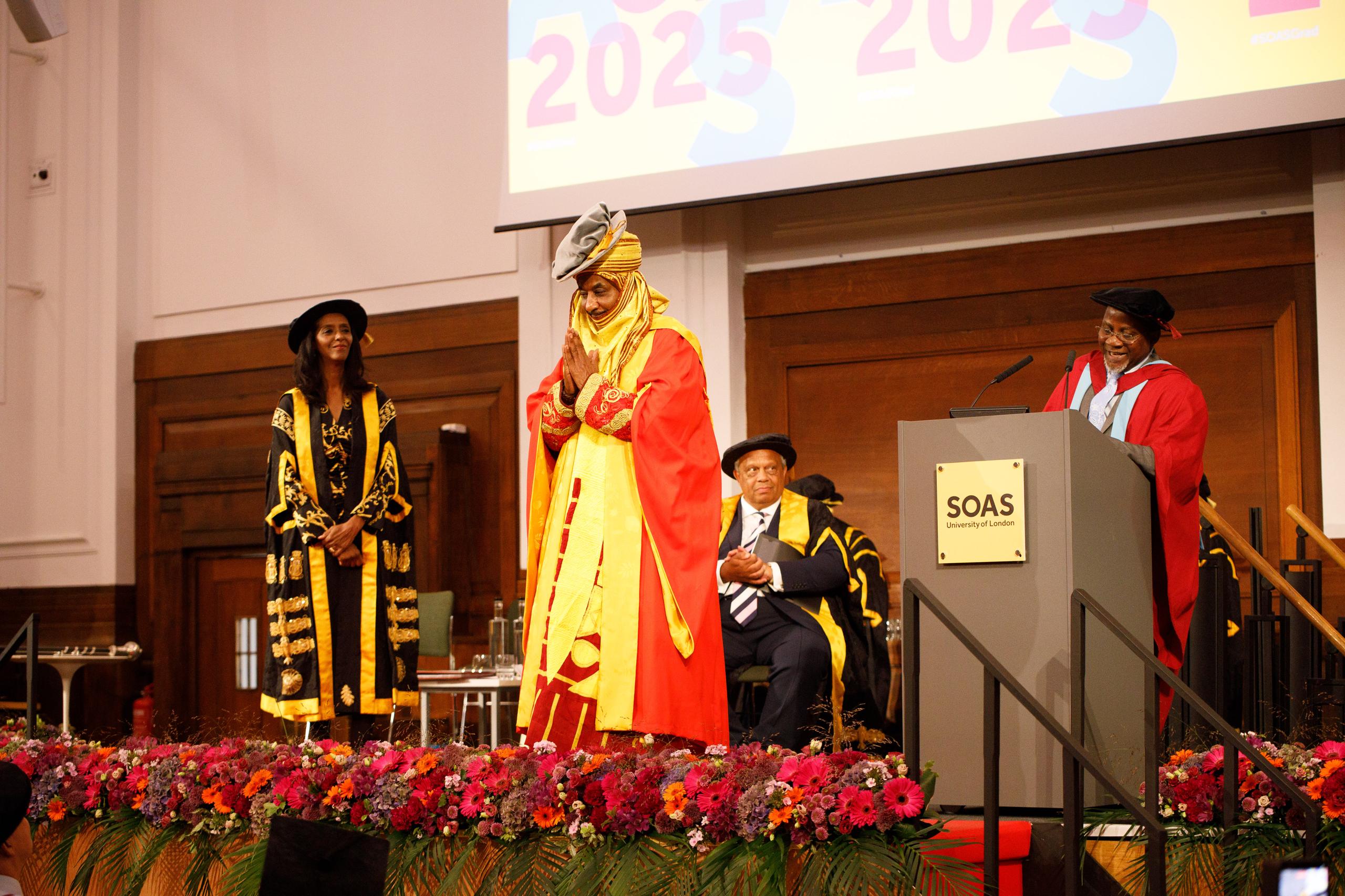
HRH Khalifa Muhammad Sanusi Bags PHD Honours in London


By Eric Elezuo
The city of London on Thursday, the 4th of September, 2025, recorded a wholesome activity, as the day marked a historic milestone for His Highness Khalifa Muhammad Sanusi II, CON, Sarkin Kano, as he was conferred with a Doctorate Degree (PhD) from the prestigious University of London. The graduation ceremony was a moment of pride and joy, showcasing his lifelong pursuit of knowledge, leadership, and reform.
The event, which experienced the pomp and finesse of royalty, saw the Emir standing amidst academic supremacy, savoring the attention that comes with achievements and invincibility.


After the ceremonies that heralded the prestigious award, dignitaries and well-wishers later in the evening gathered at The Lanesborough Hotel in London for a memorable dinner celebration in his honour. Among the attendees were the Governor of Kano State, His Excellency Alhaji Abba Kabir Yusuf; the Governor of Abia State, His Excellency Dr. Alex Chioma Otti, OFR; the Senior Pastor of Trinity House Church, Pastor Ituah Ighodalo; the Founder of Stanbic IBTC Bank, Atedo Peterside; and many other distinguished guests.
Reflecting on his remarkable journey, His Highness shared these powerful words: “At some point in life, life gave me lemons, and I made lemonade.”


It was truly an unforgettable day from the halls of the University of London to an evening of honour at The Lanesborough, celebrating an exceptional leader known for his scholarship, service, and resilience.
KHALIFA MUHAMMAD SANUSI’S BRIEF CITATION
Born July 31, 1961 to Muhammad Aminu Sanusi and Saudatu Anduwa Hussain, Sanusi descends from a lineage marked by its combination of royal blood and public service, in the spiritual as well as the temporal domain. Numerous imams and judges are to be found among his forebears. Sanusi’s father, who held the princely title of Chiroma of Kano, was a pioneer career diplomat of Nigeria.
He was charged with setting of Nigerian intelligent services by the late Sir Abubakar Tafawa Balewa in 1961.He served as Nigerian High Commissioner to Canada. He also served as Nigerian ambassador to
Belgium. In 1972 he became Nigerian first Ambassador to the People Republic of China. He retired in 1979 as Permanent Secretary, Federal Ministry of External Affairs.

Sanusi was the cherished grandson of Emir Muhammad Sanusi I (r. 1954-1963), known for his strength of character and public spiritedness. Credited with modernizing Kano’s economy through industrial
development, irrigation projects, and the opening of an international airport, Muhammad Sanusi I also reinvigorated the emir’s moral and spiritual role by exercising the right to lead Friday prayers and serve as
shari’a judge. Through adopting his grandfather’s official title and other symbolic actions, Muhammad Sanusi II has explicitly signalled the continuity between his and his grandfather’s reigns.


After childhood Qur’anic studies and elementary school, Sanusi entered King’s College Lagos, then earned a bachelor’s and master’s degree in economics at Ahmadu Bello University, Zaria — where he also taught economics. In 1985, he launched a distinguished banking career at ICON Ltd. Merchant Bankers, a subsidiary of Morgan Guaranty Trust and Baring Brothers. Later, he joined United Bank for Africa, running its credit and risk management division and then rising to the position of general manager. In 2005, he moved to First Bank, where he was appointed group managing director in 2009. Alongside this work in the financial industry, Sanusi never ceased pursuing his scholarship in Islamic history, thought, and law. After years of private study under the tutorial of a number of learned ulama’, he left banking to enrol in the Africa International University in Khartoum, Sudan, where he earned a degree in Islamic studies and fiqh in 1997. In June 2009, Nigerian President Umaru Musa Yar’adua appointed Sanusi governor of the central bank. It was a trying moment to take up such a post: the world was reeling in the throes of the worst financial crisis since the Great Depression. Nigerian banks had hardly escaped the impact: corroded by corruption, mismanagement, and reckless and fraudulent lending practices, twenty-four banks were on the brink of collapse. Sanusi pursued an approach unrivalled anywhere in the world. On the one hand, he mobilized some NGN 400b ($2.1b.) to bail out key establishments. But simultaneously, he insisted on repercussions for those responsible. Several managing directors were sacked as part of the deal, and some sixteen faced criminal charges. One received a jail term. In no other country were the individuals whose decisions contributed to the 2008 financial crisis held personally responsible on such a scale. In recognition, The Banker Magazine named Sanusi the World’s Best Central Bank Governor of the Year for 2011.
Acknowledging that few names achieve consensus on any judging panel, the magazine remarked on the exception: “When it came to finding the best global central bank governor of the year, Mr. Sanusi was chosen unanimously.” The magazine lauded his “radical anti-corruption campaign,” which “salvaged a crumbling financial sector,” and “reforms that have put Africa’s most promising market back on the map for
investors.” Emir Sanusi pioneered the introduction of Islamic banking into the Nigerian banking sector when he was Governor of the Central Bank, and he received the Global Islamic Finance Leadership Award (GIFA) and became the GIFA Laureate of 2015. He had earlier been given the Global Islamic Finance Excellence Award in 2013.

In late 2013, Sanusi began drawing attention to a grievous shortfall in Nigerian oil revenues. According to his accounts, some $20b, in the proceeds of sales had failed to reach the national budget over an eighteenmonth period. He submitted detailed findings to the Nigerian senate on February 3, 2014, and summoned the managing directors of several banks, warning they would be required to open their books so his examiners could probe suspected shell company activities and other irregularities believed to be linked to the missing billions. On February 20, in the midst of the investigation, President Goodluck Jonathan suspended Sanusi. In reaction, the Nigerian currency (naira) fell to its lowest level since 1999, and bond trading had to be halted. On June 6, 2014, Kano Emir Ado Bayero, Sanusi’s great uncle, passed away, after a half-century reign. Two days later, four kingmakers and Kano Governor Rabiu Kwankwaso announced that Lamido Sanusi was their choice to succeed him. In keeping with his history of outspoken public discourse, both as a government official and when participating in Islamic legal debates, Sanusi has used his Friday sermons as a platform to offer observations on the crucial issues of the day — not least the burgeoning Boko Haram insurgency.
Many of his comments are aimed at galvanizing his congregation to transcend the fear of death and take more responsibility for their own destinies. Emir Sanusi has remained engaged in the field of Finance and Development, believing strongly that no solution to the social and security challenges faced by Nigeria is possible without development. As Chairman of Black Rhino Group, a portfolio company of Blackstone, he has been driving development of key power and energy infrastructure projects across the African continent. One of the projects in the company’s pipeline is a 120 MW solar plant to be set up in Kano to kick start the re-industrialisation process. This is to be followed by two coal fired power plants of 500 MW each. These plants are being built by a JV of Black Rhino and the Dangote Group. The Emir is also chairman of an impact capital fund named Babban Gona (i.e Big Farm). As the name implies this firm is dedicated to agricultural development and the support of small scale rural farmers.
Already operating in 14 Local Government areas of Kano and Kaduna States, Babban Gona organizes farmers into cooperatives, provides them with research data, technical analysis, high yield variety of seeds, inputs, mechanised harvesting and direct links to large buyers for their product. The farmers in this program are having yields that are multiple times the average for their products and Emir Sanusi hopes to reach one million farmers within five years with this program. He continues to bring his wealth of experience and contacts to bear on key development projects like public
health, girl-child education advocacy and reforms of Muslim family law as well as the systems of zakat and auqaf (endowments).
His Highness was awarded various doctorate degrees by among others the following Universities: –
– University of Nsukka
– Bayero University Kano
– University of Jos
– University of Benin
– University of Maiduguri
– Benue State University
– University of Abuja
– Oduduwa University, Ile – Ife
– Kano University of Science and Technology, Wudil
In the course of his carrier as banker, His Highness received various awards including: –
– Central Bank of Nigeria Governor of the year for Sub- Saharan Africa by the Emerging Market Magazine for the years 2010, 2011 and 2013
– Central Bank Governor of Africa 2013 by the African Banker Magazine
– African Central Bank Governor of the year 2011 by Banker Magazine
– Global Central Bank Governor of the year 2011by Financial Times of London
– His Highness was also made Man of the Year by various magazines and newspapers 2010, 2011 and 2013
– His Highness was also awarded the National honour of the Commander of the Order of the Niger (CON)
📸: @adetolafilms
Planner: @spfusionco
@delemomoduovation
By Eric Elezuo
The story of the former President of the prestigious Africa Development Bank (AfDB), Mr. Akinwumi Adesina, is one veritably punctuated with honours, credibility, integrity, service delivery and show of gratitude. This is the reason behind the copious awards that have trailed his existence, in and out of office.
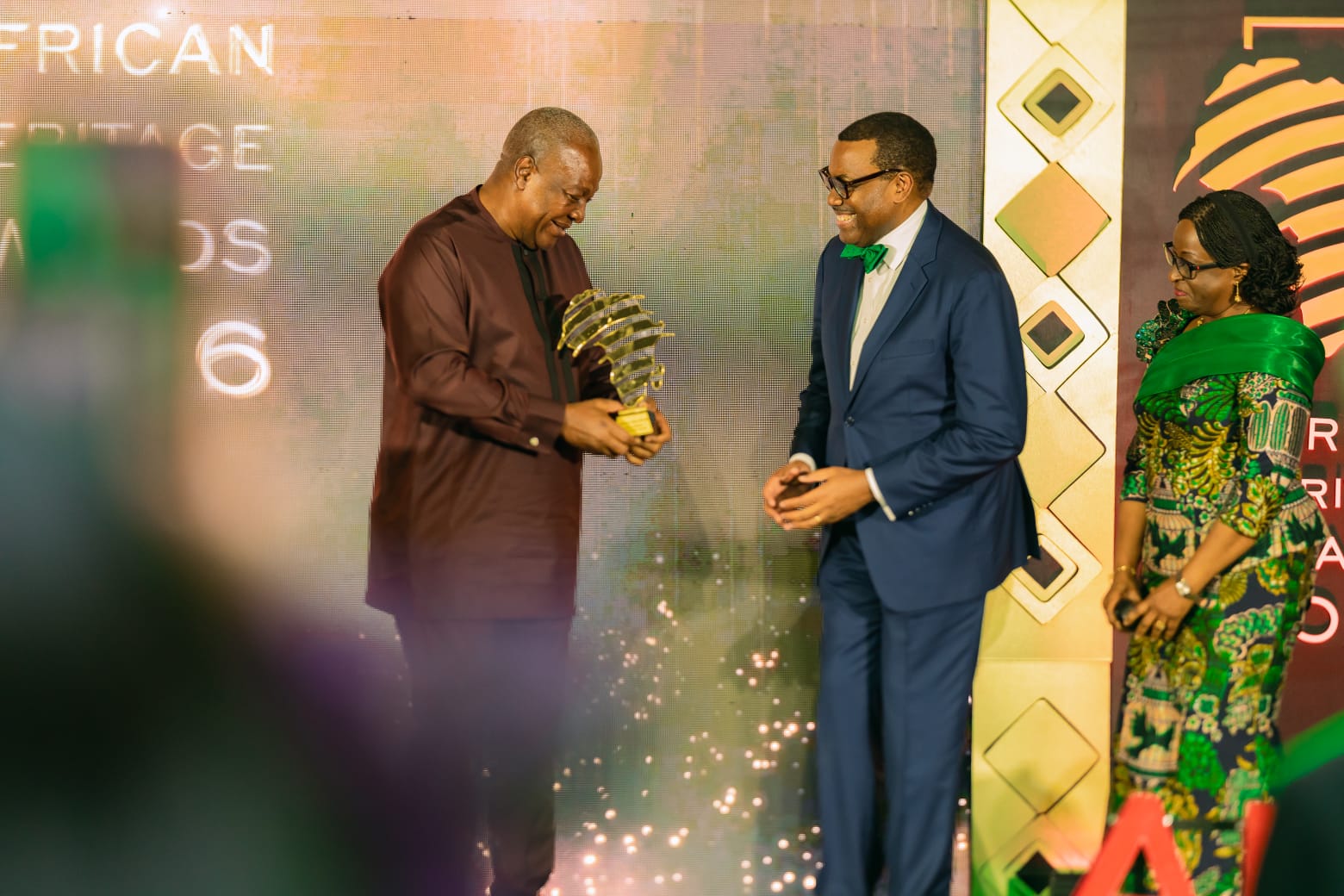
It was for his exemplary leadership qualities, among a plethora of achievements that the main hall of the glamorous Movenpick Hotel, in the heart of Accra, Ghana, was jam-packed with special guests, dignitaries and a host of other African achievers, including the 24-hour Economy exponent, who is the admired President of Ghana, Dr. John Dramani Mahama. The event was the 2026 African Heritage Awards. And Adesina one more time, shone like a million stars, carting away the prestigious African Lifetime Achievement Award.
Akinwumi is not a stranger to high profile and prestigious awards.

Recall that shortly before he rounded off his tenure as AfDB president, he was awarded the much sought after Obafemi Awolowo Leadership prize in the presence notable dignitaries. As a follow-up, he won the inaugural African of the Decade Award. A landmark achievement, and the first of its kind.
His then organisation, the AfDB celebrated the landmark honour with glowing tributes, part of which include the fact that “Dr. Adesina has demonstrated a significant impact on the African continent through innovative solutions, projects, or initiatives that address the continent’s pressing socio-economic and environmental challenges. He has consistently shown leadership, vision, and dedication, driving positive change in sustainable development in Africa.”
The also recognised that “Under Adesina’s tenure, Nigeria ended 40 years of corruption in the fertilizer sector by developing and implementing an innovative electronic wallet system, which directly provides farmers with subsidized farm inputs at scale using their mobile phones.


“Since assuming leadership of the African Development Bank in 2015, Adesina, a World Food Prize laureate, has been instrumental in attracting global investment, championed innovative development strategies, and consistently positioned Africa as a continent of immense potential and opportunity.”
As always, Adesina was accompanied by his beloved wife, Mrs Grace Yemisi Adesina, and a retinue of well wishers.
It was a moment of glamour and most sought after, when the Dr Mahama stepped up the podium to do the honours to a son of Africa, whose tenure in every field of endeavour he had walked through, especially his 10-year stewardship at the AfDB, had been crowned with loud ovation.
Smiling from ear to ear, and with certain encouragement and support from his wife, Adesina picked up his award to a thunderous cheer by a crowd of distinguished ladies and gentlemen.

THE MAN, AKINWUMI ADESINA

Akinwunmi Adesina is one Nigerian who has left the footprint of achievements, nostalgia, accomplishment and determination in the sands of time, culminating in his unequivocal acceptance by well meaning peoples of the earth.
Born to a Nigerian farmer in Ibadan, Oyo State, on February 6, 1960, Adesina attended a village school and graduated with a Bachelors in Agricultural Economics with First Class Honors from the University of Ife, Nigeria in 1981. He was basically the first student to be awarded this distinction by the university. He followed up his studies at Purdue University in Indiana, briefly returning to Nigeria in 1984 to get married.
Afterwards, he returned to school, obtaining his PhD (Agricultural Economics) in 1988 from Purdue, winning the Outstanding Ph.D Thesis for his research work in the bargain.
Adesina’s professional career kicked off proper in 1990, when he served as a Senior Economist at West African Rice Development Association (WARDA) in Bouaké, Ivory Coast. He served till 1995.
He worked at the Rockefeller Foundation since winning a fellowship from the Foundation as a senior scientist in 1988.
From 1999 to 2003 he was the representative of the Foundation for the southern African area. And from 2003 until 2008, he was an Associate Director for food security.
In 2011, he was appointed Nigerian Agriculture Minister, a post he held till 2015 when the administration of former President Goodluck Jonathan ended.
Adesina was named as Forbes African Man of the Year for his reform of Nigerian agriculture. He introduced more transparency into the fertiliser supply chain. He also said that he would give away mobile phones to farmers but this proved too difficult as a result of lack of mobile network in rural areas.
Also in 2010, United Nations Secretary General, Ban Ki-moon appointed him as one of 17 global leaders to spearhead the Millennium Development Goals.


On May 28, 2015, just before he completed his tenure as the Nigerian Minister of Agriculture, a position he had held for four years, Adesina was elected the presumptive President of the African Development Bank. He began his tenure of the office on September 1 2015. He is the eighth president in the organization’s history, and the first Nigerian to hold the post.
On resumption at the AfDB, He launched a strategy based on energy, agriculture, industrialization, regional integration and bettering Africans’ lives. The Board of Executive Directors approved the reorganization of the structure around these five priorities.
In September 2016, Adesina was appointed by United Nations Secretary-General Ban Ki-moon to serve as member of the Lead Group of the Scaling Up Nutrition Movement.
In 2017, he was awarded 2017 World Food Prize. Upon receiving the prize on October 21, 2017. Adesina donated the $250,000 he received to the development of African youth in agriculture. That is how generous and benevolent he is.
As an Agricultural Economist, Dr. Akinwumi Adesina has been a leader in agricultural innovation for over 30 years. He has contributed greatly to food security in Africa, aimed at improving the lives of millions currently living in poverty, throughout the African continent. The Sunhak Committee acknowledges Dr. Akinwumi Adesina’s achievements in promoting Good Governance of Africa, which boosts Africa’s capacity to feed itself and transform its total economies for generating wealth for millions of rural and poor African farmers.
At the Cape Town International Convention Center, the Sunhak Peace Prize Committee announced him as a co-winner of the 2019 Laureates for the Sunhak Peace Prize, with Waris Dirie, 53 year-old world-class supermodel and anti-FGM activist.


The Sunhak Peace Prize honors individuals and organizations who have made significant contributions to the peace and the welfare of the future generations. The Sunhak Peace Prize includes a cash prize totaling one million dollars. He received the award in February, 2019 in Seoul, Korea.
Dr. Akinwumi Adesina has been a leader in agricultural innovation in Africa for over 30 years, bringing great improvement to Africa’s food security, contributing to Africa’s dynamic growth. His leadership is building stepping-stones for Africa’s dynamic growth.
Dr. Akinwumi Adesina pioneered major transformations in the agricultural field, including expanding rice production by introducing high yielding technologies, designing and implementing policies to support farmers’ access to technologies at scale, increasing the availability of credit for millions of smallholder farmers, attracting private investments for the agricultural sector, rooting out the corrupt elements in the fertilizer industry, and assisting in establishment of major agricultural policies for Africa’s green revolution.
The “Africa Fertilizer Summit,” which he organized in 2006, was one of the largest high-level meetings in Africa’s history that had a focus on solving Africa’s food issues. During this Summit, Dr. Adesina was instrumental in developing the “Abuja Declaration on Fertilizer for the African Green Revolution,” whereby the participants stated their commitment to the “eradication of hunger in Africa, by 2030.”
Dr. Adesina has worked with various banks and international NGOs in order to create an innovative financing system, providing loans to small farmers, providing a way for them to rise out of poverty. This move leveraged $100 million in loans and provided opportunities for small farmers to increase their agricultural productivity, and their income.

His stewardship as the president of the African Development Bank Group, has continued to ensure a central role in Africa’s development. As an “economic commander” of Africa, he promotes the “High 5 Strategy” that include: light up and power Africa, feed Africa, industrialize Africa, integrate Africa and improve the quality of life for the people of Africa. As a result of his work, the lives of millions of people throughout Africa have been improved.
Dr. Adesina, also significantly utilized social impact bonds, most notably launching a record-breaking $3 billion “Fight COVID-19” Social Bond in March 2020. The initiative, designed to alleviate the economic and social impact of the pandemic on livelihoods and African economies, was the world’s largest US dollar-denominated social bond at the time.
Overall, his administration raised over $14 billion in social bonds in the past eight years to fund projects with measurable positive social impacts, such as education, healthcare, and infrastructure improvements.
During his 10-year tenure, the African Development Bank (AfDB) implemented Adesina’s “High 5” strategic priorities, which significantly impacted an estimated 565 million people across Africa in energy, agriculture, industrialisation, integrated infrastructure, and the improvement in the lives of Africans through investments in education, water, sanitation, and investments in women-led businesses and SMEs.
He was instrumental in gathering no fewer than 200 leading African political, business, and diplomatic leaders in Johannesburg for the 8th African Leadership Magazine Persons of the Year Award dinner. He was the cynosure of all eyes. Adesina’s achievements shone like a million stars as he was named and honored as the African of the Year 2019, the most popular vote-based third-party endorsement in Africa.


The event which was themed ‘Africa for Africans – Exploring the Gains of a Connected Continent’, brought together dignitaries including South African Deputy President, David D Mabuza, South African Ministers Nkosazana Dlamini-Zuma and Lindiwe Zulu, and Dr. Ken Giami, Publisher of African Leadership Magazine.
In his usual self, he delivered a keynote speech on the night that speaks of his passion for the continent. Much as he deserved the honour by every standard, he nonetheless expressed deep humility in being recognised, classifying his giant strides as ‘modest achievements and contributions to Africa’.
“Humbled to be nominated by what I gather to be 60% of the votes cast by some 1 million people, humbled to be at the helm of an organisation that is making a tremendous difference across Africa – the African Development Bank. An organisation that is daily making prosperity a reality,” he said.
He dedicated the award to his wife, Grace, the Board, staff, and colleagues at the bank, his mother, and “to the young mothers, struggling to bring up a child, to the farmer in search of a better tomorrow, to the youth of Africa longing for a better future, and to Africa’s journalists who risk their lives in helping to tell Africa’s true story.”

The truth remains that Adeaina has never reneged in achieving the feats.

Under his leadership, the AfDB helped over 18 million people get electricity, 141 million people get agricultural technologies, 13 million people get finance through private sector investee companies, 101 million people get improved transport services, and 60 million people get better water and sanitation.
“Africa does not need anyone to believe in her or to affirm her place and position in history. Africa will and must develop with pride. For right on the inside of us, as Africans, lies our greatest instrument of successes: confidence!” Here is a man who loves Africa with an undying passion.
It is worth mentioning that under Adesina’s leadership (2015–2025), AfDB achieved a historic capital increase, soaring from $93 billion in 2015 to roughly $318–$325 billion by 2025.
On January 16, 2020, Adesina came face to face with what can arguably be termed the greatest challenge of his career if not his life when allegations of ethical breaches were leveled against him by whistleblowers with the backing of the United States of America. The complaint was conveniently leaked paving the way for assault and a smear campaign.
Consequently, a high powered Ethics Committee, comprising Executive Directors representing shareholder nations, deliberated over every single dot and cross of the allegations, and in May 2020 gave Adesina a clean bill of health. In their words, the allegations were frivolous, baseless, and without merit or evidence. The report and conclusive deliberations of the Ethics Committee was subsequently sent to all Finance Ministers, better referred to as Governors of the Bank’s 81 shareholder counties, including the United States for ratification.
Not even one of the allegations stuck, making the originators bow their faces in shame. A cross section of respondents told The Boss that Adesina would have to be removed as President of the Bank and made ineligible for re-election originally scheduled for May 2020 if one allegation has scaled through.
Adesina’s watertight innocent was upheld by almost everyone that has a voice from across his country of birth, Nigeria, and across Africa.
The Nigerian government protested on his behalf that the governance procedures of the Bank during the investigation were followed to the letter including painstaking analysis of facts, evidence and documents. It noted that the whistleblowers were even prevailed upon to produce any more evidence at their disposal, but they failed they do so. It therefore, wondered at the sudden turnaround of the United States to call for another ‘independent investigation’.
“The Ethics Committee, following three months of work to examine the whistleblowers’ allegations made against the President, dismissed each and every one of the allegations of the whistleblowers against the President as unsubstantiated and baseless.
“The Nigerian Government welcomes this conclusion of the Ethics Committee and the decision of the Chair of the Board of Governors”, the statement read. The probe committee was headed by Takuji Yano, the institution’s Japanese Executive Director.
Towing the line of the Nigeria government, a former President of Nigeria, Chief Olusegun Obasanjo, mobilised former African leaders to the rescue of the embattled president. In a letter, the former leader personally signed and copied about 13 former heads of state, cutting across all regions of Africa, Obasanjo proposed that the leaders jointly issue a press statement to support the laid down procedures embarked upon to evaluate the allegations against the President of the Bank.
Just as the Nigerian government, Obasanjo went further to highlight Adesina’s achievements, noting that under his leadership AfDB “has been actively positioned as an effective global institution ranked fourth globally in terms of transparency among 45 multilateral and bilateral institutions.”
Other achievements include taking bold measures to ensure the bank can respond proactively to support African countries and got its board of directors to approve a $10 billion crisis response facility to support African countries during the thick of the COVID-19 pandemic as well as successfully launching a $3 billion ‘Fight COVID-19’ social impact bond on the international capital market at 0.75 per cent interest rate.”
Africa Leaders, on their part, under the aegis of Concerned African Leaders, released a statement titled Leadership of the African Development Bank: A Need for Caution, announcing their solidarity with Adesina, stating inter alia:
“The African Development Bank is a pride for all of Africa, and its President, Dr. Adesina, has taken the Bank to enviable heights. At this critical time that Africa is battling with COVID-19, the Bank and its President should not be distracted.”
Nigeria’s then President, Muhammadu Buhari, personally assured him that he would stand by him, and was so elated at the announcement of his reelection, saying ‘you deserve it’. He also thanked the African Union for its endorsement of Adesina, and to the shareholders of the bank.
Adesina has been fearless in the discharge of his duties, creating many firsts and stepping on supposedly powerful toes.
“In 2019, he successfully led the Bank’s shareholder General Capital Increase from $93 billion to $208 billion. In the process, he became the first Bank President to take the risk of championing a case for increasing capital for Africa’s development during a first term in office. It was a gambit that paid off in spite of initial strong American opposition.
“In 2018, Adesina championed and helped create the Bank-sponsored Africa Investment Forum which in 2018 and 2019 attracted more than $225 billion in infrastructure investment interests into the continent. This was an unprecedented initiative. The U.S. representative was said to have considered the Forum a departure from the Bank’s original mandate. Some also saw this as an attempt by Adesina to help wean African nations off a dependency on foreign aid. Some critics also suggested that Adesina was attempting to burnish his credentials among African Heads of State via the investment forum.
Much as everyone acknowledges the sustainable development of the AfDB, it must be noted that Adesina, through a dint hard work propelled by intelligence, determination and legacy-inspired zeal, built the African Development Bank into a world class financial institution. The following indices can be considered:
*For ten straight years, maintained AAA credit ratings for the African Development Bank by all the 3 major global credit rating agencies, Moody’s, S & P Global ratings and Fitch ratings—reinforcing the Bank’s position as the only financial institution in Africa with a AAA credit rating.
– The African Development Bank was rated as the Best Multilateral Development Bank in the world by Global Finance.
– The African Development Fund (the concessional financing institution of the Bank) was ranked as the second best concessional financing institution in the world, ranking above all the 55 concessional financing institutions in all advanced economies of the OECD.
– The African Development Fund innovated and developed a market borrowing framework that would allow it to raise over $25 billion from the global capital market. This was what allowed the Fund to raise additional funds for its recent replenishment.
– The African Development Bank was ranked as the Most Transparent Financial Institution in the World for its sovereign lending to countries.
– In the 10 years he held sway, Adesina developed and secured board’s approval for the building of a new world-class headquarters building for the African Development Bank Group.
Adesina was literally a star on the job; a typical example of a round peg in a round hole. He wore the job, and many other of his endeavours as a fitting apparel. He was, and is still that good.
Adesina is not all work however, he is reportedly very close to his God. While at Purdue University, he, his wife, along with another couple, started a Christian group called the African Student Fellowship. He and his wife Grace have two children, Rotimi and Segun.
The accomplished technocrat and reputable entrepreneur is sure to quadruple his achievements of the last couple of years by the way he is going. He was one AfDB president many wished he continued in office even after the expiration of his 10 years stewardship.
Congratulations sir!
By Eric Elezuo
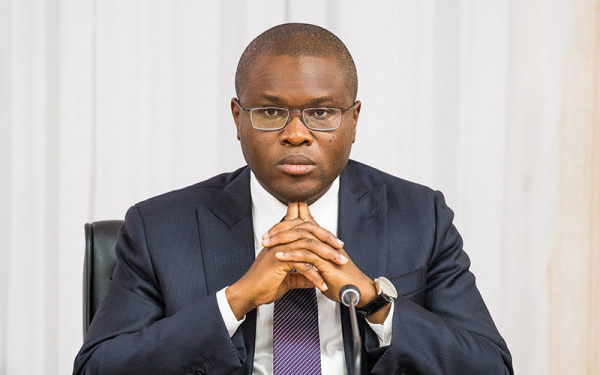
Romuald Wadagni is not new to Benin politics, neither is he new to administration, especially in the area of financial reorientation, recovery and development. He has professionally steered the Finance and Economy ministry of his country for 10 uniterrupted years after serving as a finance guru with top finance films including the renowned Deloitte. Wadagni is an enigma, and of course Benin’s choice to be president come April 12.
Below is a text delivered by the frontline presidential candidate for the forthcoming Benin Republic Presidential election, Romuald Wadagni on his stewardship, and the expections for the average Benoise:

Over the past few years, our country has achieved what many thought was impossible. With vision and courage, we have proven that when a people decide to take charge of their own destiny, nothing can stand in their way.
The progress we have made and the efforts contributed by all now give us the means to deploy a new complementary development approach that will eradicate extreme poverty and ensure that prosperity reaches every household. This is the challenge we must take on together.

Tomorrow, every Beninese, every young person, wherever they may be, must be able to find an opportunity within reach. Our ambition involves establishing regional development hubs, giving a more prominent role to the private sector, and fully harnessing technology. The goal is clear: to create wealth for all and improve living conditions across the entire country.
This program is the logical continuation of what we have started, and the beginning of what I propose we accomplish together: to build an even greater Benin—the Benin of our dreams.
Romuald Wadagni




World Bank Flags ‘Hidden Spending System’ Diverting N34.53trn of Nigeria’s Revenue

Why MTN, Airtel Suspended Airtime, Data Borrowing Services + the FCCPC Connection

Voice of Emancipation: Nigeria’s Political Climate and the Yoruba Struggle

Tinubu, Victim of Historical Amnesia – Atiku

2027: Why Nigeria Can’t Afford to Lose Atiku’s Experience and Expertise

Again, Iran’s Military Closes Strait of Hormuz

African Heritage Awards: Honours Galore for Ex-AfDB President, Akinwumi Adesina

Ali Ndume Accuses FG of Insincerity in Fight Against Insecurity

Leadership As Decisive Force in Regional and Continental Security

Supreme Court Fixes April 22 for Hearing in ADC Leadership Crisis

Tech and Humanity: When the System Has No Answer, Build One

Dele Momodu Proposes Atiku/Obi Ticket As ‘Best Bet’ to Unseat Tinubu in 2027

Man Rescued Amid Attempt to Jump into Lagos Lagoon

The Oracle: Human Rights: Our Everyday Essential Pt.2
-
 National6 days ago
Ali Ndume Accuses FG of Insincerity in Fight Against Insecurity
-
 Opinion2 days ago
Leadership As Decisive Force in Regional and Continental Security
-
 Headline6 days ago
Supreme Court Fixes April 22 for Hearing in ADC Leadership Crisis
-
 Tech and Humanity2 days ago
Tech and Humanity: When the System Has No Answer, Build One
-
 Featured5 days ago
Dele Momodu Proposes Atiku/Obi Ticket As ‘Best Bet’ to Unseat Tinubu in 2027
-
 Featured4 days ago
Man Rescued Amid Attempt to Jump into Lagos Lagoon
-
 The Oracle3 days ago
The Oracle: Human Rights: Our Everyday Essential Pt.2
-

 Islam3 days ago
Friday Sermon: DEL FAJ at 76: To Whom Much is Given…