Connect with us

Headline

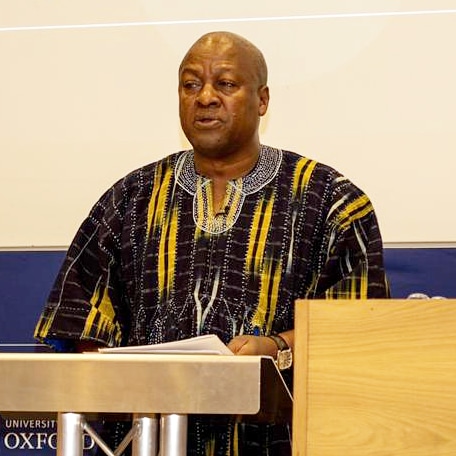
Xenophobia: Nigerians Are Safe in Ghana – President John Mahama

Published

on

By Eric Elezuo

Following weeks of escalating differences between Nigerians living in Ghana, and their Ghanaian hosts, leading to protests, threats against the Nigerian population in the country and calls to vacate the country, in what was tagged ‘Nigeria Must Go’, the President of the Republic of Ghana, Dr. John Dramani Mahama, has said emphatically that there is no room for xenophobia in the West African country. He insisted that Nigerians living in Ghana are safe.

Mahama made the disclosure while receiving Nigeria’s President Bola Tinubu’s special envoy led by the Minister of State for Foreign Affairs, Amb. Bianca Odumegwu-Ojukwu at the Presidential Palace, in Accra, Ghana.

The statement further quoted Mahama as asking the envoy to convey his message to President Tinubu, urging that he should not lose sleep over recent protests against Nigerian nationals resident in his country.

He stated that Nigeria and Ghana have a shared history.

“Tell President Tinubu not to lose sleep over the recent protests. Nigeria and Ghana are brothers with a shared history, and we won’t allow anything to come between us,” the statement quoted the Ghanian President as saying.

“The recirculation of an old video made by a Nigerian residing in Ghana over 10 years ago actually generated tension, but gladly, the situation was swiftly managed.

“The protesters were not more than 50. I assure the envoy of the safety and protection of the lives, properties and businesses of Nigeria and Nigerians in Ghana.”

A group of Ghanaians had recently staged a protest accusing Nigerians living in Ghana of prostitution and ritual killings.

In a viral video clip of the protest, a large crowd of protesters was seen holding placards with messages such as: “Nigeria must go,” “Armed robbery and violent attacks must stop,” “Our health is at risk due to mass prostitution,” “Who protects the rights and freedoms of Ghanaians?”

BACKGROUND OF THE ‘NIGERIA MUST GO’ PROTEST

Though Nigeria and Ghana have over the years enjoyed a friendly relationship both on individual and government basis, problem erupted when a handful of Ghanaians faulted a certain Igbo’ king, who they claimed is planning to set up an ‘Igbo Kingdom’ in Ghana.

In the four-minute-long video, which was made in 2013, and seen by The Punch, one Chukwudi Ihenetu, a businessman based in Ghana, revealed that he had acquired 50 acres of land in Ghana to build an Igbo Village, which, according to him, would consist of a market, a guest house, Eze Ndigbo palace, a 2,000-capacity town hall and streets named after Igbo leaders.

“I’m creating an Igbo village which has never happened in the history of Igbos in the world. As I’m talking to you, I have acquired 50 acres of land, which is 250 plots of land along the Aflao road in the Old Ningo area. The reason for acquiring this land is to build an Igbo village in Ghana, which I call Ama Ndigbo in Ghana.

“We will build the village, and in this village, we are going to build the palace of Eze Igbo, a huge palace. We will build an Igbo town hall with about 2,000 and a 100-room guest house. The essence of this guest house is to accommodate our governors and other Igbo great leaders when they come to Ghana with their entourage. We will also accommodate some of our people who have accommodation,” Ihenetu said.

He added, “In the village, we will create streets that will represent the names of ancient Igbos, like Sam Mbakwe, Nnamdi Azikiwe, my father and other great leaders of Igbo that have gone and those that are present.

“In this village, every Igbo man all over the world will come and buy property, whether you want a plot or two plots of land to build your dream house. We will build Igbo market, school and Eze Igbo garden, and from there Igbo people will expand.”

But a Ghana-based media strategist SoG Precious, who spoke during an interview on Channels Television, noted that Ghanaians were growing increasingly frustrated with the conduct and alleged criminal activities of some Nigerians living in the country.

Precious said the protest was triggered by incidents of abduction, killings, and rising prostitution in parts of Ghana, with some Nigerians at the centre of the accusations.

“I believe that the protest sent a message, and the message was very clear that Ghanaians are kind of fed up with some characters of some Nigerians that are living in Ghana,” Precious said.

He said the most recent protests were not isolated but stemmed from accumulated grievances.

“The people of Ghana feel that they have been too good to the people, that they feel Nigerians are trying to take advantage of their kindness, so I think, basically, that is what has ignited this whole protest,” he said.

Precious also acknowledged that the Ghanaian government is working to manage the situation and prevent it from escalating.

He added that beyond official interventions, local institutions are also stepping up.

NIGERIANS IN GHANA RESPOND, ALLEGE DISCRIMINATION

In a The Punch report over the weekend, members of the Nigerian community lamented that they have been subjected to persistent discrimination and victimisation, particularly by Ghanaian landlords.

They cited instances of exorbitant  house rents imposed specifically on Nigerian tenants, as well as the selective enforcement of business regulations that disproportionately affect Nigerian-owned enterprises.

A businessman, Patrick Isaac, who spoke to The Punch, lamented astronomical house rents and discriminatory business practices targeted specifically at Nigerian tenants.

Isaac described the protest as an attempt by some Ghanaians who are not happy with the success of Nigerian traders to provoke them into attacking Ghanaians, thereby causing a diplomatic crisis between the two African nations.

“This has been going on for long. We knew the protest was going to happen, and we were prepared for them. There was a meeting of Igbo traders in Ghana, and we were told not to react to their provocation during the protest because their plan was to provoke us into attacking them, thereby leading to a serious diplomatic crisis between Nigeria and Ghana,” he said.

He insisted that the protest was not a response to the actions or utterances of a self-proclaimed Igbo leader in Ghana, Chukwudi Ihenetu, but a reflection of growing hostility towards Nigerians, especially those involved in small businesses and informal trade.

“Most Nigerians here are victims of certain prejudices. When you go to rent an apartment or office space, you are already presumed to have too much money just because you are Nigerian, even when you are just someone trying to survive. When a Ghanaian pays 1,000 Cedis for rent, you may be asked to pay five times more, and if you can’t, you are chased away.

“As a Nigerian, when you rent a shop or an apartment, they (Ghanaians) triple your rent in such a way that you are forced to leave so that they can come in and continue that kind of business which you have been doing.

“The protest does not have anything to do with the utterances of the young man (Chukwudi Ihenetu), who is the leader of the Igbo community. The comments he made were not really the reasons for this outburst; it is because a Nigerian who is a trader here has a higher living standard, quality of life and lives in a better apartment than an average Ghanaian. This is the motivation behind the ‘Nigerians Must Go’ protest,” Isaac said.

He alleged that the Nigerian High Commission in Ghana had failed to take decisive action to protect the interests of its citizens.

According to him, the mission has remained largely silent in the face of increasing harassment, discriminatory policies, and targeted crackdowns on Nigerian businesses.

The paper also quoted another Nigerian trader who requested anonymity, as describing the protest as a calculated attempt to force Nigerian traders out of business and limit their growing influence in the local market.

He cited the proposed Ghana Investment Promotion Centre $1m levy as part of the scheme by the country to frustrate foreigners, particularly Nigerian retail traders, out of business.

The GIPC mandates every foreign investor in Ghana to either provide $1m in cash or raw materials before being legally recognised to do business in the country.

“This has been going on for a long time; each time they (Ghanaians) see any Nigerian trader thriving, they try to pull them down. It started in 2017 when they tried to enact a law that no foreigner should engage in retail trading; they said we can do wholesale trading while we employ their indigenes. They tried to enact the law, which affected some of us in the spare parts and electronics business.

“In 2019, it was so massive that all Nigerian shops were closed. This victimisation against Nigerians is becoming too much, and now they are targeting the Igbos because they know that we are the ones doing the business here and we have a very strong hold because we have the Igbo festival and other things we do,” he said.

Also bemoaning the discrimination faced by Nigerians in the housing sector, a fashion designer from Imo State, Emmanuel Chubike, said Nigerian tenants are increasingly being targeted by Ghanaian landlords due to growing tensions between both communities.

“Before you get an apartment here, you will go through hell because some Nigerians who are into criminal activities have given the country a bad name.

“I have received reports from many of my friends saying that their landlords have issued quit notices and asked them to vacate once their rents expire. My own landlord has also increased my rent by 50 per cent, and it is clear this is because of the perceived hatred going on between Nigerians and Ghanaians,” Chubike said.

He appealed to the Ghanaian government to intervene and discourage unfair treatment, while urging both governments to work towards promoting mutual respect and peaceful coexistence between citizens of the two countries.

THE ROAD TO PEACE, RECONCILIATION 

As the protest escalates, President Tinubu had to sent a deputation, led by the Minister of State for Foreign Affairs, Bianca Odumegwu-Ojukwu, who visited the country to de-escalate the situation.

During a joint press briefing in Ghana, the Minister called for peace, noting that relevant authorities in both Nigeria and Ghana are addressing the issue.

According to Mrs Odumegwu-Ojukwu, the viral video caused anxiety, necessitating her visit to the country for a firsthand assessment of the situation.

She, however, noted that contrary to the impressions created online, there were no visible signs of unrest, such as street protests or public demonstrations calling for the deportation of Nigerians.

“Since I arrived, I haven’t seen people burning tyres in the streets or carrying placards everywhere calling for Nigerians to be deported.

“This shows that the Ghanaian government and the president have stepped up to the situation. I would say there’s no cause for alarm, they are handling the situation effectively, and we will continue engaging stakeholders,” she said.

She also explained that the Nigerian delegation had met with some of the individuals involved in the protest, as part of efforts to de-escalate tensions.

Similarly, Ghana’s Foreign Affairs Minister, Samuel Ablakwa, noted that the ministry is working on the concerns raised by the protesters and has begun engaging with leaders of the Nigerian community.

“The Ghanaian government will ensure that everyone in the country, citizens and non-citizens, is protected,” he said.

The assurances of President Mahama notwithstanding, the Nigerian community in Ghana, has described the protest as “deeply unsettling”, expressing the fear that Nigerian nationals may be targeted for attack in the future, stressing that there was a need for increased security presence in areas with large Nigerian populations to prevent any possible outbreak of violence, the calmness of the situation at the moment notwithstanding.

FLASHBACK TO 1983 ‘GHANA MUST GO’ PROTEST IN NIGERIA 

Many analysts, observers and watchers of affairs have dismissed the protest in Ghana as a form of retaliation considering the events of 1983 when the administration of Alhaji Shehu Shagari supervised the deportation of Ghanaians from Nigeria.

An estimated two million undocumented migrants of West African origin living in the country, half of which were Ghanaian, have been mandated to leave Nigeria in a two-weeks ultimatum.

“If they don’t leave, they should be arrested and tried and sent back to their homes. Illegal immigrants, under normal circumstances, should not be given any notice whatsoever,” President Shagari had said in a message on that early January 17, 1983 broadcast.

The unprecedented movement, which left in its wake, the popular Ghana Must Go bag, has remained a watershed in the history of Africa, especially between Ghana and Nigeria.

42 years after, Ghanaians seems to be on a revenge mission.

But the magnanimity of President John Mahama has brought the matter to a peaceful end.

Continue Reading
Click to comment

Leave a Reply

Your email address will not be published. Required fields are marked *

Headline

Breaking: FG Secures Release of 100 Pupils of Saint Mary’s School

Published

on

By

By Eric Elezuo

The Federal government has announced the release of 100 pupils of Saint Mary’s School, Papiri, Niger State.

According reports monitored on Channels Television on Sunday, only 100 out of the about 250 pupils in the captivity of the terrorists were released.

Details soon…

Continue Reading

Headline

Atiku Abubakar @79: Celebrating a True Statesman + Dele Momodu’s Inspiring Tribute

Published

on

By

By Eric Elezuo

The rich cultural border town of Jada in Adamawa State, Nigeria, came briskly alive during the week, when trusted colleagues and associates, party bigwigs and immediate family members, trooped in to honour a man, whose legacies of political sagacity and entrepreneurial wizardry have become a reference point, Alhaji Atiku Abubakar, a former Vice President of the Federal Republic of Nigeria, as he celebrates his 79th birthday.

With fanfare, razzmatazz and deep-rooted joy, the about-to-become-octogenarian hosted a week-long soiree rooted in legit discourse, high profile networking and philanthropy for all and sundry.

Known for his near-impeccable public service image, Atiku is revered as the Midas of our time, converting almost nothing to something of immense value.

A former Speaker of the House of Representatives, Hon Yakubu Dogara, once described the invincibility of the Wazirin Adamawa as follows:

1. Give him pure water and he’ll turn it into Farro water
2. Show him a Primary school and he’ll turn it into a world class univeristy
3. Show him a jetty and he’ll turn it into a world class port
4. Give him a bull and a heifer and just few years and he ll give you a herd
5. Give him a bag of chaff and he’ll mill it into animal feed
6. Give him a bottle of bala blue and he’ll turn the cream to farro juice
7. Give him a home and he’ll bring Nigeria into it as family members
8. Make him walk into an environment where there is contention and fight and see how they fade into peace.

From the Nnamdi Azikiwe International Airport to the Yola Airport in Adamawa State, heartfelt accolades from supporters trailed every movement of the vice president, who absorbed all with equanimity, acknowledging greetings with finesse and humility, stopping at regular intervals for a deep hug and claspy handshake that says more friendship and camaraderie.

The grand finale of the activities was held at the Atiku Family Event Hall in Jada with a well-attended Commemoration Lecture that drew dignitaries and admirers including political associates, mentees, members of the diplomatic corps and many others from far and wide. Though it was meant to be an in-house celebration, it drew together distinct policy makers and more.

From one distinguished speaker to another, soul striking lectures and goodwill messages were delivered including tributes aimed at extolling the stateman-like qualities of His Excellency.

It is instructive to note that Atiku, as he is easily recognized, is not just another politician; he is exceptionally versatile as a detribalised, prolific entrepreneur and a practitioner of politics without bitterness. It is not a wonder therefore that he has excelled in politics, public service, and entrepreneurship, most especially.

It was in the notes of the one of the keynote speakers, Chief Dele Momodu, that the underlying greatness, humane qualities and more of Atiku Abubakar were laid bare before public scrutiny.

Momodu, in a lecture he titled Alhaji Atiku Abubakar: The Consumate Democrat, took the audience down memory lane as he highlighted the uncommon humility the Waziri Adamawa demonstrated when he stepped down for MKO Abiola in 1993.

The details of Chief Momodu’s speech are as follows:

ALHAJI ATIKU ABUBAKAR: THE CONSUMMATE DEMOCRAT

It gives me great pleasure, and I consider it a privilege, to have been invited to speak about one of the greatest Nigerians alive today. There’s no way I would have turned down this request.

Just last week, I was invited to a roundtable meeting at the British House of Lords in London, also at the behest of Alhaji ATIKU ABUBAKAR. I wish to offer my sincere gratitude to ALHAJI for his confidence in me and his demonstration of love for me at all times.

My earliest recollection of Alhaji was wayback in 1993, in the beautiful city of Jos, where three political gladiators, Alhaji Babagana Kingibe, Alhaji Atiku Abubakar, and Chief Moshood Abiola had locked horns in a world heavyweight bout to decide who picks the Presidential ticket of the Social Democratic Party. I was barely 32/33 at that time but I was politically savvy and heavily inspired and motivated by my adopted father, Chief Moshood Abiola.

The SDP primary of that year remains unprecedented till this day. I will not bore you with details of the Convention that brought these juggernauts into a three horse race, which only one of them can, and must win. But there was a logjam and the only way a winner could have emerged was for one of them to step down and quit the race. This was a tough decision for all of them.

Alhaji Babagana Kingibe enjoyed the avuncular support of most of the SDP Governors. Alhaji Atiku had access to the extensive networks of his mentor Major General Shehu Musa Yar’Adua. The Abiola team calculated well and smartly by reaching out to the godfather pronto. The incredible then happened. Without much ado, Alhaji stepped down and thus cleared the coast for the eventual victory of my adopted father, Chief Moshood Abiola. Since then, unknown to Alhaji Atiku, I have been his big fan. Alhaji did not throw tantrums or sulk endlessly like a baby. He did not seek to destroy their party. Not that he didn’t have enough reasons to be angry and bitter but he chose the path of uncommon equanimity and submitted himself to the immutable will of Allah at His appointed time.

What could have made matters worse, Alhaji Atiku failed to clinch the runningmate slot, against conventional wisdom of give and take. Again, Alhaji Atiku went back to his drawing board, and about his life peacefully without raining a tirade of insults against distinguished elders who have paid their dues to our country. Even when he had the opportunity to retaliate after the June 12 debacle, Alhaji followed a path of honor by supporting Chief Abiola, unconditionally, and for the revalidation of his mandate. Alhaji Atiku is not your common politician.

As fate would have it, he later contested the Governorship election in his home state and won. But before settling down to his Gubernatorial assignments, he was invited to be the Vice President to President Olusegun Obasanjo. He would soon become the most effective and influential Vice President ever in Nigeria. As the head of the economic team, he was able to attract and work with the best and brightest. The gentleman’s agreement was that he would Vice for the office of the President after one term, but again he was let down. He could have fought tooth and nail against his Boss, President Olusegun OBASANJO but he chose the path of absolute peace and patience. But his boss was unhappy that Alhaji and his friends ever challenged him. President OBASANJO went after them like bullets. And there were collateral damages here and there. Several of my friends in Alhaji’s office at the Presidential villa were summarily sacked.

I must confess that I have never seen a man like Alhaji before. He takes everything in his strides. Most politicians would have brought down the rooftops. His faith in Allah is unshakable. What should have been to his glory eventually became his albatross. But Allah compensated with extraordinary favor as a businessman. While his peers became parasites feeding fat on the State, Alhaji became King Midas and most businesses he touched turned to gold. Though he never abandoned his political dreams, he pursued his ambition with visionary clarity and painstaking discipline. He never engaged in violence. He rather invested unrelentingly in the rule of Law. Whenever he contested and he felt robbed of victory, he headed to the courts of the land. Many of his landmark cases have since enriched our jurisprudence and legal lexicon. He has remained a tireless fighter and defender of the rights of the common man.

It is a tragedy that such a man of sharp intellect and prodigious talents has been endlessly maligned in the name of politics.

It must be noted that many of our political icons had suffered similar persecution in the past. My sad conclusion is that when we refuse to encourage good people, the worst amongst us will continue to thrive.

I make bold to declare my maximum respect for ALHAJI ATIKU ABUBAKAR as a great man of ideas and ideals, a peacemaker, man of God, blessed family man, absolutely detribalised, very cosmopolitan, well educated, versatile, humble in spirit, unpretentious, experienced and exposed. He is without doubt a man of diversity and destiny. May Allah preserve him for the benefit of all us because in the days of tribulations, kids must run to the elders of the house. No one else is better prepared for this role at this auspicious moment.

Please, let’s all rise and give a standing ovation to a leader who has refused to give up on his goals…

Other speekers, who eulogized the celebrant in goodwill messages were former Adamawa Governor Jibrilla Bindow, Senator Ishaku Abbo, Senator Aishatu Dahiru Ahmed Binani, Senator Abdulaziz Nyako and several others.

In his traditional soft-spoken nature, Atiku expressed gratitude to all attendees, with special appreciation to the organizers, and special mention of Prof. Ahmed Shehu (Pullo Jada) for their dedicated efforts to ensure the smooth sailing of the event.

THE MAN ATIKU ABUBAKAR 

Below is brief history of the former Vice President as told by himself –

I was born on the 25th of November 1946 in Jada village, Adamawa State Like many of my generation, my father was opposed to Western education and tried to keep me out of school. When the government discovered this, my father spent a few days in jail. I was then enrolled in Jada primary school.

When I was only 11 years old, my father drowned and died while trying to cross a small river. The task of raising me then fell on my mother. At that age I resolved to work hard, remain focused and be successful in life to make my her proud. In 1960, I was admitted to Adamawa Provincial Secondary School in Yola.

Academically, I did well in English Language and Literature but I struggled with Physics, Chemistry and Mathematics. I spent most holidays working to earn extra money. In 1961, when I was 15 years old, my mother’s elder brother sold the family house in Jada without her knowledge and rendered us homeless. I spent that holiday working and from my earnings, I bought a house for my mother in Ganye. I became an orphan when my mother suffered a heart attack and died in 1984.

Post Secondary School

I graduated from secondary school in 1965. After that, I studied at the Nigeria Police College in Kaduna for a short while. I left when I was unable to present an O-Level Mathematics result. I worked briefly as a Tax Officer in the regional Ministry of Finance, from where I gained admission to the School of Hygiene in Kano in 1966.
I graduated with a Diploma in 1967, having served as Interim Student Union President at the School. In 1967 I enrolled for a Law Diploma at the Ahmadu Bello University Institute of Administration, on a scholarship from regional government. After graduation in 1969, I was employed by the Nigerian Customs Service.

Family

I met nineteen year old Titilayo Albert when I was serving at Idiroko, Lagos, and in December 1971 I married her secretly, because her family was initially opposed to the union. On 26 October 1972, Titi delivered a baby girl and we named her Fatima. Titi later gave birth to Adamu, Halima and Aminu.

In January 1979 I married Ladi Yakubu as my second wife. I wanted to expand the Abubakar family. I had no siblings and I felt extremely lonely as a child. I did not want my children to feel that way.

This is why I married more than one wife. My wives are my sisters, my friends, and my advisers and they complement one another. Ladi gave birth to Abba, Atiku, Zainab, Ummi-Hauwa, Maryam and Rukayatu.

In 1983 the late Lamido of Adamawa who had become like my father made me the Turaki of Adamawa. This position was usually reserved for one of the Emir’s favorite sons and was rarely given to non-royals like me. To ensure that I met the ‘blood tie’ requirement for the title, the Lamido gave me one of his daughters, Princess Rukaiyat, to marry.

She gave birth to Aisha, Hadiza, Aliyu, Asmau, Mustafa, Laila and Abdulsalam. I married Fatima Shettima in 1986. She gave birth to Amina (Meena), Mohammed and two sets of twins Ahmed and Shehu, Zainab and Aisha and then Hafsat. Jennifer Jamila Atiku-Abubakar is my last wife. She gave birth to Abdulmalik, Zara and my youngest child, Faisal.

Customs

My Customs career commenced on 30 June 1969. My first posting was at Idi-Iroko, a border town between Nigeria and Benin Republic. My other assignments included the Lagos Airport, Apapa Ports (1974), Ibadan Customs Command (1975), Kano Command (1976), Maiduguri (Area Comptroller, 1977), Kaduna (1980) and the Apapa Ports in 1982.

In April 1984, when I was the Murtala Muhammed Airport Area Administrator, my name was associated with a scandal that made headlines. As part of efforts to cripple corrupt politicians who had stashes of stolen cash in their possession, the new military government had phased out the old naira currency and replaced it with new ones. Orders had been given to ensure that all luggage entering the country was properly screened to prevent smuggling of the old notes. The Emir of Gwangu and Ambassador Dahiru Waziri had arrived from Saudi Arabia with many suitcases. As is customary, the suitcases were supposed to pass through Custom officers for check but the Emir’s son, who was a Major in the Army and also ADC to Head of State Gen Buhari drove straight to the Tarmac with soldiers, off-loaded the suitcases there, picked up his father and the Ambassador and drove away. The soldiers had threatened to shoot the Custom officers who had protested and tried to stop them. My officers reported in writing to me and I in turn reported the incidence to my boss, the Director of Customs. A few days later, one of the officers leaked the story to Guardian Newspapers and their correspondent called me to confirm if it was true. I did.

Soon after, Newspaper Headlines read, “Passenger with 53 suitcases leaves airport unchecked”. This scandal embarrassed the government and they tried to make me deny it happened. I refused and they threatened to throw me out of service. The Minister of Finance then, Soleye, who oversaw the Customs Service played a big role in ensuring I wasn’t dismissed. He had said it would be unfair to punish me for being honest and standing by my officers.

In 1987 I was promoted to Deputy Director of Customs and Excise in charge of Enforcement and Drugs. In April 1989, when I was 43, I voluntarily retired from Customs after 20 years of meritorious service.

Business

I’ve always had a good nose for business. In my early years as a Customs officer, I received a 31,000 naira Housing Loan, built a bungalow in Yola, and rented it out. With the rent I collected in advance, I bought a second plot and built another house. I continued building new houses with rent from completed ones and after a few years I had built 8 houses in choice areas in Yola. When I was transferred to Kaduna, I continued this process and in a few years I had 5 houses there.

In 1981, I moved into agriculture. I became the largest maize farmer in the whole of Gongola state. Unfortunately, due to Government policies that increased the cost of production, the business fell on hard times and closed in 1986.

The most successful business I ever ventured into was with Gabrielle Volpi, an Italian businessman. He intimated me about how profitable Oil and Gas Logistics business could be and, trusting his abilities, I partnered with him to form NICOTES which started operating from a container office at Apapa ports.

When the business began to grow, we relocated to Onne, Rivers State. The company, now known as INTELS (Integrated and Logistics Services) is a multi-billion naira company that has a staff of over 15,000 people and pays huge dividends to its shareholders. My other businesses include agriculture, feed making, plastics, printing, TV/radio media, and beverages.

Politics

I met Shehu Musa Yar’Adua towards the end of my Customs career. He invited me to the political meetings that were happening regularly in his Lagos home; and that was how my foray into politics began.

In 1989 the political meetings became Peoples Front of Nigeria and I was elected as the National Vice- Chairman.

We wish the Wazirin Adamawa a happy birthday, and many fruitful years ahead!

Continue Reading

Headline

Season of Compensations: Tinubu Submits 32 Ambassadorial Nominees to Senate

Published

on

By

President Bola Ahmed Tinubu has sent the names of 32 ambassadorial nominees to the Senate for confirmation, days after he sent the first batch of three names.

Bayo Onanuga, media aide to President Tinubu made this known in a statement on Saturday.

According to the statement, President Tinubu, in two separate letters to the President of the Senate, Godswill Akpabio asked the Senate to consider and confirm expeditiously 15 nominees as career ambassadors and 17 nominees as non-career ambassadors.

Onanuga stated that there are four women on the career ambassadors’ list and six women on the non-career ambassadors’ list.

The statement reads, “Among the non-career ambassador designates are Barrister Ogbonnaya Kalu from Abia, a former presidential aide, Reno Omokri (Delta), former chairman of the Independent National Electoral Commission (INEC), Mahmud Yakubu, former Ekiti first lady, Erelu Angela Adebayo, and former Enugu governor, Ifeanyi Ugwuanyi.

“Others are Tasiu Musa Maigari, the former speaker of the Katsina House of Assembly, Yakubu N. Gambo, a former Commissioner in Plateau State and former deputy executive secretary of the Universal Basic Education Commission (UBEC).

“Professor Nora Ladi Daduut, a former senator from Plateau; Otunba Femi Pedro, a former deputy governor of Lagos State; Chief Femi Fani-Kayode, a former aviation minister from Osun State; and Barrister Nkechi Linda Ufochukwu from Anambra State are on the nomination list.

“Also on the list are former First Lady of Oyo, Fatima Florence Ajimobi, former Lagos Commissioner, Lola Akande, former Adamawa Senator, Grace Bent, former governor of Abia, Victor Okezie Ikpeazu, Senator Jimoh Ibrahim, businessman, lawyer and Senator from Ondo State, and the former ambassador of Nigeria to the Holy See, Ambassador Paul Oga Adikwu from Benue State.

“Among the nominees for career ambassador and high commissioner-designates are: Enebechi Monica Okwuchukwu (Abia), Yakubu Nyaku Danladi (Taraba), Miamuna Ibrahim Besto (Adamawa), Musa Musa Abubakar (Kebbi), Syndoph Paebi Endoni (Bayelsa), Chima Geoffrey Lioma David (Ebonyi) and Mopelola Adeola-Ibrahim (Ogun).

“The other nominees are Abimbola Samuel Reuben (Ondo), Yvonne Ehinosen Odumah (Edo), Hamza Mohammed Salau (Niger), Ambassador Shehu Barde (Katsina), Ambassador Ahmed Mohammed Monguno (Borno), Ambassador Muhammad Saidu Dahiru (Kaduna), Ambassador Olatunji Ahmed Sulu Gambari (Kawara) and Ambassador Wahab Adekola Akande (Osun).

“The new nominees are expected to be posted to countries with which Nigeria maintains excellent and strategic bilateral relations, such as China, India, South Korea, Canada, Mexico, the United Arab Emirates, Qatar, South Africa, Kenya, and to Permanent Missions such as the United Nations, UNESCO, and the African Union. All the nominees will know their diplomatic assignments after their confirmation by the Senate.

“Last week, President Tinubu sent three ambassadorial nominees for screening and confirmation. The nominees were Ambassador Ayodele Oke (Oyo), Ambassador Amin Mohammed Dalhatu (Jigawa), and Retired Colonel Lateef Kayode Are (Ogun). All three are in the pot for posting to the UK, USA, or France after their confirmation.

“President Bola Ahmed Tinubu said more nominees for ambassadorial positions will be announced soon.”

Continue Reading

Trending