Connect with us

Voice of Emancipation

Voice of Emancipation: Is Nigeria Truly a Poor Nation?

Published

on

By Kayode Emola

Depending on who you ask, you may be told that Nigeria is either a rich or a poor country. However, by looking at it statistically or empirically, we should be able to ascertain which it is.

An oft-cited indicator of whether a country is rich or poor is GDP (gross domestic product). Whilst this is an acceptable international standard for measuring the growth in a country, it may not be the perfect tool to use in the case of Nigeria, as much of the nation’s production goes undocumented, which can skew the data collected.

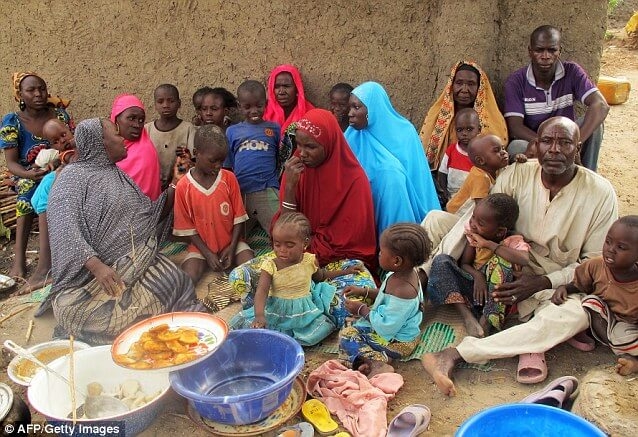
Other factors we may consider are the earning capacity of the citizens and their respective spending compared to other countries of the world. In Nigeria today, the minimum wage of a worker is ₦70,000 (approx. $46) per month – roughly $1.50 a day for an average worker, from which they must pay electricity, water, accommodation, transportation and all their other supplementary expenses, as well.

The meagre sum of $46 a month is not a problem if it is adequate to meet the needs of the person earning it. However, a critical assessment of the expenses incurred by an ordinary person on the street gives us an indication of where Nigeria sits within the nations’ league tables.

An average commute from one’s home to their place of work would cost around ₦2,000 /day (equivalent to $1.30/day). For someone working 22 days each month, more than half of their wages are gone on transportation alone. When we then factor in subsistence, accommodation, electricity, water, and other sundry expenses, then the earning power of the average Nigerian relative to their expenses makes the country fall into the class of a poor nation.

If one looks solely at the wages being paid to workers, the derivative tax, and the purchasing power of the population, then there is no doubt that Nigeria should be classed as a poor nation. However, this does not necessarily tell the complete story: historical data shows that Nigeria was once a rich country, with the potential to be a global giant.

Consider, for instance, that in 1916 the average salary of a clerk in Nigeria was £25/month. Correcting for a century’s inflation using the Bank of England’s inflation calculator (https://www.bankofengland.co.uk/monetary-policy/inflation/inflation-calculator) we can see that £1 in 1916 is equivalent to £75.46 today.

This shows that if wages were being adjusted for inflation, the average wage of the Nigerian worker today should be £75.46 times the original £25: £1,886.50 (equivalent to ₦3,950,000) a month. The truth is that not even the high-income earners in Nigeria are getting such a monthly wage, let alone the middle-income earners.

Looking at where we are and where we have come from, it is clear that those who lived in 1916 Nigeria are by far better off than many of us living there in the 21st century. If a month’s take-home pay is not capable of covering even one aspect of the many basic needs of the ordinary man, then it is time to critically evaluate the existence of the country.

In this way, it is evident that anyone who is not earning sufficient money to cater for themselves and their immediate families, yet still believes that Nigeria can work, needs their brain seriously examined. The difference between the ₦70,000/month minimum wage being offered by the government today and the ₦3.95m/month the average worker ought to be earning had wages kept up with inflation is monumental.

Yet, a Senator in the government of the Federal Republic of Nigeria receives ₦29m each month for salary, plus allowances on top. How is it that the political office-holder’s salary has not only kept up with but surpassed inflation over the last 100 years, but the average worker’s pay has gone back by more than 200 years?

Therefore, there is a denial of the fact that any Yoruba person still supporting the political elite is doing a disservice to the Yoruba nation. The politicians we have in Nigeria will not stand up for the people to address this social injustice, as it doesn’t affect them personally.

This means that the only recourse left for the poor man to escape the poverty of Nigeria is to try and become part of the corrupt government structure. This is, unless every poor person blighted by poverty stands up for themselves and demands the right to self-determination of their ethnic nationality. Then, and only then, will we have a chance of building a nation that works for the good of all, not just the elite. Then, we can make our Yoruba nation the prosperous country it should always have been.

Continue Reading
Click to comment

Leave a Reply

Your email address will not be published. Required fields are marked *

Voice of Emancipation

Voice of Emancipation: When Will Nigeria Ever Have a New Constitution?

Published

on

By

By Kayode Emola

In a few weeks from now, the Tinubu-led administration will unleash a new tax regime on Nigeria, one for which the poor masses are unprepared. Suddenly, people would begin to fear receiving money in their bank accounts in case they get caught up in the tax brouhaha. No doubt, this policy is designed to make Nigerians poorer, thereby worsening the poverty situation in the country.

In all of this, Tinubu, who is nearly three years into his presidency, has not deemed it reasonable to allow Nigerians the opportunity to write a new constitution for themselves. After all, the Americans that we purport to follow have 27 amendments to their constitution and would be ready to alter it again if it failed to meet the expectations of their people.

We know that in over a century since amalgamation, Nigerians have not had the opportunity to choose for themselves how they want to be governed. Nigeria as a country is a forced nation, destined for failure due to the powers that have declined to build a harmonious country. They have instead built a tyranny dependent on brute force to keep the people silenced and staying in line.

However, there comes a time when brute force alone can no longer hold a contrivance like Nigeria together. In fact, when that time comes, it may be the same brute force used to hold the country together that becomes the pivotal element in tearing it apart.

There’s no doubt that Nigeria is going through the most difficult period in its history as a country to date. Every indigenous nation that comprises Nigeria is dissatisfied with the trajectory of the country and wants out. This should have been ringing alarm bells in the ears of the decision-makers, but they are unfazed by the situation due to the tremendous profits they are accumulating from the chaos.

In a country where Christians outnumber Muslims, Sharia and Qu’ran are mentioned in the constitution 73 times, whilst the word ‘Bible’ or ‘Christian’ is not mentioned even once. That this anomaly has gone on for so many years is not only an aberration but a disrespect to the indigenous nationalities that makes up Nigeria.

When the United Nation special rapporteur, Agnes Callamard, visited Nigeria around 2021, she described the Nigeria constitution as a “pressure cooker of internal conflict.” She highlighted these internal conflicts and generalised violence as matters requiring urgent attention.

Seeing how insecurity in the land has taken on an unprecedented dimension, it beats my imagination how President Tinubu missed the opportunity in his day one address to tackle the issues of insecurity and constitution, instead turning his focus on subsidy.

He further compounded the issue by choosing a fellow Muslim to be his vice president, breaking the decades-long practice of having both Christianity and Islam represented within the Presidency and Vice Presidency. The strategy of ensuring both faiths were represented at the highest level was one designed to promote political and religious unity and inclusivity, a tradition that Tinubu swept away in a moment.

If the Nigerian politicians are now feeling the US breathing down their necks to stop these insecurities and the ethnic genocide in Nigeria, I believe their first act should be to dismantle this diabolic document forced upon Nigeria called the ‘1999 Constitution’.

However, the US do not have the mandate to ask Nigeria to change its constitution if we the citizens do not demand such from our government. It is not surprising that Tinubu has not said anything about the constitution, when he stands to gain so much from perpetuating the status quo.

The time is coming when logic and reasoning will fail and the only means by which the country can move forward would be violence. In that time, it won’t matter what the constitution of Nigeria says; the only thing to matter will be the deprivation that the people are experiencing.

I hope our Yoruba people who are close to the president are letting him know that he’s sitting on a keg of gunpowder. Especially since the US are now also involved in demanding justice for the innocent victims of the ethnic genocide in the country.

If Tinubu wants to solve insecurity in the country, the first step is to set up a constitutional review committee. The committee should be given the mandate to create a new constitution for Nigeria that would be acceptable to every section of the country. The new constitution must guarantee the rights of self-determination as enshrined in international law. It must also permit any constituent parts to break away from the country peacefully if they so choose.

Barring that, even if the US were to come into Nigeria with all guns blazing to fight the current insecurity, it would be only a matter of time before it raised its ugly head again. It is better that this matter is settled once and for all so that millions of Nigeria can have the opportunity for a better life.

I urge our Yoruba people to know that all these beautiful proposals are not going to be considered by the government. Therefore, if the Nigerian government will not do the needful, there is no shame in seeking foreign assistance in helping us secure our own independent Yoruba nation.

Ultimately, we are fighting for a future, not only for ourselves and our tribespeople, but for that of our children and our children’s children. With stakes so high, we must take whatever assistance is offered and do so proudly, knowing that we are fighting for the noblest of causes.

Continue Reading

Voice of Emancipation

Voice of Emancipation: Yoruba Must Be Ready

Published

on

By

By Kayode Emola

Anyone observant of recent events in Nigeria needs no prophet to tell them that all is not well with the country. Since the announcement by President Donald Trump that he was designating Nigeria as a ‘Country of Particular Concern’, the level of insecurity has risen astronomically.

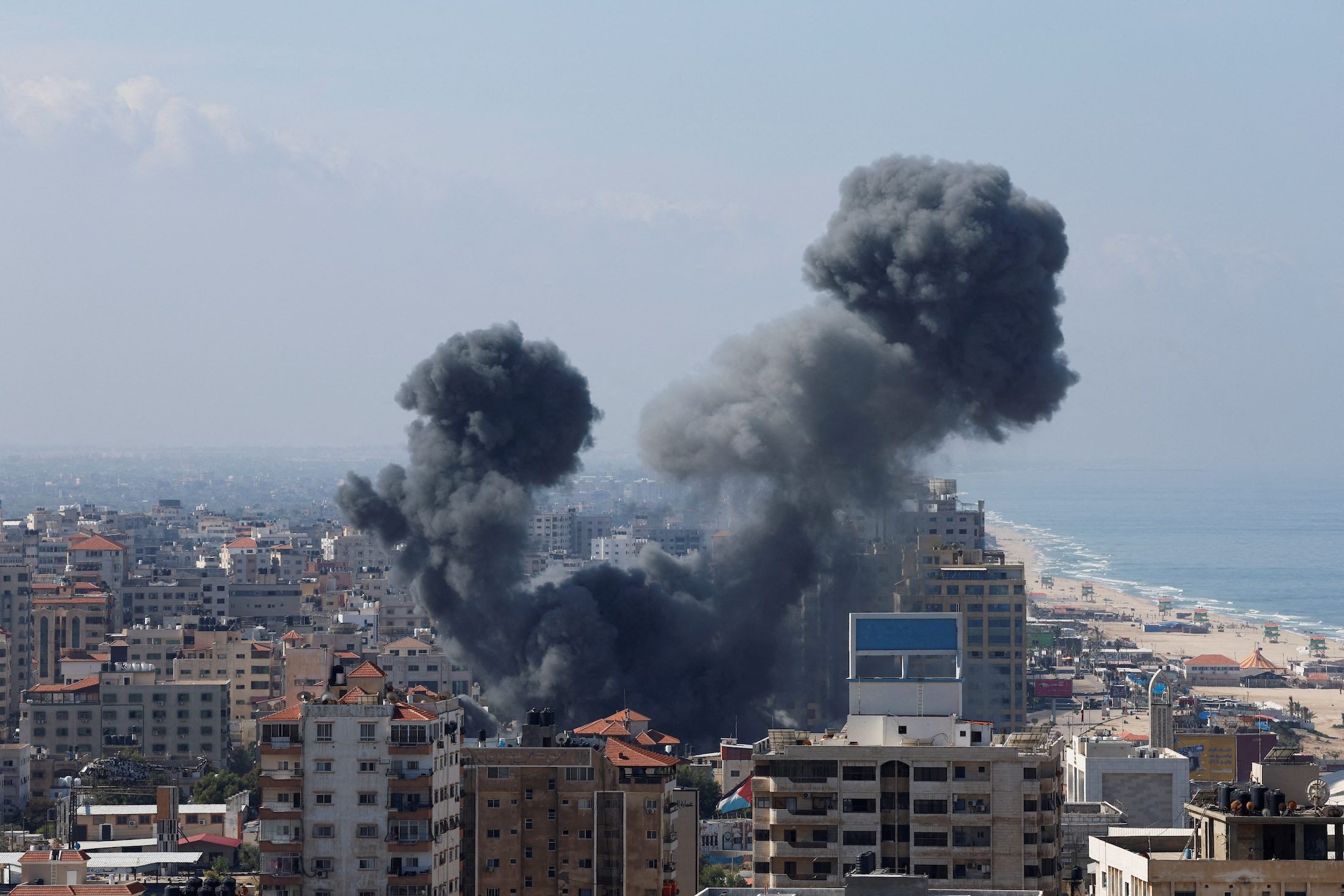
We have seen an Army General kidnapped in an ambush and subsequently killed. We have seen churches attacked, villages ransacked, and communities being devastated by the level of rising insecurity. For those who are still in denial, I pray it doesn’t reach their doorstep before they realise we are in a state of emergency.

What we must now realise as Yoruba is that the Fulani jihad against Nigeria is now in full swing. Just this week, they attacked communities in Ogun, Kogi, Kwara and some parts of Osun State. If the alarm bells are not ringing in our ears already, then we are, of all people in Nigeria, the most foolish.

Even people who are staunch supporters of President Tinubu, like Adetoun, are now making videos and asking the government to call for the help of Chief Sunday Adeyemo (Igboho) in dislodging the Fulani terrorists. It shows that the country is now witnessing a high degree of insecurity, and the government has no control over what is happening.

Although the government would like to make some gullible people believe that it is making progress in the security of lives and properties. The truth is that their progress is more of a façade than the reality on the ground.

For instance, the government claimed that the President was active throughout the rescue mission of the kidnapped victims from the CAC Church in Eruku, Kwara State. They also claimed that he left no stone unturned in rescuing some of the school girls who were kidnapped from the boarding house in Niger State. However, they failed to tell us how the victims were rescued and if any ransom was paid.

The truth is that, when it comes to insecurity in the country, the President is only acting when the cameras are turned on, and the international communities are involved. This President is not genuinely interested in fighting insecurity. The reason is that he has been quoted as saying he cannot fight insecurity, and if he dares, they will kill him. He is only interested in the titular privileges the position of a President brings, rather than the security of the lives and property of the innocent citizens.

Therefore, we Yoruba must now be on high alert as to the heightened insecurity in the land. We must recognise that our Yoruba territory is the crown jewel of Nigeria, and that is all these sponsors of terrorism and their foreign collaborators are looking for.

We must not let down our guard at any time and must begin to make serious efforts for the emancipation of our Yorubaland from Nigeria. The Caliphate have activated its long-awaited jihad, and we must be ready to respond in kind at a moment’s notice.

This is not the time to be fearful, but rather, it is the time to be courageous and be ready to declare our Yoruba nation if push comes to shove. Every Yoruba must realise that we are all in this together, and the only way to win is if we all put our differences aside and fight for the defence of our Oodua heritage. I know for a fact that in the end, Yoruba will win this battle, and our glory will be restored.

Continue Reading

Voice of Emancipation

Voice of Emancipation: Righteousness Exalts a Nation

Published

on

By

By Kayode Emola

The numerous talks about corruption in Nigeria are largely due to one factor: righteousness left our shores a long while ago. Many people are of the opinion that taking an oath before our local traditional deities like Sango, Ogun, Aiyelala etc, will bring back sanity to us as a nation.

However, the solution is not about oath-taking to compel us to say the truth for the sake of fulfilling our oath obligations; we need to always be radically conscious to do the right thing.

This week, we witnessed the altercation between the Minister of the Federal Capital Territory (Nyesom Wike) and the young naval officer Yerima. Many people have written several articles regarding who is right and who is wrong. Other commentators have sided with one party or the other, depending on whose side they stand on.

In analysing the situation, there are more questions than answers, and trying to be right rather than rational may be misleading. Firstly, on ethical grounds, the FCT Minister Wike, as the person in charge of land allocation in Abuja, has every right to inspect land allocation past and present to make sure they conform to regulations.

Secondly, the naval officer attempting to prevent Minister Wike should be questioned as to whether he was on official duty, mounting guard there on that day. Were his superiors aware of his deployment to the parcel of land, and was it properly documented that he should be there, considering that this was a civil matter rather than a military affair.

That said, if we look at it from moral and ethical grounds, one will begin to falter on the fundamental problem. There is an adage in Yoruba that says, were la fin wo were, meaning we use madness to cure madness. Following from the antecedents of the FCT Minister Wike in revoking and demolishing people’s property in Abuja and subsequently re-allocating those lands to his cronies, I believe the uniform men may be justified to stand their ground.

We all know that Minister Wike is not a person who follows the rule of law and is not necessarily one person that obeys court orders. Therefore, the military personnel would be justified in standing their ground and be ready to use force if necessary.

The fact that Minister Wike also backed down very quickly shows that he knew he had not done things correctly. I do not know the full details of the case, but Wike’s action showed a man desperate to be seen as doing something rather than someone who is prepared to do the right thing.

Wike did not prove beyond a reasonable doubt that there was sufficient evidence for the Federal Capital Development Authority (FCDA) to demolish that property on the day. He clearly did not provide evidence that there was any document to show the lands were acquired illegally and that the current occupiers needed to get the required document to regularise their ownership.

The Minister also did not demonstrate that sufficient time was given to the people to look for alternative accommodation before embarking on the journey to demolition. What transpired that day is a case of a government minister trying to bully people into submission by virtue of his position.

The bottom line is that Nigeria is not a country that particularly follows the rule of law. Righteousness left that country a long time ago, and it seems that everyone is doing what seems right in their own eyes, rather than what is actually the right thing to do.

Neither Wike nor the naval officer did the right thing on that fateful day, as neither both were supposed to be there if Nigeria had a functioning system. The Nigerian system is so riddled with corruption, and everyone works with the rule of man, rather than the rule of law.

It shows why we must make sure our Yoruba nation sets off on a righteous footing so that we don’t end up with the same mistakes as Nigeria. No nation riddled with corruption can ever develop and fulfill its potential.

There is no way workers will be paid a pittance and expected to live on miracles. For justice and equity to prevail, workers must be paid a decent living wage, and politicians alike must be paid based on the minimum wage. After all, everyone is working for the development of the country. If not, the Yoruba nation of our dream may be even worse than the Nigeria we are all running away from. If the politicians were to be paid astronomically, while the rest of the populace are left with nothing to write home about.

Continue Reading

Trending