Connect with us

Voice of Emancipation

Voice of Emancipation: Extrajudicial Killings in an Unjust Nigerian Society

Published

on

By Kayode Emola

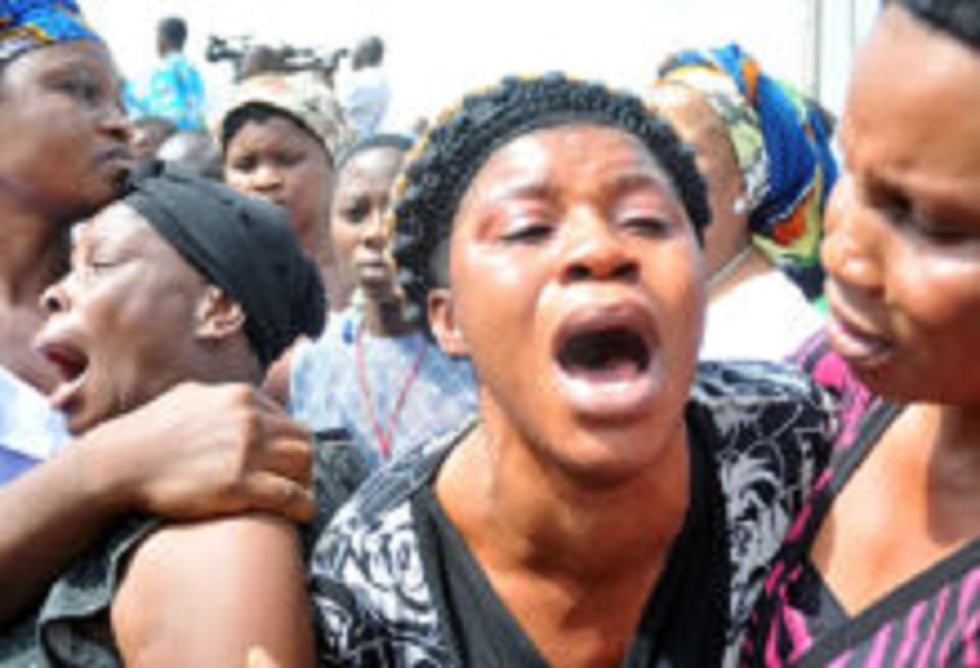
Last week, I read an article about an innocent man who was killed by a mob for an offence he did not commit, and it reminded me of when I lived in Lagos. I don’t know if it is a Yoruba-wide phenomenon, but mob justice is very common in Lagos, where the crime rate is high. The following account of what happened is graphic and may be upsetting for some readers.

This innocent boy was killed just because he was accused of stealing a woman’s ₦20,000 which she was hoping to take to the market. When asked about the money, the boy whispered through trembling lips, “I didn’t do it,” begging for his life.

However, his plea went unheeded as the first blow landed, coming from behind, followed by a stick that cracked across his shoulder. Another hit followed, with stones flying at him from unseen hands. His blood splattered on the ground, and the taste of iron filled his mouth. He cried “Mama,” whimpering, barely audible, but his mother wasn’t there. Only the angry crowd whose eyes were glazed with bloodlust, whose voices fed and were in turn fed from each other’s hate.

Within moments, a tyre was brought from nowhere, then came gasoline and the strike of a match. The boy was in flames, and the smell of the fire made the mob scamper a little. The boy’s hand reached out weakly, but to no avail; he cried for help, but none came. His breath became shallow, and his heart slowed. Even as he wanted to run, a two-by-two stick was used to force him back to the blazing tyre until he was burnt to ashes.

A few minutes later, someone ran into the square with the shattering news: the boy was not the one who took it. The accuser’s daughter had seen the money on the counter and taken it when no one was around. That is when it dawned on the crowd that an innocent young man had been killed for an offence he did not commit. The mob stood frozen, staring at the burnt body they had just destroyed; the grey sky wept for an innocent child killed because of false accusations in a society where the justice system has failed everyone.

One could try to write this off as an isolated story of one innocent boy killed because of a false testimony, but this pattern frequently repeats itself, time and time again, with no one doing anything to address the ugly situation. We have seen so many innocent people killed on the streets because of false accusations, both in Lagos and elsewhere in Nigeria, on some occasions with even the police standing by, and doing nothing.

This is what happens when society is broken, when justice is served only if you have money to pay for it. If even just one sensible person had advocated for the innocent boy to be handed over to the police so that the proper judicial process could take its course, how different might the outcome have been? However, we all know that the justice system in Nigeria doesn’t work that way.

Many genuinely guilty parties need do nothing more than bribe the police and are released without any charges. This is the reason that many people resort to mob action to get the justice they long for, and, as a result, in Nigeria, and especially in Lagos, it has become the norm. Every person feels that street justice is the only way to get restitution for any perceived breach of their rights, rather than appealing to the formal judicial process.

The problem is, when the accuser becomes the judge overseeing their own case, you cannot expect to see real justice reign. That is why we have lost too many innocent people in our land to crimes they did not commit.

And yet, I witnessed a case around 2010 when I was doing my National Youth Service Corps (NYSC) in Nasarawa. A young man who was serving in my local government, in the same Community Development Service (CDS) as I didn’t turn up for almost two months. I wondered what had happened to him, as he was always punctual for the weekly meeting.

A close mutual friend of ours informed me that he had experienced a trauma: he had driven into a pedestrian who lost his life. My first thought upon hearing that he had killed someone was, how can he still be alive, and not even in prison? Our friend explained to me that in Northern Nigeria, when such things occur, they term it as “kadara,” meaning destiny.

She explained that since it was destiny for the pedestrian to lose his life in that way, the jungle justice system cannot be applied to our friend who was driving. Instead, he was asked to make restitution to the family of the victim by means of covering the cost of the burial, and, having done so, he was let go.

I was amazed that this could happen in Nigeria. I told my friend that had this happened in Lagos, the driver would have fled the scene because, if caught, he would most definitely be lynched by an angry mob.

This story taught me a valuable lesson: that just because something has been normalised in our society, that doesn’t make it the proper practice. Some things can and should change, especially if it is costing the lives of innocents.

I cannot say that the extrajudicial killings going on in Lagos will stop overnight – or, indeed, will ever stop whilst the Yoruba remain in Nigeria. However, it is a menace that cannot be permitted within our society when we get our independent Yoruba nation.

However, the only way to prevent people from resorting to street justice is to strengthen our judicial process such that justice is guaranteed no matter who must be held accountable. If not, this may be only one of many problems of Nigeria that will become our nightmare when we declare our sovereign Yoruba nation.

Continue Reading
Click to comment

Leave a Reply

Your email address will not be published. Required fields are marked *

Voice of Emancipation

Voice of Emancipation: Implications of President Trump’s Christmas Day Bombing

Published

on

By

By Kayode Emola

For the first time in 10 years, Christians in Nigeria celebrated the 2025 Christmas without experiencing attack on churches or Christian worshippers. Although the anxiety was there, and many churches were told not to open for gatherings around that period, it still felt as if something big would happen anyway.

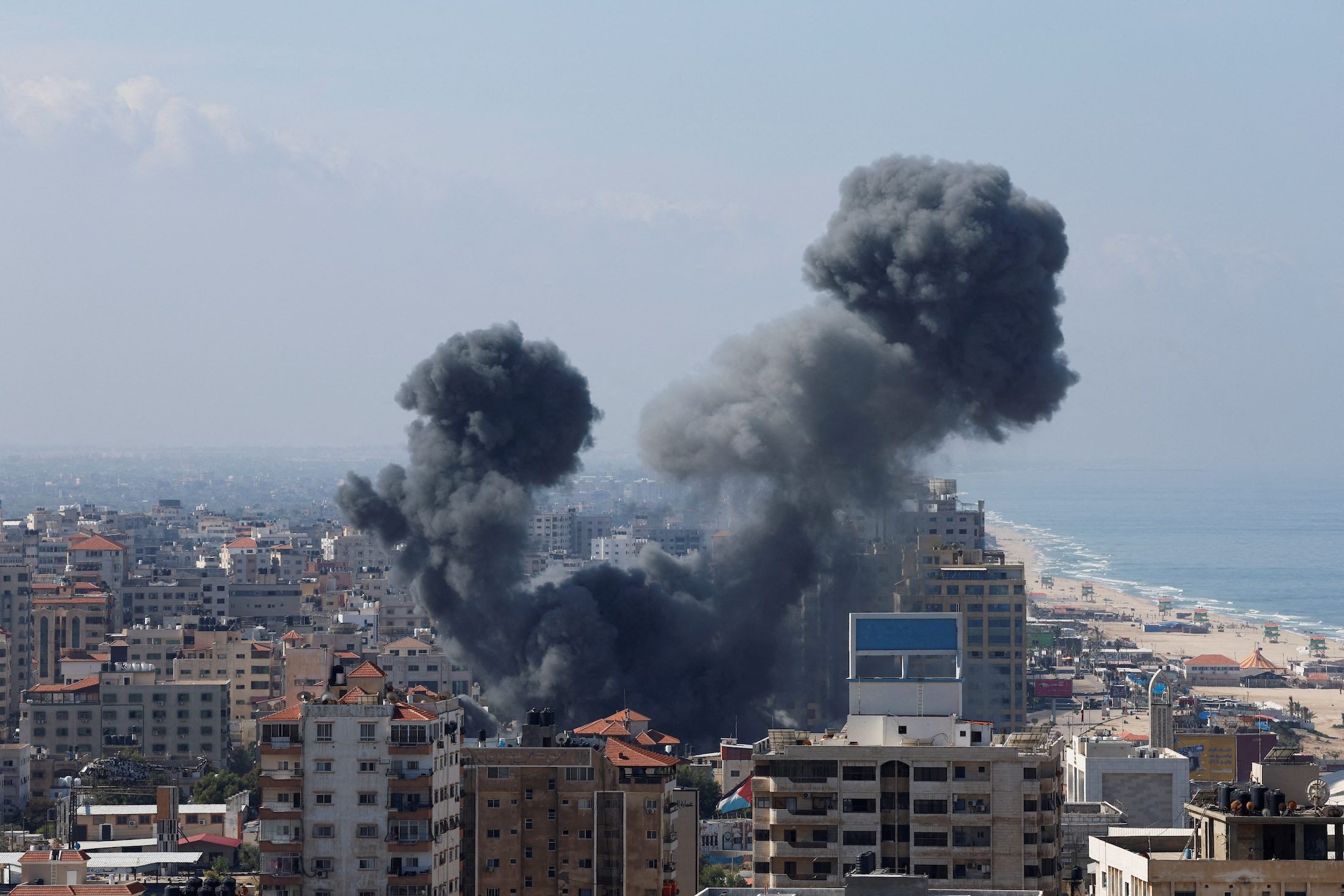
Indeed, something big did happen and it was loud even to the deaf, but the consequences of that singular action may last for a lifetime. This time around, it was the terrorists’ themselves that were being attacked and not innocent people in the communities. Few days ago, President Trump stated in a TV interview with FOX News that the US had bomb Nigeria once and if necessary, there will be many bombs if Christians continues to be killed.

I do not believe that bomb alone can solve this problem, and if the US continues to throw bombs on Nigerian soil without truly delving into the root causes of insecurity in Nigeria, then the US would create a greater problem than they met. The problem of insecurity in Nigeria is not just banditry and terrorism on innocent villagers, it is an agelong jihad that has spread its wing into several aspect of the society.

For instance, the US army’s bombed terrorist’s hideout in Tangaza area of Sokoto state which is less than 50km to the Nigeria/Niger Republic porous border. What that could lead to is the terrorists gaining support from their brothers in Niger republic and other parts of the Sahelian countries to terrorise the villagers in those communities.

The second possibility is that the terrorists will start migrating southwards to finally conclude their jihadi conquest mission for the Caliphate. In either scenario, we Southerners who may have been shielded by the Rivers’ Niger and Benue may become vulnerable to frequent attacks.

The US Christmas day bombing of the Lakurawa vigilante group (now metamorphosed into a full-blown terrorist group) may give the group more sympathy among its people. This could therefore solidify their presence in the area granting them legitimacy they highly desire. They could use this newly acquired position to portray themselves as the protectors of the communities against government aggression, thereby controlling vast amounts of lands for themselves.

As for us Yoruba and other nationalities in Nigeria, this is the time to speak out loudly and clearly to the world without mincing words. Our political leaders have failed to do the needful by protecting the lives and properties of the people, therefore it is time for us to take decisive actions.

This is not the time to merry go-round about our security; it is the time to become resolute in our resolve to solve the insecurity problem once and for all. We like the Israelis faced multiple threats from the Iranian regime, Hamas group, Hezbollah and the Houthi government in Yemen.

The Israelis did not fold their hands hoping for the day God will come down to help them defeat their enemies. They took affirmative action in going after the terrorists’ groups that were after their lives and properties. With the decisive defeat of the Hamas group, the Hezbollah and the Iranian regime, Israel can now breathe to a sigh of relief for many years to come.

I urge our Yoruba people to begin to organise themselves into formidable groups that can repel this terrorists’ groups invading our lands. We need to understand that President Trump’s Christmas day bombing of Sokoto however good that it is, has opened a pandora box. We either get the job done once and for all or live the rest of our lives as a conquered slave if we do not act, God forbid.

This is the time for affirmative action just like the Israelis did following the Oct 7th, 2023, attack by Hamas. We need not think that the Christmas day bombing of the terrorists by the US and the promise of continuous bombing by President Trump will bring lasting solution especially if the US is not prepared to put boots on the ground to finish what they started.

The US will need to decide for themselves how they want to carry out their own campaign. However, if our government officials fail to protect the lives and properties of our people, then communities have a moral responsibility to start forming local vigilante groups that would defend their lands and livelihood. A word is enough for the wise.

Continue Reading

Voice of Emancipation

Voice of Emancipation: After Venezuela, Which Country is Next?

Published

on

By

By Kayode Emola

On 14th December 2025, I wrote in my weekly column of the Boss Newspaper that Nicolas Maduro is a goner; in case you missed that article, here is the link (https://thebossnewspapers.com/2025/12/14/voice-of-emancipation-nicolas-maduro-is-a-goner/) for a re-read. Exactly 3 weeks later, he’s in the custody of the Drug Enforcement Administration in New York.

For Nicolas Maduro, the US military presence in the Caribbean Sea felt like theatrics, and he even brandished a sword he intended to use in stopping the US war machines. However, when reality dawned on him, not even his heavily guarded presidential palace could save him.

There is no doubt that the actions of President Trump have created a lot of stir in the international community. Some have spoken in favour of his decisive actions, while others are in awe at what has just happened. The one thing I know is that after a few days, the dust will settle and everyone will move on.

However, if I were President Tinubu, I would begin to see the handwriting on the wall very clearly. The actions of the US in Venezuela should be seen by President Tinubu as a troubling sign of things to come. Likewise, the Ayatollah of Iran, who always thinks he can rule his people with impunity. The days of brutal dictatorship are over in so far as President Trump is concerned, especially when it comes to American interests.

Some people may see the events in Venezuela as a sign that the US may or may not come to Nigeria. Let me burst their bubble by saying the US is coming to Nigeria, and they are coming with fire and fury.

Why did I know that the US is coming to Nigeria? It is not because I engage with this present US administration, but because I know that the radical Islamic terrorists terrorising Nigeria are hellbent on creating unspeakable havoc. Just 5 days ago, on 31st December 2025, Boko Haram terrorists invaded the villages of Zah, Mubang Yadul, and Kijing, all in Hong Local Government Area of Adamawa state, killing at least 12 persons.

Their message was clear to the villagers: convert to Islam or get ready to die. In a country like Nigeria, where persecution of Christians in Northern Nigeria has become a norm, I don’t believe the US will stand idly by and watch.

In the same vein, terrorists invaded the Owo Local Government of Ondo State, Southwestern Nigeria and burnt down a police station with no repercussions. It is not the burning of the Police Station in Owo local government or the killing of villagers in Hong local government that bothers me the most. It is the fact that there was no security, either from the police or the military, that could repel these terrorists during their attack or even shortly after the attack had taken place.

It simply shows that there is a breakdown of law and order in Nigeria if terrorists can just run riot as they wish, destroying lives and properties, and the government seems helpless. The connotation that the Nigerian government cannot fight insecurity is a misleading one. Nigeria has all it takes to fight terrorism; what it lacks is the appetite to fight insecurity.

Tinubu had better get a grip on the situation before he ends up like Nicolas Maduro in chains to the US to face criminal charges. If he does not have the appetite to fight insecurity, he had better leave the stage quietly while there is still the opportunity. Nicolas Maduro was offered a safe passage to any country of his choice, but he refused; now he is going to face the full wrath of the American justice system.

President Tinubu has been warned severally by the US government to get a grip on insecurity in Nigeria; however, he still treats the situation of terrorism with kid gloves. If he thinks that President Trump forgot about Nigeria, then he should think again. The US President only took a break to deal with the situation in Venezuela.

Now that the situation in Venezuela has been fully dealt with and under control, Nigeria is the next stop for President Trump. Except if things escalate in Iran, in which case President Trump will quickly remove the Ayatollahs and then return to his original plans of dealing with the situation in Nigeria.

Nigeria is a very strategic asset to the US, and they cannot afford to let it slip away from their grip. The US has written countless documents on the importance of Nigeria to their foreign policy and global influence. The matter is of national importance to the US, and they are not going to keep quiet about it.

As for us, the Yoruba people, the choice is simple: get the hell out of Nigeria before the ship sinks or sink with Nigeria when the Americans come. The obvious choice is simple: get out while we can. Our docility is fuelling the government’s incompetence, as our silence is provoking the government to inaction.

We are afraid to speak out and to take the necessary actions for our liberation because of our own foolishness. We had hoped that things under President Tinubu would improve; however, it has only gotten worse. The only option for us now is to get out of Nigeria; otherwise, we should be ready to be colonised by the US. If you doubt it, watch how the US is going to govern Venezuela as its 51st State, which will give it a foothold in South America.

Trump has already said the US will govern Venezuela, and he’s not backing down. He is going to appoint a sole administrator who will report directly to him. How long that arrangement will last is anyone’s guess.

Therefore, if we don’t want to go down with Nigeria and with President Tinubu, Yoruba and every indigenous nation in Nigeria should do the needful by demanding their self-determination. That is the only true way that we can escape the wrath of the US that is coming. A stitch in time saves nine; let us speak out and act now to save ourselves the embarrassment of another colonisation.

Continue Reading

Voice of Emancipation

Voice of Emancipation: Tinubu’s Tax Regime

Published

on

By

By Kayode Emola

As we move closer to 2026, one thing that will be on the minds of many Nigerians is the new tax regime of President Tinubu coming into effect on 1st January 2026. Many people are wondering how this is going to affect their personal finances; is the government going to come into their bank accounts to seize their hard-earned money, especially if they cannot prove the source?

Some are wondering, haven’t we already been taxed enough? What else are they looking for that they haven’t already got? I have deliberately stayed away from this topic for some time, but I believe it is prudent to shed some light on what is really happening, especially as its implementation is imminent.

Tinubu has travelled to many countries and has seen how many developed economies work. Most countries survive mainly on taxation, but taxes without accountability would not bring the desired change or development in the country. So, I believe that the new tax regime brings a tangible positive impact on the people of the country, as claimed by the government.

Let’s even ask ourselves what the term tax refers to. Tax is a mandatory financial charge imposed by the government of a country on individuals’ income, companies’ profits, or the cost of goods and services.

If tax is the mandatory financial charge on an individual’s income or a company’s profit, etc, how come the Nigerian government is just waking up to realise that Nigerians are not properly taxed? First, many Nigerians are being taxed through their employment, and many big businesses are also being taxed. The only problem with Nigeria is that we do things haphazardly, which makes for ineffective results.

Tinubu’s proposed tax regime is going to experience a lot of hiccups and not necessarily achieve the desired results it was intended to achieve. Not because the government does not have genuine intentions but because the Nigerian government is working in reverse when it comes to taxation.

In many progressive countries, there is less bureaucracy in setting up a company. Once your company is set up, you are automatically given a unique tax reference number, which you can use to open a bank account and start transactions. When we are talking about progressive countries, I don’t mean the likes of the USA, Canada, UK, Norway etc. I am talking about countries in Africa, like Rwanda, where it takes just about 6 hours to open a company and get set up for business.

In fact, you can open a company on your way to Rwanda, and your company will be ready to go before you get there. This little bottleneck makes it easier to get set up in a place like Rwanda and many other progressive countries compared to a country like Nigeria, where it takes forever to set up a company. Even after opening your company in Nigeria, it could take you forever to get set up for banking transactions, let alone getting your business.

The bottom line here is that it is not that Nigerians don’t want to pay tax but the bureaucracy in setting up a business makes it difficult to get set up and registered for tax purposes. For a country that has less people in paid employment, the government would need to make it easier for people to set up a company so that people can actually run their business through a limited company for proper accountability.

Secondly, over 70 percent of Nigerians live in abject poverty, so when the government is talking about taxing the people, it feels more like asking the people to make straws with their hands. How can you tax someone who literally don’t have anything to give? The majority of the people live on less than $2/day, and most of them don’t even have a bank account. How then does the government expect to tax them?

In 2021, the government imposed various forms of charges on personal and business bank accounts. The aim was to generate revenue for the government, and it was hailed as a panacea for development as the government had hoped to raise a lot of revenue this way. Fast forward 5 years, and the government is planning to abolish it and introduce direct taxation instead, thinking it can raise more money.

The truth is that most developed countries like Britain, which raises over 70 percent of its income through taxation, do so through the pay-as-you-earn (PAYE) system. This is the most effective way to collect taxes for the state and generate the needed revenue for development. In the case of Nigeria, many people are not in paid employment; therefore, I don’t think the government will generate as much as it has hoped for.

This means that the newly introduced tax regime is just another government exercise and whether it succeed or fails remains to be seen, depending on how it is implemented. How can the pepper seller or the groundnut seller in the market pay their tax. These small traders are merely survivors who live on their daily income and have nothing left for their day-to-day essentials.

For those who are confused about the Nigeria tax reform, I will advise them to get for themselves the gazetted copy through this link C:\Users\Computer Section\Deskt. I believe most of the questions regarding the Nigeria Tax Act 2025 can be found here.

As we move forward to January 2026, I will use this opportunity to wish our people a happy new year and hope that the Tinubu tax regime makes their lives better. I sincerely hope that the government is not, in all sincerity, trying to introduce stealth taxes on our already impoverished people.

Continue Reading

Trending