Opinion
The Oracle: Harnessing the Potentials of Nigerian Intellectuals with Disability…(Pt.1)
Published
2 years agoon
By
Eric
…for Positive Contributions to the Government
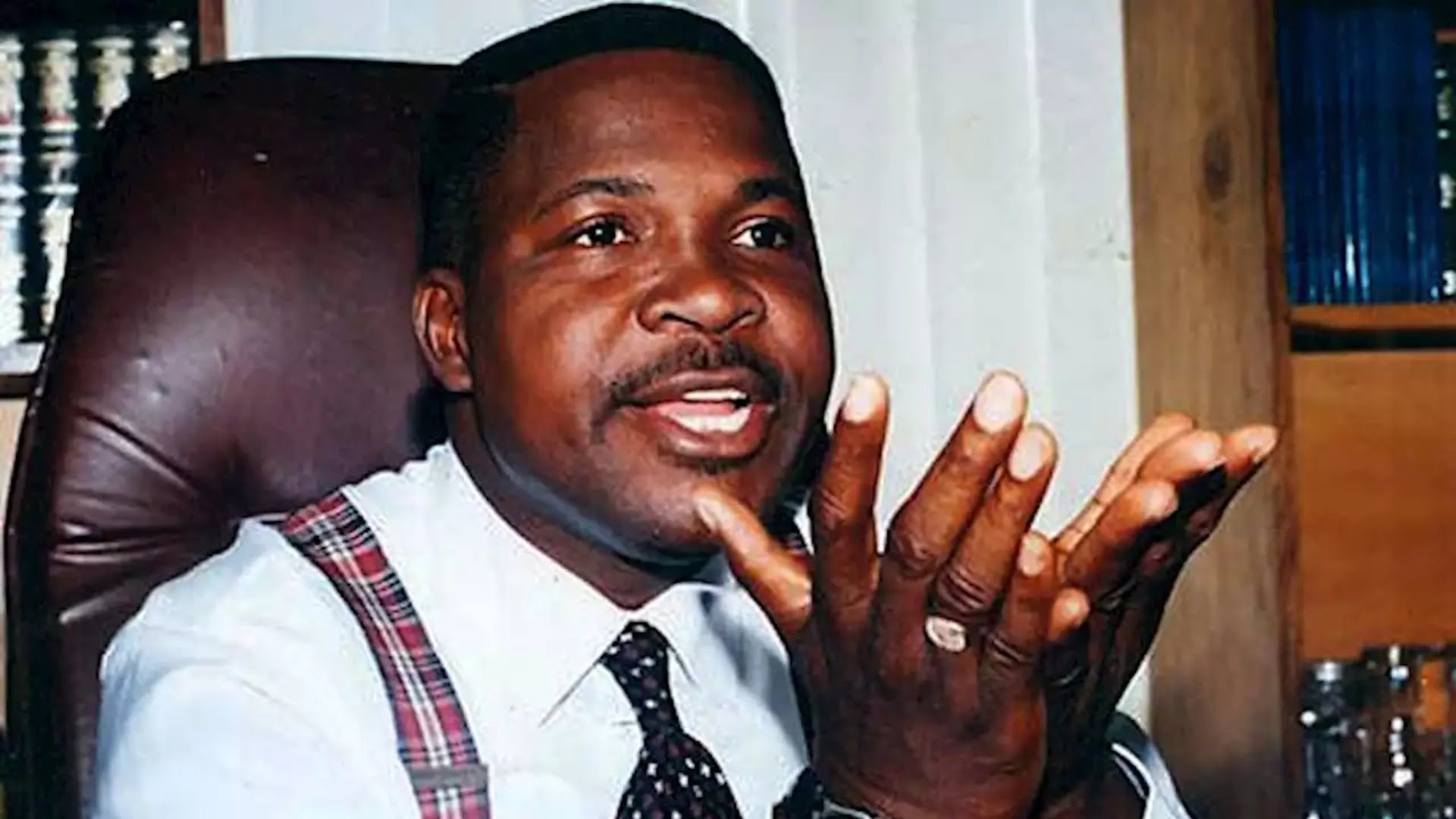
By Mike Ozekhome
INTRODUCTION
There is no doubt that persons with disabilities have often been disadvantaged and have suffered some forms of discrimination at one time, or the other, in the society. Some of the movers and shakers of this world, were disabled intellectuals who made contributions of gargantuan proportion to the advancement of civilisation and yet, have been relegated to the background as if being disabled equates to lack of potentials. In this paper, we shall briefly discuss ways to harness the potentials of persons with disability both at home and abroad for purposes of national development. Before then, it is apposite to examine the meaning of disability.
DEFINITIONAL TERMS
According to Wikipedia, Disability is the consequence of an impairment that may be physical, cognitive, mental, sensory, emotional, developmental, or some combination of these. A disability may be present from birth, or occur during a person’s lifetime. “Disabilities” is an umbrella term, covering impairments, activity limitations, and participation restrictions (World Health Organisation: Disabilities. Available at: http://www.who.int/topics/disabilities/en/ Accessed 15/12/15). Impairment is a problem in body function or structure; an activity limitation is a difficulty encountered by an individual in executing a task or action; while a participation restriction is a problem experienced by an individual in involvement in life situations. Thus, disability is a complex phenomenon, reflecting an interaction between features of a person’s body and features of the society in which he or she lives.
Individuals may also qualify as disabled if they have had an impairment in the past or are seen as disabled based on a personal or group standard or norm. Such impairments may include physical, sensory, and cognitive or developmental disabilities. Mental disorders (also known as psychiatric or psychosocial disability) and various types of chronic disease may also qualify as disabilities (DisabledWorld. Disability: Benefits, Facts & Resources for Persons with Disabilities. Available at: http://www.disabled-world.com/disability/ Accessed 15/12/15).
According to the International Labour Organisation (ILO), one out of every seven people in the world—or some 1 billion people—has a disability. Between 785 and 975 million of them are estimated to be of working age, but most do not work. While many are successfully employed and fully integrated into society, as a group, persons with disabilities often face disproportionate poverty and unemployment (ILO, Inclusion of persons with disabilities. Available at: http://www.ilo.org/skills/areas/inclusion-of-persons-with-disabilities/lang–en/index.htm Accessed 15/12/15). Acknowledging the fact that persons with disabilities are imbued with vast and sometimes untapped) potentials, the World health Organisation made the appeal that governments should step up efforts to enable access to mainstream services and to invest in specialized programmes to unlock the vast potential of people with disabilities. (World Health Organisation: New world report shows more than 1 billion people with disabilities face substantial barriers in their daily lives. Available at: http://www.who.int/mediacentre/news/releases/2011/disabilities_20110609/en/).
In order to effectively discuss the potentials of disabled intellectuals to nation-building, let us consider the barriers and obstacles which the society has advertently or inadvertently, erected on the paths of disabled persons.
BARRIERS ERECTED ON THE PATH OF DISABLED PERSONS
Societal stereotyping of persons with disabilities is the most egregious barrier suffered daily by disabled persons. They are made the scum of the earth, rejected, overlooked, dejected and relegated by the society of which they are part of. Because of such prevailing societal mindset, it is more difficult to get employed, have a carrier, get married, or even get loved as a person with disability.
Denial of access to equal opportunity, integration and self-representation through the lack of appropriate resources which is the result of bad and uninformed planning. This is also as a result of non-communication – verbal and non-verbal-as well as written, e.g. no effort is made to communicate with people who are blind, or whose hearing or speech is impaired or is severely disabled.
The lack of accessible public transport is perhaps, one highly discriminating barrier persons with disabilities daily confront. Without this resource, they are forced to see the world from their windows or in more fortunate cases, their street. They are restricted, relegated and handicapped in movement. The majority of people with disabilities cannot afford their own transport due to the inadequate social securities and the lack of employment opportunities.
The lack of physical access to the built environment is another hurdle a physically challenged person has to surmount. The way houses, institutions and offices are built with no provision or considerations for disabled persons are alarming. How will disabled persons gain equal opportunity, realize integration and attain self-representation if they cannot get into educational and other institutions, libraries, places of recreation, churches, mosques, malls, in fact most places?
POTENTIALS OF PERSONS LIVING WITH DISABILITIES
People with disabilities have the skills to pursue meaningful careers and play an important role in any country’s educational and economic success. In fact, experience with disability can offer a competitive edge when it comes to work or nation building. Richard Okoro Eweka, properly captured the great potentials of person with disabilities when he wrote thus:
“Despite the cruelty fate has brought their way, people living with disabilities have proven over the years that there is ability in every disability. They are not saying it to keep faith alive or for us to read to be motivated, but have been able to show it in different ways that they can achieve and attain any desired goal in life that they set for themselves irrespective of the state of deformity. They all have several evidence to show for their determination to succeed and have attained greater height than those without disabilities. The evidence of their successes have further convinced us that they are gifted people just like every other able- bodied men and women around. They have shown the world that disability in any form is an open invitation to take the world by surprise and that they are not made to beg. Some physically challenged persons in our society have come out stronger than the able people in their chosen career. Some have become entrepreneurs and employers of labour despite their disabilities. Some others have become preachers of the word of God, given hope to the hopeless in the society and the world at large. Some others have found strength in singing to lift the soul of those that have lost hope in themselves or those who are distressed with the challenges of life”. (Richard Okoro Eweka, ‘Harnessing the Ability in Disability’. The Nigerian Observer of 3rd July, 2014).
The protection guaranteed in Human rights treaties, and grounded in the Universal Declaration of Human Rights, should apply to all. Persons with disabilities have, however, remained largely ‘invisible’, often side-lined in the rights debate and unable to enjoy the full range of human rights.
CLOSING THE GAP OF DISABILITY
In recent years, there has been a revolutionary change in approach, globally, to close the protection gap and ensure that persons with disabilities enjoy the same standards of equality, rights and dignity as everyone else. The Convention on the Rights of Persons with Disabilities, which was adopted in 2006 and entered into force in 2008, signalled a ‘paradigm shift’ from traditional charity-oriented, medical-based approaches to disability to one based on human rights. Former UN High Commissioner for Human Rights, Louise Arbour, said, “The celebration of diversity and the empowerment of the individual are essential human rights messages. The Convention embodies and clearly conveys these messages by envisaging a fully active role in society for person with disabilities.” (Statement by Ms. Louise Arbour UN High Commissioner for Human Rights on the occasion of the 8th Session of the Human Rights Council – Celebration of the entry into force of the Convention on The Rights of Persons with Disabilities and its Optional Protocol – See more at: http://www.ohchr.org/en/NewsEvents/Pages/DisplayNews.aspx?NewsID=8366&LangID=E#sthash.4m9d82aN.dpuf).
THOUGHT FOR THE WEEK
“Recognizing and respecting differences in others, and treating everyone like you want them to treat you, will help make our world a better place for everyone”. (Kim Peek).
Related
You may like
Opinion
Book Review: Against the Odds by Dozy Mmobuosi
Published
2 days agoon
December 4, 2025By
Eric
By Sola Ojewusi
Against the Odds is an ambitious, deeply personal, and unflinchingly honest memoir that traces the remarkable rise of Dozy Mmobuosi, one of Nigeria’s most dynamic and controversial entrepreneurs. In this sweeping narrative, Mmobuosi reveals not just the public milestones of his career, but the intimate struggles, internal battles, and defining moments that shaped his identity and worldview.
The book is both a personal testimony and a broader commentary on leadership, innovation, and Africa’s future—and it succeeds in balancing these worlds with surprising emotional clarity.
A Candid Portrait of Beginnings
Mmobuosi’s story begins in the bustling, unpredictable ecosystem of Lagos, where early challenges served as the furnace that forged his ambitions. The memoir details the circumstances of his upbringing, the value systems passed down from family, and the early encounters that sparked his desire to build solutions at scale.
These foundational chapters do important work: they humanize the protagonist. Readers meet a young Dozy not as a business figurehead, but as a Nigerian navigating complex social, financial, and personal realities—realities that millions of Africans will find familiar.
The Making of an Entrepreneur
As the narrative progresses, the memoir transitions into the defining phase of Mmobuosi’s business evolution. Here, he walks readers through the origins of his earliest ventures and the relentless curiosity that led him to operate across multiple industries—fintech, agri-tech, telecoms, AI, healthcare, consumer goods, and beyond.
What is striking is the pattern of calculated risk-taking. Mmobuosi positions himself as someone unafraid to venture into uncharted territory, even when the cost of failure is steep. His explanations offer readers valuable insights into:
• market intuition
• the psychology of entrepreneurship
• the sacrifices required to build at scale
• the emotional and operational toll of high-growth ventures
These passages make the book not only readable but instructive—especially for emerging
African entrepreneurs.
Triumphs, Crises, and Public Scrutiny
One of the book’s most compelling strengths is its willingness to confront controversy head-on.
Mmobuosi addresses periods of intense scrutiny, institutional pressure, and personal trials.
Instead of glossing over these chapters, he uses them to illustrate the complexities of building businesses in emerging markets and navigating public perception.
The tone is reflective rather than defensive, inviting readers to consider the thin line between innovation and misunderstanding in environments where the rules are still being written.
This vulnerability is where the memoir finds its emotional resonance.
A Vision for Africa
Beyond personal history, Against the Odds expands into a passionate manifesto for African transformation. Mmobuosi articulates a vision of a continent whose young population, natural resources, and intellectual capital position it not as a follower, but a potential leader in global innovation.
He challenges outdated narratives about Africa’s dependency, instead advocating for
homegrown technology, supply chain sovereignty, inclusive economic systems, and investment in human capital.
For development strategists, policymakers, and visionaries, these sections elevate the work from memoir to thought leadership.
The Writing: Accessible, Engaging, and Purposeful
Stylistically, the memoir is direct and approachable. Mmobuosi writes with clarity and intention, blending storytelling with reflection in a way that keeps the momentum steady. The pacing is effective: the book moves seamlessly from personal anecdotes to business lessons, from introspection to bold declarations.
Despite its business-heavy subject matter, the prose remains accessible to everyday readers.
The emotional honesty, in particular, will appeal to those who appreciate memoirs that feel lived rather than curated.
Why This Book Matters
Against the Odds arrives at a critical moment for Africa’s socioeconomic trajectory. As global attention shifts toward African innovation, the need for authentic narratives from those building within the system becomes essential.
Mmobuosi’s memoir offers:
• a case study in resilience
• an insider’s perspective on entrepreneurship in frontier markets
• a meditation on reputation, legacy, and leadership
• a rallying cry for African ambition
For readers like Sola Ojewusi, whose work intersects with media, policy, leadership, and social development, this book offers profound insight into the human stories driving Africa’s new generation of builders.
Final Verdict
Against the Odds is more than a success story—it is a layered, introspective, and timely work that captures the pressures and possibilities of modern African enterprise. It challenges stereotypes, raises important questions about leadership and impact, and ultimately delivers a narrative of persistence that audiences across the world will find relatable.
It is an essential read for anyone interested in the future of African innovation, the personal realities behind public leadership, and the enduring power of vision and resilience
Related
Opinion
Redefining Self-leadership: Henry Ukazu As a Model
Published
3 days agoon
December 3, 2025By
Eric
Related
Opinion
The Fault Lines of Power: A Global Leadership Crisis and the Path to Restoration
Published
7 days agoon
November 29, 2025By
Eric
By Tolulope A. Adegoke, PhD
“Across the world, we are navigating the fault lines of outdated leadership. The future belongs to those who can mend these cracks with the mortar of integrity, the vision of long-term purpose, and the resilience of empowered people” Tolulope A. Adegoke, PhD
Leadership serves as the foundational pillar for any thriving organization, corporation, or nation. It is the critical framework meant to ensure stability, inspire direction, and foster resilience against challenges. Yet, a pervasive and unsettling phenomenon is emerging worldwide: the development of deep fault lines within these very structures of authority. This crisis of confidence spans sectors and continents, from established Western democracies to burgeoning economies in the Global South.
This examination explores these global leadership fissures, with a specific focus on Nigeria’s complex landscape. We will diagnose the universal symptoms, analyze their acute manifestation in the Nigerian context, and ultimately, propose a constructive framework for renewal aimed at individuals, businesses, and governments.
Diagnosing the Global Leadership Decay
The erosion of effective leadership rarely happens overnight. It typically begins with subtle, often ignored fractures that gradually weaken the entire system. These fractures commonly appear as:
- The Credibility Chasm: A growing disconnect between a leader’s promises and their tangible actions. When rhetoric of transparency clashes with a reality of opacity, the essential bond of trust is severed.
- The Tyranny of the Immediate: An overwhelming focus on short-term gains—be it quarterly earnings or political popularity—that sacrifices long-term strategy and sustainable health. This is the equivalent of building on unstable ground.
- Strategic Inertia: In a world defined by rapid change, leaders who cling to outdated, rigid hierarchies render their organizations incapable of adapting, innovating, or surviving future shocks.
- The Empathy Void: Leadership that is intellectually or emotionally detached from the realities of its people, employees, or citizens. This breeds disengagement, stifles collaboration, and fuels a silent exodus of talent and goodwill.
- The Succession Failure: A critical neglect of leadership pipeline development, which creates a dangerous vacuum of vision and competence during transitions, jeopardizing institutional memory and future stability.
The Nigerian Context: A Magnified View of the Crisis
Nigeria, a nation brimming with phenomenal human and natural potential, offers a powerful case study where these global fault lines are particularly pronounced and consequential.
Within the Political Arena:
Leadership is frequently marred by a system that rewards patronage over performance. Rampant corruption diverts essential resources from critical public services, leading to a catastrophic decay in infrastructure, healthcare, and education. This, combined with policy instability across political administrations, creates an environment of uncertainty that discourages vital long-term investment.
Within the Corporate Sphere:
Many organizations, including prominent family-owned conglomerates, are hindered by overly centralized decision-making and weak corporate governance structures. When nepotism overshadows meritocracy, innovation is suppressed, and employee motivation withers. A survivalist mindset, driven by a challenging economic climate, often trumps strategic investment in talent and innovation.
Within Public Institutions:
A pervasive culture of bureaucracy and inefficiency often widens the gap between the government and the governed. This leads to profound citizen frustration and a demoralized public workforce, undermining the very purpose of these institutions.
The cumulative effect of these intersecting failures is a palpable national anxiety—a widespread belief that the nation is operating far below its potential, not due to a lack of resources or talent, but because of a fundamental breakdown in its leadership frameworks.
A Framework for Renewal: Building Resilient Leadership
Identifying the problem is only the first step. The imperative is to forge a path forward. The following advisory framework outlines how to bridge these fault lines and unlock latent possibilities.
For Individuals (The Agents of Change):
- Transition from Spectator to Stakeholder: Exercise accountability through informed civic participation and constructive advocacy. Use platforms, including digital media, to demand transparency and results from leaders.
- Embody Ethical Leadership Daily: Demonstrate integrity, accountability, and empathy within your immediate circle—your workplace, community, and family. Leadership is an action, not merely a position.
- Commit to Lifelong Learning: Proactively acquire new skills, cultivate a global perspective, and strengthen your emotional intelligence to navigate an increasingly complex world.
- Engage in Reciprocal Mentorship: Actively seek guidance while also dedicating time to mentor others. Cultivating the next generation is a collective responsibility that ensures a continuous flow of capable leaders.
For Corporations (The Economic Catalysts):
- Ingrain, Don’t Just Install, Governance: Move beyond superficial compliance. Foster a culture where independent boards, radical transparency, and ethical practices are non-negotiable core values.
- Systematize Leadership Development: Establish robust talent management and succession planning programs. Intentionally identify and nurture future leaders through targeted training, mentorship, and strategic role assignments.
- Champion a Stakeholder-Centric Purpose: Define a corporate mission that creates genuine value for all stakeholders—employees, customers, communities, and the environment. This builds lasting brand equity and attracts purpose-driven talent.
- Cultivate Psychologically Safe Spaces: Foster an organizational climate where employees feel empowered to voice ideas, question assumptions, and experiment without fear of reprisal. This is the bedrock of a truly innovative and adaptive organization.
For Nations (The Architects of Society):
- Fortify Institutions Over Individuals: Invest in building strong, independent institutions—such as the judiciary, electoral commissions, and anti-corruption bodies—that can function autonomously and uphold the rule of law.
- Prioritize Human Capital as the Supreme Asset: Direct national investment toward foundational pillars like quality public education and healthcare. An educated, healthy, and skilled populace is the most critical driver of sustainable national development.
- Articulate and Adhere to a Long-Term National Vision: Develop a strategic, non-partisan national development plan that provides a consistent direction for policy, transcending political cycles and uniting citizens around a common goal.
- Establish a Consequence-Based Culture: Implement a system where integrity is visibly rewarded and corruption is met with swift, transparent, and impartial justice, regardless of the offender’s status.
Conclusion: Laying a New Foundation
The fault lines in global leadership present a significant challenge, but they also offer a clarion call for renewal. The solution lies in a deliberate return to the core tenets of visionary, accountable, and empathetic leadership.
For Nigeria, and for the world at large, delivering on our shared potential requires a concerted effort to repair these foundations. We must collectively shift from a culture of short-sightedness to one of intergenerational stewardship, and from fractured allegiances to a unified commitment to the common good.
The blueprint for change is clear. By choosing to reinforce our leadership at every level, we can transform these fault lines into cornerstones for a more prosperous, stable, and equitable future. The responsibility to build rests with all of us.
Dr. Tolulope A. Adegoke, AMBP-UN is a Doctor of Philosophy (PhD) in History and International Studies, Fellow Certified Management Consultant & Specialist, Fellow Certified Human Resource Management Professional, a Recipient of the Nigerian Role Models Award (2024), and a Distinguished Ambassador For World Peace (AMBP-UN). He has also gained inclusion in the prestigious compendium, “Nigeria @65: Leaders of Distinction”.
Related


Era of Nationwide Fuel Queues Has Come to An End, Says Dangote
The Oracle: When a Nation Undermines Citizens’ Rights (Pt. 4)
Friday Sermon: Pride and the Pitfalls of Arrogance
Atiku Abubakar Remains Only Person Tinubu Govt is Afraid Of – Dele Momodu (Full Interview)
Olubukola Adubi: Entrepreneurial Amazon of Immeasurable Value
Appeal Court Affirms Ruling Barring VIO from Impounding Vehicles, Fining Motorists
Tinubu Nominates Ibas, Dambazau, Enang, Ohakim As Ambassadors
67 Healthy Garlands for His Excellency, Dr. John Mahama, the President of Ghana
Kidnapped Kwara Monarch, Six Others Escape from Bandits’ Custody Amid Vigilante Onslaught
Alex Otti Pays Solidarity Visit to Nnamdi Kanu in Sokoto Prison
Selassie Ibrahim: Astute Screen Goddess on a Mission
After Weeks of Incarceration, Cameroon Opposition Leader Dies in Detention
Globacom-Sponsored African Voices Changemakers Features BBN Host, Ebuka Obi-Uchendu
Just In: Defence Minister Abubakar Badaru, Resigns, Tinubu Accepts
Trending
-
Featured6 days ago67 Healthy Garlands for His Excellency, Dr. John Mahama, the President of Ghana
-
News5 days agoKidnapped Kwara Monarch, Six Others Escape from Bandits’ Custody Amid Vigilante Onslaught
-
Featured4 days agoAlex Otti Pays Solidarity Visit to Nnamdi Kanu in Sokoto Prison
-
Boss Of The Week6 days agoSelassie Ibrahim: Astute Screen Goddess on a Mission
-
Featured4 days agoAfter Weeks of Incarceration, Cameroon Opposition Leader Dies in Detention
-
Entertainment5 days agoGlobacom-Sponsored African Voices Changemakers Features BBN Host, Ebuka Obi-Uchendu
-
News4 days agoJust In: Defence Minister Abubakar Badaru, Resigns, Tinubu Accepts
-
USA3 days agoUS Lawmakers Meet Today over Reported Christian Genocide