Featured
Adeduntan: FirstBank is Future-Proof, Remains Committed to Gold Standard of Excellence in Banking
Published
2 years agoon
By
Eric
…With over 4.6 trillion-naira loans to customers in Q3 2023, FirstBank is committed to economic growth and transformation.
At the dawn of the new year, it is natural for the Nigerian banking sector operators to anticipate dynamic shifts in regulations, increased digital innovations, and a focused approach toward sustainable growth and financial inclusion, while both the government and private sector eagerly anticipate the banking industry’s pivotal role in driving economic resilience, fostering innovation, ensuring regulatory compliance, and spearheading inclusive financial initiatives to bolster national development.
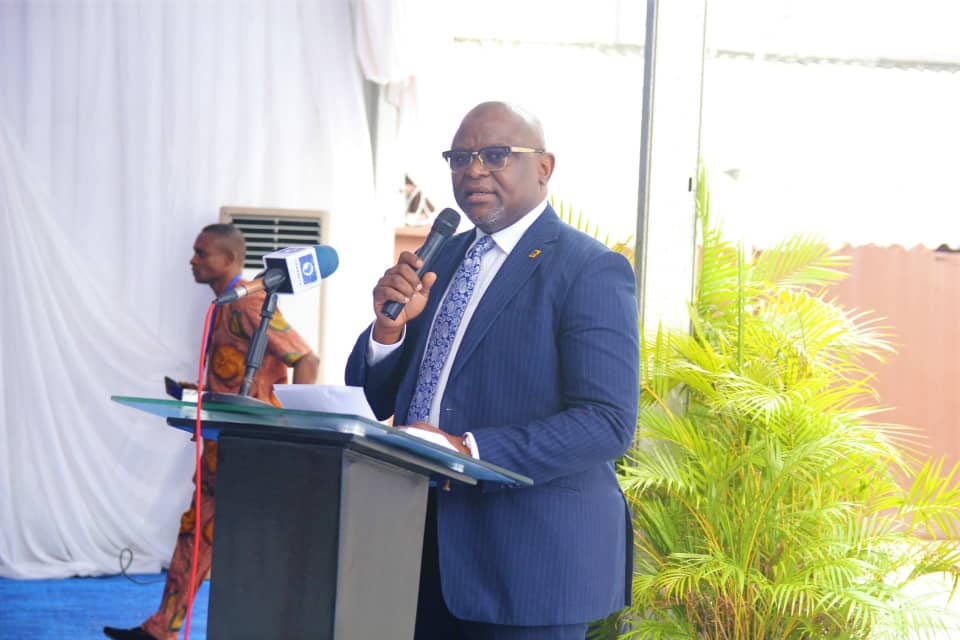
As a mark of readiness for the 2024 journey, the Group Managing Director of FirstBank of Nigeria Limited, the premier bank in Africa, Dr. Sola Adeduntan, in this interview with Festus Akanbi speaks on wide-ranging issues including how to insulate the Nigerian economy from the fallouts of the current hostilities at the international scene, the prevailing operating environment in Nigeria and the First Bank’s blueprint for optimum performance in 2024.
The global community is yet to recover from the hostilities in Eastern Europe and the Middle East and the wars do not look as if they will end soon. How can Nigeria, a leading producer of oil, take advantage of the attendant disruptions to world order to reposition its economy instead of continuing to count the losses of the wars?
Since the emergence of the COVID-19 pandemic, global uncertainties have been on the rise; manifesting either as geo-political trade tensions or full-blown wars such as the ongoing Russia-Ukraine war and more recently, the Israeli-Hamas hostilities in Gaza. Despite concerted global efforts to resolve the conflict, the Russia-Ukraine war seems on track to mark its second anniversary in a few weeks from now. This has also led to significant disruptions to the global supply chain, especially in the commodities and energy space.
As a leading oil producer, one way Nigeria can take advantage of the disruptions caused by the wars is by positioning herself to fill the vacuums created by the breakdown in relationships among established trading partners and regions, e.g. the Russia – Europe gas supply deals. However, to do this, the right infrastructural enablers must be in place as well as a significant rise in volumes of daily crude oil outputs beyond current levels. Nigeria must position itself as a more reliable source of gas supply to Europe in the short to medium term.
On the flip side, Nigeria can take additional steps to further insulate her economy from external shocks by strengthening local manufacturing capabilities and improving agricultural production to reduce the Nation’s import dependency.
However, due to growing global interconnectedness, it is becoming more difficult for any nation to fully protect its economy from volatility on the global scene. Nonetheless, this period calls for a heightened sense of awareness among Nigerian policymakers to ensure minimal distortions to the Nation’s economic conditions.
Nigeria’s crude oil production benchmark in the 2024 budget has been pegged at 1.78 million bpd, whereas OPEC is proposing a cut that will leave Nigeria with 1.5 million bpd. How can Nigeria remedy this in a way that will not significantly jeopardise the implementation of the 2024 budget?
Traditionally, Nigeria has struggled to meet its OPEC output quota over the last couple of years. Although the Nation is currently recording some improvements in daily output volumes (largely due to the improving security situations), the country’s production volumes as of November 2023 stood at 1.25mbpd (excluding condensates), according to available official figures. This represents about 3 million barrels cumulative monthly reduction when compared with the average daily production output of 1.35mbpd recorded in October 2023.
In preparing the 2024 budget, the government has made some key assumptions around crude oil production outputs and price, that is, 1.78mbpd and $77.96/barrel respectively. Given the expectation that security around crude exploration will keep improving and crude oil theft will progressively reduce, these assumptions do not seem overly aggressive. Also, the Minister of State for Petroleum Resources recently expressed strong optimism about the country’s ability to achieve its crude oil production budget benchmark.
However, recent moves by OPEC to cut crude oil export to buoy global crude oil prices should not immediately be a challenge for the Nation seeing that our national daily crude production levels are still a bit far off from OPEC’s quota. Rather, we should focus on entrenching the improvements in crude oil production levels to make them sustainable. Where OPEC’s production cuts become inimical to economic growth, it is also possible to engage OPEC for exemptions from the production cuts given our current difficult economic situation. Nevertheless, the Nation also stands to benefit from the upsides of a higher crude oil price if OPEC’s production cuts are effective. This should offset the envisaged reduction in production volumes.
I would also like to note that the Nigerian authorities should enhance the ability of the non-oil sector of the economy to generate sizeable revenues to support the government’s expenditure. This will help to reduce the perennial over-reliance on crude oil revenues.
The Federal Government borrowing in the 2024 budget is to increase from N6.3 trillion in 2023 to N7.8 trillion in 2024, with much of it coming from Nigerian banks. How will you allay the fear of a possible crowding out of the private sector from banks in the coming year?
Given the government’s current preference for local borrowings, I can understand where the fear of a possible crowding out of the private sector is emanating from. However, this does not necessarily have to be the case.
Over the years, Nigerian banks have sufficiently demonstrated their commitment to supporting the real sector of the economy. For example, as of H1 2023, the value of loans disbursed to customers by just seven Nigerian banks stood at almost NGN23 trillion. As of September 2023, FirstBank alone has grown its loan book to customers by over N1 trillion over the December 2022 closing position. This is a clear testament to FirstBank’s ongoing commitment to the growth of the Nigerian economy.
As bankers, we fully understand and have embraced our catalytic role as agents of economic transformation. In addition, banks deliberately pursue a diversified earning asset portfolio strategy. As such, lending to the real sector will continue to offer much-needed diversification for banks’ overall portfolio health.
In summary, I do not think the private sector has any need to worry as we will continue to support all sectors of the economy (including government) to realize their objectives.
With the inflation rate trending at 26.72%, and its attendant strain on the economy, how realistic is the dream of the private sector for an affordable lending rate in 2024?
Interest rate remains inextricably linked to the inflation rate. To narrow the margin of negative returns (which usually happens when the inflation rate far exceeds the interest rate in an economy), monetary authorities like the Central Bank of Nigeria (CBN) move to restore the attractiveness of investments by raising interest rates to tame inflationary pressures.
The rise in interest rate also affects customers differently depending on which side of the divide they fall. For depositors, a rise in interest rate means they will earn more returns on their savings or investments, while borrowing customers may have to take on a higher lending rate as banks also try to adjust for the higher funding costs.
Nevertheless, it has also been proven that an unusually high-interest rate burden exerts considerable pressure on borrowers’ ability to repay their loans. Therefore, it is in the best interest of both the banks and their customers to collaborate in arriving at a lending rate that works for both parties. I do not believe that any bank will unreasonably raise its lending rate above its justifiable cost profile, given the elevated competition that exists in Nigeria’s financial services industry.
The current administration plans to grow the GDP to $1 trillion in 2026. Although the Central Bank Governor has directed banks to gear up for recapitalisation to enable them to adequately lend to the economy, do you believe the nation’s capital market, largely dominated by local investors, is liquid enough to generate the needed capital for banks?
The Government’s aspiration for a $1 trillion economy in the next 8 years from 2023 seems well-anchored given the significant fiscal changes that have been implemented since the new administration came on board. If successfully implemented, these actions hold immense potential to unlock new growth opportunities within the economy.
As of 18th December 2023, the Nigerian Exchange All Share Index (NGX ASI) has grown by almost 45% from its closing position in December 2022. This suggests significant activity in the capital market within that period. Also, as the inflation rate tapers in advanced economies, we will begin to see normalization of interest rates in these jurisdictions. Given this trend, we expect to see a growing volume of Foreign Portfolio Investments (FPIs) into the Nation’s capital market as investors seek high-return jurisdictions and portfolios.
Therefore, given these tailwinds and other factors, I remain confident that the Nation’s capital market will be sufficiently liquid to support the potential recapitalisation of banks.
The Bank recently took its culture of impressive performance higher with a 79 per cent increase in its gross earnings on a year-on-year basis as it declared N922.2 billion in its nine-month result for 2023. In terms of profitability, what should the Bank’s shareholders be expecting at the end of the 2023 financial year?
At FirstBank, we understand our responsibilities to all our various stakeholders, including customers, regulators, employees, and shareholders, and we remain fully aligned on discharging our obligations to all categories of stakeholders.
The Bank’s Q3 2023 financial performance underscores how dearly we strive to uphold our obligations to all our stakeholders: we supported our customers with additional loans by growing the loan book by 34% to N4.6 trillion; we guaranteed our staff’s employment by remaining profitable in the face of the harsh operating environment; the Bank maximized its shareholders’ wealth with a commendable growth in profitability.
Our stakeholders should expect to see a Bank that is future-proof and ready to provide best-in-class products and services that will meet and surpass their needs across all our channels and jurisdictions of operations.
FirstBank remains dependably dynamic and will ensure that the needs of all stakeholders are met:
• to the customers, we will provide the best products and deliver exceptional customer experience,
• to the shareholders, maximization of ‘Total Shareholders Return’
• to employees, competitive emolument, and exciting career experience
• to regulators, voluntary compliance with all rules and regulations
• to communities, we will be good corporate citizens and give back to the society where we operate.
What is the current NPL ratio of FirstBank? What strategies have you adopted to significantly bring it to its current level?
As of Q3 2023, the Bank’s NPL ratio remains within the Central Bank of Nigeria’s regulatory threshold of 5%. It is also our expectation that the ratio will be maintained within the regulatory threshold by the end of FY2023.
FirstBank has built an enduring risk culture and governance system, strengthened the risk infrastructure through specialized training, digitization of credit processes, and imbibed a disciplined and pro-active portfolio management approach thereby ensuring strict regulatory compliance as well as maintaining the NPL ratio with the acceptable threshold.
In what ways will the planned recapitalisation of banks affect the economy given our experience of 2005?
The planned recapitalization of Nigerian banks should have several positive effects on the economy given the intermediation role that banks play. Some of them include:
Investment Stimulation: since banks may leverage the capital market to raise additional capital, the investing public will have more outlets for profitable investments. Given the relatively profitable nature of most banks, I expect that the appetite for the banking sector stocks will remain impressive, and this should significantly drive volumes on the Nigerian Exchange
Enhanced Underwriting Capacity: For banks, additional capital will mean improved capacity to underwrite bigger transaction tickets that can further unlock economic growth and support the Nation’s aspirations for the real sector.
Higher Employment Rate: As banks become better capitalized and able to support the real sector on a bigger scale, this should translate to more employment opportunities as companies employ more people to support their expansion programmes. A higher employment rate will also result in a lower poverty rate for the country.
How true is the fear that the current state of the economy may not guarantee the raising of the needed funds from the capital market at the same time, unlike what was obtained in the last banking sector recapitalisation? What are the options available to banks seeking to shore up their capital?
As I mentioned earlier, though we are in a high inflation era and investible funds for households and corporates might be repressed, given the anticipated tailwinds from interest rate normalization in advanced economies, I am of the view that the capital market will be adequately liquid to support the recapitalization exercise.
I would like to note that, investors will always seek decent returns even in a repressed economy. Nigerian banks have remained quite profitable, and most investors would like to invest in profitable entities. Similarly, equities of Nigerian banks might offer some good growth prospects in the near to medium term, thus offering significant capital appreciation opportunities for discerning investors.
Nevertheless, where there is a need for some augmentation, there are several other capital-raising options available to banks. For example, banks can issue subordinated debt instruments or other forms of convertible bonds either locally or offshore.
Overall, depending on the eventual level of recapitalization mandated by the CBN, banks will pursue any or a combination of several options to meet the required capital base.
With the headline inflation rate at 26.72 per cent in September and the interest rate at 18.75 %, and with the removal of subsidy and the attendant high cost of living, running businesses in Nigeria is becoming a big risk. How will Nigerian banks assist operators of small and medium-scale enterprises which form the bulk of businesses in Nigeria?
SMEs remain the bedrock of any economy as they account for about 80% of employment on the continent. As such, it is extremely important to put measures in place to keep them thriving. In my view, the measures to make SMEs thrive in Nigeria can be broadly classified into two categories. These are fiscal and financing measures.
The fiscal measures relate to issues around ease of doing business, improving security for lives and property, tax efficiency, adequate power generation, and enforcement of law and order, amongst other things. I am sure you will agree with me that these matters largely fall on the part of the government across all levels.
On the financing part, although there is still a lot more room for improvement, banks have done quite well. For example, at FirstBank, through our SMEConnect hub, we offer much more than just financing to our SME clients. Through the platform, the Bank offers specialized business training to raise the skills level of our SME business owners, thereby equipping them to make better business decisions that will guarantee the success of their businesses. The platform also offers crucial networking and marketing opportunities for all our SME clients to exchange business ideas and contacts.
FirstBank also offers several lending products dedicated to SME clients operating in diverse economic sectors such as FirstEdu loan for those in the educational sector, First Traders Solution for those engaged in fast-moving consumer goods, Health Finance Facility for those operating in the health sector, and many more. The Bank also continually reviews the terms and conditions of these facilities to ensure that they remain market-relevant and reflect the current realities of SME clients.
FirstBank’s SME clients can continue to count on us to listen to them through this rough economic patch and offer necessary cushions that are within our control as a Bank. As a Bank that is woven into the fabric of society, we have no other option than this.
Given the naira devaluation this year, what is the fate of the largely US dollar-denominated nature of FirstBank’s lending to the oil and gas sectors?
As the foremost financial institution in Nigeria, FirstBank’s support for the Oil and gas sector is in tandem with our long-term views for the Nigerian market and our commitments to our clients.
Also, learning from previous experience, the current client composition of our Oil & Gas portfolio is quite healthy which is why there has been no material adverse effect on our operations as reflected in our most recent financial performance, despite the significant naira devaluations. In addition, some of these clients also have receivables in United States dollars which easily offsets their foreign currency-denominated obligations.
As a Bank, we remain committed to the highest standards of risk asset quality, and we will continue to work with our clients to ensure this is always achieved.
FirstBank was recently adjudged as the Best Corporate Bank in Nigeria by Euromoney. With the concentration of your bank’s lending activities in the energy and mining sectors. How do you measure the gains from the bank’s exposure to oil and gas which is put at 31% of net loans in 2022?
FirstBank’s emergence as the Best Corporate Bank in Nigeria by Euromoney represents a very significant external validation of the strides the Bank has made on the Nigerian corporate banking landscape. The goal for our Corporate Banking business has always been to be a “Trusted Advisor” to our clients and we are quite pleased that the market is beginning to acknowledge our impact in this area.
Also, beyond Oil and gas, the Bank is very supportive of other sectors of the Nigerian economy (such as Manufacturing, Services, Telecommunications, Construction, etc), and FirstBank’s emergence as the Best Corporate Bank in Nigeria by Euromoney represents a very significant external validation of the strides the Bank has made on the Nigerian corporate banking landscape. The goal for our Corporate Banking business has always been to be a “Trusted Advisor” to our clients and we are quite pleased that the market is beginning to acknowledge our impact in this area.
Also, beyond Oil and gas, the Bank is very supportive of other sectors of the Nigerian economy (such as Manufacturing, Services, Telecommunications, Construction, etc) and is also actively deploying its balance sheet to facilitate growth and development across these sectors.
As I mentioned earlier, our exposure to the Oil and gas sector reflects our strong commitment to building local content and capabilities required for sustainable national progress. In addition, the portfolio remains healthy with decent returns, and we expect this to continue.
As the foremost Bank in Nigeria, to what extent has FirstBank taken advantage of the gains of the African Continental Free Trade Area (AfCFTA) agreement, which is designed to create the largest free trade area in the world measured by the number of countries participating?
According to the World Bank, the African Continental Free Trade Agreement (AfCFTA) has the potential to boost Africa’s income by $450 billion by 2035 and lift 30 million people out of extreme poverty. As a pan-African bank with a vision to be “Africa’s Bank of First Choice”, AfCFTA presents a very important vehicle for us to serve the broader African market.
Therefore, the Bank has taken several measures to optimally exploit opportunities around AfCFTA. First, as a Bank, we have engaged in extensive export requirements and capabilities trainings for our customers to distill the significant export opportunities around the AfCFTA and help them identify suitable markets for their produce. These training programs will remain a recurring feature in the short to medium term.
Secondly, we have created and positioned a strong payments/remittance proposition (known as First Global Transfer) to support and facilitate payments for intra-African trade among both existing and prospective customers, while keeping in close step with developments around AfCFTA’s Pan-African Payment and Settlement System (PAPSS) for seamless integration.
Finally, in line with our vision, the Bank will ensure a strategic presence in critical trading corridors on the African continent to support the trade facilitation and other requirements of our clients, thereby giving them an unparalleled competitive advantage.
What are your plans to sustain the bank’s robust customer service network and digital banking architecture in 2024?
At FirstBank, our “You First” brand promise to our customers is not just a cliché. It encapsulates our firm commitment to making banking seamless, more accessible, and rewarding for our teeming customers. As an institution, we will continue to leverage both physical and digital channels to serve our customers effectively.
With almost 700 operational business locations, no other bank comes close in the branch network. This has enabled FirstBank to deliver banking services within proximity to our customers’ homes and offices. We have also supported our extensive branch network with a best-in-class agent banking network with over 220,000 FirstMonie Agents strategically located across the length and breadth of the country. These agents, in no small measure, have been critical to extending financial inclusion levels in their immediate localities.
With over 3,000 Automated Teller Machines (ATMs), FirstBank has one of the highest ATM spreads in the Nigerian financial services space which enables us to serve our customers round-the-clock. Also, the Bank’s digital and mobile channels (*894#, FirstMobile, FirstOnline & Lit App) have been very successful with our clients, enabling them to conclude both banking and non-banking transactions from the comfort of their homes and offices.
To cater to the needs of our wholesale clients, the Bank has positioned a robust transaction banking platform (FirstDirect) that enables us to service the transaction banking needs of our customers.
In a bid to improve overall customer experience, the Bank has also ensured that its service delivery channels have in-built complaint-handling and issue resolution mechanisms to give customers extra confidence to transact on any of these channels. This is in addition to our always-on, 24/7 interactive, and intelligent contact center, known as FirstContact.
At FirstBank, we remain committed to seeking innovative ways to serve our clients and we will leave no stone unturned to continue to deliver a wholesome customer experience.
As the first Nigerian bank to surpass 200,000 agent banking locations as an exceptional financial inclusion pioneer, what are the plans being put in place to maintain your dominance of agent banking in the coming year?
FirstBank’s feat in the Nation’s agent banking landscape is in tandem with our established pioneering status in Nigeria and the sense of partnership with which the bank operates towards achieving critical national developmental objectives. With over 220,000 agents on our FirstMonie Agent Network, FirstBank is a major partner in pushing the Central Bank of Nigeria’s (CBN) financial inclusion agenda.
The Bank’s FirstMonie Agent Network has processed over 1.4 billion unique transactions worth well over NGN32 trillion and has empowered numerous localities around the Nation’s 774 Local Government Areas (LGAs) with basic financial services that facilitate economic activities in these communities. This is in addition to the millions of direct and indirect employment opportunities that our agent banking network has created for local communities.
The Bank is constantly strengthening its value propositions to the FirstMonie agents in several ways. For example, through our Agent Credit product, the Bank supports agents to bridge intra-day liquidity shortfalls, thus enabling them to better serve their clients. Also, beyond basic offerings (such as cash-in-cash-out, transfers, and bill payments), the bank has empowered its agents to render more financial services such as account opening for customers. We are also continuously fine-tuning our agents’ support structure to ensure our agents obtain prompt resolution for any service hitch experienced.
As a Bank, we view our FirstMonie Agents as partners and we remain committed to making the necessary investments to make the partnership a win-win for all parties involved.
Another game-changer in the story of the transformation of FirstBank was the conscious attempt of the board and management to make the bank a transaction-led institution. How does the bank intend to continue from this threshold as a way of drawing from the gains of its investment in Technology Academy in Nigeria?
One of the Bank’s strategic priorities in the current strategic cycle is to build a world-class (customer-first) service organization. As such, as an institution, we no longer view Technology as a business enabler but as a business.
Also, when you consider that over 90% of the Bank’s customer-induced transactions now happen on digital platforms, it becomes clearer why we have made (and will continue to make) sizeable investments to overhaul our Information Technology (IT) architecture and infrastructures to guarantee IT platform availability and security to support the overall business aspirations.
The FirstBank Technology Academy is one of the Bank’s creative solutions to addressing the emerging shortage of skilled IT talents in the country in the wake of the increasing migration rate (commonly known as Japa). It is a one-of-a-kind intervention where the Bank engages available graduates with a STEM background and offers them bespoke IT training in line with our business needs. This is FirstBank’s way of growing its IT talents and boosting the national supply of critical IT talents as we cannot afford to use a shortage of talents as an excuse for not meeting up to the high standards to which our customers hold us. The program has also proven to be highly successful, and we will intensify our efforts in this regard.
As a foremost financial institution in Nigeria and on the continent, we are keenly aware of the role technology will continue to play in our ability to serve our clients, and we are poised to make necessary investments at the right scale and on an ongoing basis to guarantee the security, availability, and relevance of our digital assets.
Is acquisition one of the plans being put in place by FirstBank in preparation for the new threshold of capital base to be announced soon by the Central Bank of Nigeria? We note that the bank already has a capital base of N1.287 trillion.
As you also noted, FirstBank has been very intentional in ensuring that it maintains a strong capital base given the scope of the Bank’s operations and in line with regulatory requirements. This has informed the deliberate measures the Bank has taken to shore up its capital base over the past few years.
Depending on where the pendulum finally settles when the CBN unveils the new minimum capital requirements for banks, as a compliant and socially responsible institution, we will explore all options available to us to ensure full compliance and maintain our competitive advantage over other players in our industry.
At FirstBank, we leverage both organic and inorganic growth strategies to achieve scale and deliver improved shareholder value.
FirstBank’s plan to rejuvenate its workforce was recently underscored by the employment of more than 700 fresh graduates. Can you start to count the gains of this decision?
The Bank’s Graduate Trainees programme is a highly competitive process through which the Bank identifies and selects young and dynamic individuals for proper grooming to occupy future leadership roles within the organization. Aside from this, FirstBank has several other talent development initiatives such as the FirstBank Management Associate Programme (FMAP), Leadership Acceleration Programme (LAP), and Senior Management Development Programme (SMDP) which are targeted at employees at different strata within the workforce to build a sustainable pipeline of dependable leaders for the institution.
I am glad to note that as an equal-opportunity employer, we offer very compelling employee value propositions that set us apart in the industry. This is in line with our belief that our employees are not just our greatest asset, but they represent the greatest source of strategic advantage for the Bank’s long-term success.
In 2015, FirstBank initiated a development plan that allows most vacancies in the bank to be filled internally. What is the update on this employee-friendly policy of the bank?
At FirstBank, we maintain an end-to-end view of the employee lifecycle which ensures that we focus on offering every employee a fair chance of having meaningful work experience with us. This approach ensures continuous improvements across every stage of the employee experience from recruitment to development and deployment on an ongoing basis.
Since implementing the policy on internal recruitment for vacant roles, the Bank has witnessed a significant uptick in the employees’ mobility index as most vacancies now get filled from existing employee pools. To achieve this, several initiatives such as the FirstBank Job Shadow Programme and the FirstBank Mentoring Programme enable current employees to acquire new skills even while still in their current roles. This makes them ready to take on future opportunities within the Bank.
Secondly, the Bank has acquired a world-class people management system that supports seamless management of job vacancies, competency assessments, and the entire employee lifecycle management process. This provides the necessary visibility into various aspects of our employee management process.
While the Bank still conducts some external recruitments to infuse external perspectives into some functions, the proportion of external recruitments in the overall recruitments has reduced over the last few years.
The bank recently pioneered the deployment of humanoid robots in three of its branches as a demonstration of its commitment to fully adopt technology-led banking services. What is the initial feedback from customers and what are the implications of the adoption of technology on the employees’ job security?
FirstBank’s Digital Xperience Centre (DXC)is Nigeria’s first ever fully digitized bank branch employing the latest technologies such as humanoid robots and artificial intelligence to enable customers to perform self-service banking transactions. The DXCs reflect the Bank’s views on the near-future possibilities in financial services delivery, given recent technological advancements. It also underscores the central role modern technology now plays in the Bank’s operations and overall service delivery strategy.
The DXC is a fully automated interactive digital branch that was first launched in Lagos in 2021 and has since then, redefined customers’ banking experience through a world of digitised self-service. We have thereafter rolled out the DXC at the University of Ibadan, Oyo State, and more recently, at our branch in Wuse Abuja. Since these rollouts, the Bank has received commendable feedback from customers (especially customers in the retail segments) which has validated our investments in these modern technologies. There are already plans in place for more rollouts of the DXCs across all our operating jurisdictions.
I would like to note that the DXC is not a trade-off for our employees, but an enabler to free up our staff’s productive time to take on more complex and rewarding tasks within the Bank. Also, given our several laudable employee initiatives (some of which I had earlier mentioned), we are well-equipped to empower our employees to take on any other role they may desire within the larger FirstBank Group.
Sir, can you give further explanation on the recently announced phased corporate name change for FirstBank’s subsidiaries in the United Kingdom and Sub-Saharan Africa?
The Bank’s decision to adopt a monolithic brand name across all operating jurisdictions is borne out of the need to ensure we leverage the rich heritage behind the FirstBank name, and the goodwill garnered in almost 130 years of operations across all the markets where we operate.
Also, as we follow our clients across geographies, it becomes increasingly important to maintain consistency in the brand name to improve overall client affinity and guarantee similar standards in service delivery across all operating jurisdictions. In addition, the name change across all our subsidiaries will enable us to take advantage of available synergistic opportunities in both our marketing efforts and budgets.
Finally, a uniform brand name (across our market) helps the Bank to avoid needless identity crises and is best aligned with our vision of becoming “Africa’s Bank of First Choice”
FirstBank has consistently been recognized as a market leader in the sustainability/ESG space in Nigeria and Africa. This recognition has come from different organisations such as Global Banking and Finance, International Business Magazine, Euromoney Market, Great Place to Work, etc. And these mostly happened under your leadership. Congratulations sir.
Please what is FirstBank doing in the ESG and the broader sustainable development space to achieve these recognitions and how do you intend to ensure this is strengthened to enhance your market leadership considering that ESG/sustainability space is very dynamic, fluid, and always evolving?
At FirstBank, we value our relationships with all our stakeholders, especially the communities where our businesses operate. Therefore, we are very deliberate in how we engage our host communities to guarantee shared prosperity and the long-term sustainability of the environment. The Bank also ensures its Corporate Responsibility and Sustainability (CR&S) approach is well aligned with both local and international best practices as advised by the Nigeria Sustainable Banking Principles (NSBPs), International Finance Corporation Performance Standards (IFC PS), and the Equator Principles (EPs).
To this end, FirstBank’s CR&S Framework is hinged on three strategic pillars, namely: Education, Health & Welfare; Diversity & Inclusion; and Responsible Lending, Procurement & Climate Initiatives.
Each pillar is operationalized through the implementation of well-coordinated programmes and initiatives that enable the Bank to fulfill its sustainability agenda and priorities. For example, some of the initiatives include:
SPARK: SPARK (an acronym for Start Performing Acts of Random Kindness) is a values-based initiative designed to continuously reignite the Bank’s cherished moral values of compassion, civility, and charity. Since its inception, the SPARK initiative has impacted over 150,000 people and 100 charities / NGOs across 8 countries where FirstBank currently operates.
FutureFirst Programme: In partnership with Junior Achievement Nigeria (JAN), this programme is FirstBank’s vehicle for promoting the triple benefits of financial literacy, career counseling, and entrepreneurship among the younger generation. Over 1 million people across Nigeria have benefitted from this financial advocacy effort.
Partnership with Nigeria Conservation Foundation (NCF): Through the Green Recovery Nigeria (GRN) Initiative, the Bank aims to plant 50,000 trees in 2024 towards the reduction of carbon dioxide gas emissions.
In addition, the Bank has fully embedded an Environmental, Social, and Governance Risk Management System (ESGMS) into its credit decision processes as well as adopted sustainability reporting to measure progress on its sustainability journey. The Bank is also committed to decarbonizing its operations, including those of its value chain, in a bid to accelerate its transition to a net-zero carbon emission status. This is being done in line with the standards of the Partnership for Carbon Accounting Financials (PCAF) and other international agencies such as the British International Investment (BII) and Proparco.
Finally, to ensure issues about sustainability are continuously given the highest visibility and consideration in all our business pursuits, FirstBank has constituted a Corporate Responsibility & Sustainability Committee that is chaired by our Executive Director / Chief Risk Officer, thereby guaranteeing the right “tone at the top” in the execution of our broad ESG agenda.
Culled from ThisDay
Related
You may like
Featured
Full Text of Gen Chris Musa’s Speech on Assumption of Office As Defence Minister
Published
31 minutes agoon
December 7, 2025By
Eric
It is with profound humility and a deep sense of responsibility that I address you today in my new capacity as the Minister of Defence of the Federal Republic of Nigeria. Six weeks ago, I was in Kaki. Now, I am coming as the Minister. It can only be God. I thank President Bola Ahmed Tinubu, GCFR, for the trust and confidence you have shown in me.
I take that very seriously. For me, it is indeed a privilege and an honour, after serving 39 years in service, to come in and now be the Minister of Defence of the Federal Republic of Nigeria. The love Nigerians have shown us reflects that people believe we can turn the tide.
But it is not rhetoric. It is by action. We must, firstly as Nigerians, take ownership of the responsibilities and challenges we face in our country.
It is only us who can solve the problem. It is when we agree within ourselves that we can deal with this, that we will succeed. God is with us, and He has always given us the responsibility to succeed.
This responsibility is one I accept with solemn reverence and unwavering commitment to the safety and security of our great nation, Nigeria. Let me also acknowledge the dedicated leadership of my predecessor and the relentless efforts of every one of you in this room.
When I was the Chief of Defence Staff, you gave me all the support, and I truly appreciate it. I want to assure you that coming back as Minister, we want to do more for your welfare, well-being, and the administration of the Ministry. I strongly believe in reward and accountability. You do well, you are rewarded. We take corrective measures to ensure we succeed. I don’t believe in “na so we dey do am.”
We must assess everything that we are doing and see whether we can improve it. I believe in fostering a positive workforce. We are going to listen to your challenges, and whatever we can do to address them, we will. But I count on you also to put in your best. You know your task ahead. You don’t have to wait until somebody calls you or asks you a question. Do what you are supposed to do, and that will make it easier for us as a nation.
The task of securing the nation is continuous, and I am aware that you have been holding the line with dedication. I commend you all. For decades, my life has been defined by uniform, by the ethos of service, and by sacred covenants to defend the territorial integrity and citizens of Nigeria. I therefore come to this role not as a stranger to our security challenges, but as a comrade who has been in the trenches both literally and figuratively. I’ve seen firsthand the bravery of our troops, the complexity of our threats, and the role of strategic coordination. Like I always say, no single individual can achieve this alone. No single service operator can do it. We must work as Nigerians, making Nigeria better.
Consequently, my core philosophy in ensuring the affairs of this ministry is simple: operational effectiveness through unified action and strategic foresight. Ladies and gentlemen, we cannot afford to operate in silos.
We cannot tolerate gaps between policy and execution, or between the ministry and the services. This ministry will be a powerhouse of strategic direction, enabling support, and relentless accountability. We must provide that support for our troops to continue to succeed. They are sacrificing their lives out there in the field—day and night, thunderstorm or windstorm—whatever the situation, to ensure that we, Nigerians, can go to bed and sleep well. We must continue to pray for them. We must continue to provide the necessary support.
Working as a team with other MDAs, Mr. President has made it very clear he will give us all the support we require and demands that we achieve success, which we have promised him. Within the first few weeks, we must show that we are committed: the ministry working inside, the troops working outside.
To translate this philosophy into action, my initial focus will rest on three interconnected pillars: enhancing joint operational strategy synergy. We will immediately begin a rigorous review of all theatre commands and inter-service operations. My door will be open, as always, to the Chief of Defence Staff and Service Chiefs for frank discussions on equipment, training, welfare, and strategy. Mr. President wants us to present our challenges, with the promise that they will be addressed. So it is left for us to do the needful.
Our goal is to overwhelm the adversaries with seamless jointness, not just cognition.
Welfare and Morale as a Force Multiplier
We all understand the importance of morale to our personnel and staff. We must therefore prioritise the timely provision of all necessary kits, ensure prompt payment of operational allowances, and vigorously address accommodation and medical care for our personnel and their families. Those not injured are watching how we treat the injured. If they are not taken care of properly, they will not give their best, because they will be apprehensive. Especially those who have lost their loved ones—the families want to know what will happen.
It is our responsibility to take care of them. The aspect of actions that impugn their integrity is not acceptable. We must make payments seamless. We must treat them with respect. Anybody who is laying down their life for their country deserves the highest respect, and that is what we offer. I will be very critical about that.
Intelligence-Driven and Technology-Enabled Defence
The Ministry of Defence is the strategic brain of our national defence architecture. We must therefore leverage technology for intelligence, surveillance, and recurring service. We have partners and allies ready to support us. We will reach out to them to work as a team. We will also collaborate with other security agencies. Every Nigerian is vital to the success of Nigeria. We will foster a culture where data and intelligence drive our decisions, not just experience alone. I charge the Ministry to be a catalyst for innovation and efficient resource management.
Distinguished ladies and gentlemen, I expect the highest standards of professionalism, integrity, and urgency from all of us. We do not have time to waste. We will continue to hit the ground running. We must respect the human rights of Nigerians. If we make mistakes, we must take necessary action to make amends. I will always encourage candid advice and robust debates. But once a decision is taken, we must move as one united team.
There will be zero tolerance for corruption, indiscipline, or indolence. Our loyalty is to Nigeria and the Nigerian people. The President is the Commander-in-Chief; the bulk stops on his table. We must provide the support required to make Nigeria peaceful.
Shedding of innocent blood is over. Our children should go back to school. Our farmers should go back to their farms. Most of the challenges we face are not military solutions—they are issues of good governance, justice, equity, and fairness, which we will encourage. Both non-kinetic and kinetic solutions must work hand in hand. We cannot afford to fail Nigerians. Charity begins at home; if we have the mindset that we will succeed, we will.
To the Service Chiefs, I offer my full support and expect your utmost cooperation to move the Armed Forces to greater heights. To the Department Secretary and the Civil Service cadre, you are the institutional memory and the framework for our sustainability. I value your expertise and count on your diligence to translate our military objectives into actionable administrative and budgetary policies.
The road ahead is demanding and will be tough. Let us not take it for granted. But because we are Nigerians, we shall overcome. The threats we face are adaptive and complex, but I have absolute faith in the indomitable spirit of our Armed Forces and the capable minds within the Ministry. With the support and prayers we are receiving from all Nigerians, we cannot fail.
In closing, let me once again reaffirm my commitment to lead with fairness, firmness, and loyalty to our Constitution. The President is doing everything possible to ensure our success. We must play our part. The task ahead is enormous, but surmountable. We can win. We will win. The good people of Nigeria are looking up to us for results, and we must deliver immediately. I am not here to preside; I am here to lead, to walk, and to deliver alongside you. I cannot do it alone. I thank you all as I look forward to our detailed work and the tasks ahead.
God bless you all, and God bless the Federal Republic of Nigeria.
Thank you.
— General Christopher Gwabin Musa (Rtd)
Minister of Defence, Federal Republic of Nigeria
Related
Featured
Fight Against Insecurity: The Second Coming of General Christopher Gwabin Musa
Published
37 minutes agoon
December 7, 2025By
Eric
By Eric Elezuo
The confirmation by the Nigerian Senate of General Christopher Gwabin Musa as the new Minister of Defence, came as a welcome development to not a few Nigerians, just days after he was honorably retired from the army, having reached the pinnacle of his military career as the Chief of Defence Staff.
Musa’s appointment comes at a time of heightened insecurity in Nigeria with mass abductions, banditry, and kidnapping taking centre stage across parts of the country.
President Donald Trump of US had threatened military action in Nigeria over the killings and what he described as the mass slaughter of Christians, prompting the Federal Government to ramp up security measures, including a reshuffle of security chiefs, which also affected the new defence minister.
The confirmation followed a screening session that featured questions and answers, which lasted over three hours.
During the exercise, Musa criticised negotiations with bandits and assured lawmakers that, under his leadership, the Defence Ministry would intensify efforts to dislodge criminal groups terrorising the country.
He also faulted the deradicalisation of repentant Boko Haram members into society, insisting that terrorists should face stricter punitive measures.
The then minister-designate called for increased funding for military operations, noting that many essential fighting equipment are still being imported.
Recalled that on October 24, 2025, President Bola Tinubu replaced General Musa as the CDS with General Olufemi Oluyede, who was hitherto the Chief of Army Staff. But in a twist of fate, Musa, who had unceremoniously made plans for his retirement, was suddenly recalled to come and supervise the Defence Ministry to sustain the fight against insurgency and terrorism. It would also be recalled that Tinubu’s documented reason for removing Musa, was to give the fight against insurgency a new lease of life.
Nigerians are still wondering what changed just weeks after the President’s announcement through his media aide, Bayo Onanuga as follows:
President Bola Ahmed Tinubu has nominated General Christopher Gwabin Musa as the new Minister of Defence.
In a letter to Senate President Godswill Akpabio, President Tinubu conveyed General Musa’s nomination as the successor to Alhaji Mohammed Badaru Abubakar, who resigned on Monday.
General Musa, 58, on December 25, is a distinguished soldier who served as Chief of Defence Staff from 2023 until October 2025. He won the Colin Powell Award for Soldiering in 2012.
Born in Sokoto in 1967, General Musa received his primary and secondary education there before attending the College of Advanced Studies in Zaria. He graduated in 1986 and enrolled at the Nigerian Defence Academy the same year, earning a Bachelor of Science degree upon graduation in 1991.
General Musa was commissioned into the Nigerian Army as a Second Lieutenant in 1991 and has since had a distinguished career. His appointments include General Staff Officer 1, Training/Operations at HQ 81 Division; Commanding Officer, 73 Battalion; Assistant Director, Operational Requirements, Department of Army Policy and Plans; and Infantry Representative/Member, Training Team, HQ Nigerian Army Armour Corps.
In 2019, he served as Deputy Chief of Staff, Training/Operations, Headquarters Infantry Centre and Corps; Commander, Sector 3, Operation Lafiya Dole; and Commander, Sector 3 Multinational Joint Task Force in the Lake Chad Region.
In 2021, General Musa was appointed Theatre Commander, Operation Hadin Kai. He later became Commander of the Nigerian Army Infantry Corps before being appointed Chief of Defence Staff by President Tinubu in 2023.
In the letter to the Senate, President Tinubu expressed confidence in General Musa’s ability to lead the Ministry of Defence and further strengthen Nigeria’s security architecture
Much as the reappointment of General Musa into the defence architecture was much applauded by a large number of Nigerians across ethnic and political divide, many are wondering why he had to be removed in the first place, and posited such inquiries as if the threats of the United States and President Donald Trump form the reason behind the second coming of the the General.
In as many years, especially in the last 10 years, and more especially during the last two years of the Tinubu administration, Nigerians, in their numbers have had reasons to fault any appointments made by the government, considering it as a loyalty based, compensation or outright placeholding, but with the appointment of General Musa, Nigerians witnessed an appointment everyone can agree on. Many described it as round peg in round hole, or square peg in square hole depending on the individual’s choice of grammar.
But Musa’s return will be to a great personal sacrifice as his life out of the military was beginning to take just before the national recall on December 2.
Among some of the assignments the retired General had set out to begin was his appointment as a member of the board of directors of Midlothian Angel Network (Midlo Angels), one of North America’s fastest-growing angel investment networks.
Described as a decorated veteran, who previously served as Chief of Defence Staff of the Federal Republic of Nigeria, leading the Armed Forces with a focus on strategic modernisation, inter-agency coordination, and international security partnerships, Musa received one of his post-retirement assignments.
Announcing the appointment, Board Chair of Midlothian Angel Network, Tomie Balogun, said the appointment of Musa marks another milestone in Midlo’s mission to foster cross-border investment between the United States and Africa through disciplined governance, visionary leadership, and global collaboration.
But for those wondering what next Musa has to offer, having served in one of the security aparachnik, the officer said:
“It is that synergy that we need to build on and work on, and that’s what we are going to do. I can assure you, within the shortest possible time, Nigerians will see results.
“I want to use this medium to appreciate all Nigerians. Nigerians have shown me love, and I will guarantee them that I am going to work, whatever it takes, to ensure that Nigeria is secured.”
A promise, no doubt, but that falls within the ranks of what Nigerians wish to hear at a time like this when insecurity lamented in kidnapping, banditry, terrorism and genocide are practiced with impunity, and the government seems helpless.
The second coming of Musa may trigger an era where ransom payment will become a thing of the past as he noted while addressing the Senate during his confirmation that the act “compromises security” and undermines the fight against criminals.
He also hinted that “The use of technology is very important. Like I said, if we are able to have a database – every Nigerian has a number linked to everything you have electronically – we can monitor everything”
A general analysis of Musa’s agenda for the next era of Nigeria’s security reorganization points to the following:
- A rigorous review of all theatre commands and inter-service operations.
- Zero tolerance for corruption, indiscipline, and indolence in the ministry.
- Emphasis on troop welfare is for morale boosting.
- Leveraging on technology and intelligence to drive defence operations and minimize civilian casualties.
- Use of data, not conjecture, to guide military decisions and accountability.
- Loyalty to the President with commitment to a balanced kinetic and non-kinetic approach.
Sometime in August 2025, Musa hinted on the possible arrest of terrorism kingpins, during a television interview, saying ‘we know them’.
He assured that the process of identifying and prosecuting terrorism financiers in Nigeria is ongoing, stressing that the matter involves legal complexities.
“I think the process is on, I can speak for this government … and because it has to do with a lot of legal issues and because again, it has to do with international connections. Some of them have funds coming from outside, we cannot do anything from within.
“We know them. The local ones, what they do normally is to employ a few individuals, provide motorcycles for them and those ones are remitting funds daily into some accounts. So, it’s being tracked. They try to circulate these monies and that’s why it’s important for us to be able to track the funds.
“The NFIU has been doing so much, apart from the intelligence set up, the financial links are also being followed through and through and arrests have been made. I can assure you the Attorney-General of the Federation, the NSA (Nuhu Ribadu) are all working seriously to ensure that we address those issues.
“You know criminals work together. They synergise their efforts together, both the bandits and terrorists, because one, a common goal, they want to make money, they want to make sure communities are suffering for whatever reason. And again, some part of politics, when there is peace, it shows the government is doing well and when there is no peace it shows the government is not doing well.
“You realise that last year, we had the least number of deaths, then, how come suddenly everything has gone up? Because politics has come in, elections are coming in. You cannot rule out the fact that some individuals are making sure there is no peace. The funny thing is that how do you want to kill the people you want to govern? What do you gain from it?” Musa had said.
However, Nigerians are no longer interested in much talks, but need actions that would guarantee sleeping with both eyes closed, travel to any part of the country with fear of being kidnapped and send children to school rest assured. These are, and should be the priorities of Musa on his second coming!
DEFENCE MINISTER CHRIS MUSA’S BRIEF BIO
Christopher Gwabin Musa (Retd.) is a distinguished Nigerian military officer who served as Chief of Defence Staff from June 2023 until his retirement on October 31, 2025, after 39 years and four months of dedicated service.
His career spans over three decades of strategic leadership, operational excellence, and national service across various theatres of operation, notably in counter-terrorism, national security, and peacekeeping. He was previously Theatre Commander of Operation Hadin Kai, Nigeria’s counter-insurgency mission in the North East, where he was recognised for operational discipline, collaborative leadership, and his focus on civilian protection.
A graduate of the Nigerian Defence Academy (NDA), General Musa also completed senior-level training at the Armed Forces Command and Staff College (Jaji) and the National Defence College. He holds advanced certifications in defence strategy, national security, and management and has completed executive education programmes both locally and internationally, demonstrating his lifelong commitment to service and excellence.
Related
Featured
Atiku Abubakar Remains Only Person Tinubu Govt is Afraid Of – Dele Momodu (Full Interview)
Published
3 days agoon
December 4, 2025By
Eric
By Eric Elezuo
If there is one Nigerian, who can tell accurately the heartbeat of the nation, its direction and what the future portends for it, based on the dynamics already at play, that person is Chief Dele Momodu; a seasoned journalist, former presidential candidate, holder of high profile chieftancy titles across the country, and Chief Executive Officer, Ovation Media Group.
As a vocal politician and public speaker, whose voice echoes across the length and breadth of the nation for all the good reasons, Momodu has continued to speak against the cluelessness of the present government and the need for the government to redress its steps in terms of unpopular policies emanating from the cradle, which have rather impoverished the populace rather than do the opposite. He is credited with being the first to notice the government’s unpopular drift towards one-party system, and warned on the dangers. Today, almost all the state governors, national and state assembly members have all decamped to the ruling All Progressives Congress (APC).
Sustaining his credence as a value-adding speaker, Momodu was a guest of the fabulous, experience and adequately exposed Charles Aniagolu of Arise News(Night), where he further highlighted the challenges and remedies of the Nigerian situation.
He also spoke on the appointment of the former Chief of Defence Staff, General Chris Musa (retd) as the Minister of Defence, the withdrawal of Police eacort from very important personalities (VIPs) including the former Vice President Atiku Abubakar and many other issues of national concern.
The text of the interview is presented in details even to the tiniest details below:

Momodu with former Vice President, Atiku Abubakar
Well, for more on this, I’m joined now from our studios in Lagos by the former presidential candidate and publisher of Ovation magazine, Basharu Dele Momodu. Mr. Momodu, thank you very much indeed for coming in. You look like you’re about to cry there. I mean, I know you had a bit of a tough time getting in, and I do apologize to our viewers because we’re quite a few minutes late. But you had a bit of a mishap coming in, and that delayed us a bit.
Dele Momodu: Yes. Well, we thank God that it was something minor. We had an accident on top of the bridge coming into the Arise studios, but we’re okay. Now, you asked if I am off the mark this…
Well, I’m going to get to that in a minute. Sorry to interrupt you – I want to be a bit systematic because we’ve got to gallop ahead, given that we’re, I mean, almost 12 minutes late in starting the program. Let me start by first of all getting your reaction to the confirmation of General Christopher Musa as the new Minister of Defence in the current climate of insecurity that’s gripping this country.
Dele Momodu: Well, I mean, I didn’t expect anything else. I expected that he would be screened — whether bow-and-go or not — he would be screened, and he would be ratified. And he’s been ratified, and I want to congratulate him. That’s all. I pray that we won’t hear sermons this time and that he will just go straight into action.
Yes, we all hope for that, don’t we? And we also got the news this evening that the National Economic Council has approved 100 billion naira for the renovation of training centres for the police and other security agencies across Nigeria. So that suggests that they’re serious about retraining serving police officers and training new ones. Is that the message that you’re getting from it?
Dele Momodu: Well, I would say that 100 billion is too small for the police and the security agencies. The government should do something better if it is serious about the insecurity that is terrorizing everybody in Nigeria. They would need to get serious, invest more in training, involve- I mean, invest in new personnel. The reasons they are saying they are withdrawing police from the streets are just because we don’t have enough of them. But we have enough jobless people in Nigeria, including graduates and non-graduates, who are willing to join the police force and other security agencies. So my advice is that President Tinubu should invest heavily in security. 100 billion to me, especially when you translate it into other currencies, it’s chicken feed.
Well, to be entirely fair, Bashorun, that 100 billion is for the renovation of training centers for the police. It’s not for the whole security recruitment thing. It’s purely to renovate the centres that have been left to kind of, you know, rot across the country, and he’s trying to bring them up to speed and at the same time get on with the recruitment of new police officers and move on with the training of existing ones.
Now, you spoke recently about the ban on police escorts for VIPs. You called it a targeted move against opposition figures like Alhaji Atiku Abubakar, who you support, and who is constitutionally entitled to security protection. You argued that the ban is a calculated move to weaken opposition voices and fuel resentment against successful Nigerians, and that it’ll expose prominent Nigerians to danger. I wonder why you think all that, because public sentiment in Nigeria seems to be in support of President Tinubu’s decision to ban the use of police escorts by VIPs. And it looks like you are the one who is off the mark this time.
Dele Momodu: No, I’m not off the mark. I remember in October 2022, when I foretold the dictatorship that would soon visit Nigeria. I was abused that night — that I’m talking rubbish. You see, I am trained to go behind the scene to find the real stories. A lot of Nigerians get easily, easily fooled. And if you read my press release yesterday, I said it there that we have been fooled again. What they are doing is to set the poor against the rich. And whenever you do that, you will get an applause, you will get an ovation. But the truth is that most people are not thinking about the real motive behind this decision.
If you look at Lagos State, for example, when they had the problem in the House of Assembly, you will see that one of the things they used to intimidate the people was, one, they sent some forces in to disrupt the house. Then they withdrew the police security that was guarding the brother of the new speaker. They withdrew the police from Oba Elegushi. It’s nothing new. So if we start the campaign, let’s say in January — I don’t know when we are starting — tell me, who will risk his life criss-crossing Nigeria without police escort?
We should stop being fooled. You see, the sentiment is that, oh yes, all of us should suffer. There is no country in the world where you don’t have VIPs. And it’s never a crime to be successful. As a matter of fact, those who should lose their security are those politicians in Abuja and not the ordinary man, not a Dangote, not an Abdulsamad. Imagine a time when a kidnapper said he almost got Aliko, if not for his heavy security.
So you will see – I’ve said it again today – when tomorrow comes, and events begin to unfold, you will remember that only one man warned you that this is part of the plot to suffocate the opposition.
Well, I mean, I think that obviously you’re entitled to your opinion, but a lot of people will probably disagree with that because the government didn’t say that they were going to completely leave VIPs naked without protection. They talked about redrafting civil defense people to become protectors. And members of civil defense — they carry guns and very sophisticated weapons at that. And of course, it’s not just directed at the opposition; members of the government and the VIPs are also subject to the same restrictions.
But let’s move on from there because I’m concerned that we lost a lot of time at the beginning. I want to get your response to a lot of things because it’s not every day that we have you sitting there. I don’t know whether you’ve heard this, but it’s being reported tonight that the US government has introduced a new policy which allows it to impose a visa ban on people considered responsible for the attack on Nigerian Christians.
The State Department issued a statement saying the policy allows it to deny visas to those who have directed, authorized, supported, participated in, or carried out abuses targeting people based on faith. And it said that family members of affected people are also subject to the restrictions, and that the US cannot stand by while such atrocities are happening in Nigeria. What’s your reaction to that? Does it sound like all the attempts by the Nigerian government to convince the Americans that there isn’t genocide targeted specifically at Christians have failed?
Dele Momodu: You see, when you have bullies in power, people will also jubilate when a bigger bully comes to bully them. So what’s happening in Nigeria right now is that a lot of people feel hopeless. They feel helpless, and they are excited that there is a bigger bully. The same way you said, “Oh, people are happy that they are withdrawing security from…” is the same way America is bullying us now, and you can see us reacting.
It took us over two years to react, to what? To appoint ambassadors who will represent our country. So I think the game continues, and I can tell you that a lot of Nigerians, especially on social media, are very excited that for once, at least, our leadership is listening to someone, and that’s President Donald Trump. So if that’s what it takes for our country to get serious, maybe that’s what we needed, and that’s what we are getting.
And Mr. Momodu, as you assess the political landscape inside Nigeria using your very blunt and unapologetic assessment indicators, what do you see as we approach 2027? Is it, as some have suggested, a done deal for President Tinubu and the APC, given the many failures of the opposition? Because I see you being quoted as saying that no southern candidate — not even Goodluck Jonathan or Peter Obi — can defeat President Tinubu in 2027.
Dele Momodu: Oh, I’ve been saying that for long. It’s nothing new. nothing is a done deal for President Tinubu. About two months ago, no one expected him to suddenly sit up and respond to America. But now we are responding. So we don’t know what’s going to happen in the coming weeks that may further get them sober.
What we witnessed in the past was the giddiness — “Oh, we are the ones in charge, nothing can happen.” But suddenly we see them reacting to forces from America, which is unfortunate because to govern Nigeria is not too difficult. Nigerians — we’re the most tolerant human beings; otherwise, we wouldn’t be where we are now. We tolerate everything.
And I know that 2027 is not yet a done deal. But the opposition must get its act together. I’ve said it before on this programme that actions and reactions are always equal and opposite, according to Isaac Newton. So that’s my scientific analysis of what is going to happen.
Any southerner who goes into the race now – an average southerner will say, “After all, we already have Tinubu there, so why are we worrying ourselves?” So, the force that we need to energize the opposition, I believe it will not be there. There are three key things when it comes to presidential elections. Number one is ethnicity — where the candidate comes from. No northerner is going to come and die to come and defend a southern candidate if, let’s say, for example, he’s rigged out of the election. But when you have your own candidate, it’s more than likely that you will be more enthused to vote for that candidate.
And that is why I said, look, don’t let us waste our time. And I’ve said it — you know me, I’ve said it — I said the only person this government is afraid of is Atiku Abubakar. I will continue to say it. And since Atiku and Peter Obi ran together in 2019, I supported them then, and I was not a member of PDP. So it should be easier for them to come back together.
We have less than one year to prepare for that election. While Tinubu is already campaigning, cajoling, and, you know, coercing whoever he can, we are still busy thinking who is going to be our candidate. I think we are wasting too much time. Now is the time to do what is necessary.
And just following up on that, you recently described Peter Obi’s candidacy as independent because, according to you, he doesn’t have a party and has shown unwillingness to build and work with the ADC. But I mean, many of his supporters disagree with you and say that he is still a member of the Labour Party for now, and that the party has been making behind-the-scenes moves towards reconciliation and could well pull a rabbit out of a hat in 2027. What’s your assessment of that?
Dele Momodu: Now you have gone in the realm of magic. I am not a magician and I don’t see any magic that would awaken Labour Party or PDP and that APC will fold its arms and allow such a platform for Obi. I mean, the truth of the matter is that, you know, he’s a man I respect so much. If you look at it right now, I believe he’s party-less, like most of our opposition leaders.
He has not yet made up his mind, and he joined the ADC last week. So anybody who wants to run a year to election and you have not yet made up your mind, I think it’s proving more difficult. that’s why I said an independent candidate. But he has not said that he’s opposed to ADC, so we need to correct that. He has not said that he’s opposed. What I think he’s opposed to is maybe having to go through a convention — a primary — and ADC said everybody should come to the primary: if you win, you win, then others will support.
But I think it’s going to be difficult for any party to donate a ticket — especially any formidable party — at this stage, to donate a ticket to any candidate. I don’t even think Atiku can get an automatic ticket in ADC; he will have to fight for it. So let them — I mean, you have Roti… one of the most experienced politicians in the history of Nigeria. So they are all there; let them go and fight for it. And that is what a true democrat should do.
The only person who will get an automatic ticket, and already has, is President Tinubu. So for anybody to be shopping for a ticket at this stage, I think we need to get very serious. I’m being brutally frank.
Indeed, and that’s what we like about you – your brutal frankness. And in that regard, let’s talk a little bit about you as a prominent media personality. I mean, do you see your role as a commentator as influencing government policy or shaping public opinion?
Dele Momodu: Well, for me, I am like a prophet. I was born in an Aladura church, and I was named Joseph. I dream a lot. I see visions. And most of my predictions about Nigeria have come to pass, even after people have abused me.
They used to tell me, “Oh, you like supporting losers.” But now they can see that I support common sense. It does not matter whether you are going to win or you are not going to win. That’s the role God has chosen for me, and I have gladly accepted it.
So those who want quick fixes or quick, you know, appointments, of course, would always join the ruling party. When I supported Buhari the other time, I never went there to do anything. They invited me; I told them my piece of mind. So it tells you that I’m not desperate for anything.
For me as a person, I will continue to influence the younger ones. Everywhere I go – and I travel virtually every week – the young people come to me, even on flights, and say, “Thank you for speaking up.” A lot of people don’t speak up. That is why we believe Nigeria is populated by bad people. There are a lot of good people who are voiceless. And so they are looking for someone to just tell them where to go.
And I am happy that most things that I have said have come. I predicted that there would be a dictatorship, and that one didn’t take much. So as a prophet, I’m enjoying it.
Well, we like having you, and thank you very much indeed for taking the time to talk to us. And thank you for being there tonight. And also, I hope everything goes well because I know you had a bit of a mishap getting into the studio.
Dele Momodu — Basharun Dele Momodu — is a former presidential candidate and publisher of Ovation magazine. He was talking to me from our studios in Lagos.
Related


Voice of Emancipation: When Will Nigeria Ever Have a New Constitution?
Full Text of Gen Chris Musa’s Speech on Assumption of Office As Defence Minister
Fight Against Insecurity: The Second Coming of General Christopher Gwabin Musa
Soldiers Strike in Benin Republic, Removes Talon, Takes over Govt
The Incredible World of Capt. Segun Sotomi @45
Adding Value: Heal and Move On by Henry Ukazu
Open Letter to Global Leadership: Forging New Intergenerational Partnership for Sustainable Governance
Alex Otti Pays Solidarity Visit to Nnamdi Kanu in Sokoto Prison
US Moves to Impose Visa Restrictions on Sponsors, Supporters of Violence in Nigeria
Just In: Defence Minister Abubakar Badaru, Resigns, Tinubu Accepts
US Lawmakers Meet Today over Reported Christian Genocide
Tinubu Names Immediate Past CDS Chris Musa As New Defence Minister
Redefining Self-leadership: Henry Ukazu As a Model
Davido Hails Uncle, Gov Adeleke on Resignation from PDP
Trending
-
Featured6 days agoAlex Otti Pays Solidarity Visit to Nnamdi Kanu in Sokoto Prison
-
World4 days agoUS Moves to Impose Visa Restrictions on Sponsors, Supporters of Violence in Nigeria
-
News6 days agoJust In: Defence Minister Abubakar Badaru, Resigns, Tinubu Accepts
-
USA5 days agoUS Lawmakers Meet Today over Reported Christian Genocide
-
National5 days agoTinubu Names Immediate Past CDS Chris Musa As New Defence Minister
-
Opinion4 days agoRedefining Self-leadership: Henry Ukazu As a Model
-
Featured4 days agoDavido Hails Uncle, Gov Adeleke on Resignation from PDP
-
Featured3 days agoAtiku Abubakar Remains Only Person Tinubu Govt is Afraid Of – Dele Momodu (Full Interview)