
Headline
Constitutional Crisis in Rivers: Who Misled Tinubu?

Published
2 years agoon
By
Eric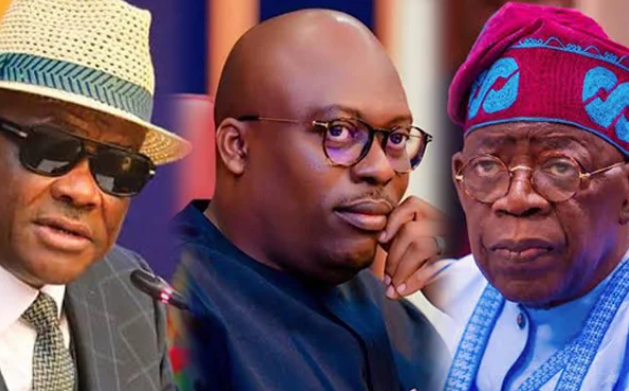

By Eric Elezuo
The political crisis in Rivers State, during the week, assumed a new dimension as President Bola Tinubu is accused of flagrantly desecrating the provisions of the Constitution of the Federal Republic of Nigeria. His actions through a peace meeting he supposedly brokered, have been dismissed by not a few Nigerians as extra constitutional, and without respect for the law of the land.
The crisis, which erupted as a result of the perceived desire of the former Governor of State, who is now the Minister of the Federal Capital Territory (FCT), Nyesom Wike, to control the mechanism of the state government to the detriment of the incumbent governor, Siminialayi Fubara, witnessed the massive decamping of 27 lawmakers to the All Progressives Congress (APC) from the Peoples Democratic Party (PDP), and resignation of nine commissioners, including the Attorney-General and Commissioner for Justice.
The long list of commotion, and the bid to stop the lawmakers loyal to Wike from possible impeachment of the governor, Fubara hastily demolished the State House of Assembly Complex, and in its wake obtained a court order, preventing the sitting of the decamped lawmakers at any place.
But the president, seeking to restore peace, invited the contending duo to Abuja for settlement. Reports say that while the loyalist of Wike were represented in their numbers, only Fubara attended from his own camp.
An eight Communique was subsequently drawn and signed to after the the meeting. The terms of settlement as recorded in the document, were dismissed as one-sided, and counterproductive both to Governor Fubara and the constitution of the Federal Republic of Nigeria. This therefore, begs the question as to the reason behind Tinubu’s desire to jettison the constitution, replacing it with his own drafted resolutions.
Reacting, Elder statesman and Leader of the Ijaw Ethnic Nationality, Chief Edwin Kiagbodo Clark, expressed disgust at the 8 point Communique released after the meeting.
The elder statesman, who could not hold his anger, while addressing the media, said they will resist any of such draconic, arbitrary and unconstitutional action of the president and Wike. He further threatened legal action against the decisions taken at the meeting, which he claimed were one sided.
Below is the full text of Clarke’s statement:
Firstly, I wish to commend President Bola Ahmed Tinubu for heeding the various calls, including our own, to mediate in the on-going crisis rocking Rivers State by calling Barr. Nyesome Wike to order so as to restore peace and tranquillity in the State and avert any problem similar to that which occurred in 2013, when Barr. Wike was Minister of State Education.
However, the terms of settlement as contained in the Communique issued at the end of the reconciliatory meeting is what is baffling, appalling and unacceptable to the people, especially, the Ijaw ethnic nationality. From the terms of settlement, it is obvious that President Tinubu sees his role as a mediator, to once again, show gratitude to the current Minister of the Federal Capital Territory (FCT), for “delivering” Rivers State to him during the past Presidential elections, having first of gratified him by making him the Minister of FCT.
First Observation:
The composition of the attendees of the meeting was one sided in favour of Nyesome Wike, the Minister of the Federal Capital Territory (FCT), because while Martins Amaewhule, a former Speaker, (because he has automatically lost his seat the very moment he decamped to another political party), was present at the meeting, it would have only been equitable and expedient, for Edison Ehie, the Speaker as affirmed by constitutional provisions and by the granting of the court, to be in the meeting, if there were sincerity of purpose.
The 8 resolutions reached, are the most unconstitutional, absurd and obnoxious resolutions at settling feuding parties that I have ever witnessed in my life. As a matter of fact, some medias captured it very well when they described it as Directives. And for the fact that such thing was done at the Villa, the seat of the Federal Government of Nigeria, is sacrilegious, because any place housing or is a custodian of symbol of authority, ought to be sacred.
It is obvious that Governor Siminialayi Fubara was ambushed and intimidated into submission. President Tinubu should know that with all the powers he possesses, he cannot override the Constitution. From all that transpired at the meeting, the laws of the land have not been obeyed. President Tinubu simply sat over a meeting where the Constitution, which is the fulcrum of his office as President and which he swore to uphold and abide by, was truncated and desecrated.
27 or so members (because the figure is not certain), of the Rivers State House of Assembly left the political party on which platform they were elected. The Constitution of the Federal Republic of Nigeria is very clear on that. Section 109 is quite clear on that and it says:
A member of a House of Assembly shall vacate his seat in the House if
Being a person whose election to the House of Assembly was sponsored by a political party, he becomes a member of another political party before the expiration of the period for which that House was elected:
Provided that his membership of the later political party is not as a result of a division in the political party of which he was previously a member or of a merger of two or more political parties or factions by one of which he was previously sponsored;
The Speaker of the House of Assembly shall give effect to subsection (1) of this section, so however that the Speaker or a member shall first present evidence satisfactory to the House that any of the provisions of that subsection has become applicable in respect of the member.
Nyesom Wike is quite abreast of these constitutional provisions. He shouted his voice hoarse calling for the removal of persons like David Umahi as Governor of Ebonyi State, Ben Ayade as Governor of Cross River State and Bello Matawalle as Governor of Zamafara State, when they decamped from the PDP on which platform they were elected into office, to the APC, citing the above constitutional provisions. What has changed?
A Court of competent jurisdiction has pronounced Edison Ehie as the Speaker of the Rivers State House of Assembly. That Ruling has not been vacated, and based on that he exercised the duties conferred on him by Section 109 (2) as quoted above, when the 27 or so members openly defected to APC, waving the flags of the party and singing President Tinubu’s campaign songs, from the Peoples’ Democratic Party (PDP). As at today and going by the Constitution, the Rivers State House of Assembly has four members who are recognised by the laws of the land Therefore, on what premise is Mr. President saying that the 27 decamped members should go back to the House? Under what political party, the PDP or the APC. The directives of Mr. President is absurd and cannot hold water. Mr. President should be aware that Siminialayi Fubara, today, is the elected Governor of Rivers State in the same manner Bola Ahmed Tinubu is the elected President of the country. And as a Governor, Mr. Fubara possesses all the powers as conferred on him by the Constitution.
2. Re-Submission of the names of Commissioners who have resigned their Appointments:
Another “directive” of Mr. President that the names of the Commissioners who were nominated by Nyesom Wike and who resigned on their own volition, and who have lost their trust in Governor Fubara, should be represented to the Rivers State House of Assembly for clearance to become Commissioners again, is ridiculous. Who is nominating them to become Commissioners again? Is it Mr. President? Was Mr. President thinking that he was mediating in a matter between Nyesom Wike and employees in Nyesom Wike’s private company? Is it what Nyesom Wike means when he talks about “structure”, referring to Rivers State as his personal holdings or enterprise?
3. Re-Presentation of a Budget already signed and passed into Law:
Another unthinkable “directive” of Mr. President is that a Budget which has been passed into Law, should be represented. It is absolutely ridiculous and unconstitutional.
By President Tinubu’s actions and directives, he has overruled the Constitution of the country; he has shaken the foundation of the country’s democracy. People lost their lives fighting for democracy in this country. Today, President Bola Ahmed Tinubu, has made of no effect the blood of the freedom fighters shed to salvage this country. He has thrown the country’s democracy fifty years backwards; this is unacceptable. Rather than building a strong system and society, we are building strong, invidious characters, with our national patrimony through corruption and avarice.
By the actions of President Bola Ahmed Tinubu, he has really shown his dislike and disdain for the Ijaw people. and confirms his hatred for them. And as the leader of the Ijaws, we will resist it.
Nyesom Wike is not an emperor. For the eight years he was in power as Governor of the Rivers State, he ruled with an iron fist. As Governor, he will not accept such treatment from anyone, as he is spear heading to be meted out to the current Governor of the State, Siminialayi Fubara. Barr. Wike destroyed his opponent’s houses and even threatened to kill them as cried out by Senator Lee Maiba from Ogoni, and Dr. Abiye Sekibo from Okrika
It is still fresh in our memory, how Nyesom Wike, as Minister of State, Education, used federal might to fight the then Governor of Rivers State, Chibuike Amaechi that almost led to the grinding to a halt of governance in Rivers State when the Judiciary was closed down and the House of Assembly was shut down by the then Governor, Rotimi Chibuike Amaechi. President Jonathan did not interfere in his action because if he did, he will definitely be breaching Section 5(2) of the 1999 Constitution of the Federal republic of Nigeria, which President Tinubu has deliberately breached, despite his oath of office to uphold and promote the Constitution. Nyesom Wike is Minister now, and again, he is using the federal government to truncate the wishes of the people of Rivers State. The rule of law in the country is completely truncated by President Tinubu. While it will be noted that presently, the National Assembly is discussing on the Bill of Local Government Autonomy, President Bola Tinubu is directing Governor Fubara to put into effect, a Bill passed by people who are no longer law makers.
4. The members of the House of Assembly choosing where they will sit to carry out their legislative duties:
It is the duty of the executive to provide legislative accommodation for the Houses of Assembly including the National Assembly, and not the members of the House of Assembly to choose a place to meet. It is in this vein that President Bola Ahmed Tinubu, in presenting his Budget to the National Assembly, recognised the FCT Minister, Nyesome Nwike, as the land lord, because he is of the executive arm of government. It is the FCT that owns the National Assembly complex and maintains it. It is, therefore, ridiculous and unconstitutional for President Tinubu to direct, in his settlement, that the members of the Rivers State House of Assembly, should meet wherever they want to meet.
We will resist such draconic, arbitrary and unconstitutional action by Mr. President and his customer Nyesom Wike. We will go to court to challenge this so-called one-sided and oppressive action of Mr. President.
On his part, the Executive Governor of Rivers State, Siminialayi Fubara, who has the mandate of the people of Rivers State to govern them for the next four years, has shown feebleness of character, by agreeing and appending his signature on a document containing such absurdity. He has betrayed the people who elected him as Governor and those who stood behind him in this cause. Mr Fubara has shown naivety in his actions; by signing that document, he has signed his death warrant, believing that the President will show him some sort of favours. Mr. Fubara’s mandate is Constitutional and so, he cannot surrender it in the face of intimidation from any quarter. And it is quite unfortunate. Did he go to that meeting to speak and justify his actions, or he went there to take directives from an equally elected President. As Governor of a State and as the Chief Security Officer of the State, he has shown tremendous lack of courage and competence. It will be in his best interest to resign if he cannot govern the State as constitutionally provided, or he may as well decamp and join APC, and be taking directives from Nyesom Wike and President Tinubu on the governance and leadership of the State.
Like I stated earlier, these obnoxious directives will not stand. The people of Rivers State, particularly, the Ijaws, who are in the majority and who have about 11 (eleven) Local Government Areas, out of the 23 Local Government Areas in the State, will resist it. Because by it, President Tinubu has delivered Rivers State to Nyesom Wike as a reward for “delivering” the State to him. I call on the people of Rivers State and indeed all well-meaning Nigerians, to stand up against it, using all Constitutional and legal means, because we do not know the next State in the country that will be affected or pawned to another political customer by President Tinubu, as political patronage. It is absurd, it is draconian. It is transactional. It is a rape of our democracy. The people of Rivers State should remember that it was the same lopsided solution/directive that President Tinubu gave to the people of Ondo State but they resisted and rejected it. Today, the needful has been done in that State.
Bola Ahmed Tinubu would not allow himself to be treated the way he oversaw Mr. Fubara being treated. We all can recall what happened when he governed Lagos State for eight years, and when he successfully resisted President Olusegun Obasanjo’s dictatorial tendencies when he tried to prevent him from creating more Local Government Areas in Lagos State. Nigerians hailed Bola Ahmed Tinubu for standing up to the occasion. That made him to be the undisputed leader of Lagos State. But today, he is overseeing such draconian and authoritarian action as President of the country, giving directives to a Governor to take action on things obviously not in tandem with the nation’s Constitution.
I, Senator Edwin Kiagbodo Clark, as leader of the Ijaw nation, and as Chairman of the Board of Trustees of the Ijaw National Congress (INC), decided to hold this emergency Press Conference with the full authority of my people. We are prepared to face any consequences that may result in the political crisis in Rivers State. We will resist any attempt subtle, subterranean, convert, overt, to make an elected Ijaw son, Siminialayi Fubara, the Governor of Rivers State, a servant, a stooge to Nyesome Wike, who had boasted that any attempt by the Governor to touch his so-called ‘Wike’s structure’, with the connivance and support of President Bola Tinubu, will be resisted by us.
Like I said, we will go to go court to resist this oppressive action using all available constitutional and legal means. It is on this note I wish to appeal to the youths who are aggrieved, to remain calm, as we will use legal means to dethrone this hydra headed monster, called oppression.
Enough is Enough.
Also responding, a former Minister of Work, and two terms governor of Lagos State, Babatunde Fashola, said that Tinubu’s intervention is not required as the constitution doesn’t give room for such.
“Does the Constitution assign a role to the President in this matter?” Fashola asked while speaking at the Nigerian Air Force Officers Mess Honourary Members Forum 2023 Annual Lecture held in Lagos. Fashola said the constitution clearly outlines the proper procedures and roles of officials in such situations.
Also responding, Constitutional and human rights lawyer, Femi Falana SAN, faulted President Bola Tinubu’s order on the reinstatement of 27 lawmakers in the Rivers State House of Assembly.
The PDP had asked the Independent National Electoral Commission (INEC) to declare the seats vacant and conduct a fresh election into the constituencies.
In a statement he signed, Falana stressed that presidential interventions must always be anchored on the provisions of the constitution.
He pointed out that defecting lawmakers can only retain their seats if they can prove that the political party that sponsored them has been divided into factions.
He said: “With respect, the presidential reinstatement of the 27 cross carpeting members of the Rivers State House of Assembly by the Presidency is alien to the Constitution in every material particular.”
“The seats of the cross carpeting members have been declared vacant by the Speaker known to law. To that extent, the Independent National Electoral Commission (INEC) is mandatorily required to conduct the by-election once the ex parte order issued by the Federal High Court last Friday is quashed.
“Even if all the cases in the Rivers State High Court and the Federal High Court are withdrawn in line with the advice of the President, it is submitted that all actions taken by the Speaker (Ehie) recognised by the Rivers State High Court, remain valid, including his pronouncement on the vacant seats of the 27 cross carpeting members of the House.
“In other words, only a court of law is constitutionally competent to set aside the pronouncement of the Speaker which is anchored on section 109 of the Constitution. Furthermore, as the Speaker has not been removed by the required number of legislators, a presidential directive cannot remove him.”
Some other legal practitioners in the Niger Delta have also faulted the resolution of the Tinubu-led peace parley directing the incumbent governor, Sim Fubara to immediately withdraw all lawsuits instituted in the courts regarding the crisis, and recognizing the decamped lawmakers with Amaewhule as the Speaker.
They dismissed the outcome of the meeting as gross abuse of power and a slap on the constitution of the Federal Republic of Nigeria.
They described the president’s role in the matter as an attempt to undermine the nation’s democracy.
The Vanguard quoted a former Akwa Ibom Attorney General, and Senior Advocate of Nigeria, SAN, Uwemedimo Nwoko, as saying “Why I feel very sad is that as educated as the President is, he does not feel any sense of repulsion, he does not feel any sense of shame going to preside over the desecration of the constitution of Nigeria.
“It is very sad that the president would preside over the desecration of the constitution that he had taken oath to protect. It is scandalous, it is very embarrassing, it is shameful, despicable and condemnable. It is wanton abuse of the Constitution.
“In law, parties cannot sit down to agree on unconstitutionality, parties cannot negotiate illegality. They cannot enter into agreement to violate the law or the constitution. For instance, the purported return of the 27 lawmakers to the House is illegality, it is unconstitutionality, it cannot stand.
“The agreement that the governor should go and re-present the appropriation bill to the House of Assembly, when the Bill has already been passed by the House, and assented to by the governor is an illegality, it is a joke of the highest level…
“The constitution is like the Rock of Gibraltar, it cannot be moved, it cannot be shaken. What the Constitution provides stands permanently. So, the purported agreement, or settlement, whatever they call it has no meaning as far as the status of the 27 state lawmakers are concerned.”
Another lawyer, according to Vanguard, Amaebi Clarkson, said: “The matter is subjudice, so the so-called resolution is of no moment. it’s sad that such absurdity can be foisted on an elected governor in a democratic dispensation and they think it can stick. Obviously, Governor Fubara was arm twisted to sign such suicidal instrument, so he has the leverage to jettison it and pursue the legal process with vigour.
“He has everything to gain by taking refuge in the legal process because the resolution is a noose on his neck. The PDP should equally contest the validity of the carpet crossing of the 27 lawmakers to the apex court so that the matter would be given a final seal.”
In his own remarks, Ogunbiyi Olajuwon, noted that “According to Section 109 (1)g, a House Member will lose his seat if he defects to another political party before the expiration of the term. “This position has been taken cognizance of even by the Supreme Court and the lower courts in a number of decided cases.
“Notwithstanding the above mentioned position and decided cases, there is also an exception provided for under that section 109 (1)g. The second paragraph of that subsection also provides room for defection when there is a division in a political party or in case of mergers of political parties.
“The import of the second paragraph of that subsection is in the same spirit with Section 40 of the same Constitution of the Federal Republic of Nigeria,1999.
“The Constitution is the groundnorm and therefore, will not envisage a situation where someone will join a political party and won’t be able to exit such association. Being a member of a political party is not tantamount to slavery or servitude where once you are branded ,you are branded for life…
With a generality of Nigerians speaking up against the so called shenanigans of a few individuals, no matter how highly placed, it is left to be desired what the final outcome will be.
Related
You may like
Headline
ADC National Convention: To Be or Not to Be?
Published
2 days agoon
April 11, 2026By
Eric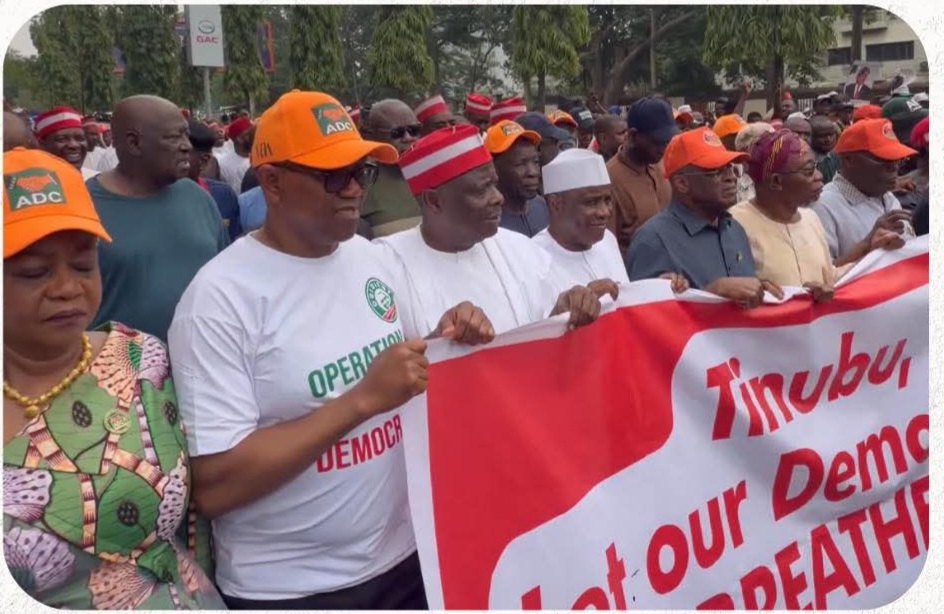
By Eric Elezuo
On April 1, 2026, the Independent National Electoral Commission (INEC), led by its Law Professor Chairman, Joash Amupitan, threw a shocker at Nigerians, derecognising the David Mark and Rauf Aregbesola led-leadership of the hitherto main opposition party, the African Democratic Congress (ADC). The announcement has since generated chain reactions across board in the Nigerian body policy, creating divisive opinions for and against the electoral body.
Among other factors, the announcement put a question mark on the already planned April 14, 2026 National Convention of the ADC, prompting a question mark on whether or not the convention will hold as planned.
INEC had through its National Commissioner and Chairman of the Information and Voter Education Committee, Mohammed Haruna, announced the Commission’s decision to withdraw their recognition of the ADC leadership, with special emphasis to the Chairman, Senator David Mark and Secretary, Rauf Aregbesola, in a statement.
It hinged its decision on a court order which directed the commission to maintain the status quo pending the determination of a suit challenging the legality of David Mark’s leadership of the opposition party. But the maintenance of status quo was variously interpreted by interested parties to suit their various whims and caprice.
But the ADC has insisted on proceeding with its planned congresses and national convention despite the controversy surrounding its derecognition by INEC, a move the body said would amount to nullify if embarked upon.
ADC’s National Publicity Secretary, Bolaji Abdullahi, announced this while speaking on Arise Television’s Morning Show, citing the party’s current leadership struggle.
Abdullahi stated that the party had already given INEC the required 21-day notice for its operations and that the commission acknowledged receipt of the notice.
He maintained that the ADC would not halt its internal processes regardless of INEC’s position, stressing that the party remains committed to carrying out its congresses and convention as scheduled.
The spokesman also expressed concern over what he described as growing threats to Nigeria’s democracy, warning against attempts to limit political competition ahead of the 2027 general elections.
The electoral authority has also announced that it will not accept Nafiu Bala Gombe, who is seeking to be declared national chairman through the court.
He said, “If we’re in a military regime, we can understand it. We are finding ourselves in a situation where everything is being done to ensure that the election in 2027 is a fait accompli and that Nigerians will be left with no option or no choice. We’ve seen how this has ended in the past.
“So we are saying that we will go ahead with our congresses. We have given INEC 21 days’ notice. They have accepted the notice.
“So whether they come or not, we’ll continue with our congresses; we’ll continue with our convention.
“We are all Nigerians. We can see what is going on. We can see our democracy unravelling before our very eyes.”
Consequently, with only a few days left before the stipulated date for the convention, the ADC has gone ahead to set up a 361-man convention planning committee that would soon be inaugurated.
If hitches or changes do not occur in the coming moments, the former governor of Cross River State, Leyel Imoke will lead the 361-member National Convention Central Coordination Committee of the David Mark-led National Working Committee (NWC) of the ADC.
Sources within the party informed that preparations for the convention were in full swing, with several committees already constituted to handle key aspects of the event.
The speedy plans attached to the Convention is borne out of the fact that the Mark-led NWC has rejected INEC’s interpretation of the judgement and insisted that it would proceed with the planned national convention and other internal party processes.
Prominent political figures backing the Mark camp including former Vice President Atiku Abubakar; formwr Anambra State governor, and Labour Party presidential candidate in the 2023 ele tions, Peter Obi; former Rivers State governor, Rotimi Amaechi; former Kano State governor, Rabiu Musa Kwankwaso; and former Osun State governor Rauf Aregbesola, had staged a protest to challenge INEC’s position.
Information reaching The Boss noted also that personalities like former governor of Imo State, Emeka Ihedioha; former Minister of State for Education, Emeka Nwajuba; FCT Senator, Ireti Kingibe and other prominent members of the ADC have been listed to play key roles in the planning of the convention.
But fresh evidence coming from several sources has noted that the state congresses sheduled for Saturday, April 11, 2026, have been stalled, no thanks to the leadership crisis rocking the party amid internal wrangling and legal hurdles.
As at today, crises have fragmented the party into three camps led by former Senate President David Mark, former deputy National chairman, Nafiu Gombe and a bloc spearheaded by some state ADC chairmen, and led by the party’s presidential candidate in the 2023 election, Dumebi Kachikwu. This fragmentation has been the major reason that for the consequent de-recognition of the Mark-led National Working Committee by the INEC.
While some states have announced the suspension of their congresses, a few states have vowed to proceed with the election ahead of the party’s convention.
On Thursday, a faction led by Gombe stormed the INEC headquarters in Abuja, demanding formal recognition.
Gombe, accompanied by a Rep member from Kogi State, Leke Abejide, and hundreds of supporters, accused the David Mark-led leadership of attempting to hijack the party’s leadership in defiance of its constitution and internal processes.
Addressing officials of the electoral body during the protest, a barely-able-to-express-himself Gombe insisted that due process must be followed in resolving the leadership dispute.
Reading a prepared text, he said, “We are here to urge INEC to follow due process. You cannot come to the ADC through the window and expect to overturn the owners of the ADC. As democrats, we don’t want any moneybags to come and destroy democracy. The ADC is for all Nigerians from wards, states, to the national level.”
Also speaking, Abejide, who had said he would quit the ADC if the Mark NWC is finally recognised, called on the commission to resist what he described as an attempted takeover of the party, stressing that the ADC constitution clearly outlines eligibility requirements for leadership positions.
“We are here to urge INEC to do the right thing and rescue democracy from the hands of usurpers. How do you come to a party and attempt to hijack the leadership on the same day? Which political platform is that done?
“The party constitution is clear about this. You have to spend at least two years in the ADC as an active member before you can aspire for any position. The commission has not erred. These people are hijackers, and INEC must follow through on reverting to status quo ante bellum by recognising Nafiu Bala Gombe as the national chairman of the party,” he said.
Abejide has also filed a case at the Federal High Court, Abuja, seeking the permanent removal of Mark and Aregbesola as leaders of the party. Hearing comes up on Monday, April 13.
Similarly, the ADC Director of Youths and Mobilisation, Mohammed Sahad, commended INEC for complying with a court order, but urged the commission to go further by affirming Gombe’s leadership.
“INEC has not erred in any way. In fact, we commend the commission for obeying the court order. But they need to recognise Nafiu Bala Gombe as the authentic national chairman of the ADC. INEC needs to do the right thing and do it now. That is why we are here,” he said.
Responding on behalf of the commission, INEC National Commissioner, Abdullahi Abdu Zuru, assured the protesters that their concerns would be reviewed.
“I am here on behalf of the chairman, and I believe INEC, as a commission, will look at your letter and give you feedback. Thank you for being orderly with your protest,” he said.
The protest comes barely 24 hours after a rival faction of the party, led by former Senate President David Mark, staged a large demonstration in Abuja under the banner of #OccupyINEC, accusing the electoral body of actions they claimed undermined democracy and the party’s internal leadership structure.
The back-to-back protests underscore the deepening rift within the ADC, raising concerns over the party’s stability ahead of future electoral contests.
In another development, Adamawa State chapter of the ADC has been barred from going ahead with the congress by a Yola High Court.
Justice Ahmed Isa, who presided over the case, ordered the suspension of the congresses, which was scheduled for Thursday until the determination of the case. The court subsequently adjourned the case to April 15, 2026, for continuation of the hearing, a day after the supposed National Convention.
The embattled ADC chairman in the State, Shehu Yohanna, had approached the court, seeking to stop the congresses due to alleged exclusion from the process.
Yohanna filed the suit against Sadiq Dasin, the state chairman of the transition committee.
According to a report on The PUNCH however, the North East Vice Chairman of the party and former Secretary to the Government of the Federation, Mr Babachir Lawal, denied knowledge of the court ruling.
“I’m in Abuja, so I don’t know about the case. Go and ask those who were in court today. I don’t know anything about the court case,” he told The Punch.
In Anambra State, the party chairman, Patrick Obianyo, disclosed that the party has suspended the proposed congresses until further notice.
Obianyo said the party’s decision underscores its unwavering commitment to the rule of law, due process, and respect for judicial authority.
He, therefore, called on all party members and stakeholders to remain calm, law-abiding, and peaceful throughout this period.
He also informed the INEC not to recognise anything done by those parading themselves as ADC leaders in the state.
“The African Democratic Congress, the Anambra State chapter, has announced the immediate suspension of all planned and proposed congresses across the state, until further notice.
“For the avoidance of doubt, the tenure of the current ADC Executive Committee in Anambra State, as well as in other states, remains constitutionally valid and duly recognised by INEC.
“Consequently, the general public is strongly advised to disregard any directives, announcements, or actions from unauthorised individuals falsely parading themselves as party leaders.
“The party will duly communicate new dates for congresses and conventions following the conclusion of ongoing national consultations and meetings.’’
Similarly, the Ondo ADC has announced the suspension of its earlier scheduled Congresses following the re-recognition of the national leadership of the party.
The party had earlier scheduled to hold its ward, local government and state congresses this month, but disclosed that the exercises had been suspended.
This was contained in a statement made available to our correspondent by the state chairman of the party, Mr Wole Ademoyegun.
It said the suspension was in line with the directive of the INEC, which asked the party to maintain the status quo ante bellum.
“We reaffirm our unwavering respect for INEC as the constitutionally constituted regulatory authority for political parties and our firm commitment to due process and institutional order.
BACK TO COURT AFTER PROTESTS
Meanwhile, the David Mark, factional has returned to court after its elaborate protests, where they called for the removal of INEC boss, Amupitan, asking the Federal High Court in Abuja to overturn the decision of the Independent National Electoral Commission (INEC) to derecognise his leadership of the party.
In a motion filed before Emeka Nwite, the presiding judge, Mark is seeking orders compelling INEC to restore his name and that of Rauf Aregbesola as national chairman and national secretary of the party, respectively.
The motion on notice, dated and filed on April 7, was filed by Mark’s new lawyer, Sulaiman Usman, SAN.
The motion is in reaction to the March 12 Court of Appeal’s judgement in a suit instituted by Hon Nafiu Bala Gombe before Justice Nwite.
The motion, which sought three reliefs, was brought pursuant to Order 26, Rules 1, 2, 3 and 4 of the Federal High Court (Civil Procedure) Rules, 2019; the inherent jurisdiction of the court and under the equitable jurisdiction of the court to grant injunctive reliefs.
By every inch of explanation, all is not well with the ADC, and its quest to be on the ballot paper come 2027. The party has consistently blamed President Bola Tinubu for its woes, saying the president is muzzling opposition in a bid to be the only one contesting against himself; the only one on the ballot in 2027.
But will Nigerians allow the plot? Time will tell.
Related
Headline
Amnesty Condemns Wike’s ‘Shoot’ Remark Against Seun Okinbaloye
Published
6 days agoon
April 6, 2026By
Eric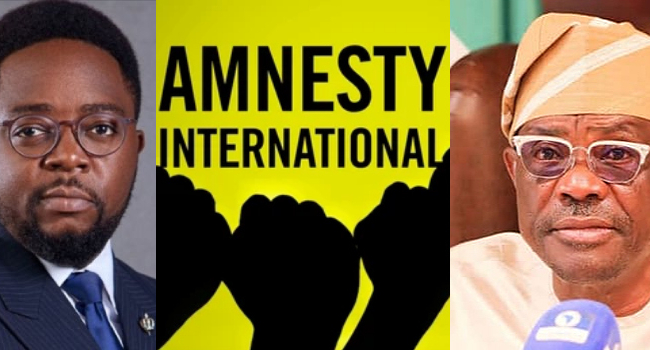
Amnesty International Nigeria has condemned comments by the Minister of the Federal Capital Territory, Nyesom Wike, over a statement in which he said he could “shoot” a television anchor during a live broadcast.
In a statement issued on Saturday, the organisation described the minister’s remarks as “reckless and violent,” warning that such language could incite attacks on journalists and undermine press freedom.
The group said Wike’s statement, made during a media parley in Abuja, violated broadcasting standards and carried the risk of normalising violence against media practitioners.
“Amnesty International Nigeria strongly condemns the reckless and violent language of the Minister of the Federal Capital Territory (FCT), Mr Nyesom Wike, in which he stated that he can respond to a statement by a journalist with shooting,” the statement read.
It added that Wike’s remarks—“If there’s any way to break the screen, I would have shot him”—not only incited violence but also contravened Nigeria’s broadcasting code, which the National Broadcasting Commission is mandated to enforce.
The organisation warned that such comments from a public official could embolden attacks on journalists.
“What Wike said carries the danger of normalising violence and encouraging the targeting of journalists for just doing their job. This level of violent intent coming from a member of Nigeria’s federal cabinet is unlawful and unacceptable,” it said.
Amnesty International called on the minister to immediately withdraw the statement and issue a public apology.
The controversy followed Wike’s reaction to comments made by Channels Television anchor Seun Okinbaloye during a programme discussing the leadership crisis in the African Democratic Congress and its implications for opposition politics ahead of the 2027 elections. Okinbaloye had raised concerns about the possibility of a one-party state, a position the minister criticised as inappropriate for a journalist.
Related
By Eric Elezuo
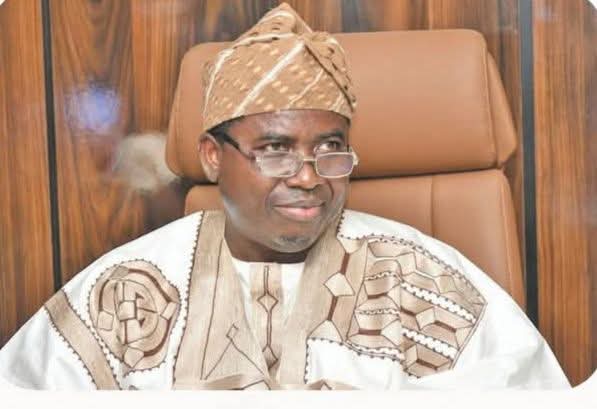
Following the Wednesday derecognition of the leadership of the main opposition party, the African Democratic Congress (ADC), by the Prof Joash Amupitan-led Independent National Electoral Commission (INEC), diverse narratives have flooded media space as to the real reason behind the decision.
A section of the Nigerian population has wondered if the INEC is playing out a well written script or swaying to a thoroughly rehearsed and choreographed dance. Others have hinted that the electoral body, and its officials, who are products of the powers that be, are harking to the voice of their pay paymaster to ensure that the vocal fears of many Nigerians regarding the intention of the President Bola Tinubu-controlled Federal Government and All Progressives Congress (APC) to turn the country to a one-party state comes to reality.
These and many other developments in recent times have prompted the rhetorical question, is Amupitan’s INEC complicit? Are the popularly assumed Independent body dependent on the APC government to dance to their tunes? Will Amupitan, whom many Nigerians celebrated his appointment go the way if other INEC chairmen? Especially the immediate past chairman, Professor Yakubu Mahmood, who has been rewarded with ambassadorial appointment presently.
It would be recalled that INEC, on Wednesday through its National Commissioner and Chairman of the Information and Voter Education Committee, Mohammed Haruna, announced the Commission’s decision to withdraw their recognition of the ADC leadership, with special emphasis to the Chairman, Senator David Mark and Secretary, Rauf Aregbesola, in a statement.
It hinged its decision on a court order which directed the commission to maintain the status quo pending the determination of a suit challenging the legality of David Mark’s leadership of the opposition party. But the maintenance of status quo has been variously interpreted by interested parties to suit their various whims and caprice.
While the Amupitan-led INEC believes that status quo means going back to the days before the leadership of David Marj came on board, the ADC argued that the status quo promptly refers to the period before any law suit was Instituted. The development puts a heavy question mark on the judiciary, and it’s ambiguous declarations and judgment, and the lawyers, who most times, out of mischief, refuses to adhere to the correct interpretation in as much as they are aware what the interpretation is or should be.
Now, who interprets the interpreter?
INEC has said in a statement that the appellate court, in a judgment delivered on March 12, 2026, directed all parties to maintain the existing situation before the dispute arose and refrain from actions that could prejudice the outcome of the case.
“That the Commission would, in accordance with the Order of the Court of Appeal in Appeal No. CA/ABJ/145/2026 refrain from taking any step or doing any act capable of foisting a fait accompli on the court or otherwise rendering nugatory the proceedings before the trial court, having regard to all the processes filed before the trial Court,” the statement read.
Reacting, the mark-led ADC and a faction of the Peoples Democratic Party (PDP), through their spokespersons, Bolaji Abdullahi and Ini Ememobong, insisted that the development was a calculated attempt to undermine democratic structures, alleging the involvement of the APC government and urging supporters to mobilise in defence of democratic principles.
Abdullahi said INEC’s position does not reflect the facts of the case and raises concerns about impartiality. He noted in a statement as follows:
“We reject INEC’s interpretation of the Court of Appeal ruling.
“INEC’s press statement is full of contradictions that fly in the face of both facts and reason. We shall clarify these contradictions for all to see. What is clear, however, is that INEC has caved to pressure and has chosen to side with the government against the Nigerian people,” the statement read.
“We are currently reviewing our options, and we shall make these known soon.
“Meanwhile, we call on our members and all Nigerians to remain steadfast as they await further directives.
“Nigeria is rising. ADC is rising,” he added.
As a follow-up to the rejection, the ADC called for the resignation or sack of the INEC Chairman, accusing him of complicity and colluding with the ruling APC to ensure no other political party is on the ballot paper to challenge the APC in the 2027 elections.
Mark, who addressed the world press conference noted as follows in a speech titled, This Attack on Democracy Will Not Stand.
On behalf of the African Democratic Congress (ADC), and lovers of democracy, I welcome you all to this world press conference.
Since 1999, Nigeria has been under democratic rule. After 27 years, we thought we could proudly celebrate the entrenchment of democracy, believing that the country’s dictatorial past has receded into history.
Our experience in the past three years or so since President Bola Tinubu came to power has however confirmed otherwise. Democracy is only sustained by the quality of freedom that it offers and guarantees, especially the freedom to choose, the freedom to participate, and the freedom to associate. These freedoms are so critical to democracy that without them, democracy dies.
Yet, in the past three years, we have witnessed a relentless assault on these very freedoms. The agenda is very clear, to create a situation where, in 2027, President Bola Ahmed Tinubu emerges as the only option left for the people, despite the widespread suffering and wanton killings going on across the country. The twin challenge of deepening poverty, and worsening security situation in the country did not just happen. They are direct consequences of the failure of this government. They know that Nigerians will not want this to continue. They know Nigerians will vote them out. This is why they would do anything to hang on to power by hook or crook.
Background to the Coalition
The coalition of opposition parties came about as a result of a collective search for democratic freedom and the desire to resist what was clearly a relentless assault on opposition political parties. The coalition leaders decided to come together under ADC to save multi-party democracy in Nigeria and rescue Nigeria from what was clearly an emerging dictatorship.
We did not come to the ADC by chance. We did our due diligence. We fulfilled all the party’s constitutional requirements, as well as all wider requirements under the laws that guide the management and operation of political parties.
In furtherance of this process, a NEC meeting was convened on July 29th, 2025, monitored by INEC officials. One of the conclusions of that NEC meeting was the dissolution of the National Working Committee of the party, and the ratification of a caretaker committee to take over the affairs of the party, with my humble self, David Mark, as the National Chairman; Ogbeni Rauf Aregbesola as the National Secretary; as well as others who have since been serving as officers of the party.
In addition to witnessing this process that brought in the new leadership of the party, a formal report of these resolutions was subsequently communicated to the Independent National Electoral Commission (INEC). On September 9th, 2025, INEC then uploaded the names of the relevant NWC members of the party, based on the NEC resolutions.
One of the officials in the dissolved NWC was Nafiu Bala, who was one of the Deputy National Chairmen of the party. It is on record that Gombe resigned this position on 17th May, 2025. His resignation was also duly transmitted to INEC on the 12th of August, 2025. Regardless of his resignation, he decided to approach the courts on September 2nd, 2025, four clear months after his resignation, seeking to be recognised as the Chairman of the ADC.
What this means is that by the 2nd of September, when he approached the courts, INEC was already aware that Secretary Aregbesola and I had been inaugurated on the 29th of July in a process monitored by INEC. INEC was also aware that Gombe had resigned his position before the said inauguration on the 29th of July.
While this matter was in court, our team of lawyers approached the Court of Appeal, challenging the jurisdiction of the Federal High Court. In rejecting the appeal, the Court of Appeal ordered the parties including INEC to maintain the status quo ante bellum.
After this ruling on March 12th, 2026, we noticed a flurry of activities by lawyers associated with Nafiu Bala, requesting INEC to recognise him as the new chairman, or to de-recognise Aregbesola and I as the secretary and chairman respectively, in a curious interpretation of what constitutes status quo ante bellum. But we knew all along that Nafiu Bala and his lawyers were not acting on their own volition. They had become willing tools in the hands of a ruling party that had lost all support and goodwill of the Nigerian people; a government that had become desperate to cling on to power by all means even if it meant throwing the country into avoidable crisis.
In the past couple of months, ADC has become the only viable opposition party left in Nigeria. But this APC government does not want any opposition. While we were fully aware of all their desperate plans, we remained confident that no level of desperation would have driven the government and the INEC to take a direct action against the ruling of the court. But we were wrong.
It was therefore to our surprise, yesterday, 1st of April, that INEC issued a press statement after the close of business hours, announcing that it had decided to withdraw recognition for both the ADC leadership, which I head, and the fictitious one purportedly led by Nafiu Bala, thereby creating a false equivalence between the parties.
By purporting to recognizing Nafiu Bala as a faction, INEC seems to have conveniently forgotten that this individual had resigned his position, to the knowledge of INEC itself.
The Legal Position
The crux of the matter is the interpretation of what constitutes status quo ante bellum, which the Court of Appeal directed should be maintained. From all authoritative counsel at our disposal, there is no legal interpretation or precedent that could possibly lead to the outcome that INEC seeks to foist on our party.
Based on its press statement of yesterday, INEC is pretending to be confused as to what constitutes the status quo ante bellum. If this was so, under the circumstances, what one would have expected was for INEC to approach the Court of Appeal to request a judicial interpretation of what truly represents the status quo under the circumstances. But it did not do this. While posturing to be neutral, its actions confirm that it has become irredeemably partisan, working, as it were, towards a preconceived agenda. With its action, this INEC has left no one in doubt that it has chosen the path of dishonour and has become complicit in undermining Nigeria’s democracy. It therefore can no longer be trusted.
What we say in essence is this: INEC cannot choose to fix the status quo from the day it took the administrative action to upload the names of the new ADC officials on its website, because INEC does not have the power to determine for any political party who its leaders should be. That decision was taken on July 29th, not on September 9th. With its press release yesterday, INEC has invented a status quo that never existed, because there was no time that the African Democratic Congress (ADC) did not have a duly constituted leadership. What INEC has done is to create a situation that, by its own curious logic, leaves the ADC without leadership. This certainly cannot be the status quo that the Court of Appeal directed should be preserved. It is an INEC invention that is not known to any Nigerian law.
There is only one conclusion that Nigerians can draw from the April 1st action taken by INEC: THE ELECTORAL UMPIRE HAS TAKEN SIDES. IT CAN NO LONGER BE TRUSTED. As a matter of fact, INEC has acted in contempt of the Court of Appeal and has therefore acted unlawfully.
My fellow democrats, distinguished ladies and gentlemen. It is not the ADC that is under attack. This is a direct assault on Nigeria’s democracy and the right of Nigerians to choose, participate, and exercise their rights as free citizens. We have witnessed how the APC-led Federal Government has undermined, compromised, and coerced other opposition political parties. The ADC has risen as the last bastion between Nigeria’s democracy and full-blown dictatorship. And this is what worries them.
What is now unfolding is a concerted effort to dismantle that last bulwark. If we allow this to happen, it could signal the end of our democracy as we know it. If we yield to it, we would have become complicit by our inaction. We therefore hold it a duty to our democracy and the Nigerian people to say “no”.
Right now, I speak to Nigerians at home and in diaspora. I also speak directly to President Bola Ahmed Tinubu: with 90% of the National Assembly and over 30 of Nigeria’s 36 Governors in the APC, President Tinubu, what are you afraid of? If you are convinced that you have done well for the people who voted for you, why are you afraid of a free, fair, and transparent electoral contest? If you are indeed the democrat that you claim to be, why are you bent on destroying all opposition political parties?
Let me reiterate for the record; there are no competing claims on the leadership of the ADC. Nafiu Bala has no locus whatsoever. INEC should have waited for the Court of Appeal to decide this matter. Instead, INEC went ahead to do the bidding of the ruling party. But let us be clear: the role of INEC over political parties is not administrative: it is not managerial: It is simply supervisory.
For the avoidance of doubt, the leadership of ADC inaugurated at the 29th July 2025, NEC meeting remains the lawful leaders of the party. Party members and all Nigerians should therefore remain calm as there is no cause for alarm whatsoever.
It is important to state the net implications of this decision taken by INEC, in case they had not thought of it, or they just do not care:
First, by attempting to subvert the leadership of the ADC, INEC has already undermined our participation in the Osun and Ekiti elections taking place later this year.
Secondly, we have our congresses starting on the 9th of April, 2026, ending with our convention on the 14th April, 2026. We have given due notice to INEC, and they have acknowledged receipt of that notice. This is what the law requires of us.
Let us sound a note of warning. This INEC under Professor Joash Amupitan will be held directly responsible for whatever actions or reactions that follow this criminal path that it has chosen to take.
Our demand is therefore clear:
We demand the immediate resignation or sack of the INEC Chairman, Professor Amupitan, and all the National Commissioners. We no longer have confidence in them. We are convinced that they are incapable of conducting any credible election.
Let us also make it clear: we are proceeding with our party programmes, because there is nothing under the law that makes INEC’s attendance, a mandatory requirement. We have duly served INEC notice, and we will proceed accordingly.
We also call on the international community to take note of INEC’s actions of April 1st, and of the restraint we are exercising today. We urge them to recognise the clear threat to Nigeria’s democracy and stability, and to hold accountable those who are undermining the integrity of the electoral process.
We call on Nigerians to defend our democracy. This is a defining moment. Stand firm. Speak out. Participate. Resist any attempt to impose a one-party state on Nigeria. Nigeria belongs to all of us, and together, we must protect it.
It is often said, that the arc of history does not bend towards tyranny. It bends towards freedom.
And no matter how long the night may seem, the morning will come.
Nigeria will not be silenced. Nigeria will not be conquered.
Nigeria is rising, ADC is rising.
While Nigerians from all walks of life continue to react either positively or negatively, depending on the political divide, the ADC has insisted on going ahead with its National Convention scheduled for April 14, 2026, and its Congresses in deviance to INEC’s directive.
INEC had warned the ADC that it risks losing out completely it went ahead to conduct a Convention without the backing of the electoral body and with a court judgment on maintenance of status quo hanging on their necks. But the ADC would hear none of this, claiming that INEC is acting out a script, carefully written out by the Tinubu-led FG and APC.
Lending his voice to the accusation that Amupitan is backed by Tinubu’s government, prominent legal scholar Professor Chidi Odinkalu alleged that Professor Amupitan signed a resignation letter before taking office as a condition of his appointment — and that the threat of releasing it was used to pressure him into withdrawing recognition from the David Mark-led National Working Committee of the African Democratic Congress.
“I have it on the most impeccable authority that there is a pre-signed resignation letter by Chairman Amupitan.
“It was a precondition for his appointment. Ultimately, that had to be called in aid by those who persuaded him to issue this release. The threat of releasing it did the magic,” Odinkalu wrote on X.
Odinkalu also noted that INEC’s decision came roughly 60 hours after senior officials of the commission held meetings with the Presidency, justices of the Court of Appeal, and the Federal High Court — a sequence of events he said was not coincidental.
He further warned that the 2027 election “will not be much of an election,” stressing that the credibility of Nigeria’s electoral process, and the stability of the country, could be at serious risk if the allegations prove true.
Also speaking, a former Director, Voter Education and Publicity in INEC, Barr. Oluwole Osaze-Uzzi, faulted the commission’s de-recognition of the David Mark-led leadership of the ADC, insisting that the Opposition party should go ahead with its planned congresses despite its ongoing leadership dispute before the court.
Osaze-Uzzi said while he held the leadership of INEC in high regard, he had serious reservations about the commission’s interpretation of the Appeal Court order at the centre of the ADC leadership tussle.
Osaze-Uzzi argued that the order in question was not one that stripped either side in the crisis of legitimacy, but rather one that sought to preserve the subject matter of the case pending final determination by the High Court.
“Because the court did not say that INEC will withdraw recognition from either faction. All it did say is that both INEC and the contesting factions will be careful not to do anything that will usurp the power of the court and its ability to do justice on the matter,” he stated.
“I think the ADC should proceed with all that they are doing, as long as they do not impugn the majesty of the court and its ability to do justice on the case,” Osaze-Uzzi said.
According to him, the court did not direct INEC to withdraw recognition from either of the contending factions in the party, but only cautioned all parties against taking any step that could undermine the authority of the court or frustrate the judicial process.
The debate whether the Mark-led ADC defaulted when they took over the leadership of the party in July 2025 still remains on the front burner with the opposers, mostly APC adherents, lashing out at the opposition party, and hailing INEC’s decision while supporters of the ADC have not only blamed the INEC, but accused Tinubu of fear of having opposition.
The coming days promise to be dicey in the Nigerian political terrain, seeing that the ADC is the only viable opposition to Tinubu’s re-emergence in 2027.
While Nigerians watch events develop, the all-important question remains, is Amupitan’s INEC complicit?
Related




Trump Orders US Naval Blockade of Strait of Hormuz

200 Feared Killed As Military Airstrikes Hit Yobe Market

Police Probe Four Officers Accused of ‘Misconduct’ in Lagos

We’ve Crushed Iran’s Nuclear, Missile Programmes, Netanyahu Boasts

Turaki Faction Kicks As Police Unseal PDP Secretariat

Nation Building Reimagined: Integrated Principles and Strategies for Sustainable Growth

Dear CDS, NSA, Your Prodigal Sons, Brothers Have Killed General Braimah

Koumagnon Family Pledges Unalloyed Support for Romuald Wadagni As President

Benin Republic 2026: Romuald Wadagni, The President in Waiting
Trump Delays Iran’s Strike by 2-Weeks As Pakistani Leaders Intervene

FG Expels US Missionary Alex Barber
Dear CDS, NSA, Your Prodigal Sons, Brothers Have Killed General Braimah
Nation Building Reimagined: Integrated Principles and Strategies for Sustainable Growth

Again, Iran Blocks Strait of Hormuz, Alleges Ceasefire Violation
Trending
-
 Boss Picks3 days ago
Koumagnon Family Pledges Unalloyed Support for Romuald Wadagni As President
-
 National4 days ago
FG Expels US Missionary Alex Barber
-
 Featured3 days ago
Benin Republic 2026: Romuald Wadagni, The President in Waiting
-
 World4 days ago
Trump Delays Iran’s Strike by 2-Weeks As Pakistani Leaders Intervene
-
 Opinion1 day ago
Dear CDS, NSA, Your Prodigal Sons, Brothers Have Killed General Braimah
-
 Opinion1 day ago
Nation Building Reimagined: Integrated Principles and Strategies for Sustainable Growth
-
 Middle East3 days ago
Again, Iran Blocks Strait of Hormuz, Alleges Ceasefire Violation
-

 News4 days ago
Prominent ADC Leaders Storm INEC Hqrs in Protest Against Dictatorship