
Boss Picks
Abdulrasheed Bawa: The Hunter that Became the Hunted



By Eric Elezuo
With a loud ovation, Nigerians reveled at the announcement of its billionaire-quartet, Aliko Dangote, Mike Adenuga, Femi Otedola, and Abdulsamad Rabiu as among Africa’s richest individuals in 2026.
The four has constantly put Nigeria in the limelight, ensuring that Forbes is never complete without a mention of the giant of Africa, Nigeria
According to the latest Africa Billionaires ranking released by Forbes, Dangote retained his position as Africa’s richest man, with an estimated net worth of $28.5 billion. He added about $4.6 billion to his fortune over the past year, largely driven by the strong performance of Dangote Cement on the Nigerian Exchange Limited.
Telecommunications magnate Adenuga also retained his place among Africa’s billionaires.
The founder of Globacom and chairman of Conoil Producing remains one of Nigeria’s most influential entrepreneurs with diversified interests spanning telecoms, oil and gas, and banking.
Otedola, chairman of Geregu Power Plc, also featured on the list despite a slight dip in his wealth over the past year. Forbes estimates that the billionaire investor lost about $200 million following the sale of a majority stake in the power generation company at a discount to its market price.
The increase in Rabiu’s net worth was largely driven by the performance of BUA Cement, whose shares rose 135% over the past year, outperforming the broader rally on the Nigerian stock market.
The 23 billionaires on the continent are now worth a combined $126.7 billion, representing a 21% increase from 2025 after they collectively added $20.3 billion to their net worth.
Across the continent, billionaire fortunes were boosted by strong equity market performance, record corporate profits, and improving currency stability in several African economies.
South Africa remains the highest number of billionaires on the list, with seven individuals, followed by Egypt with five, Nigeria with four, and Morocco with three.
Here is a peep into the world of Nigeria’s Billionaire-Quartet.
ALIKO DANGOTE

For the President of the Dangote Group, Alhaji Aliko Dangote, and his multifaceted group, playing second fiddle has never been an option. Both the enterprise and the entrepreneur have maintained market leadership to the extent that Dangote himself has appropriated the richest man in Africa status to himself, and has hardworkingly sustained the tag for as long as anyone can remember.
Since 2014, when Forbes magazine named him the world’s 23rd billionaire, jumping 20 spots on the scale from his previous 43rd position among the elite club of the world’s richest people. Aliko Dangote has not looked back, winning back to back the accolade among African billionaires, and never slipping from the world ranking.
Again, as expected, the famous Forbes has proclaimed the soft spoken businessman as Africa’s richest man for the 12th time in a row; a proof that the name Dangote is synonymous with consistency. He is a businessman, who understands that no man rest on his oars if turnovers have to continue to turn over. With marked differentiation, he has demystified the business terrain, and proved that if it can be done, then it must done. His establishment of the humongous fertilizer and sugar plants and the ambitious refinery in Lekki, Lagos, Nigeria, are testimonies of the trajectory of one who knows his onions.
Worth $13.4 by the last Forbes ranking, which sustained him as the richest man in African for the 11th time, entrepreneur extraordinaire has the following points to his name:
- Aliko Dangote, Africa’s richest person, founded and chairs Dangote Cement, the continent’s largest cement producer.
- He owns 85% of publicly-traded Dangote Cement through a holding company.
- Dangote Cement has the capacity to produce 48.6 million metric tons annually and has operations in 10 countries across Africa.
- After many years in development, Dangote’s fertilizer plant in Nigeria began operations in mid-2021.
- Dangote Refinery, under construction since 2016, hit the public space since 2024, and is one of the world’s largest oil refineries, with a capacity of 650,000 barrels per day production.
The above and many has remained the factors that have made it easy for the billionaire to remain in the top echelon of world’s money men, and the supremo among African businessmen. Little wonder he is one of the few recipients of the GCON national honours reserved for top politicians of vice president ranking and top government appointees.
Born in Kano in 1957, Dangote proudly shuttles between three wonderful tags as the richest man in Nigeria; the richest man in Africa and the richest Black man in the world. He has paid his dues, and mankind is the better for it.
Releasing impacts, Aliko Dangote Foundation (ADF), the private charitable foundation of Alhaji Aliko Dangote. Incorporated in 1994, as Dangote Foundation, is saddled with the mission to enhance opportunities for social change through strategic investments that improve health and wellbeing, promote quality education, and broaden economic empowerment opportunities. 20 years later, the Foundation has become the largest private Foundation in sub-Saharan Africa, with the largest endowment by a single African donor.
The primary focus of ADF is child nutrition, with wraparound interventions centered on health, education and empowerment, and disaster relief. The Foundation also supports stand-alone projects with the potential for significant social impact.
The Foundation works with state and national governments and many highly reputable international and domestic charities, non-governmental organizations and international agencies to advance its humanitarian agenda.
In one of its biggest collaboration to date, Aliko Dangote Foundation started working in partnership with the Bill and Melinda Gates Foundation and key northern State Governments in Nigeria from 2013 to eradicate polio and strengthen routine immunization in Nigeria.
Worthy of praise is the fact that nearly a decade, the Foundation has spent over N7 Billion in the course of feeding, clothing and the general welfare of the Internally Displaced Persons in the Northeast.
To make his host communities feel at ease, and the impact of his presence, Dangote has embarked on an initiative to provide further support to improving educational systems in Ibeju-Lekki and Epe locality. The educational support initiative is a tripartite programme consisting of scholarship, capacity building for teachers and school infrastructure projects.
In addition, Scholarships have been awarded to 52 secondary school students whilst some financial support was provided to their parents and/or guardians. Tertiary students will be included in the next batch of the scheme.
Furthermore, about 100 teachers, principals and school administrators were trained in teaching techniques for the 21st century. After which they were monitored in class on how they were using the skills acquired.
There is hardly any sector that has not felt the milk of human kindness running through Aliko Dangote; the military, media, politicians, governments across boards and more.
Dangote is surely an asset to this world!
As at today, there is no space for slowing down for Dangote as he continues to trudge on, creating firsts after first for himself and for humanity. He is blessed with three wonderful daughters, who have followed the rewarding footprints of entrepreneurship, and is looking forward to hitting the richest man in the world status. And very soon too.
ABDULSAMAD RABIU

Abdulsamad Rabiu’s consistent climb on the ladder of success has become phenomenal. The unassuming Chairman at BUA Group has become a study in entrepreneurial discipline, focus, philanthropy and intentional sacrifice. But what can actually be said of a man who has steadily evolved as one of Africa’s biggest investors, in fact, the biggest in the order of reckoning on the Nigerian Exchange. He has graciously used his BUA Foundation and the phenomenal Abdul Samad Rabiu Africa Initiative to not only affect lives, but ensured that the people of the world, especially his native Nigeria, live in better comfort. The Chairman/Chief Executive Officer, Bua Group, makers of quality cement, sugar, flour among other wonderful household items has been a epitome of enterprise. He is presently by divine and entrepreneurial orchestration one of Nigeria’s richest investor. He is also the third richest man in the Africa, by Forbes calculation behind Nigeria’s Aliko Dangote, South African billionaire, Johann Rupert.
In 2023, via a list compiled by Billionaires in Africa revealed the rankings on the Nigerian Exchange, NGX, showing that Abdulsamad Rabiu, the billionaire businessman and industrialist, overtook Aliko Dangote as the richest investor in the country, albeit temporarily.
According to data tracked by Billionaires.Africa, Rabiu’s holdings in his publicly-listed businesses on the local bourse were valued at an impressive $6.01 billion, making him the only investor with an investment portfolio worth over $6 billion then. This is a feat that can only be achieved through wholesome business acumen and dedication.
Born August 4, 1960, in Kano, to one of Nigeria’s foremost industrialists in the 1970s and 1980s, Khalifah Isyaku Rabiu, Abdul Samad Isyaku Rabiu CON is a perfect combination of many things in one.
It was in his native Kano that he kick-started his academic pursuit, carousing through elementary education with ease as a gifted child, and obtained his First School Leaving Certificate. He was later admitted into the Federal Government College, Kano, where he had his secondary education, and gradually with honours.
With a combination of fate, brilliance and determination, Abdulsamad was catapulted to Capital University in Columbus, Ohio, where he studiously studied Economics, and acquired his tertiary education before returning to Nigeria, all before his 24th birthday, to oversee his family business. He was that much sought after, and highly brilliant, and considered capable of holding fort for his father, who was being detained by the administration of General Muhammadu Buhari over matters concerning import duties.
In 1988, just after learning the ropes of entrepreneurial excellence, Abdul Samad Rabiu established BUA International Limited, for the sole purpose of commodity trading. The company followed after the footsteps of his father, and imported rice, edible oil, flour, iron and steel.
In 1990, having exhibited the character worthy of a world class entrepreneur, and the ability to execute classical projects, Rabiu’s BUA was invited by the government, which owned Delta Steel Company to supply its raw materials in exchange for finished products. This provided a much-needed leverage for the young company, and consequently expanded further into steel, producing billets, importing iron ore, and constructing multiple rolling mills in Nigeria.
Rabiu’s dexterity showed further a few years later, when the company acquired Nigerian Oil Mills Limited, the largest edible oil processing company in Nigeria, and there erupted the company’s and BUA’s influence and care over the people in the provision of affordable edible oil. His passion to see people excel in comfort has continued to make him churn out one great tiding after another, and endearing him in the hearts of the generality of the public.
A man with a vision for tomorrow, Rabiu, in 2005, started two flour-milling plants, in Lagos and in Kano, and by 2008, had broken an eight-year monopoly in the Nigerian sugar industry by commissioning the second-largest sugar refinery in sub-Saharan Africa. This was a feat only a bravest of hearts could wroth. As a result, in 2009, the company went on to acquire a controlling stake in a publicly-listed Cement Company in Northern Nigeria and began to construct a $900 million cement plant in Edo State, completing it in early 2015. Rabiu’s passion for expansion is unequalled.
BUA Group has since concentrated and excelled in manufacturing, infrastructure and agriculture and producing a revenue in excess of $2.5 billion. This is in addition to being the chairman of the Bank of Industry (BOI).
The Group, in 2019, announced plans to merge its privately owned BUA Cement with the publicly traded Cement Company of Northern Nigeria Plc (CCNN), to create Nigeria’s second largest cement producer thereby consolidating the grip on the cement market and breaking its monopolistic status.
MICHAEL ADENUGA

Michael Adenuga Jr. is one entrepreneur, who has proved over the decades that he is not the regular billionaire. He is of the stock that is not regulated by stock market figures, but by liquid cash. And that explains why his wealth and net worth supercedes whatever figures churned out by any institution, or any position he is placed in the billionaires’ list.
Adenuga is, for all intent and purpose, in a world and class of his own. This is because his business trajectory and personal philosophy are uniquely his, and therefore worthy of emulation.
Sitting atop one of the most cherished and subscribed network, Glo, Adenuga has not only inspired lives, but practically lifted not a few to enviable heights.
Known for his diverse investments in oil, gas, telecommunications, banking, construction, and real estate, Mike Adenuga notably shook up the African telecom sector with the launch of his telecommunications network, Globacom Limited (Glo), in August 2003.
Also referred to as The Guru, Adenuga is like the proverbial Iroko tree, who is unlike any other. In terms of humility, pedigree, magnanimity, wealth and portfolio of investments, he is one of a kind.
“As of Jan. 1, 2024, Forbes, the U.S.-based business magazine renowned for tracking global billionaire fortunes, estimated Adenuga’s wealth at $6.1 billion. By Dec. 31, 2024, his net worth had grown to $6.8 billion, ranking him as the 448th richest person in the world. Adenuga’s wealth is anchored in his control of Globacom, Nigeria’s second-largest mobile telecommunications and digital services provider, which boasts over 60 million subscribers,” according to Billionaires.Africa
Adenuga is fondly remembered for launching operations on Per Second Billing, thus ensuring subscribers only pay for actual time spent on a call instead of the practice of billing customers N50 per minute even when the call cuts off at just 2 seconds. It also crashed the cost of SIM card from N30,000 to N6,999 and later N100, thereby making it possible for low income earners, students and artisans to own GSM lines today. It is now one of the most recognizable brands across the continent.
Love him or hate him, you can’t fault him. He is an enigma. A definition of class, humanity, intellectual discipline and entrepreneurial acumen. He is the very epitome of when the going gets tough, the tough gets going. And of course, a reference point and research material when it comes to philanthropy. Dr. Mike Adenuga doesn’t give little or give just for giving sake. He gives to sort and solve a lasting challenge. Yes, he is Dr. Michael Adenuga Jr., ‘The People’s Billionaire,’ and without introduction, the brain behind the increasingly success stories recorded at the Globacom Group, among his many other conglomerates and subsidiaries.
Known by many appellations, such as the Spirit of Africa, a rare gem, walking kindness, moon amongst the stars, owner of wealth beyond money, the mighty oak, the man with the gift of Foresight, the Bull, Pillar of sports among a whole lot more, Adenuga’s image looms large. He appears little, and achieves so much more. Hardly seen, but gracefully and consistently felt.
Born on April 29, 1953 to Oloye Michael Adenuga Sr and Chief (Mrs) Juliana Oyindamola Adenuga, the Yeyeoba of Ijebuland, Otun Gbadebo of Ikija and Iyalaje of Ijebu-Igbo, Dr. Mike Adenuga Jnr was not a silver spoon kid, but his parents were comfortable.
The indigene of Oru, Ijebu-Igbo, Ogun State was born and schooled in Ibadan. He attended the famous Ibadan Grammar School. He had his university education in the United States. He majored in Business administration with emphasis on Marketing.
While in school, to augment the allowance sent by his parents, he worked as a cabbie (Taxi Driver), putting in many hours of work a week. This culture of back-breaking hard work shaped him for his ambitious business adventures later in life.
Dr. Mike Adenuga Jr is married to Mrs. Titi Adenuga (nee Adewale). She provides the comfort and stability that such an incredibly busy man requires. His children are Oyin, Babajide (Bobo), Paddy, Bella, Eniola, Bimbo, Sade and ‘Niyi Jnr. He also has grandchildren.
FEMI OTEDOLA

Billionaire businessman, and Chairman, Geregu Power Plc, simply addressed as Femi Otedola (CON), is a focused and determined man. He made his choice from day one, and has refused to be derailed. This explains his prolific nature in the world of entrepreneurship, which has directed his life.
One thing is very obvious before all and sundry, and that is the fact the dotting father of four adorable children is really an Epicurus son, and has no place for half measures when it comes to giving himself, his business and of course everyone around him the good life.
It won’t be forgotten in a hurry how the philanthropist spent a whopping Three Million Pounds to rent a cruise boat in celebration of his 60th birthday in 2022.
Born on November 4, 1962, in Ibadan to the family of the late Sir Michael Otedola, a former governor of Lagos State, Otedola is a definition of everything good, positive and encouraging. He has lived his 60 years representing the very essence of living, affecting lives as a philanthropist, developing careers and manpower as a businessman, industrialists and entrepreneur, and raising biological children, who has stood their own in the society. There is hardly anywhere this tall, handsome phenomenon of a personality can be faulted.
The billionaire businessman started his education at the University of Lagos Staff School before attending Olivet Baptist High School from where he was admitted into Obafemi Awolowo University in 1980. He graduated in1985.
A former chairman of Forte Oil Plc, the Chancellor of St Augustine University, Epe, Lagos, is the founder of Zenon Petroleum and Gas Ltd, and the owner of a number of other businesses across shipping, real estate and finance. He has recently invested in power generation as part of the liberalisation of the sector in Nigeria.
The author of the bestseller, MAKING IT BIG, who has homes in Lagos, Abuja, Dubai, London and New York City has a much impressive existence since he set out to take the bull by the horns in the field of enterprise. This is as chronicled by wikipedia. In 2003, having identified an opportunity in the fuel retail market, Otedola secured the finance to set up Zenon Petroleum and Gas Ltd, a petroleum products marketing and distribution company.
As owner and chairman of Zenon, in 2004 he invested N15 billion in downstream infrastructure development and acquired storage depots at Ibafon, Apapa as well as four cargo vessels, amounting to a combined total storage capacity of 147,000 metric tonnes. The same year he acquired a fleet of 100 DAF fuel-tanker trucks for N1.4 billion.
By 2005, Zenon controlled a major share of the Nigerian diesel market, supplying fuel to most of the major manufacturers in the country including Dangote Group, Cadbury, Coca-Cola, Nigerian Breweries, MTN, Unilever, Nestle and Guinness.

By Eric Elezuo, Morakinyo Ajibade and Ruth Akpan
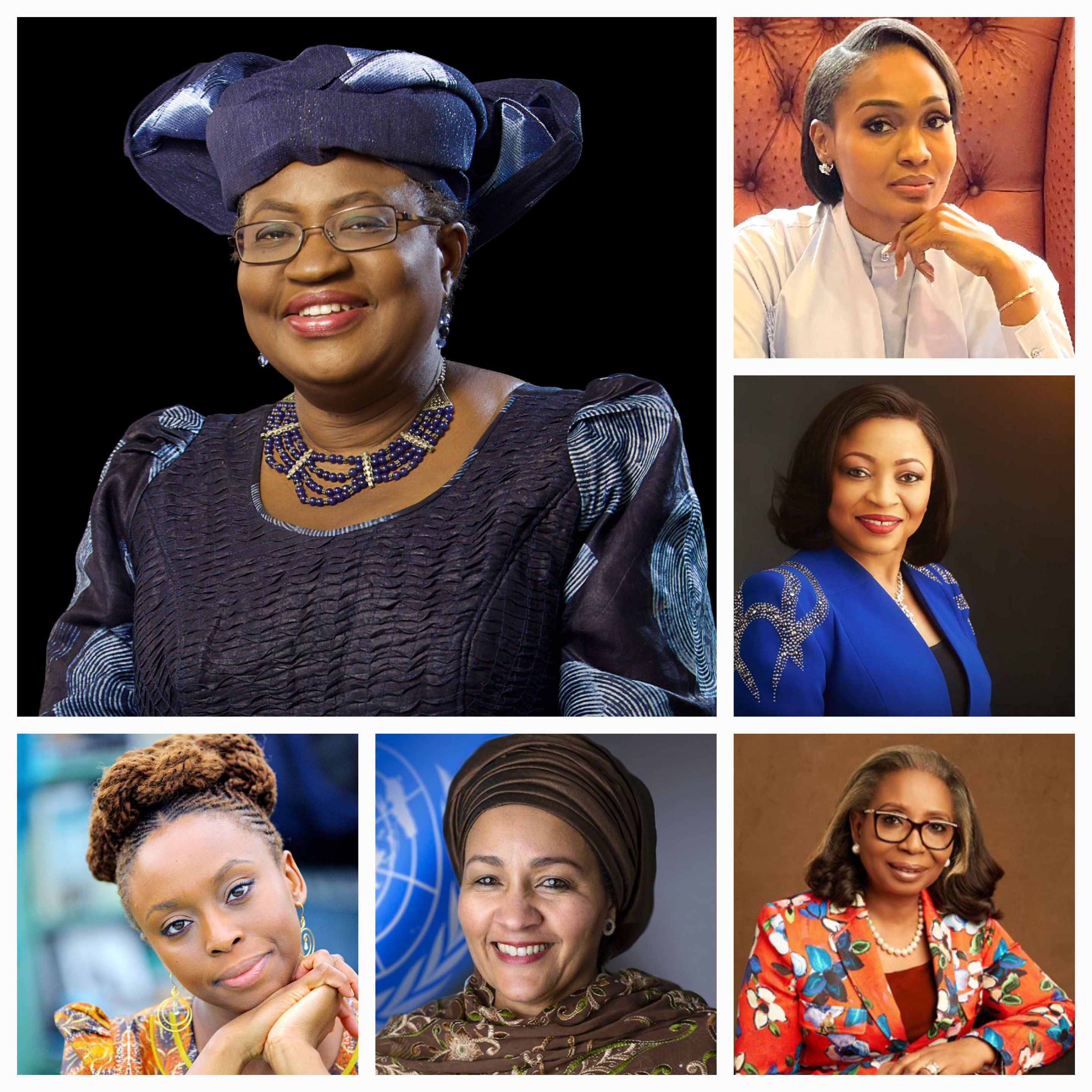
Nigerian women are among the best professionals the world can boast of. They are represented in every facet of human endeavour, and known to excel in their chosen terrains.
As a result, and in the spirit of the 2026 International Women’s Day celebrated worldwide, and themed Give to Gain, The Boss Newspaper presents 100 and among host of celebrated female Nigerian professionals, who has created their own worlds, and broken the proverbial glass ceilings for the benefit of humankind.
In no particular order, they are:
OYINDAMOLA ADEYEMI

She is the Chairman of Still Earth Group, and earned her B.Sc Degree in Political Science from the University of Abuja, and an M.Sc Degree in Political Economy and Development from the same University and is also an alumna of the prestigious Harvard Business School, Massachusetts, Boston, after attending the Owner/ President Management Program.
Adeyemi certainly has enough grounding to aspire to the top echelon of the business world where many turn problems to opportunities.
The reserved technocrat with both beauty and brains was born and raised in Gombe State, North Eastern Nigeria to a Yoruba father from Ondo State and Hausa/Fulani Mother.
Her multilingual, multi-ethnic upbringing has made her a bridge builder which enables her to feel free at home in the Northern or South Western part of Nigeria.
Fluent in both Hausa and Yoruba, Ms Adeyemi has built a solid reputation as one of the few entrepreneurs without an ethnic bias, which makes her such a distinctive and appealing business leader.
KEMI NANDAP

Kemi Nanna Nandap was born on 3 June 1966 in Zaria, Kaduna State with roots in Ogun State. She attended Corona Primary School, Jos and Therbow Primary School, Zaria for her first school leaving certificate. Nandap attended St. John’s College, Jos and Yejide Girls’ Grammar School, Ibadan, Oyo State for her secondary school leaving certificate.
Nandap holds a Bachelor of Science degree in Biochemistry from the University of Ilorin. She also earned a Master of Science in International Relations and Strategic Studies from the University of Jos, as well as an MBA from the University of Abuja
REMI TINUBU

Remi Tinubu is a politician, pastor, and philanthropist who currently serves as the First Lady of Nigeria following the election of her husband, President Bola Ahmed Tinubu, in 2023. Born on September 21, 1960, in Ogun State, she studied education at the University of Ife (now Obafemi Awolowo University). Her journey into public service began when she served as First Lady of Lagos State from 1999 to 2007 during her husband’s tenure as governor. During that period, she became widely known for her involvement in social development initiatives, particularly through the Committee of Wives of Lagos State Officials (COWLSO), where she promoted women’s empowerment, health advocacy, and social welfare programs.
She later entered elective politics and represented Lagos Central Senatorial District in the Nigerian Senate from 2011 to 2023, serving three consecutive terms. As a legislator, she championed policies and motions related to gender equality, youth development, and social welfare. In her role as First Lady, she leads the Renewed Hope Initiative, a humanitarian platform focused on supporting women, youth, and vulnerable communities through empowerment programs, grants for small businesses, and health interventions. Over the years, Remi Tinubu has built a reputation as a grassroots mobilizer and advocate for social development, combining political leadership with faith-based and philanthropic engagement across Nigeria.
IRETI KINGIBE

Ireti Kingibe is a Nigerian civil engineer and politician currently serving as Senator representing the Federal Capital Territory (FCT) in the National Assembly. Born on June 2, 1954, she received her engineering education at the University of Minnesota after earlier schooling in Lagos and the United States. Before entering politics, Kingibe built a professional career as an engineer and consultant, working with construction and engineering firms including the New Nigeria Construction Company and later operating in the private sector as a senior partner in engineering consultancy. Her technical background and experience in infrastructure development later influenced her political agenda focused on urban development and public infrastructure.
Kingibe’s political journey began in the early 1990s when she joined the Social Democratic Party and served as an adviser to the party’s national chairman. Over the years she remained active in Nigerian politics across several political platforms before joining the Labour Party in 2022. In the 2023 general elections, she won the FCT senatorial seat, defeating long-serving incumbent Philip Aduda. In the Senate, she has served as Chairperson of the Senate Committee on Women Affairs and has advocated improved infrastructure, gender inclusion, and social development in Abuja’s rural communities. Her election marked a significant milestone for female representation in the politics of Nigeria’s capital territory.
AISHA YESUFU

Aisha Yesufu is a socio-political activist, businesswoman, and public speaker widely recognized for her fearless advocacy for good governance, human rights, and accountability in Nigeria. Born on December 12, 1973, in Kano State, she studied at Bayero University Kano and later became involved in entrepreneurship and civic engagement. She rose to national and international prominence as a co-founder of the #BringBackOurGirls movement, which emerged in 2014 following the abduction of more than 200 schoolgirls by the terrorist group Boko Haram in Chibok, Borno State. The movement mobilized global attention and drew support from international figures such as Michelle Obama and Hillary Clinton.
Yesufu later became a visible voice in Nigeria’s civil society movements, particularly during the 2020 #EndSARS protests against police brutality. Known for her iconic image standing defiantly before armed police during protests, she symbolizes citizen activism and resistance against injustice. Beyond activism, she frequently speaks at international forums and academic institutions on issues of governance, social justice, and civic participation. Her influence has earned her global recognition, including being listed among the BBC’s 100 Women in 2020 and among the most influential Africans by New African Magazine.
OYERONKE OYEWUMI

Oyeronke Oyewumi is a renowned sociologist and feminist scholar whose research has significantly reshaped discussions about gender, culture, and African social structures. Born in Nigeria, she studied sociology at the University of Ibadan before pursuing further academic training in the United States. Oyewumi is best known for challenging Western assumptions about gender in African societies, particularly through her influential scholarship on Yoruba culture and social organization.
Her landmark book, The Invention of Women: Making an African Sense of Western Gender Discourses, argues that precolonial Yoruba society did not organize social roles primarily around gender in the same way Western societies do. This groundbreaking work sparked global academic debates and expanded feminist scholarship by introducing African-centered perspectives on gender and identity. As a professor of sociology at Stony Brook University in the United States, Oyewumi continues to influence international scholarship through her teaching, writing, and advocacy for decolonizing knowledge production in African studies.
CHIMAMANDA NGOZI ADICHIE

Chimamanda Ngozi Adichie is one of the most globally celebrated Nigerian writers of the 21st century. Born on September 15, 1977, in Enugu State, she grew up in Nsukka where her father worked as a professor at the University of Nigeria. Adichie studied communication and political science before moving to the United States to continue her education. She gained international acclaim with her novels Purple Hibiscus, Half of a Yellow Sun, and Americanah, works that explore themes of identity, migration, feminism, and postcolonial African history. Half of a Yellow Sun, which tells the story of the Nigerian Civil War, won the Orange Prize for Fiction and further established her as a powerful literary voice.
Beyond fiction, Adichie has become a global advocate for gender equality and African storytelling. Her essay We Should All Be Feminists—adapted from her widely viewed TED Talk—has been translated into numerous languages and used in educational institutions worldwide. Through lectures, essays, and public engagements, she continues to challenge stereotypes about Africa while advocating for women’s empowerment and the importance of authentic narratives in global literature.
NGOZI OKONJO-IWEALA

Ngozi Okonjo-Iweala is a globally respected economist and international development expert who currently serves as Director-General of the World Trade Organization. Born on June 13, 1954, in Delta State, Nigeria, she studied economics at Harvard University and later obtained a PhD in regional economics and development from the Massachusetts Institute of Technology (MIT). She spent more than two decades at the World Bank, rising to the position of Managing Director, where she supervised development programs across several regions of the world.
In Nigeria, Okonjo-Iweala served twice as Minister of Finance and briefly as Minister of Foreign Affairs. During her tenure, she led significant economic reforms, including efforts to improve transparency in public finance and negotiations that helped secure the cancellation of billions of dollars in Nigeria’s external debt. In 2021, she made history as the first African and first woman to lead the World Trade Organization, further cementing her status as one of the most influential economic leaders from Africa.
OBY EZEKWESILI

Oby Ezekwesili is a Nigerian economic policy expert, former government official, and civil society advocate known for her strong commitment to transparency, good governance, and accountability. Born on April 28, 1963, she studied accounting at the University of Nigeria, Nsukka, before pursuing a master’s degree in international law and diplomacy. Ezekwesili first gained national prominence as one of the founding directors of Transparency International and later served as Nigeria’s Minister of Solid Minerals and Minister of Education under President Olusegun Obasanjo.
Internationally, she served as Vice President of the World Bank for the Africa Region, where she supervised development projects across multiple African countries. Ezekwesili also became one of the leading voices of the #BringBackOurGirls movement following the 2014 abduction of schoolgirls in Chibok. Her activism, public commentary, and leadership in policy reform initiatives have made her a prominent advocate for democratic accountability and citizen engagement in governance.
HADIZA BALA USMAN

Hadiza Bala Usman is a public administrator and policy expert known for her leadership in public sector reform. Born on January 2, 1976, she studied business administration at Ahmadu Bello University, Zaria. She gained national recognition as the Chief of Staff to the Governor of Kaduna State before being appointed Managing Director of the Nigerian Ports Authority in 2016. Her appointment made her one of the most prominent female leaders in Nigeria’s maritime sector.
During her tenure at the Nigerian Ports Authority, Usman implemented reforms aimed at improving transparency, revenue generation, and operational efficiency within Nigeria’s port system. She also promoted digitalization and regulatory reforms intended to modernize port operations and reduce corruption. Her leadership in public administration has made her an influential figure in discussions around governance reform and institutional accountability in Nigeria.
MO ABUDU

Mo Abudu is a media mogul, entrepreneur, and philanthropist widely regarded as one of Africa’s most powerful figures in the entertainment industry. Born on September 11, 1964, she studied human resources management in the United Kingdom before beginning a career in corporate consulting. She later transitioned into media and founded EbonyLife TV, a pioneering African entertainment network dedicated to telling African stories to global audiences.
Through EbonyLife Media, Abudu has produced numerous television shows and films that have gained international attention, helping to elevate African storytelling on the global stage. She has been recognized by several international organizations, including being listed among the world’s most influential people by TIME magazine. Her work continues to reshape Africa’s media landscape while promoting cultural representation and creative entrepreneurship.
KADARIA AHMED

Kadaria Ahmed is a respected Nigerian journalist, media entrepreneur, and political analyst known for her incisive interviews and contributions to democratic discourse. Born in 1967, she studied journalism and media studies in Nigeria and the United Kingdom. Ahmed worked with several major Nigerian media outlets before founding RadioNow 95.3FM in Lagos, a talk radio station dedicated to policy discussions, governance issues, and civic engagement.
Through her media platforms and public engagements, Ahmed has become a prominent voice in Nigerian journalism, hosting interviews with political leaders, policymakers, and thought leaders. Her work emphasizes fact-based reporting, public accountability, and the promotion of democratic values. Over the years, she has contributed significantly to strengthening independent media and public debate in Nigeria.
FOLORUNSO ALAKIJA

LAGOS, NIGERIA – DECEMBER 27: Folorunsho Alakija attends the Diamond Collection By Folake Majin Fashion Show at Iko Hotel and Suites on December 27, 2012 in Lagos, Nigeria. (Photo by Bennett Raglin/Getty Images)
Folorunso Alakija is one of Nigeria’s most prominent entrepreneurs and philanthropists, widely recognized for her achievements in the oil and fashion industries. Born on July 15, 1951, in Lagos State, she began her professional career as a secretary at the International Merchant Bank before studying fashion design in the United Kingdom. She later established Supreme Stitches, a fashion label that became popular among Nigeria’s elite and political class during the 1980s and 1990s. Her business trajectory expanded dramatically when she entered the oil and gas sector through Famfa Oil Limited, a company that secured a stake in the lucrative Agbami oil field.
Over the years, Alakija has become one of Africa’s wealthiest women and an influential figure in business and philanthropy. Through the Rose of Sharon Foundation, she supports widows and vulnerable women with scholarships, empowerment programmes, and financial assistance. Her career stands as a powerful example of entrepreneurial resilience and leadership, inspiring many women across Africa to pursue opportunities in industries traditionally dominated by men.
IBUKUN AWOSIKA

Ibukun Awosika is a renowned Nigerian entrepreneur, leadership expert, and author known for her influence in corporate governance and enterprise development. Born on December 24, 1962, she studied chemistry at the University of Ife (now Obafemi Awolowo University) before venturing into entrepreneurship. She founded The Chair Centre Group, a leading furniture manufacturing and interior solutions company in Nigeria, which grew from a small startup into a major corporate brand.
Awosika gained historic recognition in 2015 when she became the first female Chairperson of First Bank of Nigeria, one of the country’s oldest financial institutions. Through her leadership roles, public speaking engagements, and mentorship programmes, she has become a prominent advocate for entrepreneurship, youth empowerment, and ethical leadership. Her influence extends across Africa’s business ecosystem, where she continues to inspire a new generation of female entrepreneurs.
AMINA J. MOHAMMED

Amina J. Mohammed is a distinguished Nigerian diplomat and international development expert who serves as the Deputy Secretary-General of the United Nations. Born on June 27, 1961, she studied at Kaduna Polytechnic and later built a career in architecture and development planning before moving into global policy work. Mohammed became internationally recognized for her expertise in sustainable development and environmental governance.
Before her current role, she served as Nigeria’s Minister of Environment and previously as Special Adviser to the United Nations Secretary-General on Post-2015 Development Planning. In that capacity, she played a central role in coordinating the development and global adoption of the Sustainable Development Goals (SDGs). Through her leadership in global diplomacy and policy formulation, she has become one of Africa’s most influential voices in international development and environmental sustainability.
ARUNMA OTEH

Arunma Oteh is a globally respected Nigerian economist and financial expert known for her contributions to financial sector reforms and international finance. Born in 1965 in Abia State, she studied economics at the University of Nigeria before obtaining an MBA from Harvard Business School. Oteh spent many years working with the African Development Bank, where she rose to the position of Vice President for Corporate Services.
She later served as Director-General of the Nigerian Securities and Exchange Commission, where she spearheaded reforms aimed at restoring investor confidence following the Nigerian stock market crash of 2008. Her career later took her to the World Bank and the University of Oxford, where she has contributed to global discussions on financial governance, economic development, and capital market regulation.
BLESSING OKAGBARE

Blessing Okagbare is one of Nigeria’s most accomplished track and field athletes, celebrated for her achievements in sprinting and long jump competitions. Born on October 9, 1988, in Delta State, she rose to prominence at the 2008 Beijing Olympics where she won a silver medal in the long jump event. Her performance established her as one of Africa’s leading track athletes.
Over the years, Okagbare has won multiple medals at the Commonwealth Games, African Championships, and international athletics competitions. Known for her speed, athletic versatility, and competitive spirit, she became a symbol of Nigerian excellence in global sports and inspired a new generation of athletes across the continent.
CHIOMA AJUNWA

Chioma Ajunwa is a historic figure in Nigerian sports as the country’s first Olympic gold medalist in an individual event. Born on December 25, 1970, in Imo State, she initially played professional football before focusing on athletics. Ajunwa achieved global recognition at the 1996 Atlanta Olympic Games where she won the gold medal in the women’s long jump, marking a landmark moment in Nigerian sporting history.
Beyond athletics, Ajunwa later joined the Nigeria Police Force and rose through the ranks while also promoting youth sports development. She has been actively involved in mentoring young athletes and advocating for better support systems for sports in Nigeria. Her legacy continues to inspire many young Nigerians to pursue excellence in athletics and national service.
MARY ONYALI

Mary Onyali is one of Nigeria’s most decorated sprinters and a trailblazer in African athletics. Born on February 3, 1968, in Rivers State, she represented Nigeria in five Olympic Games between 1988 and 2004. Onyali gained international recognition when she won a bronze medal in the 200-metre race at the 1996 Atlanta Olympics.
Throughout her career, Onyali won numerous medals at the African Championships, Commonwealth Games, and other international competitions. Her longevity in athletics and consistent performances made her one of the most respected figures in Nigerian sports history. After retiring from competitive athletics, she continued to contribute to sports development and youth mentorship programmes.
FUNKE AKINDELE

Funke Akindele is one of Nigeria’s most influential actresses, filmmakers, and producers whose work has significantly shaped modern African cinema. Born on August 24, 1977, in Lagos State, she studied Mass Communication at the Moshood Abiola Polytechnic and later obtained a law degree from the University of Lagos. She first gained national recognition through the popular television series I Need to Know in the late 1990s but rose to widespread fame with the comedy film Jenifa, which later evolved into the highly successful television series Jenifa’s Diary.
Through her production company, Scene One Productions, Akindele has produced numerous box-office hits and television series that have expanded the reach of Nollywood both locally and internationally. Her films often combine humour with social commentary, addressing themes such as youth culture, ambition, and societal pressures. Beyond entertainment, she has also been involved in political engagement and social advocacy, further establishing herself as a powerful voice in Nigeria’s creative and cultural industries.
GENEVIEVE NNAJI

Genevieve Nnaji is a globally recognized Nigerian actress, producer, and director whose career has played a pivotal role in elevating Nollywood to international prominence. Born on May 3, 1979, in Mbaise, Imo State, she began acting as a child in television dramas before transitioning into full-length films. Over the years, she became one of the most respected actresses in Nigeria, starring in numerous critically acclaimed films and earning multiple awards for her performances.
In 2018, she made history as the director of Lionheart, the first Nigerian film acquired by Netflix. The film showcased Nigerian storytelling on a global streaming platform and represented a major milestone for the country’s film industry. Beyond acting, Nnaji has also ventured into fashion and entrepreneurship while advocating for women’s empowerment and the global recognition of African creative talent.
TARA FELA-DUROTOYE

Tara Fela-Durotoye is a leading Nigerian beauty entrepreneur and pioneer of the professional makeup industry in Africa. Born on March 6, 1977, she studied law at Lagos State University but later pursued a career in beauty and cosmetics. She founded House of Tara International, which began as a small makeup studio and eventually grew into one of Africa’s most recognized beauty brands.
Through her business ventures, she has trained thousands of makeup artists and entrepreneurs across Nigeria and other African countries. Fela-Durotoye is also known for her mentorship programmes and initiatives aimed at empowering young women in business. Her entrepreneurial journey has made her a role model for aspiring business leaders in Africa’s creative and beauty industries.
NIKE DAVIES-OKUNDAYE

Nike Davies-Okundaye is a renowned Nigerian textile artist and cultural ambassador celebrated for preserving and promoting traditional African art forms. Born in 1951 in Osun State, she became widely known for her mastery of Adire textile design, beadwork, and traditional painting. Without formal university education, she built an extraordinary career through talent, dedication, and cultural advocacy.
She founded the Nike Art Gallery, one of the largest art galleries in West Africa, which has become a major centre for artistic training and cultural preservation. Through her workshops and mentorship programmes, she has trained thousands of artists and artisans, particularly women, helping them develop sustainable livelihoods through art. Her work continues to promote Nigerian culture on the global stage.
IJEOMA NWOGWUGWU

Ijeoma Nwogwugwu is a highly respected Nigerian journalist and editor known for her contributions to investigative journalism and media leadership. She studied history at the University of Lagos and began her journalism career at The Guardian newspaper before moving to THISDAY, where she rose to the position of editor. Her work focused on political reporting, economic analysis, and investigative features that shaped public discourse in Nigeria.
Nwogwugwu later became the founding Managing Director and Chief Executive Officer of Arise News Channel, an international television network broadcasting African news and perspectives to global audiences. Through her editorial leadership, she has played a key role in strengthening independent journalism and elevating African voices in global media.
IFUEKO OMOIGUI-OKAURU

Ifueko Omoigui-Okauru is a distinguished Nigerian accountant and public administrator best known for transforming Nigeria’s tax administration system. Born in 1949, she studied economics at the University of Lagos and later qualified as a chartered accountant. Her professional career included years of service in the private sector before she was appointed Executive Chairman of the Federal Inland Revenue Service (FIRS).
During her tenure from 2004 to 2012, she led sweeping reforms that modernized Nigeria’s tax system, improved compliance, and significantly increased government revenue. Her leadership emphasized transparency, institutional reform, and capacity building within the tax authority. Omoigui-Okauru’s achievements earned her numerous national and international awards and established her as a leading figure in fiscal policy and public sector reform in Nigeria.
NDIDI OKONKWO NWUNELI

Ndidi Okonkwo Nwuneli is a social entrepreneur and development expert known for her work in agriculture, nutrition, and social innovation. She studied at the University of Pennsylvania’s Wharton School and Harvard Business School before returning to Nigeria to pursue development initiatives. Nwuneli founded LEAP Africa, a leadership development organization that trains young Africans in ethical leadership and entrepreneurship.
She later co-founded AACE Foods, an agro-processing company that sources agricultural produce from local farmers and transforms them into packaged food products. Through her work, she has promoted sustainable agriculture, job creation, and youth empowerment across Africa. Her leadership in social entrepreneurship has made her an influential figure in development and business innovation on the continent.
HANNATU MUSAWA

Hannatu Musa Musawa is a Nigerian lawyer, politician, and public policy advocate who has emerged as a notable figure in Nigeria’s governance and cultural development space. Born in Katsina State, she studied law at the University of Buckingham in the United Kingdom and was subsequently called to the Nigerian Bar. Musawa built a career that spans legal practice, public affairs, and political engagement, gaining recognition for her involvement in policy advocacy and governance discussions. Over the years, she has contributed to political campaigns, policy formulation, and national conversations around youth participation, leadership, and democratic development in Nigeria.
In 2023, she was appointed Nigeria’s Minister of Art, Culture, Tourism, and the Creative Economy, a role that placed her at the centre of efforts to reposition the country’s cultural and creative industries as drivers of economic growth. In this capacity, Musawa has championed initiatives aimed at promoting Nigeria’s rich cultural heritage, expanding opportunities within the creative sector, and strengthening tourism as a viable contributor to national development. Her work reflects a broader commitment to empowering creative professionals and elevating Nigeria’s cultural influence on the global stage.
FOLASHADE YEMI-ESAN

Folashade Yemi-Esan is a distinguished Nigerian public administrator whose career in the civil service spans more than three decades. She rose through the ranks to become the Head of the Civil Service of the Federation in 2020, following her appointment by President Muhammadu Buhari after the death of Abba Kyari and the subsequent restructuring of key federal administrative offices. Before reaching the pinnacle of Nigeria’s civil service, she served in several strategic roles, including Permanent Secretary in the Federal Ministry of Petroleum Resources, where she played an important role in administrative coordination within one of Nigeria’s most critical sectors. Known for her professionalism, discipline, and administrative expertise, Yemi-Esan has been widely respected for her commitment to strengthening governance structures and improving efficiency in the Nigerian public service.
As Head of the Civil Service, Yemi-Esan championed reforms aimed at modernising Nigeria’s bureaucracy and enhancing service delivery across federal ministries, departments, and agencies. She pushed forward initiatives such as the digitalisation of civil service processes, capacity-building programmes for civil servants, and the institutionalisation of performance management systems designed to improve accountability and productivity in government operations. Her leadership has been instrumental in promoting transparency, professional ethics, and gender inclusion within the civil service, making her a role model for women aspiring to leadership in public administration.
UCHE PEDRO

Uche Pedro (born Uchenna Jennifer Eze) is a Nigerian media entrepreneur and the founder and CEO of BellaNaija, one of Africa’s most influential lifestyle and entertainment digital media platforms. She launched the platform in 2006, transforming what began as a personal blog into a leading media-tech brand with multiple extensions such as BellaNaija Weddings and BellaNaija Style. Today, the BellaNaija network generates hundreds of millions of monthly impressions and has played a major role in shaping modern African pop culture, fashion, weddings, and entertainment storytelling.
Beyond media entrepreneurship, Uche Pedro is recognized for her contributions to youth empowerment and civic engagement. She founded the #BNDoGood initiative, which supports social impact organizations, and co-founded PVCitizen, a platform encouraging young Nigerians to participate actively in elections and democratic processes. Her work has earned global recognition, including being listed among Forbes’ Most Powerful Women in Africa and being selected as a Young Global Leader by the World Economic Forum, boosting her reputation as a trailblazer in African digital media and innovation.
BUKKY GEORGE

Bukky George is a Nigerian healthcare entrepreneur and the founder and Chief Executive Officer of HealthPlus Limited, one of Nigeria’s pioneering integrated pharmacy chains. She established HealthPlus in 1999 with the vision of transforming the pharmaceutical retail landscape in Nigeria by introducing a modern, customer-focused pharmacy model. Under her leadership, HealthPlus expanded into a well-recognized healthcare brand providing quality medicines, professional pharmaceutical services, and health products across several Nigerian cities.
Beyond building a successful healthcare enterprise, Bukky George has also been a strong advocate for improved access to quality healthcare and pharmaceutical standards in Nigeria. She founded CasaBella International, a beauty retail chain that further expanded her footprint in Nigeria’s health and wellness industry. Widely respected for her entrepreneurial resilience and leadership, she has received numerous recognitions for business excellence and continues to inspire women entrepreneurs across Africa through her contributions to healthcare innovation and enterprise development.
BOLANLE AUSTEN-PETERS

Mrs Bolanle Austen-Peters of BAP Productions
Bolanle Austen-Peters is a renowned Nigerian lawyer, theatre director, and creative entrepreneur who has played a pivotal role in revitalizing contemporary stage productions in Nigeria. She is the founder of Terra Kulture, a Lagos-based cultural hub dedicated to promoting Nigerian languages, arts, food, and heritage. Through Terra Kulture and the Terra Kulture Arena theatre, she has produced several successful stage plays and musicals that celebrate Nigerian history and culture.
Austen-Peters gained widespread recognition for producing and directing major theatrical productions such as Saro the Musical and Wakaa the Musical, both of which received international acclaim and toured globally. Expanding her influence into filmmaking, she has also produced notable films including Bling Lagosians and Man of God. Through her creative vision and dedication to storytelling, she has significantly contributed to the growth of Nigeria’s theatre and film industries while promoting African culture on the global stage.
PROF. BOSEDE AFOLABI

Bosede Afolabi is a distinguished medical doctor, researcher, and Professor of Obstetrics and Gynaecology at the University of Lagos as well as a consultant at the Lagos University Teaching Hospital. Renowned for her work in maternal and reproductive health, she has devoted much of her career to addressing maternal mortality and improving pregnancy outcomes in Nigeria and across Africa. Her research focuses particularly on hypertensive disorders in pregnancy, maternal nutrition, and evidence-based interventions to reduce complications during childbirth.
Beyond clinical practice and teaching, Professor Afolabi is actively involved in global health research collaborations and capacity building in maternal healthcare. She has participated in several international research initiatives aimed at improving maternal and neonatal health in low- and middle-income countries. Through her academic leadership, mentorship of young doctors, and contributions to public health policy discussions, she has become a respected voice in advancing safer motherhood and strengthening Nigeria’s healthcare system.
RENA WAKAMA

Rena Wakama is a Nigerian basketball coach and former professional player who has gained national and international recognition for her leadership in women’s basketball. In 2023, she made history when she was appointed head coach of Nigeria’s women’s national basketball team, D’Tigress, becoming the first female coach to lead the team. Before taking up the role, Wakama had an accomplished playing career and later transitioned into coaching, bringing a strong tactical understanding and passion for developing the sport.
Under her leadership, D’Tigress continued to strengthen Nigeria’s dominance in African women’s basketball, showcasing discipline, teamwork, and resilience on the continental stage. Wakama’s appointment marked an important step for female representation in sports leadership in Nigeria, inspiring young women to pursue careers not only as athletes but also as coaches and sports administrators. Her impact extends beyond the court, as she is widely regarded as a role model for women striving to break barriers in sports.
ADAORA UMEOJI – ZENITH BANK

On June 1, 2024, the newest kid on the block in the banking world, Dame (Dr.) Adaora Umeoji, mounted the topmost echelon of the Zenith Bank brand as its Group Managing Director/Chief Executive Officer. She is the first female to ever hold the position in the near three decades history of the bank. The Amazon has spent 26 years of her total 30 years in the banking world with Zenith.
Before her appointment however, Umeoji has been the Deputy Managing Director of the bank since October 28, 2016 and has close to 30 years of banking experience of which 26 years has been with Zenith Bank.
According to her profile, Umeoji is an alumnus of Harvard Business School, where she attended the Advanced Management Programme, and an alumnus of Columbia Business School with a Certificate in the Global Banking Program. She holds a bachelor’s degree in sociology from the University of Jos, a bachelor’s degree in accounting, and a first-class honours degree in law from Baze University, Abuja.
She holds a Master of Laws from the University of Salford, United Kingdom, a Master in Business Administration from the University of Calabar, and also has a doctorate in business administration from Apollos University, USA. She holds a Certificate in Economics for Business from the prestigious MIT Sloan School of Management, USA, and has attended various management programmes in renowned Universities around the world including the strategic thinking and Management programme at Wharton Business School, USA.
She holds a Certificate in Economics for Business from the prestigious MIT Sloan School of Management, USA, and has attended various management programmes in renowned Universities around the world including the strategic thinking and Management programme at Wharton Business School, USA. She also attended the executive program in Strategic Management, and has a Certificate in Leading Global Business all from Harvard Business School, USA.
She is a fellow of notable professional bodies including the Chartered Banker Institute, UK, Chartered Institute of Bankers of Nigeria, Nigerian Institute of Management, Institute of Credit Administration, Institute of Certified Public Accountants of Nigeria, Institute of Chartered Mediators and Conciliators, and the Institute of Chartered Secretaries and Administrators of Nigeria among others.
NNEKA ONYEALI-IKPE – FIDELITY BANK

No doubt, Mrs Onyeali-Ikpe, reputed as a solid amazon in the finance sector, and a go-getter, has seen and conquered the banking arena, and is honoured among veterans as a solid foundation in Nigeria’s money business. This prompted her reappointment as the CEO of FidelityBank Plc.
Born on July 28, 1964, and on the verge of hitting the diamond age, Nneka, as beloved and close family members, friends and colleagues fondly call her, is a force to reckon with, and has in a space of 32 years and counting, of career banking, brought to bear all the stops that make for great banking and financial experience, climbing to the topmost echelon of investment banking and related areas.
She began her career in 1990, when she was employed as a legal officer for the now-defunct African Continental Bank. She later worked as a treasury officer for the First African Trust Bank, and thereafter joined Zenith Bank, and subsequently the Standard Chartered Bank. Her experience in the course of her sojourn are combined to make her a toast of the banking industry today.
AYODELE TOMI SOMEFUN – UNITY BANK

Prior to her current appointment as the CEO of Unity Bank, Mrs. Ayodele Somefun, another Amazon of Nigerian banking sector, had worked at Credit Bank Limited and UBA Plc. She was also the MD/CEO of UBA Capital & Trustee Limited and the Founding Managing Director of UBA Pension Custodian Limited: two of UBA Group’s major subsidiaries.
She also served as a Non-Executive Director on the boards of directors of UBA Foundations, UBA Trustees, UBA Nominees and UBA Registrars.
In the course of her career with Unity Bank Plc, she served as an Executive Director in charge of Lagos and the South-West region of Nigeria until August, 2015.
Mrs. Tomi Somefun, on August 12, 2015, assumed her role as the Chief Executive Officer of Unity Bank Plc.
YETUNDE BOLANLE ONI – UNION BANK

Mrs. Oni’s trajectory in the banking world depicts her as a highly accomplished financial services leader with a successful career spanning over 30 years. She has held senior positions in international and local banks, focusing on emerging markets. In January 2024, Yetunde was appointed by CBN as the Managing Director/CEO of Union Bank of Nigeria.
Before this, Yetunde worked at Standard Chartered Bank Nigeria Limited as the pioneer head of commercial clients in September 2014. She became the Managing Director & Country Head of Commercial Banking in West Africa in 2017. During her tenure, she developed and executed comprehensive business growth strategies, managed key relationships, and ensured compliance with group credit policy and local underwriting standards.
BOLAJI AGBEDE – ACCESS HOLDINGS

Mrs. Agbede was appointed CEO of Access Bank on February 11, 2024.
She has nearly three decades of professional experience cutting across banking and business consultancy services. Ms Agbede commenced her professional career in 1992 at Guaranty Trust Bank and served in various capacities within the Commercial Banking and Operations functions rising to the position of Manager in 2001. She subsequently served as the Chief Executive Officer of JKG Limited, a business consulting outfit in 2003.
She holds a Bachelor’s Degree in Mathematics and Statistics from the University of Lagos (1990) and a Masters of Business Administration Degree from Canfield University UK in 2002. She is a member of the Chartered Institute of Management UK and the Chartered Institute of Personnel Management of Nigeria.
MIRIAM OLUSANYA – GTB

In 2011, Olusanya made history as the first Managing Director of Guaranty Trust Bank, and its subsidiary.
Miriam joined GTBank as an executive Trainee in 1998 and rose through the ranks to the present position she occupies. She was formerly the Group Treasurer and Head of Wholesale Banking.
She obtained a Bachelor’s degree in Pharmacy from the prestigious University of Ibadan. She further proceeded to the University of Liverpool where she obtained an MBA in Finance and Accounting. Additionally, she enrolled in various executive programmes at institutions such as Cranfield School of Management.
Miriam Olusanya is an accomplished banker with over 21 years of experience in corporate finance, treasury, assets and liability management and wholesale banking.
IRETI SAMUEL-OGBU – CITI BANK

Prior to being appointed CEO of Citi Bank Group, Samuel-Ogbu was the Europe, Middle East and Africa (EMEA) Head, Payments and Receivables, Treasury and Trade Solutions (TTS) under Citi’s Institutional Clients Group (ICG) based in London, UK. She has also been on the Board of Citibank Nigeria Limited for the last 5 years as a non-Executive Director.
Samuel-Ogbu is responsible for leading and protecting the franchise, and with the talented and experienced team in Nigeria, continue to drive performance. She assists Citi’s institutional clients by harnessing the potential of their significant product, functional and geographic capabilities in Nigeria and the region.
HALIMA BUBA – SUN TRUST BANK

The CEO of Sun Trust Bank, Halima Buba, has over two decades of comprehensive banking experience. Her illustrious career spans prominent financial institutions, including Allstates Trust Bank, Zenith Bank, Inland Bank Plc, Oceanic Bank Plc, and Ecobank Nigeria Limited. Halima earned her Bachelor of Science degree in Business Management and an MBA from the University of Maiduguri.
An alumnus of the Lagos Business School’s Senior Management Programme, she is a Senior Honorary Member of the Chartered Institute of Bankers and a Fellow of the Institute of Management Consultants.
YEMISI EDUN – FCMB

The Managing Director of First City Monument Bank (FCMB), Yemisi Edun holds a Bachelor’s degree in Chemistry from the University of Ife, Ile-Ife and a Master’s degree in International Accounting and Finance from the University of Liverpool, United Kingdom.
She is a Fellow of the Institute of Chartered Accountants of Nigeria and a CFA® Charter holder. She is also an Associate Member of the Chartered Institute of Stockbrokers; an Associate Member of the Institute of Taxation of Nigeria; a Member of Information Systems Audit and Control, U.S.A; and a Certified Information Systems Auditor.
BUKOLA SMITH – FSDH MERCHANT BANK

Bukola has been the Managing Director/Chief Executive Officer of FSDH Merchant Bank in April 2021, with over 29 years of progressive experience in the banking industry and with a track record of strategic execution and leadership.
Before her appointment as Managing Director, she was the Executive Director, Business Development at First City Monument Bank and held several other leadership positions since joining in 2006. She was responsible for the bank’s over 200 branches across the country, Public Sector, Business Banking, Agriculture and Transaction Banking Divisions. Under her, the bank’s SME focused team in 3 years moved from 5th position in the industry to 1st position in 2019 (KPMG Customer Service Report 2020). In addition, she established the FCMB Women in Business Desk (branded SheVentures) which supports female entrepreneurs; and set up FCMB Trustees and FCMB Custody.
KAFILAT ARAOYE – LOTUS BANK

A graduate of History from the University of Ife, now Obafemi Awolowo University (1985), and an M.Sc. holder in Industrial Relations & Personnel Management from the University of Lagos (1987), Kafilat Araoye has over 25 years experience in banking, graduating as the best student in her class.
She has attended various executive management courses at the Cranfield School of Management (UK), Lagos Business School, Institute of Management Development (Switzerland) and INSEAD (France),Ross business School, University of Michigan(USA). She is certified in specialised banking courses, conferences and seminars, among them are the Structured Trade Finance Course by Euromoney U.K, Payments, Clearing and Settlement Conference by National Association of Clearing Houses, USA 2006, 2007, 2008, International Banker’s Seminar, USA, South Africa and Swift regional conference.
PROFESSOR MARIETU OHUNENE TENUCHE OF KOGI STATE UNIVERSITY

Professor Marietu Ohunene Tenuche, the Acting Vice Chancellor, was born on 29th September, 1959. She obtained her West African School Certificate from Government Girls Secondary School, Yola in 1976.
She obtained a University of Cambridge General Certificate in Education (G.C.E.) Advanced Level Certificate from the School of Basic Studies, Kwara State College of Technology (now Kwara State Polytechnic) Ilorin in1978.
Professor Tenuche graduated with a Bachelor of Science, Second Class (Upper Division), in Political Science, from the Ahmadu Bello University (ABU) Zaria, in 1981. She obtained her Master and Doctorate degrees from the same institution.
Professor Tenuche has received several awards and honours, with the “Worthy Alumnus” award conferred on her by the Department of Political Science, ABU, Zaria, in 2018 as her most cherished.
She holds the traditional title of “OyinOiza” Ebira conferred on her by the Ohinoyi of Ebiraland, Alhaji (Dr) Ado Ibrahim, in 2003.


Prof. (Mrs.) Ibiyinka Fuwape was born in Lagos State to the family of Mr. and Mrs. David Ademokun of Ogun State on 18th December, 1962. She had her primary school education at Reagan Memorial Baptist Girls Primary School, Yaba, Lagos. She also obtained her O’Level certificate with a division one grade in 1979 from the Methodist Girls High School, Yaba, Lagos. She proceeded to Queen’s College Yaba for her Higher School Certificate from 1979-1981.
Prof. Fuwape holds a Bachelor of Science (B.Sc.) degree in Physics (First Class) from the University of Ibadan in 1984. She went on National Youth Service Corps (NYSC) from 1984-1985. She holds a Master of Science (M.Sc.) and Doctor of Philosophy (PhD) degree in 1986 and 1989 respectively from the same University of Ibadan.
She is a Christian and she is happily married to Prof. Joseph Fuwape and blessed with children.
PROFESSOR NNENNA NNANNAYA OTI OF FEDERAL UNIVERSITY OF TECHNOLOGY, OWERRI

Professor (Mrs.) Nnenna Nnannaya Oti is from Afikpo, Ebonyi State. A highly seasoned, versatile and accomplished scholar, Nnenna is a Professor of Soil Science and Environmental Conservation, who was recently appointed the Deputy Vice-Chancellor (Academic), Federal University of Technology, Owerri (FUTO).
Prof. Nnenna Oti made a First Class Honours Degree in Soil Science, and has an M.Sc in Soil Microbiology/Biochemistry from the University of Nigeria Nsukka (UNN), before proceeding to the Katholieke Universitiet Leuven, Belgium, where she bagged a PGD (Distinction) in Irrigation Engineering. In 2002, Nnenna broke an unusual record when she won the NUC – Best PhD in Nigeria Award.
A Fellow of the Soil Science Society of Nigeria, Prof. Nnenna Oti, is a Chartered Soil Scientist, Member Agricultural Society of Nigeria, Member Soil Science Society of America, Member Crop Science Society of America and Member Agronomy Society of America and a host of others.
She is a Christian who firmly believes in family values, truth, honesty, integrity, forgiveness, humility, loyalty and hard work. She is married with 3 adult children. THE ONLY LIFE WORTH LIVING IS THE LIFE OF SERVICE TO HUMANITY!
PROFESSOR ADENIKE TEMIDAYO OLADIJI OF FEDERAL UNIVERSITY OF TECHNOLOGY, AKURE

Professor Adenike Temidayo Oladiji was born on 27th April, 1968. She attended Christ Anglican School, Ijomu-Oro, Iludun Oro Nursery and Primary School between 1972 and 1977 and St. Claire’s Anglican Grammar School, Offa from 1977 to 1982, all in Kwara State, for her secondary education. She holds a B.Sc Biochemistry, Second Class Upper Division Degree from the University of Ilorin, 1988, MSc. Biochemistry, University of Ilorin, 1991 and Doctor of Philosophy Degree in Biochemistry from the University of Ilorin, 1997. She joined the services of the University of Ilorin in July 1992 as Assistant Lecturer and was appointed a Professor in September 2011.
She has over 29 years of continuous service in the university system.
A prolific reseacher with over 100 publications, Professor Oladiji has won many distinctions and awards which include University’s Merit Award, Certificate of Merit and scholarships among others. She is a Fellow of the Nigerian Academy of Science and Fellow, Nigerian Society for Biochemistry and Molecular Biology. She has served as Member of various Scienctific Committees at the National Universities Commission, NUC, Tertiary Education Fund, TetFund and has been an external examiner in over 20 Universities in Nigeria and outside the country.
She is happily married and blessed with children.
PROF. FOLASADE TOLULOPE OGUNSOLA OF UNIVERSITY OF LAGOS
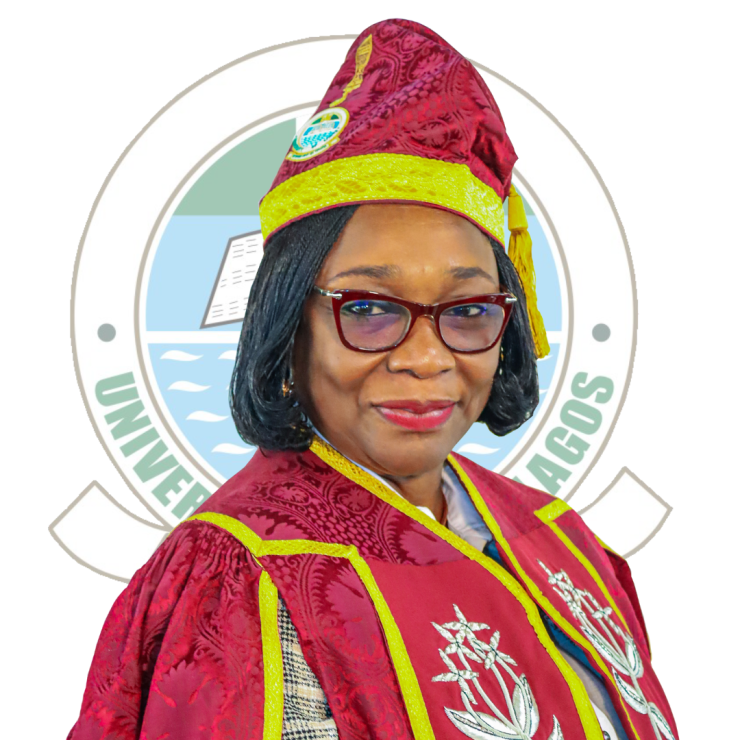
Folasade Tolulope Ogunsola (born 1958) is a Nigerian professor of medical microbiology, and the Vice-Chancellor of the University of Lagos. She specializes in disease control, particularly HIV/AIDS. Ogunsola was provost of College of Medicine, University of Lagos and is reputed as being the first woman to occupy the position. She was also the Deputy Vice Chancellor (Development Services) of the institution between 2017 and 2021. She was acting vice chancellor of the University of Lagos for a short period in 2020 when the University was plunged into crisis as a result of the removal of the Vice Chancellor by the University Council.
Ogunsola was raised in University of Ibadan where her father, Akin Mabogunje lectured. As a child, she mimicked medical practitioners by using dolls as patients, while offering medical care to them. She attended Queen’s College, Lagos. Between 1974 and 1982, she obtained her first degree from University of Ife and a master’s degree from College of Medicine, University of Lagos, then proceeded for her doctorate at University of Wales between 1992 and 1997.
PROF IBIYEMI OLATUNJI-BELLO OF LAGOS STATE UNIVERSITY

Prof Ibiyemi Olatunji-Bello was “born in Lagos on April 23, 1964. She had her primary education at Anglican Girls Primary School, Surulere, from 1970 to 1974 and her secondary education at Lagos Anglican Girls Grammar School, Surulere, between 1974 and 1979.
“Prof. Ibiyemi Olatunji-Bello then proceeded to Methodist Girls High School, Yaba, and Lagos State College of Science and Technology, Ikosi Campus where she did her ‘A’ level in 1982.
“For her university education, she attended the University of Ibadan from 1982 to 1985 where she bagged a B.Sc (Hons) in Physiology. In 1987, at the University of Lagos, she was awarded M.Sc (Physiology). In 1998, she was awarded a PhD in Physiology, also at the University of Lagos after attending a 6-month research training in the University of Texas Health Science Center at San Antonio in the US in 1994.
PROFESSOR LILIAN IMUETINYAN SALAMI OF UNIVERSITY OF BENIN

Professor Lilian Imuetinyan Salami was born on the 8th of August 1956 to the family of Late Benjamin Idemudia Emovon and Mrs. Alice Omoariagbon both from Obadan Community in Uhunmwode Local government Area of the Benin Kingdom. She attended Baptist High School and Itohan Girls Grammar School both in Benin /city from 1969 – 1975. Thereafter, she gained admission into the North Dakota Universisty in Fargo, North Dakota, USA, where she obtained a BSc degree in Home Economics in 1979. She subsequently obtained a Master of Science degree in Nutrition from the same University in 1982.
Professor Salami returned to Nigeria to observe her National Youth Service (NYSC) in 1982 and proceeded to obtain her PhD degree in Human Nutrition at the University of Nigeria, Nsukka in 1991. Due to her passion for education, she studied for and was awarded a Post Graduate Diploma in Education by the University of Benin in 2001 and a Postdoctoral degree in Tourism and Hospitality, this time from the Vaal University of Technology, Vanderbijlpark, South Africa in 2005.
Professor Salami is a fellow of the International Federation of Home Economics (IFHE),Nutrition society of Nigeria (NSN) and Home Economics Professional Association of Nigeria (HEPAN). She was the pioneer president of Home Economics Teachers’ Association of Edo State and a steering member of Home Economics Council of Nigeria. She was also a pioneer member of African Nutrition leadership programme, South Africa.
FLORENCE BANKU OBI OF UNIVERSITY OF CALABAR

Florence Banku Obi is an academic, author and a professor of special education. She is the 11th substantive vice-chancellor of University of Calabar and the first female vice-chancellor since the inception of the institution. After her appointment as the new VC, Senator Ovie Omo-Agege who chairs the Senate Adhoc Committee on Constitution Review, described Prof. Obi as “an astute educational icon.” She was previously the deputy vice-chancellor, academics and commissioner for women affairs in Cross River State. She was a candidate in the 2015 VC election but was not elected until 2020 when she became the first woman to be elected. In 2007, she served as the social development and member of the executive council, Cross River State.
Obi is from Bansan–Osokom, Boki Local Government Area of Cross River State.
Obi is married with four children and six grandchildren.
PROF. OLAYINKA RAMOTA KARIM OF FOUNTAIN UNIVERSITY OSOGBO

Karim Olayinka Ramota is a native of Ijebu Ode, Ogun state. She is a Professor in the Department of Home Economics and Food Science, University of Ilorin, Kwara State. and has a Ph.D. and B.Sc. in Food Science & Technology from the Federal University of Agriculture, Abeokuta. As a NASFAT Muslim, Ramota believes that interreligious dialogue and mediation is important in increasing her skills and knowledge in her service to humanity.
OLUBUNMI KUKU

Olubunmi Kuku is a highly respected Nigerian corporate executive and aviation administrator who has carved a niche for herself through decades of experience in global finance, technology, and aviation management. She rose to national prominence following her appointment as the Managing Director and Chief Executive Officer of the Federal Airports Authority of Nigeria (FAAN), one of the most strategic institutions in Nigeria’s transportation sector. With a professional career that spans several continents, she has worked with globally renowned institutions including Visa Inc., Ernst & Young, and Accenture, where she contributed to financial advisory services, risk management, and technology-driven business transformation. Her expertise has been widely acknowledged for helping organisations modernise operational systems and improve efficiency.
Since assuming leadership at FAAN, Olubunmi Kuku has been widely recognised for bringing fresh energy, global best practices, and strategic thinking to Nigeria’s aviation sector. Her leadership has focused on strengthening airport infrastructure, improving passenger experience, enhancing safety standards, and ensuring more transparent management of aviation resources. Known for her disciplined work ethic and results-oriented leadership style, she continues to advocate innovation and digital transformation within the aviation industry. Through her accomplishments, she has become one of the most influential female figures in Nigeria’s public sector leadership, inspiring younger professionals—especially women—to pursue excellence in fields traditionally dominated by men.
CAPT. BOLAJI AGBELUSI

Bolaji Agbelusi is an aviation expert and professional pilot whose career reflects discipline, courage, and a passion for excellence in one of the world’s most technically demanding professions. As a commercial airline pilot, she has earned recognition for her commitment to safety, operational precision, and high professional standards within the aviation industry. Her journey into aviation required years of rigorous training, technical education, and flight experience, all of which she has successfully navigated to establish herself as a respected figure within the field.
Beyond the cockpit, Agbelusi is widely admired for her dedication to mentoring aspiring aviators, particularly young women who often face challenges entering the aviation sector. She actively promotes awareness about aviation careers and encourages more female participation in the industry. Through her work and public engagement, she continues to demonstrate that determination, discipline, and passion can open doors in even the most competitive professional fields. Her growing influence within aviation circles has positioned her among the notable Nigerian women making significant contributions to the sector.
OJYE OKPE

Ojye Okpe is a distinguished broadcast journalist and television anchor widely recognised for her insightful reporting and eloquent presentation of national and international issues. With years of experience in broadcast journalism, she has become one of the prominent voices shaping public discourse in Nigeria’s media landscape. As a senior anchor at Arise News, she has moderated several high-profile interviews and discussions involving political leaders, policymakers, and business executives.
Through her work on television, Ojye Okpe has earned a reputation for professionalism, balanced reporting, and intellectual depth. Her ability to analyse complex political and economic developments has made her a respected figure among viewers and colleagues alike. Over the years, she has also played a key role in elevating the standards of television journalism in Nigeria, inspiring many aspiring journalists who look up to her career path as a model of credibility and excellence in broadcast media.
AYO MAIRO-ESE

Ayo Mairo-Ese is a well-known Nigerian media personality, journalist, and television presenter whose career has been defined by eloquence, versatility, and professionalism. She has worked with some of Nigeria’s leading broadcast platforms, including Arise News and Channels Television, where she gained recognition for hosting engaging programmes that address social, political, and cultural issues affecting society.
Her role as a television host has allowed her to interact with influential personalities across different sectors while moderating important national conversations. Known for her calm demeanor and articulate presentation style, Mairo-Ese has built a reputation as a trusted media professional. In addition to broadcasting, she is also an accomplished event host and moderator, often invited to anchor major conferences and corporate events. Her work continues to inspire young Nigerians interested in media and communications.
MAUPE OGUN-YUSUF

Maupe Ogun-Yusuf is one of Nigeria’s most respected broadcast journalists, known for her calm authority, sharp interviewing skills, and deep understanding of national issues. She rose to prominence as a presenter on Channels Television, where she co-hosts the widely watched current affairs programme Sunrise Daily. Through this platform, she has conducted interviews with leading political figures, policymakers, economists, and analysts.
Her ability to ask incisive questions and guide complex conversations has earned her the admiration of viewers and colleagues across Nigeria. Ogun-Yusuf is widely regarded as a symbol of professionalism and integrity in journalism. Over the years, she has contributed significantly to the advancement of political and current affairs broadcasting in Nigeria, inspiring many young journalists who aspire to follow in her footsteps.
VIMBAI MUTINHIRI-EKPENYONG

Though originally a Zimbabwean, Vimbai Mutinhiri-Ekpenyong, media personality, actress, and television host who has successfully built a career across Africa’s entertainment and broadcasting industries,is now Nigerian by virtue of marriage. She first gained widespread recognition as a finalist on the reality television show Big Brother Africa, which introduced her to millions of viewers across the continent. Following this exposure, she transitioned into television hosting, acting, and media entrepreneurship.
Over the years, Vimbai has hosted numerous high-profile events, award shows, and red-carpet programmes across Africa. Her charisma, elegance, and media savvy have made her a familiar face at major entertainment gatherings. Beyond entertainment, she has also ventured into digital media and lifestyle branding, establishing platforms that promote African culture and creativity. Her career reflects the evolving influence of African media personalities in shaping global perceptions of the continent’s entertainment industry.
LINDA IKEJI

Linda Ikeji is one of Africa’s most successful digital entrepreneurs and a pioneer of celebrity blogging in Nigeria. Rising from modest beginnings, she built a media empire through her blog, Linda Ikeji’s Blog, which became one of the most widely read online platforms in Africa. Her website gained massive popularity for breaking entertainment news, celebrity stories, and lifestyle content, attracting millions of readers across the continent and the diaspora.
Beyond blogging, Ikeji expanded her influence into television, publishing, and digital media through ventures such as Linda Ikeji TV. Her entrepreneurial success has made her a symbol of innovation within Nigeria’s digital economy. Known for her philanthropic efforts and motivational messages encouraging women to pursue financial independence, Linda Ikeji remains a powerful example of how creativity and determination can transform opportunities in the digital age.
CAPTAIN IBIRONKE ROTIMI-OLAJIDE

Captain Ibironke Rotimi-Olajide is a distinguished aviation professional and one of the pioneering female commercial pilots in the country. She is regarded as the first female pilot and captain in Africa to fly the Embraer E195-E2 aircraft. She is currently the captain at Air Peace. Through years of dedication, rigorous training, and exceptional flying skills, she rose through the ranks to become one of the most respected female captains in Nigerian aviation. Her career has seen her command various commercial aircraft on domestic and international routes, demonstrating remarkable professionalism, discipline, and leadership in the cockpit. Her success has not only elevated her personal career but has also opened doors and inspired more Nigerian women to pursue careers in aviation.
Beyond her achievements in the cockpit, Captain Rotimi-Olajide has become a symbol of determination, resilience, and female empowerment in Nigeria’s aviation sector. She has participated in several mentoring and advocacy efforts aimed at encouraging young people—especially girls—to consider careers in science, technology, engineering, and aviation.
ASISAT OSHOALA

Asisat Oshoala
Asisat Oshoala is one of Nigeria’s most celebrated female athletes and a global ambassador for women’s football. Born in Lagos, Oshoala has risen to international prominence as a forward for FC Barcelona Femení in the Spanish Primera División and as a key player for the Nigeria women’s national football team, popularly known as the Super Falcons. Known for her speed, skill, and clinical finishing, she has earned numerous accolades, including multiple African Women’s Footballer of the Year awards. Her exploits on the field have made her an inspiration to young girls across Africa, demonstrating that talent combined with dedication can achieve global recognition in sports.
Beyond her sporting achievements, Oshoala is an influential figure off the pitch, using her platform– the Asisat Oshoala Academy–to advocate for the development of women’s football in Africa and to inspire youth empowerment through sports. She has partnered with several initiatives promoting education, gender equality, and access to sports facilities for young girls. As a role model, she exemplifies resilience, discipline, and ambition, showing how sports can be a catalyst for social change.
ODUNAYO EWENIYI

Odunayo Eweniyi is a prominent Nigerian technology entrepreneur and advocate for women in the digital economy. She is best known as the co-founder and Chief Operations Officer of PiggyVest, one of Nigeria’s leading financial technology platforms that helps millions of users cultivate disciplined savings and investment habits. Since its launch in 2016, PiggyVest has revolutionized personal finance in Nigeria by providing secure and accessible digital tools that encourage savings and wealth creation. Through her work in the fintech space, Eweniyi has played a crucial role in driving financial inclusion, particularly among young Nigerians who are embracing technology-driven financial solutions.
Beyond her success in business, Eweniyi is widely recognized as a passionate advocate for gender equality and women’s participation in technology. She is a co-founder of Feminist Coalition, a group that gained global recognition for its advocacy for women’s rights and civic engagement in Nigeria. A graduate of Covenant University where she studied Computer Engineering, she has received numerous accolades for her influence in Africa’s technology ecosystem. Her work has been acknowledged internationally, including recognition by Forbes in its 30 Under 30 list.
JOSEPHINE ODUMAKIN

Josephine Odumakin is one of Nigeria’s most prominent voices in the struggle for human rights, democracy, and social justice. A fearless activist and public intellectual, she has spent decades advocating for the protection of civil liberties, gender equality, and good governance in Nigeria. She is widely known as the President of Women Arise for Change Initiative, a civil society movement dedicated to empowering women and mobilizing citizens to demand accountability and justice. Through the organization, Odumakin has led numerous campaigns, peaceful protests, and advocacy initiatives aimed at defending the rights of marginalized groups and addressing issues such as gender-based violence, political oppression, and social inequality.
Beyond her activism, Odumakin has built an impressive career in public advocacy and policy engagement. She holds a doctorate in History and Strategic Studies from the University of Lagos and has long been involved in Nigeria’s pro-democracy movement. Over the years, she has worked with several human rights organizations and international bodies, earning recognition for her courage and dedication to democratic ideals. Her work has positioned her as a powerful symbol of resilience and civic responsibility, inspiring many Nigerians—particularly women and young people—to participate actively in the defense of democracy and human rights.
CHINWE EGWIM

Chinwe Egwim is a respected Nigerian economist, policy analyst, and thought leader in the field of economic development and financial markets. She serves as the Chief Economist and Head of Research and Intelligence at Coronation Merchant Bank, where she leads the bank’s economic research initiatives, providing strategic insights into Nigeria’s macroeconomic environment, financial markets, and investment landscape. Over the years, Egwim has gained recognition for her deep analytical expertise and her ability to interpret complex economic trends, offering guidance to policymakers, investors, and business leaders navigating Nigeria’s evolving economic terrain. Through her research publications, policy commentaries, and conference presentations, she has become a trusted voice on issues such as fiscal policy, economic reforms, and sustainable growth within Africa’s largest economy.
Egwim’s professional journey reflects a strong academic foundation and a commitment to advancing economic knowledge in Nigeria and beyond. She holds degrees in Economics, including postgraduate qualifications, and has participated in several global policy dialogues and research collaborations focused on economic development, gender inclusion, and financial sustainability. Beyond her corporate role, she is widely regarded as an advocate for youth empowerment and women’s leadership in economics and finance, frequently speaking at academic and professional forums where she encourages greater female participation in economic policymaking.
EMEM USORO

Emem Nnana Usoro is a distinguished Nigerian banker and financial leader whose career spans more than two decades in the banking and financial services sector. She currently serves as Deputy Governor for Operations at the Central Bank of Nigeria, a role she assumed in 2023 following her appointment by President Bola Ahmed Tinubu. Prior to joining the apex bank, she built an impressive career in commercial banking, particularly at United Bank for Africa, where she served as Executive Director for the Northern region. In that position, she oversaw banking operations across several states, guiding strategic growth across more than 150 branches while strengthening the bank’s presence in Northern Nigeria. Her expertise spans retail, commercial, corporate, and public-sector banking, making her one of the most accomplished female banking executives in the country.
Usoro’s professional journey reflects a strong commitment to financial inclusion, strategic leadership, and institutional growth within Nigeria’s banking system. A graduate of Biochemistry from the University of Uyo, she later earned an MBA from Obafemi Awolowo University and attended executive programs at both Harvard Business School and Lagos Business School. Throughout her career she has held various leadership roles including regional director and directorate head in the banking industry, where she became known for driving business expansion, operational excellence, and financial literacy initiatives, particularly in underserved regions. As a Fellow of the Chartered Institute of Bankers of Nigeria, she represents a new generation of Nigerian female leaders shaping policy, strengthening financial institutions, and advancing economic development across the country.
MICHELLE ALOZIE

Michelle Alozie is a talented Nigerian-American footballer who has made her mark as a forward for the Nigeria women’s national football team and in international club football. Born in the United States, Alozie developed her football skills at a young age, combining speed, agility, and scoring instinct to become a dynamic presence on the field. She has competed in top-tier leagues abroad, gaining recognition for her technical ability, tactical intelligence, and leadership qualities. As a member of the Super Falcons, she contributes significantly to Nigeria’s dominance in African women’s football, helping the team in continental championships and international tournaments.
Off the pitch, Alozie work part time as a research technician at Texas Children’s Hospital in Houston, specializing in acute leukemia and cancer research.
NKIRU ANUMUDU

Nkiru Anumudu is a well‑known Nigerian society figure and influential fashion icon celebrated for her poised presence, impeccable style, and enduring role in high‑profile social circles in Lagos and beyond. Married to the late billionaire businessman Willie Anumudu, former Chairman of Globe Motors Limited, she became widely recognised in Nigerian elite society for her support of luxury brands, attendance at major fashion and cultural events, and her ability to blend contemporary trends with personal flair, earning her a reputation as one of Nigeria’s most photographed and stylish women. Her fashion sense—often featuring high‑end international designer ensembles—continues to attract attention in lifestyle and society pages, making her an enduring symbol of elegance and sophistication.
Beyond the glitz and glamour, Nkiru Anumudu is also respected for navigating life’s challenges with resilience, particularly after the passing of her husband in 2020, which saw her temporarily withdraw from the social scene before gradually returning with renewed grace and strength. In recent years she has been featured at major fashion shows and social events, often alongside her daughter, highlighting her sustained influence in Nigeria’s fashion and lifestyle spheres.
KEMI IBRU

Kemi DaSilva‑Ibru is a highly respected Nigerian medical doctor, public health specialist, and social activist whose work focuses on improving the health and wellbeing of women and girls across Nigeria and Africa. A trained obstetrician and gynaecologist with over two decades of clinical experience, she combines her medical expertise with a deep commitment to addressing systemic issues affecting women’s health and rights. Dr. DaSilva‑Ibru completed her medical training at the University of Lagos and pursued postgraduate specialisation in obstetrics and gynaecology at Howard University, followed by a master’s degree in public health from Johns Hopkins Bloomberg School of Public Health; she is currently undertaking a PhD in gender‑based violence at the London School of Hygiene & Tropical Medicine. Her professional journey spans clinical practice, research, public health leadership, and global advocacy, making her a leading voice in women’s health and gender equity.
Dr. DaSilva‑Ibru is best known as the founder and Executive Director of the Women at Risk International Foundation (WARIF), a prominent non‑profit organisation dedicated to combating sexual and gender‑based violence, rape, and the trafficking of girls and young women in Nigeria and beyond. Through WARIF’s holistic model, she has pioneered comprehensive services that include free medical care, psychosocial support, education, community outreach, and advocacy campaigns designed to prevent violence and support survivors. Her leadership has earned her international recognition, including being named to the prestigious Forbes 50 Over 50 Europe, Middle East & Africa list and being invited to serve as a regional representative on the UN ACT Global Civil Society Steering Committee on Ending Violence against Women and Girls. By bridging clinical care with advocacy and policy engagement, Kemi DaSilva‑Ibru continues to advance efforts toward a world where women and girls can live free from violence and discrimination.
ADAOBI NWAKUCHE

Adaobi Nwakuche is a seasoned Nigerian insurance industry leader with over 25 years of experience across key roles in major insurance firms. She currently serves as the Managing Director and Chief Executive Officer of Veritas Kapital Assurance, where she leads strategic direction, business growth, and stakeholder engagement for the publicly‑listed underwriting firm. Before her appointment at Veritas, Nwakuche was the pioneer Managing Director/CEO of Heirs Insurance Limited and has held senior leadership positions including Executive Director at Heirs Holdings Group, Director (Commercial) at Equity Assurance, and other significant roles at Staco and Standard Alliance Insurance, reflecting her deep industry expertise and dynamic leadership. Her appointment at Veritas—which still required final regulatory approval at the time of announcement—underscores her reputation as a respected and influential voice in Nigeria’s insurance sector.
Nwakuche’s career is marked by strategic transformation, strong commercial insight, and commitment to excellence in risk management and underwriting. She holds a Bachelor’s degree in Government and Public Administration from Abia State University, an MBA in Business Administration from ESUT Business School, and a Doctorate in Insurance, Risk Management and Corporate Governance from European American University. An alumna of the Harvard Kennedy School and Lagos Business School, she is also a member of both the Chartered Insurance Institute of Nigeria and the Chartered Insurance Institute (UK). Under her leadership, her companies have recorded notable financial growth and enhanced market positioning, showcasing her impact as a transformative leader in Nigeria’s financial services landscape.
TEMILADE OPENIYI (TEMS)

Tems (Temilade Openiyi) is a globally acclaimed Nigerian singer, songwriter, and record producer known for her distinctive voice, Afrobeat-infused sound, and genre-blending style. She first gained widespread recognition with her hit single “Try Me” in 2019, which earned her critical acclaim and established her as one of Africa’s leading female artists. Her music seamlessly fuses Afrobeat, soul, R&B, and alternative sounds, creating a signature style that resonates with audiences worldwide. Tems has collaborated with prominent international artists, most notably contributing to Future’s “Wait For U,” which won the Grammy Award for Best Melodic Rap Performance in 2023, and she has also featured on Beyoncé’s Renaissance album, further cementing her global presence.
Beyond her musical talent, Tems is recognized for her influence on the African music scene and her role as a cultural ambassador for Nigerian music worldwide. She has received multiple awards, including MTV Europe Music Awards, BET Awards, and Headies recognitions, while also being celebrated for her fashion-forward persona and social advocacy.
OMOTOLA EKEINDE

Omotola Ekeinde is one of Nigeria’s most iconic and influential actresses, widely celebrated for her extensive contributions to Nollywood, the country’s thriving film industry. Often referred to as “Omosexy” for her enduring charm and screen presence, she has starred in over 300 films since her debut in the mid-1990s, spanning diverse genres from drama and romance to action and social commentary. Beyond acting, Omotola is also a singer, producer, and entrepreneur, demonstrating remarkable versatility in her career. Her work has earned her numerous accolades, including awards at the Africa Movie Academy Awards, the Nigeria Entertainment Awards, and recognition as one of Time magazine’s 100 most influential people in the world in 2013, highlighting her impact both within and beyond the entertainment industry.
Beyond her professional achievements, Omotola is a committed philanthropist and social advocate. She founded the Omotola Youth Empowerment Program (OYEP), which focuses on supporting underprivileged youth through education, mentorship, and skills acquisition initiatives. She has also collaborated with international organizations, including the United Nations, on campaigns addressing issues such as HIV/AIDS awareness, gender equality, and poverty alleviation.
DAMILOLA OGUNBIYI

Damilola Ogunbiyi is widely recognized as one of the most influential Nigerian women on the global stage in the field of sustainable energy and climate advocacy. An accomplished engineer, policy expert, and development leader, she currently serves as the Chief Executive Officer and Special Representative of the UN Secretary-General for Sustainable Energy for All (SEforALL), a global organization working to ensure universal access to sustainable and modern energy. In addition, she co-chairs UN‑Energy, the United Nations’ mechanism for coordinating energy-related activities across the UN system. Ogunbiyi has earned international respect for her strategic leadership in mobilizing governments, private sector stakeholders, and development partners toward accelerating clean energy access, particularly in developing countries where millions still live without reliable electricity.
Before assuming her global leadership roles, Ogunbiyi played a transformative part in Nigeria’s energy sector as the Managing Director of the Rural Electrification Agency (REA) under the Federal Government of Nigeria. During her tenure, she spearheaded ambitious initiatives aimed at expanding off-grid and renewable energy solutions to underserved communities across the country, helping to power homes, schools, hospitals, and small businesses in rural areas. Through innovative programmes and strong international partnerships, she helped position Nigeria as a leading example of how decentralized renewable energy can drive economic development.
FIFI EJINDU
Fifi Ejindu is a distinguished Nigerian architect, entrepreneur, and philanthropist known for her pioneering contributions to architecture, business, and cultural promotion in Africa. Born Offiong Ekanem Ejindu in Ibadan, Nigeria, she comes from a prominent lineage as the great-granddaughter of King James Ekpo Bassey of Cobham Town in Calabar. Educated internationally, she studied architecture at the Pratt Institute in New York, where she became the first Black African woman to earn a Bachelor of Architecture degree from the institution. She later obtained a Master’s degree in Urban Planning and gained professional experience in the United States before returning to Nigeria to build her career. Her architectural style is widely recognized for blending contemporary design with African cultural aesthetics, helping to shape modern Nigerian architecture while preserving elements of traditional heritage.
Beyond architecture, Fifi Ejindu has established herself as a formidable business leader and cultural advocate. In 1995, she founded the Starcrest Group, a diversified conglomerate involved in real estate, construction, project management, and oil and gas. Through this enterprise, she has delivered several high-profile projects and contributed to economic development and job creation in Nigeria. She is also the convener of the African Arts and Fashion Initiative, a platform dedicated to promoting African creativity and providing opportunities for emerging designers and artists. Renowned for her philanthropy and commitment to women’s empowerment, Ejindu has supported numerous initiatives focused on youth development and cultural advancement, earning several international recognitions and awards for her contributions to business, architecture, and society.
STELLA OKOLI

Dr. Stella Chinyelu Okoli is a renowned Nigerian pharmacist, entrepreneur, and one of Africa’s most respected pharmaceutical industry leaders. Born on July 30, 1944, in Kano State, Nigeria, she hails from Nnewi in Anambra State. She studied pharmacy at the University of Bradford in the United Kingdom, where she obtained her Bachelor of Pharmacy degree before gaining professional experience in pharmaceutical practice both abroad and in Nigeria. Driven by a strong vision to improve access to quality medicines in Nigeria, she founded Emzor Pharmaceutical Industries Limited in 1984, starting the business from a small pharmacy shop. Through resilience, innovation, and an unwavering commitment to healthcare delivery, Okoli gradually transformed the company into one of the largest indigenous pharmaceutical manufacturers in Nigeria.
Under her leadership, Emzor grew into a major healthcare brand producing a wide range of essential medicines, including analgesics, vitamins, and antibiotics widely used across Nigeria and beyond. Stella Okoli’s entrepreneurial success has played a crucial role in strengthening Nigeria’s local pharmaceutical manufacturing capacity and reducing reliance on imported drugs. Beyond business, she is widely respected for her philanthropy and dedication to public health initiatives, supporting educational scholarships, medical outreach programmes, and community development projects. Over the years, her outstanding contributions to healthcare, entrepreneurship, and national development have earned her numerous awards and honours, firmly establishing her as one of Nigeria’s most influential women in business and healthcare.
DAISY DANJUMA

Daisy Danjuma is a prominent Nigerian politician, business executive, and philanthropist who has made remarkable contributions to governance and the corporate sector in Nigeria. Born Daisy Ehanire Danjuma on August 6, 1952, in Benin City, Edo State, she received her early education in Nigeria before studying law at the Ahmadu Bello University in Zaria. After being called to the Nigerian Bar, she began her professional career as a legal officer at the Nigerian Television Authority (NTA), where she later rose to the position of company secretary and legal adviser. Her passion for public service eventually led her into politics, and in 2003 she was elected as the Senator representing Edo South Senatorial District in the Nigerian Senate, where she served until 2007 and was known for her advocacy on social welfare and national development issues.
Beyond politics, Daisy Danjuma has established herself as a highly respected figure in Nigeria’s business landscape. She is the Executive Vice Chairman of South Atlantic Petroleum (SAPETRO), a major indigenous oil and gas exploration company founded by her husband, Theophilus Danjuma. Through her leadership role, she has contributed significantly to the growth of the company and to the advancement of indigenous participation in Nigeria’s energy sector. Known for her elegance, intellect, and philanthropy, Danjuma has also been actively involved in humanitarian initiatives, particularly those that promote women’s empowerment, education, and community development. Her achievements across politics, business, and social advocacy have firmly positioned her as one of Nigeria’s influential female leaders.
BOLA SHAGAYA

Bola Shagaya is a prominent Nigerian entrepreneur, philanthropist, and influential figure in the country’s business and social circles. Born on October 10, 1959, in Ilorin, Kwara State, she had her early education in Nigeria before furthering her studies abroad. She began her professional career in the banking sector, working with the Central Bank of Nigeria before venturing into private enterprise. In 1983, she founded Bolmus Group International, a diversified conglomerate with interests spanning oil and gas, real estate, banking, and photography. Through her business acumen and strategic investments, Shagaya steadily built a thriving enterprise that established her as one of Nigeria’s most successful female entrepreneurs.
Beyond her corporate achievements, Bola Shagaya is widely respected for her philanthropy and commitment to community development. She has supported numerous charitable initiatives through the Bola Shagaya Foundation, focusing particularly on education, healthcare, and empowerment programmes for women and young people. Known for her elegance, generosity, and strong influence within Nigeria’s elite circles, she has also served as a patron and supporter of several cultural and humanitarian organisations. Over the years, her contributions to business, philanthropy, and national development have earned her numerous recognitions, including national honours such as the Officer of the Order of the Niger (OON), further boosting her reputation as one of Nigeria’s notable and impactful women.
PATIENCE JONATHAN

Patience Jonathan is an educationist, politician, and women’s rights advocate who gained national prominence as the First Lady of Nigeria from 2010 to 2015 during the presidency of her husband, Goodluck Jonathan. Born on October 25, 1957, in Port Harcourt, Rivers State, she had her early education in Rivers State before pursuing higher studies in education. She attended the Rivers State College of Education where she obtained the Nigeria Certificate in Education (NCE), and later earned a Bachelor’s degree from the University of Port Harcourt. Before entering the national spotlight, she worked as a teacher and later as a public servant in the Rivers State civil service, gradually building a career in education and community development.
As First Lady, Patience Jonathan became widely known for her advocacy for women’s empowerment, youth development, and improved healthcare services. She founded and supported several initiatives aimed at uplifting women and vulnerable groups, including the Women for Change and Development Initiative, a platform dedicated to encouraging greater participation of women in politics and leadership across Nigeria. Through her programmes and public engagements, she championed issues relating to maternal health, girl-child education, and social inclusion. Despite attracting both admiration and criticism during her time in public office, Patience Jonathan remains a notable figure in Nigeria’s political and social landscape, remembered for her strong grassroots appeal and her efforts to amplify the voices of women in governance.
UJU IFEJIKA

Uju Ifejika is a prominent Nigerian entrepreneur, industrialist, and corporate leader recognized for her contributions to Nigeria’s maritime, oil and gas, and logistics sectors. She studied law at the Ahmadu Bello University in Zaria and was later called to the Nigerian Bar, beginning her professional career in legal practice. Driven by a strong entrepreneurial spirit, she later ventured into business and established herself as a key player in Nigeria’s marine and energy industries. Her strategic vision and leadership enabled her to build successful enterprises in sectors traditionally dominated by men, positioning her as one of Nigeria’s influential female business figures.
Uju Ifejika is the founder and Chief Executive Officer of Brittania-U Nigeria Limited, an indigenous oil exploration and production company involved in upstream petroleum operations. She is also the chairperson of Brittania-U Group, which has interests in shipping, logistics, oil and gas services, and energy. Under her leadership, the company has secured significant oil blocks and expanded its presence within Nigeria’s energy sector. Known for her resilience and strategic leadership, Ifejika has also been active in promoting indigenous participation in the oil industry and encouraging women’s involvement in business and leadership. Through her achievements and influence, she has become a role model for aspiring entrepreneurs and a respected figure in Nigeria’s corporate landscape.
BIMBO OLOYEDE

Bimbo Oloyede is a distinguished Nigerian broadcast journalist, media executive, and communications expert widely regarded as one of the pioneers of modern television broadcasting in Nigeria. Born in Ibadan, Oyo State, she received her education both in Nigeria and abroad, studying journalism and communications in the United States. She rose to national prominence in the 1970s and 1980s as a presenter on the Nigerian Television Authority (NTA), where she anchored the widely respected news and current affairs programme Newsline. Through her eloquence, professionalism, and commanding on-screen presence, Oloyede became one of the most recognizable faces on Nigerian television and played a significant role in shaping broadcast journalism in the country.
Beyond her work as a broadcaster, Bimbo Oloyede has made substantial contributions to media development, communications consulting, and leadership training. She later founded El‑Argent Media, a media and communications consultancy firm that provides training and advisory services to organizations and professionals. She has also served as a mentor and advocate for excellence in journalism, helping to nurture a new generation of media practitioners. Renowned for her articulate delivery, intellectual depth, and dedication to ethical journalism, Oloyede remains an influential figure in Nigeria’s media landscape and a respected voice in discussions on communication, leadership, and national development.
TOBI AMUSAN

Tobi Amusan is a world-class Nigerian sprinter and hurdler who has brought global recognition to Nigeria through her extraordinary performances in athletics. Born on April 23, 1997, in Ijebu Ode, Ogun State, she began her athletic journey at a young age, demonstrating remarkable speed and agility in school competitions. Amusan honed her skills at the University of Texas at El Paso (UTEP) in the United States, where she studied and competed for the university’s track and field team, gaining international exposure and refining her technique in the 100-meter hurdles, her signature event. Her dedication, discipline, and relentless pursuit of excellence quickly set her apart as one of the most promising athletes in Africa.
Tobi Amusan’s career has been marked by historic achievements and record-breaking performances. She became the first Nigerian to win a gold medal in the 100-meter hurdles at the World Athletics Championships, setting a new world record of 12.12 seconds in the semifinals. She has also represented Nigeria in multiple Olympic Games, African Championships, and Commonwealth Games, earning several medals and accolades along the way. Beyond her athletic feats, Amusan is celebrated for her role as a trailblazer for African women in sports, inspiring young athletes across the continent to pursue excellence. Her determination, sportsmanship, and global achievements have cemented her reputation as one of Nigeria’s most influential and accomplished female athletes.
FOLU ADEBOYE

Folu Adeboye, fondly called Mummy G.O. or Mother‑in‑Israel, is a respected Nigerian pastor, educator, mentor, and global Christian leader. Born Foluke Adenike Adeyokunnu on July 13, 1948, she comes from a royal family in Ijesha, Osun State, and pursued a life dedicated to education and service. She trained as a teacher at the United Missionary College in Ibadan and later worked passionately in teaching and Christian education early in her ministry. She is best known as the wife of Enoch Adejare Adeboye, the General Overseer of the Redeemed Christian Church of God (RCCG), and has been a powerful spiritual influence both within Nigeria and internationally.
Pastor Folu Adeboye’s impact extends far beyond her role as a pastor’s spouse — she is an advocate for education, women’s empowerment, and community development. Over the decades, she has played a pivotal role in establishing and growing Christian education initiatives, including numerous schools under the RCCG umbrella, and has championed literacy and vocational training for vulnerable groups. She founded outreach ministries such as Habitation of Hope to support and empower street‑connected youths and Africa Missions Global for evangelism and community transformation. In addition to her educational and humanitarian work, she organizes the annual Feast of Esther, a fellowship for women leaders, and has received recognition for her leadership, including being appointed Chancellor of Caleb University in Lagos state in 2026.
NATASHA AKPOTI-UDUAGHAN

Natasha Akpoti‑Uduaghan is a Nigerian lawyer, entrepreneur, and politician who has risen to national prominence through her advocacy, legal expertise, and determined pursuit of public office. Born Natasha Hadiza Akpoti on December 9, 1979, in Ilorin to a Nigerian father and a Ukrainian mother, she received her early education in Nigeria before studying law at the University of Abuja and being called to the Nigerian Bar in 2005 after attending the Nigerian Law School. She later earned a Master’s in Business Administration from the University of Dundee in Scotland. Before entering politics, Akpoti‑Uduaghan worked as legal counsel at Brass LNG and founded the Builders Hub Impact Investment Program (BHIIP), focusing on community development and empowerment. She first contested elective office in 2019 and, in 2023, was elected as the first female senator from Kogi State, representing the Kogi Central Senatorial District under the People’s Democratic Party (PDP).
As a senator, Natasha Akpoti‑Uduaghan has been a vocal advocate for gender equality, social justice, infrastructure development, and the economic revitalisation of her constituency. She has championed initiatives for the revival of the Ajaokuta Steel Mill and legislative efforts on gender-based violence and women’s rights, earning accolades such as the Politician of the Year award at the 2023 Leadership Excellence Awards and the This Day Senator of the Year award in 2025.
DAME WINIFRED AKPANI

Dame Winifred Akpani is one of Nigeria’s most influential businesswomen and a trailblazer in the traditionally male‑dominated oil and gas industry. Born and educated in Nigeria—with a B.Sc. in Mathematics from the University of Benin and a Postgraduate Diploma in Computer Science from the University of Lagos—she began her career as a trainee accountant and qualified as a Chartered Accountant, rising to senior roles in prominent firms before pivoting to petroleum. In 1998, with just ₦200,000 in capital, she founded Northwest Petroleum & Gas Company Limited, which she grew from a small diesel supplier into a multimillion‑dollar, pan‑African energy enterprise with hundreds of modern fuel stations, large storage terminals, and upstream investments. Under her visionary leadership, Northwest is licensed for crude oil export and is a major indigenous player in Nigeria’s energy sector—a testament to her resilience, business acumen, and commitment to developing local capacity.
Beyond corporate success, Akpani has become a role model for women in leadership and entrepreneurship, earning numerous awards and national recognition for her impact. She received the 2024/25 Zik Prize in Entrepreneurial Leadership, honoring her transformative contributions to Nigeria’s economy and empowerment of local businesses. She has also served as Chairperson of the Depot and Petroleum Products Marketers Association of Nigeria (DAPPMAN), helping to shape industry policy, and holds fellowships with major professional bodies. Her philanthropic initiatives and personal honours—including national awards and papal commendations—reflect a commitment to community development, education, and empowerment that extends far beyond her corporate achievements, inspiring a new generation of African women to break glass ceilings in male‑dominated fields.
BELLA DISU

Born Belinda Ajoke Adenuga, on May 29, 1986 to the duo of Emelia Adefolake Marquis, a Nigerian entrepreneur, and the global phenomenon, Dr. Mike Adenuga Jr., Bella received her early education in Lagos, at the prestigious Corona School in Victoria Island before enrolling at Queen’s College for her secondary education. In 1998, she transferred to Vivian Fowler Memorial College for Girls, where she concluded her secondary education.
She proceeded to the University of Massachusetts, Boston, USA, where she obtained a Bachelor of Arts degree in International Relations, and later, a Master of Science degree in Leadership from the Northeastern University, also in Boston.


 Mercy Nnenda Chinwo is an accomplished singer, songwriter, and actress, born on September 5, 1990. She is simply known professionally as Mercy Chinwo or Mercy Chinwo-Blessed, by virtue of marriage.She gained recognition after winning the second season of Nigerian Idol. In 2017, she signed a recording contract with EeZee Conceptz. Chinwo has released the albums The Cross: My Gaze (2018), Satisfied (2020), Overwhelming Victory (2024) and In His Will (2025).In 2023, she and her husband, whom she married in 2022 established the MercyisBlessed Foundation, an NGO focused on helping underprivileged communities and youth development. Beyond being a gospel singer, Mercy is also a minister.FLORENCE ITA-GIWA

Florence Ita Giwa is the former wife of the legendary journalist, Dele Giwa, who was killed via a letter bomb in 1986. She was born on February 19, 1946, and is reputed for her contributions in politics and advocacy.
She served as a Senator representing the good people of Cross River South Senatorial District of Cross River State from 1999, where she was appointed to committees on Rules and Procedures, Environment, Foreign Affairs, Women, Niger Delta and Drug & Narcotics
She also 1992 served as a member of the House of Representatives.
Ita-Giwa became involved in Bakassi affairs, and earned the nickname “Mama Bakassi”.
ENE OBI

Ene Obi is a frontline activist, who served as the Country Director of ActionAid Nigeria until her retirement in 2023. During her tenure, she worked with local women leaders to challenge power dynamics, increase women’s participation in decision-making processes, and end violence against women and girls.
Her emergence as president of the University of Jos students union in the late 1980s remains symbolic for the radical rebellious industry as well as a statement in gender equity. This is particularly so that hers is only the second of such statement before then in northern Nigeria, the other case being that Najatu Mohammad at the Ahmadu Bello University, Zaria around the same era.
She has remained resolute in the struggle for women rights, especially with the call for special seats for women in the National Assembly, and as against oppressive government laws and policies.
NIKE OGUNLESI

Mrs. Adenike Ogunlesi is the Founder and Creative Director of Africa’s leading Premium children’s clothing brand, Ruff ‘n’ Tumble.
She is an alumnus of the prestigious Lagos Business School. Adenike is a Non-Executive Director at Lafarge Holcim Plc and the founding member and first president of the Network of Entrepreneurial Women (NNEW) at the Nigeria Employer’s Consultative Association (NECA).
She is also an advisory board member and mentor at WISCAR (Women in Successful Careers), a structured mentoring programme for young women, and the Coordinator of The Marriage & Family Life Unit at the Catholic Church of the Presentation.
FUNKE EGBEMODE

Funke Egbemode
Funke is a journalist and columnist with a career spanning over three decades. She has worked with several prominent Nigerian newspapers, including Punch, Post Express, ThisDay, Saturday Independent, and Daily Sun. She is currently a columnist with The Sun Newspaper.
She currently serves as the head of the secretariat of the International Press Institute (IPI) in Nigeria. She is a board member of the Federal Radio Corporation of Nigeria (FRCN), a position she has held since 2006.
Funke served as the President of Nigerian Guild of Editors for two terms. She is currently the Commissioner for Information and Orientation in Osun State, Nigeria.
CHIOMA AKPOTHA

Also known as Chiona Chukwuka, Chioma Akpotha is a prolific actress, director and movie producer. She has seen and been a part of the foundational and development of the Nigerian movie, she ventured into it at the age of 19 in 2000 with her debut movie, ‘The Apple’.
In 2007, she won the Africa Movie Academy Award for “Best Actress in a leading role” for her performance in the movie “Sins of the Flesh”, and the Afro Hollywood award for best actress in a lead role in 2010.
Chioma is reputed as one of the very few actresses, who have never recorded a scandal in the movie industry.
With 20 years of experience, she has starred in more than 350 Nollywood movies, produced 6 movies and has many awards to her credit. As a film maker, Chioma has produced/co-produced over 8 movies including the award-nominated blockbuster On Bended Knees. Chioma Chukwuka is also a public speaker and mentor.
Chioma has been the loving wife of Franklyn Akpotha since 2006, and blessed with three children.
OLAYINKA PAMELA ADEDAYO

A former Federal Civil Servant, who served as an Administrative Officer with the Federal Ministry of Finance from 1981-1990, Princess Pamela Adedayo is the Founder/CEO of notable eatery, Tastes Fried Chicken (TFC), an offshoot of her experience from working with Kentucky Fried Chicken (KFC), in Chicago, USA, working as Store Manager between 1978-1980.
She is the pioneer National President of the Restaurant and Food Services Proprietors Association of Nigeria- (REFSPAN), formerly known as the Association of Fast Foods Confectioners of Nigeria (AFFCON), and established Tastee Pot Limited in 1991, which transmuted to TFC in later days.
She is known for her philanthropic gestures, and has been decorated with so many awards.
ESTHER OKORONKWO

Esther Okoronkwo is the Abia State-born Super Falcons playmaker, who was raised in Richmond, Texas, United States.
She came to limelight when her superlative performance helped the Falcons with their 10th African Championship in Morocco in 2025.
 Adefemi is a broadcast journalist, public speaker and advocate for press freedom. She has worked with some of the world’s leading news networks including Al Jazeera, Reuters, Sky News and TRT World and is the International Correspondent and Anchor at Arise News based in Lagos, Nigeria.Adefemi is a 2023 Fellow at the Nieman Foundation for Journalism at Harvard University. She holds a BA in International Politics from King’s College London. Adefemi has been on the frontline of Russia’s invasion of Ukraine, covering the refugee crisis and the role of race in the early war evacuation effort. She has reported from the U.S. Presidential elections and the 2025 inauguration, the World Economic Forum in Davos, the International Monetary Fund & World Bank Spring Meetings in Washington DC, as well as the G7 Forum in Cornwall. Adefemi has interviewed, one-on-one, Ngozi Okonjo-Iweala, Director-General of the World Trade Organisation, former British Prime Minister Tony Blair, and Amina Mohammed, Deputy Secretary-General at the United Nations.
RASHEEDAT AJIBADE

Rasheedat is the present captain of the Super Falcons, who led the team to their 10th WAFCON victory in July 2026, in Morocco.
She was born on December 8, 1999) is a Nigerian professional footballer, and plays as a forward for French Première Ligue club Paris Saint-Germain.
Rasheedat has represented Nigeria in all categories including under-17, under-20 and senior national team, and has scored crucial goals that gave hard fought victories to the Super Falcons.
Rasheedat, a member of the Mountain of Fire and Ministeries, is highly spiritual.
SHADE OKOYA

Shade, the beautiful wife of billionaire industrialist, Razaq Okoya, is a distinguished entrepreneur, who was born on April 25, 1977.
She is the MD/CEO of Eleganza Group, a leading conglomerate in Nigeria’s manufacturing industry, founded by her husband.
Shade is the sponsor of the Folashade Okoya Kids Cup, which held its maiden edition in December 2014 in partnership with the Lagos State Grassroots Soccer Association to celebrate kids at Christmas. She also sponsors 10 students yearly into Higher Institutions via a scholarship scheme and organizes yearly pilgrimage for Muslims to visit the holy land among others.
TIWA SAVAGE
Tiwa Savage is one of the biggest pop stars to emerge from West Africa, with numerous hits and international awards to her name.
Initially active in the music business as a backing singer and songwriter, she arrived in the early 2010s with a hybrid form of dance-pop that synthesizes Afro-pop, reggae, and contemporary R&B, singing in English and Yoruba.
Already a major success by the time her debut Once Upon a Time arrived in 2013, Savage continued releasing hits throughout the following decade and expanded her global reach, performing at international festivals and venues and appearing on the 2019 soundtrack The Lion King: The Gift.
With releases like 2020’s Celia and 2021’s Water & Garri EP, her sound grew to incorporate vintage Afrobeat influences, while her lyrics became more socially conscious and female empowering. She co-produced and starred in the movie Water & Garri, which appeared in 2024, along with its soundtrack. This One Is Personal, her fourth album, was released in 2025.
Born and raised in Lagos, Nigeria, Tiwatope Savage moved with her family to England when she was 11 years old. During the latter half of the ’90s, she established herself as a background vocalist, and opted to leave the accounting world when she was sought by Mary J. Blige. Though she had a business administration degree from Kent University, she furthered her music career by attending Berklee College of Music on scholarship.
Tiwa is a typical example of the true Nigerian spirit that is at home with what she wants.
Prior to her graduation, she competed on The X Factor (U.K.) during series three and made it to the final 24. During the next couple years, Savage raised her stock with additional background work, such as an appearance on Whitney Houston’s I Look to You (2009), and the landing of songwriting credits on a handful of albums, including Fantasia’s Grammy-nominated Back to Me.
CHIDINMA EKILE

Ekile is a musician prodigy known professionally by her first name, Chidinma.
She is an accomplished singer, songwriter, and actress, born of Imo State origin, but in Ketu, Kosofe, Lagos State.
Chidinma took limelight by storm, when she mermerised audience in 2010, ro win the third season of Project Fame West Africa.
Chidinma became the first female musician to peak at number 1 on the MTV Base Official Naija Top 10 chart after releasing the music video for her single “Emi Ni Baller”. In 2011, she released the Sound Sultan-assisted single “Jankoliko”. Her eponymous debut album, Chidinma, which was released via the music platform Spinlet, yielded the singles “Jankoliko”, “Carry You Go”, “Kedike” and “Run Dia Mouth”.
Chidinma won Best Female West African Act at the 2012 Kora Awards and performed “Kedike” at the ceremony.
In May 2021, Chidinma revealed her transition to gospel music and full Christian ministry. She released the gospel single “Jehovah Overdo” that same mont, and more followed.
Chidinma founded the NMA Foundation to help visually impaired children and young people across Africa. The foundation’s name was derived from the last three letters of her name.




Is Amupitan’s INEC Complicit?

Effective Strategic Leadership: Resolving Nigeria’s Contemporary Challenges and Unlocking Inclusive Possibilities

Evangelist Ebenezer Obey: Celebrating a Music Maestro at 84

The Ponnles Honour Parents With N150m Memorial Endowment at OAU

Sorrow, Tears, Love As Ex-Ovation Editor, Mike Effiong, Buries Wife, Kemi in Lagos

Adding Value: Examine Yourself by Henry Ukazu

The Oracle: The New Digital Colonialism: Navigating AI Policy Under Foreign Tech Dominance (Pt. 5)

FG Issues Security Advisory to Nigerians in South Africa

Bauchi Gov Bala Mohammed Signals Possible Defection to ADC

When Anthropic Accidentally Opened Its Own Vault: The Claude Code Leak of March 31, 2026

ADC Rejects INEC’s Interpretation of Court of Appeal Ruling

This Attack on Democracy Will Not Stand – ADC Chairman, David Mark
Effective Strategic Leadership: Resolving Nigeria’s Contemporary Challenges and Unlocking Inclusive Possibilities
The Oracle: The New Digital Colonialism: Navigating AI Policy Under Foreign Tech Dominance (Pt. 5)
-
 Headline5 days ago
FG Issues Security Advisory to Nigerians in South Africa
-
 Headline4 days ago
Bauchi Gov Bala Mohammed Signals Possible Defection to ADC
-
 Tech and Humanity2 days ago
When Anthropic Accidentally Opened Its Own Vault: The Claude Code Leak of March 31, 2026
-
 Headline4 days ago
ADC Rejects INEC’s Interpretation of Court of Appeal Ruling
-
 Headline3 days ago
This Attack on Democracy Will Not Stand – ADC Chairman, David Mark
-
 Opinion21 hours ago
Effective Strategic Leadership: Resolving Nigeria’s Contemporary Challenges and Unlocking Inclusive Possibilities
-
 The Oracle1 day ago
The Oracle: The New Digital Colonialism: Navigating AI Policy Under Foreign Tech Dominance (Pt. 5)
-

 Headline3 days ago
What Manner of Condolence Visit is This, Atiku Knocks Tinubu on Trip to Jos