
Headline
Dangote’s 650, 000bpd Refinery: A Breath of Fresh Air

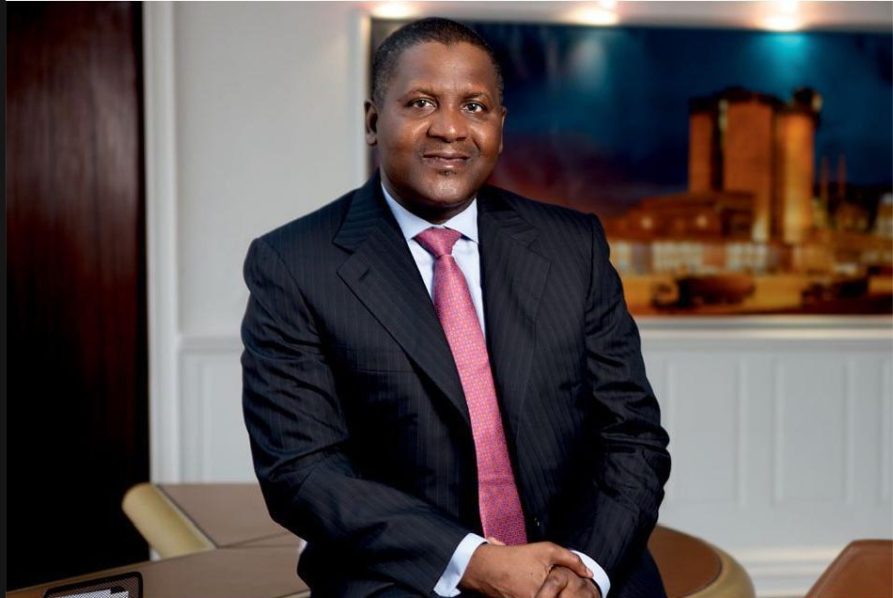

By Eric Elezuo
All is set for the official unveiling for public use of the ambitious 650, 000 barrel per day refinery built by one of Africa’s finest, Alhaji Aliko Dangote. The refinery is in fulfillment of “Efforts by the Federal Government to make Nigeria self-sufficient in local refining of crude oil to save the scarce foreign exchange used in the importation of petroleum products, according to presidency voice, Bashir Ahmad, who is a special assistant to the president on digital communications.
The Dangote Refinery, by every standard, is the world’s largest single-train refinery, and its inauguration is set for May 22nd, 2023, by President Muhammadu Buhari. This may be one of Buhari’s major official functions in his eightvyears of administration before he leaves office on May 29, 2023.
Gulping a tremendous $19 billion to build, the refinery is located in the Lekki free trade zone area of Lagos state, and for all intent and purpose, is Africa’s biggest oil refinery and the world’s biggest single-train facility. This opening of the refinery is a big kudos to Africa’s billionaire, Aliko Dangote, who milk of human sympathy runs through his veins.
The integrated refinery and petrochemical project, which is expected to generate 9,500 direct and 25,000 indirect jobs, will also have an output more than enough to meet Nigeria’s fuel demands, and turn Africa’s largest crude producer into an exporter of refined crude.
Note that in 2022, Dangote, chairman of Dangote Group, said his oil refinery would be commissioned before the end of Buhari’s tenure. The consistent billionaire, being a man of his words, has ensured that the promise is fulfilled even seven days to the expiration of the Buhari administration.
IN THE BEGINNING
Aliko Dangote alone knew where he was going when a few days after his 56th birthday in April, 2013, he told the world about his dream of building a refinery in Nigeria.
According to him, the Dangote Petroleum Refinery will be the largest single train petroleum refinery in the world with a capacity to refine 650,000 barrels of crude daily and employ thousands of Nigerians directly and indirectly.
Located in the Lekki Free Trade Zone, in Ibeju-Lekki, Lagos State, the facility covers a land area of approximately 2,635 hectares which is six times the size of the famous Victoria Island.
Every one knows that to finance this kind of project was not going to be easy, but Dangote’s track record of business excellence did the magic.
This much was revealed along with the financing model at the signing ceremony of the first tranche of loan secured for the Refinery. This was a $3.3 billion term loan facility supported by a consortium of 12 local and international banks. The loan facility was jointly coordinated by Standard Chartered Bank as the Global Coordinator, and Guaranty Trust Bank Plc as the Local Coordinator.
At the ceremony, President/Chief Executive of Dangote Group, Aliko Dangote said: “This plant will further entrench Africa’s role on the global map as not only a valued contributor for natural resources, but also a competent manufacturer of refined products and fertilizer. As a result, several African nations will be less reliant on importing fuel and fertilizer from foreign markets, reducing the negative impact of negotiating terms within increasingly turbulent international markets.”
“We will end up spending between $12 billion to $14 billion. The funding is going to come through equity, commercial bank loans, export credit agencies and developmental banks,” Dangote noted.
He added, “We have done the numbers and we are sure of numbers. This is a project that will redefine the sector”
Also speaking, CEO of Standard Chartered Bank in Nigeria, Ms. Bola Adesola, added: “Standard Chartered is proud to support the Dangote Group in a project which will significantly boost Nigeria’s economic productivity and create valuable jobs with specialist skills from key growth sectors. This project is an historic example of self-empowerment and leadership for the continent as a whole – and is made possible through effective partnerships between the Nigerian private sector, Government and international financial institutions. Standard Chartered remains committed to being here for good in Nigeria, and the region.”
And for Mr. Segun Agbaje, Managing Director of Guaranty Trust Bank Plc, “This landmark project reinforces Dangote’s commitment to the development of the Nigerian economy. We are proud to be associated with Dangote on this transaction and this demonstrates the bank’s commitment to supporting the development of the agriculture and oil and gas industries.”
That was not all, Dangote also signed a loan of $650 million from the African Export-Import Bank (Afreximbank), $300 million loan from the African Development Bank and $997.4 million in training grant from the United States Trade and Development Agency for 100 of its staff.
With the funds to kick off in place, Dangote then had to seek partners that will help the dream become a reality.
According to a report by Businessday, India state-owned firm, Engineers India Limited was contracted to provide project management consultancy (PMC) services, as well as engineering, procurement and construction management (EPCM) for the Nigerian refinery, US-based Honeywell UOP was contracted for the supply of catalyst regeneration and dryer regeneration control systems, column trays, heat exchanger tubes, a modular CCR unit, and catalyst coolers among other equipment, C&I Leasing was contracted to provide transportation and installation services for mooring systems and subsea pipelines of the refinery, Hang Xiao Steel Structure Company is to provide steel structure and Jan De Nul Group was engaged for carrying out land reclamation works.
Furthermore, MAN Diesel & Turbo was contracted for supplying two compressor trains, Air Liquide Engineering & Construction was contracted for supplying the SMR units.
Fabtech (18 columns), Schneider Electric (process automation systems), SOFEC (Catenary Anchor Leg Mooring buoys), and WABAG (raw water treatment plant) and Still Earth Construction were also part of the contractors on the project.
Thus, work began in earnest and so when the Publisher of The Boss, Dele Momodu, Billionaire businessman, Femi Otedola visited the Refinery sometimein 2021, they were astounded at the amount of work that had been done.
BENEFITS OF THE REFINERY AT A GLANCE
The Dangote Petroleum Refinery has the capacity to meet 100% of the Nigerian requirement of all refined products (Gasoline, 57 million litres per day; Diesel, 27 litres per day; Kerosene, 11 million litres per day and Aviation Jet, 9 million litres per day) and also have surplus of each of these products for export.
The 400 MW Power Plant in the Refinery alone will be able to meet the total power requirement of Ibadan DisCo of 860,316 MWh covering five States including Oyo, Ogun, Osun, Kwara and Ekiti. A Captive Power plant comprising three Steam Turbine Generators of 40 MW capacity each, making a Total of 120 MW is also part of the package.
In addition, the Refinery will create market for $11 billion per annum of Nigerian Crude. Interestingly, the facility is designed for 100% Nigerian Crude with flexibility to process other crudes. Of course, its strategically located marine infrastructure for Crude receipts & product trade is an added advantage.
Also part of this humongous project is the Dangote Fertilizer Plant which will have two of the World’s Largest Fertilizer Trains – Three Million Tonnes per Annum capacity at 1.5m per train. It is bigger than the 1.4 million tonnes per annum of the former champion, Indorama Fertilizer Limited.
The Fertilizer Project is the largest Granulated Urea Fertilizer complex coming up in the entire fertilizer industry history in the world, with an investment of $2 Billion (Two billion US Dollars).
The Fertilizer from this plant will be channeled into growing the local agriculture sector which is essential in producing healthy crops and promoting Nigeria and West Africa’s agricultural development. The Petrochemical plant will also produce Polypropylene which is a common component of most plastic and fabric products.
In other to ensure that this facility is first-rate, the company has deployed the most advanced technology and bench marks itself with the best standards in the world.
For example, Dangote Refinery has the biggest single-train facility used for refining crude. The atmospheric equipment which was manufactured by Sinopec company in China, is the primary unit processor of crude oil into fuels.
Capt Rajen Sacher, Head, Maritime and Ports Infrastructure of Dangote said the equipment weighs 2250MT; Length, 112.5m; Width, 14.036m; and Height, 13.752m. The above-mentioned weight does not include the weight of the internal trays which is approx. 536 MT.”
He said that the crude oil processor took 14 months in construction by Sinopec company in China and eight weeks to be brought down to Nigeria.
“Dangote refinery also invested heavily in dredging the sea from the refinery to Apapa for easy passage of the vessel,” he said. The piece of equipment which has the length of a soccer field, has the weight of 320 large elephants.
It was because of this and other heavy duty equipment called Out of Dimension that the company had to construct a special jetty which has made its work easier.
Talking of construction of its structures, the concrete for piling, residual catalytic cracking sub-structure, pavement plant areas, building in plant and non-plant areas and roads and drains have been carefully crafted to ensure maximum fortification.
It currently has the largest ready mix concrete production facility in the world. At thickness of 9 inches, 16 metres wide, the concrete required for the Refinery project is enough to pave the entire Federal Roads in Lagos (720KM).
In terms of providing employment, the Dangote Refinery has employed over 10,000 Nigerian personnel on site, with employment by the various contractors and subcontractors at the site reaching 7,500. The current ratio of Nigerians to Expatriates is 93% Nigerians to 7% Expats.
Apart from creating employment, Dangote is also passionate about technology transfer to Nigerians.
In this regard, a total of 900 Nigerian Engineers are being trained in design, engineering and design of the refinery. There are currently other Engineers currently under-going training.
Furthermore, the company recently completed the training of 200 artisans selected from the host communities in the areas of Masonry, Carpentry, AC Electricians, Plumbing, Welders, Iron-benders and Auto Mechanics. This was achieved in collaboration with the Nigerian Directorate of Employment and Nigerian Content Development and Monitoring Board.
MORE FACT-CHECKS OF THE REFINERY
Now concluded and ready for commissioning, here are facts that bestrides the invincibility of the project
• World Class Project
• The Dangote Petroleum Refinery is located in the in Ibeju-Lekki, Lagos, covering a land area of approximately 2,635 hectares (seven times the size of Victoria Island.)
• World’s Largest Single-Train 650,000 barrels per day Petroleum Refinery with 900 KTPA Polypropylene Plant.
• The 435 MW Power Plant in the Refinery alone will be able to meet the total power requirement of Ibadan DisCo of 860,316 MWh covering five States including Oyo, Ogun, Osun, Kwara and Ekiti.
• Dangote Petroleum Refinery can meet 100% of the Nigerian requirement of all refined products (Gasoline, 53 million litres per day; Diesel, 34 litres per day; Kerosene, 10 million litres per day and Aviation Jet, 2 million litres per day) and also have surplus of each of these products for export.
• Designed for 100% Nigerian Crude with flexibility to process other crudes.
• Self-sufficient Marine facility with ability for freight optimization. Largest single order of 5 SPMs anywhere in the world.
• Diesel & Gasoline Products from the refinery will conform to Euro V specifications.
• The refinery design complies to World Bank, US EPA, European emission norms and Department of Petroleum Resources (DPR) emission / effluent norms.
• State- of- the- art technology.
• Designed to process large variety of crudes including many of the African Crudes, some of the Middle Eastern Crudes and the US Light Tight Oil.
• Dangote Petroleum Refinery can meet 100% of the Nigerian requirement of all liquid products (Gasoline, Diesel, Kerosene & Aviation Jet) and also would have surplus of each of these products for export.
• 65 Million Cubic Metres of Sand dredged costing approx. Euros 300 Million , using the world’s largest, the second largest and the tenth largest dredgers to elevate the height by 1.5 metres, to insure against any potential impact of increase in mean sea level due to global warming.
• Bought over 1,209 units of various equipment to enhance the local capacity for site works since even the biggest local civil contractors are unable to handle even small portions of our construction requirement.
• Bought 332 cranes to build up equipment installation capacity since the current capacity in Nigeria is extremely poor.
• Built the world’s largest granite quarry to supply coarse aggregate, stone column material, stone base, stone dust & material for break water. (10 million tonnes per year production capacity).
• Developed a port and constructed two quays with a load bearing capacity of 25 tonnes/ sq meter to bring Over Dimensional Cargoes close to the site directly.
• Constructed two more quays in the port with a capacity to handle up to Panamax vessels to export the fertiliser and the petrochemicals and two quays to handle liquid cargoes. The port will thus have 6 quays, including a Roll-on/Roll-off quay.
• In the course of the civil works, some days 700 piles were drilled daily, and the total number of piles came to 250,000.
• It has 177 tanks of 4.742 billion litre capacity.
• Total tanker loading of 2,900. This number is based on tanker capacity of 33KL.
• Dangote is one of the few companies in the world executing a Petroleum Refinery and a Petrochemical complex directly as an Engineering, Procurement, and Construction (EPC) Contractor. Globally, apart from three companies, no individual owner has done the complete EPC Contract for a Petroleum Refinery.
• Temporary housing units on the premises can house 33,000 persons.
• The project utilised the coordination of various local and international suppliers and the coordination of multi-cultural work teams.
• The Dangote Refinery Plant is a legacy project that will see Nigeria netting 21 billion dollars per annum.
• Training of 900 young engineers in refinery operations outside the country. Another six Mechanical Engineers trained in the GE University in Italy. 50 Process engineers trained by Honeywell/UOP for six months; 50 Management Trainees; secondment for succession.
ALIKO DANGOTE, BRAIN BEHIND THE PROJECT
For the President of the Dangote Group, Alhaji Aliko Dangote, and his multifaceted group, playing second fiddle has never been an option. Both the enterprise and the entrepreneur have maintained market leadership.
Since 2014, when Forbes magazine named him the world’s 23rd billionaire, jumping 20 spots on the scale from his previous 43rd position among the elite club of the world’s richest people. Aliko Dangote has not looked back, winning back to back the accolade among African billionaires, and never slipping from the world ranking.
The name Dangote is synonymous with consistency. He is a businessman, who understands that no man rest on his oars if turnovers have to continue to turn over. With mark differentiation, he has demystified the business terrain, and proved that if it can be done, then it must done. His establishment of the humongous fertilizer and sugar plants and the ambitious refinery in Lekki, Lagos, Nigeria, are testimonies of the trajectory of one who knows his onions.
Worth over $13.4 by the latest Forbes ranking, the entrepreneur extraordinaire has the following points to his name:
- Aliko Dangote founded and chairs Dangote Cement, the continent’s largest cement producer.
- He owns 85% of publicly-traded Dangote Cement through a holding company.
- Dangote Cement has the capacity to produce 48.6 million metric tons annually and has operations in 10 countries across Africa.
- After many years in development, Dangote’s fertilizer plant in Nigeria began operations in mid-2021.
- Dangote Refinery has been completed and is expected to be one of the world’s largest oil refineries once complete.
The above and many has remained the factors that have made it easy for the billionaire to remain among the world’s money men, and occupies a pride of place among African businessmen. Little wonder he is one of the few recipients of the GCON national honours reserved for top politicians of vice president ranking and top government appointees. He has never been any of the above.
In 2021, his 3.0 million metric tonnes of Urea per annum Dangote Fertiliser Plant, sited at the Dangote Industries Free Zone, Ibeju Lekki, was commissioned. During his speech, at The Fertiliser Complex, which occupies 500 hectares, and built at a cost of $2.5 Billion, Dangote had the following to say in his much sought after humility:
“The commissioning of this Fertiliser Plant is historic. It marks the official opening of the largest Granulated Urea Fertiliser Complex in Africa. The new plant will make Nigeria self-sufficient in fertiliser production, with excess capacity to export to other markets in Africa and the rest of the world. Our products have already reached the markets some African countries, the USA, Brazil, India and Mexico.
“It is an ambitious developmental project, which will drastically reduce the level of unemployment and youth restiveness in this country, through generation of direct and indirect employment. Agriculture accounts for over 20 per cent of Nigeria’s GDP, and the country is a leading producer of various agricultural commodities. The sector has the potential of becoming the biggest source of income for our Nation, providing employment and raw materials for industries. However, low fertilizer usage has been a major reason for low productivity in the sector.

Halimat , Zainab & Fatimah Dangote
“It is common knowledge that non-availability of the product, in quantity and quality, rather than affordability, is the primary constraint to the use of fertilizer.
“Our goal is to make fertiliser available in sufficient quantities and quality for our teeming farmers assuring greater agricultural output. To help realise this potential, we are rolling out initiatives that will transform the agricultural sector, including extension services for small and medium scale farmers. We have also established well-equipped soil-testing laboratories to ensure that the appropriate fertiliser blends are applied to specific soil and/or crop types. This will boost productivity, enhancing output across the Nation.
“Our continuous efforts to innovate, create value and invest in Nigeria are borne out of our firm belief in the vast economic potential of our dear country. This has also informed our desire to continue with our investment strategy, with a focus on driving import substitution, ensuring that we increase local production to achieve self-sufficiency, and even export excess production.”
He proved that his entrepreneurial skills are not just geared towards uplifting him as a person, but to create an enabling environment for the Nigeria youth and child to grow and development in an environment he can proudly co-own. His vision is practically for the greater good of the world, and Nigeria in particular.
Born in Kano in 1957, Dangote has paid his dues, and mankind is the better for it.
The ALIKO DANGOTE FOUNDATION AND IMPACTS
Aliko Dangote Foundation (ADF) is the private charitable foundation of Alhaji Aliko Dangote. Incorporated in 1994, as Dangote Foundation, with the mission to enhance opportunities for social change through strategic investments that improve health and wellbeing, promote quality education, and broaden economic empowerment opportunities. 20 years later, the Foundation has become the largest private Foundation in sub-Saharan Africa, with the largest endowment by a single African donor.
The primary focus of ADF is child nutrition, with wraparound interventions centered on health, education and empowerment, and disaster relief. The Foundation also supports stand-alone projects with the potential for significant social impact.
The Foundation works with state and national governments and many highly reputable international and domestic charities, non-governmental organizations and international agencies to advance its humanitarian agenda.
In one of its biggest collaboration to date, Aliko Dangote Foundation started working in partnership with the Bill and Melinda Gates Foundation and key northern State Governments in Nigeria from 2013 to eradicate polio and strengthen routine immunization in Nigeria.
His commitment to the health and wellbeing of the world is second to none, and it is on record that his CSR in the health sector has transcended numerals. The ADF, beyond the health sector, has made landmark achievements in the field of education, where it has affected the development of educational infrastructures of many tertiatiary institutions including Ahmadu Bello University, Zaria; Bayero University Kano; Kano State University of Science & Technology, Wudil and University of Ibadan. The construction of a N1.2 Billion Dangote Business School, Bayero University Kano, Kano State, construction of a N1.2 Billion Dormitories in Ahmadu Bello University, Zaria, Kaduna State, construction of Dormitories and provision of power supply to Kano University of Science and Technology, Wudil, Kano State at the cost of N500 Million, construction of Dormitories in Crescent University, Abeokuta, Ogun State, and construction of Aliko Dangote Complex within the premises of University of Ibadan Business School, Ibadan, Oyo State, are just few examples.
Additionally, the ADF has engaged in Economic Empowerment at various levels through the Aliko Dangote Foundation Micro-grant programme, which is a N10 Billion national programme, launched in 2011, and designed to provide a N10,000 one-off grant to at least 1,000 vulnerable women, and in some cases, youths, in each of the 774 LGAs across Nigeria.
Worthy of praise is the fact that for the past seven years, the Foundation has spent over N7 Billion in the course of feeding, clothing and the general welfare of the Internally Displaced Persons in the Northeast. Dangote’s efforts at providing relief has drawn a lot of accolades.
Aliko Dangote Foundation was there in 2014 to help the government to contain the Ebola virus outbreak as well as when there ethnic crisis in Ife in 2017.
Rightly addressed as an international philanthropist, Dangote’s interventions are felt across the world. Some of the are building and equipping of Children’s hospital in Abidjan, Grand Heart Foundation – Chad, ONE Campaign, Emergency response to meningitis outbreak in Niger Republic, Donation of mobile clinics to serve 5 counties in Kenya, Emergency response to victims of earthquake in Nepal, Global Business Coalition for Education, and Sustainable Development Goal – Center for Africa – Rwanda.
MORE CSRs BY THE DANGOTE GROUP
To make his host communities feel at ease, and the impact of his presence, Dangote has embarked on an initiative to provide further support to improving educational systems in Ibeju-Lekki and Epe locality. The educational support initiative is a tripartite programme consisting of scholarship, capacity building for teachers and school infrastructure projects.
In addition, Scholarships have been awarded to 52 secondary school students whilst some financial support was provided to their parents and/or guardians. Tertiary students will be included in the next batch of the scheme.
Furthermore, about 100 teachers, principals and school administrators were trained in teaching techniques for the 21st century. After which they were monitored in class on how they were using the skills acquired.
Still on education, the company plans to renovate existing structures, building new schools, donating school furniture and equipment etc. This component of the education support initiative is on the verge of taking off.
Already, it has constructed a block of 6 classrooms with restroom facilities and staff rooms. This was handed over at a formal ceremony in December 2020.
Youth development was also an area it took seriously. 400 local youths have been trained in two batches of 200 beneficiaries per batch. They are being trained on acquiring vocational skills such as plumbing, masonry, welding, iron bending, auto mechanics and electrical works. First batch of trainees graduated in September 2020 and some of them have been engaged; 2nd batch of trainees will graduate in February 2021.
There is hardly any sector that has not felt the milk of human kindness running through Aliko Dangote; the military, media, politics, governments across boards and more.
As at today, there is no space for slowing down for Dangote as he continues to trudge on, creating firsts after first for himself and for humanity. He is blessed with three wonderful daughters, who have followed the rewarding footprints of entrepreneurship.




200 Feared Killed As Military Airstrikes Hit Yobe Market

Police Probe Four Officers Accused of ‘Misconduct’ in Lagos

We’ve Crushed Iran’s Nuclear, Missile Programmes, Netanyahu Boasts

Turaki Faction Kicks As Police Unseal PDP Secretariat

Nation Building Reimagined: Integrated Principles and Strategies for Sustainable Growth

Dear CDS, NSA, Your Prodigal Sons, Brothers Have Killed General Braimah

Voice of Emancipation: Lessons from the Iran/USA War

Trump Delays Iran’s Strike by 2-Weeks As Pakistani Leaders Intervene

Benin Republic 2026: Romuald Wadagni, The President in Waiting

FG Expels US Missionary Alex Barber

Koumagnon Family Pledges Unalloyed Support for Romuald Wadagni As President

Again, Iran Blocks Strait of Hormuz, Alleges Ceasefire Violation
Nation Building Reimagined: Integrated Principles and Strategies for Sustainable Growth
Dear CDS, NSA, Your Prodigal Sons, Brothers Have Killed General Braimah
-
 World4 days ago
Trump Delays Iran’s Strike by 2-Weeks As Pakistani Leaders Intervene
-
 Featured3 days ago
Benin Republic 2026: Romuald Wadagni, The President in Waiting
-
 National4 days ago
FG Expels US Missionary Alex Barber
-
 Boss Picks3 days ago
Koumagnon Family Pledges Unalloyed Support for Romuald Wadagni As President
-
 Middle East3 days ago
Again, Iran Blocks Strait of Hormuz, Alleges Ceasefire Violation
-
 Opinion1 day ago
Nation Building Reimagined: Integrated Principles and Strategies for Sustainable Growth
-
 Opinion1 day ago
Dear CDS, NSA, Your Prodigal Sons, Brothers Have Killed General Braimah
-

 News4 days ago
Prominent ADC Leaders Storm INEC Hqrs in Protest Against Dictatorship