Connect with us

World

UK Plans to Sanction Electoral Offenders, Collates List

Published

on

The British High Commission has said the UK Minister of State for Development and Africa, Andrew Mitchell MP, is prepared to take action against those who engaged in or incited electoral violence during the just-concluded general elections.

The commission said the UK was already collating names of perpetrators and would impose sanctions “including preventing people from obtaining UK visas or imposing sanctions under our human rights sanctions regime.”

In a statement made available to our correspondent on Wednesday, the high commission said, “We can confirm that we are collating relevant information, with a view to taking action against some individuals.”

The high commission, which said it deployed observers in six states, noted, “There were notable points of concern.  Members of our observation mission personally observed violence, and voter suppression in numerous voting locations. We witnessed and received credible reports from other observer missions and civil society organisations of vote buying and voter intimidation, the destruction and hijacking of election materials and the general disruption of the process in numerous states including Lagos, Enugu and Rivers.

“In addition, we observed incidents of harassment of journalists. Freedom of speech and a free press is crucial for a healthy democracy, and journalists must be able to go about their work without being threatened.

“The UK is concerned by the use of inflammatory ethnoreligious language by some public and political figures.  We call on all leaders not just to distance themselves from this kind of language, but to prevent those who speak on their behalf from doing so in this way.

“It is a testament to their commitment to democracy that many Nigerians were prepared to vote despite being faced with intimidation and hostility.”

It, however, commended the Independent National Electoral Commission for improving on its performance during the governorship and state Houses of Assembly elections on March 18.

The Punch

Continue Reading
Click to comment

Leave a Reply

Your email address will not be published. Required fields are marked *

Middle East

We’ve Crushed Iran’s Nuclear, Missile Programmes, Netanyahu Boasts

Published

on

By

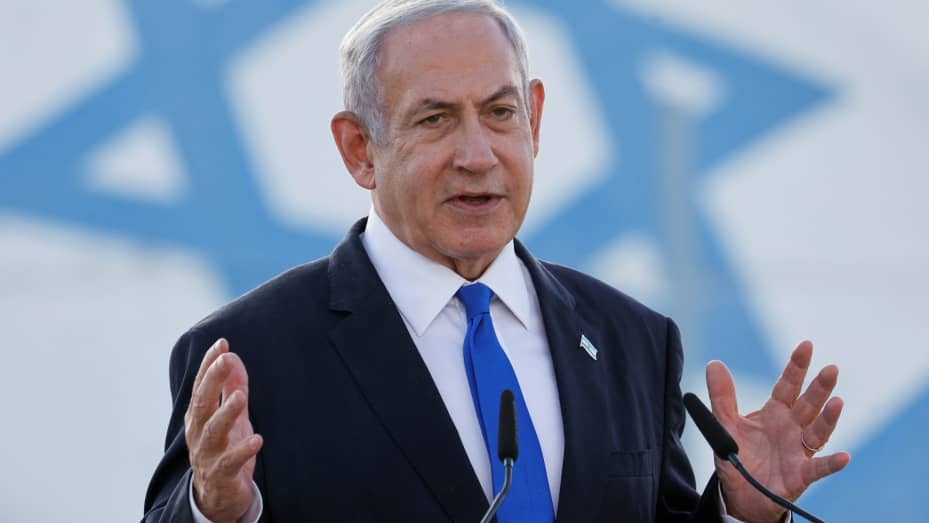
Israeli Prime Minister, Benjamin Netanyahu, said on Saturday that the joint US-Israeli campaign against Iran has succeeded in “crushing” the Islamic republic’s nuclear and ballistic missile programmes.

Netanyahu’s comments came as Iranian and US officials held two rounds of face-to-face talks in Pakistan in a bid to end the Middle East war, with a third round expected later on Saturday evening or Sunday, Iranian state television reported.

“We have succeeded in crushing the nuclear programme, and crushing the missile programme,” Netanyahu said in a televised statement, adding that the war against Tehran had also weakened Iran’s leadership and its regional allies.

“We have reached a situation in which Iran no longer has a single functioning enrichment facility.”

Netanyahu said the United States and Israel had prevented Iran from acquiring a nuclear bomb by launching a war in June 2025, followed by the current campaign that began on February 28.

He said the latest war was launched after intelligence indicated that the now deceased Iranian supreme leader Ali Khamenei had sought to expand the country’s nuclear and missile programmes even after the June 2025 war.

“He sought to bury both missile production and nuclear production deep, deep beneath a mountain, in a way that even B-2 aircraft could not reach. Once again, we could not stand by. We acted,” Netanyahu said.

“Most of its missile production capacity has disappeared. They still have missiles, they still have stockpiles, but it is shrinking.”

He said there were “enormous achievements” in the war effort.

“They are reflected in this weakened regime, which is now even seeking a ceasefire,” he said.

Netanyahu added that, for decades, Iran’s leadership and its allies had threatened Israel.

“They wanted to strangle us, and (now) we are strangling them. They threatened us with annihilation, and now they are fighting for survival.”

On Lebanon, Netanyahu said the country had approached Israel regarding a potential peace deal.

“In the past month, it has reached out several times to begin direct peace talks,” Netanyahu said.

“I have given my approval, but on two conditions: we want the dismantling of Hezbollah’s weapons, and we want a real peace agreement that will last for generations.”

On Friday, Lebanon’s presidency said that a meeting would be held with Israel in Washington next week to discuss a ceasefire in the Israel-Hezbollah war and the potential start of negotiations between the neighbours.

Hezbollah and Israeli forces have been clashing since March 2, two days after the start of the Iran war, following rocket fire by the Lebanese armed group at Israel in retaliation for the killing of Khamenei.

Since then, Israel has killed at least 2,020 people in Lebanon, including 248 women, 165 children and 85 medical and emergency personnel, according to the Lebanese health ministry.

Israel carried out its largest air attack this week on Lebanon since March 2, which it says left hundreds of Hezbollah fighters dead.

Even as Netanyahu spoke, around 800 Israeli protesters rallied in Tel Aviv on Saturday to protest against the wars in Iran and Lebanon, accusing Netanyahu of attempting to derail the ceasefire with Iran.

“In Bibi, we don’t trust,” read one banner, using Netanyahu’s nickname, as protesters chanted: “No to endless wars, no to a government of death”.

Protester Martin Goldberg said Netanyahu was not in favour of a ceasefire with Iran.

“What happened immediately after the ceasefire in Iran, Israel launched one of its largest attacks in Lebanon, which in my opinion, was an attempt to try and sabotage the ceasefire with Iran,” the 61-year-old demonstrator told AFP.

“Israel is pretty openly saying that they’re not interested in a ceasefire in Iran, and they don’t want a peaceful solution in Iran.”

Continue Reading

World

Israel Questions Pakistan’s Credibility in Mediating over US-Iran Ceasefire Agreement

Published

on

By

Israel has expressed doubts about Pakistan’s ability to act as a credible mediator in the ongoing Middle East conflict. This comes as diplomatic interactions involving the United States and Pakistan continue, particularly regarding Iran and its allies. Israel’s Ambassador to India, Reuven Azar, made his position clear during a recent statement in New Delhi.

Ambassador Azar articulated that Israel does not recognise Pakistan as a dependable player in mediation. He elaborated that the United States’ decision to engage Pakistan in these diplomatic efforts is driven primarily by its own strategic interests.

During his remarks, Azar addressed the historical context in which the United States has previously involved countries like Qatar and Turkey to facilitate talks aimed at reaching agreements with groups such as Hamas. He indicated that these choices were made for pragmatic reasons rather than based on the reliability of the states involved.

US Strategy Involving Pakistan

The involvement of Pakistan by the United States is reportedly based on specific strategic calculations that align with its broader diplomatic goals in the region. Despite Israel’s scepticism, Washington appears committed to its course of diplomatic engagement, which includes Pakistan as a participant in discussions related to the conflict.

Ambassador Azar also emphasised the importance of coordination with the United States regarding the desired outcomes of these diplomatic efforts. He noted that maintaining alignment with US objectives is crucial for Israel as it navigates the complexities of the ongoing hostilities.

Moreover, Azar’s comments suggest that there is a level of caution within Israel regarding the potential implications of Pakistan’s involvement. The ambassador’s statements reflect a broader perspective among Israeli officials about the challenges of engaging with states that possess varied relationships with groups involved in the conflict.

Regional Implications of Mediation Roles

The rejection of Pakistan as a credible mediator raises questions about the future of diplomatic efforts in the Middle East. As the situation evolves, the roles of various nations in facilitating peace talks will remain under scrutiny. The perspectives of nations like Israel are central to understanding the dynamics of mediation in ongoing conflicts.

Ambassador Azar’s comments may influence how other countries view Pakistan’s involvement. As different nations weigh the potential effectiveness of various mediators, the confidence displayed by Israel could impact international diplomatic discussions going forward.

The current geopolitical landscape is complicated, with alliances and enmities frequently shifting. Israel’s firm stance against Pakistan’s mediation reflects deeper concerns about the reliability of diplomatic partners in a region marked by longstanding tensions and hostilities.

Source: thecsrjournal.in

Continue Reading

World

Mahama, Macron Hold High-Level Bilateral Talks in France

Published

on

By

By Eric Elezuo

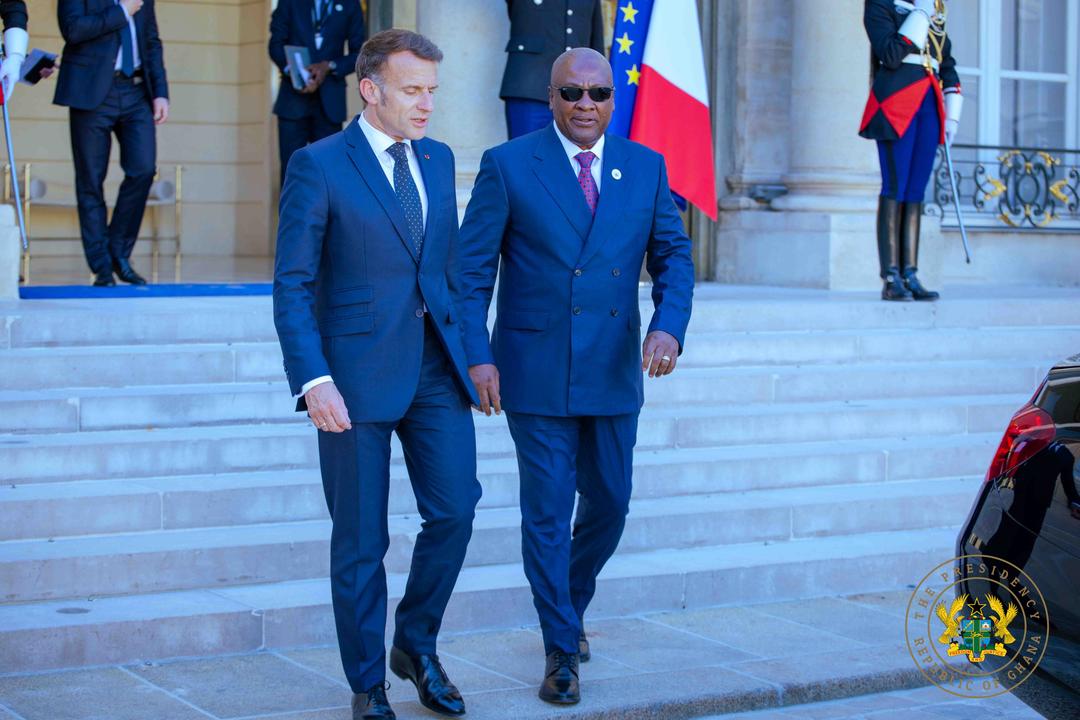
True to his words targeted at reshapening the economic narratives of the people of Ghana, President John Dramani Mahama, has paid a diplomatic and economic visit to France, where he held high level bilateral talks with his counterpart, Mr. Emmanuel Macron.

The Ghana President’s visit corresponds with his intention to maximize his second term in office towards making the Eldorado that it was during his first coming between 2012 and 2016.

The presidency.gov.gh, the authentic platform for activities of President Mahama, captured the visit as follows:

President John Dramani Mahama and his French counterpart, President Emmanuel Macron, held high-level bilateral talks at the Élysée Palace on Wednesday, marking a significant milestone in the deepening diplomatic and economic relationship between Ghana and France.

The meeting, held at the official invitation of President Macron, followed the successful conclusion of the One Health Summit in Lyon, which both leaders co-chaired on Tuesday.

During the deliberations, President Macron expressed his profound gratitude to President Mahama for his leadership in co-chairing the Lyon summit. Highlighting Ghana’s growing influence in global health policy, President Macron announced that Ghana has been selected as the first beneficiary of the newly introduced National Health Compact.

The French leader also lauded the Accra Reset Initiative, an ambitious framework introduced by President Mahama. Macron described the initiative as “very important,” noting that its principles were frequently referenced as a blueprint during the Lyon summit.

For his part, President Mahama expressed his appreciation for the warm reception and the opportunity to co-chair the One Health Summit, noting its critical importance to the World Health Organisation (WHO) and global pandemic preparedness.

On the economic front, President Mahama officially thanked France and China for their pivotal roles in supporting Ghana’s debt restructuring process. He informed President Macron that the Ghanaian economy has shown remarkable resilience, stating that “the economy has bounced back and is doing very well, with very positive indicators.”

The two leaders discussed a broad range of development cooperation, including building on years of support from the French Development Agency (AFD), the Accra-Kumasi Expressway, ensuring food security through year-round farming initiatives, advancing Artificial Intelligence (AI) development and enhancing support for maternal health services.

President Mahama emphasised that the strength of the Ghana-France relationship is rooted in a shared commitment to democracy, the rules-based international system, and global peace.

“Ghana and France stand together on key issues of peace and security”, President Mahama stated, as the two leaders analysed the impact of global conflicts on distant regions and discussed strategies to maintain stability within the West African sub-region.

Prior to arriving at the Élysée Palace, President Mahama and his delegation met with the President of the French Senate

Continue Reading

Trending