Connect with us

World

72-Year-Old Shooter Kills 10, Self During Lunar New Year festival in US

Published

on

No fewer than 10 people were killed by a 72-year-old at a dance club, in Monterey Park, Los Angeles, California in the United States on Saturday.

The septuagenarian gunman, identified as Huu Can Tran, however, killed himself on Sunday as the police approached him after he had carried out a Lunar New Year massacre.

Los Angeles County Sheriff Robert Luna said the shooter used a high-capacity magazine pistol to shoot up a ballroom dance venue popular with older patrons about 11km east of downtown Los Angeles.

Reuters reported that 10 people were also wounded but the investigators did not yet know a motive, although gun violence is frequent in the United States.

Luna did not identify any of the victims but said the five men and five women appeared to be in their 50s, 60s and beyond.

The sheriff said the pistol Tran used appeared to be illegal in California, where state laws ban any magazine holding more than 10 rounds.

“We want to know, we want to know how something this awful can happen,” Luna said.

After police say Tran carried out the shooting in Monterey Park at about 10 pm US time, he was confronted by bystanders at a second dance club in the neighbouring city of Alhambra about 20 minutes later, Luna said.

“I can tell you that the suspect walked in there, probably with the intent to kill more people, and two brave community members decided they were going to jump into action and disarm him,” Luna said.

Of the 10 people injured, seven remained hospitalised Sunday night, with at least one person in critical condition.

Continue Reading
Click to comment

Leave a Reply

Your email address will not be published. Required fields are marked *

World

Trump Orders US Naval Blockade of Strait of Hormuz

Published

on

By

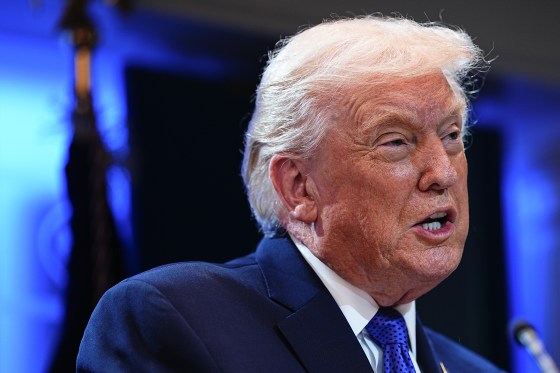
United States President, Donald Trump, has ordered a U.S. naval blockade of the Strait of Hormuz following Iran’s refusal to abandon its nuclear programme during peace talks in Islamabad, Pakistan.

Trump said on Sunday that negotiations held in Islamabad were largely successful, noting that “most points were agreed to,” but insisted Tehran remained firm on its nuclear ambitions.

“Effective immediately, the United States Navy, the Finest in the World, will begin the process of BLOCKADING any and all Ships trying to enter, or leave, the Strait of Hormuz,” Trump said on Truth Social.

“Any Iranian who fires at us, or at peaceful vessels, will be BLOWN TO HELL!”

Tribune Online reports that talks ended without a deal as US Vice President JD Vance departed Pakistan after meeting with an Iranian delegation led by Mohammad Bagher Ghalibaf. The meeting marked the highest-level engagement between both sides since the 1979 Islamic Revolution.

“We leave here with a very simple proposal, a method of understanding that is our final and best offer. We’ll see if the Iranians accept it,” Vance told reporters.

In separate posts, Trump criticised Iran for failing to reopen the Strait of Hormuz, a critical route responsible for transporting about one-fifth of the world’s crude oil.

“They say they put mines in the water, even though all of their Navy, and most of their ‘mine droppers,’ have been completely blown up. They may have done so, but what ship owner would want to take the chance?” Trump said.

The waterway has remained effectively closed for weeks following a bombing campaign launched by the United States and Israel against Iran more than six weeks ago.

On Saturday, the US military confirmed that two warships had passed through the strait as part of a mine clearance operation.

AFP

Continue Reading

Middle East

We’ve Crushed Iran’s Nuclear, Missile Programmes, Netanyahu Boasts

Published

on

By

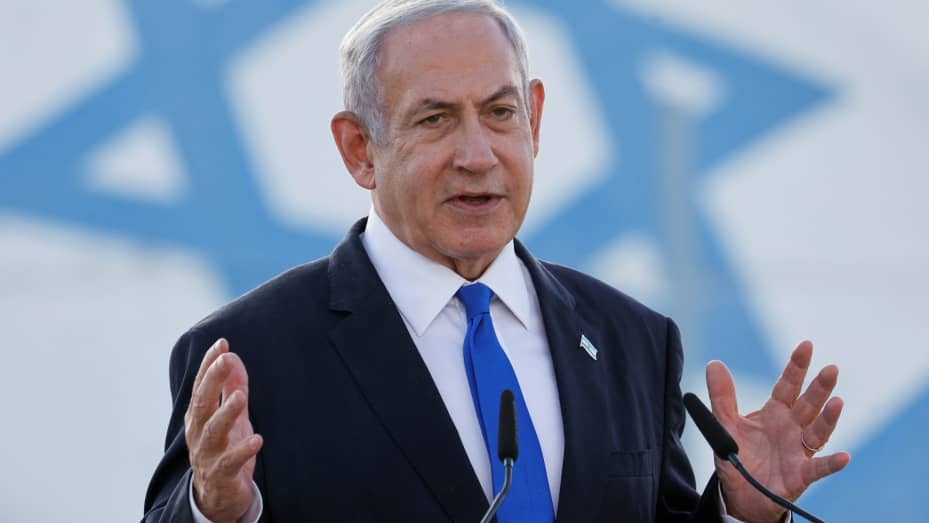
Israeli Prime Minister, Benjamin Netanyahu, said on Saturday that the joint US-Israeli campaign against Iran has succeeded in “crushing” the Islamic republic’s nuclear and ballistic missile programmes.

Netanyahu’s comments came as Iranian and US officials held two rounds of face-to-face talks in Pakistan in a bid to end the Middle East war, with a third round expected later on Saturday evening or Sunday, Iranian state television reported.

“We have succeeded in crushing the nuclear programme, and crushing the missile programme,” Netanyahu said in a televised statement, adding that the war against Tehran had also weakened Iran’s leadership and its regional allies.

“We have reached a situation in which Iran no longer has a single functioning enrichment facility.”

Netanyahu said the United States and Israel had prevented Iran from acquiring a nuclear bomb by launching a war in June 2025, followed by the current campaign that began on February 28.

He said the latest war was launched after intelligence indicated that the now deceased Iranian supreme leader Ali Khamenei had sought to expand the country’s nuclear and missile programmes even after the June 2025 war.

“He sought to bury both missile production and nuclear production deep, deep beneath a mountain, in a way that even B-2 aircraft could not reach. Once again, we could not stand by. We acted,” Netanyahu said.

“Most of its missile production capacity has disappeared. They still have missiles, they still have stockpiles, but it is shrinking.”

He said there were “enormous achievements” in the war effort.

“They are reflected in this weakened regime, which is now even seeking a ceasefire,” he said.

Netanyahu added that, for decades, Iran’s leadership and its allies had threatened Israel.

“They wanted to strangle us, and (now) we are strangling them. They threatened us with annihilation, and now they are fighting for survival.”

On Lebanon, Netanyahu said the country had approached Israel regarding a potential peace deal.

“In the past month, it has reached out several times to begin direct peace talks,” Netanyahu said.

“I have given my approval, but on two conditions: we want the dismantling of Hezbollah’s weapons, and we want a real peace agreement that will last for generations.”

On Friday, Lebanon’s presidency said that a meeting would be held with Israel in Washington next week to discuss a ceasefire in the Israel-Hezbollah war and the potential start of negotiations between the neighbours.

Hezbollah and Israeli forces have been clashing since March 2, two days after the start of the Iran war, following rocket fire by the Lebanese armed group at Israel in retaliation for the killing of Khamenei.

Since then, Israel has killed at least 2,020 people in Lebanon, including 248 women, 165 children and 85 medical and emergency personnel, according to the Lebanese health ministry.

Israel carried out its largest air attack this week on Lebanon since March 2, which it says left hundreds of Hezbollah fighters dead.

Even as Netanyahu spoke, around 800 Israeli protesters rallied in Tel Aviv on Saturday to protest against the wars in Iran and Lebanon, accusing Netanyahu of attempting to derail the ceasefire with Iran.

“In Bibi, we don’t trust,” read one banner, using Netanyahu’s nickname, as protesters chanted: “No to endless wars, no to a government of death”.

Protester Martin Goldberg said Netanyahu was not in favour of a ceasefire with Iran.

“What happened immediately after the ceasefire in Iran, Israel launched one of its largest attacks in Lebanon, which in my opinion, was an attempt to try and sabotage the ceasefire with Iran,” the 61-year-old demonstrator told AFP.

“Israel is pretty openly saying that they’re not interested in a ceasefire in Iran, and they don’t want a peaceful solution in Iran.”

Continue Reading

World

Israel Questions Pakistan’s Credibility in Mediating over US-Iran Ceasefire Agreement

Published

on

By

Israel has expressed doubts about Pakistan’s ability to act as a credible mediator in the ongoing Middle East conflict. This comes as diplomatic interactions involving the United States and Pakistan continue, particularly regarding Iran and its allies. Israel’s Ambassador to India, Reuven Azar, made his position clear during a recent statement in New Delhi.

Ambassador Azar articulated that Israel does not recognise Pakistan as a dependable player in mediation. He elaborated that the United States’ decision to engage Pakistan in these diplomatic efforts is driven primarily by its own strategic interests.

During his remarks, Azar addressed the historical context in which the United States has previously involved countries like Qatar and Turkey to facilitate talks aimed at reaching agreements with groups such as Hamas. He indicated that these choices were made for pragmatic reasons rather than based on the reliability of the states involved.

US Strategy Involving Pakistan

The involvement of Pakistan by the United States is reportedly based on specific strategic calculations that align with its broader diplomatic goals in the region. Despite Israel’s scepticism, Washington appears committed to its course of diplomatic engagement, which includes Pakistan as a participant in discussions related to the conflict.

Ambassador Azar also emphasised the importance of coordination with the United States regarding the desired outcomes of these diplomatic efforts. He noted that maintaining alignment with US objectives is crucial for Israel as it navigates the complexities of the ongoing hostilities.

Moreover, Azar’s comments suggest that there is a level of caution within Israel regarding the potential implications of Pakistan’s involvement. The ambassador’s statements reflect a broader perspective among Israeli officials about the challenges of engaging with states that possess varied relationships with groups involved in the conflict.

Regional Implications of Mediation Roles

The rejection of Pakistan as a credible mediator raises questions about the future of diplomatic efforts in the Middle East. As the situation evolves, the roles of various nations in facilitating peace talks will remain under scrutiny. The perspectives of nations like Israel are central to understanding the dynamics of mediation in ongoing conflicts.

Ambassador Azar’s comments may influence how other countries view Pakistan’s involvement. As different nations weigh the potential effectiveness of various mediators, the confidence displayed by Israel could impact international diplomatic discussions going forward.

The current geopolitical landscape is complicated, with alliances and enmities frequently shifting. Israel’s firm stance against Pakistan’s mediation reflects deeper concerns about the reliability of diplomatic partners in a region marked by longstanding tensions and hostilities.

Source: thecsrjournal.in

Continue Reading

Trending