Connect with us

Headline

Buhari Mum As Fuel Crises Cripple Nigerians, Businesses

Published

on

By Eric Elezuo

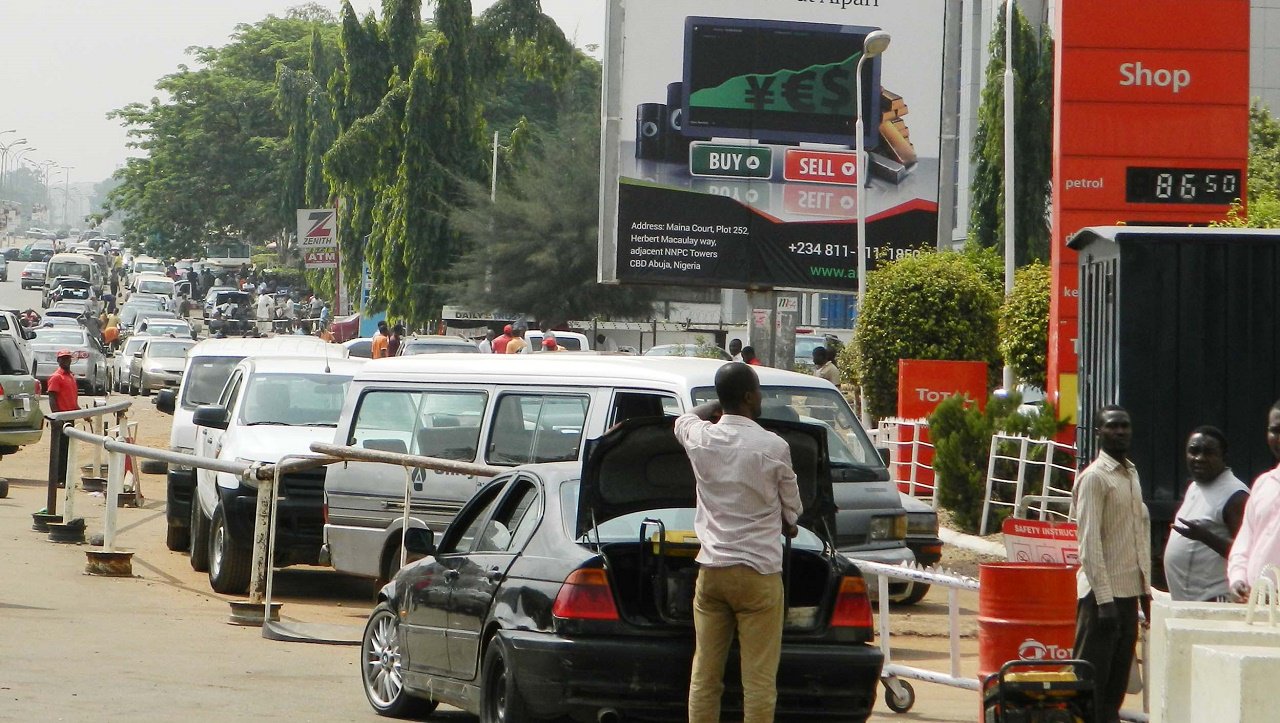
Nigerians, for the umpteenth time in the life of the administration of President Muhammadu Buhari, have come under the excruciating pains of unending fuel scarcity, with the president yet to address the issue even as government officials continually make promises that have not seen the light of the day. Like a curse, the last parts of the year have remained an albatross when it comes to fuel scarcity as it has become a norm that Christmas seasons and scarcity of fuel products have become synonymous. But the life of the present administration has ensured that scarcity is not only a December issue, but an all year round crisis.

Rising from the delay of ministerial appointment six months after he assumed office in May 2015, Buhari made himself the Minister of Petroleum, with Mr. Ibe Kachikwu as the Minister of State for Petroleum. Nigerians have rejoiced at the prospect, believing that whatever crises witnessed in the sector over the years have come to an end. But that was not to be. For the three years and counting, Kachikwu held sway as Deputy Minister in the oil and gas industry, he grappled unsuccessfully to keep in check the lingering issue, even as Mr President maintained an undignified silence over the matter.

In January 2016, the country launched into a dire fuel crisis, which set the stage for the subsequent after effects still experienced till date. The crisis which lasted for about three months, was without the voice of Buhari, who was battling to save his life in a London hospital.

“I share the pains of Nigerians, I feel that pain everyday when I walk the streets: on Easter day, I was in Lagos monitoring fuel distribution and the depots, I had given 24 hours attention to the problems.

“I have continued to work with one sole purpose, which is that every problem must have a solution and I think that is the reason I was picked.

“I do apologise for the comment that I made jocularly with my friends in the press about being a magician and it offended Nigerians; it was not meant to be, it was a side jocular issue. I did go on to explain what needed to be done, I did not know that it would create the kind of hyperbole (exaggeration) that it did.

“Let me first admit that I am not a typically experienced politician, I am a technocrat: I come to work.” Kachikwu said while defending his position as the scarcity lasted.

In December 2017, another scarcity hit the nation spiraling deep into 2018. This was how it continued until Kachikwu was removed in August 2019, and replaced by former Bayelsa State governor, Timipre Sylva. However, the trend has remained the same, and growing worse. Yet, Buhari’s undignified silence remaining deafening.

Worse it in the scheme of things is the Premium Motor Spirit, popularly called petrol. Its scarcity has grown worse across the country as massive queues were witnessed in Abuja, Lagos, Port Harcourt, Calabar, Warri, Nasarawa, Minna, among other places, according to The Punch reports.

A typical excuse by oil marketers remains that dealers could hardly access the product from the only two depots that were dispensing the commodity in Lagos State.

The few filling stations, particularly those of independent marketers, that dispensed the commodity sold it at between N250/litre and N300/litre, depending on area of purchase.

Oil marketers told The Punch that over 1,000 tickets, belonging to marketers which had paid for products, remained unattended to, at the few depots that dispense the commodity in Lagos. It was gathered that the tickets, which were for over 1,000 tankers, had continued to pile up due to the pressure on the two depots, namely MRS and Pinnacle.

It was also gathered that the cost of petrol could have been increased quietly by the Federal Government, as stations that used to sell the approved price of N179 – N180/litre had raised their prices to between N185 – N190/litre. The government has however, denied increasing prices.

While Lagos residents still managing to buy at 300 naira per litre, most residents of other parts of the country, notably the Southeastern parts, have lamented the total scarcity of the product, saying that when seen, a customer must have to part with as much as 400 to 450 naira for one litre.

Most motorists have packed their vehicles for want of the product while commercial drivers, who managed to still ply the roads, are charging exorbitantly to make up for the high cost of the fuel purchase. As a result, some commuters, especially in Lagos and major metropolitan cities have resolved to trekking to their destinations.

In the same vein, market women and men have hiked the price of their goods to reflect the huge cost incurred while transporting the said goods from one point to another. Even service providers, who have to shop for the high priced commodities have also increased the prices of your services to stay afloat of the situation. The situation has turned to a round robin affair with cost of both goods and services hitting roof top.

“Petrol has remained the pivot on which the economy of the nation revolves. As a result, whatever happens to the price or availability of the petroleum products with special emphasis to petrol, will sure have a reverberating effect on every other sector. It is just the way we have succeeded in wiring the country,” a motorists on a petrol queue told The Boss

Also commenting on the issue, the Secretary, Independent Petroleum Marketers Association of Nigeria, (IPMAN) Abuja-Suleja, Mohammed Shuaibu, told The Punch that the concerns in the downstream sector would continue to linger as long as the government remained the sole importer of petrol into Nigeria.

“The Federal Government, through NNPC, is the only one importing this product and it is subsidising it. And they don’t have the facility to store the product.

“Some time ago we complained about this because when they store in private depots, the price is hiked and some of the depots continue to exploit the masses arbitrarily.

“However, as it is now, the government is bringing in products. But the issue now is that virtually all the depots that belong to major marketers in Apapa axis of Lagos are empty. So there is now pressure on MRS and Pinnacle depots where NNPC drop products.

“So, there are over 1,000 tickets of marketers who have paid to have their trucks loaded, but we don’t know what is happening. Today they will tell you that they are upgrading the system, tomorrow you will hear that the system did not capture.

“You know that it takes much time to transport this product from the South to the North. Some trucks spend one month, especially when they have problems on the road, others spend two to three weeks,” he said.

He lamented that the Buhari-led Federal Government has so far not done anything about the situation, which must be done fast, and the situation is deteriorating. He also added that pipeline vandalism, depot upgrade among other issues reasons the reasons other depots in Apapa and in other locations not selling products.

He said, “Last time we complained that some depots were exploiting us, and the depots argued that the cost of moving products from one end of their facility to another had Increased, as well as other issues. So we can’t tell whether that is another reason why NNPC stopped supplying some of these depots.

“Things were not worse like this before. As I’m talking to you now, some of our tickets have been there for close to a month. I did payment since but I can’t load. And the story is the same across their 21 depots. We can’t load.”

Meanwhile, Shuabu stated that unconfirmed information on the official pump price of PMS that filtered in on Thursday evening was that the government had quietly raised the cost of petrol.

“I cannot confirm it yet, but we are hearing that they have quietly increased the pump price of petrol, because major marketers in Lagos who used to sell at N179 – N180/litre, are now selling at N185 – N190/litre,” he stated.

The Public Relations Officer, IPMAN, Chief Ukadike Chinedu, blamed the scarcity on the changes being done by NNPC in terms of payment for products by marketers.

“NNPC has moved independent marketers from PPMC Marketers Express to the NNPC Retail portal. That NNPC Retail portal is where marketers will be able to buy their products. However, they told us that the portal is in place now.

“Another concern is that they (NNPC) are also having an issue with the remittance, which, according to them, has been resolved. But the impact of these issues will definitely be felt and it will take some time to clear.

“Marketers are calling on NNPC to supply products to some of the depots where independent marketers can access them since most NNPC depots are not functional because of pipeline vandalism,” he said.

The government has insisted on removing subsidy by May even as the signing of the Petroleum Industry Bill in August 2021 has not helped to ease petroleum crises over the years. Nigerians await to see if the removal of the subsidy or emergence of a new president in May will bring to an end the perennial fuel issues.

But before then, the problems of Nigerians continue even as feelers reveal that an early resolution of the problem is a mirage as supply hitches may not end any time soon. The Punch quoted a senior official in the Ministry of Petroleum Resources as saying that the fuel scarcity might get worse in the days and weeks to come as there were many issues affecting the smooth supply of the product across the country including the inability of the NNPC Limited to import sufficient volume of Premium Motor Spirit (petrol).

The source also explained that the inability of the country to produce enough crude oil to meet its Organisation of Petroleum Export Countries’ quota was another problem, noting that insecurity and crude theft had significantly affected the production capacity.

He added, “Another issue is the failure of the crude swap for refined products deal that the NNPCL had with major international oil firms and traders. The inability of the NNPCL to meet its own side of the deal by supplying the required quantity of crude has frustrated the arrangement.

“While Nigeria has been taking refined products from the partners, it has not been able to supply the crude equivalent and the international firms and traders have stopped shipping products to the country.”

Oil marketers has also alluded to the problems in the downstream sector and predicted that the current scarcity would not abate until the government comes out with a clear position on subsidy removal, full deregulation and price determination.

It still remains to be seen when the fuel issue will be settled.

Continue Reading
Click to comment

Leave a Reply

Your email address will not be published. Required fields are marked *

Headline

Why Nigerians Must Reject INEC’s Revised Timetable – ADC

Published

on

By

By Eric Elezuo

The Independent National Electoral Commission (INEC), during the week, released a fresh elections timetable, with major amendments to accommodate the just passed and signed Electoral Act 2026 by the National Assembly and President Bola Tinubu respectively.

Following the repeal of the Electoral Act, 2022 and the enactment of the Electoral Act, 2026, which introduced adjustments to statutory timelines governing pre-election and electoral activities, the Commission has reviewed and realigned the Schedule to ensure full compliance with the new legal framework.

Accordingly, the Commission has resolved as follows:

  1. Presidential and National Assembly Elections will now hold on Saturday, 16th January 2027 as against the earlier stated February 20, 2027
  2. Governorship and State Houses of Assembly Elections will now hold on Saturday, 6th February 2027 as against the former date of March 6, 2027

Also in accordance with the approved Schedule of Activities, the electoral bidy noted in the revised timetable that:

Conduct of Party Primaries, including resolution of disputes arising from primaries, will commence on 23rd April 2026 and end on 30th May 2026.

Presidential and National Assembly campaigns will commence on 19th August 2026.

Governorship and State Houses of Assembly campaigns will commence on 9th September 2026.

As provided by law, campaigns shall end 24 hours before Election Day. Political parties are strongly advised to adhere strictly to these timelines. The Commission will enforce compliance with the law.

But in a swift reaction, the opposition coalition, African Democratic Congress (ADC), rejected the revised 2026–2027 general election timetable, describing it as a politically biased schedule designed to favour the re-election agenda of President Bola Tinubu, and calling on all Nigerians to speak up enmasse to reject the revised timetable.

The ADC, in a statement by its National Publicity Secretary, Bolaji Abdullahi, on Friday argued that the new deadlines and compliance requirements under the Electoral Act 2026 create near-impossible hurdles for opposition parties seeking to field candidates.

On February 13, INEC initially scheduled the 2027 Presidential and National Assembly elections for February 20, 2027, while the Governorship and State Houses of Assembly elections were fixed for March 6, 2027.

The timetable, however, faced objections from some Muslim stakeholders who noted that the dates coincided with the 2027 Ramadan period.

Following the concerns, the National Assembly amended Clause 28 of the Electoral Act Amendment Bill, reducing the required election notice period from 360 to 300 days, allowing INEC to adjust the election dates.

Subsequently, INEC released a revised schedule on Thursday, signed by its Chairman, Joash Amupitan, moving the Presidential and National Assembly elections to January 16, 2027, and the Governorship and State Houses of Assembly elections to February 6, 2027.

Reacting, the ADC said the requirement that political parties submit a comprehensive digital membership register by April 2, 2026, effectively bars opposition parties from participating.

The party stated: “The African Democratic Congress rejects the updated 2026–2027 electoral timetable released by the Independent National Electoral Commission. What has been presented as a routine administrative schedule of the upcoming general elections is, in fact, a political instrument carefully structured to narrow democratic space and strengthen the incumbent administration ahead of the 2027 general elections.

“According to the timetable, party primaries are to be conducted between April 23 and May 30, 2026, just 55 to 92 days from today. However, more significant is that, pursuant to Section 77(4) of the Electoral Act 2026, political parties are required to submit their digital membership registers to INEC not later than April 2, 2026.

“That is only about 34 days away. Section 77(7) further provides that any party that fails to submit its membership register within the stipulated time shall not be eligible to field a candidate. These are not routine administrative rules but are deliberately constructed barriers designed to exclude the opposition from participating in the election.”

The party further noted that Section 77(2) of the Electoral Act 2026 requires the digital register of members to contain name, sex, date of birth, address, state, local government, ward, polling unit, National Identification Number (NIN) and photograph in both hard and soft copies, while Section 77(6) prohibits the use of any pre-existing register that does not contain the specified information. It warned that failure to meet these requirements would lead to disqualification.

The ADC questioned the fairness of the digital membership requirement, noting that the ruling All Progressives Congress began its registration process in February 2025, long before the requirement became mandatory.

“It is not a product of foresight but insider advantage. They knew what was coming. They therefore had one full year to carry out an exercise that other political parties are expected to complete in one month, during which they must collect, process, collate and transmit large volumes of digital data to INEC under the threat of exclusion. This is practically impossible.

“Democratic competition is based on a level playing field that does not give any contestant an undue advantage. A system where one party exploits incumbency to gain a one-year head start on a requirement that other parties only became aware of when it was nearly too late is a rigged system.”

The ADC said it has joined other opposition parties in rejecting the Electoral Act 2026, adding that the INEC timetable is equally rejected as it appears designed to serve what it described as a self-succession agenda.

“Let it be clear that ADC will not take any action that appears to confer legitimacy on a fraudulent system. We are reviewing our options and will make our position known in the coming days,” the party said.

The party also called on civil society organisations, democratic stakeholders and Nigerians to scrutinise the timetable and demand fairness, stressing that democracy cannot survive when electoral rules are structured to produce predetermined outcomes.

The party has consistently accused the Tinubu-led All Progressives Congress (APC) of scheming to silence the opposition as the 2027 General Elections draw closer, citing his manipulation of state governors and Assembly members from jumping ship, and settling with the ruling party.

Presently, the president’s party has a total of 31 out of 36 states governors, more than majority of the national and states Houses of Assembly.

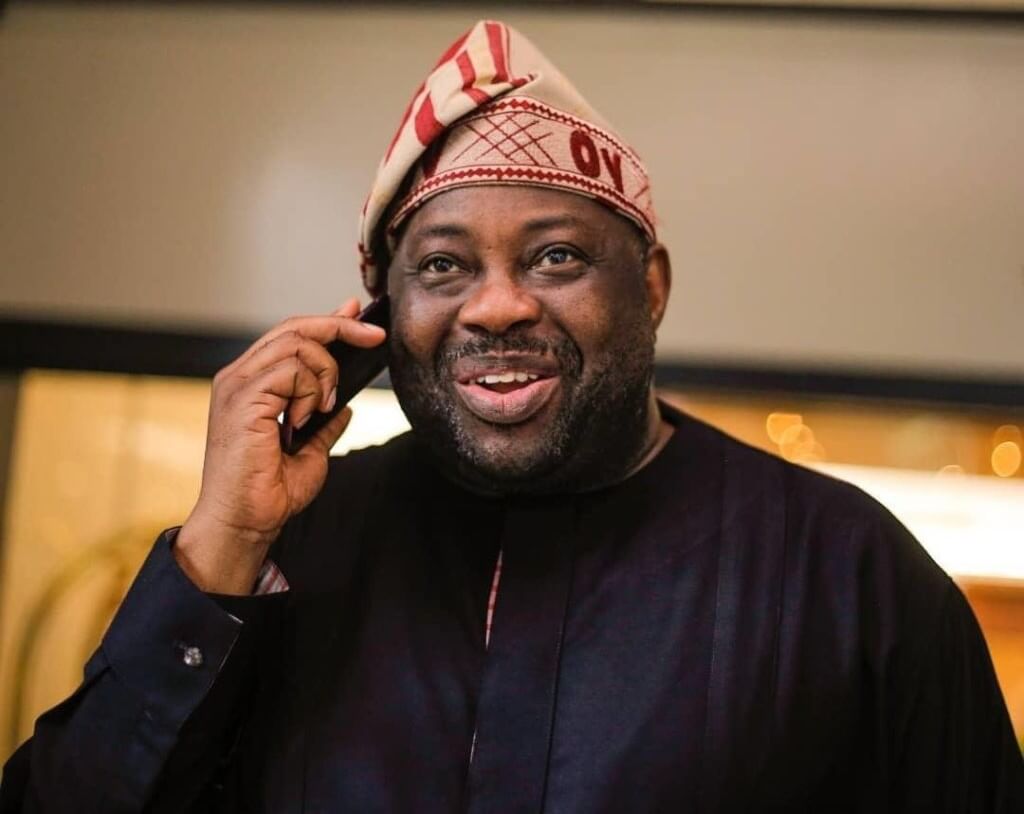
A frontline publisher and chieftain of the ADC, Chief Dele Momodu, has warned that Tinubu is gradually transforming into full-blown dictatorship, stressing that his second term in office would turn state governors into ‘total slaves’.

Continue Reading

Headline

Second Term for Tinubu Will Turn Governors into Total Slaves, Dele Momodu Warns

Published

on

By

Chairman, Ovation Media Group, and former presidential aspirant, Aare Dele Momodu, has expressed strong concern over what he described as growing political support for President Bola Ahmed Tinubu among state governors across the country.

Speaking during an interview on News Central TV, Momodu said he was shocked by the level of backing the president is reportedly receiving, warning that Nigeria’s democracy could face serious risks if the current political trend continues.

The media entrepreneur cautioned that allowing Tinubu to secure a second term in 2027 could, in his view, lead to excessive concentration of power. He particularly criticized what he described as a growing wave of opposition figures aligning with the ruling All Progressives Congress> (APC).

Momodu referenced reports of opposition governors, including Ahmadu Umaru Fintiri, allegedly moving closer to the ruling party, describing the development as politically troubling.

According to him, some governors are allegedly competing to demonstrate loyalty to the president ahead of future elections.

“The governors are fighting to ensure Tinubu wins a second term, fighting to be the biggest thug for him. If a man in his first term can capture the bodies and souls of Nigerians this way, imagine what he would do with a second term. It will be a full-blown dictatorship, and the governors will regret it as they become total slaves to him,” Momodu said.

He concluded by urging Nigerians to remain vigilant and actively protect democratic institutions, warning that unchecked consolidation of political power could threaten the nation’s democracy and future stability.

Gistmania

Continue Reading

Headline

Court Validates PDP 2025 Convention in Ibadan, Affirms Turaki-led NWC

Published

on

By

The Oyo State High Court sitting in Ibadan has affirmed the validity of the 2025 Elective Convention of the Peoples’ Democratic Party (PDP), which produced Dr. Kabiru Turaki as the substantive National Chairman of the party.

Delivering judgment on Friday, Justice Ladiran Akintola upheld the convention in its entirety, ruling that it was conducted in full compliance with the relevant constitutional and statutory provisions governing party elections in Nigeria.

The decision marked a significant legal victory for the party’s leadership and brought clarity to the dispute surrounding the convention’s legitimacy.

The ruling followed an amended originating summons filed by Misibau Adetunmbi (SAN) on behalf of the claimant, Folahan Malomo Adelabi, in Suit No. I/1336/2025.

In a comprehensive judgment, the court granted all 13 reliefs sought by the claimant, effectively endorsing the processes and outcomes of the Ibadan convention.

Justice Akintola held that the convention, organised by the recognised leadership of the party, satisfied all laid-down legal requirements as stipulated in the 1999 Constitution of the Federal Republic of Nigeria, the Electoral Act 2022 (as amended), and the relevant provisions of the Electoral Act 2026.

The court found no breach of due process or statutory non-compliance in the conduct of the exercise.

In the same proceedings, the court dismissed the Motion on Notice seeking a stay of proceedings and suspension of the ruling, filed by Sunday Ibrahim (SAN) on behalf of Austin Nwachukwu and two others. The applications were described as lacking merit.

Earlier in the proceedings, the court had also rejected a bid by Ibrahim to have his clients joined in the suit.

Justice Akintola ruled at the time that the joinder application was unsubstantiated and consequently dismissed it.

Continue Reading

Trending