Connect with us

Opinion

The Oracle: See How President Buhari Turned Me to Nostradamus, Clairvoyant (Pt. 3)

Published

on

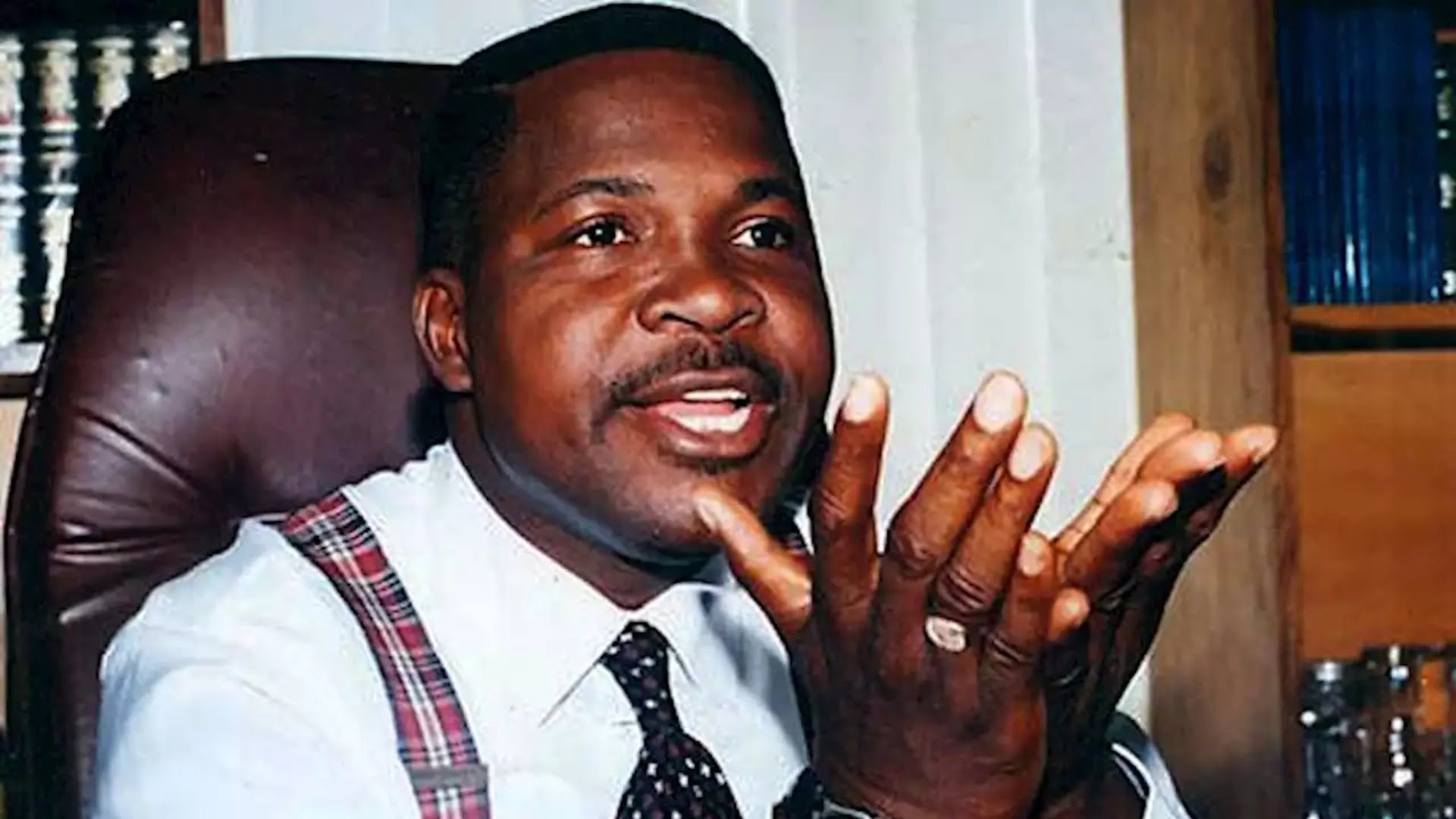
By Mike Ozekhome

INTRODUCTION

I discussed these seering seer predictions in my last two outings,. We shall attempt to end this trilogy today, to enable me deal with other emergent critical national issues, even though there are still more already fulfilled predictions of mine. The present write-up is a collector’s item consisting of reminiscences of what I had written and predicted as far back as 19th July, 2015, just only after 50 days of Buhari’s tenure! They have all come to pass. Now, read on please.

“BOKO HARAM INSURGENCY AND SUNDRY CHALLENGES

“The Boko Haram insurgency has intensified geometrically, with power supply getting worse, and more epileptic. Internally, PMB appears to have no control over his APC party, which he ought to be leader of, perhaps because they regard Bola Tinubu as the national leader.

“The party is imploding instalmentally. Impunity in all facets of life has increased. PMB is still running the government solo, in the manner of a military dictator, contrary to the provisions of the Constitution which compels him to have Ministers.

“REFUSAL TO DECLARE ASSETS PUBLICLY

“PMB has refused to make public, the declaration of his assets as he promised during electioneering campaigns, to the applause of Nigerians. Yes, he satisfied the mere constitutional requirement of doing so before the code of Conduct Bureau. But, like Yar’adua, he needs to do more by declaring them publicly, if only to oil the wheels of his change talisman. He had promised to do so. Voluntarily. So, no one should tell Nigerians that he has satisfied the provisions of section140 of the 1999 constitution, by declaring his assets as a precondition for taking the oath of office. That is the letter of the Law. What about its spirit, the morals?

“There is despondency and hopelessness everywhere, with the government exhibiting no real sense of direction, mission or vision. The ship of state appears rudderless and directionless, with his ruling APC party still talking and behaving tough as if it is still in the opposition. It still shadow boxes, with imaginary enemies, forgetting it is now in power.

“CORRUPTION

“Corruption, which has become the 37th State of Nigeria and indeed, the wealthiest at that, is not climbing down from its imperious monstrous height. Rather, it is waxing stronger and becoming more and more endemic, ravishing the weak fiber of the Nigerian society with reckless abandon and impunity. Corruption now mocks all of us with utmost derision. It dares us. It spits in our faces. What is PMB doing about it?

“WORSENING AN ATMOSPHERE OF INSECURITY

Insecurity is becoming more frightening, with Boko Haram which had been massively degraded and nearly decapitated before PMB’s oath of office on May 29, waxing stronger and stronger, and indeed becoming more daring and defiant. Over 600 people have been mindlessly killed in the last few weeks in the renewed upsurge of violence and attacks. Innocent Nigerians are murdered in cold blood.

“Kidnapping cases have since increased on a monumental scale, with Judges, Pastors, Rev. Fathers, Monarchs, Women, Children and Men, becoming daily victims in the nefarious activities of these marauders. There is still no major national broadcast to Nigerians as to the direction of PMB’s govt. regarding his policies on education, infrastructural development, national ethos, anti-corruption war, or how to grow the economy, and give jobs to the teaming unemployed youths of Nigeria, unemployed of whom he had promised Five Thousand Naira (N5,000.00), monthly stipends before they get employed.

“WHAT IS PMB’s POLICY DIRECTION?

“There is no single statement about oil subsidy and emergency oil subsidy merchants, who are bleeding the Nigerian economy dry and threatening to asphyxiate and vanquish already hapless Nigerians.

“The bi-camera National Assembly is in turmoil with no positive presidential intervention, to save Nigeria’s hard earned democracy, except threats to impose external leadership. Nigeria appears to be wobbly, groggy, fumbling and near prostrate. What is the policy direction of PMB regarding the above issues? I don’t know. I do not know if you know.

“FRITTERING AWAY NIGERIA’s GOODWILL

“PMB, in my humble opinion, is busy frittering away the groundswell of goodwill and affection Nigerians bestowed on him on March 28. Ex-President GEJ did it and paid dearly for it. Although he was sworn in on May 29, the truth is that he became aware he was the elected President of Nigeria since April 4, nearly 100 days ago, when GEJ called to concede defeat and congratulate him. Till now, he has not even appointed a Secretary to the Government of the Federation (SGF), the clearing house and heartbeat of any government, Chief of Staff, Principal Secretary, etc. Government business has literally ground to a halt, with no money in circulation. All ministries are virtually dead, with permanent Secretaries afraid to take major decisions or sign any contract.

“NIGERIA, WE HAIL THEE

“Nigeria appears to be in a state of suspended animation, dancing in uncomfortable limbo, like a yoyo, virtually on auto-pilot. PMB, sir, don’t allow the usual bootlickers, grovelers and fawners deceive you by telling you that you are doing very well. It’s a complete lie. You have so far performed dismally, with no spark to ignite national passion and enthusiasm. No endearing leadership traits have so far been exhibited, to key Nigerians into line.

“Be informed that Nigerians are very interesting and impatient people, easy to govern, difficult to satisfy, and impossible to tyranise, intimidate or browbeat.

“VAIN SHUTTLE DIPLOMACY

“Your missions to Niger Republic, Chad, G7 and AU in South Africa cannot help us. No slave masters like those western imperialists and neo colonial slave drivers will want freedom for slaves or servants. Our neighbours who are jealous of our size and natural wealth have always loathed us.

“These countries won’t help you sir, beyond mere tokenism, crumbs from the masters table. Don’t tell Nigerians you are not a miracle worker or magician. They won’t listen to you Sir. They want you to approximate the two at once, a merger of Pastor Chris Oyakhilomeh and Prof. Peller rolled intone. They expect abracadabra from you.

“I support you sir. Nigerians support you greatly. But, so far, your performance has been below average. Certainly not what Nigerians are yearning for. Time is not on your side, whether in age or in performance. The clock is ticking away. Very fast. Inexorably. Seize the sliding tide before it is too late, sir.

“Tell your media aids, to scrutinize the social media for you and see how the tide is turning frighteningly fast against you. Just within three months of your popular and populist emergence as President of 175 million Nigerians, after four gruesome attempts, of sweat, pains, pangs and hear blood. Come out of your shell and become the Abraham Lincoln of our time. Times like these need very strong men. PMB, you can do it. Nigerians want you to be used. I am one of them.

“PMB’S STATE VISIT TO U.S.A

“It was good that PMB seized the first available opportunity to visit U.S.A on President Obama’s invitation. Whilst we may be rolling out the drums to celebrate this diplomatic move, we must not over indulge ourselves as having scored any major breakthrough in the icy relationship between Nigeria and U.S.A. The reason is simple. Whilst PMB was still in the U.S.A meeting with other groups during the State visit, Obama trip to Africa, specifically to Kenya, his pedigree and to Ethopia. Don’t forget that Obama had visited Ghana, a neighbouring country to Nigeria, some years ago, while ignoring Nigeria maximally. All the same, congrats, PMB, even if not much was achieved during state visit. The most outstanding of the minuses is that U.S.A still refuses to sell arms to Nigeria, to curb the malignant Boko Haram insurgency.

“THE AMICABLE RESOLUTION OF NASS CRISIS

“It is gratifying to note that NASS has finally resolved its crisis, which threatened to tear APC apart as snowball into a national calamity of monumental proportions. It took PMB only 20 minutes to give a hard talk to the warring factions. The meaning of this is twofold. First, PMB can assume leadership of APC and call short without necessarily interfering in the internal affairs of a separate arm of govt. the National Assembly. In other words, he cannot act like chichidodo bird envisaged by Ayi Kwei Armah, the authoritative Ghanaian author, in his epic novel, “The Beautiful Ones Are Not Yet Born”, which hates human excrements with passion, but feeds on maggots that wriggle out of human faeces. Lesson: Be in charge without interfering.

“Second, whilst party supremacy should be encouraged and respected, it has its limit, which is that it must never dictate to any of the three arms of govt. under its governance. It must restrict itself to policy formulation and party path finding, but never to act as a tyrant that dictates to duly elected representative of the people. PDP did it, and got its fingers badly burnt and its toes badly bruised.

“Are Nigerians, PMB, APC, Proprietors and Managers of the old football clubs of those glorious days, Enugu Rangers, Raccah Rovers of Kano, Mighty Jets of Jos, Bendel Insurance football club of Benin, IICC shooting stars of Ibadan, Stationery Stores football club of Lagos, and the Nigerian Football Federation, reading, digesting and utilising these tips, these Scott Fitzgerald’s 1925 “The Great Gatsby” recollections, where, in his magnum opus, this celebrated Author explored the themes of idealism, resistance to change, social upheaval and decadence, amongst others? For their future improvement? All from the unputdownable weekly Sunday sermon on the Mount of the Nigerian project, by Chief Mike A. A. Ozekhome, SAN, OFR?”. (The end).

FUN TIMES

“TEACHER: What is the full meaning of APC?

STUDENT: Association of People without Certificate”

THOUGHT FOR THE WEEK

“A self-fulfilling prophecy is an assumption or prediction that, purely as a result of having been made, cause the expected or predicted event to occur and thus confirms its own ‘accuracy.’” (Paul Watzlawick)

Continue Reading
Click to comment

Leave a Reply

Your email address will not be published. Required fields are marked *

Opinion

Book Review: Against the Odds by Dozy Mmobuosi

Published

on

By

By Sola Ojewusi

Against the Odds is an ambitious, deeply personal, and unflinchingly honest memoir that traces the remarkable rise of Dozy Mmobuosi, one of Nigeria’s most dynamic and controversial entrepreneurs. In this sweeping narrative, Mmobuosi reveals not just the public milestones of his career, but the intimate struggles, internal battles, and defining moments that shaped his identity and worldview.

The book is both a personal testimony and a broader commentary on leadership, innovation, and Africa’s future—and it succeeds in balancing these worlds with surprising emotional clarity.

A Candid Portrait of Beginnings

Mmobuosi’s story begins in the bustling, unpredictable ecosystem of Lagos, where early challenges served as the furnace that forged his ambitions. The memoir details the circumstances of his upbringing, the value systems passed down from family, and the early encounters that sparked his desire to build solutions at scale.

These foundational chapters do important work: they humanize the protagonist. Readers meet a young Dozy not as a business figurehead, but as a Nigerian navigating complex social, financial, and personal realities—realities that millions of Africans will find familiar.

The Making of an Entrepreneur

As the narrative progresses, the memoir transitions into the defining phase of Mmobuosi’s business evolution. Here, he walks readers through the origins of his earliest ventures and the relentless curiosity that led him to operate across multiple industries—fintech, agri-tech, telecoms, AI, healthcare, consumer goods, and beyond.

What is striking is the pattern of calculated risk-taking. Mmobuosi positions himself as someone unafraid to venture into uncharted territory, even when the cost of failure is steep. His explanations offer readers valuable insights into:
• market intuition
• the psychology of entrepreneurship
• the sacrifices required to build at scale
• the emotional and operational toll of high-growth ventures

These passages make the book not only readable but instructive—especially for emerging

African entrepreneurs.

Triumphs, Crises, and Public Scrutiny
One of the book’s most compelling strengths is its willingness to confront controversy head-on.

Mmobuosi addresses periods of intense scrutiny, institutional pressure, and personal trials.

Instead of glossing over these chapters, he uses them to illustrate the complexities of building businesses in emerging markets and navigating public perception.

The tone is reflective rather than defensive, inviting readers to consider the thin line between innovation and misunderstanding in environments where the rules are still being written.

This vulnerability is where the memoir finds its emotional resonance.

A Vision for Africa

Beyond personal history, Against the Odds expands into a passionate manifesto for African transformation. Mmobuosi articulates a vision of a continent whose young population, natural resources, and intellectual capital position it not as a follower, but a potential leader in global innovation.

He challenges outdated narratives about Africa’s dependency, instead advocating for
homegrown technology, supply chain sovereignty, inclusive economic systems, and investment in human capital.

For development strategists, policymakers, and visionaries, these sections elevate the work from memoir to thought leadership.

The Writing: Accessible, Engaging, and Purposeful

Stylistically, the memoir is direct and approachable. Mmobuosi writes with clarity and intention, blending storytelling with reflection in a way that keeps the momentum steady. The pacing is effective: the book moves seamlessly from personal anecdotes to business lessons, from introspection to bold declarations.

Despite its business-heavy subject matter, the prose remains accessible to everyday readers.

The emotional honesty, in particular, will appeal to those who appreciate memoirs that feel lived rather than curated.

Why This Book Matters

Against the Odds arrives at a critical moment for Africa’s socioeconomic trajectory. As global attention shifts toward African innovation, the need for authentic narratives from those building within the system becomes essential.

Mmobuosi’s memoir offers:
• a case study in resilience
• an insider’s perspective on entrepreneurship in frontier markets
• a meditation on reputation, legacy, and leadership
• a rallying cry for African ambition

For readers like Sola Ojewusi, whose work intersects with media, policy, leadership, and social development, this book offers profound insight into the human stories driving Africa’s new generation of builders.

Final Verdict

Against the Odds is more than a success story—it is a layered, introspective, and timely work that captures the pressures and possibilities of modern African enterprise. It challenges stereotypes, raises important questions about leadership and impact, and ultimately delivers a narrative of persistence that audiences across the world will find relatable.

It is an essential read for anyone interested in the future of African innovation, the personal realities behind public leadership, and the enduring power of vision and resilience

Continue Reading

Opinion

Redefining Self-leadership: Henry Ukazu As a Model

Published

on

By

By Abdulakeem Sodeeq SULYMAN
In a world filled with talents and unique gifts, nurturing oneself for an impact-filled living becomes one of the potent metrics for assuming how one’s life would unfold – either in the nearest or far future. I am sure the question you may be curious to ask is ‘what is the important quality that has shaped the life of every individual who has unleashed their ingenuity?’ Apparently, our society is filled with numerous people, who missed the track of their life. Their iniquity is boiled down to one thing – failure to lead oneself.
Realising how important it is to be your own leader has been the springboard for every transformative life. Notably, this also becomes the premise for appreciating and celebrating Henry Ukazu for setting the pace and modeling self-leadership in this era, where self-leadership is under-appreciated by our people. Self-leadership itself engineers purposeful and impactful living, turning individuals to sources of hope to others.
This is exactly what Henry Ukazu symbolises. The name Henry Ukazu is akin to many great things such as ‘Unleashing One’s Destiny,’ ‘Finding One’s Purpose’ and ‘Triumphant Living.’ Regardless of the impression one have formed about Henry Ukazu, one thing you cannot deny is his ability to be pure to nature and committed to his cause. Henry Ukazu is one of the rare people who still believed in the values of the human worth and has committed every penny of his to ensure that every human deserves to live the best life.
The trajectory of Henry Ukazu’s life is convincing enough to be choosing as an icon by anyone who chooses to climb the ladder of self-leadership. Oftentimes, Henry Ukazu always narrate how he faced the storms of life when birthing his purpose. He takes honour in his struggles, knowing full well that every stumbling blocks life throws at him helped in building himself. If not for self-leadership, he will not found honours in his struggles, let alone challenging himself to be an example of purposeful living to others.
Without mincing words, Henry Ukazu’s life has been blessed with the presence of many people, with some filling his life with disappointments, while some blessing him with immeasurable transformations. Surprisingly, Henry Ukazu has never chosen to be treating people negatively; rather he would only choose the path of honour by avoiding drama and let common sense prevail. That’s one of the height of simplicity!
Dear readers, do you know why today is important for celebrating Henry Ukazu? Today, 3rd December, is his birthday and with all sincerity, Henry Ukazu deserves to be celebrated because he has chosen the noble path, one filled with honours and recognitions for being an icon of inspiration and transformation to the mankind. As Henry Ukazu marks another year today, may the good Lord continue shielding him from all evils and guiding him in right directions, where posterity will feel his role and impacts!
Many happy returns, Sir!

Continue Reading

Opinion

The Fault Lines of Power: A Global Leadership Crisis and the Path to Restoration

Published

on

By

By Tolulope A. Adegoke, PhD

“Across the world, we are navigating the fault lines of outdated leadership. The future belongs to those who can mend these cracks with the mortar of integrity, the vision of long-term purpose, and the resilience of empowered people” Tolulope A. Adegoke, PhD

Leadership serves as the foundational pillar for any thriving organization, corporation, or nation. It is the critical framework meant to ensure stability, inspire direction, and foster resilience against challenges. Yet, a pervasive and unsettling phenomenon is emerging worldwide: the development of deep fault lines within these very structures of authority. This crisis of confidence spans sectors and continents, from established Western democracies to burgeoning economies in the Global South.

This examination explores these global leadership fissures, with a specific focus on Nigeria’s complex landscape. We will diagnose the universal symptoms, analyze their acute manifestation in the Nigerian context, and ultimately, propose a constructive framework for renewal aimed at individuals, businesses, and governments.

Diagnosing the Global Leadership Decay

The erosion of effective leadership rarely happens overnight. It typically begins with subtle, often ignored fractures that gradually weaken the entire system. These fractures commonly appear as:

  1. The Credibility Chasm: A growing disconnect between a leader’s promises and their tangible actions. When rhetoric of transparency clashes with a reality of opacity, the essential bond of trust is severed.
  2. The Tyranny of the Immediate: An overwhelming focus on short-term gains—be it quarterly earnings or political popularity—that sacrifices long-term strategy and sustainable health. This is the equivalent of building on unstable ground.
  3. Strategic Inertia: In a world defined by rapid change, leaders who cling to outdated, rigid hierarchies render their organizations incapable of adapting, innovating, or surviving future shocks.
  4. The Empathy Void: Leadership that is intellectually or emotionally detached from the realities of its people, employees, or citizens. This breeds disengagement, stifles collaboration, and fuels a silent exodus of talent and goodwill.
  5. The Succession Failure: A critical neglect of leadership pipeline development, which creates a dangerous vacuum of vision and competence during transitions, jeopardizing institutional memory and future stability.

The Nigerian Context: A Magnified View of the Crisis

Nigeria, a nation brimming with phenomenal human and natural potential, offers a powerful case study where these global fault lines are particularly pronounced and consequential.

Within the Political Arena:

Leadership is frequently marred by a system that rewards patronage over performance. Rampant corruption diverts essential resources from critical public services, leading to a catastrophic decay in infrastructure, healthcare, and education. This, combined with policy instability across political administrations, creates an environment of uncertainty that discourages vital long-term investment.

Within the Corporate Sphere:

Many organizations, including prominent family-owned conglomerates, are hindered by overly centralized decision-making and weak corporate governance structures. When nepotism overshadows meritocracy, innovation is suppressed, and employee motivation withers. A survivalist mindset, driven by a challenging economic climate, often trumps strategic investment in talent and innovation.

Within Public Institutions:

A pervasive culture of bureaucracy and inefficiency often widens the gap between the government and the governed. This leads to profound citizen frustration and a demoralized public workforce, undermining the very purpose of these institutions.

The cumulative effect of these intersecting failures is a palpable national anxiety—a widespread belief that the nation is operating far below its potential, not due to a lack of resources or talent, but because of a fundamental breakdown in its leadership frameworks.

A Framework for Renewal: Building Resilient Leadership

Identifying the problem is only the first step. The imperative is to forge a path forward. The following advisory framework outlines how to bridge these fault lines and unlock latent possibilities.

For Individuals (The Agents of Change):

  1. Transition from Spectator to Stakeholder: Exercise accountability through informed civic participation and constructive advocacy. Use platforms, including digital media, to demand transparency and results from leaders.
  2. Embody Ethical Leadership Daily: Demonstrate integrity, accountability, and empathy within your immediate circle—your workplace, community, and family. Leadership is an action, not merely a position.
  3. Commit to Lifelong Learning: Proactively acquire new skills, cultivate a global perspective, and strengthen your emotional intelligence to navigate an increasingly complex world.
  4. Engage in Reciprocal Mentorship: Actively seek guidance while also dedicating time to mentor others. Cultivating the next generation is a collective responsibility that ensures a continuous flow of capable leaders.

For Corporations (The Economic Catalysts):

  1. Ingrain, Don’t Just Install, Governance: Move beyond superficial compliance. Foster a culture where independent boards, radical transparency, and ethical practices are non-negotiable core values.
  2. Systematize Leadership Development: Establish robust talent management and succession planning programs. Intentionally identify and nurture future leaders through targeted training, mentorship, and strategic role assignments.
  3. Champion a Stakeholder-Centric Purpose: Define a corporate mission that creates genuine value for all stakeholders—employees, customers, communities, and the environment. This builds lasting brand equity and attracts purpose-driven talent.
  4. Cultivate Psychologically Safe Spaces: Foster an organizational climate where employees feel empowered to voice ideas, question assumptions, and experiment without fear of reprisal. This is the bedrock of a truly innovative and adaptive organization.

For Nations (The Architects of Society):

  1. Fortify Institutions Over Individuals: Invest in building strong, independent institutions—such as the judiciary, electoral commissions, and anti-corruption bodies—that can function autonomously and uphold the rule of law.
  2. Prioritize Human Capital as the Supreme Asset: Direct national investment toward foundational pillars like quality public education and healthcare. An educated, healthy, and skilled populace is the most critical driver of sustainable national development.
  3. Articulate and Adhere to a Long-Term National Vision: Develop a strategic, non-partisan national development plan that provides a consistent direction for policy, transcending political cycles and uniting citizens around a common goal.
  4. Establish a Consequence-Based Culture: Implement a system where integrity is visibly rewarded and corruption is met with swift, transparent, and impartial justice, regardless of the offender’s status.

Conclusion: Laying a New Foundation

The fault lines in global leadership present a significant challenge, but they also offer a clarion call for renewal. The solution lies in a deliberate return to the core tenets of visionary, accountable, and empathetic leadership.

For Nigeria, and for the world at large, delivering on our shared potential requires a concerted effort to repair these foundations. We must collectively shift from a culture of short-sightedness to one of intergenerational stewardship, and from fractured allegiances to a unified commitment to the common good.

The blueprint for change is clear. By choosing to reinforce our leadership at every level, we can transform these fault lines into cornerstones for a more prosperous, stable, and equitable future. The responsibility to build rests with all of us.

Dr. Tolulope A. Adegoke, AMBP-UN is a Doctor of Philosophy (PhD) in History and International Studies, Fellow Certified Management Consultant & Specialist, Fellow Certified Human Resource Management Professional, a Recipient of the Nigerian Role Models Award (2024), and a Distinguished Ambassador For World Peace (AMBP-UN). He has also gained inclusion in the prestigious compendium, “Nigeria @65: Leaders of Distinction”.

Continue Reading

Trending