Connect with us

Headline

Alleged $3.6m Contract Palaver: Court Strikes Out Spurious Criminal Charge Against Addax, Mayaki & Esan

Published

on


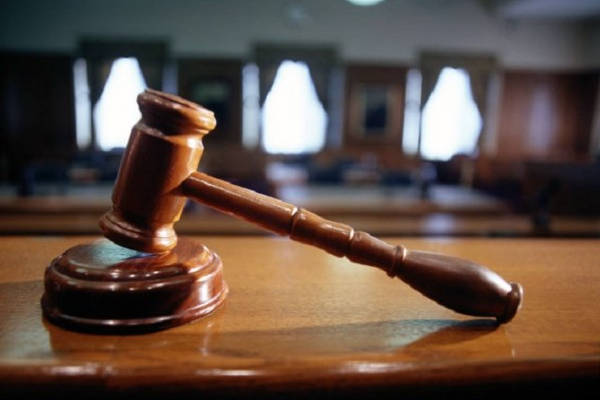
Addax Petroleum Exploration Nigeria Limited (Addax), Mr. Tunji Mayaki, Addax’s Deputy Managing Director and Dr. Nike Esan, Addax’s Head, Dispute Resolution & Corporate Governance can now heave a sigh of relief as a spurious $3.6m criminal charge brought against them has been struck out by Hon. Justice A. Fadipe of the High Court of Lagos State, Ikeja Judicial Division.

The suit No. ID/16806C/202  filed by the Special Frauds Unit (SFU) of the Nigeria Police Force (NPF) was struck out by tthe court on Friday, March 11, 2023.

The SFU had on 28th October 2021 charged Addax and its officials for the alleged offences of conspiracy to steal and stealing the sum of 3.6 million United State Dollars purportedly belonging to Peacegate Oil and Gas Limited (“Peacegate”) in 2010.

The charge was predicated on a petition submitted to the law enforcement agency on 6th July 2021, by one Mr. Adedoyin Ayorinde, the Managing Director of Peacegate.

In response to the above charge, Addax and its officials, represented by the law firm of Babalakin & Co. led by Mr. Olawale Akoni SAN, filed a notice of preliminary objection, contending that the High Court of Lagos State lacked jurisdiction to hear the charge on the grounds that the charge was premised on a law unknown to Lagos State and significantly too that the proof of evidence did not disclose the commission of any crime as the issues between Peacegate and Addax was basically a civil  and contractual dispute, matters regarding which the Civil courts had already determined..

Addax’s legal representatives further pointed out to the court that Mr. Mayaki and Dr. Esan could not by any stretch of imagination, have conspired to steal or conspire to have stolen any money whatsoever belonging to Peacegate as Mr. Mayaki joined Addax in 2012, two years after the period of the alleged offence and Dr. Esan who was a legal officer without any approving or managerial authority at the relevant period, was never involved in the execution of the contract that led to the dispute.

Dr. Esan only worked on the court and arbitration cases alongside the external lawyers engaged by Addax to defend itself.

Our investigation in the above matter showed the following:

  1. Addax had entered into a contract with Peacegate in October 2008 for the provision of three security vessels to carry out security patrol services for some of Addax’s operation for a duration of 9 months. Peacegate only delivered one of the vessels, MV Rescuer and put same to Addax’s use between 22nd January 2009 and 5th February 2009. However, on 5th February 2009, militants attacked the MV Rescuer resulting in damage to the vessel which consequently became unavailable for Addax’s use.
  2. Addax thus terminated the Contract and a dispute arose between the parties in this regard.   In consonance with the Parties’ contractual dispute resolution provision, Peacegate commenced arbitration proceedings against Addax claiming over $10 million for the damaged vessel and full day rate payment for the three vessels. Addax denied liability.
  3. Upon Peacegate’s request, arbitration was suspended and National Petroleum Investment Management Services (NAPIMS), a division of The Nigerian National Petroleum Corporation (NNPC) waded into the mattee.  After series of meetings,  a settlement was eventually recommended by NAPIMS that apart from the sums already paid to Peacegate by Addax, the sum of $3.6million be paid to Peacegate by Addax. As is the practice in Production Sharing Contract arrangements, Addax sought and obtained NNPC Board’s approval in 2010 to pay the sum of $3.6 Million and N44 Million as full and final settlement of all Peacegate’s claims.
  4. However, at a meeting convened to finalise the settlement,  Peacegate flatly rejected the settlement sum, and opted to continue with the ongoing arbitration proceedings, hoping to recover much more than the settlement sum. Mr. Ayorinde Adedoyin, the CEO of Peacegate and other parties who attended the settlement meeting signed the minutes of the meeting containing this position.
  5. At the end of the arbitration proceedings, the arbitral panel issued its arbitral award on 8th July 2011, wherein it only awarded to Peacegate, the total sum of $420,250 and N162,500 as opposed to its over $10 Million arbitration claim.
  6. Peacegate was dissatisfied with this award but rather than challenge the whole award, decided to pick and choose. It adopted an unlawful and inappropriate approach of seeking to enforce in suit No. (FHC/L/CS/401/2012), the favourable part of the award and at the same time seeking to set aside the unfavourable part. Peacegate sought to enforce the part of award granting it $420,250 and N162,500 and commenced enforcement proceedings against Addax. Addax eventually paid the arbitral award sums.
  7. Peacegate also sought to set aside the part of the award not favourable to it in court by filing Suit No. FHC/L/Cs/981/2011 against Addax.  On 24thApril 2014, the Federal High in its judgment in Suit No FHC/L/CS/981/2011 agreed with Peacegate and set aside the arbitral award without taking cognisance of the fact that the award had been enforced or making any order for a refund of arbitral award sums received by Peacegate. Addax appealed this judgment and the Court of Appeal in its judgment of 10th March 2017, reversed the Federal High Court’s decision and reinstated the Arbitral Award of 8th July 2011. Peacegate has a pending appeal against this decision at the Supreme Court.
  8. Despite the pendency of this appeal, Peacegate continued to go about town complaining to all who cared to listen that Addax and its officials conspired to steal and allegedly stole the sum of $3.6 Million and N44 Million which Peacegate rejected at the settlement meeting convened by NAPIMS.

Our findings at the Nigeria Police Force, confirm that, the authorities of the Nigeria Police Force authorized the SFU to withdraw the criminal charge; particularly as it sought and acted on the legal advice of Directorate of Public Prosecution (DPP) Federal Ministry of Justice with a view to prevent a pervasion and miscarriage of justice through malicious prosecution. It is instructive to note that the DPP advised that after thorough review of the issues, Addax and its Officers have not committed any crime and that parties should settle their differences by way of a civil action. It is on the strength of this instruction that Mr. Henry Obiazi, the police prosecutor applied to withdraw the charge and the court consequently struck it out and discharged Addax, Mr. Tunji Mayaki and Dr. Nike Esan.

Reacting to the news that the criminal charge has been struck out, Mr. Mayaki said “This is a welcome development for all of us at Addax, we are glad to put this needless distraction behind us. It is inconceivable that a charge could be brought against persons who were not in employment of the company at the time the alleged offence was committed and against persons who had no actual or ostensible authority regarding the relevant contracts at the material time. Peacegate, following failure to establish their case in the civil courts as they ought to, has dragged us to different law enforcement and regulatory agencies such as the Economic and Financial Crimes Commission (EFCC), the Inspector General of Police Monitoring Team, the and National Petroleum Investment Management Services (NAPIMS).

After investigation by these agencies, Addax and its officials were always cleared of any wrongdoing as it is obvious that the issue between the Peacegate and Addax is a civil and contractual matter with no criminal underpinnings. Once again, we have been exonerated from the spurious charges brought against us and parties can now focus attention on other matters .”

Continue Reading
Click to comment

Leave a Reply

Your email address will not be published. Required fields are marked *

Headline

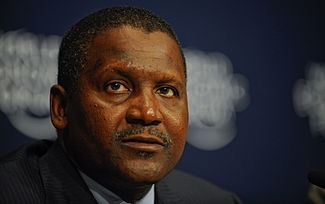
Dangote Warns of Dire Consequences for Nigeria If Iran War Continues

Published

on

By

Nigeria’s foremost industrialist, Alhaji Aliko Dangote, has warned that Middle-East tensions driving global oil volatility could have far-reaching consequences for Nigeria and African economies.

Dangote spoke on Monday in Lagos after a courtesy visit and Eid-el-Fitr homage to President Bola Tinubu.

He said the visit was to extend Sallah greetings, reconnect with the president after some time, and reaffirm respect and continued support for the administration’s policies.

Dangote noted Nigeria had no direct role in the crisis but would still feel the impact because of deep global economic interdependence.

“We are part of a global village, and unfortunately, developments like this will affect us even if we are not directly involved,” he said.

He warned that prolonged tensions could trigger higher fuel prices, rising transport costs, inflationary pressures, and widespread hardship across African economies.

“If the situation does not de-escalate, we will end up paying a heavy price, especially given existing economic challenges,” Dangote said.

He explained that governments could face mounting fiscal strain as subsidies rise and revenues fluctuate under unstable global oil market conditions.

Dangote added that Africa’s rising debt burden could worsen under prolonged instability, further limiting fiscal space and weakening economic resilience.

“Africa is already grappling with debt, and additional shocks will only compound hardship for governments and the people,” he said.

He said escalating energy costs would disrupt nearly every sector, including small enterprises, manufacturing chains, logistics operations and household consumption patterns.

“Energy affects everything. From small businesses like barbers to industries running generators, everyone will feel the impact if costs continue to rise,” he said.

Dangote noted that some countries are already adopting coping strategies such as reduced workdays, energy rationing and remote working arrangements.

He said such measures, while necessary, could reduce productivity, slow economic output and affect livelihoods, particularly among vulnerable populations.

Dangote urged global leaders to prioritise de-escalation, stressing that many Africans rely on daily earnings and remain highly exposed to economic shocks.

“In Africa, in Nigeria, many people depend on daily earnings. If they don’t work, they don’t eat. So we must pray this situation comes down quickly,” he said.

On Tinubu’s recent visit to the United Kingdom, Dangote said the trip had opened new economic opportunities and strengthened Nigeria’s investment outlook.

“I believe the visit has opened many doors. Diplomacy without economic outcomes is incomplete, and this has created opportunities for Nigeria,” he said.

He said agreements reached during the visit, especially in infrastructure and financing, signaled growing international confidence in Nigeria’s reform agenda.

“It is not just about the money committed, but the confidence it shows in Nigeria and the reforms being implemented,” he said.

Dangote said planned investments in critical sectors such as ports would significantly improve trade efficiency and support medium-term economic expansion.

“These investments will help improve our infrastructure, especially in key areas like ports, and complement ongoing government efforts,” Dangote said.

He expressed optimism that other countries, including Germany, would follow with investments as confidence in Nigeria’s economy strengthens.

“Once confidence is established, other countries will come in. It is a signal that Nigeria is ready for business,” he said.

Dangote said the agreements would enable Nigerian private sector players to access international financing and technical support for large-scale projects.

“For Nigerian investors, this shows we can approach these agencies to access funding. It means they are now open to supporting our projects,” Dangote said.

He described the development as a breakthrough, noting that such credit facilities had historically remained underutilised by Nigerian businesses.

“We have not really utilised these resources before, but now there is clear capacity and willingness to fund viable Nigerian projects,” he said.

Dangote reaffirmed his support for the administration, expressing confidence that reforms, partnerships and investor confidence would drive sustainable economic growth in Nigeria.

NAN

Continue Reading

Headline

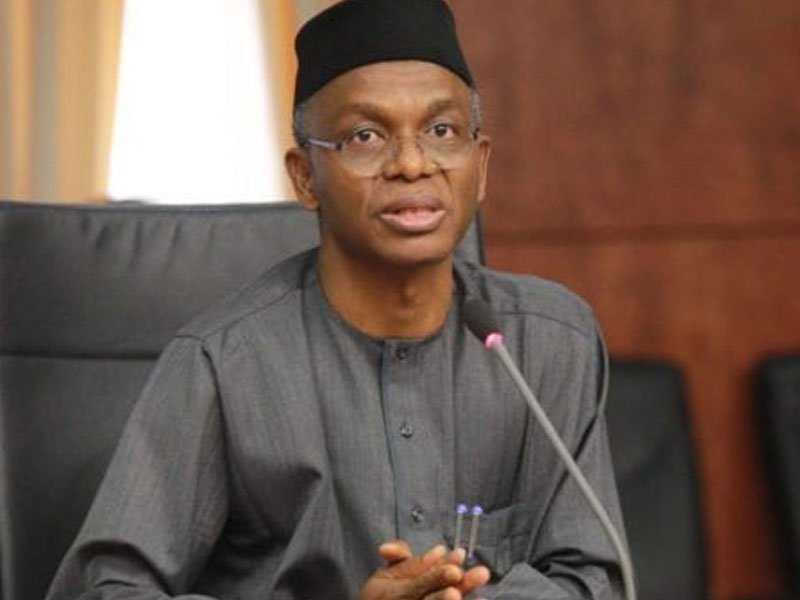
The Travails of Nasir El-Rufai

Published

on

By

By Eric Elezuo

The present predicament of the immediate past governor of Kaduna State, Mallam Nasir El-Rufai, has created diverse camps of supportive, non-supportive and completely indifferent reactions.

The former governor, who completed his two terms in office on May 29, 2023, has remained in the news ever since for the wrong reasons. First, falling out with his supposed godson, the incumbent Governor of Kaduna State, Uba Sani, who has accused him of embezzlement of public funds while in office, using the state house of Assembly.

Secondly, he was unceremoniously dropped from the list of favored applicants for ministerial positions after the Senate, in a brazen act, rejected his nomination and failed to confirm him after undergoing ministerial screening. El-Rufai has neither forgiven the Senate nor President Bola Tinubu for allowing that to happen.

El-Rufai, whi was once the Minister of the Federal Capital Territory (FCT), had consequently turned himself into a vocal critic of the government, offering explanations why the present administration must not be allowed to return to power in 2027.

His most recent outburst of accusing the NSA, Mallam Nuru Ribadu, of orchestrating his arrest on arrival to Nigeria from Egypt, had set the stage for his present predicament. The former governor had in a live interview on Arise Television, claimed to have tapping into the NSA’s communications line, thereby becoming privy to the discussions relating to the order of his arrest. He was therefore, invited to explain the whys and hows of his bugging a high level security line. El-Rufai has not come out of detention ever since. His journey has proceeded from the gaurdroom of the Economic and Financial Crimes Commission (EFCC) to the Department of State Security (DSS).

From all indications, these are not the best of times for the immediate past Governor. And stakeholders have insisted that it’s only a passionate presidential pardon that could extricate the former FCT minister from all entanglements.

Meanwhile, a cross-section of the newest opposition block, the African Democratic Congress (ADC) has insisted that the predicaments and persecutions El-Rufai found himself, and is facing at the moment are orchestrations of the ruling All Progressives Congress (APC) by President Tinubu just as the ruling party has maintained that the former governor is facing the music of his actions and inaction while in office between 2015 and 2023.

Recall that in August 2023, the Senate set the tone for what awaits El-Rufai in the Tinubu administration, when the group, against all expectations rejected his nomination as a minister, confirming 45 others. He was one of the nine former governors nominated for ministerial positions by the Tinubu administration.

The Senate refused to confirm the nomination of Nasir El-Rufai, as well as two other nominees including Stella Okotete (Delta) and Sani Danladi (Taraba).

The President of the Senate, Senator Godswill Akpabio, had informed that the three nominees not confirmed would be subjected to further security checks even as he advise them to take their matter to Mr President, stressing that the non-conformation status stemmed from ‘security reasons’.

It must be recalled also that during El-Rufai’s screening on the floor of the Senate, Senator Karimi Sunday from Kogi West Senatorial District raised a “very strong petition” against the ex-Kaduna governor that bothered on insecurity, unity, and national cohesion.

Sunday, who praised El-Rufai’s performance as Kaduna governor and Minister of the Federal Capital Territory (FCT) some 20 years ago, said, “but I have a very strong petition against you that bothers on security, unity and cohesiveness of the Nigerian nation and I think that petition has to be considered along this screening exercise”.

Much as there was a loud resistance from the Senators against the subject, the Senate President insisted on allowing the Kogi senator’s view to stand, citing reception of other petitions against the former governor.

“Distinguished colleagues, perhaps I should inform you that I have received petitions from many other people in respect of other nominees but this is not where we are to deal with petitions. Our job here is to screen and of course, we can refer petitions to where petitions would be dealt with.

“These are the nominees of Mr President. If it is something that is a formal petition before the Senate, we will look at it formally but there are certain petitions that we have to refer to the Presidency or security agencies to look at and that has nothing to do with us.

“I think by the time we are going with the issue of confirmation and approval, we will so advise. So, I will want to plead with my brother (El-Rufai) to take a bow. So, don’t bother about (addressing the petition). Thank you.”

That was the beginning of the many Travails that trailed, and continued to trail the former Kaduna governor. His case was never revisited. His preferred, and speculated ministerial portfolio, Power, was handed to a legal practitioner, marking the end of the presidential consideration. That was when El-Rufai and Tinubu’s relationship entered the stage of ‘no love lost’

Shortly afterwards in June 2024, the Kaduna State House of Assembly’s ad hoc committee had earlier submitted its investigative report on the El-Rufai administration’s financial dealings, loans, and contracts to the House

The chairman of the ad hoc committee, Henry Zacharia, said the loans secured during El-Rufai’s tenure were largely misused, and in some instances, proper procedures were not followed in obtaining them.

The Assembly Speaker, Yusuf Liman, alleged that El-Rufai’s administration misappropriated N423 billion, resulting in significant financial burdens for the state.

Many Nigerians, though had their misgivings about the 8-years stewardship of El-Rufai, dismissed the charges, claiming it was an aftermath of his altercations with the president. Some assumed it was a witchhunt perpetrated by an administration that has issues with the ex-governor.

In response however, El-Rufai sued the Kaduna State House of Assembly over claims that his administration embezzled N432 billion and left the state with significant debt obligations.

He filed a fundamental rights enforcement case against the Kaduna State House of Assembly at the Federal High Court in Kaduna.

El-Rufai, who appeared in person to file the lawsuit, alleged that the committee denied him a fair hearing, according to a statement by the former governor’s media aide, Muyiwa Adekeye, posted on his X handle.

The lawsuit, filed by El-Rufai’s lawyer, Abdulhakeem Mustapha, contested the Kaduna Assembly Committee’s report, which accused El-Rufai of corruption.
Adekeye wrote, “His lawyer, AU Mustapha SAN, said that El-Rufai approached the court as a Nigerian citizen who is entitled to be given a fair hearing before his rights can be determined by a quasi-judicial or investigative body or courts in line with the provisions of the Constitution of the Federal Republic of Nigeria, 1999 (as amended) and the African Charter on Human and Peoples Rights.

“El-Rufai also asked the court to declare that by the provisions of Section 36 of the Constitution of the Federal Republic of Nigeria, 1999, the Report of the Ad-Hoc Committee on Investigation of Loans, Financial Transactions, Contractual Liabilities and Other Related Matters of the Government of Kaduna State from 29 May 2015 to 29 May 2023, as ratified by the Kaduna State House of Assembly, is unconstitutional and therefore null and void for violating his right to fair hearing as guaranteed under the Constitution.”

Though questions as to whether the persecutions and legal attacks on El-Rufai were products of his vituperations on the presidency for canceling his nomination as a minister, the former governor had continued to leverage on any interview to speak of the incompetence of the administration, while attempting to rally Nigerians to vote out the government come 2027. El-Rufai had also joined the now major opposition party towards wrestling power from Tinubu and his APC government.

On February 12, 2026, El-Rufai was accosted by security operatives, who attempted to arrest him upon his arrival from Cairo at the Nnamdi Azikiwe International Airport in Abuja. His passport was seized in the scuffle that ensued, even as he reportedly declined to accompany operatives without the presentation of a warrant.

To make matters worse, El-Rufai, while appearing on a live interview boasted of intercepting a phone conversation, where the NSA Nuhu Ribadu, had given the order for his arrest on arrival to Nigeria.

El-Rufai had alleged that he and some others listen to the telephone conversations of Mr Ribadu after an individual tapped the NSA’s phone.

He defended the legality of the phone interception, acknowledging that it is technically illegal but claiming, “The government does it all the time. They listen to our calls without a court order. But someone tapped his phone and told us that he gave the order.”

But like the government has been waiting for the slip, they capitalized on the revelation to initiate another round of investigation against the former governor

In His reaction after the interview on Arise TV, Presidential Spokesperson, Bayo Onanuga, raised concerns about the implications of the claim for national security.

“El-Rufai has confessed to wire-tapping Nigeria’s NSA on TV. Does it mean that he and his collaborators have wire-tapping facilities?” Onanuga queried.

He added that the issue should not be ignored, stressing the need for accountability.

“This should be thoroughly investigated and punishment meted out. El-Rufai is not too big to face the wrath of the law,” the presidential spokesperson stated.

However, between February 16 and 18, El-Rufai was detained by the Economic and Financial Crimes Commission over the allegations of misappropriating ₦432 billion during his tenure as governor of Kaduna State.

The government made good its threat as the DSS arrested the former governor, and filed cybercrimes charge before the Federal High Court in Abuja against him over the phone-tapping allegation. The case was filed as FHC/ABJ/CR/99/2026.

The prosecution said he admitted to intercepting the NSA’s communications, failed to report others who conducted unlawful interceptions, and compromised public safety and national security by using technical systems to tap the NSA’s phone.

The alleged acts were said to violate provisions of the Cybercrimes (Prohibition, Prevention, etc.) (Amendment) Act, 2024, and the Nigerian Communications Act, 2003. No arraignment date has been fixed, and Mr El-Rufai has not publicly responded to the charges.

But beyond the DSS legal actions, the ICPC has continued to keep El-Rufai in its custody, having arrested him shortly after his release from the EFCC. It was while the former was in custody that the DSS conducted a search in his Abuja home, claiming to find various items used in wire-tapping. They therefore, attempted to lend credence to the wire-tapping allegations leveled against the former governor.
El-Rufai’s immediate family members have however, denied the DSS allegations just as the former proceeded to the courts to get a judgment declaring every finding as may be presented by the DSS as untenable, citing unauthorisation.
But the ICPC has continued to hold on to the former against the law as many respondents have cited.
In its defence, the ICPC attempted to provide a provide a timeline of events, to prove that El-Rufai’s detention followed a court approved process tied to ongoing investigations into alleged financial crimes., according to statement signed by John Okor Odey, the Head, Media and Public Communication at the ICPC.

“The initial remand order was granted, allowing the Commission to detain the suspect for 14 days to investigate allegations of money laundering and abuse of office. Upon the expiration of the initial order, the Commission applied for a 14-day extension to complete its investigations, which the court acceded to on 5th March, 2026.”

It further noted that an earlier attempt by El-Rufai’s counsel to nullify the remand order had already failed.

“Counsel to El-Rufai attempted to set aside the remand order issued on 19th February, 2026, but the application was dismissed on 9th March, 2026.”

The ICPC maintained that the former governor remains in custody in line with legal provisions.

“Mallam El-Rufai remains in the lawful custody of the ICPC under the remand order dated 5th March, 2026. The Commission is strictly following the court mandated timeline, including the requirement for a progress report.”

It emphasised that all actions taken so far align with the law.

“The ICPC conducts its duties with the highest professionalism and respect for the rule of law. The remand of Mr El-Rufai has been authorised by a court of law in accordance with the Administration of Criminal Justice Act (ACJA) 2015.”

The Commission also reiterated its stance against media interference in legal processes.

“Furthermore, the ICPC remains firm in upholding its longstanding policy of avoiding media trials. We believe that legal disputes should be settled in the courtroom, not on newspaper pages and social media platforms. The Commission’s leadership remains steadfast and undeterred in confronting any and all challenges in the course of the current investigation.”

It urged the public to rely on verified information.

“We urge the public to avoid spreading unverified information and to rely on official updates from the Commission.”

It will still be till end of March before the fate of El-Rufai is known in these fast-paced travails with the government-controlled security agencies.

Continue Reading

Headline

Eid-el-Fitr: Tinubu Felicitates with Nigerian Muslims, Urges Renewed Patriotism

Published

on

By

As Muslims worldwide celebrate Eid-el-Fitr, marking the end of Ramadan, President Bola Tinubu has congratulated the Muslim faithful in Nigeria, urging renewed commitment to the nation and humanity.

President Tinubu enjoined Nigerian Muslims to rededicate themselves to the noble teachings of the holy month, which emphasise piety, empathy, and unity among humanity.

The President’s message was contained in a statement signed by his media aide, Bayo Onanuga, on Thursday.

“We have a lot to draw from the noble lessons of Ramadan, especially at a time like this. We must continue to abide by the virtues of piety, selflessness, perseverance, kindness and compassion beyond this period,” he said.

President Tinubu urged all Muslim faithful to extend a hand of kindness to the needy of all faiths, to further show unity and camaraderie.

The President also tasked Muslim leaders to use the occasion to offer prayers for peace and prosperity to prevail in the country.

On Wednesday, the Sultan of Sokoto and President-General of the Nigerian Supreme Council for Islamic Affairs, Muhammad Sa’ad Abubakar, approved the declaration of Friday as the day for Eid-el-Fitr.

He congratulated Muslims on the successful completion of Ramadan and called for sustained prayers for national unity and development.

The Sultan’s announcement came after the Federal government of Nigeria declared Thursday, 19 March, and Friday, 20 March 2026, as public holidays to mark the celebration of Eid-el-Fitr, which signifies the end of the holy month of Ramadan.

In a statement signed by the Permanent Secretary, Ministry of Interior, Magdalene Ajani, on Tuesday, the Minister of Interior, Olubunmi Tunji-Ojo, who made the declaration on behalf of the Federal Government, extended warm greetings and heartfelt congratulations to the Muslim faithful on the successful completion of the holy month of Ramadan.

Continue Reading

Trending