Connect with us

Opinion

Get M.A.D (Make Apt Decisions)!

Published

on

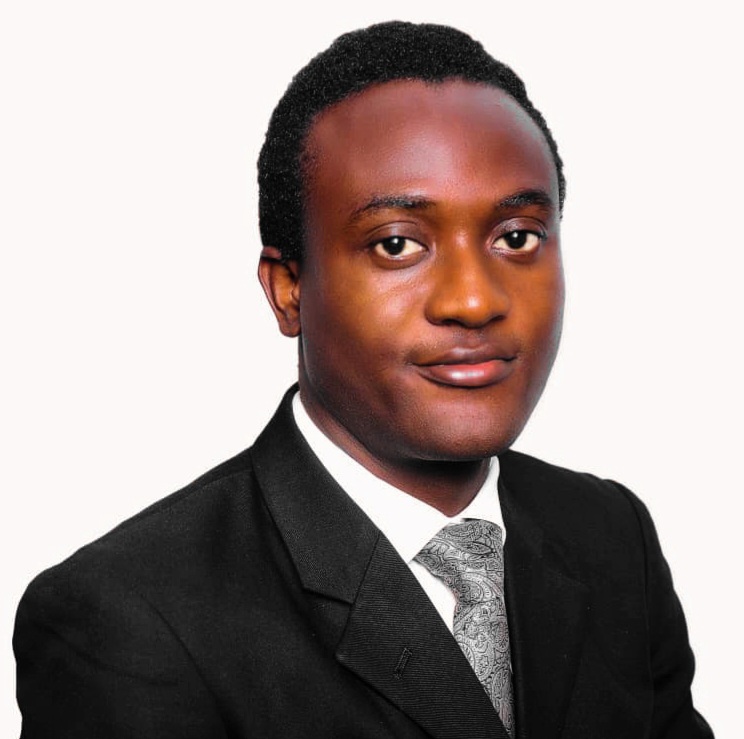
By Tolulope A. Adegoke

Ideas are best implemented for maximum results when you make decisions and stay committed to them. Winning comes by sticking. To succeed, you must start doing something now and stay committed to it.

 People often react differently to the ideas they receive or generate. Some choose to hibernate with their ideas because they are afraid they might fail or they might have to spend their last dime implementing it.

Some people procrastinate. They keep postponing acting on their ideas, until it gets stale or until someone else beats them to the implementation. Fortunately, however, there is a selected few who run with their ideas until the ultimate goal is achieved. I hope you are counted among these few.

Never wait until you are fully “ready” before taking decisions on your ideas – otherwise you may never be able to accomplish a quarter of what you could. The difference between high achievers and low achievers is that high achievers almost always make decisions before they are ready to move – and they stay committed to such decisions.

Your commitment is a vital key to actualising your desired dreams at every level or stage in life. Be wise enough to be dedicated. Do not waste the most precious thing in the world – a good idea; do not waste time either. Good moments and good opportunities must be treasured and fully maximised.

Begin now to harness your empowered zero. Do not wait for any special “inspiration”. Open your eyes; use your head and your heart will follow. Do not wait until you “feel” like it; otherwise, you will be acting by emotion, instead of reason. Your winning starts with your beginning; and you begin by DOING.

Your life today is the aggregate result of the steps you took in the past and the choices you made. Bearing this in mind, you must strategically plan your future because you must live in it to the fullest. Ensure that you get started; never accept defeat (don’t quit). Keep pressing forward, until the hero in you is fully activated and harnessed – until you become a living legend!

Capsules for Effective Harnessing

Remember these capsules at every point of harnessing your potentials:

  • Always affirm
  • Be Alert
  • Applaud

Anybody can amount to something if he will affirm himself and his potentials. Affirm that you can do anything. You can solve that challenge! Yes! You can seal that multi-billion deal. You can get that job! You can be great! You must strongly affirm that you deserve to succeed as much as anyone else. You are an embodiment of God-given potentials which naturally gives you the privilege of deserving to succeed. If you do not believe in your abilities, you may not be able to fully maximise them.

I once could not write the letter ‘g’ correctly. I usually wrote it in the shape of a dumbbell. My mind was not really clear, but through God’s intervention and the help of a very few people that believed in me, I was able to overcome this challenge, as well as developing my latent abilities. I rapidly gained the stamina to believe in my God-given potentials. However, as should be expected, while a few people were helping me to improve, some others were far less considerate, including those who were downright nasty. “Don’t waste your time on him,” they said. But as I continued to strive for the best, I ended up graduating as the overall best student in my department at the first degree level – and becoming even more confident that I was born to deliver solutions and possibilities to peoples, organisations and nations.

I urge you to keep believing strongly that somehow, through God’s intervention and the help of people, you can always reach the peak of your heart desires and fulfil your dreams. You can always make it, even if your approach is different from that of others.

Today, choose to transit from being a zero to a hero, by upgrading yourself intellectually and professionally with a new skill or new trade. No matter the level of your challenges, there is always someone who has the key to wisdom to set you free. This is why you must choose the right mentors and associates.

Understand that you were created in the image of God; you have latent abilities that you must harness. Dr. Robert Schuller said: “When you are inspired with a dream, God has hit the ball into your court. Now you have to hit it back with a commitment.” You cannot fully harness your empowered zero without commitment. Many people harnessed their potentials, but couldn’t stay focused and ended up being devastated.

Bear in mind therefore that, being an embodiment of God’s treasures, you must not fail your generation, and you must not fail God. Cancel negative thoughts, and then count your blessings. Be committed to your decisions. And, more importantly, be ready to take risks because without taking risks, you will never be able to solve problems.

Thank you for reading.

Continue Reading
Click to comment

Leave a Reply

Your email address will not be published. Required fields are marked *

Opinion

Why Investing in People Outperforms Every Resource on Earth

Published

on

By

By Tolulope A. Adegoke, PhD

“The truest measure of a nation’s riches lies not in the depths of its mines or the breadth of its fields, but in the minds, hearts, and hands of its people—created in divine image, called to steward creation, and destined to multiply possibilities through faithful cultivation and wise leadership.” – Tolulope A. Adegoke, PhD

In an era defined by finite natural resources, rapid technological change, and global interdependence, a profound truth resonates across philosophy, faith, economics, and management: the greatest wealth is not buried beneath the earth in minerals, oil, or soil, but stands upon it in the form of human beings. This perspective challenges the traditional fixation on extractive riches and redirects attention to the living, creative, and relational capacity of people. Far from a poetic sentiment, it represents a divinely ordained reality, empirically validated across nations, and strategically indispensable for unlocking possibilities at every level of human endeavor—among individuals and communities (peoples), within corporations, and across entire nations.

This comprehensive examination draws upon timeless biblical revelation, rigorous empirical data from global institutions such as the World Bank and the Institute for Economics and Peace, and established principles from strategic management theory to demonstrate that humans constitute the ultimate resource. As stewards created in the image of God, people possess inherent dignity, creativity, and dominion that no mineral deposit or fossil fuel can replicate. Investing in human potential—through education, health, skills, and ethical empowerment—yields exponential returns that transcend material extraction and deliver sustainable prosperity, innovation, and resilience.

Biblical Foundations: Humans as God’s Image-Bearers and Vicegerents

The scriptural narrative establishes human beings as the pinnacle of creation and the greatest earthly asset long before modern economics articulated the concept. In Genesis 1:26–28, God declares, “Let us make man in our image, after our likeness. And let them have dominion over the fish of the sea and over the birds of the heavens and over the livestock and over all the earth and over every creeping thing that creeps on the earth.” This declaration is not incidental; it links the imago Dei—the image of God—with the mandate of dominion. Humans are entrusted with responsible stewardship over creation precisely because they reflect divine attributes: rationality, creativity, relationality, moral agency, and purposeful productivity.

This truth is echoed in Psalm 8:4–6, where the psalmist marvels, “What is man that you are mindful of him, and the son of man that you care for him? Yet you have made him a little lower than the heavenly beings and crowned him with glory and honor. You have given him dominion over the works of your hands.” Humanity’s crowning with glory underscores intrinsic worth that far surpasses any natural resource. Unlike oil reserves that deplete or mineral veins that exhaust, human potential compounds through generations when nurtured.

The New Testament reinforces this dignity. Jesus’ teachings, such as the Parable of the Talents in Matthew 25:14–30, portray God as entrusting resources to servants for multiplication through faithful stewardship—symbolizing the investment in human capacity rather than hoarding material wealth. The apostle Paul further affirms in Colossians 3:10 that believers are renewed “in knowledge after the image of its creator,” emphasizing ongoing development of the mind and spirit. These passages collectively reveal that God ordained humans—not the ground beneath them—as the primary vehicle for realizing creation’s possibilities. Dominion is exercised not through exploitation but through creative cultivation, innovation, and relational justice, making every person a living repository of divine potential.

Empirical Evidence: Human Capital as the Driver of Productivity and National Prosperity

Contemporary data unequivocally validate this ancient insight. The World Bank’s Human Capital Index Plus (HCI+) 2026 report provides compelling global evidence that human development accounts for up to two-thirds of cross-country income differences. The index measures the expected productivity of a child born today based on health, education, and employment outcomes extending to age 65. Striking disparities emerge: GDP per hour worked in the world’s ten most productive countries exceeds that of the ten least productive nations by more than thirty times. These gaps stem not primarily from natural resource endowments but from deficits in nutrition, learning, and workforce skills.

The report reveals sobering realities: 86 out of 129 low- and middle-income countries experienced stagnation or regression in key human capital components between 2010 and 2025. Deficits in these areas are projected to cost children born today approximately half of their potential future earnings. Conversely, countries that prioritize human investment outperform expectations relative to their GDP per capita. High relative performers include Vietnam, India, Malaysia, Jamaica, Kenya, and the Kyrgyz Republic—nations that have leveraged education, health, and skills to drive growth despite modest natural resources.

This pattern refutes the “resource curse” documented in seminal studies, such as Jeffrey Sachs and Andrew Warner’s 1997 analysis, which found that economies heavily dependent on natural resource exports in 1970 grew more slowly over subsequent decades. In contrast, resource-scarce yet human-rich nations have achieved remarkable transformations. South Korea’s economic miracle from 1960 to 1979 was propelled by massive investments in education and productivity rather than physical capital alone. Human capital and total factor productivity explained growth per worker comparably to physical investments, enabling the country to rise from post-war poverty to global industrial leadership without significant mineral wealth.

Singapore offers an equally compelling case. With virtually no natural resources, it achieved a 2023 Human Development Index of 0.946 (ranking among the world’s highest) through deliberate policies in education, healthcare, and skills development. Its transformation from a trading port to a knowledge-based economy illustrates how human ingenuity creates value where raw materials cannot. Japan and Israel similarly demonstrate resilience: Japan rebuilt after World War II through human capital intensity, while Israel—often called the “Start-Up Nation”—thrives on innovation ecosystems fueled by educated citizens despite arid land and limited conventional resources.

Longitudinal cross-country analyses, including Robert Barro’s 1991 study on economic growth, consistently show that higher human capital (measured by schooling and health) correlates with elevated investment rates, lower fertility (enabling demographic dividends), and sustained GDP growth. These empirical patterns confirm that humans are not merely consumers of resources but creators who multiply value exponentially.

Professional Management and Strategic Evidence: Humans as the VRIO Source of Competitive Advantage

Strategic management theory elevates this empirical reality into actionable frameworks. Gary Becker’s pioneering Human Capital (1964, expanded 1975 and 1993) treated education, training, and health as investments analogous to physical capital. Becker demonstrated that such investments yield measurable returns in earnings, productivity, and national growth—explaining the “residual” in economic models that physical capital and labor alone could not account for. Organizations and societies that systematically enhance human capabilities realize compounding advantages.

Peter Drucker, the father of modern management, famously observed in the late 20th century that “the most valuable assets of a 20th-century company were its production equipment. The most valuable asset of a 21st-century institution… will be its knowledge workers and their productivity.” Drucker foresaw the shift to a knowledge economy where human intellect, creativity, and adaptability become the decisive factors. In today’s context of artificial intelligence and digital transformation, this insight has only intensified: technology amplifies human potential but cannot replace the judgment, innovation, and relational intelligence that define knowledge work.

The Resource-Based View (RBV) of the firm, formalized by Jay Barney in his 1991 seminal paper “Firm Resources and Sustained Competitive Advantage,” provides the strategic capstone. According to RBV, resources deliver sustained advantage when they are Valuable, Rare, Inimitable, and Organized (VRIO). Human capital frequently satisfies all four criteria: it is valuable for generating economic rents; rare in its unique combinations of skills and experience; difficult to imitate due to path-dependent development and tacit knowledge; and organizable through culture, leadership, and systems. Empirical assessments of RBV confirm that firms prioritizing talent development outperform peers reliant on tangible assets. Companies such as Microsoft under Satya Nadella or Google (Alphabet) have achieved market dominance not through superior physical infrastructure but through relentless investment in attracting, developing, and retaining exceptional human talent.

Indispensable Roles: Delivering Possibilities Across Peoples, Corporations, and Nations

At the level of peoples (individuals and communities), humans as the greatest resource translate divine image-bearing into personal agency and collective uplift. Education and health investments empower individuals to exercise dominion creatively—innovating solutions, building families, and fostering communities. Empirical returns are clear: each additional year of schooling can increase individual earnings by 8–10 percent globally, while healthy populations contribute to demographic dividends that accelerate societal progress.

In corporations, strategic human capital management drives innovation, adaptability, and stakeholder value. Talent-centric organizations cultivate cultures of continuous learning, psychological safety, and ethical purpose. They outperform asset-heavy competitors by leveraging knowledge workers to navigate disruption, as evidenced in Deloitte’s 2026 Global Human Capital Trends, which highlight that competitive advantage increasingly depends on human-edge scaling amid AI proliferation. Corporations that treat employees as investments rather than costs achieve higher engagement, retention, and long-term profitability.

For nations, human resource development constitutes the foundation of sovereignty, resilience, and inclusive growth. Policies that prioritize universal health, quality education, and lifelong skills—aligned with the World Bank’s HCI+ recommendations—reduce inequality, mitigate shocks (from pandemics to climate events), and position countries for participation in the global knowledge economy. Nations ignoring this reality risk stagnation, while those embracing it, as Singapore and South Korea have, convert human potential into geopolitical influence and shared prosperity.

Relevance to All-Round Leadership and Global/National Security: Empirical Foundations and Strategic Imperatives

The recognition of humans as the greatest wealth extends profoundly into the realm of all-round leadership and security, where human capital emerges as the indispensable foundation for holistic governance, resilience, and sustainable peace. All-round leadership—integrating self-mastery, visionary foresight, relational wisdom, strategic execution, team alignment, and ethical integrity—cannot flourish in isolation from a well-nurtured populace. Biblical leadership models, such as Nehemiah’s reconstruction of Jerusalem’s walls (Nehemiah 4–6), illustrate this synergy: wise, prayerful, and inclusive leadership combined with empowered citizens to restore both physical and spiritual security. Proverbs 29:18 reinforces the principle: “Where there is no vision, the people perish,” underscoring that visionary leaders depend on developed human potential to translate ideals into enduring stability.

Empirically, the Institute for Economics and Peace’s Global Peace Index 2025 and its Positive Peace framework provide robust international-standard evidence. Positive Peace comprises eight interconnected pillars that build resilience and prevent conflict, one of which is explicitly “High Levels of Human Capital.” This pillar—centered on education, skills, and health—shows one of the strongest positive correlations with overall peacefulness, well-functioning government, low corruption, and equitable resource distribution. Countries ranking high on the Human Capital Index consistently occupy the top positions in the Global Peace Index: Iceland, New Zealand, and the Nordic nations demonstrate how sustained investment in people generates not only economic vitality but also societal cohesion and institutional trust that underpin national security.

In contrast, nations trapped in the resource curse—rich in minerals yet deficient in human capital—exhibit heightened insecurity, including internal conflict, governance fragility, and vulnerability to external shocks. The IEP data reveal that improvements in human capital are among the most powerful predictors of sustained Positive Peace, enabling societies to absorb geopolitical, cyber, or environmental disruptions without descending into violence. The World Economic Forum’s Global Risks Report 2026 and Global Cybersecurity Outlook 2026 further corroborate this: human talent gaps exacerbate cyber vulnerabilities, supply-chain fragility, and leadership deficits in crisis response. Organizations and nations with robust human capital pipelines, by contrast, exhibit superior resilience through adaptive leadership and collective intelligence.

Strategically, all-round leadership thrives when human resources are cultivated as the primary asset. Harvard Business Impact’s 2025 Global Leadership Development Study highlights that organizations prioritizing human capital development produce leaders who excel in navigating volatility, fostering innovation, and upholding ethical standards—precisely the qualities required for 21st-century security challenges. At the national level, this translates into comprehensive security: not merely military defense but human security encompassing economic stability, food sovereignty, cyber defense, and social harmony. Singapore’s transformation and Israel’s innovation-driven defense ecosystem exemplify how human-centered strategies convert potential vulnerability into strategic strength. Investing in people thus becomes both a divine mandate and a pragmatic security imperative, creating resilient leaders and societies capable of stewarding peace amid uncertainty.

Conclusion: A Divine and Strategic Imperative for Investment

The greatest wealth is indeed not in the ground but on the ground—embodied in every human life created in God’s image. Biblical revelation affirms this dignity and dominion; empirical data from the World Bank’s HCI+ 2026, the Institute for Economics and Peace’s Global Peace Index 2025, and decades of econometric research demonstrate its productivity, leadership, and security dividends; and strategic frameworks from Becker, Drucker, and Barney prove its competitive necessity. Across individuals, corporations, nations, leadership, and security architectures, humans deliver possibilities that no extractive industry can match: innovation that solves intractable problems, relationships that build trust and cohesion, visionary governance that prevents conflict, and stewardship that sustains creation for future generations.

The call to action is both spiritual and pragmatic: invest sacrificially in people through education, healthcare, ethical leadership development, inclusive opportunity, and Positive Peace-building initiatives. In doing so, societies honor their Creator, unlock exponential value, fulfill the dominion mandate responsibly, and fortify all-round leadership and security in an interdependent world. In a world tempted by short-term extraction, the timeless truth endures—true riches walk upon the ground, bearing the image of God and the potential to transform everything they touch. Nations, organizations, and communities that recognize and cultivate this reality will not merely survive but flourish, leaving legacies of abundance, wise leadership, and enduring peace for generations yet to come.

Dr. Tolulope A. Adegoke, AMBP-UN is a globally recognized scholar-practitioner and thought leader at the nexus of security, governance, and strategic leadership. His mission is dedicated to advancing ethical governance, strategic human capital development, and resilient nation-building, and global peace. He can be reached via: tolulopeadegoke01@gmail.comglobalstageimpacts@gmail.com

Continue Reading

Opinion

My Dear Brother, Dele Momodu by Segun Adeyemi

Published

on

By

Permit me to go straight to the heart of this message.

I can no longer pretend that I have not been following the deeply troubling and increasingly vile exchanges involving you and others in recent times.

What has now become a public brawl is unfolding on social media, an arena without boundaries, without gatekeepers and, it would seem, without red lines.

Social media is a most unforgiving theatre. Whatever is said there acquires a troubling permanence.

Long after we are gone, generations yet unborn need only type a name, and every word, spoken or hurled, rises again, fresh and unrelenting.

Should that not give us pause?

Should it not compel restraint in what we say, and even in what we choose to dignify with a response?

Of all those caught in this fray, you are the one I know, and have known for a very long time.

Our friendship dates back to 1977, a year before we gained admission into UNIFE. We worked together then as clerical officers in the University Library under Mr. Dipeolu (I hope I got that right. If I didn’t, I can be forgiven. It’s almost half a century ago).

That was long before fame found you. You were grounded, witty, perceptive and street-smart, yet deeply studious. Innovative. Brilliant. We competed, not in vanity, but in intellect, over the books we had read, the ideas we had encountered.

And we read, voraciously. How could we not, with the rare privilege of unfettered access to a university’s intellectual treasury?

We also had fun, maximum fun. We drank palm wine. We drank beer. We partied. We chased babes.

I remember accompanying you, many times, to visit your dear mother, of blessed memory, at her shop near the palace. She feted us each time. Ever so kind. Ever so motherly.

I recall meeting your brother, Dr. Ajayi, newly returned then, whose sports car was the talk of the town.

I reach back into these memories not out of nostalgia alone, but to establish my bona fides to write you this note, to remind you that I knew you before the noise, before the crowd and before the many voices that now speak at you and about you.

You have always earned your place through hard work, discipline and intellect. Many don’t know this, sadly. They only see the fun-loving Publisher of a popular society magazine.

I am not concerned here with who is right or wrong, nor with what ignited this present _Ija’gboro_, this no-holds-barred street fight where everything becomes a weapon, including shared history and past goodwill.

My concern is you, my friend, my colleague, my brother.

For the sake of all you hold dear; for the memory of your mother, whose dignity and values you carry; and for the sake of God, I urge you: find an off-ramp from this vicious freeway. Step away from this corrosive spiral now.

You are not the sum of the insults hurled at you. You are not the distortion others attempt to project. No.

You will recall that in those Ife days, you held British Philosopher Bertrand Russell in high regard. Russell once observed:

_”The whole problem with the world is that fools and fanatics are always so certain of themselves, and wiser people so full of doubts.”_

Wisdom, my brother, often lies in restraint, in knowing when to disengage from the theatre of noise.

And perhaps you also read the works of another Philosopher, German Friedrich Nietzsche, whose haunting warning feels especially apt at a time like this:

_”He who fights with monsters should be careful lest he thereby become a monster. And if you gaze long into an abyss, the abyss also gazes into you.”_

There is yet another truth, often echoed across ages: when one descends into the arena with a beast, the spectators, in time, cease to know the difference. I didn’t say this to insult your opponents in this shameful arena. They are not my concern here.

I say this with all the affection and sincerity of a brother: rise above this moment. Withdraw your dignity from the marketplace of insults. Let silence, where necessary, speak louder than rebuttal.

May God guide your thoughts, guard your words and steady your steps at this time.

Yours ever so sincerely,

Segun ADEYEMI, a veteran journalist

Continue Reading

Opinion

The Six Focal Dimensions of Leadership: A Holistic Framework for Personal Mastery

Published

on

By

By Tolulope A. Adegoke, PhD

“True leadership awakens the highest in others by first mastering the highest in oneself: it weaves inner clarity with outward vision, human connection with disciplined action, collective harmony with unyielding integrity—transforming individuals, institutions, and societies into their fullest potential.” – Tolulope A. Adegoke, PhD.

Leadership constitutes a pivotal force in human progress, operating as a multifaceted process that shapes personal trajectories, drives organizational excellence, and steers national destinies. Far beyond positional power, it integrates psychological depth, behavioral agility, strategic acumen, relational wisdom, systemic orchestration, and unwavering ethical commitment. The focal dimensions—self-leadershipvisionary directionrelational influencestrategic executionteam and systemic alignment, and ethical integrity—serve as enduring pillars, drawn from an evolving synthesis of leadership theories including trait, behavioral, contingency, transformational, servant, authentic, and collective models. These dimensions interact dynamically, adapting to cultural nuances, technological advancements, generational shifts, sustainability demands, and geopolitical complexities in our interconnected era.

This expanded exploration delves profoundly into each dimension, weaving theoretical foundations with practical applications across individuals (peoples), corporations, and nations. It incorporates concrete, globally recognized examples—historical and contemporary—to provide clearer insight, deeper comprehension, and alignment with international standards of scholarship and practice. These illustrations highlight successes, challenges, and transferable lessons, underscoring leadership’s role in fostering resilience, innovation, equity, and sustainable flourishing.

Self-Leadership: The Internal Compass of Personal Mastery and Authenticity

Self-leadership forms the foundational dimension, emphasizing proactive self-direction through heightened self-awareness, emotional regulation, disciplined habits, continuous learning, and resilient agency. Rooted in cognitive-behavioral and positive psychology frameworks, it empowers individuals to align actions with intrinsic values amid external pressures.

For individuals, self-leadership manifests in personal triumphs over adversity. Viktor Frankl, the Austrian psychiatrist and Holocaust survivor, exemplified this during his imprisonment in Nazi concentration camps. Despite unimaginable suffering, Frankl chose his attitude and inner response, maintaining meaning through logotherapy principles and later authoring Man’s Search for Meaning. His practice of finding purpose in suffering demonstrates self-leadership’s power to preserve dignity and agency in extreme conditions.

In corporations, self-leadership scales to executive authenticity and cultural modeling. Leaders who engage in reflective practices—such as executive coaching, mindfulness, and vulnerability—cultivate environments of ownership. Companies like Google have institutionalized self-leadership through programs encouraging personal growth and error reflection, contributing to innovation cultures where employees proactively drive projects.

Nationally, self-leadership appears in statespersons exhibiting moral courage and transparency. Leaders who publicly acknowledge policy shortcomings while pursuing national interests build institutional trust. This dimension supports anti-corruption efforts and civic responsibility in diverse societies, enhancing social capital and intergenerational equity in education, health, and environmental policies.

Visionary Direction: Articulating and Mobilizing Toward Compelling Futures

Visionary direction involves crafting an inspiring, feasible future narrative and aligning resources through foresight, purpose communication, and motivational alignment. It draws from transformational leadership, integrating scenario planning and inspirational rhetoric.

Individuals harness this by defining legacy-oriented missions, channeling energy beyond daily survival toward skill mastery or societal contribution, sustaining motivation through setbacks.

Corporations depend on visionary direction for enduring success. Reed Hastings at Netflix pioneered streaming disruption, envisioning a world where entertainment shifts from physical media to on-demand digital access. By investing boldly in original content and global expansion while phasing out DVD rentals, Hastings aligned the company with technological inevitability, transforming it from a mail-order service into a dominant entertainment platform.

At the national level, visionary direction shapes long-term policy architectures. Jacinda Ardern, former Prime Minister of New Zealand, articulated a compassionate, science-driven vision during the COVID-19 pandemic, emphasizing “team of five million” unity, rapid border closures, and clear communication. This foresight enabled effective containment, economic safeguards, and high public trust, illustrating how inclusive national narratives mobilize cross-generational coalitions amid global crises.

Relational Influence: Building Trust, Empathy, and Inclusive Connections

Relational influence prioritizes authentic bonds through emotional intelligence, active listening, empathy, and mutual empowerment. Grounded in leader-member exchange and relational theories, it transforms interactions into collaborative partnerships.

Individuals apply this in nurturing supportive networks—family, mentorships, communities—that enhance well-being and collective efficacy.

In corporations, relational leadership fosters inclusive, innovative cultures. Satya Nadella at Microsoft shifted from a competitive to a collaborative ethos, emphasizing empathy, growth mindset, and cross-functional dialogue. By modeling vulnerability (sharing personal stories of his child’s disability) and empowering teams, Nadella revitalized innovation, boosted employee engagement, and drove market resurgence.

Nationally, relational influence bridges societal divides. Leaders who facilitate inclusive dialogue and empathetic policymaking reduce polarization. In multicultural or federal contexts, this strengthens democratic legitimacy and crisis coordination, building social capital vital for equitable reforms.

Strategic Execution: Adaptive Implementation and Problem-Solving Under Uncertainty

Strategic execution demands rigorous analysis, decisive action, resource optimization, and iterative adaptation. Informed by contingency and situational models, it balances efficiency with flexibility.

Individuals exercise this in career navigation or personal crises, converting obstacles into advancement.

Corporations require strategic execution for resilience. During Boeing’s 737 MAX crises, leadership (post-2019) executed comprehensive safety overhauls, MCAS redesigns, regulatory cooperation, and cultural reforms—demonstrating calibrated response to regain certification and stakeholder confidence.

Nationally, this dimension drives governance efficacy. New Zealand’s Ardern again exemplified execution during COVID-19 through evidence-based lockdowns, testing scaling, and adaptive economic support, minimizing health and economic damage while maintaining public adherence.

Team and Systemic Alignment: Orchestrating Cohesion and Interdependent Success

This dimension empowers others, clarifies interdependencies, and aligns efforts via distributed leadership models, viewing outcomes as networked rather than hierarchical.

Individuals contribute through meaningful delegation and peer mentoring.

Corporations build high-performing ecosystems by dismantling silos and integrating functions. Relational approaches, as seen in collaborative cultures at companies emphasizing team empowerment, enhance knowledge flow and adaptability in global operations.

Nationally, alignment harmonizes institutions and partnerships. Effective leaders empower subnational entities while ensuring coherent direction, facilitating seamless development and crisis responses in federated or diverse systems.

Ethical Integrity: The Moral Anchor of Accountability and Sustainability

Ethical integrity demands principled consistency, transparency, stakeholder protection, and long-term orientation. Drawing from servant and authentic paradigms, it safeguards trust across all endeavors.

Individuals uphold personal codes resisting expediency.

Corporations embed integrity through governance and stakeholder focus. Johnson & Johnson’s 1982 Tylenol crisis response—swift nationwide recall, transparent communication, and tamper-proof packaging redesign—exemplified ethical prioritization of public safety over short-term profit, restoring trust and setting industry standards.

Nationally, ethical leadership combats corruption and upholds rule of law. Leaders modeling public-interest primacy enhance credibility, investment attraction, and civic virtue diffusion.

Interconnections, Global Relevance, and Pathways Forward

These dimensions interlink synergistically: self-leadership informs visionary clarity, relational trust enables execution, systemic alignment reinforces ethics. Cross-level synergies create virtuous cycles—personal mastery informs corporate innovation, which shapes national resilience.

In today’s context—AI integration, climate urgency, demographic changes, multipolar dynamics—hybrid, culturally intelligent leadership prevails. Measurement via assessments, scorecards, and indices supports development through mentorship, academies, and experiential programs.

Conclusion: Leadership as Catalyst for Interdependent Flourishing

The focal dimensions offer a timeless, adaptable framework elevating individuals to fulfillment, corporations to prosperity, and nations to inclusive progress. Through global examples—from Frankl’s resilience and Hastings’ disruption to Ardern’s empathy and Johnson & Johnson’s integrity—leadership demonstrates profound impact when harmonized with authenticity and service. Investing in these dimensions equips stakeholders to navigate complexity, fostering legacies of resilience, equity, and shared well-being across borders and generations in our interdependent world.

Dr. Tolulope A. Adegoke, AMBP-UN is a globally recognized scholar-practitioner and thought leader at the nexus of security, governance, and strategic leadership. His mission is dedicated to advancing ethical governance, strategic human capital development, and resilient nation-building, and global peace. He can be reached via: tolulopeadegoke01@gmail.comglobalstageimpacts@gmail.com

Continue Reading

Trending