Headline
A Seminar to End All Seminars – Tribute to Adebayo Williams at 70
Published
5 years agoon
By
Eric
By Hon Femi Kehinde
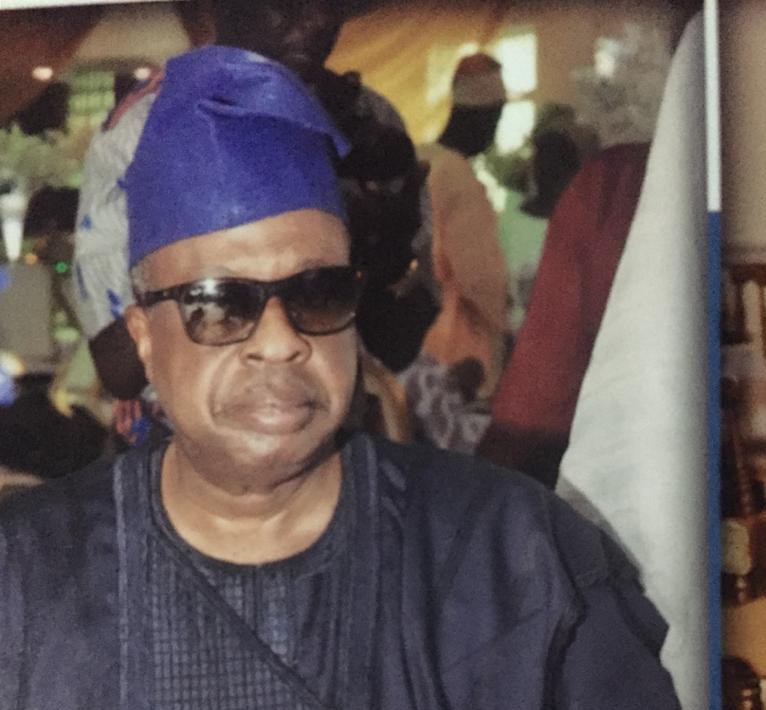
Sometime in 1986, during the military jackboot and gestapo style of governance in Nigeria, Adebayo Williams, then a teacher of Literature-in-English, at the University of Ife, was invited to Lagos, to deliver a public lecture at a seminar, purposely convoked, to discuss democracy. Mindful of the possibility of arrest after his delivery, which may be acerbic and unpleasant to the men of power, he ably, titled his lecture at this seminar- A seminar to end all seminars.
This lecture was published in major newspapers of the day. Despite this premonition of a possible arrest, Adebayo has gone ahead to deliver so many seminal works and intellectual papers at various fora across the globe, and has lived to be 70 years; the seminars have not ended.
First and foremost, I am eminently qualified to write Adebayo’s story. Adebayo’s mother, Maria Oyedun Williams was my maternal grandfather’s (Kasumu Oyekanmi) immediate younger sister. Kasumu begat my mother, Elizabeth Wulemotu Boladale Aduke Kehinde – the late Iyalode of Gbonganland . From this vantage position, I have known, and lived under the guidance and mentorship of Adebayo- a much older brother, like a father, for six decades.
Adebayo Biala Alamu Williams, was born on the 9th of September, 1951, to late Pa Johnson Bolarinwa Williams and late Mama Maria Oyedun Williams, of Ile Keti Compound, Gbongan in Osun State.
He was named Biala, because Oyedun had him as her first fruit of the womb, when she was slightly above 40 years. Adebayo’s arrival, to her and the family, was like a dream – Bi Ala! In the trajectory of his life, he has lived that name. Adebayo’s chequered life cannot certainly be different from life’s alloy’s fundamental principles.

A brief chronicle of his life tells the story.
Adebayo’s father, Johnson Bolarinwa of the Gbongan/Modakeke stock, was one of Gbongan’s early political elites. In his early days, he was a UAC factor in Gbongan, in charge of cocoa produce in the big conglomerate. He later ventured into politics, and became Gbongan’s first elected councillor, after the advent of the Macpherson constitution of 1951, that brought fresh elites into political relevance.
He was elected on the platform of the NCNC of Dr. Nnamdi Azikiwe and later became a big stalwart of the Samuel Ladoke Akintola’s NNDP government of the Western Region. He was a key participant in the UPGA/DEMO Saga in Gbongan, that erupted as a result of the uproars of the 1965 Western Regional elections.
In the NCNC/NNDP, he was very friendly, with the likes of Adegoke Adelabu, Fani Kayode (Fani Power) Richard Akinjide, Adeoye Adisa, and his political comrades in Gbongan – Atanda and Ogunyele. J.B Williams, popularly known as “Willy” in Gbongan, had his house razed to the ground, in the ‘operation Wetie’, that erupted upon the overthrow of the first civilian government and the advent of military interregnum, on the 15th of January, 1966. Kasumu (Oyedun’s senior brother), did not live too long. He was a victim of the dreaded small pox (sanponna) epidemic of 1947.
As a result of the death of Kasumu in 1947, Wulemotu was in the early care and mentorship of Kasumu’s younger sister – Oyedun, who begat Professor Adebayo Williams, and Evangelist. Taiwo Williams. Interestingly, on the opposite side of the divide, Chief (Mrs.) Wulemotu Aduke Kehinde, the late Iyalode of Gbongan land, who was also an active participant of the Akintola/Awolowo Saga of the first republic, led the women vanguards of UPGA, and was clamped into police detention on spurious charges, not unconnected to Political Vendetta.
Gbongan was founded by a man named Olufiade (short form, Olufi.) Olufiade was a direct descendant of Alaafin Abiodun Adegoriolu, who reigned in Oyo, between 1750 and 1789. Olufi contested for the throne of the Alaafin of Oyo after the demise of his father, but lost to another prince. He had to leave Oyo as tradition demanded, and was followed by many Oyo Citizens, that were sympathetic to his struggle for the throne of Alaafin.
Olufi and his entourage left Oyo via Igbori route, stayed there for some time, and then moved to Soungbe, from where they finally got to Gbongan-Ile. The Olufi carried along from Oyo, a beaded crown, which made his followers recognise him, not only as an Oyo Prince, but an Oba in his own right.

The unrest that wrecked the stability of Oyo, also affected many Oyo towns, and this allowed marauders to penetrate several Oyo towns, including Gbangan-Ile. Olufi and his followers had to migrate to a more forested location, which was more secure, than the former location. The present Gbongan is situated in the forest belt of Osun State. This is why at the present location, we have such settlements like Eke-Egan, Oke Apata, Ile-Opo, Aiyepe, Ile Keti, and Owo-Ope. Gbongan town, is watered by a network of streams like Oyunlola, Akinjole, Alaanu, Oleyo, Yemoja and Elu.
Her Eastern boundary with Ile-Ife is the big Sasa River. This present Gbongan was founded around 1825. The fact that Gbongan was headed by an Oba attracted many people to settle there and the thick forest location, provided security for the population from the invaders. By the middle of the 19th century, the community, which started as a small settlement at Gbongan Ile by 1790, had grown to become one of the largest towns in her area.
Intriguingly, Adebayo bears a surname, that has hidden his “Ara Oke” stock and identity – a Gbangan/Modakeke man to the core. As a local breed of that environment, Adebayo attended St. Luke’s Anglican Primary School, Gbongan, with the likes of Wale Adenuga of the Ikebe Fame, whose father, was then though of Ijebu stock, a prominent businessman in Gbongan. He later relocated his business to Ile-Ife, but his Adenuga Street in Gbongan, is still a beautiful reminder of his long sojourn in the Gbongan community.
After Adebayo’s Primary education, he was admitted to the Gbongan-Odeomu Anglican Grammar School, Gbongan, for the early part of his Secondary Education, under the principalship of Mr. G.A Adeyemo – an Ibadan man.
He had a brief stint in Gbongan-Odeomu Anglican Grammar School as a result of the relocation of his father, J.B Williams (Willy), to Modakeke, after the destruction of his house in Gbongan, due to the violence of 1966. In Modakeke, where he had now relocated to with his father, he also had a brief stint at the Oranmiyan Memorial Grammar School, Ile-Ife, from where he then moved into the world, to chart and navigate a destined course of life.
Briefly, he was a Primary school teacher at Telemu, near Iwo, in present day Ola Oluwa Local Government Area of Osun State. As a precocious young man, he certainly did not enjoy the life of holding the chalk in front of infants, and also perhaps, a disdain for the rural life of Telemu. He bolted out from Telemu and got a job as a sub editor with late Chief Obafemi Awolowo’s Nigerian Tribune against his father’s wish. J.B Williams had a nauseating disdain for the Action Group. Adebayo was now engaged in the profession of journalism, which was described as “only that belonging to the flotsam and jetsam of the society,” by Ernest Ikoli- a doyen of Journalism practice in Nigeria and former president of the Nigerian Youth Movement (NYM).
He left the Nigerian Tribune in 1971, and was admitted to the University of Ife, to study English Language. The University of Ife, established by an Act of Parliament of the Western Region in 1961, under the premiership of Chief Samuel Ladoke Akintola, admitted its first set of 244 students in September, 1962, with 5 faculties, of which the Faculty of Arts was one of them. The University took off at the current site of the North Campus of the Ibadan Polytechnic, that was then known as the Nigerian College of Arts, Science and Technology, with Professor Oladele Ajose as its first Vice Chancellor. In 1967, the University moved to its permanent site in Ile-Ife on the 130, 000 Acres of land donated by the people of Ile-Ife and the Ooni of Ife, Oba Titus Martins Tadeniawo Adesoji Aderemi, then Governor of the Western Region. The Ife Campus, adjudged as the most beautiful campus in Africa, was designed by the Isreali Architect, Arieh Sharon, together with a team of Nigerian Architects, including Lagos based Architect, A. A Egbor, in the 1960s. They gave Ife the beauty, the elegance and the picturesque sceneries, that made the university a great haven for learning and culture. This was the university that trained Adebayo Williams, from where he graduated, and which later employed him, as a lecturer of English Literature.
After a successful completion of his university education at the Great Ife, he went for his National Youth Service in the then Eastern Region of Nigeria, specifically in Enugu, and thereafter, secured a teaching appointment with the Federal Ministry of Education, and was posted to the Federal Government College, Kaduna as a classroom teacher, where he also mentored so many students, who are now distinguished in various fields of human endeavours.
It was in Kaduna that he met his heartthrob. Bolanle, an Ogbomosho lady, and a nursing sister, working in a Government hospital in Zaria, and whom he later married, and had three children – Bisola, Adeola and Oladipupo.
The classroom in Kaduna could not guarantee and secure the future that Adebayo dreamt of and envisaged. He had been granted a car loan, and bought a brand new Volkswagen Passat car, but nonetheless, his dream was expansive. He dreamt of a world that would bring out the intellectual profundity in him. He secured an employment with the University of Ife, and was admitted to pursue his Masters Degree course, and also teach English Literature as a graduate assistant; and then the meteoric rise. In the 1981/82 session, while still a Visiting Graduate Student Lecturer, Adebayo was appointed Honorary Visiting Lecturer, Department of English, University of Sheffield, England.
In that capacity, he gave lectures and seminars in the new areas of Theories of African Literature. In 1983, Adebayo was awarded a Doctorate Degree in Theory of African Literature. In 1986, he became a Senior Lecturer in the Department of English, Obafemi Awolowo University, Ile Ife, from where he began the journey again, to traverse the world. Adebayo was popularly known as Larry B or Tatolo Alamu – a pen name, by his friends and admirers. Tatalo Alamu, was a pioneer of Sekere, a type of Yoruba traditional music. A native of Ibadan, he was popular in Yorubaland, through out the 1950s and early 1960s. Adebayo, returned to Nigeria in 2006, after serving as a Professor in various universities in America and Europe.
Aside from his various intellectual engagements, Adebayo had also served, as chairman, Lagos State Electoral Reform Panel, between 2008 and 2010, member, Board of Trustees, Obafemi Awolowo Institute for Governance and Public Policy 2009 till date, and chairman, Lagos State Gubernatorial Advisory Committee, 2010 to 2018, under Governors Babatunde Fashola and Akinwunmi Ambode.
In 1995, Professor Williams was appointed the Director-General of Africa Policy Group – a London based Think-tank, which addresses issues of governance crucial to Africa. Earlier in 1991, while still teaching at Obafemi Awolowo University, Ile-Ife, Nigeria, Professor Williams, was made a director of the USAID-sponsored project on Governance and Democratization in Africa.
In 1997, he returned to the Centre of African Studies, University of Birmingham, as a visiting lecturer and Honourary Research fellow, a position he held till 2006. He had earlier served in the same department as Leverhulme Fellow, between 1988 to 1990.
In November 1998, Professor Williams became a Fellow of African Studies Centre, University of Leiden, Holland and Professor of Liberal Arts, Savannah, College of Arts and Design, Georgia, USA. In January, 2004, Professor Williams assumed duty as the Amy Freeman Lee Distinguished Chair of Humanities and Fine Arts, University of The Incarnate Word, San Antonio, Texas USA. He has also served as jury/professor at the Ecole Normale Superieure in France.
In the course of a distinguished career, spanning almost fifty years. Professor Williams has won many Laurels in scholarship, journalism and creative writing, including winning, twice both The Association of Nigerian Authors Prize in 1988 and 1995, and the Alade Odunewu prize for Informed Commentary in 1993 and 2000.
In addition, he has served as mentor and iconic source of inspiration for many generations of Nigerians, who look up to him as a source of guidance and political compass. Adebayo, a man of profound wit, fecund mind and intellect, was once asked a nagging question – “Would you agree that Tinubu’s role in the Afenifere crisis contributed to the death of Pa Adesanya?”
He responded rather brusquely: “I am yet to see the death certificate of Pa Adesanya, so I wouldn’t know. But I know that he died of age related infirmity. He might have been heartbroken about development in the organisation particularly on how things ought to have been done.”
He was one of the brains behind the first ever Nigerian Political summit, chaired by Pa Adekunle Ajasin at Eko Hotel, Lagos. Adebayo yearns and clamours for a restructured Nigeria, and he said in an interview session –
“We have been saying that Nigerians need to sit down and talk. I have been saying this for the past 20 years that elections will not resolve national questions. In fact, it worsens it. We have seen situation, where elections led directly to civil war in many African countries. When you think that democracy is solely synonymous to election, that is what they call electoralism. Election is just one aspect of democracy, so the way we are going, if we are not careful, Nigeria is heading for a terminal crisis. If we cannot talk among ourselves, eventually, the United Nations (UN) may be forced to come and supervise a talk in this country. That is my prediction, and I have no apology for saying this.”
He added: “The masses are so important, so are the elites. My fear is that if we go to this election with this kind of mindset, particularly in the current ruling class, a winner may emerge but the contending contradiction may make the country ungovernable for such a winner and then we just begin to slide towards Mogadishu.”
In other words, victory without success. It was a prophetic interview. This interview session was in 2019, before the 2019 election.
As a crowning glory, Adebayo Williams is one of Nigeria’s best known scholars and globally recognised academics, with over a thousand publications, with over six books to his credit. He is a polyvalent intellectual scholar. He had been columnist to NewsWatch Magazine between 1985 and 1990, African Concord, between 1990 and 1992, Tempo/The News – 1993 to 1995, The Nation, 2007 till date, and African Today as columnist and editor at large – 1995 till date.
Adebayo Williams, a man of sartorial taste and elegance, loves good cars, wine and intellectual environment.
When Obafemi Awolowo was 70 years on the 6th of March, 1979, and at a campaign rally at the Mapo Hall, Ibadan, the enthusiastic crowd of UPN party faithful and stalwarts, thronged to the Mapo Hall Rally, to welcome Chief Awolowo to the Presidential Campaign rally, and thenceforth, was referred to as Papa Obafemi Awolowo, with a deafening shouts of Papa Awo!!! Awo!!! Awo!!! So as a fresh mint 70 year old man, do we now call Adebayo, Papa Adebayo Williams? He certainly does not possess the gait and look of a 70 year old man.
I have known Adebayo Williams, as my mother’s younger brother, and I grew to know him as a mentor, role model and pathfinder, who has certainly added values to my life of six decades. He ensured my transition or relocation from the Department of History in Ile-Ife, to the Faculty of Law, through the able supports of Mr. Itsey Sagay, now Professor of Law, then Dean of the Faculty of Law; Dr. Kehinde Olupona, now Professor of Religions; Professor Sola Ehindero, now Harvard University Professor of Religions, and Professor Fajana as Dean of the Faculty of Education.
Through this innumerable efforts, I now eat with two spoons – Historical and Biographical writings as a passion, law as a profession of almost four decades, and perhaps the third spoon-Politics as a vocation, being a former member of the House of Representatives in the National Assembly, all from a single plate, courtesy of the mentorship of Adebayo Williams.
In this enchanting drama of a life being lived well, let the music and the lyrics go on, because Adebayo Williams is the song and the melody. In a society that places scant values on its egg heads – Adebayo Biala Alamu Williams – may you continue to live well, even now as a statesman and Septuagenarian.
Happy birthday!!!
Hon (Barr) Femi Kehinde is a legal practitioner and former member of the House of Representatives,
representing Ayedire/Iwo/Ola-Oluwa Federal Constituency, Osun State (1999-2003).
Related
You may like
Headline
Amnesty Condemns Wike’s ‘Shoot’ Remark Against Seun Okinbaloye
Published
1 hour agoon
April 6, 2026By
Eric
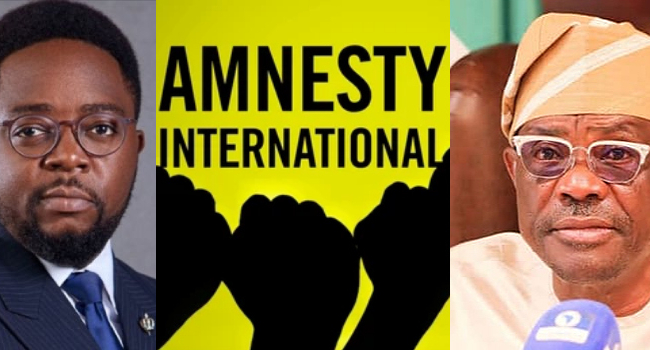
Amnesty International Nigeria has condemned comments by the Minister of the Federal Capital Territory, Nyesom Wike, over a statement in which he said he could “shoot” a television anchor during a live broadcast.
In a statement issued on Saturday, the organisation described the minister’s remarks as “reckless and violent,” warning that such language could incite attacks on journalists and undermine press freedom.
The group said Wike’s statement, made during a media parley in Abuja, violated broadcasting standards and carried the risk of normalising violence against media practitioners.
“Amnesty International Nigeria strongly condemns the reckless and violent language of the Minister of the Federal Capital Territory (FCT), Mr Nyesom Wike, in which he stated that he can respond to a statement by a journalist with shooting,” the statement read.
It added that Wike’s remarks—“If there’s any way to break the screen, I would have shot him”—not only incited violence but also contravened Nigeria’s broadcasting code, which the National Broadcasting Commission is mandated to enforce.
The organisation warned that such comments from a public official could embolden attacks on journalists.
“What Wike said carries the danger of normalising violence and encouraging the targeting of journalists for just doing their job. This level of violent intent coming from a member of Nigeria’s federal cabinet is unlawful and unacceptable,” it said.
Amnesty International called on the minister to immediately withdraw the statement and issue a public apology.
The controversy followed Wike’s reaction to comments made by Channels Television anchor Seun Okinbaloye during a programme discussing the leadership crisis in the African Democratic Congress and its implications for opposition politics ahead of the 2027 elections. Okinbaloye had raised concerns about the possibility of a one-party state, a position the minister criticised as inappropriate for a journalist.
Related
By Eric Elezuo
Following the Wednesday derecognition of the leadership of the main opposition party, the African Democratic Congress (ADC), by the Prof Joash Amupitan-led Independent National Electoral Commission (INEC), diverse narratives have flooded media space as to the real reason behind the decision.
A section of the Nigerian population has wondered if the INEC is playing out a well written script or swaying to a thoroughly rehearsed and choreographed dance. Others have hinted that the electoral body, and its officials, who are products of the powers that be, are harking to the voice of their pay paymaster to ensure that the vocal fears of many Nigerians regarding the intention of the President Bola Tinubu-controlled Federal Government and All Progressives Congress (APC) to turn the country to a one-party state comes to reality.
These and many other developments in recent times have prompted the rhetorical question, is Amupitan’s INEC complicit? Are the popularly assumed Independent body dependent on the APC government to dance to their tunes? Will Amupitan, whom many Nigerians celebrated his appointment go the way if other INEC chairmen? Especially the immediate past chairman, Professor Yakubu Mahmood, who has been rewarded with ambassadorial appointment presently.
It would be recalled that INEC, on Wednesday through its National Commissioner and Chairman of the Information and Voter Education Committee, Mohammed Haruna, announced the Commission’s decision to withdraw their recognition of the ADC leadership, with special emphasis to the Chairman, Senator David Mark and Secretary, Rauf Aregbesola, in a statement.
It hinged its decision on a court order which directed the commission to maintain the status quo pending the determination of a suit challenging the legality of David Mark’s leadership of the opposition party. But the maintenance of status quo has been variously interpreted by interested parties to suit their various whims and caprice.
While the Amupitan-led INEC believes that status quo means going back to the days before the leadership of David Marj came on board, the ADC argued that the status quo promptly refers to the period before any law suit was Instituted. The development puts a heavy question mark on the judiciary, and it’s ambiguous declarations and judgment, and the lawyers, who most times, out of mischief, refuses to adhere to the correct interpretation in as much as they are aware what the interpretation is or should be.
Now, who interprets the interpreter?
INEC has said in a statement that the appellate court, in a judgment delivered on March 12, 2026, directed all parties to maintain the existing situation before the dispute arose and refrain from actions that could prejudice the outcome of the case.
“That the Commission would, in accordance with the Order of the Court of Appeal in Appeal No. CA/ABJ/145/2026 refrain from taking any step or doing any act capable of foisting a fait accompli on the court or otherwise rendering nugatory the proceedings before the trial court, having regard to all the processes filed before the trial Court,” the statement read.
Reacting, the mark-led ADC and a faction of the Peoples Democratic Party (PDP), through their spokespersons, Bolaji Abdullahi and Ini Ememobong, insisted that the development was a calculated attempt to undermine democratic structures, alleging the involvement of the APC government and urging supporters to mobilise in defence of democratic principles.
Abdullahi said INEC’s position does not reflect the facts of the case and raises concerns about impartiality. He noted in a statement as follows:
“We reject INEC’s interpretation of the Court of Appeal ruling.
“INEC’s press statement is full of contradictions that fly in the face of both facts and reason. We shall clarify these contradictions for all to see. What is clear, however, is that INEC has caved to pressure and has chosen to side with the government against the Nigerian people,” the statement read.
“We are currently reviewing our options, and we shall make these known soon.
“Meanwhile, we call on our members and all Nigerians to remain steadfast as they await further directives.
“Nigeria is rising. ADC is rising,” he added.
As a follow-up to the rejection, the ADC called for the resignation or sack of the INEC Chairman, accusing him of complicity and colluding with the ruling APC to ensure no other political party is on the ballot paper to challenge the APC in the 2027 elections.
Mark, who addressed the world press conference noted as follows in a speech titled, This Attack on Democracy Will Not Stand.
On behalf of the African Democratic Congress (ADC), and lovers of democracy, I welcome you all to this world press conference.
Since 1999, Nigeria has been under democratic rule. After 27 years, we thought we could proudly celebrate the entrenchment of democracy, believing that the country’s dictatorial past has receded into history.
Our experience in the past three years or so since President Bola Tinubu came to power has however confirmed otherwise. Democracy is only sustained by the quality of freedom that it offers and guarantees, especially the freedom to choose, the freedom to participate, and the freedom to associate. These freedoms are so critical to democracy that without them, democracy dies.
Yet, in the past three years, we have witnessed a relentless assault on these very freedoms. The agenda is very clear, to create a situation where, in 2027, President Bola Ahmed Tinubu emerges as the only option left for the people, despite the widespread suffering and wanton killings going on across the country. The twin challenge of deepening poverty, and worsening security situation in the country did not just happen. They are direct consequences of the failure of this government. They know that Nigerians will not want this to continue. They know Nigerians will vote them out. This is why they would do anything to hang on to power by hook or crook.
Background to the Coalition
The coalition of opposition parties came about as a result of a collective search for democratic freedom and the desire to resist what was clearly a relentless assault on opposition political parties. The coalition leaders decided to come together under ADC to save multi-party democracy in Nigeria and rescue Nigeria from what was clearly an emerging dictatorship.
We did not come to the ADC by chance. We did our due diligence. We fulfilled all the party’s constitutional requirements, as well as all wider requirements under the laws that guide the management and operation of political parties.
In furtherance of this process, a NEC meeting was convened on July 29th, 2025, monitored by INEC officials. One of the conclusions of that NEC meeting was the dissolution of the National Working Committee of the party, and the ratification of a caretaker committee to take over the affairs of the party, with my humble self, David Mark, as the National Chairman; Ogbeni Rauf Aregbesola as the National Secretary; as well as others who have since been serving as officers of the party.
In addition to witnessing this process that brought in the new leadership of the party, a formal report of these resolutions was subsequently communicated to the Independent National Electoral Commission (INEC). On September 9th, 2025, INEC then uploaded the names of the relevant NWC members of the party, based on the NEC resolutions.
One of the officials in the dissolved NWC was Nafiu Bala, who was one of the Deputy National Chairmen of the party. It is on record that Gombe resigned this position on 17th May, 2025. His resignation was also duly transmitted to INEC on the 12th of August, 2025. Regardless of his resignation, he decided to approach the courts on September 2nd, 2025, four clear months after his resignation, seeking to be recognised as the Chairman of the ADC.
What this means is that by the 2nd of September, when he approached the courts, INEC was already aware that Secretary Aregbesola and I had been inaugurated on the 29th of July in a process monitored by INEC. INEC was also aware that Gombe had resigned his position before the said inauguration on the 29th of July.
While this matter was in court, our team of lawyers approached the Court of Appeal, challenging the jurisdiction of the Federal High Court. In rejecting the appeal, the Court of Appeal ordered the parties including INEC to maintain the status quo ante bellum.
After this ruling on March 12th, 2026, we noticed a flurry of activities by lawyers associated with Nafiu Bala, requesting INEC to recognise him as the new chairman, or to de-recognise Aregbesola and I as the secretary and chairman respectively, in a curious interpretation of what constitutes status quo ante bellum. But we knew all along that Nafiu Bala and his lawyers were not acting on their own volition. They had become willing tools in the hands of a ruling party that had lost all support and goodwill of the Nigerian people; a government that had become desperate to cling on to power by all means even if it meant throwing the country into avoidable crisis.
In the past couple of months, ADC has become the only viable opposition party left in Nigeria. But this APC government does not want any opposition. While we were fully aware of all their desperate plans, we remained confident that no level of desperation would have driven the government and the INEC to take a direct action against the ruling of the court. But we were wrong.
It was therefore to our surprise, yesterday, 1st of April, that INEC issued a press statement after the close of business hours, announcing that it had decided to withdraw recognition for both the ADC leadership, which I head, and the fictitious one purportedly led by Nafiu Bala, thereby creating a false equivalence between the parties.
By purporting to recognizing Nafiu Bala as a faction, INEC seems to have conveniently forgotten that this individual had resigned his position, to the knowledge of INEC itself.
The Legal Position
The crux of the matter is the interpretation of what constitutes status quo ante bellum, which the Court of Appeal directed should be maintained. From all authoritative counsel at our disposal, there is no legal interpretation or precedent that could possibly lead to the outcome that INEC seeks to foist on our party.
Based on its press statement of yesterday, INEC is pretending to be confused as to what constitutes the status quo ante bellum. If this was so, under the circumstances, what one would have expected was for INEC to approach the Court of Appeal to request a judicial interpretation of what truly represents the status quo under the circumstances. But it did not do this. While posturing to be neutral, its actions confirm that it has become irredeemably partisan, working, as it were, towards a preconceived agenda. With its action, this INEC has left no one in doubt that it has chosen the path of dishonour and has become complicit in undermining Nigeria’s democracy. It therefore can no longer be trusted.
What we say in essence is this: INEC cannot choose to fix the status quo from the day it took the administrative action to upload the names of the new ADC officials on its website, because INEC does not have the power to determine for any political party who its leaders should be. That decision was taken on July 29th, not on September 9th. With its press release yesterday, INEC has invented a status quo that never existed, because there was no time that the African Democratic Congress (ADC) did not have a duly constituted leadership. What INEC has done is to create a situation that, by its own curious logic, leaves the ADC without leadership. This certainly cannot be the status quo that the Court of Appeal directed should be preserved. It is an INEC invention that is not known to any Nigerian law.
There is only one conclusion that Nigerians can draw from the April 1st action taken by INEC: THE ELECTORAL UMPIRE HAS TAKEN SIDES. IT CAN NO LONGER BE TRUSTED. As a matter of fact, INEC has acted in contempt of the Court of Appeal and has therefore acted unlawfully.
My fellow democrats, distinguished ladies and gentlemen. It is not the ADC that is under attack. This is a direct assault on Nigeria’s democracy and the right of Nigerians to choose, participate, and exercise their rights as free citizens. We have witnessed how the APC-led Federal Government has undermined, compromised, and coerced other opposition political parties. The ADC has risen as the last bastion between Nigeria’s democracy and full-blown dictatorship. And this is what worries them.
What is now unfolding is a concerted effort to dismantle that last bulwark. If we allow this to happen, it could signal the end of our democracy as we know it. If we yield to it, we would have become complicit by our inaction. We therefore hold it a duty to our democracy and the Nigerian people to say “no”.
Right now, I speak to Nigerians at home and in diaspora. I also speak directly to President Bola Ahmed Tinubu: with 90% of the National Assembly and over 30 of Nigeria’s 36 Governors in the APC, President Tinubu, what are you afraid of? If you are convinced that you have done well for the people who voted for you, why are you afraid of a free, fair, and transparent electoral contest? If you are indeed the democrat that you claim to be, why are you bent on destroying all opposition political parties?
Let me reiterate for the record; there are no competing claims on the leadership of the ADC. Nafiu Bala has no locus whatsoever. INEC should have waited for the Court of Appeal to decide this matter. Instead, INEC went ahead to do the bidding of the ruling party. But let us be clear: the role of INEC over political parties is not administrative: it is not managerial: It is simply supervisory.
For the avoidance of doubt, the leadership of ADC inaugurated at the 29th July 2025, NEC meeting remains the lawful leaders of the party. Party members and all Nigerians should therefore remain calm as there is no cause for alarm whatsoever.
It is important to state the net implications of this decision taken by INEC, in case they had not thought of it, or they just do not care:
First, by attempting to subvert the leadership of the ADC, INEC has already undermined our participation in the Osun and Ekiti elections taking place later this year.
Secondly, we have our congresses starting on the 9th of April, 2026, ending with our convention on the 14th April, 2026. We have given due notice to INEC, and they have acknowledged receipt of that notice. This is what the law requires of us.
Let us sound a note of warning. This INEC under Professor Joash Amupitan will be held directly responsible for whatever actions or reactions that follow this criminal path that it has chosen to take.
Our demand is therefore clear:
We demand the immediate resignation or sack of the INEC Chairman, Professor Amupitan, and all the National Commissioners. We no longer have confidence in them. We are convinced that they are incapable of conducting any credible election.
Let us also make it clear: we are proceeding with our party programmes, because there is nothing under the law that makes INEC’s attendance, a mandatory requirement. We have duly served INEC notice, and we will proceed accordingly.
We also call on the international community to take note of INEC’s actions of April 1st, and of the restraint we are exercising today. We urge them to recognise the clear threat to Nigeria’s democracy and stability, and to hold accountable those who are undermining the integrity of the electoral process.
We call on Nigerians to defend our democracy. This is a defining moment. Stand firm. Speak out. Participate. Resist any attempt to impose a one-party state on Nigeria. Nigeria belongs to all of us, and together, we must protect it.
It is often said, that the arc of history does not bend towards tyranny. It bends towards freedom.
And no matter how long the night may seem, the morning will come.
Nigeria will not be silenced. Nigeria will not be conquered.
Nigeria is rising, ADC is rising.
While Nigerians from all walks of life continue to react either positively or negatively, depending on the political divide, the ADC has insisted on going ahead with its National Convention scheduled for April 14, 2026, and its Congresses in deviance to INEC’s directive.
INEC had warned the ADC that it risks losing out completely it went ahead to conduct a Convention without the backing of the electoral body and with a court judgment on maintenance of status quo hanging on their necks. But the ADC would hear none of this, claiming that INEC is acting out a script, carefully written out by the Tinubu-led FG and APC.
Lending his voice to the accusation that Amupitan is backed by Tinubu’s government, prominent legal scholar Professor Chidi Odinkalu alleged that Professor Amupitan signed a resignation letter before taking office as a condition of his appointment — and that the threat of releasing it was used to pressure him into withdrawing recognition from the David Mark-led National Working Committee of the African Democratic Congress.
“I have it on the most impeccable authority that there is a pre-signed resignation letter by Chairman Amupitan.
“It was a precondition for his appointment. Ultimately, that had to be called in aid by those who persuaded him to issue this release. The threat of releasing it did the magic,” Odinkalu wrote on X.
Odinkalu also noted that INEC’s decision came roughly 60 hours after senior officials of the commission held meetings with the Presidency, justices of the Court of Appeal, and the Federal High Court — a sequence of events he said was not coincidental.
He further warned that the 2027 election “will not be much of an election,” stressing that the credibility of Nigeria’s electoral process, and the stability of the country, could be at serious risk if the allegations prove true.
Also speaking, a former Director, Voter Education and Publicity in INEC, Barr. Oluwole Osaze-Uzzi, faulted the commission’s de-recognition of the David Mark-led leadership of the ADC, insisting that the Opposition party should go ahead with its planned congresses despite its ongoing leadership dispute before the court.
Osaze-Uzzi said while he held the leadership of INEC in high regard, he had serious reservations about the commission’s interpretation of the Appeal Court order at the centre of the ADC leadership tussle.
Osaze-Uzzi argued that the order in question was not one that stripped either side in the crisis of legitimacy, but rather one that sought to preserve the subject matter of the case pending final determination by the High Court.
“Because the court did not say that INEC will withdraw recognition from either faction. All it did say is that both INEC and the contesting factions will be careful not to do anything that will usurp the power of the court and its ability to do justice on the matter,” he stated.
“I think the ADC should proceed with all that they are doing, as long as they do not impugn the majesty of the court and its ability to do justice on the case,” Osaze-Uzzi said.
According to him, the court did not direct INEC to withdraw recognition from either of the contending factions in the party, but only cautioned all parties against taking any step that could undermine the authority of the court or frustrate the judicial process.
The debate whether the Mark-led ADC defaulted when they took over the leadership of the party in July 2025 still remains on the front burner with the opposers, mostly APC adherents, lashing out at the opposition party, and hailing INEC’s decision while supporters of the ADC have not only blamed the INEC, but accused Tinubu of fear of having opposition.
The coming days promise to be dicey in the Nigerian political terrain, seeing that the ADC is the only viable opposition to Tinubu’s re-emergence in 2027.
While Nigerians watch events develop, the all-important question remains, is Amupitan’s INEC complicit?
Related
Headline
What Manner of Condolence Visit is This, Atiku Knocks Tinubu on Trip to Jos
Published
4 days agoon
April 2, 2026By
Eric
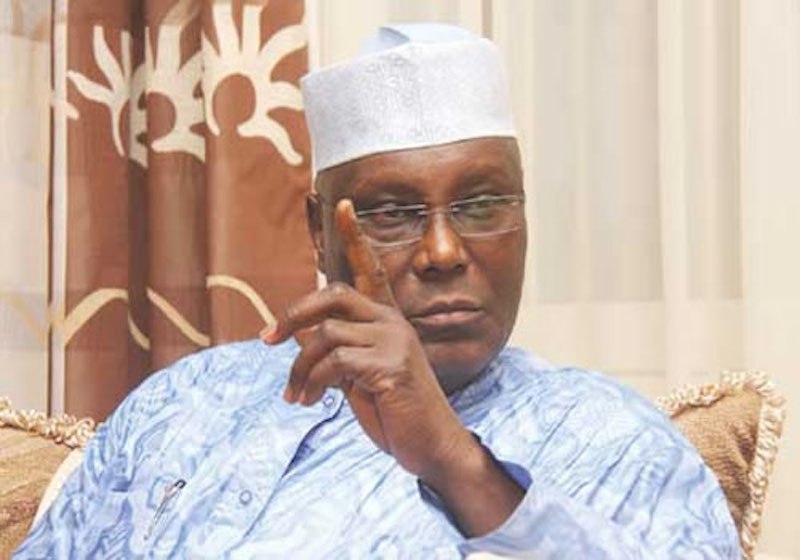
Former Vice President, Atiku Abubakar, on Thursday criticised President Bola Tinubu’s condolence visit to Plateau State, describing it as a troubling reflection of what he called a growing disconnect between leadership and the plight of ordinary Nigerians.
The chieftain of the African Democratic Congress highlighted that the events in Plateau once again exposed “a disturbing and unacceptable approach to national tragedy.”
He said, “It is both shocking and deeply insensitive that several days after the gruesome killings of innocent citizens, the President’s so-called ‘on-the-spot assessment’ was reduced to a brief stop at the foot of his aircraft, never extending beyond the airport, never reaching the grieving communities, and never touching the pain of the victims.
“While families continue to mourn those slaughtered on Palm Sunday, the President chose to convert what ought to have been a solemn visit into a political spectacle, meeting party loyalists in Jos under the thin guise of official engagement. This is not leadership; it is indifference dressed as protocol.”
According to him, the President’s handling of the Plateau visit reflects a recurring pattern of what he described as insensitive and politically driven responses to national tragedies.
He referenced a similar condolence visit to Benue State in June 2025, which he said avoided the worst-hit community and turned into a political gathering, arguing that the repetition suggests a consistent approach rather than an isolated lapse.
“In Plateau, the President neither visited the bereaved families nor the injured receiving treatment in hospitals. He offered no concrete policy direction, no decisive security intervention, and no reassurance that such horrors would not recur.
“Instead, he staged a meet-and-greet within the confines of the airport, surrounded by politicians, traditional rulers, and party operatives—far removed from the anguish of the people. This is not only inappropriate; it is shameful. A leader who cannot stand with his people in their darkest hour cannot convincingly claim to be fighting for their safety,” he stated.
Atiku’s remarks come hours after President Tinubu visited Plateau State following last Sunday’s deadly attacks in Jos, particularly in the Angwan Rukuba area, where at least 27 people were reported killed.
Addressing her by name, Tinubu acknowledged her loss and assured affected families of government support, noting that no compensation could adequately replace lost lives.
Speaking through his spokesman, Bayo Onanuga, the President described the incidents as “barbaric and cowardly,” vowing that those responsible would be brought to justice.
The President was received on arrival in Jos by the National Chairman of the All Progressives Congress, Nentawe Yilwatda, Plateau State Governor Caleb Mutfwang, and other senior government officials.
Related


I Won’t Be Intimidated, Seun Okinbaloye Replies Wike
Amnesty Condemns Wike’s ‘Shoot’ Remark Against Seun Okinbaloye
‘ADC Membership Hits 500,000 after INEC Derecognition of Leadership’
Is Amupitan’s INEC Complicit?
Effective Strategic Leadership: Resolving Nigeria’s Contemporary Challenges and Unlocking Inclusive Possibilities
Evangelist Ebenezer Obey: Celebrating a Music Maestro at 84
The Ponnles Honour Parents With N150m Memorial Endowment at OAU
FG Issues Security Advisory to Nigerians in South Africa
Bauchi Gov Bala Mohammed Signals Possible Defection to ADC
When Anthropic Accidentally Opened Its Own Vault: The Claude Code Leak of March 31, 2026
Effective Strategic Leadership: Resolving Nigeria’s Contemporary Challenges and Unlocking Inclusive Possibilities
ADC Rejects INEC’s Interpretation of Court of Appeal Ruling
This Attack on Democracy Will Not Stand – ADC Chairman, David Mark
The Oracle: The New Digital Colonialism: Navigating AI Policy Under Foreign Tech Dominance (Pt. 5)
Trending
-
Headline6 days agoFG Issues Security Advisory to Nigerians in South Africa
-
Headline5 days agoBauchi Gov Bala Mohammed Signals Possible Defection to ADC
-
Tech and Humanity3 days agoWhen Anthropic Accidentally Opened Its Own Vault: The Claude Code Leak of March 31, 2026
-
Opinion1 day agoEffective Strategic Leadership: Resolving Nigeria’s Contemporary Challenges and Unlocking Inclusive Possibilities
-
Headline4 days agoADC Rejects INEC’s Interpretation of Court of Appeal Ruling
-
Headline4 days agoThis Attack on Democracy Will Not Stand – ADC Chairman, David Mark
-
The Oracle2 days agoThe Oracle: The New Digital Colonialism: Navigating AI Policy Under Foreign Tech Dominance (Pt. 5)
-
Featured3 days agoGov Adeleke Commends MicCom Legacy As Family Launches N150m Engineering Endowment at OAU