Featured
Flashback to Jakande’s Inaugural Address as Lagos Governor in 1979
Published
5 years agoon
By
Eric
INAUGURAL ADDRESS OF GOVERNOR JAKANDE TO THE PEOPLE OF LAGOS STATE — 1ST OCTOBER, 1979.
FELLOW Citizens of Lagos State,
On Saturday, 28th, July 1979, you elected me, by 559,070 votes to 126,805, the first Executive Governor of Lagos State. Today, as a result of that election, the Chief Judge of this State, in accordance with the provisions of the Constitution of Nigeria, has invested me with the office. This is an inestimable honour of which I am very conscious. It is a call to Service I take very seriously in all humility. And I want to assure you that I shall spare no effort to justify the confidence which you, the good people of Lagos State, have demonstrably reposed in me.
God moves in a mysterious way, says William Cowper, His wonders to perform. His purposes will ripen fast, unfolding every hour.
The Creation of Lagos State, like all great events, is not the achievement of one single person. The territory now known as Lagos State is the former Colony Province Created by the British Administration for their own administrative convenience. Following the cession of his Sovereignty to the British Crown by King Dosunmu in 1861, Eko was administered independently by a Governor of the Settlement of Lagos. Under the Commission of 19th February-1866, the Settlement of Lagos was governed by an Administrator and a Legislative Council responsible to the Governor of the West African Settlements residing in Sierra Leone. This continued until 1874. By Letters Patent dated 24th July, 1874 the territory was administered by a Lieutenant Governor subject to the Governor of the Gold Coast Colony.
Nine years later, by Letters Patent of 22nd January, 1883, Lagos was administered by a Deputy Governor responsible to the Governor of the Gold Coast Colony.
In 1886, Lagos was again set up as a separate Colony in response to a petition by the people of Lagos who resented being governed from the Gold Coast. It was administered by a Governor of the Colony of Lagos under Letters Patent dated 13th January, 1886. This was the first time that the territory now known as Lagos State came under one administration. The administration continued under various Constitution until 1954, when Lagos was separated from the rest of the Colony and constituted Federal Territory, that is to say a No-Man’s Land.
Thus, it is evident that, for 89 years from 1862 to 1951, Lagos [with or without the rest of the Colony] enjoyed a separate and distinct existence as a unit of administration with its own Governor, Deputy Governor, Lieutenant-Governor, Administrator or Commissioner as the case may be. For 68 years from 1886 to 1954, the Colony of Lagos [i.e. the present Lagos State] was administered together as a Unit, an inseperable whole. From 1914 to 1923, the Colony of Lagos had its own Legislative Council while the rest of Nigeria had another Council.
Thus the foundation for a Lagos State had been well and truly laid by history. But, in the circumstances of our dear Country, it still had to be fought for. And two of the earliest fighters for a Lagos State must be remembered with gratitude on this occasion. They are Chief Theophilus Adebayo Doherty and Prince Ibikunle Akintoye. They dreamt of a Lagos and Colony State. It was left to a later generation to make their dream a reality.
In 1964, while I was serving a seven- year sentence for treasonable felony and conspiracy in the Maximum Security Prison at Kirikiri, Apapa, I came to the conclusion that the time had come to put forward a reasoned case for the Creation of a Lagos State. With the assistance of my friends outside the Prison walls, and deliberately breaking Prison regulations, this conclusion resulted in a booklet published in 1966 with the meaningful title of “The case for a Lagos State”.
In the preface to the book I said inter alia: “It seems now to be generally agreed that if Nigeria is to survive as one organic whole, one of the conditions precedent to such survival is the Creation of new States. I have endeavoured to argue the case for a Lagos State in the following pages as objectively as possible and without emotion. One is bound to recognise that this case rests almost entirely on historical circumstances and moral principles. But this does not detract from its validity. A series of historical circumstances have culminated in neglect and injustice such as can only be effectively removed, in a Nigerian Federation, by the Creation of a Lagos State”.
In August, 1966, the then Administrator of Lagos, Major Mobolaji Johnson, summoned a Conference of Young Indigenous Lagosians to deliberate on the place of Lagos in a future Constitutional arrangement.
This book formed the basis of a Memorandum submitted to the Conference. The Conference, among other things, decided that a Lagos State comprising the Federal Territory and the Colony Province of Western Nigeria should be created in a Nigerian Federation.
On September 12, 1966, the then Head of the Federal Military Government and Supreme Commander of the Armed Forces, Yakubu Gowon, established an Adhoc Conference on Nigeria’s future. The Lagos Delegation was led by Doctor Taslim Elias until he became Attorney General of the Federation when the mantle of leadership of the delegation fell on me. But it was under Doctor Elias’s leadership that the Lagos delegation submitted to the Adhoc Conference a Memorandum for the Creation of Lagos State. That Memorandum was substantially a reproduction of “The Case for A Lagos State”. And it was that Memorandum, no doubt, which enabled the Federal Military Government to reach the decision to Create a Lagos State in 1967.
I would like to take this opportunity to pay tribute to Brigadier Mobolaji Johnson for his invaluable contribution to the Creation of this State.
Throughout the period of the 1966 Adhoc Conference he was unwavering in his conviction and unsparing in his endeavours for the Creation of a Lagos State. It was his lot to become the first Military Governor of the State. And he made a good job of it, all things considered. May I also thank the last of the Military Administrators, Captain Ebitu Ukiwe, for the voluminous handing-over notes he has given me and in particular for his physical presence this afternoon. It is a kind gesture which I greatly appreciate.
It is now our historic duty to take off from where the Military left. In doing so; I have no illusion whatsoever. When on Saturday, November 4, 1978, I was nominated by my party, the Unity Party of Nigeria, to contest the gubernatorial election for this State, I said inter alia in my acceptance speech: “I am conscious of the problems and the opportunities that abound in Lagos State. I know that the Citizens of Lagos State are the most sophisticated in the country. I know that every tribe and every ethnic group, in Nigeria are represented in Lagos State. I know that for most Nigerians Lagos is the El-Dorado, with matchless opportunities for prosperity.
I know that the indigenes of Lagos State have a natural right to the Services provided by their State. I know that the non- indigenes of Lagos State have an indisputable right to the Services provided by their State of residence. I know that Lagos State is said to be the most developed part of the Federation. But I also know that below the majestic Flyovers, the mystifying ring roads, and the Spiralling Skyscrapers there is abject poverty in this State. And I know that there are in Lagos State some of the worst living conditions that can be found in any part of the Federation.
I am sure that it will surprise many Nigerians in other States to be told that Lagos State is as much in need of development as any other State.
Perhaps, our need is greater. Because of the pressure of population, which is the highest in the Country, the demand for Services is extremely severe. Besides, Lagos State is Nigeria’s Shop window.
These problems are enormous. But the consolation is that the opportunities for solving them are there. And they are exciting and challenging”. I can only underline that statement on this occasion of assuming office as Governor of Lagos State.
We shall model our government after the Government of the Western Region of Nigeria, from 1952 to 1959, headed by Chief Obafemi Awolowo. That Government was the most efficient, the most dynamic, and the most responsive of all the governments of the Federation. That Government was the country’s pace-setter — the first to do all good things that others later copied. There has never been a government like it in Africa before or since. And we know that in giving us their massive vote, the good people of Lagos State were influenced by their memories of the good old days of the Awolowo Government. We shall live up to their high expectations, especially as Chief Awolowo is still very much around and will continue to be our source of inspiration for many years to come.
In this connection, I am glad to affirm that free education at all levels, of which he is the greatest advocate in Nigeria, will become operative in Lagos State with immediate effect from today. On September 15, 1979, I issued an appeal to all School Headmasters and all Principals in this State not to demand or accept fees from School Children in Primary and Secondary Schools. I am grateful to all those who heeded this appeal, although it had no force of law. Now that I have been Sworn in as Governor of Lagos State, I direct that education shall be free at all levels in this State. For the avoidance of doubt, no fees should be collected from any Pupil or Student for anything whatsoever.
Where fees have been collected immediate steps should be taken to refund them to their payers. In all Boarding Schools Parents/Teachers Association shall take over the Management of boarding facilities, and they will be given all possible assistance by the education authorities until boarding is completely phased out. Arrangement have been made to enact the necessary legislations for this purpose.
The Unity Party of Nigeria is irrevocably committed to change things and to bring about a New Order. We have come to serve the common people of this State. We have clear-cut programmes for which we have received your mandate. I want to assure you that we shall do everything that is humanly possible, under God’s unfailing guidance and protection, to execute these prorammes and honour the solemn pledges we made to the electorate.
In implementing these programmes we shall be scrupulously fair and just to every Citizen, be he high or low; we shall seek at all times and on all occasions the greatest good of the greatest number. We shall be guided by the timeless principle that the will of the people is the Supreme law.
There will be no discrimination against anyone on the ground of political affiliation, religious belief, ethnic or State Origin, Sex or Social Status. But we can do all of these things only if all sections of the Community cooperate fully with the Government they have elected.
We need the absolute loyalty and cooperation of the Public Service. We are going to move much faster than perhaps, the Public Service is used to. We are bringing to the Service a new sense of direction. At the same time we shall ensure that every Public Servant in this State is adequately rewarded for his labour. Merit will be recognised regardless of language, colour or creed.
We need the support and cooperation of all ratepayers and all tax- payers in this State. We are prepared to serve. But Service can be provided only to the extent that the Finances of the State permit. I believe that this State is quite capable of generating the necessary funds to make life better for all Citizens. I, therefore, call on all adult Citizens to make their own contribution to the common good by paying their rates and taxes as they fall due.
We need the support of the law enforcement agencies. We are aware of their deplorable conditions of operation. And we shall, within the limits of our Constitutional powers, help to improve those conditions. For it is only in an atmosphere of peace that progress and development can take place.
We need the co-operation of the Judiciary. I am a firm believer in the independence of the Judiciary, and I am happy that independence has been enshrined in our Constitution. We shall do everything possible, within the limits of our Constitutional powers, to remove any obstacle in the way of speedy and efficient administration of Justice in this State.
We need the vigilance and patience of all Citizens. The problems which we have inherited from the Military — extremely bad roads, poor drainage, inadequate water supply, deplorable housing, neglected agriculture and the lack of Markets for example will not disappear in one day. But they certainly will disappear during our tenure of office by the grace of God. We shall start solving these problems from today and from now to the end of our term we shall do nothing else.
I ask you to pray constantly for us. More things are wrought by prayers than this world dreams of. We are embarking on a war against poverty, against Community neglect, against reaction, against disease in Lagos State. And, by the grace of God Who loves us, we shall win.
Thank you.
ADDRESS BY THE GOVERNOR OF LAGOS STATE, ALHAJI LATEEF KAYODE JAKANDE, AFTER BEING SWORN-IN FOR THE SECOND TERM OF OFFICE ON OCTOBER 1. 1983 AT 10.00 A.M.
Fellow Citizens of Lagos State,
I have just been sworn-in for the second term of office as your Governor by the learned Chief Judge of Lagos State, Mr Justice Adetunji Adefarasin. The Swearing-in is the direct result of your own decision on August 13, 1983, when you elected me Governor by an overwhelming majority. By this decision, you have done me a very great honour.
I accept this honour in all humility and with a sense of responsibility. I am grateful to you for the opportunity you have thus given me to serve you for another four years. I am particularly impressed by the size of the majority with which you have elected me for a second term of office.
In 1979, you elected me to office with 559,070 votes. This represented 81.98 per cent of the total votes cast. You gave my nearest opponent 10.55 per cent of the total votes cast. This time, my nearest opponent collected only 4.64 per cent of the total votes cast. You have also increased my vote by over one million. And you have given me a mandate which is 90.99 per cent of the total number of votes cast in the election of August 13, 1983.
I confess, fellow citizens that nothing can be more inspiring than this wonderful demonstration of your affection for me and my party, the Unity Party of Nigeria, and your constant expression of appreciation for the Services which I was able to render in my first term of office. On this occasion of my acceptance of your decision to elect me for a second term office, I want you to know that I love you very much. I love Lagos State.
For this reason, I have rededicated myself anew to the Service of the people of Lagos State. From dawn to dusk and from dusk to dawn, in any human condition or circumstance whatsoever, I shall devote my life to the selfless and impeccable Service of all of you who inhabit this State. Nothing on God’s earth will deter me at any time from seeking the greatest good of the greatest number of our people. That is my mission.
I ask for your support; your understanding; your cooperation and, above all, I ask for your prayers. “More things are wrought by prayer than this world dreams of”. I pray that the Almighty God, King of kings, may make this my second term of office a happy and prosperous one for every one of you.
Fellow Citizens,
The next four years will be difficult years. In the first place, we are in the throes of a grave national economic crisis. In spite of the recent loan to the Federal Government by certain European commercial banks, the situation remains bleak. It is reported that Nigeria is to borrow N1.4 billion from the International Monetary Fund. We know that the standard conditions of the IMF to all borrowers of its money are:
(a) devaluation of currency;
(b) reduction in public expenditure, and (c) suspension of food subsidy.
If the Federal Government succeeds in raising this loan from the IMF, it is almost certain that these conditions will be imposed on our great country. What does this imply? It implies that the value of the naira will be reduced by about 40 per cent. Since we rely on imports for the bulk of our raw materials, machinery, spare parts, vehicles, plant and equipment, devaluation means that these imported items will cost at least 40 per cent more. It will then follow that locally manufactured goods will cost more by at least 40 per cent. If that happens, then all other prices will move up in sympathy. Thus, life will become more burdensome for millions of the masses of our people. And yet the purchasing power of these people has been reduced drastically already by the present austerity measures. How will they survive the threatening gloom?
In the second place, many companies in the distributive trade have closed down. Many factories in the manufacturing industry have also stopped producing. By so doing, they have thrown thousands of Nigerians into the labour market. And yet, several thousand students are graduating annually to search for employment opportunities. Where will they find such opportunities? I am informed that some graduates are turning to menial jobs and that some are now taxi drivers. Is this what Nigeria wants?
In the third place, we have just experienced a gruesome national election. The nation is not rejoicing. It would be more correct to say that Nigeria is mourning. How long will the mourning last?
In the fourth place, we are in an era of godlessness when acts of corruption, robbery, brigandage and wickedness are committed in high places with wanton disregard for the very existence of God Almighty.
A State like Oyo State is stolen in broad daylight without any sense of shame whatever. A state like Bendel State is captured by armed robbers with unbelievable braggadocio. A State like Borno State is brazenly deprived of a Government so clearly desired by the people of the State. A State like Gongola State, whose beliefs and sympathies were never in doubt, is conquered in a manner reminiscent of the primitive wars of the eighteenth century. A State like Cross River State freely and openly changed its political leaning for good reasons. But, the masters of the day, like King Pharaoh of old, would not let our people go. A State like Ondo State, for doing no more than voting for candidates of its choice in a supposedly free election, was turned blatantly into a battle ground. Only the instant, spontaneous, violent and bloody reaction of the good people of Ondo State regained that State from the clutches of power grabbers. A state like Kwara State was only grudgingly conceded because of internal quarrel among the local chieftains of the party in power.
We went to bed one night at 12 o’clock with a Presidential Candidate leading another with 7 million votes to 6 million. We were woken up at 2.00 a.m. to be told that the losing, candidate had won by 12 million votes. We are asked to believe this miracle.
All the basic assumptions of society are destroyed in a way that leaves millions of our people dazed and agape with wonder. They had never seen anything like that in their lives.
For instance, we are asked to believe that a party that gave the people free education at all levels, free health service, cared for the common people of the States it governed, is rejected in an election in favour of a party that has done nothing for them in four years and which at election time has brought them austerity measures.
We are asked to believe that states which voted for the UPN in the Presidential election on August 6, miraculously changed their minds a week later to vote for the NPN by a wide margin.
We are asked to believe that when voters turn out in large numbers, a presidential candidate can have 2 million votes but when the same voters fail to go out to vote, a gubernatorial candidate can win 3 million votes.
That is not all. What about the impartiality of officials? What about the non- partisanship of the Police Force at National Headquarters and in certain formations? What about the independence and fairness of judges in certain parts of the country? Above all, what about he fear of God?
The Psalmist says in Chapter 14 of his book:
“The fool hath said in his heart,
There is no God.
They are corrupt, they have done abominable works; There is none that doeth good…
Have all the workers of iniquity no knowledge?
Who eat up my people as they eat bread, And call not upon the Lord; ….
When the Lord bringeth back the captivity of his people, Then shall Jacob rejoice, and Israel shall be glad”
Those who perpetrate these deeds must have forgotten verse 12 of the 65th Sura of the Holy Quran:
God is He Who Created seven Firmaments And of the earth
A similar number.
Through the midst
Of them (all) descends.
His Command; that ye may Know that God has power Over all things and that God comprehends all things IN [His] knowledge “.
But, let me assure everyone in the words of the Psalmist once again,
“Awon elomiran—gbekele keke-ogun.
Awon elomiranleesin;
Sugbon awa o ranti oruko Oluwa Olorun wa: “Nwon wole, nwon si subu:
Sugbon awa dide awa si duro sinsin”.
I want everyone to believe in the Supremacy of God Almighty. God is not mocked, or deceivable, or bribable. He is a God of good. And good will triumph over evil.
The Government and people of Lagos State are totally committed to the democratic way of life. We support unequivocally the people of Oyo, Ondo, Bendel, Borno, Gongola, Cross River and Kwara States in their grim determination to resist oppression and to defend their civic rights in every constitutional way. We are brothers and sisters with a common cause. The Government and people of Lagos State also support all progressive elements in every part of the country. They can count on our cooperation at all times.
Fellow Citizens of Lagos State,
In spite of the difficulties of today and the problems of the future, I shall ensure that this second term of office brings greater joy and happiness to all the citizens of this State. In the words of the Holy Prophet Mohammed, on Whom be peace and blessing, “to gladden the heart of a human being; to feed the hungry, to help the afflicted, to lighten the sorrow of the sorrowful, and to remove the wrongs of the injured” will be my daily assignment.
In the first term of office, we moved very fast in the implementation of our programmes, In this second term, we shall move a little faster. First, we shall strive to complete all on-going projects in the quickest possible time. Second, we shall do all that is within our power to consolidate the achievements of the first term of office. For example, we, have laid a sound foundation for our programme of free education at all levels. We have erected on that foundation, a great Super- Structure of which anyone must be proud. In this second term of office,we shall produceablueprintwhichwillspell out in every detail how this programme can be financed, managed and maintained in the next 17 years up to the year 2,000. By so doing, we shall have ensured that free education at all levels will continue for ever in this State. That will also be done in respect of other Programmes.
Third, we shall introduce a few new things for the benefit of our people. Two of them are worth mentioning the Creation of a Lagos State University, which will be the apex of our educational system, and the construction of a road from Lagos through Eti-Osa to Epe. This road will open up a vast area of our State to physical, economic and social development. It will also lead inevitably to the decongestion of the Lagos Metropolis which is at present terribly overcrowded.
Fellow Citizens of Lagos State, we plan to introduce in this term of office, a system by which the State can recognise the Services of its citizens who from time to time deserve such recognition.
As you know, the President of the Federal Republic has power to award National Honours. Each State government normally recommends five persons to the President every year. In addition, the President makes his own selection of beneficiaries from every part of the country. We have had our fair share of these national awards and we shall continue to co-operate with the President in the selection of suitable candidates.
However, there are several persons who render extraordinary Service to the State at various levels but who may not be accommodated on the National Honours List: And it is in the overall national interest that the State should acknowledge the services of such persons.
We have, therefore, decided to introduce a system of State Honours for extraordinary Services rendered to this State.
There would be three categories of State Honours:
1. Outstanding Service Award
2. Distinguished Service Award
3. Meritorious Service Award.
The Outstanding Service Award
Will be the highest form of award. It will be in recognition of a notable service rendered to the State by a Citizen of Nigeria resident in Lagos State. The award will consist of a Medal in Gold with a red ribbon attached. The stud will be in red colour.
The Distinguished Service Award
Will be for persons whose individual achievements have had a tangible impact on the State. There will be two classes of this award. The class I award will be a medal in silver with outer serrated circle and inner ridge in gold with yellow ribbon. The Class II of this award will consist of a medal in silver with the outer serrated circle only in gold with yellow ribbon.
The Meritorious Service Award
Is for long service officers and others who have served the State in their respective callings. The award will have two classes. Class I award is a medal in silver with the Inner circle in gold and a blue ribbon attached. Class II is a medal in silver and a blue ribbon attached.
The stud for the Distinguished Award is yellow while that of the meritorious Award is blue. In addition to these three honours, there will be provision for the presentation of Certificates of different grades for various services. There will also be ex-gratia awards to public officers.
I intend to set up a State Honours Committee to administer this subject. The chairman of the Committee will be the Deputy Governor of the State, Chief R. B. A. Jafojo. The other members are the Chief Judge of Lagos State, the Speaker of the Lagos State House of Assembly, the Secretary to the State Government and the Head of State Civil Service. The Committee will serviced by a Technical Committee made up of the Head of State Civil Service, as chairman, the Commissioner of Police, the Permanent Secretary, Ministry of Justice, Head of Local Government Service, Permanent Secretary [Cabinet] and four ethers who are not public officers but who have integrity. The first awards will be made in January 1984.
Fellow Citizens,
I congratulate you, on the resounding success of the first civilian administration of Lagos State since it was created in 1967. I thank each and everyone of you for your individual contribution to that success. I pray fervently that Allah; the Beneficient and the Merciful, will bless our efforts in this second term. I pray that our State, Lagos State, may have greater glory in this second term of our Service. May God grant that every citizen of this State prosper in every way during this term.
I thank you all.
Related
You may like
Featured
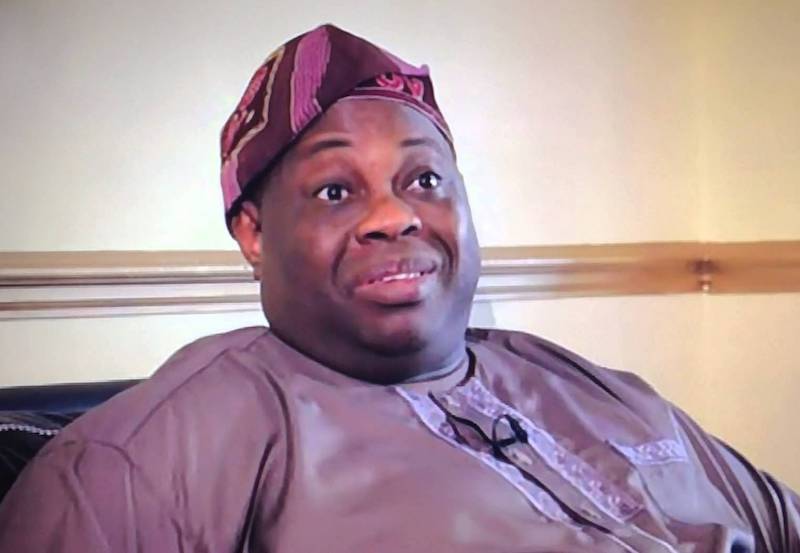
Reno, Fani-Kayode’s Brains Configured to Say Anything and Delete – Dele Momodu
Published
1 day agoon
March 18, 2026By
Eric
By Eric Elezuo
Renowned journalist and a chieftain of the African Democratic Congress (ADC), Chief Dele Momodu, has come down hard on two loyalists of President Bola Tinubu, Reno Omokri and Femi Fani-Kayode, who were ambassadors-designate, before being posted to Mexico and Germany respectively.
Momodu, in a statement titled Reno Omokri and Femi Fani-Kayode: A Tale of Two Shameless friends, and posted on his verified social media handles, including Instagram, noted that the two men have proved themselves as very ‘shameless’, with brains configured to say anything and delete immediately.
While referring to Reno and Fani-Kayode as two perpetual agents of perfidy’, Momodu informed that his statement was in other not to give the ‘two…friends’ the impression to think they could bully him into silence and submission.
“No. They can’t. They both have no credibility whatsoever. Together, they’ve expressed the worst views ever about BOLA TINUBU that they will never be able to erase, or clean up, in a million years, except the world finally comes to an end,” he said.
While maintaining that he stands by his qualification of President Tinubu as a dictator, he clarified that the duo of Rwno and Fani-Kayode has disparaged and said worst things about Tinubu in the past, with whom they are hobnobbying with at the present.
Momodu revealed that his suspension of his weekly column on ThisDay and The Boss Newspaper was out of respect for some Yoruba elders, for Tinubu, and not to be critical of him as he did to his predecessors, saying that he has nothing against the president except for his consistent dive into the world of dictatorship and tyranny.
The Ovation Magazine publisher berated the duo of Reno and Fani-Kayode for severally reaching out to him privately for publicity. He also boted that he is not a victim of poor upbringing as the two men constantly portray. He further contrasted himself from the two men, saying he does not fight like pigs, and unlike the duo, has a job.
Read the statement in full
RENO OMOKRI & FEMI FANI-KAYODE: A TALE OF TWO SHAMELESS FRIENDS…
I was going to ignore these two perpetual agents of perfidy but later decided to respond to them just in case they think they could bully me into 🔕 silence and submission.
No. They can’t. They both have no credibility whatsoever. Together, they’ve expressed the worst views ever about BOLA TINUBU that they will never be able to erase, or clean up, in a million years, except the world finally comes to an end.
The only reason I could adduce for Tinubu’s tolerance of both irritants is desperation and his inability to find better people to do the dirty jobs. The brains of these ones have been configured to say anything and delete immediately.
I have never disparaged TINUBU in my life. I have never called him a murderer. I have never called him a drug baron or addict. I’m intelligent enough, not to say what I have no proof of. Only morons talk without thinking. I thank God for good upbringing. I do not fight like pigs. And I have a job and manage my modest income. I’m not seeking government appoints. I know how many times Femi and Reno have reached out to me, privately, either begging for publicity or apologizing for attacking me publicly.
All I have accused Tinubu of is DICTATORSHIP and I stand by it with my full chest. I oppose tyranny because I once suffered under it. Chief Moshood Abiola won an election but dictatorship deprived him of his victory. Why should we replace military dictators with civilian slavemasters. That’s my only grouse against TINUBU. Because of our past association, I have been partial and generous to him by not being as critical of him as I did to his predecessors.
Because of TINUBU, I stopped writing my PENDULUM column on the Backpage of Thisday and The Boss newspapers. Also, out of respect for Yoruba elder statesmen, including retired Generals who pleaded that we give him time to stabilize. They are alive to bear me witness.
How Femi and Reno can continue to harass people on behalf of a TINUBU they’ve permanently damaged and sent to the cleaners really baffles me.
But this is Nigeria…
– AARE BASORUN AKINROGUN DELE MOMODU
Related
Featured
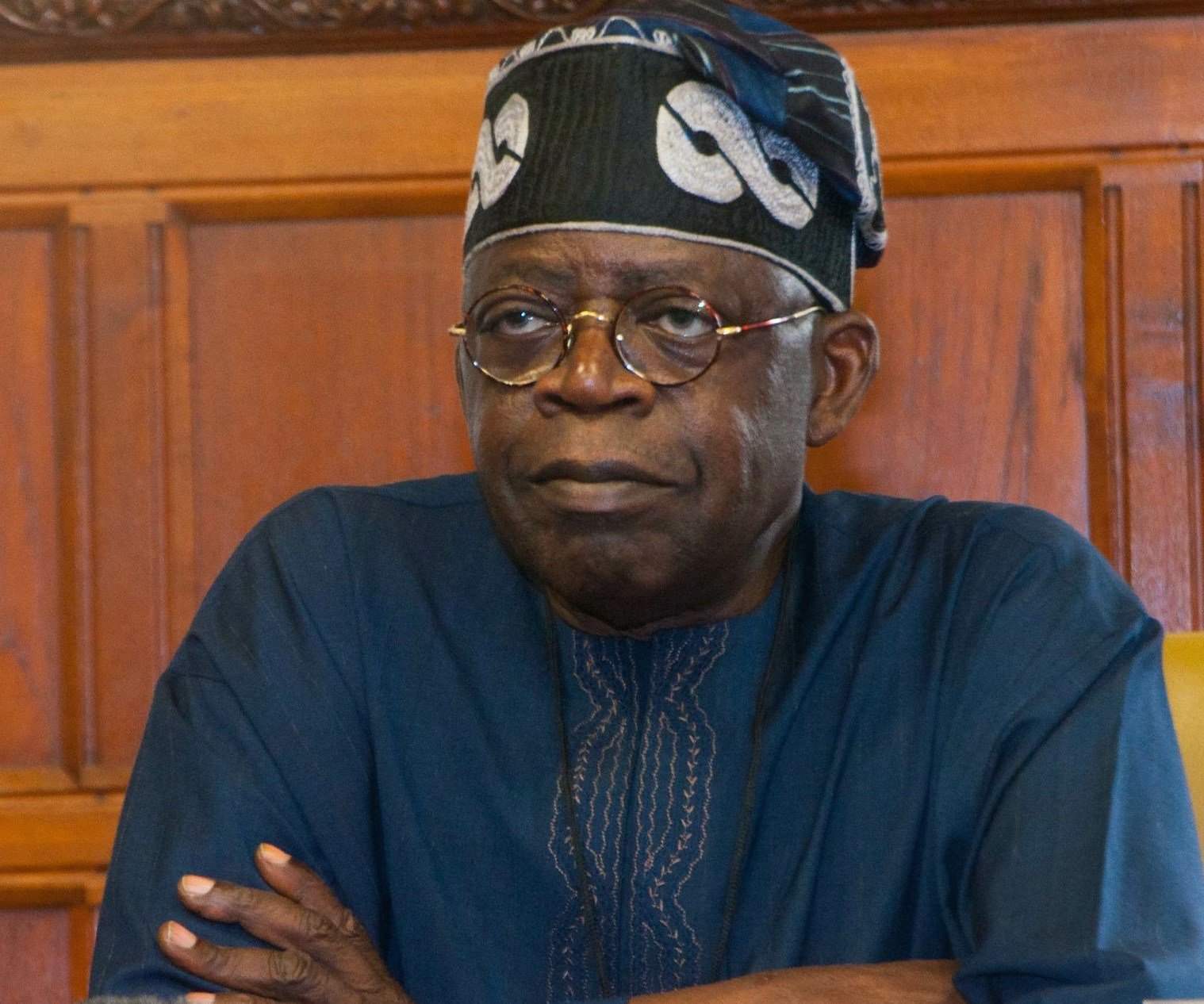
Resign by March 31, Tinubu Tells Political Appointees Seeking Elective Offices in 2027
Published
2 days agoon
March 18, 2026By
Eric
President Bola Tinubu has directed all political appointees in his administration who intend to contest elective offices in the 2027 general elections to resign their positions on or before March 31, 2026.
The directive, according to the Presidency, is in line with Section 84(12) of the Electoral Act and the timetable released by the Independent National Electoral Commission (INEC) for party primaries ahead of the 2027 polls.
The directive was conveyed on Tuesday through a statement from the Office of the Secretary to the Government of the Federation (OSGF).
The statement was signed by the Permanent Secretary, General Services Office, Dr. Ibrahim Abubakar Kana, on behalf of the Secretary to the Government of the Federation, Senator George Akume.
According to the statement, the directive applies to all categories of presidential political appointees who plan to participate in party primaries or seek nomination for any elective office in the forthcoming elections.
Those affected include Ministers, Ministers of State, Special Advisers to the President, Senior Special Assistants, Special Assistants and Personal Assistants to the President.
It also covers Directors-General and Chief Executive Officers of Federal parastatals, agencies, commissions and government-owned companies, as well as other political appointees appointed by the President.
The government stated that all affected officials are required to submit their formal resignation letters through the Office of the Secretary to the Government of the Federation on or before the March 31, 2026 deadline.
“Accordingly, all affected officials are required to submit their formal resignation letters through the Office of the Secretary to the Government of the Federation not later than March 31, 2026,” the statement said.
The Presidency explained that the directive is intended to ensure strict compliance with electoral laws and promote fairness in the political process ahead of the elections.
President Tinubu emphasised that the measure is aimed at upholding transparency and providing a level playing field for all aspirants preparing to participate in party primaries and the 2027 general elections.
The administration also reiterated its commitment to strengthening democratic institutions and ensuring credible electoral processes in the country.
Related
Featured
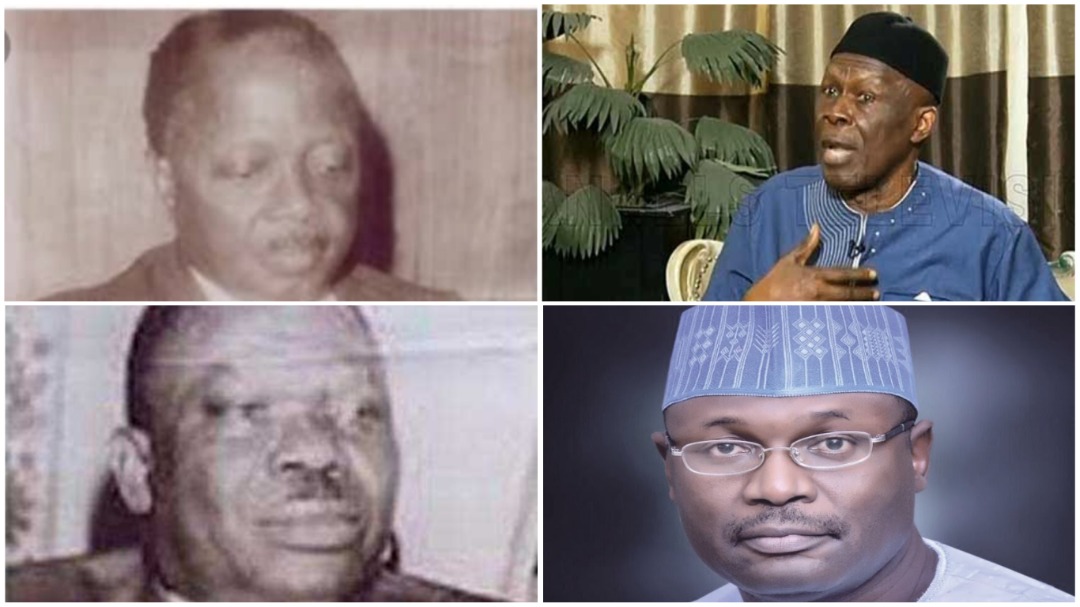
Electoral Umpires in Nigeria and Its Miasma of Failures
Published
2 days agoon
March 17, 2026By
Eric
By Hon. Femi Kehinde
Elections in Nigeria since 1923 had been bedeviled with hiccups, brouhaha, frustration, suspicion, lack of trust, and untrustworthy umpires, who were usually placed into such positions by perhaps equally untrustworthy men of power. Nigeria does not stand in isolation in this instance. However, its peculiarities of electoral failures have definitely impacted its growth and development, and stunted the eminence of its position in the Committee of Nations.
Sir Hugh Clifford assumed the office of Governor of Nigeria on August 8, 1919 and served until 1925, succeeding Sir Frederick Lugard, the apparent founder of a country called “Nigeria”- after the Amalgamation of the Southern and Northern Protectorate he had established in 1900 and 1903 respectively. He had consequently amalgamated these two uncommon people on the 1st of January, 1914 into a union called “Nigeria”- a name suggested to him by his British Journalist-wife, Flora Shaw, whom he married on 10th of June, 1902.
Perhaps as a soothsayer, the British Secretary of the Colonies, Lord Harcourt, the man whom Port-Harcourt was named after, in a formal “Instruments of Instruction” Cablegram dispatch to Sir Frederick Lugard on the 26th of December, 1913, sanctioning the creation of a new Nigeria on the 1st of January, 1914, and the appointment of Sir Lugard as its first Governor-General, said: “…May the Union be fruitful…May the Parties remain constant”.
In 1919, Sir Lord Frederick Lugard left office as Governor-General of Nigeria and was succeeded by Sir Hugh Clifford – a hugely prominent and highly experienced British Colonial Officer, who had hitherto, been Governor of the Gold Coast (present day Ghana).
Subsequently in 1922, to administer Nigeria within his own conception and to govern its people in strict adherence to the Rule of Law and democratic tenets and principles, Sir Hugh Clifford created Nigeria’s first Constitution ably tagged the “Clifford Constitution of 1922”. Interestingly, Britain has never operated a written constitution.
To herald democracy in accordance to this Constitution, he conducted an election into a talk-shop like Legislative Council, where only four (4) members were elected; three (3) from Lagos and one (1) from Calabar.
Infact, Lagos and Calabar were then referred to as British Crown Colonies. The four elected members were Egerton Shyngale, Eric Olawolu Moore, Crispin Adeniyi-Jones, Kwamina Ata-amonu. The three (3) successful candidates from Lagos were elected on the platform of Herbert Macaulay’s Nigerian National Democratic Party (NNDP), while the Calabar candidate emerged as an independent candidate.
There was no Electoral Commission to organize the election. It was personally organized and supervised by the Office of the Governor of Nigeria – Sir Hugh Clifford, who was completely apolitical (non-partisan).
However, in 1959, the tide changed. The 1959 General Election was the most significant, as it determined who would lead the country into independence. In 1958, Ronald Edward Wraith, a highly consulate British Administrative Officer, was appointed as the first Electoral Umpire by the British Governor-General in Nigeria, Sir James Wilson Robertson. His task was to design the framework for the country’s first major elections. He was appointed to oversee the 1959 General Elections, which were the most critical elections prior to Nigeria’s independence in 1960. Wraith is often credited with introducing the concept of the Secret Ballot to Nigeria. He spent years traveling round the country to educate Nigerians on how to register and vote, ensuring the transition from colonial rule to the First Republic, had a structured, albeit imperfect, foundation.
The 1959 elections, despite being organized by a British expert and Colonial Officer, was still bedeviled with irregularities. The Parties; NCNC, NPC, and AG, held dominant controls of their Regions. Elections were even won before contest, due to non-availability of Nomination Forms for opposition party members.
Right from the 1959 elections, participatory democracy began to fumble and wobble. The massive riggings of the Federal Elections of 1964 and Regional Elections of 1965 respectively, ultimately led to the collapse of the First Republic on the 15th January, 1966.
In 1960, Chief Eyo Esua was the first indigenous Chairman of the Federal Electoral Commission (FEC) during Nigeria’s First Republic. He was a veteran trade unionist and teacher. Before entering the electoral space, he was a founding member and long-time General Secretary of the Nigeria Union of Teachers (NUT). He was appointed by the Balewa government to oversee the 1964 and 1965 elections. His tenure was defined by the extreme political volatility of the 1960s. The 1964 federal election was marred by boycotts and allegations of massive fraud.
Esua was known for his personal integrity, famously admitting publicly that the 1965 Western Region elections were riddled with irregularities. This admission, while honest, highlighted the powerlessness of the Commission against the political giants of the time, shortly before the 1966 coup. He did not however admit that the 1964 Federal Election which he superintended, was equally marred with irregularities, and was infact a precursor of the 1965 Regional electoral riggings in all the regions of the federation.
In the 1965 Regional Elections in the Western Region, Chief Obadiah Ojerinola, a seasoned Senior Civil Servant in the Government of the Western Region, was appointed by the Ladoke Akintola government as the Electoral Umpire.
Obadiah Ojerinola was a high-ranking Civil Servant in the Western Region of Nigeria. Unlike the figures he worked alongside (like Chief S.L. Akintola, Chief Remi Fani-Kayode), he was not a “party man” by trade but an official within the regional bureaucracy. His appointment to lead the Electoral Body suggests he held a position of significant seniority and perceived stability within the Western Region’s Civil Service at the time.
Obadiah Ojerinola, served as the Chairman of the Western Region Electoral Commission during the highly controversial 1965 Western Region election, a period considered as one of the darkest chapters in Nigerian political history, often referred to as the era of “Wild Wild West” (Wetie).
As the “electoral umpire,” Ojerinola was at the center of the storm between the two major warring factions: NNDP (Nigerian National Democratic Party), led by Chief Samuel Ladoke Akintola (the incumbent Premier), and UPGA (United Progressive Grand Alliance), an alliance including the Action Group (AG) led by Chief Mrs. H.I.D Awolowo and Hon. Dauda Soroye Adegbenro (standing in for the imprisoned Obafemi Awolowo).
Ojerinola’s Commission was accused of extreme bias in favor of Akintola’s government. The election is remembered for several systemic failures. Before the first vote was even cast, the Commission declared many NNDP candidates “unopposed” by refusing to accept the nomination papers of opposition candidates.
On election day, there were reports of widespread ballot box stuffing and the physical intimidation of voters by “party thugs”. In a bizarre turn of events, Ojerinola’s Commission announced Akintola as the winner, while the opposition (UPGA) simultaneously announced their own victory via a pirate radio broadcast.
The conduct of the Ojerinola-led Commission sparked a total breakdown of law and order. Protesters began dousing political opponents and their property with petrol and setting them on fire, hence the term ‘Wetie’, meaning “douse it”. The Western Region became ungovernable, with widespread rioting and killings.
This electoral crisis is widely cited as the primary “trigger” for Nigeria’s first military coup on January 15, 1966, which ended the First Republic and led to the deaths of Akintola and other top leaders like Tafawa Balewa (Prime Minister of Nigeria), Festus Okoti-Ebo (Minister of Finance), Ahmadu Bello (Premier of the Northern Region).
Ojerinola is often studied as a cautionary tale of what happens when an electoral body loses its perceived neutrality. His tenure proved that without a credible ‘umpire’, the Democratic process can collapse into violence.
Similarly, the Electoral Umpires in the Eastern Regional Elections and the Northern Regional Elections in 1965, were Barrister Anthony Aniagulu (later Justice Anthony Aniagulu of the Supreme Court of Nigeria Rtd.) and Alhaji Bello Makaman Kano respectively. They performed similar feats like Ojerinola, to ensure the success of their regional gladiators in the NCNC and NPC respectively.
On 15th November, 1976, Michael Ani was appointed to the role of the Chairman of the Federal Electoral Commission (FEDECO) by General Olusegun Obasanjo’s military administration. Prior to entering the electoral arena, Michael Ani was a seasoned Civil Servant, who was known for his administrative discipline.
His primary responsibility was to oversee the transition from military rule to civilian government, which eventually led to the 1979 general elections. He led a 24-man commission tasked with organizing the return to democracy. His mandate included the registration of political parties, the delimitation of electoral constituencies, and the general conduct of the voting process.
Though he was appointed in 1976, he is most famously remembered for his legal interpretation during the 1979 presidential election. He ruled that Alhaji Shehu Shagari had met the requirement of winning one-quarter of the votes in “at least two-thirds of all the states,” despite the mathematical ambiguity of what constituted two-thirds of Nigeria’s then 19 states. His tenure is often remembered for this “Twelve Two-Thirds” legal dispute regarding the spread of votes required for a presidential winner; a case that eventually went to the Supreme Court.
However, despite Michael Ani’s famed integrity, urbane and cosmopolitan disposition, FEDECO which he presided may still not pass the crucibles of a free and fair election. In late June or early July 1979, through a nationwide State Broadcast before the elections held on August 11, 1979, the Head of State, General Olusegun Obasanjo, addressed the nation on radio and television where he said amongst several others that: “The best candidate may not necessarily win an election”.
Whatever that may mean.
In 1980, Justice Victor Ovie-Whiskey was appointed as the Chairman of the Federal Electoral Commission (FEDECO) during the Second Republic, succeeding Michael Ani, by President Shehu Shagari. He was a distinguished Jurist who served as the Chief Judge of the High Court of the defunct Bendel State. He presided over the 1983 General Elections, which were incredibly contentious due to the “landslide” victories claimed by the ruling National Party of Nigeria (NPN).
He is famously remembered for his defense of his integrity. When accused of taking bribes to rig the 1983 election, he famously quipped that if he saw a bribe of a million naira, he would “faint” because he had never seen such an amount of money.
Despite his background as a fair-minded Judge, the 1983 elections were so disputed that they served as a primary justification for the military coup led by Muhammadu Buhari on 31st December, 1983.
In-parenthesis, Oyo and Ondo States suffered massive electoral riggings, violence and manipulations in the Gubernatorial and Presidential Elections of 1983.
In Ondo State, Hon. Justice (Dr.) Lateef Oladepo Aremu, served as the Resident Electoral Commissioner (REC) for the Federal Electoral Commission (FEDECO). He was a distinguished Nigerian Jurist and later, a pioneer in the judiciary of Osun State.
As the Resident Electoral Commissioner for Ondo State, Justice Aremu was at the center of one of the most disputed Gubernatorial elections in the Second Republic.
FEDECO declared Chief Akin Omoboriowo of the National Party of Nigeria (NPN) as the winner over the incumbent Governor, Chief Michael Adekunle Ajasin of the Unity Party of Nigeria (UPN). The announcement sparked widespread riots, arson, and violence across Ondo State, as many citizens believed the results had been manipulated. The election results were eventually contested in court. In a landmark decision, the judiciary (up to the Supreme Court) overturned the FEDECO declaration, ruling that Chief Michael Ajasin was the actual winner and had been “robbed” of his mandate.
Justice Aremu’s role during this time is often cited in political and legal studies regarding the independence of electoral bodies.
While the FEDECO of 1983 faced massive criticism for “collusion” with the ruling party, Aremu’s later career as a pioneer Judge in Osun State (starting in 1992) saw him rebuild a reputation for intellectual depth and judicial integrity. His transition from the high-pressure electoral environment of 1983 to the Osun State High Court bench in 1992 is viewed as a significant paradigm shift from the Administrative side of the law back to the Adjudicatory side, where he spent the remainder of his distinguished career.
In the 1983 Elections in Ondo State, successful businessman, Chief Agbayewa, and serving member of the Federal House of Representatives, Hon. Olaiya Fagbamigbe who had both decamped from the UPN to the NPN, were killed and burnt to ashes by irate mob in Akure.
In Oyo State, Stephen Sunmiboye Ajibade (commonly cited as S.S. Ajibade) was a prominent Civil Servant and Administrator who served as the Resident Electoral Commissioner (REC) for the Federal Electoral Commission (FEDECO) during the 1983 General Elections. His tenure is historically significant due to the intense political climate of the Nigerian Second Republic and the controversial nature of the elections in the “Wild West.”
As the head of FEDECO in Oyo State, Ajibade was the primary official responsible for the logistical execution and the final announcement of election results in what was then one of Nigeria’s most politically sensitive and volatile states. Under his supervision, FEDECO declared Dr. Victor Omololu Olunloyo of the National Party of Nigeria (NPN) as the winner of the Governorship race. This was a seismic shift in Oyo politics, as it meant the defeat of the incumbent Governor, Chief Bola Ige of the Unity Party of Nigeria (UPN).
Ajibade’s stint as Resident Electoral Commissioner was marked by extreme pressure and allegations of electoral malpractices that characterized the 1983 polls nationwide. The UPN and Chief Bola Ige accused the Oyo State FEDECO office of inflating figures in favor of the NPN. This led to a period of significant tension and sporadic violence across Ibadan and other parts of the state.
The results announced by Ajibade’s office were challenged in the landmark case of Ige v. Olunloyo. While the lower Courts, and eventually the Supreme Court upheld the results (unlike in neighboring Ondo State), the conduct of the election remained a point of heavy criticism by political analysts and historians.
Beyond his role in FEDECO, S.S. Ajibade, a native of Modakeke in present day Osun State, was a Career Administrator. Interestingly, Sam Mbakwe’s name was found on the voters register in Modakeke despite being sitting Governor of Imo State.
In the years following the 1983 elections and the subsequent military coup, he continued to serve in various administrative capacities within the Nigerian Civil Service. He is often remembered in Nigerian political history as an official who stood at the center of one of the most litigated and debated electoral cycles in the country’s history.
The “Transition Years” (1987–1998) represent the most unstable yet fascinating and intriguing period in Nigeria’s electoral history. This era was characterized by a tug-of-war and maradonic styles between military rulers (specifically Generals Ibrahim Babangida and Sani Abacha) and the Chairmen tasked with returning the country to civil rule.
Professor Eme Awa was appointed by General Babangida in 1987 to lead the newly formed National Electoral Commission (NEC). He was a highly respected Professor of Political Science at the University of Nigeria, Nsukka. He was seen as an intellectual heavyweight with a deep understanding of federalism, and also known for his uncompromising integrity. He reportedly fell out with the military government because he refused to be dictated to, regarding the conduct of local government elections. He resigned in 1989. His departure was a signal to many that the military was not yet ready for a truly independent electoral body.
Prof. Humphrey Nwosu, a former student of Eme Awa, took over the NEC in 1989 with a mission to innovate. He is also a Professor of Political Science. He was energetic, vocal, and deeply committed to “homegrown” democracy. He introduced the Option A4 voting system (Open Ballot System), where voters queued behind the poster of their preferred candidate. This was meant to eliminate ballot-box snatching and ghost voting.
Nwosu conducted the June 12, 1993, Presidential Election, widely regarded as the freest and fairest in Nigeria’s history. As results showing M.K.O. Abiola in the lead were being announced, the military government annulled the election. Nwosu was famously silenced, and disappeared from the public eye for years.
Following the chaos of the June 12, 1993 annulment and the removal of Nwosu, Prof. Okon Uya was appointed by the short-lived Interim National Government (ING). He was a distinguished Professor of History and former Ambassador to Argentina. Prof. Uya was tasked with conducting a fresh presidential election to “correct” the June 12 impasse. His tenure was cut short when General Sani Abacha seized power in a coup in November 1993, dissolving all democratic structures, including the NEC.
Under the Abacha regime, the Commission was renamed the National Electoral Commission of Nigeria (NECON), and Chief Sumner Dagogo-Jack was appointed as its Chairman in 1994. Chief Dagogo-Jack was an Administrator from Rivers State. His tenure is often criticized because the five registered Political Parties at the time all nominated General Sani Abacha as their sole presidential candidate; a move popularly described by late Chief Bola Ige as “five fingers of a leprous hand”. The transition process he was overseeing ended abruptly when General Abacha died in June 1998.
This era proved that no matter how brilliant the Chairman was (like Nwosu or Awa), the “Independence” of the Commission was always at the mercy of the military’s willingness to vacate power.
In 1998, the Independent National Electoral Commission (INEC) was established by the military administration of General Abdulsalami Abubakar, replacing NECON. The formation of INEC was a foundational step in the transition program that eventually ended decades of military rule and ushered in the Nigerian Fourth Republic on the 29th May, 1999. Justice Ephraim Akpata was appointed as the first Chairman of the newly formed Independent National Electoral Commission (INEC). He was a retired Justice of the Supreme Court of Nigeria.
Justice Akpata is credited with the successful conduct of the 1999 elections, which ended decades of military juntas and ushered in the Fourth Republic. He was widely respected for his integrity and for standing his ground against political pressure during a very fragile transition period.
In the year 2000, following the death of Justice Ephraim Akpata, President Olusegun Obasanjo appointed Dr. Abel Guobadia to succeed the deceased INEC Chairman. He became the second Chairman of the Fourth Republic’s INEC. He was a distinguished Physicist and diplomat. He served as the Executive Secretary of the National Universities Commission (NUC) and was Nigeria’s Ambassador to South Korea.
He oversaw the first civilian-to-civilian transition in Nigeria’s history. While successful in keeping the Republic moving, the 2003 election was heavily trailed by allegations of “ballot-box stuffing”, logistical chaos and failures.
As at then, Dr. Guobadia was the first Chairman in Nigerian history to successfully complete a full five-year term of office from 2000 to 2005, without being sacked or resigning. Though his tenure was controversial due to the “landslide” victories of the ruling party, he maintained a calm, “by-the-book” judicial approach to electoral disputes, always advising critics to seek redress in Court.
In 2005, Prof Maurice Iwu succeeded Dr. Abel Guobadia as INEC’s Chairman. He was in office between 2005 and 2010. Professor Iwu’s tenure is perhaps one of the most debated in Nigerian history. He was a Professor of Pharmacognosy (the study of medicines derived from natural sources).
He oversaw the 2007 General Elections, which were widely criticized by international observers and even the winner, Umaru Musa Yar’Adua, for being deeply flawed. Despite the criticism, Prof Iwu introduced several technological concepts, like the initial electronic voting machine designs, though they were not fully implemented during his time.
Prof Attahiru Jega succeeded Maurice Iwu as INEC’s Chairman, and was in office between 2010 and 2015. Prof. Jega is often regarded as the man who restored the image of INEC. He was a former Vice-Chancellor of Bayero University, Kano and a prominent academic activist (former President of ASUU).
Prof. Jega is notably known for introducing the Permanent Voter Card (PVC) and the Smart Card Reader, which significantly reduced “over-voting” and ballot stuffing. He presided over the 2015 election, the first time in Nigerian history that an incumbent president (Goodluck Jonathan) lost to an opposition candidate (Muhammadu Buhari) and conceded.
Prof. Mahmood Yakubu succeeded Prof. Attahiru Jega in 2015. He was in office as the longest serving INEC Chairman in Nigerian history, serving from 2015 to October 7, 2025, when his tenure extinguished. He was a Professor of History and former Executive Secretary of the Tertiary Education Trust Fund (TETFund).
He pushed for the Bimodal Voter Accreditation System (BVAS) and the INEC Result Viewing Portal (IReV). These tools were designed to upload polling unit results directly to the internet in real-time.
While Prof Yakubu successfully managed the 2019 and 2023 elections, his tenure has faced intense scrutiny over technical glitches during the 2023 presidential result uploads.
Following his departure from INEC in October 2025, Prof. Mahmood Yakubu was appointed by President Bola Ahmed Tinubu as the Nigeria Ambassador-designate to Qatar.
The incumbent Chairman of the Independent National Electoral Commission (INEC) is Professor Joash Ojo Amupitan (SAN). He was sworn in by President Bola Ahmed Tinubu on October 23, 2025, succeeding Professor Mahmood Yakubu. He is a distinguished Professor of Law and a Senior Advocate of Nigeria (SAN). Prior to his appointment, he served as the Deputy Vice-Chancellor (Administration) at the University of Jos.
However, would the electoral land-mines and the labyrinths of systemic failures allow this Ayetoro Gbede-born, highly regarded Scholar and Administrator, be truly independent and perhaps etch his name in gold as an apostle of electoral credibility in Nigeria, which had for so long remained a forlorn hope and mirage?
Fair play is lost in a football match, between shooting stars of Ibadan and Rangers International of Enugu, when you asked the shooting stars of Ibadan to choose the referee.
Wishing this former Pro-Chancellor and Chairman of the Governing Council of a faith-based University – Joseph Ayo Babalola University (JABU), Ikeji-Arakeji, a successful voyage.
Hon. (Barr.) Femi Kehinde, MHR is a
Former Member of the House of Representatives, National Assembly, Abuja (1999-2003), representing Ayedire, Iwo, Olaoluwa Federal Constituency of Osun State, and Principal Partner, Femi Kehinde & Co. Solicitors, Ibadan, Oyo State
Related


2027: Peter Obi Raises Doubt About Clinching ADC Presidential Ticket
Terrorism: Tinubu Seeks UK’s Assistance Amid Challenges
Bala Mohammed Debunks Defection Rumours, Affirms Loyalty to PDP
Reno, Fani-Kayode’s Brains Configured to Say Anything and Delete – Dele Momodu
Eid-el- Fitr: Interior Minister Announces Thursday, Friday As Public Holidays
AFCON 2025: Senegal Rejects CAF Verdict, Heads to CAS
Resign by March 31, Tinubu Tells Political Appointees Seeking Elective Offices in 2027
Fuel Importation Ban: Dangote Tackles NMDPRA over Continuous Issuance of Import Licences
The Billionaire Gang: The Quartet That Keeps Nigeria in Limelight
Wife’s Death: Mourners Throng Former Ovation Editor, Mike Effiong’s Home in Commiseration
The Six Focal Dimensions of Leadership: A Holistic Framework for Personal Mastery
Fola Adeola to Head Tinubu’s Petroleum Task Force
Tinubu, Wife, 12-Man Entourage Depart to UK on Historic State Visit
Former Super Eagles Playmaker, Henry Nwosu is Dead
Trending
-
Business6 days agoFuel Importation Ban: Dangote Tackles NMDPRA over Continuous Issuance of Import Licences
-
Boss Picks4 days agoThe Billionaire Gang: The Quartet That Keeps Nigeria in Limelight
-
Events4 days agoWife’s Death: Mourners Throng Former Ovation Editor, Mike Effiong’s Home in Commiseration
-
Opinion5 days agoThe Six Focal Dimensions of Leadership: A Holistic Framework for Personal Mastery
-
Boss Of The Week5 days agoFola Adeola to Head Tinubu’s Petroleum Task Force
-
Featured3 days agoTinubu, Wife, 12-Man Entourage Depart to UK on Historic State Visit
-
Sports6 days agoFormer Super Eagles Playmaker, Henry Nwosu is Dead
-
Adding Value6 days agoAdding Value: Introducing the Six Pillars of Success by Henry Ukazu