Connect with us

Opinion

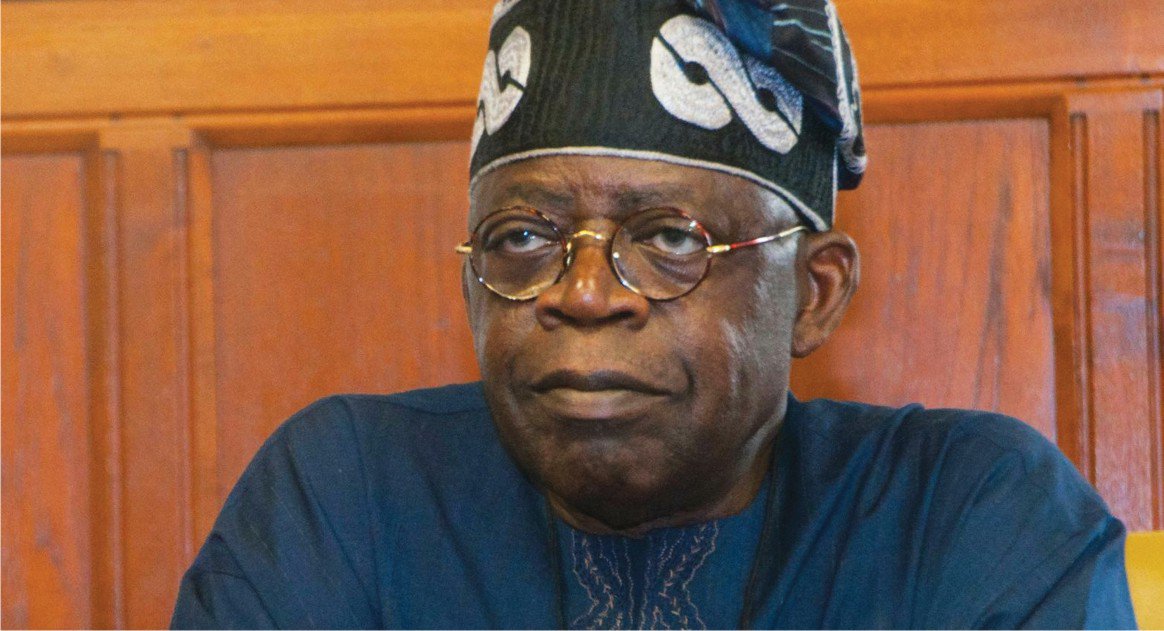
The #EndSARS Protests: A Fundamental Lesson in Democratic Governance by Asiwaju Bola Tinubu

Published

on

I heavily grieve for those who have lost their lives or been injured during the period of these protests. My deepest sympathies go to their families and loved ones for none should have been made to pay such a dear price. My career as an active politician spans nearly three decades. In that time, I have seen many things as Nigeria has struggled, sometimes against itself, to undertake the often painful yet inexorable push toward democratic government accountable to, and protective of, the people.

Though this journey, I have traversed the landscape of human experience. Having been as a political prisoner during our struggle for democracy but also having the singular honour of serving this state and its people as governor, I have known highs and lows, seen both the good and the bad of things.

But the events of the past few days have been extraordinary in a most dire sense. Only time will tell if we have the collective wisdom and requisite compassion to learn the proper lessons from these events that we may yet steer toward a better, more just Nigeria. Despite the tumult we now see, I believe with all my heart that we will meet the current challenge.

Here, let me directly address the sharp point aimed against me. I have been falsely accused of ordering the reported deployment of soldiers against peaceful protesters that took place at Lekki on 20 October 2020. This allegation is a complete and terrible lie. I did not order this or any assault against anybody. I would never want such a vile thing to happen nor did I have any prior knowledge about this sad event. It is my firm belief that no one should be harassed, injured or possibly killed for doing what they have the constitutional right to do in making their contribution to a better, more equitable society.

As a political figure, I am accustomed to people attributing to me all manner of indiscretions of which I have no knowledge and in which I played no role. I have usually ignored such falsities as the cost of being in the public eye.

This time, it is different. The allegation now levied against me is that I called on soldiers to kill my own people. This allegation is the foulest of lies.

The use of strong force against any peaceful protesters is indefensible, completely outside the norms of a democratic society and progressive political culture to which I aspire and have devoted my public life. That people were angered by the reports of violence and death is acutely understandable.

Understandably outraged, people sought to hold someone accountable. For various reasons, I became the most available scapegoat. Some people don’t like me because they believe the false rumours uttered about me over the years. Some maligned my name because they hide ulterior motives and harbour unrequited political scores they intend to settle.

A week ago, such people tried to bring enmity between me and the state and federal governments by contending I was sponsoring the protests. When that did not work, they then sought to sow enmity between me and the people by saying I ordered soldiers to quash the very same protests they first accused me of organising.

My opponents have every right to oppose me politically but let them have the courage to do so in the open, above board and to employ facts not evil fiction in their efforts against me. They have no right to slander and defame anyone with the terrible and vile fabrications now cast at my feet.

Those who have decided to hate me will hate me regardless of the truth. Again, they have the right to think as they may and I am not troubled by their unfounded animus. Today, I speak not to them. I leave them to the workings of their own conscience.

Today, I speak to those who believe in the importance of, and want to know, the truth.

The slander aimed at me is based on the untruth that I own the toll gate concession. The hate mongers prevaricate that I ordered the Lekki assault because the protests had caused me to lose money due to the interruption of toll gate activity.

Minus this alleged ownership, the slander employed against me falls to the ground as a heavy untruth. I ask people to thoroughly investigate the matter of my alleged ownership of the toll gate. By seeking facts, instead of being swayed by gossip, you will find I have no ownership interest or involvement in the toll gate. Having no business interests in the operation, my income remains unchanged whether one or 100,000 vehicles pass through that gate.

At bottom, the toll gate is a public asset. Given what has happened, I would like to propose to government that the toll gate be left closed for an indefinite period. If it is reopened, revenues should be donated to the confirmed victims of the Lekki attack as well as to other identifiable victims of police brutality in Lagos. Let government use the money to compensate and take care of those who have lost life or limb in the struggle for all citizens to go about the quiet, peaceful enjoyment of life without fear of undue harassment at this or that checkpoint.

On the other hand, I am, indeed, a promoter and financial investor in the Nation newspaper and TVC. It was widely known and circulated through social media that certain malevolent elements were going to take advantage of the situation to attack the Nation newspaper facilities and TVC in Lagos.

The attackers came. Both facilities were significantly damaged. Although equipped with prior notice of the imminent trespass, I did not call any one to seek or request for the army or police to deploy let alone attack, kill, or injure those who razed and vandalized these properties. I did not want any bloodshed. These elements, mostly hirelings of my political opponents, wreaked their havoc and destroyed those buildings and facilities and I thank God that the employees of these two media institutions managed to escape largely unharmed.

There is a deeper truth involved here. Burned buildings and damaged equipment can be rebuilt or replaced. There is no adequate substitute for the loss of even a single human life. I am not one to encourage violence. I abhor it. Thus I did nothing that might endanger lives, even the lives of those who destroyed my properties.

Now, those who claim I ordered violence in Lekki must face the sheer illogic of their assertions. There is no rationale that can adequately explain why I would order soldiers to repel peaceful protesters from the toll gate where I have no financial interest, yet, choose to do nothing to protect my investments in the Nation and TVC.

Why would I be so moved as to instigate the army to attack peaceful, law-abiding people at the toll gate where I have no pecuniary stake, yet lift not a single finger to stop hired miscreants bent on setting fire to these important media investments?

The allegations against me make no sense because they are untrue. They are parented by those seeking to stoke and manipulate the people’s anger in order to advance political objectives that have nothing to do with the subject matter of the protests.

The good and creative people of Lagos have worked hard over the years to build it into the dynamic economic and cultural focal point it has become. Lagos has enjoyed over two decades of sustained, uninterrupted growth. No other place in Nigeria can stake that claim. Some people are unhappy with this. They seek to tear down what we have worked hard to build that they may reshape Lagos to fit their own more destructive image. Such people have taken advantage of the current situation and of the public’s passions to set in motion a plan the people would never support if they only knew what the destructive schemers actually had in mind.

Not only lives have been lost in Lagos and throughout Nigeria, but livelihoods have also been impaired. I have seen the destruction to businesses, shops and homes.

I empathise with those who have lost their businesses and residences through no fault of their own but because hurtful, destructive misanthropes took it upon themselves to use this moment to disguise their efforts to destroy and upend the prosperity and hope so many of us took so many years to build. This is not what the genuine protesters wanted and no one should blame them for this destruction. In this tense situation, we must be careful not to rush to conclusions and to make sure we ascertain the true facts that we not be deceived toward rash action that may prove to be against our own interests.

This is particularly true regarding the Lekki incident. Various players will promulgate different casualty numbers. At this moment, no conclusive figure has been ascertained. Although an investigation has been launched by the governor, a totally accurate picture of the events may never be known. I for one refuse to engage in futile speculation regarding the possible number of casualties for such talk misses the vital point that we all must recognize.

We strive for a more compassionate, progressive society. Thus, we must do more than measure injustice by the number of dead or wounded. Injustice is injustice regardless of the number of victims from whom blood is drawn.

Based on the facts that come out of a thorough investigation, government may need to amend the terms of engagement for deployment of military forces in instances of mostly peaceful civil disobedience and protests. Although one of our nation’s most respected institutions, the military is not adequately equipped and trained to deal with such situations. It is placing a burden on the military they are ill-suited to carry.

Moreover, the time has come to take the necessary legal actions to allow for the creation of state police and the recruitment and training of many more police officers. Such state-created forces should be based on the modern tenets of community policing and optimal relations and cooperation with local communities.

Measures such as these are needed to cure present gaps in how military and law enforcement treat the general public. These proposals are important and they do not hamstring proper law enforcement and security operations. We know there are criminal elements in society primed to harm people and seize property. We expect this of criminals. What is not expected is that people will be brutalized and scarred by those commissioned to protect and serve them. This anomaly must end.

Given all that has happened, I must stress the great theme that underlies this entire situation so that it is not obscured and its proper societal impact lost. The right to protest is more than integral to the democratic setting; It transcends any form of government. The following thought may seem incongruous – but the right to protest exists only where orderly society exists.

Because of my strong belief in the right to protest and my adherence to democratic ideals, I was among those who actively protested the annulment of the June 12 election. I eagerly joined and sometimes led multitudes who took to the streets to protest the singular injustice of that historic moment. We demanded the establishment of a new democracy in Nigeria. Those protests are a part of the reason we have democracy in Nigeria today. They laid the foundation for the youth today to protest and to call to the fore their grievances whenever our social or political institutions fail them in a material way.

Thus, I cannot not wax nostalgic about pro-democracy protests of the 1990s yet castigate those who today protest against any form of institutionalized brutality.

No democratically minded person can fault those who protests in this regard. No society, even the most democratic, is perfect. All nations suffer lapses that cause even their most respected institutions to fall short of their better ideals. However, our imperfection does not preclude improvement or reform. We must constantly put our institutions and government to the test that we may reshape ourselves into a better nation constantly improving the manner in which it treats its citizens. If we do not commit ourselves in this way, democracy may not long be ours. We must be frank in recognizing our societal ills as well as resolute in curing them. Sometimes progress comes one election at a time. Sometimes, one protest at a time.

It must stand as a maxim for any compassionate, sane society that innocent people should not die or be injured at the hands of law enforcement. Enough blood has been spilled; enough pain has been felt.

Yes, some in the police have lost their way by distorting their helpful mission into its opposite. This gross malpractice by a tainted minority must stop so that the bulk of good police officers may do their job properly, with the support and thanks of a grateful community. This cooperative, productive embrace between the people and their genuine police protectors cannot occur as long as some in uniform continue to serially abuse fellow Nigerians.

In this regard, I must say that the steps thus far taken by the government are constructive. SARS has been ended and further reform has been promised with tangible steps taken in that direction. However, much more needs to be done for there is valid evidence of recurrent brutality and violence. Indeed, this is why the protests began in the first instance.

We are in a complex situation where almost every step has political overtones. Among the protesters, there are many people who do not politically support either the state or federal governments. However, this should not be a determinative factor in how one views the protests. We must not allow subjective politics to taint our view of what is right when it comes to the exercise of the fundamental civil liberties that we should all hold dear. Partisan narrowness cannot be allowed to redefine our core precepts of justice and human rights. This matter transcends daily politics. It goes to the of our constitutional arrangement and love of the people. While others may play politics with this issue, those who care about the nation dare not.

Young Nigerians across the country have peacefully stated their case. The president has pledge reform and should be given reasonable time to achieve them. The protests have accomplished their primary objective. There is no question that more needs to done. To achieve further progress, however, will require greater dialogue between government and protest leaders. As has been the case with almost every successful protest in every nation, there comes the decisive moment where a protest movement must shift gears to from demonstrations in the streets to negotiations with government. The protests against brutality are nearing this new stage or perhaps have already entered it.

Protest leaders and their genuine companions must now be careful. If the protests become too protracted, those genuinely interested in combating police brutality stand in danger of losing control of the protests. The risk is that the protests degenerate into something starkly inferior to the noble cause initially pursued. If so, the protests may then become associated in the public mind with localized disruptions and serious inconveniences. Through no fault of their own, except not having adequately planned their strategic endgame, protesters might lose the moral high ground they now occupy.

Here, government must also be exceptionally restrained. The protesters have remained peaceful. What has happened is that petty criminals and political miscreants sponsored by those who seek to stir mayhem are misbehaving and sparking trouble on the outer fringes of the protests.

Police and law enforcement have an overriding responsibility to differentiate between protesters and criminal elements. No doubt, they must stop the criminals. However, it would be morally wrong and politically counterproductive to use the existence of this fringe criminal element as a pretext to checkmate genuine protests. While some may think this is a cunning way to short-circuit the protests, such misguided cleverness will only worsen matters, rendering discussions towards a satisfactory settlement more difficult.

The present situation clearly does nothing to profit me politically or otherwise. It has complicated matters for me because many people now wrongfully blame me for a violent incident in which I played no part. Still, I stand strongly behind the people of Nigeria and affirm their right to protest peacefully. Along with all well-meaning, patriotic Nigerians, I want to see an end to all forms of institutionalised brutality and I shall do my utmost to see that this humane objective is realised.

For, if these protests can generate meaningful reform, our youth will have achieved a compound national success. First, they would have ended the terrible matter of institutionalized police brutality. Second, Nigeria would have made an important accretion to our political culture whereby government listened to and acted on the recommendations of ordinary people protesting against the wrongs done them.

This would establish a healthy precedent. Yet such durable progress can be made only if government respects the protesters and protesters actively negotiate with government. No steps should be taken by government to curtail protest activity as the people have chosen this vehicle as their preferred way to interface with government on this issue.

Yes, protest leaders too must appreciate the concrete realities of this situation. Street protests cannot last indefinitely without degenerating into other serious problems that no one wants. You have gotten government’s ear and attention, use this moment to press your case.

The right to protest should be pacifically exercised and never abused; neither should it be feared or unduly curtailed. It is essential because it lends greater depth to the relationship between government and the governed. If we are to attain parity with older, more established democracies, we must accept protests as part of our national development. It is important that Nigeria get this situation right. The direction and pace of our democratic progress weighs in the balance as the entire world watches to see how we manage ourselves at this delicate moment.

Asiwaju Bola Ahmed Tinubu is the National Leader of the All Progressives Congress (APC) and a former governor of Lagos State

Continue Reading
Click to comment

Leave a Reply

Your email address will not be published. Required fields are marked *

Opinion

Re-engineering the Mind: A Pathway to Freedom for Peoples, Corporates and Nations

Published

on

By

By Tolulope A. Adegoke PhD

“The most formidable borders we must cross are not geographic, but cognitive. True sovereignty—for peoples, corporates, or nations—begins with the courageous act of dismantling the internal architectures of limitation and rebuilding with the materials of our own authentic possibilities.” – Tolulope A. Adegoke, PhD

We live in a world shaped by history, yet our future is not predetermined by it. One of the most profound challenges facing individuals, corporations, and nations, particularly in contexts like Nigeria and Africa—is the legacy of mental colonialism. This isn’t merely a historical discussion; it’s about the unconscious frameworks that continue to dictate how we think, what we value, and what we believe is possible. Decolonizing oneself from this “mental slavery” is the essential first step toward delivering genuine, self-determined possibilities. This process requires honesty, courage, and a deliberate reclamation of thought.

Understanding the Invisible Chains

Mental slavery is the internalization of a worldview where the former colonizer’s culture, systems, and standards are seen as inherently superior, universal, and the sole benchmark for progress. It manifests in subtle ways: the devaluation of local languages and knowledge, the preference for foreign goods and credentials over local ones, and the persistent narrative that real solutions must always come from outside. This mindset creates a ceiling on imagination, fostering dependency and a crippling doubt in one’s own innate capacity to innovate and lead.

The Personal Journey: Reclaiming Your Inner Narrative

For the individual, decolonization is a deeply personal journey of unlearning and rediscovery. It starts with critical self-reflection.

  • Questioning Knowledge: It asks, “Whose history am I learning? Whose definition of beauty, success, and intelligence have I accepted?” It involves actively seeking out and valuing indigenous philosophies, like the Ubuntu concept of “I am because we are,” not as folklore but as viable, sophisticated frameworks for living.
  • Redefining Value: It means measuring personal success not only by proximity to Western lifestyles but by contributions to community, by cultural continuity, and by personal integrity aligned with one’s own roots.
  • Language as Liberation: It recognizes the power of language to shape reality. Embracing one’s mother tongue in thought and creative expression becomes an act of resistance and a reconnection to a distinct way of seeing the world.

The Corporate Transformation: From Extraction to Ecosystem

Businesses and organizations are often perfect mirrors of colonial logic, built on hierarchical control, resource extraction, and the standardization of Western corporate models. Decolonizing the corporate sphere requires a fundamental shift in purpose and practice.

  • Beyond Exploitation: It moves from a model that extracts value (from people, communities, and the environment) for distant shareholders to one that generates and circulates value within local ecosystems. It prioritizes regenerative practices and community equity.
  • Innovation from Within: It rejects the mere copying of foreign business playbooks. Instead, it looks inward, developing uniquely African management styles, products, and solutions that respond to local realities, needs, and social structures. It sees the informal sector not as a problem, but as a reservoir of resilience and ingenuity.
  • Partnership Over Paternalism: It abandons the “savior” complex—the idea that development is “delivered” from the outside. A decolonized corporate entity positions itself as a humble partner, listening to and amplifying local agency and existing expertise.

The National Project: Reimagining Governance and Identity

For nation-states like Nigeria, the legacy is etched into the very architecture of the state: borders that divide ethnic groups, economies structured for export of raw materials, and educational systems that glorify foreign histories.

  • Institutional Reformation: True decolonization necessitates the courageous reform of institutions. This means auditing legal systems, constitutions, and national curricula to root out colonial biases and integrate indigenous knowledge and juridical principles.
  • Economic Sovereignty: It demands a strategic, deliberate reduction of dependency. This involves prioritizing regional trade (like the African Continental Free Trade Area), adding value to natural resources locally, and investing in home-grown technology and manufacturing. It is a pivot from being a primary commodity exporter in a global system designed by others to being an architect of one’s own economic destiny.
  • Cultural Agency: On the global stage, a decolonized nation defines itself. It conducts diplomacy based on its own historical experiences and philosophical foundations, not merely by aligning with blocs formed by colonial histories. It tells its own stories, controlling its narrative.

Nigeria and Africa: The Crucible of Challenge and Promise

Africa, with Nigeria as its most populous nation, is the undeniable focal point of this global conversation. The continent’s challenges are real, but they are too often diagnosed through the very colonial lens that contributed to them. Nigeria’s specific struggle—to forge a cohesive national identity from its stunning diversity, to manage resource wealth for the benefit of all, and to overcome governance failures—is a direct engagement with its colonial past.

The “African Renaissance” envisioned in frameworks like Agenda 2063 is, at its heart, a decolonial project. It seeks an Africa integrated by its own people’s design, powered by its own intellectual and cultural capital, and speaking to the world with confidence and authority.

A Universal Call: Why the Wider World Must Engage

This is not a project for the formerly colonized alone. The wider world, including former colonial powers and global institutions, has a responsibility to engage.

  • Acknowledgment and Equity: It begins with a sincere acknowledgment of historical injustices and their modern-day economic and political echoes. It requires moving from a paradigm of charity and aid to one of justice, fair trade, and equitable partnership.
  • Enriching Humanity: Ultimately, decolonizing the mind enriches all of humanity. It frees everyone from the limitations of a single, dominant story about progress and human achievement. It opens the door to a world where multiple ways of knowing, being, and creating can coexist and cross-pollinate, leading to more resilient and innovative global solutions.

Conclusion: The Freedom to Imagine Anew

In this moment of global reckoning and transformation, the work of mental decolonization is not a luxury; it is an urgent necessity. It is the hard, internal work that must precede lasting external change. For the individual, it delivers the profound possibility of wholeness. For the corporation, it unlocks sustainable innovation and authentic purpose. For nations like Nigeria and for the African continent, it is the non-negotiable foundation for true sovereignty and transformational progress.

The ultimate deliverable is freedom—the freedom to imagine a future unbounded by the past, and the agency to build it.

Dr. Tolulope A. Adegoke is a Distinguished Ambassador For World Peace (AMBP-UN); Nigeria @65 Leaders of Distinction (2025); Recipient, Nigerian Role Models Award (2024); African Leadership Par Excellence Award (2024). 

He can be reached via: tolulopeadegoke01@gmail.comglobalstageimpacts@gmail.com

Continue Reading

Opinion

Dele Momodu’s Arrival: Day ADC Became Heavier

Published

on

By

By Dr. Sani S a’idu Baba

What does loyalty mean to you in friendships, family, or work? To me, loyalty is staying true, honest and supportive even when it’s hard. That truth defines my relationship with Chief Dele Momodu, whom I more often refer to as the pride of Africa. My loyalty to him is non-negotiable. It is not seasonal, transactional, or driven by convenience. It is rooted in conviction. So, the moment he collected his membership card of the African Democratic Congress (ADC) in his hometown of Ihievbe, Owan East, Edo State, I did the same in Kano. In that instant, distance dissolved, and purpose aligned. What happened yesterday was not just a decamping; it was a declaration. A declaration that the long, hard road to Rescue, Recover and Reset Nigeria has gained one of its most formidable travellers.

This is indeed a remarkable day for the ADC. While many defections into political parties come and go with the tides of ambition, Dele Momodu’s entry stands apart, loud in meaning, deep in symbolism, and heavy with consequence. For the ADC, this is not merely the acquisition of a new member; it is the embrace of a movement-builder, a conscience-keeper, and a bridge across Nigeria’s fractured divides, and these qualities are evident in his record.

First, Dele Momodu’s political pedigree is rare and refreshing. In an environment where political loyalty often bends toward power, he has never been part of the ruling party throughout his entire political life. This is not stubbornness; it is principle. It means he understands opposition not as noise-making, but as nation-guarding. He knows how to put governments on their toes firmly, intelligently, and fearlessly. The ADC has gained a man perfectly schooled in democratic vigilance, one who knows that true progress is sharpened by principled opposition.

Second, the ADC has gained a tested pro-democracy fighter in Dele Momodu. He paid a personal price during the military era for resisting dictatorship and standing firmly for democratic rule in the Third Republic. That history of sacrifice now translates into a major advantage for the ADC: a leader with the moral authority, experience, and courage to constitutionally, peacefully and intellectually confront the growing threat of a one-party state and one-man dictatorship. With Dele Momodu in its fold, the ADC is better equipped to defend democracy and lead the national effort to recover Nigeria from authoritarian drift.

Third, he is widely recognized as one of the most principled and loyal politicians Nigeria has produced. When Dele Momodu commits, he commits fully. No half-measures. No double games. No conditional loyalty. If he belongs to a party, he supports it wholeheartedly and unconditionally. For the ADC, this is priceless. In a time when political parties struggle with internal contradictions and wavering allegiances, here is a man whose word is his bond and whose presence strengthens internal cohesion.

Fourth, the ADC has attracted not just a member, but a truth-teller. Dele Momodu derives pleasure in saying the truth as it is, without varnish, without fear, without apology. Parties rise or fall not only by their slogans but by their capacity for honest self-examination. With Momodu in the ADC, the party gains its greatest advisor and most reliable mirror. He will celebrate what is right, challenge what is wrong, and insist on moral clarity. This is how serious political institutions are built.

Fifth, Dele Momodu is a magnet. He attracts highly responsible, competent, and patriotic Nigerians from every corner of the country. Many see him as a part-time and independent politician, one whose ultimate allegiance is not to party symbols but to Nigeria’s soul. That perception is powerful. It means that wherever he goes, Nigerians are ready to follow, to join, and to support. By welcoming him, the ADC has sent a clear signal to the nation: this is a home for credibility, courage, and Nigeria first politics.

Wherever Dele Momodu goes, Nigerians at home and in the diaspora admire him effortlessly. He never gets tired of engaging, mentoring, inspiring, and mobilising. Without any noise, he becomes a vehicle of mass mobilisation. With him, the ADC’s message will travel farther than billboards, deeper than rallies, and faster than propaganda. This is influence earned through decades of credibility, not imposed.

I speak from experience. I was the North-West Coordinator of the Dele Momodu Movement in 2022 when he contested the presidential primaries under the PDP. I later served as his agent at the primaries held at the Moshood Abiola Stadium, Abuja, on May 28, 2022. I went round with him all over Nigeria, and from that experience, I came to truly understand the perception of the ordinary Nigerian about the extraordinary pedigree of Dele Momodu, how people see him as consistent, authentic, accessible, and genuinely committed to Nigeria’s progress.

Sixth, the ADC has attracted a great promise-keeper in Dele Momodu. Let me back this claim with facts. I was among those who accompanied him to the screening before the PDP presidential primaries. When he came out and journalists asked him questions, his response was characteristically clear and sincere: it is totally about Nigeria, nothing personal. He went further to announce the promise he took during the screening, that he would support whoever emerged as the party’s candidate to victory, and he kept that promise. As great globetrotter that he is, no one can easily recall when last Dele Momodu stayed in Nigeria for months, working assiduously for the success of his party and its candidate, His Excellency Atiku Abubakar. While many others who took the same promise were busy throwing tantrums, he was on the field, mobilising, advocating, and delivering. That was a promise kept.

But beyond politics lies the most compelling asset Dele Momodu brings to the ADC: his story. The turbulent but triumphant journey of his life can draw tears not only from the over 140 million Nigerians living in extreme poverty today, but from anyone who understands struggle. It is a story that melts hearts across class, age, and geography. Relatable. Poignant. Edifying. It speaks directly to the Nigerian who feels forgotten by birth or battered by circumstance. It tells you that you may be a rejected stone today, penniless, down and out but you can become a chief cornerstone tomorrow. Not by cutting corners, but by patience, consistency, building networks of influence, embracing hard work, and staying faithful to your dream. Perhaps this is why Dele Momodu is arguably the Nigerian mentor with the highest number of mentees across every nook and cranny of this country, myself included. His mentorship culture is organic, generous, and transformational. He opens doors, builds people, and multiplies hope. For the ADC, this is a strategic advantage that cannot be overstated. A party that attracts Dele Momodu automatically attracts thousands of thinkers, professionals, youths, and patriots he has inspired over decades.

Dele Momodu is in a class of his own. Naturally unique. Authentically Nigerian. Globally respected and travels road less travel. His life proves that greatness can rise from adversity, and leadership can be forged without bitterness. With his entry into the ADC, the party has not just caught a “big fish”; it has netted a tide-changer. Yesterday, in Ihiebve, history was made. From Edo to Kano, from the grassroots to the global stage, a new chapter has begun. The ADC is no longer just preparing for the future, it is recruiting it. And with Dele Momodu on board, the mission to Rescue, Recover and Reset Nigeria has found one of its strongest voices and most trusted hands.

The journey ahead is demanding. But with men of principle, truth and influence like Chief Dele Momodu, the ADC is no longer asking Nigerians to believe. It is giving them a reason to.

Dr Baba writes from Kano, and can be reached via drssbaba@yahoo.com

Continue Reading

Opinion

Reimagining the African Leadership Paradigm: A Comprehensive Blueprint

Published

on

By

By Tolulope A. Adegoke, PhD

“To lead Africa forward is to move from transactional authority to transformational stewardship—where institutions outlive individuals, data informs vision, and service is the only valid currency of governance” – Tolulope A. Adegoke, PhD

The narrative of African leadership in the 21st century stands at a critical intersection of profound potential and persistent paradox. The continent, pulsating with the world’s youngest demographic and endowed with immense natural wealth, nonetheless contends with systemic challenges that stifle its ascent. This divergence between capacity and outcome signals not merely a failure of policy, but a deeper crisis of leadership philosophy and practice. As the global order undergoes seismic shifts, the imperative for African nations to fundamentally re-strategize their approach to governance has transitioned from an intellectual exercise to an existential necessity. Nigeria, by virtue of its demographic heft, economic scale, and cultural influence, serves as the continent’s most significant crucible for this transformation. The journey of Nigerian leadership from its current state to its potential apex offers a blueprint not only for its own 200 million citizens but for an entire continent in search of a new compass.

Deconstructing the Legacy Model: A Diagnosis of Systemic Failure

To construct a resilient future, we must first undertake an unflinching diagnosis of the present. The prevailing leadership archetype across much of Africa, with clear manifestations in Nigeria’s political economy, is built upon a foundation that has proven tragically unfit for purpose. This model is characterized by several interlocking dysfunctions:

·         The Primacy of Transactional Politics Over Transformational Vision: Governance has too often been reduced to a complex system of transactions—votes exchanged for short-term patronage, positions awarded for loyalty over competence, and resource allocation serving political expediency rather than national strategy. This erodes public trust and makes long-term, cohesive planning impossible.

·         The Tyranny of the Short-Term Electoral Cycle: Leadership decisions are frequently held hostage to the next election, sacrificing strategic investments in education, infrastructure, and industrialization on the altar of immediate, visible—yet fleeting—gains. This creates a perpetual cycle of reactive governance, preventing the execution of decade-spanning national projects.

·         Administrative Silos and Bureaucratic Inertia: Government ministries and agencies often operate as isolated fiefdoms, with limited inter-departmental collaboration. This siloed approach fragments policy implementation, leads to contradictory initiatives, and renders the state apparatus inefficient and unresponsive to complex, cross-sectoral challenges like climate change, public health, and national security.

·         The Demographic Disconnect: Africa’s most potent asset is its youth. Yet, a vast governance gap separates a dynamic, digitally-native, and globally-aware generation from political structures that remain opaque, paternalistic, and slow to adapt. This disconnect fuels alienation, brain drain, and social unrest.

·         The Weakness of Institutions and the Cult of Personality: When the strength of a state is vested in individuals rather than institutions, it creates systemic vulnerability. Independent judiciaries, professional civil services, and credible electoral commissions are weakened, leading to arbitrariness in the application of law, erosion of meritocracy, and a deep-seated crisis of public confidence.

The tangible outcomes of this flawed model are the headlines that define the continent’s challenges: infrastructure deficits that strangle commerce, public education and healthcare systems in states of distress, jobless economic growth, multifaceted security threats, and the chronic hemorrhage of human capital. To re-strategize leadership is to directly address these outputs by redesigning the very system that produces them.

Pillars of a Reformed Leadership Architecture: A Holistic Framework

The new leadership paradigm must be constructed not as a minor adjustment, but as a holistic architectural endeavor. It requires foundational pillars that are interdependent, mutually reinforcing, and built to endure beyond political transitions.

1. The Philosophical Core: Embracing Servant-Leadership and Ethical Stewardship
The most profound change must be internal—a recalibration of the leader’s fundamental purpose. The concept of the leader as a benevolent “strongman” must give way to the model of the servant-leader. This philosophy, rooted in both timeless African communal values (ubuntu) and modern ethical governance, posits that the true leader exists to serve the people, not vice versa. It is characterized by deep empathy, radical accountability, active listening, and a commitment to empowering others. Success is measured not by the leader’s personal accumulation of power or wealth, but by the tangible flourishing, security, and expanded opportunities of the citizenry. This ethos fosters trust, the essential currency of effective governance.

2. Strategic Foresight and Evidence-Based Governance
Leadership must be an exercise in building the future, not just administering the present. This requires the collaborative development of a clear, compelling, and inclusive national vision—a strategic narrative that aligns the energies of government, private sector, and civil society. For Nigeria, frameworks like Nigeria’s Agenda 2050 and the National Development Plan must be de-politicized and treated as binding national covenants. Furthermore, in the age of big data, governance must transition from intuition-driven to evidence-based. This necessitates significant investment in data collection, analytics, and policy-informing research. Whether designing social safety nets, deploying security resources, or planning agricultural subsidies, decisions must be illuminated by rigorous data, ensuring efficiency, transparency, and measurable impact.

3. Institutional Fortification: Building the Enduring Pillars of State
A nation’s longevity and stability are directly proportional to the strength and independence of its institutions. Re-strategizing leadership demands an unwavering commitment to institutional architecture:

·         An Impervious Judiciary: The rule of law must be absolute, with a judicial system insulated from political and financial influence, guaranteeing justice for the powerful and the marginalized alike.

·         Electoral Integrity as Sacred Trust: Democratic legitimacy springs from credible elections. Investing in independent electoral commissions, transparent technology, and robust legal frameworks is non-negotiable for political stability.

·         A Re-professionalized Civil Service: The bureaucracy must be transformed into a merit-driven, technologically adept, and well-remunerated engine of state, shielded from the spoils system and empowered to implement policy effectively.

·         Robust, Transparent Accountability Ecosystems: Anti-corruption agencies require genuine operational independence, adequate funding, and protection. Complementing this, transparent public procurement platforms and mandatory asset declarations for public officials must become normalized practice.

4. Collaborative and Distributed Leadership: The Power of the Collective
The monolithic state cannot solve wicked problems alone. The modern leader must be a convener-in-chief, architecting platforms for sustained collaboration. This involves actively fostering a triple-helix partnership:

·         The Public Sector sets the vision, regulates, and provides enabling infrastructure.

·         The Private Sector drives investment, innovation, scale, and job creation.

·         Academia and Civil Society contribute research, grassroots intelligence, independent oversight, and specialized implementation capacity.
This model distributes responsibility, leverages diverse expertise, and fosters innovative solutions—from public-private partnerships in infrastructure to tech-driven civic engagement platforms.

5. Human Capital Supremacy: The Ultimate Strategic Investment
A nation’s most valuable asset walks on two feet. Re-strategized leadership places a supreme, non-negotiable priority on developing human potential. For Nigeria and Africa, this demands a generational project:

·         Revolutionizing Education: Curricula must be overhauled to foster critical thinking, digital literacy, STEM proficiency, and entrepreneurial mindset—skills for the Fourth Industrial Revolution. Investment in teacher training and educational infrastructure is paramount.

·         Building a Preventive, Resilient Health System: Focus must shift from curative care in central hospitals to robust, accessible primary healthcare. A healthy population is a productive population, forming the basis of economic resilience.

·         Creating an Enabling Environment for Talent: Beyond education and health, leadership must provide the ecosystem where talent can thrive: reliable electricity, ubiquitous broadband, access to venture capital, and a regulatory environment that encourages innovation and protects intellectual property. The goal is to make the domestic environment more attractive than the diaspora for the continent’s best minds.

6. Assertive, Strategic Engagement in Global Affairs
African leadership must shed any vestiges of a supplicant mentality and adopt a posture of strategic agency. This means actively shaping continental and global agendas:

·         Leveraging the AfCFTA: Moving beyond signing agreements to actively dismantling non-tariff barriers, harmonizing standards, and investing in cross-border infrastructure to turn the agreement into a real engine of intra-African trade and industrialization.

·         Diplomacy for Value Creation: Foreign policy should be strategically deployed to attract sustainable foreign direct investment, secure technology transfer agreements, and build partnerships based on mutual benefit, not aid dependency.

·         Advocacy for Structural Reform: African leaders must collectively and persistently advocate for reforms in global financial institutions and multilateral forums to ensure a more equitable international system.

The Nigerian Imperative: From National Challenges to a National Charter

Applying this framework to Nigeria requires translating universal principles into specific, context-driven actions:

·         Integrated Security as a Foundational Priority: Security strategy must be comprehensive, blending advanced intelligence capabilities, professionalized security forces, with parallel investments in community policing, youth employment programs in high-risk areas, and accelerated development to address the root causes of instability.

·         A Determined Pursuit of Economic Complexity: Leadership must orchestrate a decisive shift from rent-seeking in the oil sector to value creation across diversified sectors: commercialized agriculture, light and advanced manufacturing, a thriving creative industry, and a dominant digital services sector.

·         Constitutional and Governance Re-engineering: To harness its diversity, Nigeria requires a sincere national conversation on restructuring. This likely entails moving towards a more authentic federalism with greater fiscal autonomy for states, devolution of powers, and mechanisms that ensure equitable resource distribution and inclusive political representation.

·         Pioneering a Just Energy Transition: Nigeria must craft a unique energy pathway—strategically utilizing its gas resources for domestic industrialization and power generation, while simultaneously positioning itself as a regional hub for renewable energy technology, investment, and innovation.

Conclusion: A Collective Endeavor of Audacious Hope

Re-strategizing leadership in Africa and in Nigeria is not an event, but a generational process. It is not the abandonment of culture but its evolution—melding the deep African traditions of community, consensus, and elder wisdom with the modern imperatives of transparency, innovation, and individual rights. This task extends far beyond the political class. It is a summons to a new generation of leaders in every sphere: the tech entrepreneur in Yaba, the reform-minded civil servant in Abuja, the agri-preneur in Kebbi, the investigative journalist in Lagos, and the community activist in the Niger Delta.

Ultimately, this is an endeavor of audacious hope. It is the conscious choice to build systems stronger than individuals, institutions more enduring than terms of office, and a national identity richer than our ethnic sum. Nigeria possesses all the requisite raw materials for greatness: human brilliance, cultural richness, and natural bounty. The final, indispensable ingredient is a leadership strategy worthy of its people. The blueprint is now detailed; the call to action is urgent. The future awaits not our complaints, but our constructive and courageous labor. Let the work begin in earnest.

Dr. Tolulope A. Adegoke is a globally recognized scholar-practitioner and thought leader at the nexus of security, governance, and strategic leadership. His work addresses complex institutional challenges, with a specialized focus on West African security dynamics, conflict resolution, and sustainable development.

Continue Reading

Trending