Connect with us

Headline

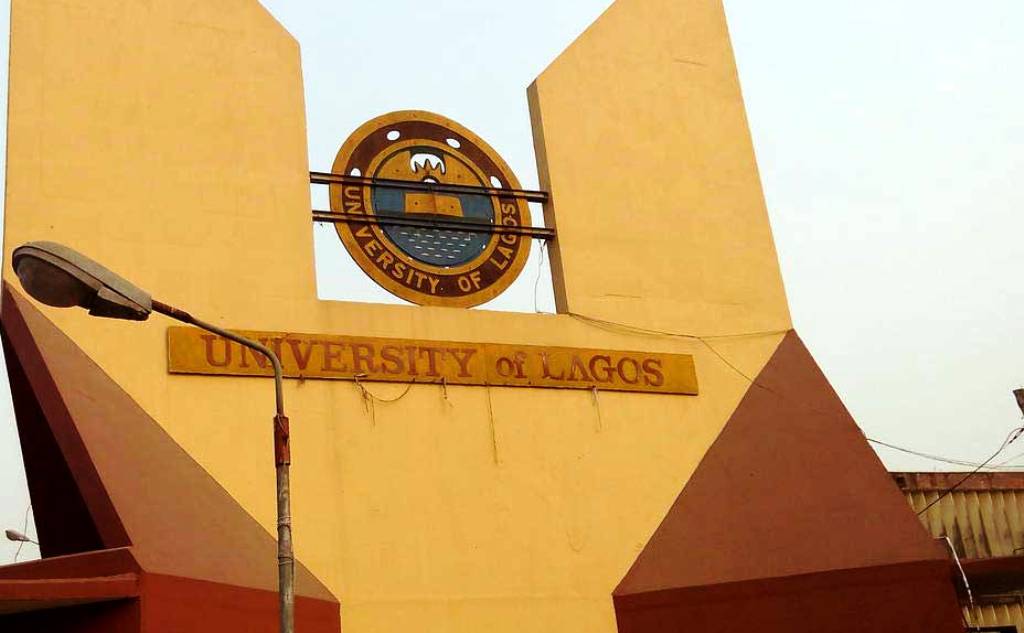
UNILAG: Trouble in the Ivory Tower

Published

on

By Eric Elezuo

The anticlimax of a series of skirmishes involving the Pro-Chancellor, Prof Wale Babalakin and Vice Chancellor, Prof Oluwatoyin Ogundipe of the University of Lagos, came to a head during the week when the Registrar, and Secretary of the Governing Council of the apex institution, Oladejo Azeez Esq, released a notice, intimating the general public of the removal of Prof. Ogundipe as the Vice Chancellor.

The notice stated that “the decision was based on council’s investigation of serious acts of wrong doing, gross misconduct, financial recklessness and abuse of office” against the VC.

The council’s meeting, which was held at the headquarters of the National Universities Commission, Abuja, had in attendance at least 11 council members, including Ogundipe. Reports available to the Boss, says majority of the attendees voted for the removal of Ogundipe.

A source told The Boss that both the university’s governing council and the management have been embroiled in irreconcilable conflicts for as long as one can remember, but the whole thing reached a climax in March when its week-long 2020 convocation was abruptly cancelled just before it started.

The cancellation, which was ordered by the NUC, Nigerian universities’ regulatory body, was reportedly in response to a directive by the Minister of Education, Adamu Adamu.

Adamu’s directive, the Boss was told, was in response to a letter written to the vice-chancellor by the council chairman, accusing Ogundipe of keeping the council in the dark as regards important details about the ceremony. The postponement of the most important ceremony in the school’s academic calendar brought to the open the unhealthy rivalry that bedeviled the administration of the cherished institution.

Shortly after the council’s letter made the rounds, Prof. Ogundipe circulated a rebuttal, rubbishing the sack notice, saying it was untrue and a figment of the imagination of the writer. He urged stakeholders to disregard the ‘mischievous disinformation’, affirming that he was still in charge. Meanwhile, the council had named a replacement in Prof Omololu Soyombo, being emboldened by the Federal Government’s assertion that the council has the right and power to hire and fire.

“My dear colleagues, the Federal ministry of Education wishes to state that it is yet to be briefed on the developments at the University of Lagos regarding the purported removal of the VC.

“While the ministry awaits proper briefing from the university authorities, it is important to reaffirm that council has the power to hire and fire but that due process must be followed in doing so,” the FG noted.

When The Boss reached out to the Lagos Chairman of the UNILAG Alumni Association, Dr. Lukumon Adeoti, he mentioned that though the process of the removal can be questioned, the council is authorised to take such decision. He hinted that with the announcement of an acting VC, it is almost certain that the Ogundipe era is over.

“However”, he said, “the senate is in a session at the moment and everyone should await the outcome of the meeting while the Alumni will be meeting tomorrow (Friday) after which a definite statement will be made on the next step to be taken.”

Consequent upon the meeting, the Senate rose to reject the removal of Ogundipe as Vice Chancellor by the Governing Council. The emergency meeting which hosted over 80 members and chaired by former Dean of the Faculty of Law, Prof. Chioma Ago, agreed that the removal of Ogundipe was in contravention of UNILAG’s regulation, as the Council removed the VC without giving him the opportunity to defend himself. They also rejected the appointment of Prof. Soyombo as Acting Vice Chancellor.

Among those who also kicked against Ogundipe’s removal were the academic and non-academic unions of the university as they went a step further by calling on President Muhammadu Buhari to dissolve the governing council. In condemning the appointment of an acting vice chancellor, the groups stated that there’s no room for any “surrogate VC”.

But Babalakin on Friday insisted that the sacking of Professor Oluwatoyin Ogundipe as the school’s Vice-Chancellor by the Governing Council was fair and followed due process, adding that it was in the best interest of the university.

“I assure you that there was full compliance with the law in the removal of the Vice-Chancellor,” he said.

Efforts made by The Boss to speak with the Chairman, UNILAG branch of the Academic Staff Union of Universities, Dr. Dele Ashiru, was not successful as his phone rang out without being picked. He however sent a message promising to call back, but never did.

The unions, in their statements faulted the process, saying that it is unheard of that a principal officer could just be removed on flimsy excuses without regard to laws. They said the UNILAG Act, as well as laws and practice of other universities not only in Nigeria but also in other civilised climes, prohibit such and subsequently held that Ogundipe’s sack is illegal based on the fact “that there was no notification to the vice chancellor concerning the allegations against him, no investigation panel set up to investigate the allegations in line with the university’s Act, lack of fair-hearing, no formal report from any investigative committee and no consideration of report of an investigative committee since none was set up as provided in the law.”

But the last has not been heard as while Prof Soyombo has declared himself acting VC and has assumed duties, the embattled vice chancellor have headed for the court in protest of the removal. Reports say that Ogundipe has briefed a leading constitutional lawyer, Chief Mike Ozekhome to challenge the purported removal from office and replacement.

He claimed that the Council breached all known rules of natural justice and Section 36 of the 1999 Constitution in purportedly removing him as VC.

“The present situation in our university should not be allowed to further degenerate. We craved and agitated for university autonomy. Now that we have it, we must not throw the bad water with the baby. We must avoid further degeneration of the present conundrum.”

But lending their voice to the matter, the Committee of Vice-Chancellors of Universities (CVC), speaking through its Secretary General, Yakubu Ochefu, also condemned the removal of the Vice-Chancellor and the appointment of Soyombo, saying it was without due process. It further frowned at the fact that appointed Acting VC was even chosen from outside the university’s three deputy Vice-Chancellors.

He said:

“The chairman of the council knows that the tenure of two members of the council has expired, so he waited for the members not to be in council to get the majority vote.

“It is like a hatchet job, we don’t want it to appear like that because of the integrity of (the) University of Lagos.

“The integrity is very high and we don’t want council members to degenerate to that situation.

“As it is now, we have a stalemate and it is looking more in favour of the university senate than the council.”

Ochefu’s stand bothered on the inability of the council to bypass due process in both removing the VC and appointing another in acting capacity.

“Unilag has three deputies, none of them was appointed as acting vice-chancellor but somebody else entirely.

“This is going to pose another problem, senate members will not allow such a person to chair their meeting because they don’t know him within the context of laws establishing universities,” he said.

He went further to explain to process to removing a sitting VC as follows:

“In the procedure for removing a vice-chancellor, you have to set up a joint council/senate committee.
“The vice-chancellor will be given the opportunity to defend himself; from there, a submission will be made to the council which will take a decision.

“As CVC, we advise the council to take a step back and allow the process of removing a vice chancellor, as established by the law, to take its course.

“It is a simple process. If it finds the man guilty, the council can remove him, but it should go through the normal process,” he said.

As things are, it is a trying period for the foremost university as daggers are drawn, ready to draw blood, thereby heightening the tension and trouble in the ivory tower.
Continue Reading
Click to comment

Leave a Reply

Your email address will not be published. Required fields are marked *

Headline

Israeli Ambassador Accuses Iran of Spreading Terror, Sponsoring Extremist Activities in Nigeria

Published

on

By

Israeli Ambassador to Nigeria, Michael Freeman, has accused Iran of sponsoring extremist activities in Nigeria and other parts of the world, alleging that Tehran supports groups aimed at destabilising countries while pursuing its hostility against Israel.

Freeman made the remarks on Friday while speaking during an interview on The Morning Show on Arise News.

The envoy claimed that Iran is the only country within the United Nations that openly expresses a desire to destroy another sovereign state, referring to repeated threats against Israel.

According to him, the Iranian government has, over several decades, supported militant groups and terror organisations around the world in pursuit of that objective.

Freeman alleged that Iran has backed groups such as Hamas and Hezbollah, adding that Tehran was also behind the October 7 attack carried out by Hamas against Israel.

He further claimed that Iranian activities aimed at spreading instability have been observed across several regions, including Europe, Australia, and parts of Africa.

Speaking specifically about Nigeria, the Israeli ambassador alleged that the Islamic Movement of Nigeria receives backing from the Iranian government.

According to Freeman, statements of support from Iran’s leadership, including posts by Ali Khamenei on social media, have openly indicated such ties.

He said: “The issue here is about Iran. Iran is the only country in the world, in the United Nations, who expressly desires to wipe another country off the face of the earth. Iran has stated its very policy is to destroy Israel. Is to wipe Israel off the map is to make sure they kill every single person and no regime, no country that has an express desire to destroy Israel, and it’s not only an expressed desire.

“We’ve seen over 47 years, they’ve taken all the actions they can in order for that to happen. We’ve seen them sponsor terror organizations. They were behind October the seventh massacre of Hamas. We’ve seen them sponsoring Hezbollah. We’ve seen them acting in Europe. We’ve seen them acting in Australia. We’ve seen them acting in Nigeria.

“We’ve seen these people acting all across the world in order to spread disturbance for them to try and carry out their aim of destroying Israel, and Israel will not allow another country to have nuclear weapons when they’ve expressly stated they want those weapons to destroy Israel”.

“I think that it is well documented. We know that there are certain movements, for example, the Islamic movement of Nigeria is sponsored and is backed by the Iranian regime. This is not me saying this, we’ve seen that documented by the Iranian regime.

The Supreme Leader posted on X his support and his backing there. So that’s very open. And there are other areas as well that Iran is working for, destabilizing, not only Nigeria, but all of West Africa.”

Continue Reading

Headline

Why Nigerians Must Reject INEC’s Revised Timetable – ADC

Published

on

By

By Eric Elezuo

The Independent National Electoral Commission (INEC), during the week, released a fresh elections timetable, with major amendments to accommodate the just passed and signed Electoral Act 2026 by the National Assembly and President Bola Tinubu respectively.

Following the repeal of the Electoral Act, 2022 and the enactment of the Electoral Act, 2026, which introduced adjustments to statutory timelines governing pre-election and electoral activities, the Commission has reviewed and realigned the Schedule to ensure full compliance with the new legal framework.

Accordingly, the Commission has resolved as follows:

  1. Presidential and National Assembly Elections will now hold on Saturday, 16th January 2027 as against the earlier stated February 20, 2027
  2. Governorship and State Houses of Assembly Elections will now hold on Saturday, 6th February 2027 as against the former date of March 6, 2027

Also in accordance with the approved Schedule of Activities, the electoral bidy noted in the revised timetable that:

Conduct of Party Primaries, including resolution of disputes arising from primaries, will commence on 23rd April 2026 and end on 30th May 2026.

Presidential and National Assembly campaigns will commence on 19th August 2026.

Governorship and State Houses of Assembly campaigns will commence on 9th September 2026.

As provided by law, campaigns shall end 24 hours before Election Day. Political parties are strongly advised to adhere strictly to these timelines. The Commission will enforce compliance with the law.

But in a swift reaction, the opposition coalition, African Democratic Congress (ADC), rejected the revised 2026–2027 general election timetable, describing it as a politically biased schedule designed to favour the re-election agenda of President Bola Tinubu, and calling on all Nigerians to speak up enmasse to reject the revised timetable.

The ADC, in a statement by its National Publicity Secretary, Bolaji Abdullahi, on Friday argued that the new deadlines and compliance requirements under the Electoral Act 2026 create near-impossible hurdles for opposition parties seeking to field candidates.

On February 13, INEC initially scheduled the 2027 Presidential and National Assembly elections for February 20, 2027, while the Governorship and State Houses of Assembly elections were fixed for March 6, 2027.

The timetable, however, faced objections from some Muslim stakeholders who noted that the dates coincided with the 2027 Ramadan period.

Following the concerns, the National Assembly amended Clause 28 of the Electoral Act Amendment Bill, reducing the required election notice period from 360 to 300 days, allowing INEC to adjust the election dates.

Subsequently, INEC released a revised schedule on Thursday, signed by its Chairman, Joash Amupitan, moving the Presidential and National Assembly elections to January 16, 2027, and the Governorship and State Houses of Assembly elections to February 6, 2027.

Reacting, the ADC said the requirement that political parties submit a comprehensive digital membership register by April 2, 2026, effectively bars opposition parties from participating.

The party stated: “The African Democratic Congress rejects the updated 2026–2027 electoral timetable released by the Independent National Electoral Commission. What has been presented as a routine administrative schedule of the upcoming general elections is, in fact, a political instrument carefully structured to narrow democratic space and strengthen the incumbent administration ahead of the 2027 general elections.

“According to the timetable, party primaries are to be conducted between April 23 and May 30, 2026, just 55 to 92 days from today. However, more significant is that, pursuant to Section 77(4) of the Electoral Act 2026, political parties are required to submit their digital membership registers to INEC not later than April 2, 2026.

“That is only about 34 days away. Section 77(7) further provides that any party that fails to submit its membership register within the stipulated time shall not be eligible to field a candidate. These are not routine administrative rules but are deliberately constructed barriers designed to exclude the opposition from participating in the election.”

The party further noted that Section 77(2) of the Electoral Act 2026 requires the digital register of members to contain name, sex, date of birth, address, state, local government, ward, polling unit, National Identification Number (NIN) and photograph in both hard and soft copies, while Section 77(6) prohibits the use of any pre-existing register that does not contain the specified information. It warned that failure to meet these requirements would lead to disqualification.

The ADC questioned the fairness of the digital membership requirement, noting that the ruling All Progressives Congress began its registration process in February 2025, long before the requirement became mandatory.

“It is not a product of foresight but insider advantage. They knew what was coming. They therefore had one full year to carry out an exercise that other political parties are expected to complete in one month, during which they must collect, process, collate and transmit large volumes of digital data to INEC under the threat of exclusion. This is practically impossible.

“Democratic competition is based on a level playing field that does not give any contestant an undue advantage. A system where one party exploits incumbency to gain a one-year head start on a requirement that other parties only became aware of when it was nearly too late is a rigged system.”

The ADC said it has joined other opposition parties in rejecting the Electoral Act 2026, adding that the INEC timetable is equally rejected as it appears designed to serve what it described as a self-succession agenda.

“Let it be clear that ADC will not take any action that appears to confer legitimacy on a fraudulent system. We are reviewing our options and will make our position known in the coming days,” the party said.

The party also called on civil society organisations, democratic stakeholders and Nigerians to scrutinise the timetable and demand fairness, stressing that democracy cannot survive when electoral rules are structured to produce predetermined outcomes.

The party has consistently accused the Tinubu-led All Progressives Congress (APC) of scheming to silence the opposition as the 2027 General Elections draw closer, citing his manipulation of state governors and Assembly members from jumping ship, and settling with the ruling party.

Presently, the president’s party has a total of 31 out of 36 states governors, more than majority of the national and states Houses of Assembly.

A frontline publisher and chieftain of the ADC, Chief Dele Momodu, has warned that Tinubu is gradually transforming into full-blown dictatorship, stressing that his second term in office would turn state governors into ‘total slaves’.

Continue Reading

Headline

Second Term for Tinubu Will Turn Governors into Total Slaves, Dele Momodu Warns

Published

on

By

Chairman, Ovation Media Group, and former presidential aspirant, Aare Dele Momodu, has expressed strong concern over what he described as growing political support for President Bola Ahmed Tinubu among state governors across the country.

Speaking during an interview on News Central TV, Momodu said he was shocked by the level of backing the president is reportedly receiving, warning that Nigeria’s democracy could face serious risks if the current political trend continues.

The media entrepreneur cautioned that allowing Tinubu to secure a second term in 2027 could, in his view, lead to excessive concentration of power. He particularly criticized what he described as a growing wave of opposition figures aligning with the ruling All Progressives Congress> (APC).

Momodu referenced reports of opposition governors, including Ahmadu Umaru Fintiri, allegedly moving closer to the ruling party, describing the development as politically troubling.

According to him, some governors are allegedly competing to demonstrate loyalty to the president ahead of future elections.

“The governors are fighting to ensure Tinubu wins a second term, fighting to be the biggest thug for him. If a man in his first term can capture the bodies and souls of Nigerians this way, imagine what he would do with a second term. It will be a full-blown dictatorship, and the governors will regret it as they become total slaves to him,” Momodu said.

He concluded by urging Nigerians to remain vigilant and actively protect democratic institutions, warning that unchecked consolidation of political power could threaten the nation’s democracy and future stability.

Gistmania

Continue Reading

Trending