Connect with us

News

Churches Likely to Reopen First Sunday in June, Says CAN

Published

on

The Christian Association of Nigeria has expressed hope that the ban on religious gatherings in the country may be lifted by the first Sunday of June.

The ban is among the safety precautions in place to combat coronavirus in the country.

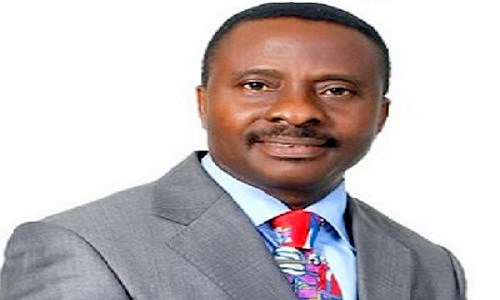
CAN President Rev Samson Ayokunle gave the indication in a statement on Wednesday.

He said they had been consulting with the Federal Government on the modalities to follow.

He said if the government did not entertain any fear in opening markets and banks, there would not be any basis to hesitate in opening churches considering the fact that they are more organised than markets and banks.

Ayokunle said, “As a law-abiding institution, the church in Nigeria and the Christian Association of Nigeria that binds all of us together complied, hitherto, with government’s directive suspending church services for the past eight weeks now.

“However, the Church is well prepared for resumption of worship and as one of the most organised institutions in the country with trained leadership and good guidance by the Scripture.

“We are in discussions with  the Federal Government and are drawing the guidelines that churches would follow in order not to endanger the life of any worshipper and equally prevent COVID-19 infection.

“We are sure of compliance if the government allows our compliance team to work hand-in-hand with their law enforcement agencies  to monitor compliance. If the government didn’t entertain any fear in opening markets and banks which are not as organised as the church, why should government entertain fear about the compliance of the church?

“We are hopeful that latest by the first Sunday in June, all our churches would open again for congregational worship under COVID-19 prevention regulations. As I said before, we are consulting with the government on this.”

Meanwhile, CAN, the Nigerian Supreme Council for Islamic Affairs, Nigeria Centre for Disease Control and Presidential Task Force on COVID-19 met on Wednesday over the issue.

The CAN delegation was led by the Chairman of its North Central chapter and President of FCT Baptist Conference, Rev. Israel Akanji.

The representatives of the Federal Government were said to have promised to prepare their own recommendations to be presented to the President, Major General Muhammadu Buhari (retd), who would decide the accepted ones and present them to the country in his nationwide broadcast scheduled for next week.

Apart from the usual the guidelines, the NSCIA was said to have asked that worship be held the same hour according to Qur’anic injunctions, but said children would not take part.

A source said, “The PTF and NCDC promised to prepare their recommendations which will be presented to the President, who will decide the accepted ones and present them to the nation in his nationwide broadcast scheduled for Monday.

“All parties agreed that it was time to reopen worship centres,” the source added.

Among the 13 guidelines sent to The PUNCH by Adebayo Oladeji, Special Assistant (Media and Communications) to  Ayokunle, every worshipper must be screened before going into the church hall, while people with high temperature would be advised to see their doctors.

He said, “CAN will constitute a committee together with law enforcement agencies to enforce full compliance.

“The guidelines for the church should be along these suggestions: churches should disinfect their premises first before they are reopened for services. Churches should provide alcoholic sanitisers, temperature readers, soap and water on their premises to be supervised by medical professionals in the church.”

The Punch

Continue Reading
Click to comment

Leave a Reply

Your email address will not be published. Required fields are marked *

News

Jigawa ADC Receives Defecters from APC, NNPP, PDP

Published

on

By

A wave of defections has hit the All Progressives Congress, the New Nigeria People’s Party, and the Peoples Democratic Party in Jigawa State, as politicians and supporters defected to the African Democratic Congress.

On Sunday, Dutse, the Jigawa State capital witnessed a large turnout of supporters and politicians during a mass gathering to formally receive a two-term senator representing Jigawa South-West Senatorial District, Senator Sabo Nakudu, who joined the ADC alongside other defectors.

Nakudu, accompanied by other politicians from across the state, was received by ADC leaders and supporters.

The former senator, who chaired the Senate Committee on Petroleum (Downstream) in the 9th Assembly, resigned from the APC on Friday and joined the ADC on Sunday.

Speaking after receiving his ADC membership card, Nakudu said, “I am grateful to my supporters for turning out en masse to receive me into my new party,” adding, “I promise to work towards a greater Jigawa and the country at large.”

Nakudu, who contested against Governor Umar Namadi during the 2023 APC governorship primaries, is expected to run for governor on the ADC platform in 2027.

Sources close to him said he has begun consultations with key stakeholders in the state.

Another prominent figure linked to the ADC is Aminu Ringim, a three-time governorship candidate in Jigawa State under the PDP (2015, 2019) and NNPP (2023).

Ringim, described as a protégé of former Kano State governor, Rabiu Kwankwaso, said he would soon formally join the ADC at a similar event in his hometown.

Also present at the event was Senator Ubale Shittu, a political figure who previously represented Jigawa North-East Senatorial District in the 8th National Assembly on the PDP platform before later moving to the APC.

Earlier, the Jigawa State ADC coordinator, Ahmad Gumel, welcomed Nakudu and other defectors, describing the development as a boost to the party.

He said the defections reflected the party’s growing popularity in the state and praised Nakudu’s experience as an asset.

Similarly, ADC chieftain Bashir Jumbo welcomed the new members, saying, “We pledge equal opportunities within the party structure.”

He urged party members to work towards unity, adding, “We must take over power in 2027 by the grace of God.”

Reacting, the PDP Public Relations Officer in the state, Umar Kyari, dismissed the defections, saying they did not involve key members of the party.

“They’re just a group of political jokers seeking relevance,” he told our correspondent via telephone on Monday.

Kyari challenged the ADC to test its popularity at the polls.

“If they want to test their power, come out and contest — we’ll show them what politics is,” he said.

Also reacting, the APC spokesperson in the state, Bashir Kundu, downplayed the development, describing the defectors as driven by personal interests.

“They’re chasing personal interests, not the public good,” he said.

Kundu added that Namadi’s performance would continue to attract support, expressing confidence that more politicians would join the APC.

Continue Reading

News

‘ADC Membership Hits 500,000 after INEC Derecognition of Leadership’

Published

on

By

The African Democratic Congress has recorded a surge in new members following the Independent National Electoral Commission’s decision to delist Senator David Mark and Ogbeni Rauf Aregbesola as national chairman and national secretary of the party.

ADC National Publicity Secretary, Bolaji Abdullahi, revealed in a statement on his X account on Sunday that the party’s membership “had grown from over 40,000 registrations on April 2 to more than 500,000 new Nigerians joining between April 1 and today.”

INEC, through its National Commissioner and Chairman of the Information and Voter Education Committee, Mohammed Haruna, announced the delisting on April 1, citing a court order that directed the commission to maintain the status quo pending a suit challenging the legality of Mark’s leadership.

The commission removed Mark and Aregbesola from its portal and said it would not recognise Nafiu Bala Gombe, who had approached the court seeking to be declared national chairman.

Haruna explained that INEC had received conflicting legal demands from opposing camps, including a cautionary letter from Suleiman Usman SAN & Co. advising against recognising Gombe, and a counter-letter from Summit Law Chambers requesting enforcement of the Court of Appeal judgment affirming Gombe’s position.

Reacting to the development, Abdullahi and his Peoples Democratic Party counterpart, Ini Ememobong, insisted the development was “a calculated attempt to undermine democratic structures,” and urged supporters to mobilise in defence of democratic principles.

Continue Reading

News

Yusuf Tuggar Resigns As Foreign Affairs Minister

Published

on

By

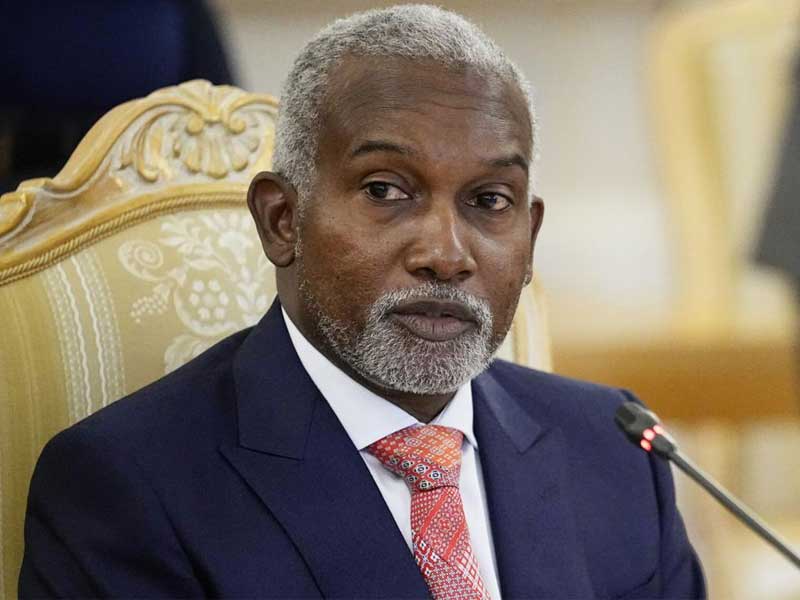
The Minister of Foreign Affairs, Yusuf Tuggar, has resigned.

Tuggar’s resignation was confirmed by the ministry’s spokesperson, Kimiebi Ebienfa, on Monday.

The minister’s action followed the directive of President Bola Tinubu to all political appointees in his administration who intend to contest elective positions in the 2027 elections to resign from their posts on or before March 31.

The president had hinged his decision on Section 88(1) of the Electoral Act 2026 and the timetable released by the Independent National Electoral Commission (INEC) for party primaries ahead of the 2027 polls.

Tuggar’s resignation comes amid the speculation of his interest in contesting the 2027 Bauchi State governorship election on the platform of the All Progressives Congress (APC).

He is a seasoned diplomat, policymaker, and political figure who was appointed as minister by Bola Ahmed Tinubu in August 2023.

Born on March 12, 1967, he has built a distinguished career spanning diplomacy, politics, energy, and strategic consulting.

He is widely regarded for his role in shaping Nigeria’s global engagement and advancing its foreign policy priorities.

His political career includes serving as a member of the House of Representatives from 2007 to 2011, representing the Gamawa Constituency in Bauchi State.

The diplomat later contested the governorship of the state in two election cycles.

From 2017 to 2023, Tuggar served as Nigeria’s ambassador to Germany, where he played a key role in strengthening bilateral relations, enhancing trade cooperation, and promoting Nigeria’s interests in Europe.

As Minister of Foreign Affairs, Tuggar led Nigeria’s diplomatic efforts under the Tinubu administration.

Channels Television

Continue Reading

Trending